10 Small Bathroom Lighting Ideas That Look Surprisingly Expensive
You lean toward the mirror to check your skin or fix your eyeliner, and the single overhead bulb throws a shadow straight down your face. That’s the most common complaint about small bathrooms, and it’s rarely about the paint color or the tile. Good small bathroom lighting ideas fix this by rethinking where light comes from, not just how bright it is. A few smart changes to fixture placement and bulb choice can make an eight by five foot bathroom feel as functional as one twice its size.
1. Why Most Small Bathrooms End Up Poorly Lit
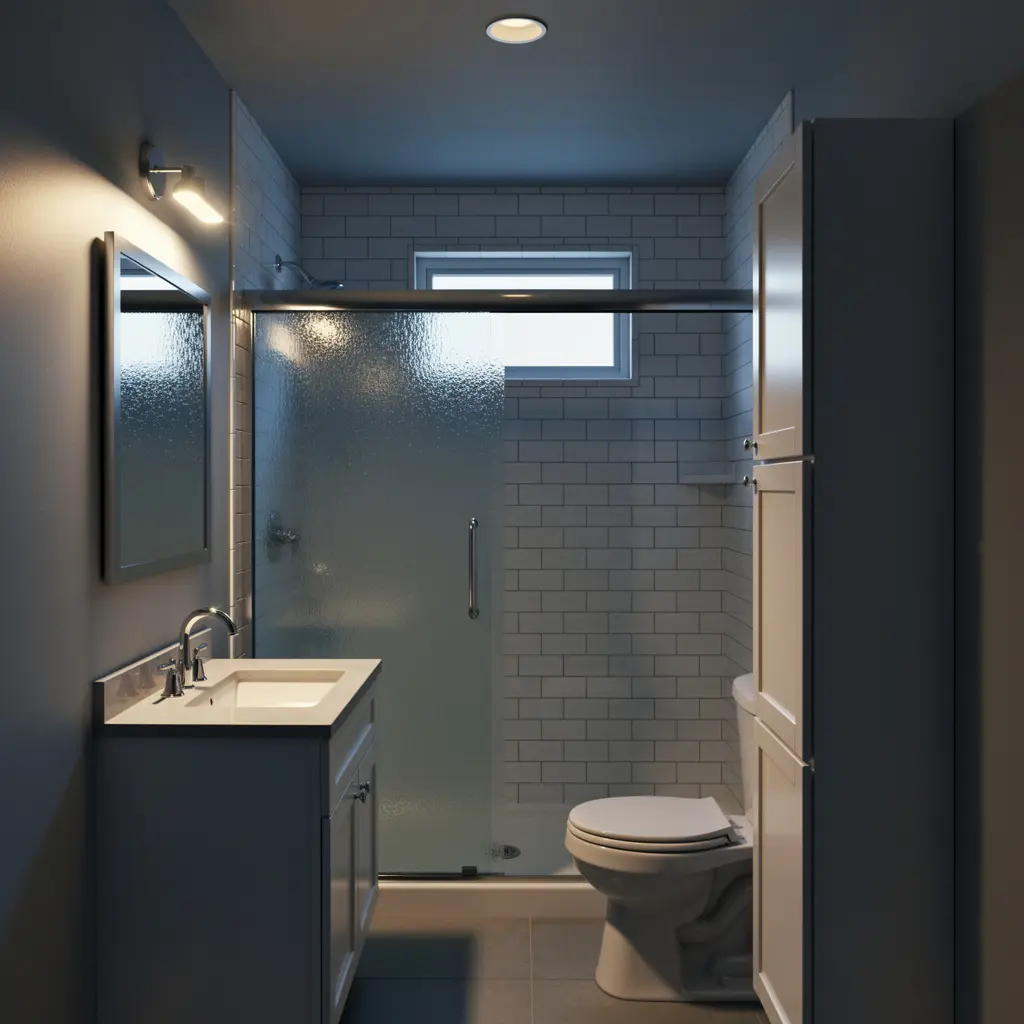
Builders often install one flush mount ceiling light and call it done. That single source throws light downward, which creates shadows under the eyes, chin, and nose exactly where you’re trying to see clearly. In a small room, this one mistake gets magnified because there’s no space for a floor lamp or a second window to balance it out.
The fix isn’t more brightness. It’s more directions. Light needs to come from the sides of your face, not just above it, for a mirror to actually be useful. That single shift in thinking changes almost every decision after this one.
Small bathrooms also tend to have fewer windows, sometimes none at all, which means artificial light has to do all the work that daylight would normally share. Without a natural light source to soften shadows during the day, the fixtures you choose and where you place them carry the entire load, morning and night alike.
2. Start With Vertical Sconces Beside the Mirror
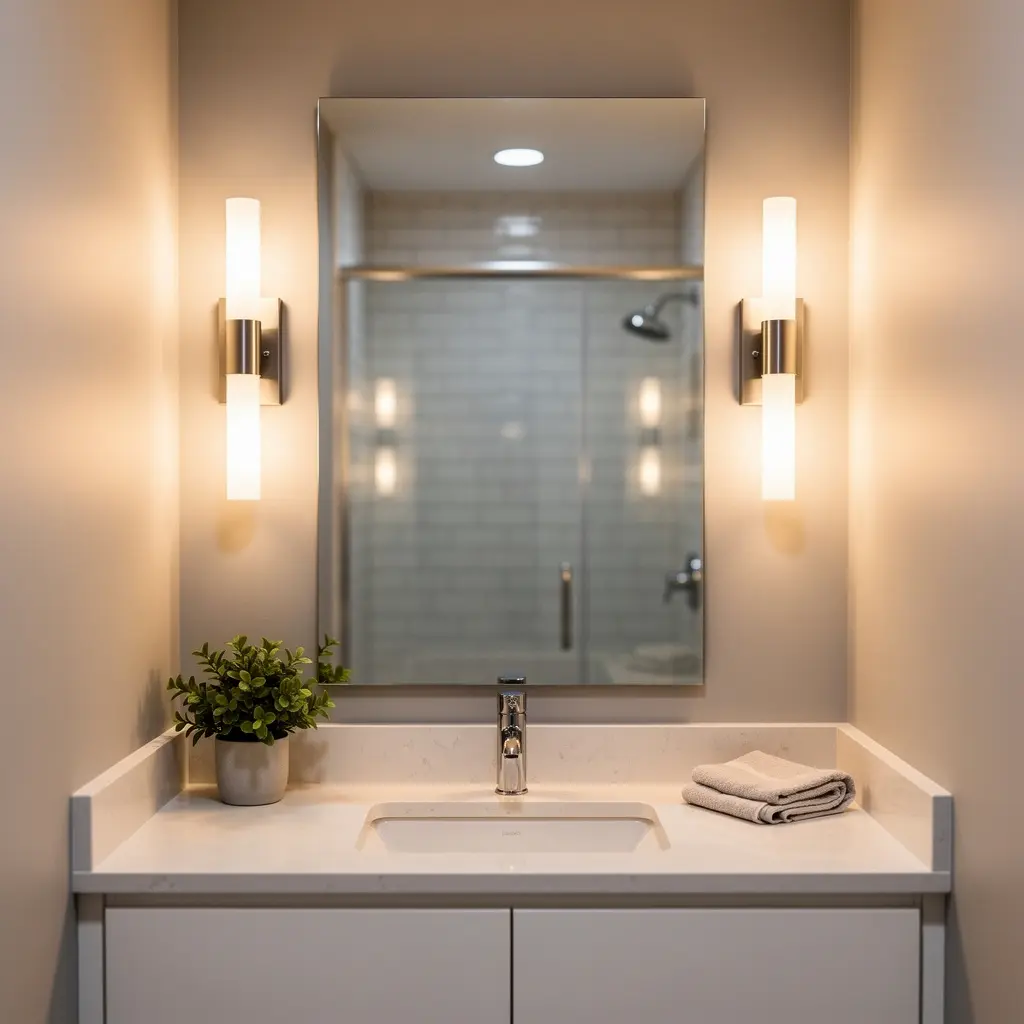
Two sconces mounted vertically on either side of the mirror, roughly at eye level, solve the shadow problem better than almost anything else. Aim for sconces spaced about 28 to 36 inches apart, depending on your mirror width, so the light hits both sides of your face evenly.
Why This Placement Works
Side lighting cancels out shadows because light hits your face from two directions instead of one. Makeup artists and actors have used this setup for decades for exactly this reason. Sconces in the $40 to $120 range in brushed nickel, matte black, or unlacquered brass cover most budgets and styles without looking generic.
3. Layer a Ceiling Fixture on Top of Vanity Lighting
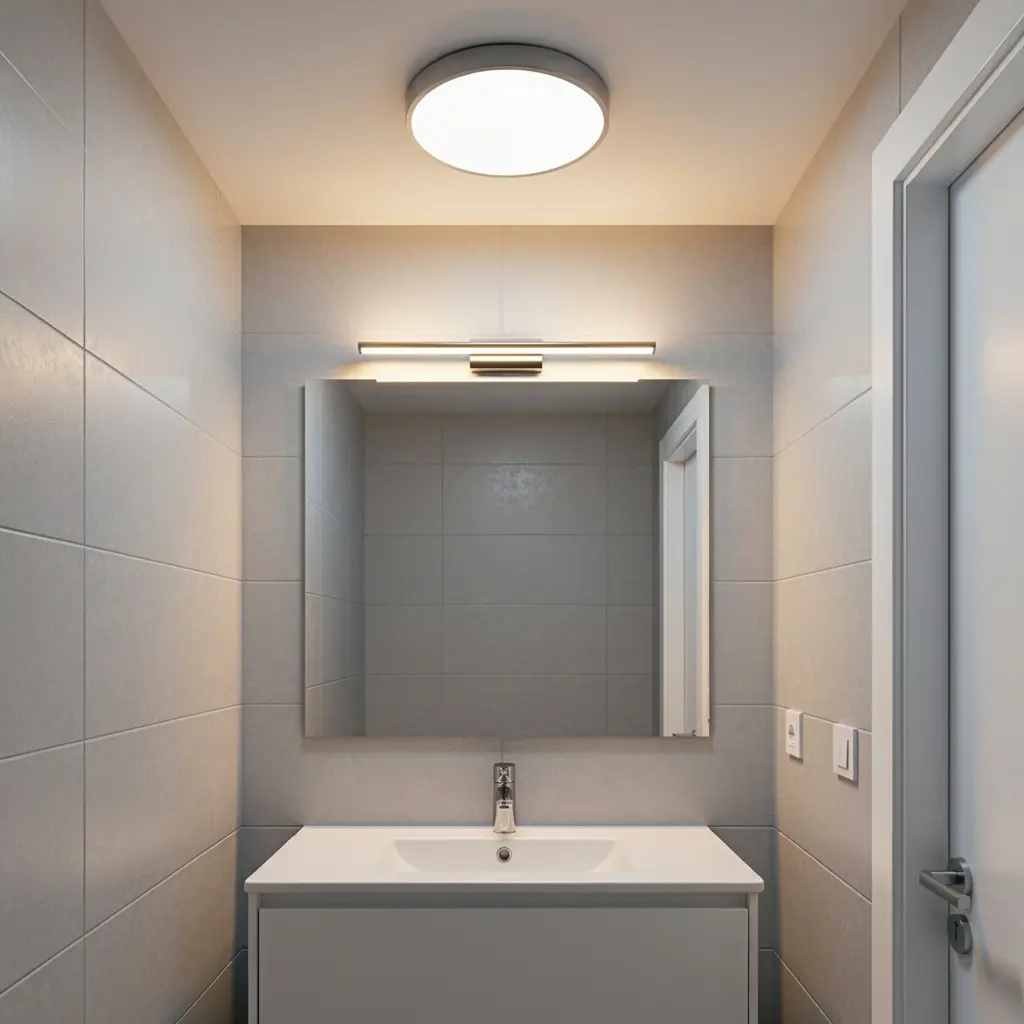
Sconces alone light your face well but leave the rest of the room dim. Add a flush mount or semi flush ceiling fixture to fill in general light for tasks like cleaning the tub or reading labels on products. Look for something rated for damp locations if it sits near the shower area.
A simple drum shade or schoolhouse style flush mount in the $50 to $150 range works in most small bathrooms without competing visually with the vanity lights. The two layers together, sconces for the face and a ceiling fixture for the room, is the combination that professional bathroom designers reach for again and again.
4. Choose the Right Bulb Temperature for Skin Tones
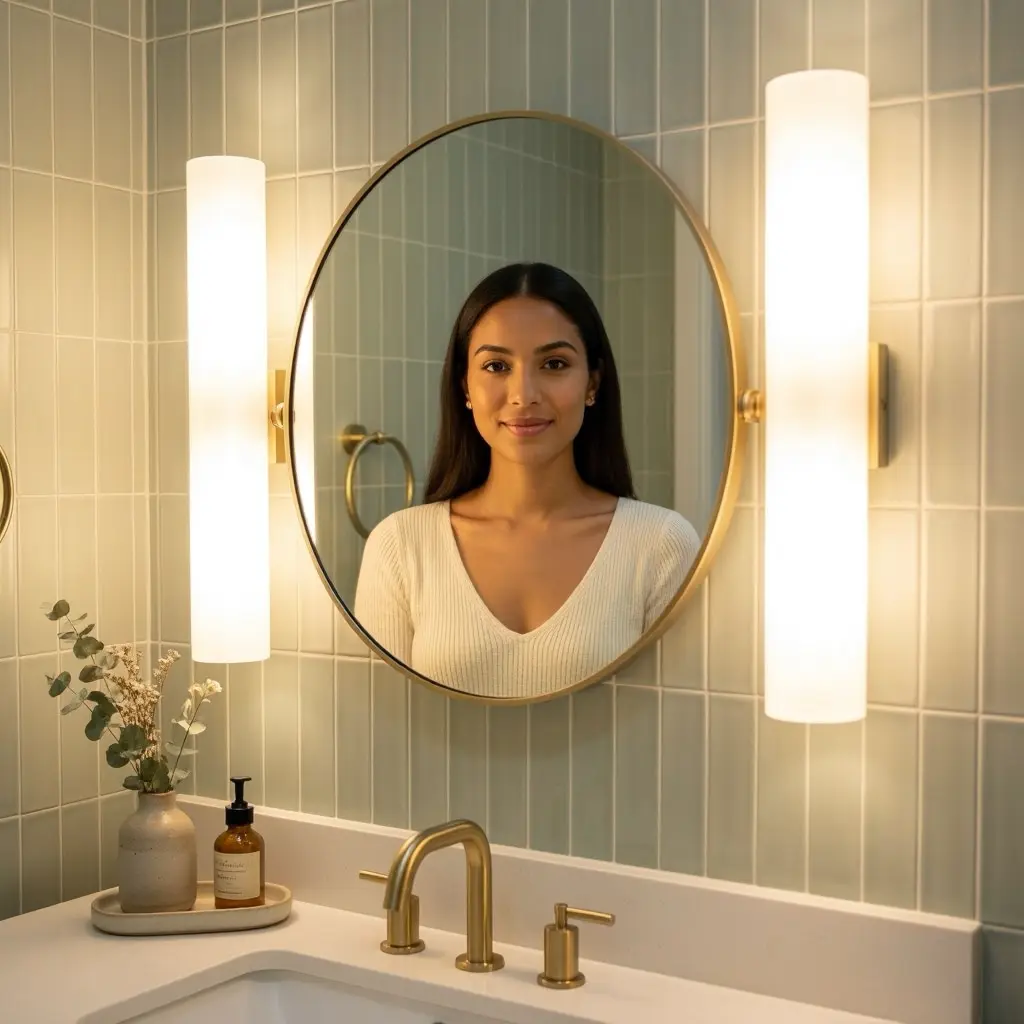
Bulb temperature is measured in Kelvin, and it matters more in a bathroom than almost anywhere else in the house. Bulbs between 2700K and 3000K read as warm white and tend to be the most flattering for skin tones, closer to what you’d see in natural indoor light. Anything above 4000K starts to look clinical, almost like a hospital exam room.
Matching Bulbs Across Fixtures
Mixing a warm bulb in one fixture with a cool bulb in another creates an uneven, slightly off look that’s hard to pinpoint but easy to notice. Buy all your bathroom bulbs in the same temperature and, ideally, the same brand so the color output actually matches.
5. Add a Small Recessed Light Over the Shower
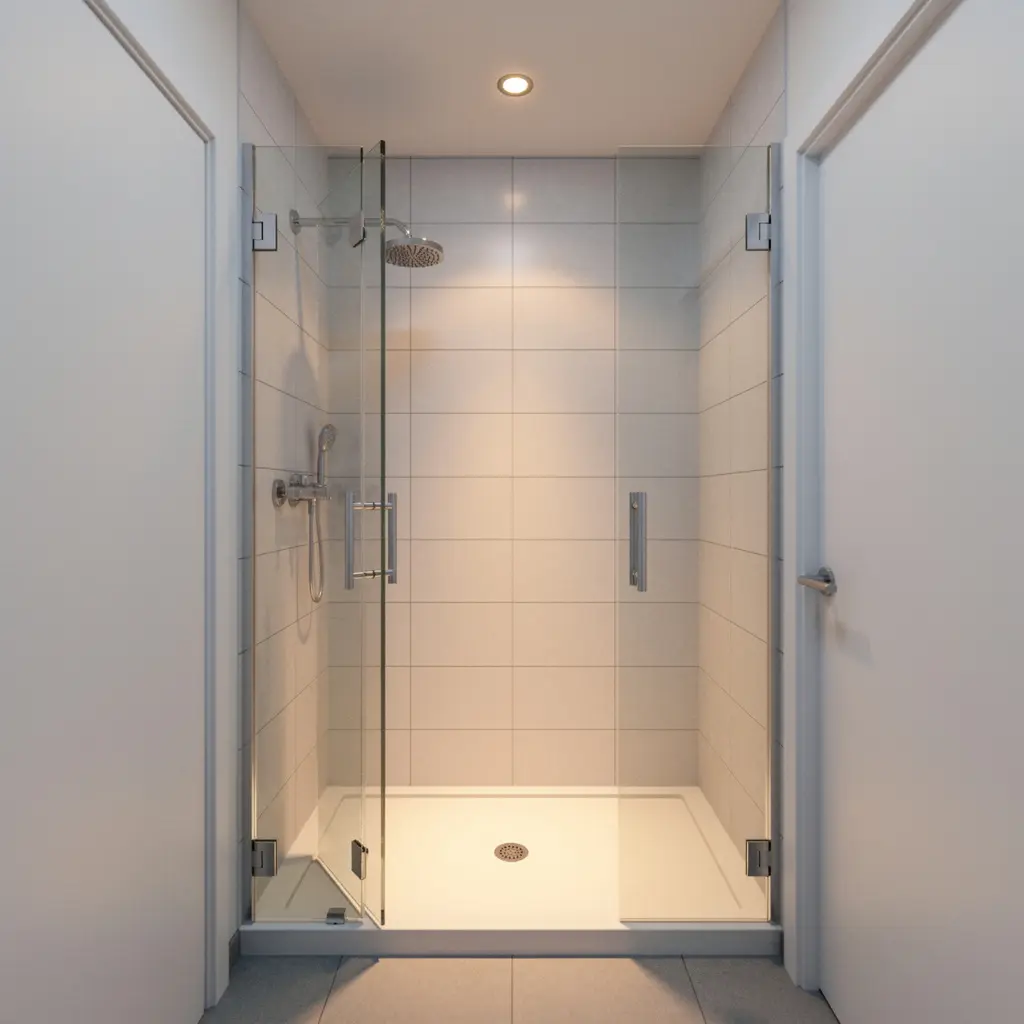
A single 4 inch recessed light rated for wet locations, centered over the shower or tub, adds task lighting exactly where you need it for cleaning or shaving. This is a smaller project than it sounds, often a half day job for an electrician in a bathroom that already has attic or ceiling access nearby.
Wet rated fixtures are non negotiable here. A standard recessed light isn’t built to handle direct water exposure or the humidity a hot shower produces, and using the wrong one is a real safety issue, not just a design preference.
6. Use Dimmers to Handle Morning and Night Routines
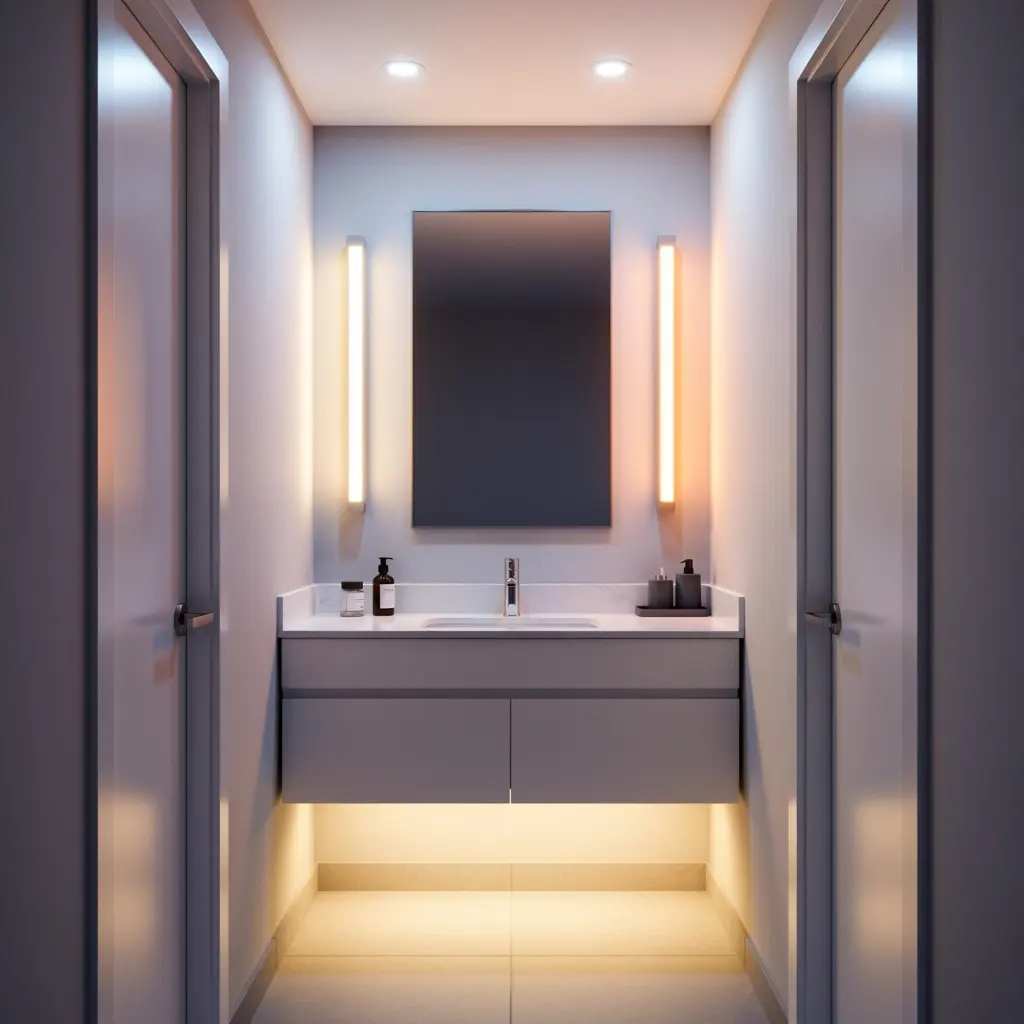
A bathroom gets used completely differently at 6am than it does at 10pm, and one fixed brightness level can’t serve both well. Dimmer switches, usually $15 to $40 each plus installation, let you run full brightness for grooming tasks and a softer glow for an evening bath or a middle of the night trip to the sink.
Make sure your bulbs are labeled dimmable before installing a dimmer switch. Non dimmable LED bulbs can flicker, hum, or fail early when paired with a dimmer, which is a common and avoidable mistake.
7. Pick Fixtures Sized for the Room, Not the Trend
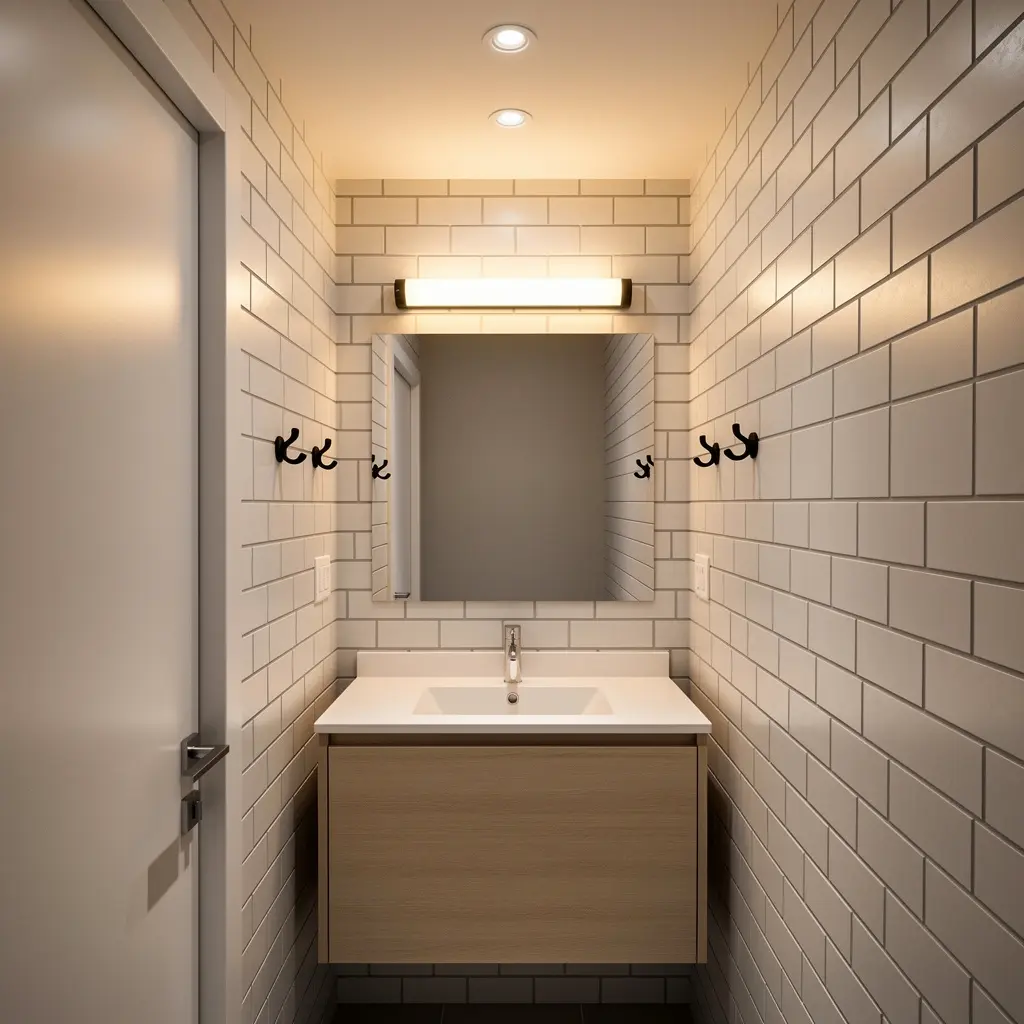
A dramatic oversized pendant might look stunning in a photo, but in a 40 square foot bathroom it can dominate the space and even become a hazard near a low ceiling. Scale fixtures to the room. A small bathroom generally does better with two or three modest fixtures than one large statement piece.
As a rough guide, keep any single fixture under about 12 inches wide in a bathroom smaller than 50 square feet, unless it’s mounted well above head height and away from the main walking path.
8. Consider a Backlit or Lighted Mirror
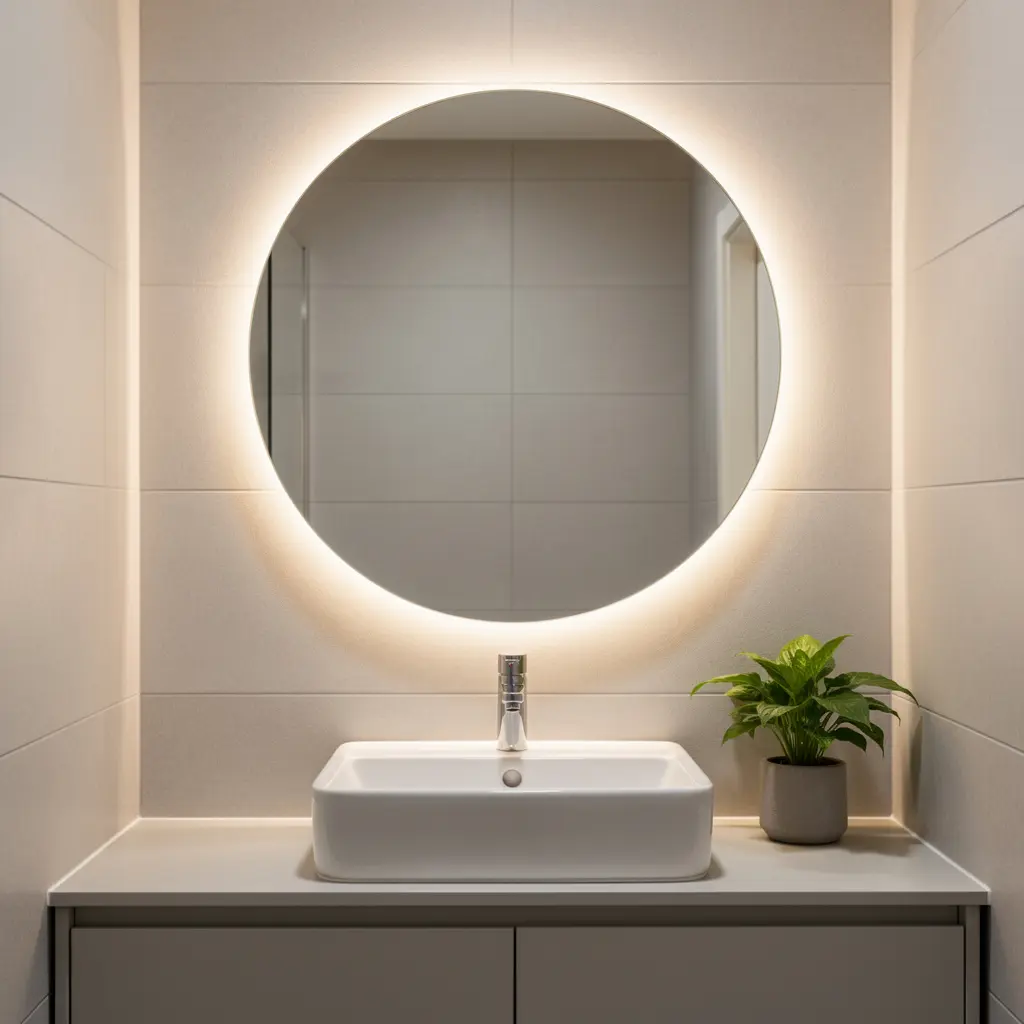
Lighted mirrors, with LED strips built into or around the frame, have become a genuinely useful option rather than just a trend. They provide even, shadow free light directly at face level, which can reduce or even replace the need for separate sconces in a very tight layout.
Where They Make the Most Sense
These work especially well in bathrooms where there’s no wall space beside the mirror for sconces, like a mirror that runs edge to edge above a narrow vanity. Prices range widely, from around $150 for a basic lighted mirror to $500 or more for larger, dimmable, anti fog versions.
9. Don’t Forget Ventilation Fan and Light Combos
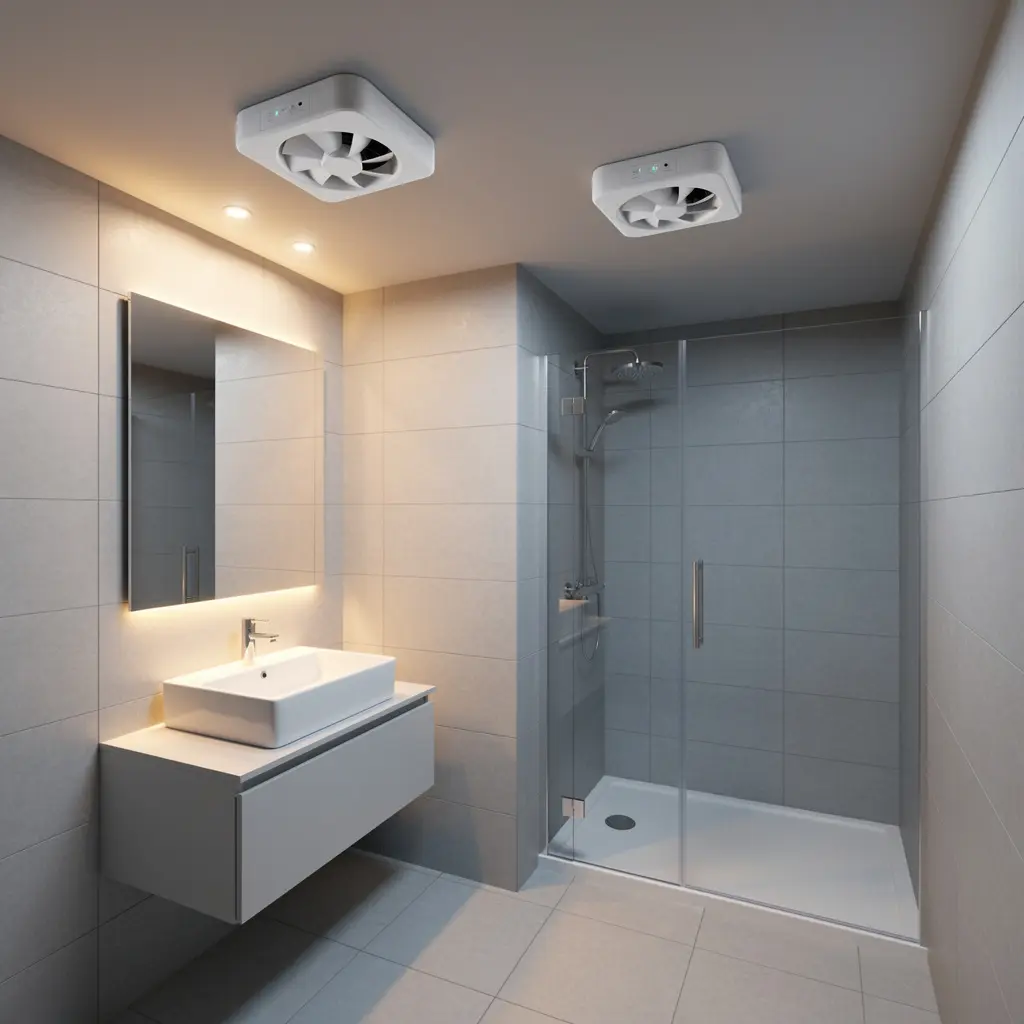
Combination fan and light units solve two small bathroom problems at once, moisture control and lighting, without adding another hole in the ceiling. Look for a fan rated for at least 50 CFM in a small bathroom, and more if the room has a separate enclosed toilet area or a deep soaking tub.
These combo units usually run $80 to $250 depending on features like a built in night light or a humidity sensor that triggers the fan automatically. They’re a practical, unglamorous upgrade, but they solve real problems like foggy mirrors and lingering humidity that no amount of pretty lighting can fix on its own.
10. Budget Friendly Ways to Upgrade Bathroom Lighting
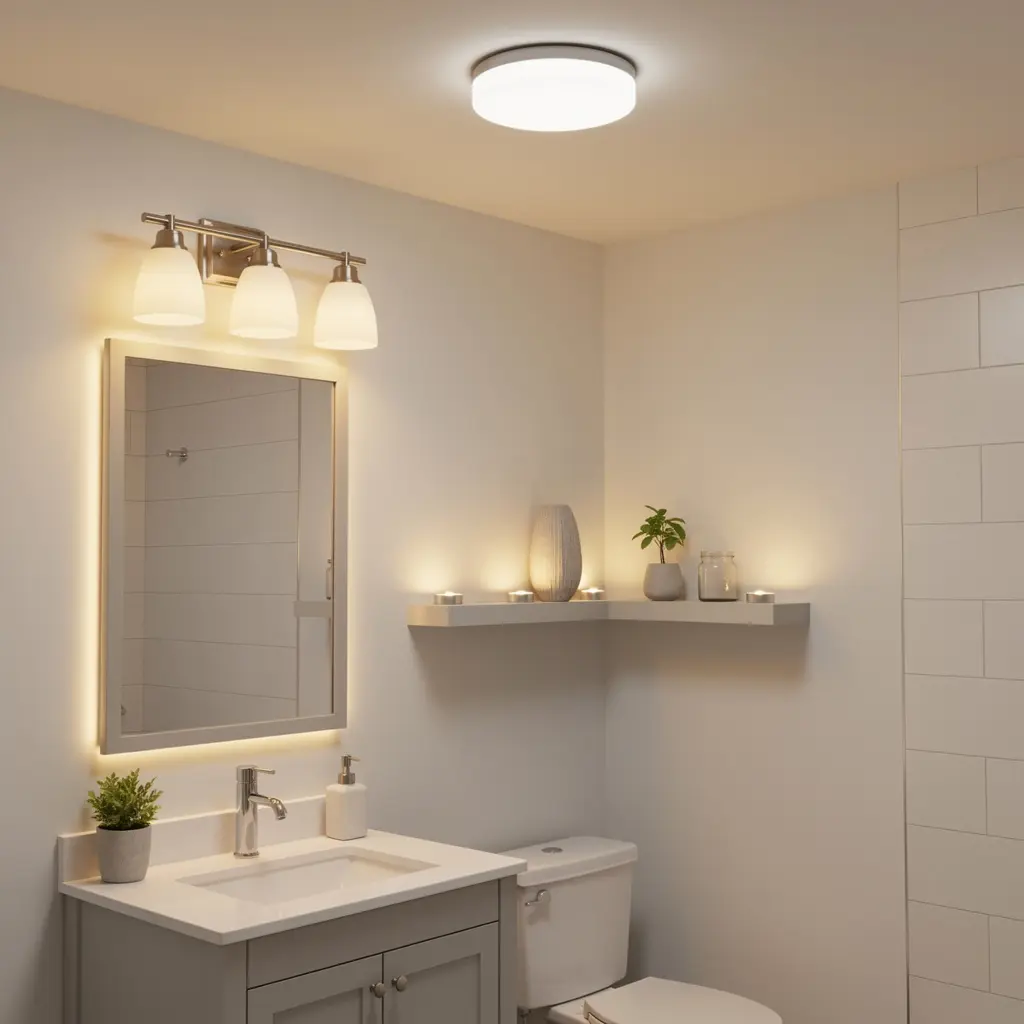
Not every bathroom needs an electrician and a full rewiring project. Swapping an existing flush mount for a better shaped fixture, changing bulbs to a consistent warm temperature, or adding a plug in LED strip under the vanity are all changes you can make in an afternoon for well under $100 total.
Even without touching the wiring, correcting bulb temperature and cleaning or replacing yellowed, cloudy fixture covers can noticeably brighten a small bathroom. It’s often the cheapest fix on this entire list and the one people skip most often.
Mistakes to Avoid
- Relying on a single overhead light as the only source in the room
- Mixing bulb temperatures across different fixtures
- Installing a fixture that isn’t rated for damp or wet locations near a shower
- Choosing a fixture based on trend photos without checking real room dimensions
- Skipping a dimmable bulb check before installing a dimmer switch
- Ignoring ventilation while focusing only on how the lighting looks
Frequently Asked Questions
What is the best bulb color for a small bathroom? Warm white bulbs between 2700K and 3000K tend to look the most natural and flattering for skin tones, without the flat, clinical feel of cooler bulbs.
How many lumens does a small bathroom need? A small bathroom generally needs somewhere between 2500 and 4000 total lumens across all fixtures combined, adjusted based on wall color and natural light.
Are sconces or overhead lights better for a small bathroom? Both, used together, work better than either alone. Sconces beside the mirror handle facial shadows, while an overhead fixture lights the rest of the room for general tasks.
Can I install bathroom lighting myself? Swapping a fixture on an existing electrical box is a manageable DIY project for some homeowners, but anything involving new wiring, wet location fixtures, or working near water is safer left to a licensed electrician.
Do lighted mirrors use a lot of electricity? No. Most lighted mirrors use LED strips, which draw very little power, typically comparable to running one or two standard LED bulbs.
Getting Small Bathroom Lighting Right
The goal with small bathroom lighting ideas isn’t to cram in more fixtures. It’s to place a few well chosen ones in the right spots, at the right height, with matching bulb temperatures, so the room actually functions the way you need it to every single morning. Start with sconces at face level, layer in a ceiling fixture, and get the bulb temperature consistent before you spend money on anything else. Once those basics are handled, upgrades like a dimmer switch or a lighted mirror become genuine improvements rather than attempts to cover up a lighting layout that never worked in the first place.