10 Rustic Farmhouse Living Room Ideas That Feel Lived In, Not Staged
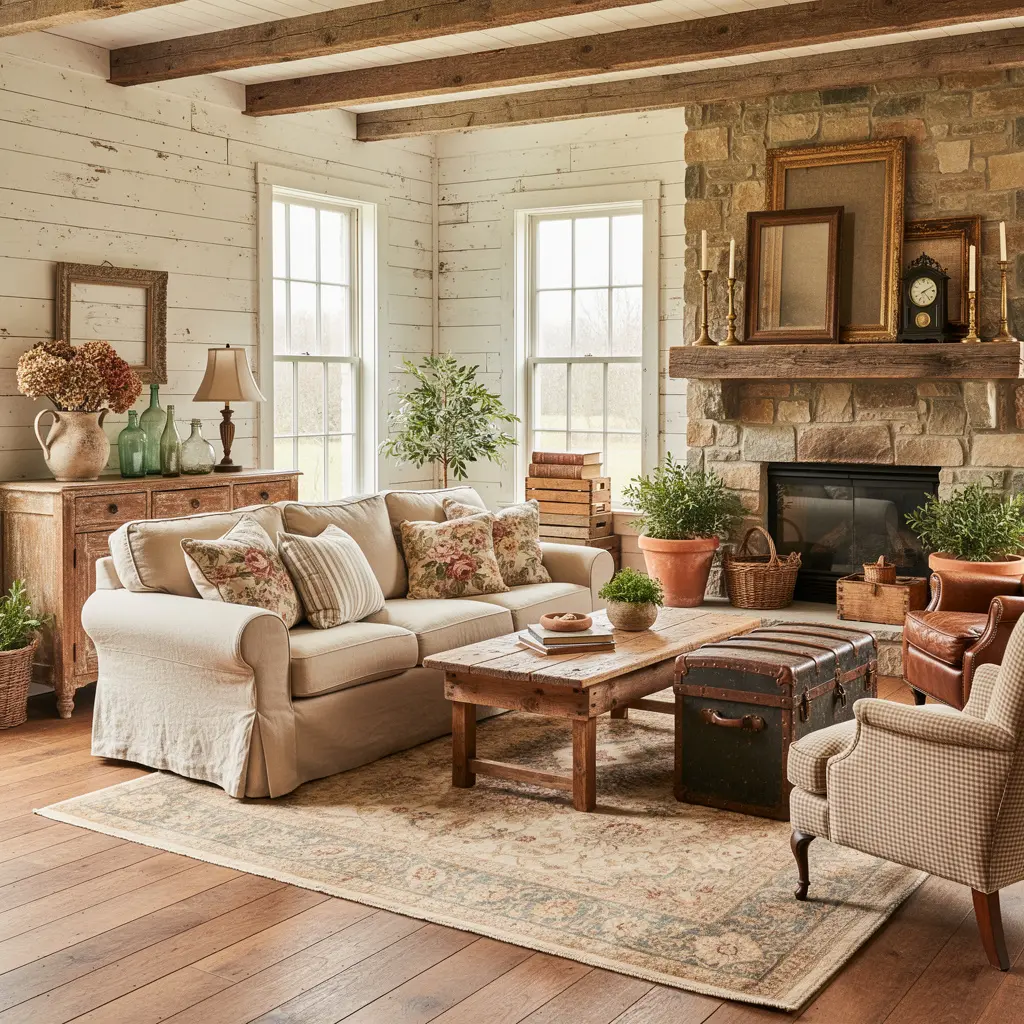
You picture a farmhouse living room and it comes out feeling like a showroom. White shiplap, matching pillows arranged just so, nothing that actually looks like real life happens there. That staged, cookie cutter version is exactly what current farmhouse design is moving away from. The modern take is less about following a rigid formula and more about layering natural materials and softened color, with pieces that look collected over time rather than bought as a matching set. That’s what actually makes a room feel warm and genuinely lived in.
1. Start With a Soft, Layered Neutral Palette
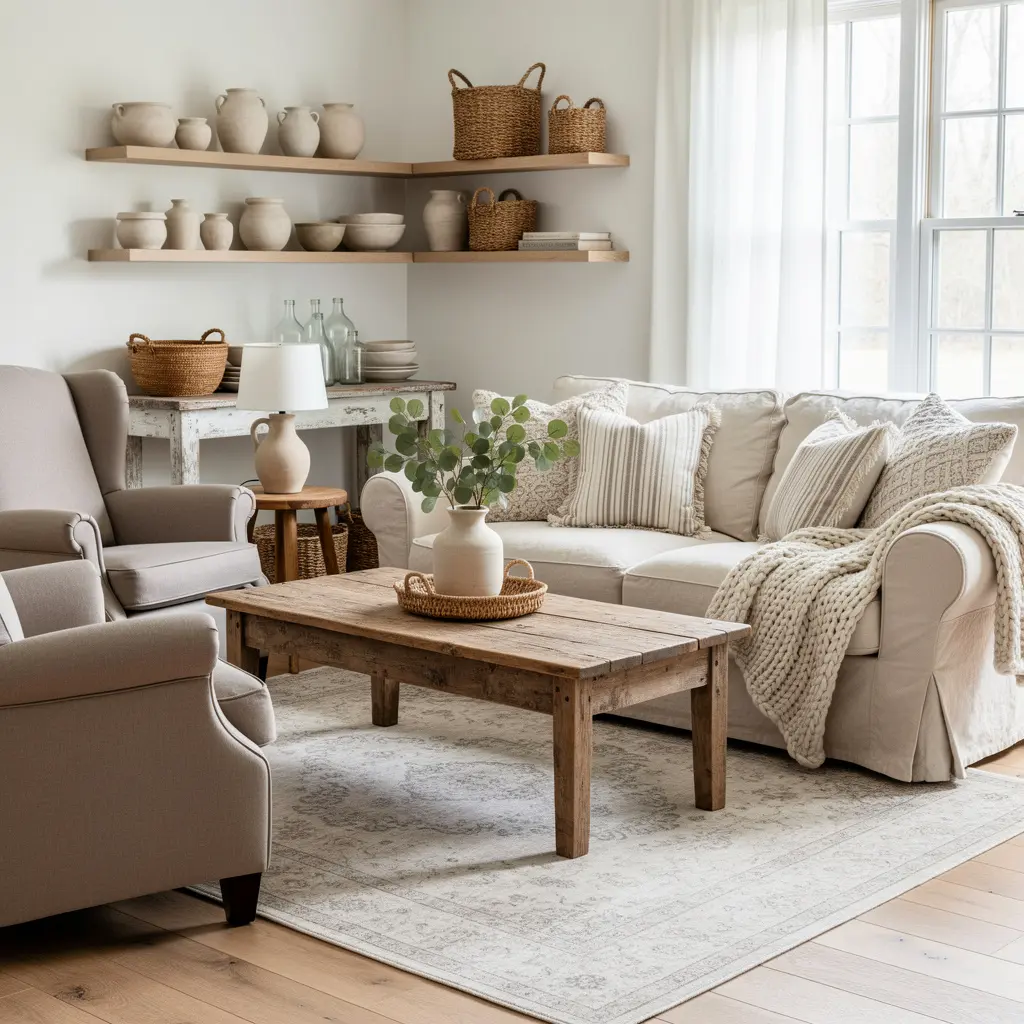
Creamy whites, warm grays, taupe, beige. These form the base, keeping the space airy while letting wood tones and texture do the visual work. The trick isn’t picking one neutral and stopping there. Mix cream, beige, and soft brown together, then add texture through fabric and wood, so the room doesn’t blend into one flat note.
A single wall in deep forest green, navy, or burnt terracotta adds real depth to an otherwise neutral room, especially behind a sofa or on a kitchen island. This moodier direction is one of the clearer shifts in current farmhouse styling, moving past the crisp white and soft neutral look that used to define the whole style on its own.
2. Add a Reclaimed or Weathered Wood Accent Wall
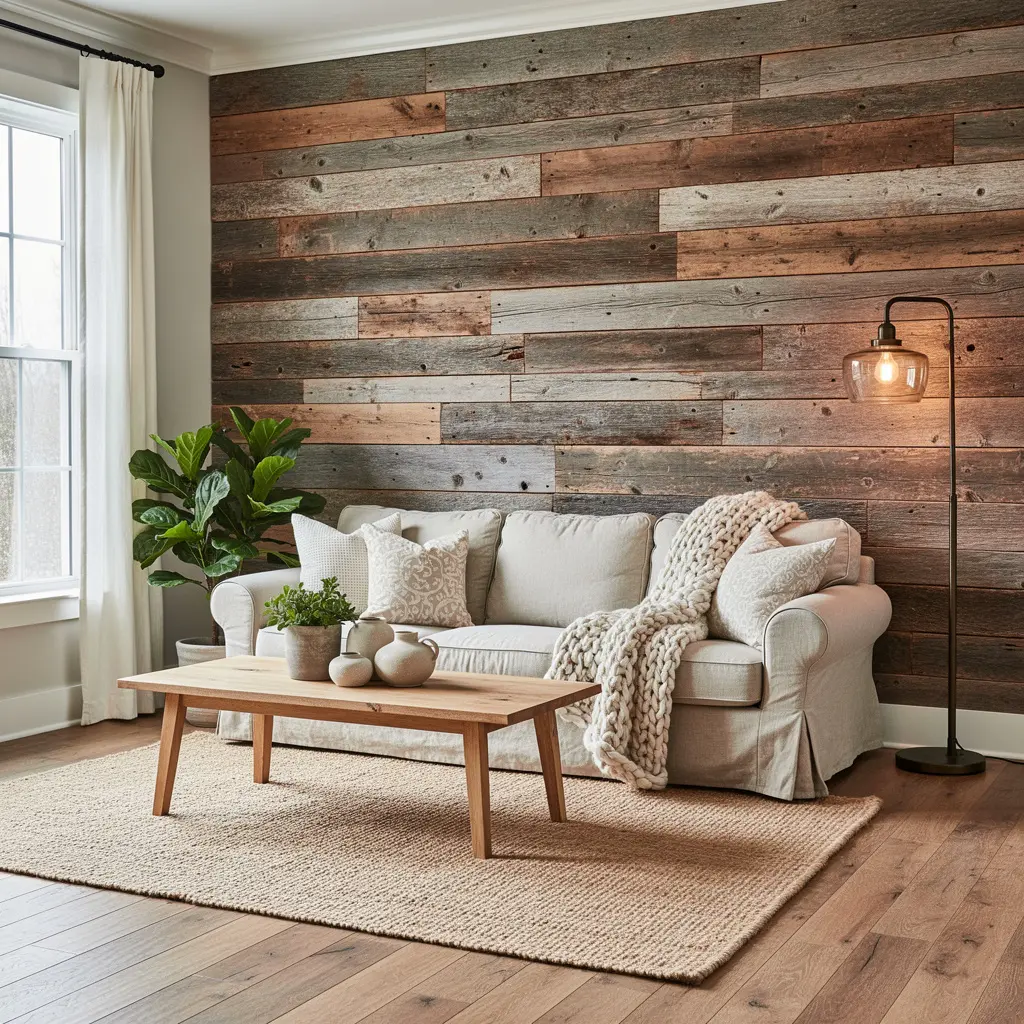
Weathered barn boards installed behind the sofa or television bring real history into the room, and the natural patina pairs beautifully against neutral walls. If sourcing real reclaimed wood isn’t practical, faux reclaimed panels or a distressed finish get you a very similar look for less cost and effort.
Real Reclaimed Wood Versus Faux Panels
Genuine reclaimed wood has more visible variation, nail holes, uneven grain, and it costs more because of that history. Faux panels are more consistent and far easier to install, which makes them the more practical choice for most living rooms unless the authenticity is genuinely important to you.
3. Layer Natural Textiles Throughout the Room
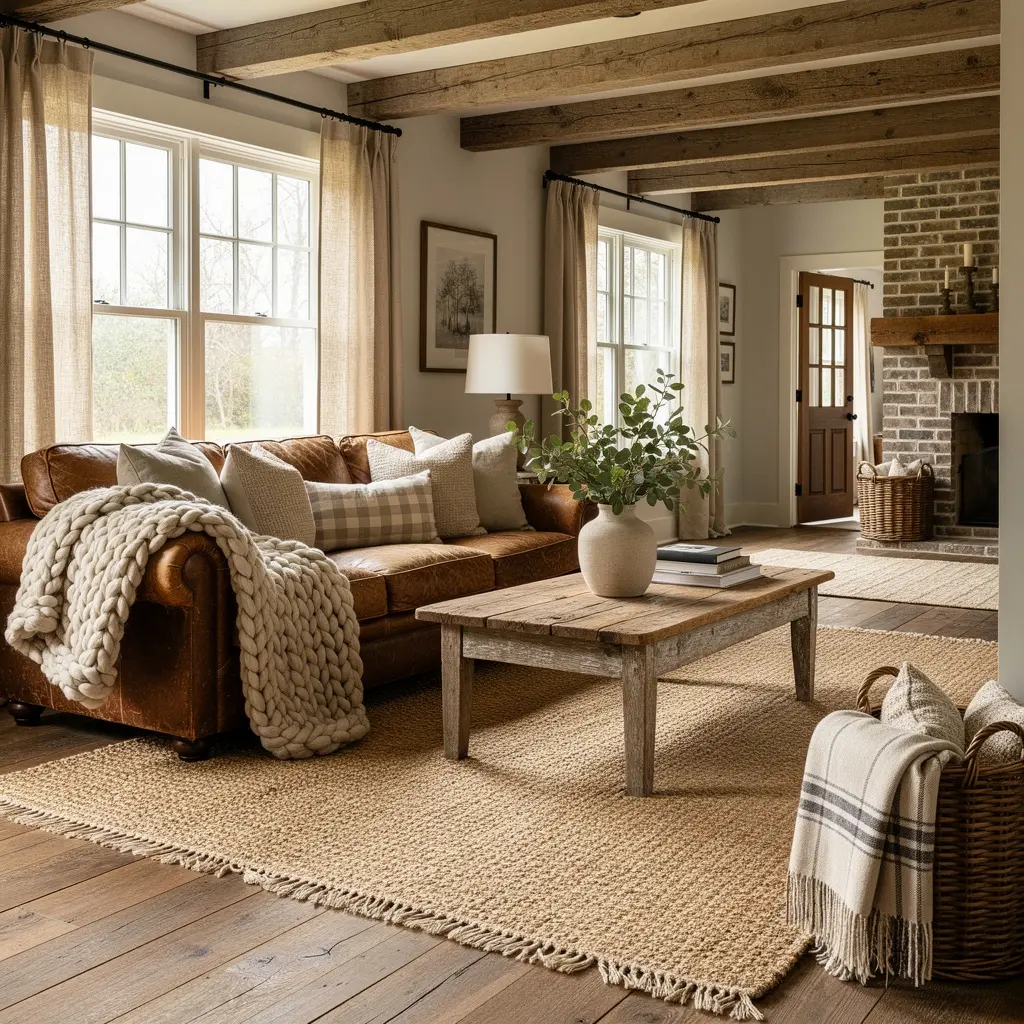
Linen, wool, jute, cotton, mixed across throws, pillows, and rugs. That combination creates the kind of depth and lived in coziness that’s central to farmhouse design. A single fabric type across every textile in the room tends to look flat. Two or three different natural materials layered together adds the visual and tactile richness that makes a room feel collected rather than assembled all at once.
4. Contrast Raw and Refined Materials
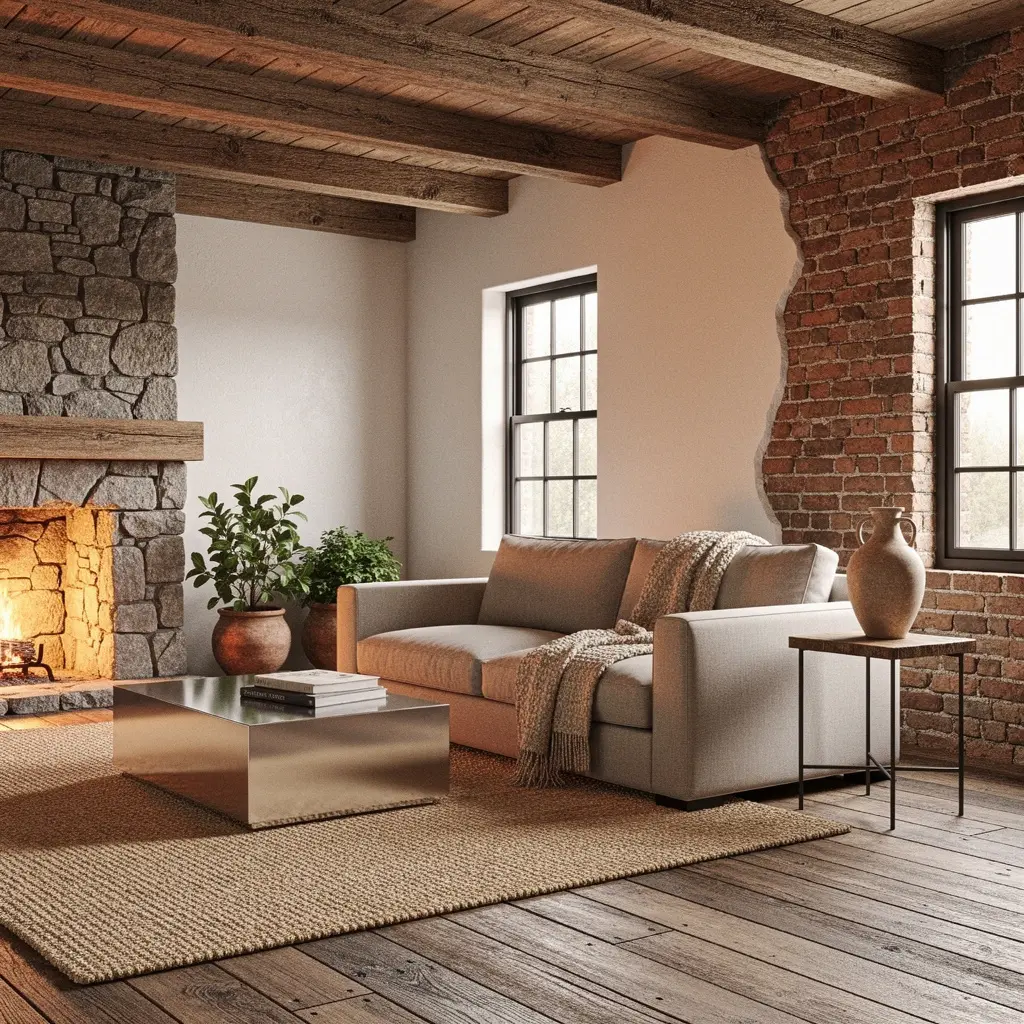
Pair a leather sofa with linen curtains, a jute rug, and a few ceramic accessories, and you get an interplay between raw and refined textures that adds character without tipping into an overly themed look. This curated contrast is part of what keeps a farmhouse room from feeling like a costume rather than a real, considered space. Gathered over time, not purchased as a single coordinated set.
5. Use Open Shelving Styled With Purpose
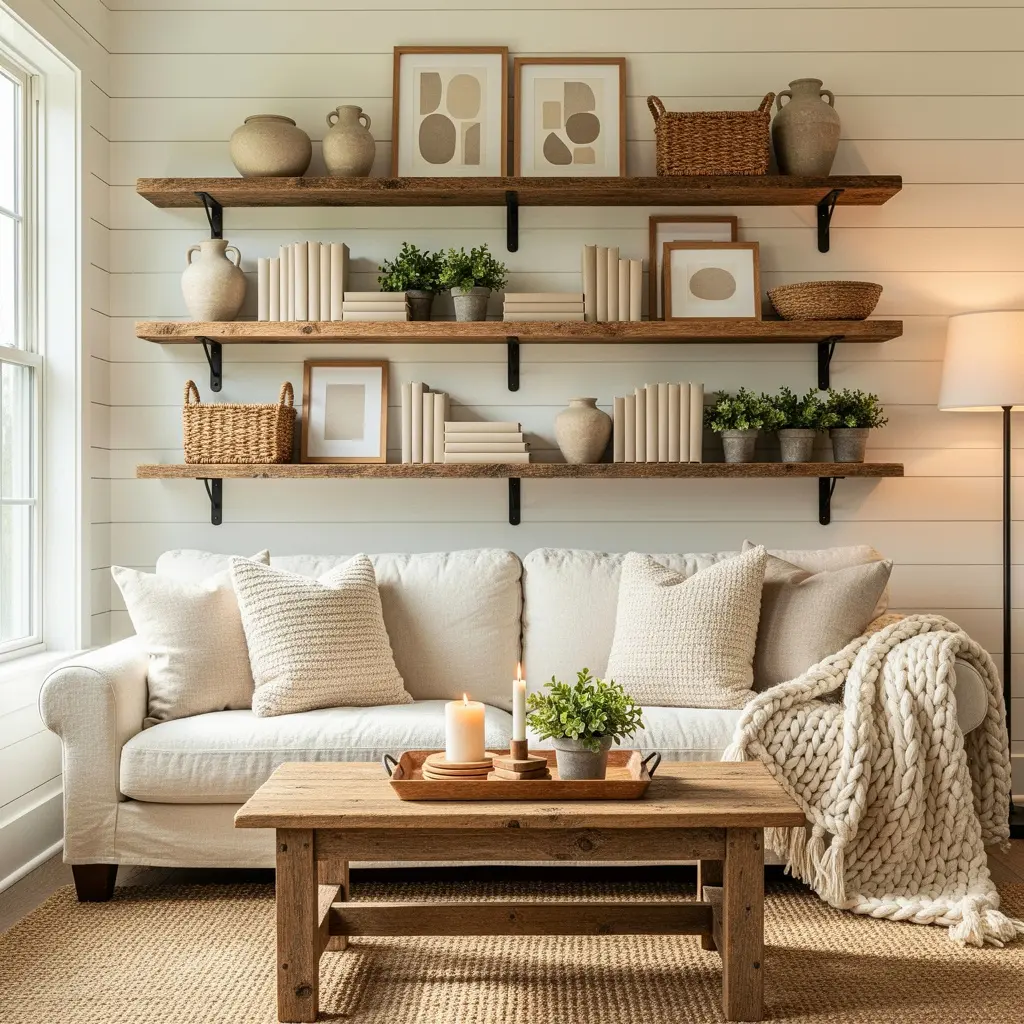
Reclaimed wood shelves, supported with matte black or brushed brass brackets, give a farmhouse living room a contemporary but still rustic frame for displaying pottery, hand woven baskets, framed art, and ceramic vases. Open shelving has a practical side effect too. It forces a bit of intentionality, since anything placed there is genuinely visible, which pushes toward a more curated style of display rather than clutter.
Styling a Shelf Without It Looking Random
Mixing textures matters more than matching pieces exactly. A woven basket next to a smooth ceramic vase next to a stack of books creates the kind of visual interest a set of identical objects never achieves.
6. Add a Stone Fireplace or Accent Wall
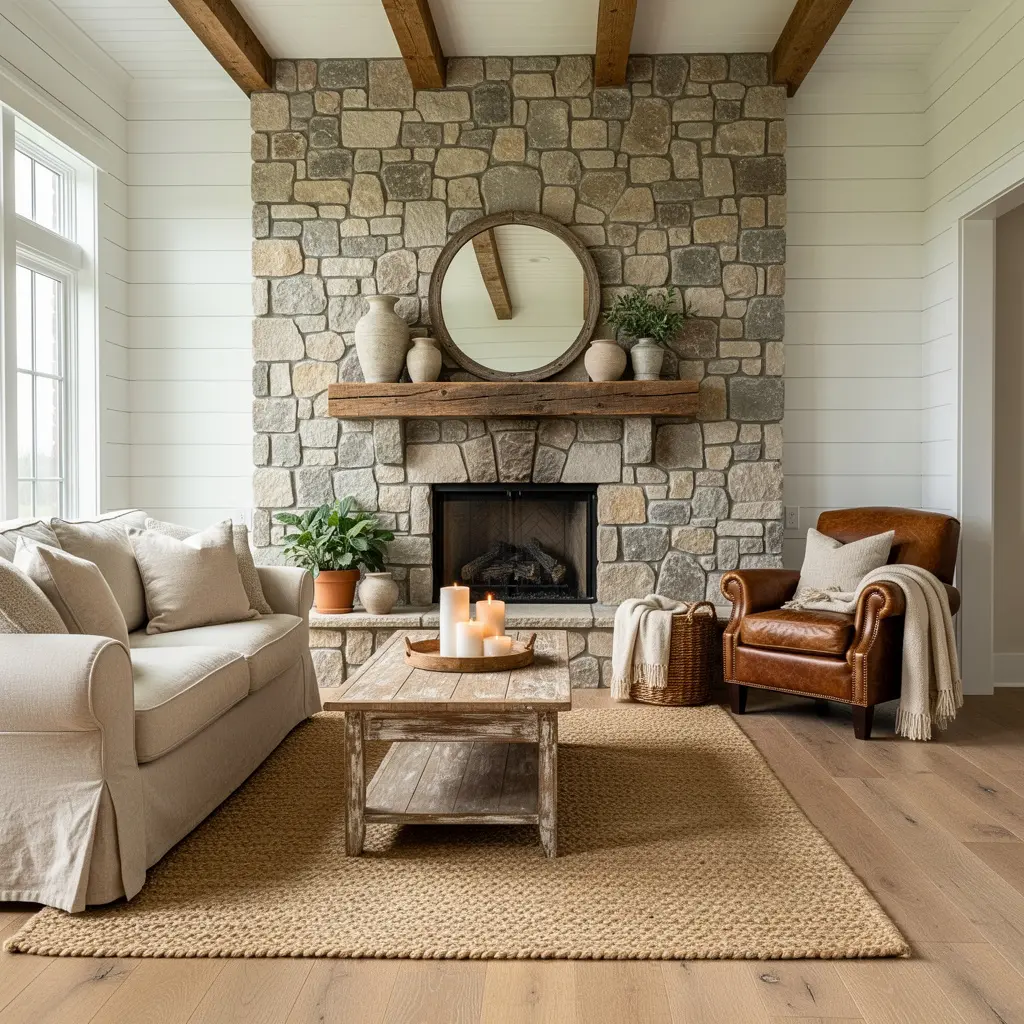
Rustic stone, whether framing a fireplace or forming a textured accent wall, elevates the room’s architecture while keeping the overall look simple rather than overdone. Stone anchors a farmhouse living room with a genuine sense of permanence and weight, which pairs especially well against the softer textiles and warmer wood tones filling the rest of the space.
7. Choose Flexible, Collected Seating Over One Matched Set
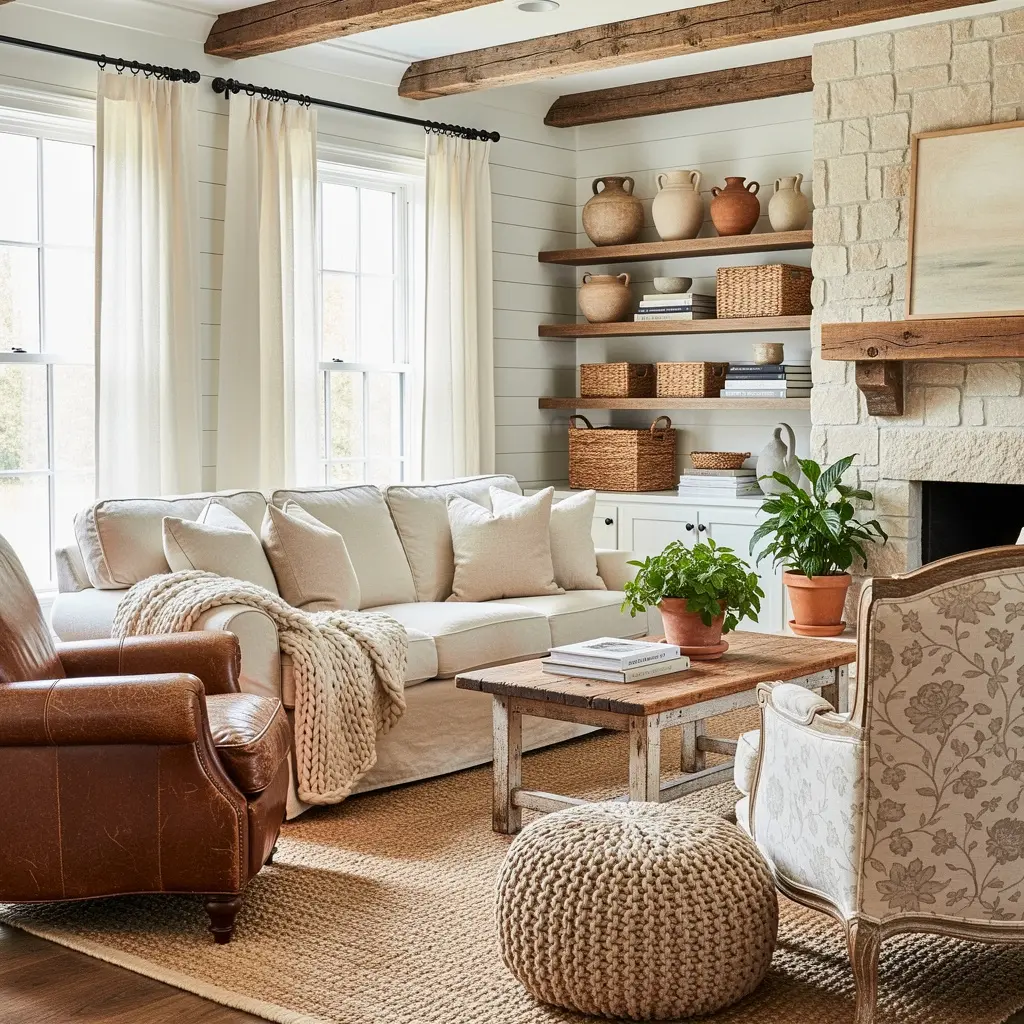
Rather than a single large matching sofa and loveseat set, current farmhouse living rooms increasingly combine armchairs, a bench, and modular sections to create flexible, conversation friendly seating. This collected approach is essentially the opposite of buying a matching furniture set, and it fits the broader farmhouse shift toward rooms that feel personally gathered rather than purchased as a package.
8. Add Brass or Warm Metal Lighting With Patina
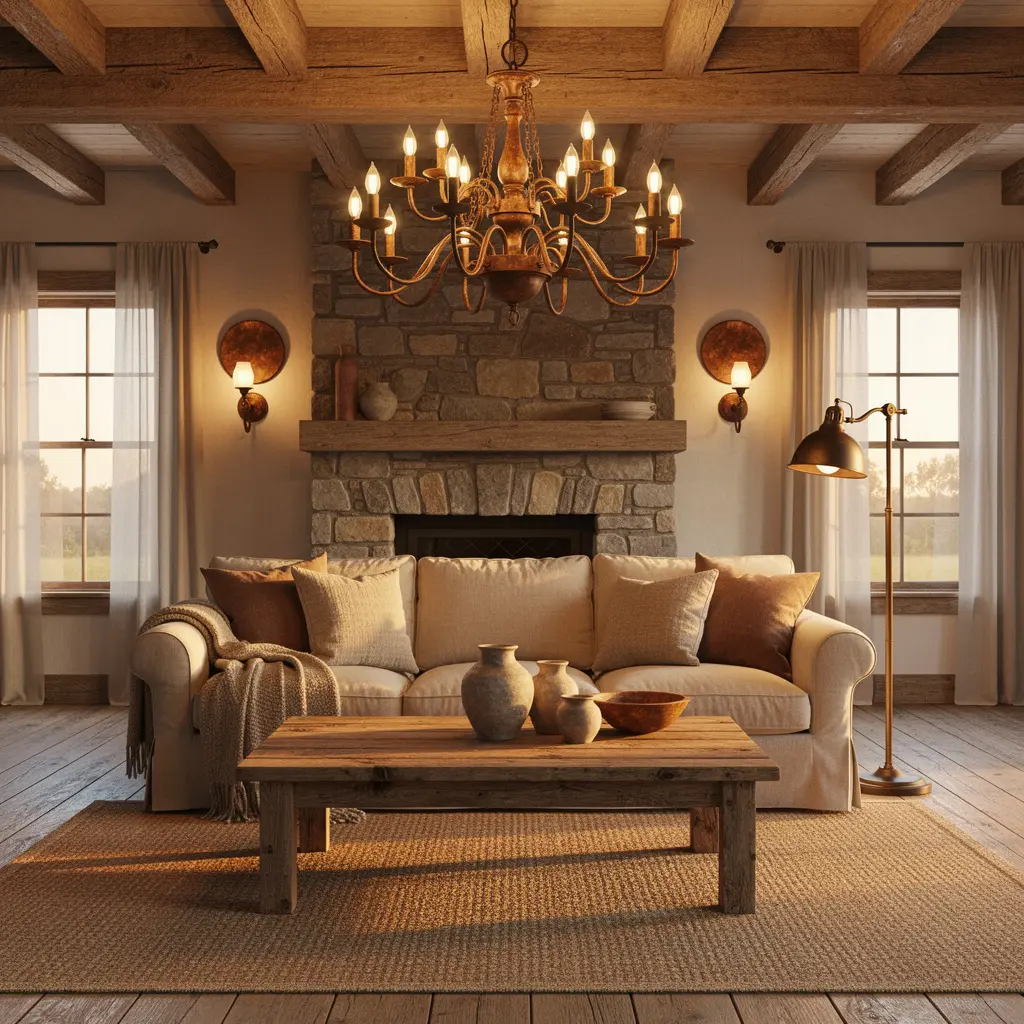
Brass fixtures, especially ones with a bit of natural patina rather than a perfectly polished finish, introduce warmth without making the room feel overly formal. This matters more than it seems. A farmhouse room with too many flawless, brand new finishes can start to feel staged rather than settled and real.
9. Hide Modern Tech Behind Rustic Framing
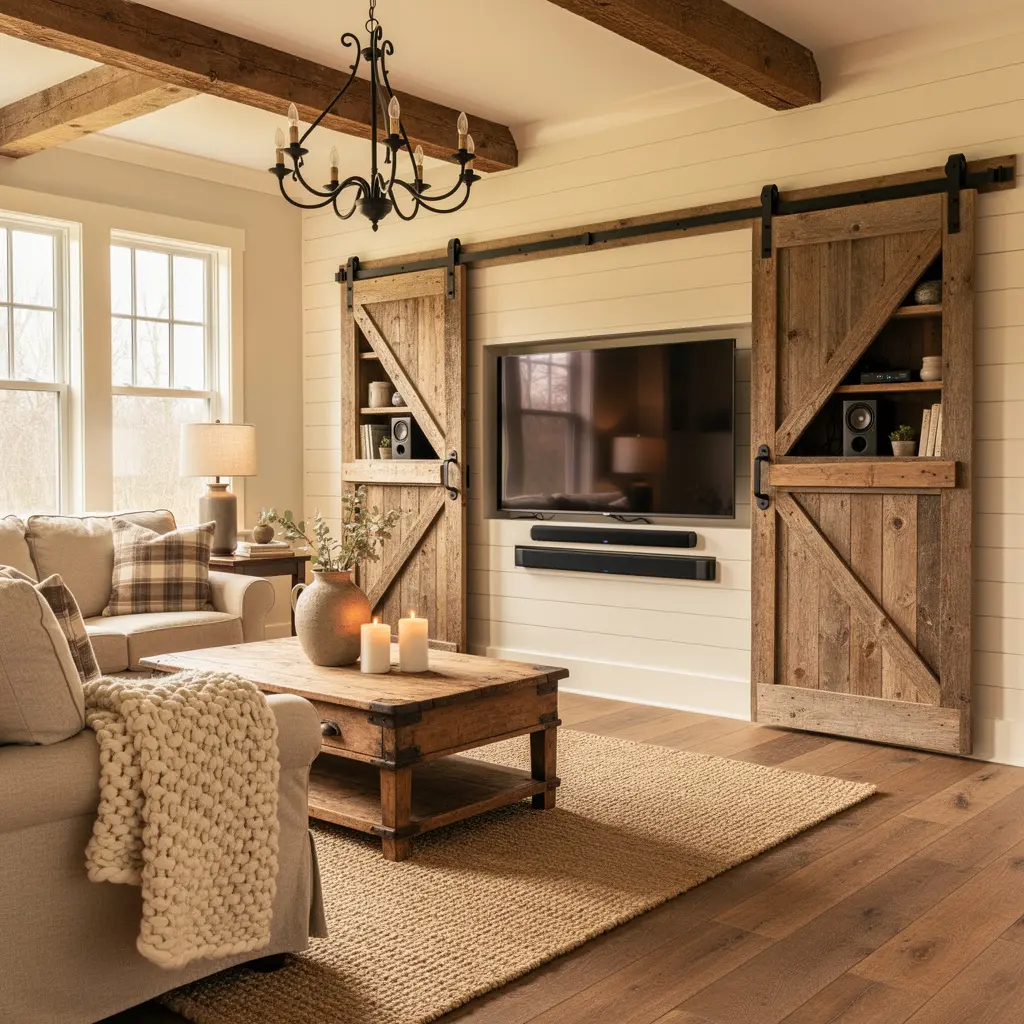
A television with a matte, canvas like finish, framed in reclaimed wood to match the room’s material palette, lets modern technology sit in a farmhouse living room without disrupting the aesthetic. The same goes for speakers tucked into ceiling beams or sensors hidden behind millwork instead of a bulky visible thermostat. This attention to blending modern convenience into a rustic frame is one of the more forward looking details in current farmhouse styling.
10. Bring In Vintage or Antique Touches
A single antique bench. An old wood ladder repurposed as a blanket rack. A piece of vintage art. Any one of these gives the room a sense of real history that new furniture alone can’t replicate. Even subtle Art Deco or mid century pieces are showing up in farmhouse rooms right now, adding unexpected character to the classic rustic base. The goal isn’t a themed collection of antiques. It’s one or two pieces that genuinely add depth.
Mistakes to Avoid
- Buying an entirely matched furniture set instead of mixing collected, flexible seating pieces
- Sticking to a single flat neutral tone instead of layering cream, beige, and soft brown together
- Choosing perfectly polished, flawless finishes throughout, which can tip the room into feeling staged rather than lived in
- Skipping texture variety and using only one type of fabric across all the textiles in the room
- Leaving modern tech, like a large flat screen or visible thermostat, fully exposed instead of framing or hiding it
- Overdoing a single theme, like too much aged leather or too many antiques at once, instead of using a few pieces with restraint
Frequently Asked Questions
Do I need real reclaimed wood for an authentic farmhouse look? No. Faux reclaimed panels or distressed wood finishes can achieve a very similar rustic look for less cost, and they’re a common substitute in current farmhouse styling.
What colors work best in a modern farmhouse living room? A soft base of creamy white, warm gray, taupe, and beige, layered with subtle variation, forms the classic palette. A single moody accent wall in forest green, navy, or terracotta adds depth without overwhelming the room.
Is an all matched furniture set out of style for farmhouse rooms? Current farmhouse styling leans away from matched sets and toward a “collected” look, mixing armchairs, benches, and modular seating pieces that feel gathered over time rather than purchased as a single package.
How do I keep a farmhouse living room from feeling dated? Lean into the newer, softer version of the style: layered neutrals, mixed materials, and a bit of vintage character, rather than the crisp white shiplap and barn door look that defined earlier farmhouse trends.
Can farmhouse style work in a small apartment, not just a large house? Yes. The core elements, natural materials, layered neutrals, and cozy textures, scale down easily and work just as well in a smaller city apartment as they do in a large country home.
Conclusion
A rustic farmhouse living room earns its warmth through layering. Soft neutral color, natural texture, a mix of collected furniture, and a few details, like patinated brass or a vintage piece, that give the room real history. Start with the textiles and one accent wall, since those changes are the fastest to make, and build the rest of the room’s character from there. The result is a space that feels genuinely settled and welcoming, not staged for a photo.