10 Dreamy Pink Aesthetic Bedroom Ideas That Feel Like a Kawaii Dream
Search “kawaii bedroom” and most of what comes up is either a cluttered wall of plushies with no real design underneath it, or a sterile pink room that looks staged and cold. A genuinely dreamy pink aesthetic bedroom sits in between those two extremes. It’s soft, personal, and a little playful, but it’s still an actual room with intentional color choices, real storage, and lighting that makes it feel cozy at night, not just cute in photos. If you’re trying to build a kawaii style room that holds up to daily use and doesn’t collapse into clutter within a month, the difference comes down to a handful of specific choices, not just buying more pink things.
Kawaii decor works best when it’s treated like any other design style, with a base layer, a color plan, and a limit on how much visual noise the room can hold before it stops feeling cozy and starts feeling chaotic. Below are ten ways to build a pink aesthetic bedroom that leans fully into kawaii without losing that dreamy, put together feeling.
1. What Makes a Bedroom Read as Kawaii Instead of Just Pink
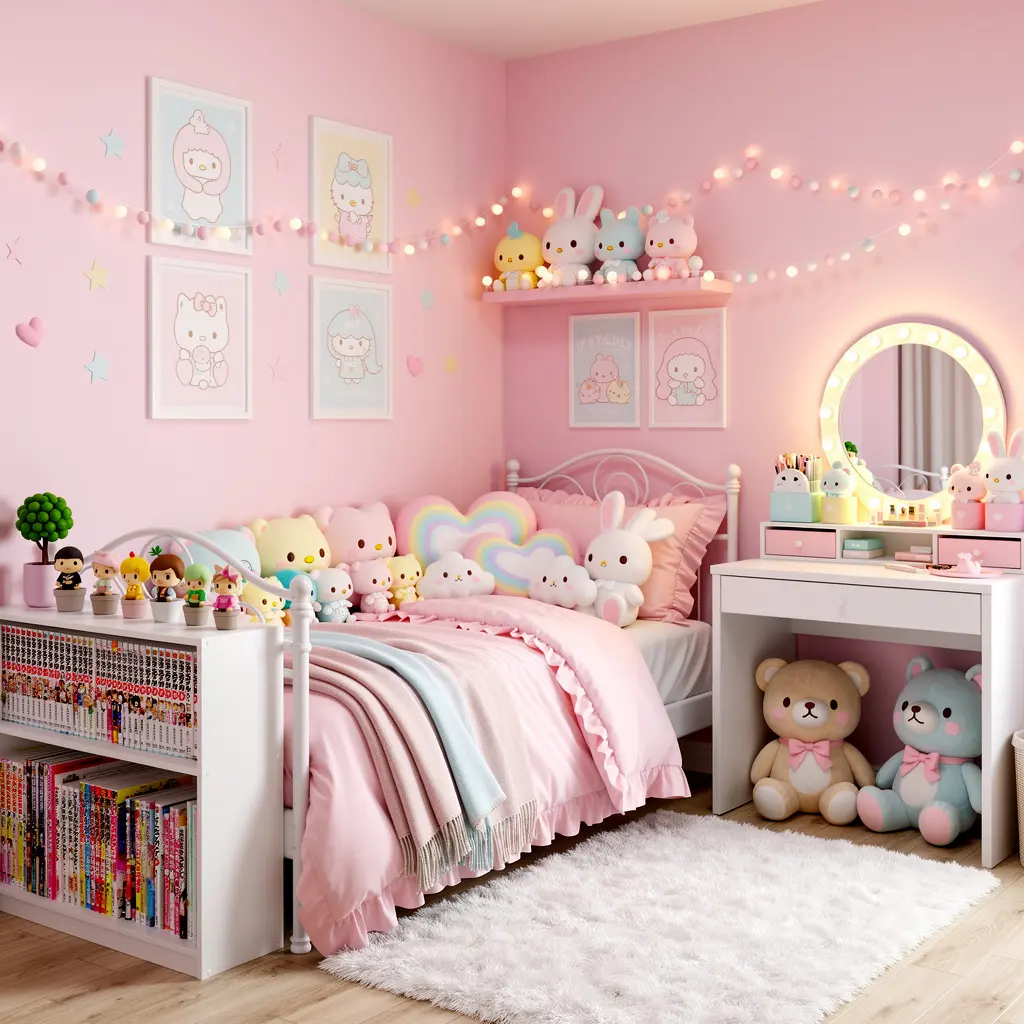
A pink room and a kawaii room are not automatically the same thing. Kawaii, as a decor style, leans on softness, roundness, and a slightly playful, sometimes cartoonish warmth, think soft plush textures, rounded furniture edges, and small character or animal motifs woven in sparingly rather than everywhere at once. A room can be entirely pink and still read as sleek or minimalist if it skips those softer, rounder elements.
The Balance Between Cute and Cluttered
The rooms that photograph well and still feel calm to actually sleep in usually follow one rule: a handful of standout kawaii pieces, not dozens of small ones competing for attention. One character plush on the bed, one soft round lamp, one gallery wall of favorite prints tends to read as more intentional than every surface covered edge to edge.
2. Choosing a Pink That Feels Dreamy, Not Sugary
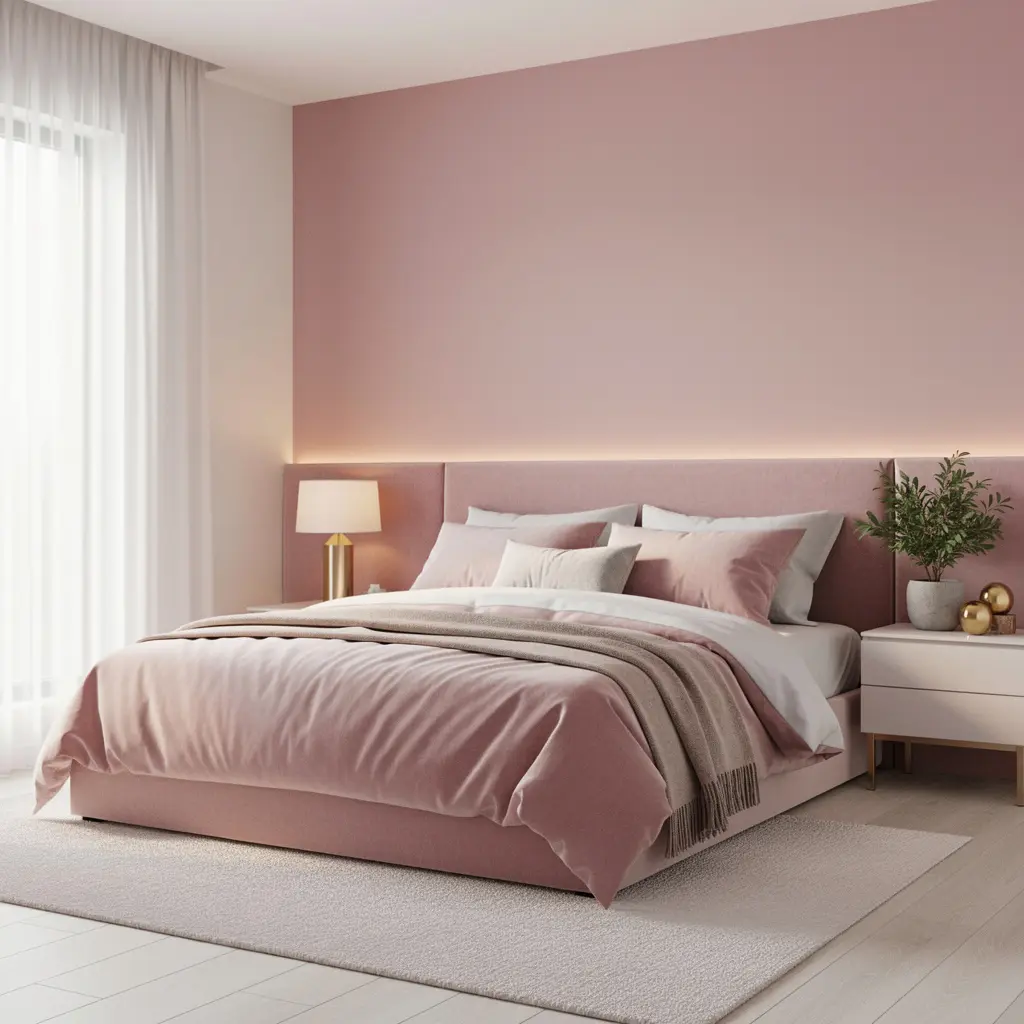
Not every pink works the same way in a bedroom. A very saturated, cool toned bubblegum pink can feel overwhelming across a full wall, especially under bright lighting. A softer, slightly muted pink, sometimes labeled “blush,” “dusty rose,” or “cotton candy” on paint cards, tends to read as dreamy and soft rather than sugary or overwhelming.
Buy a sample before committing to a full wall. Paint a poster board and move it around the room across the day, since pink shifts more than most colors depending on the light hitting it. A quart of quality interior paint typically runs between 20 and 35 dollars, a small price to avoid repainting an entire room because the color read differently once it was actually on the wall.
3. Building the Base Layer With Walls, Bedding, and Curtains

Before adding any of the fun, playful pieces that make a room feel kawaii, the base layer needs to be solid. That means wall color, bedding, and curtains working together as a cohesive palette rather than three unrelated pink shades competing with each other. A soft blush wall paired with cream or white bedding, and sheer white or pale pink curtains, gives the room a calm foundation that the more playful decor can sit on top of.
If the walls can’t be painted, a large canopy or a pink accent behind the headboard, like a fabric drape or a soft textured wall hanging, can create a similar effect without needing to touch the paint at all. That’s a useful workaround for renters or shared rooms where a full repaint isn’t an option.
4. Adding Plushies and Collectibles Without Overwhelming the Room
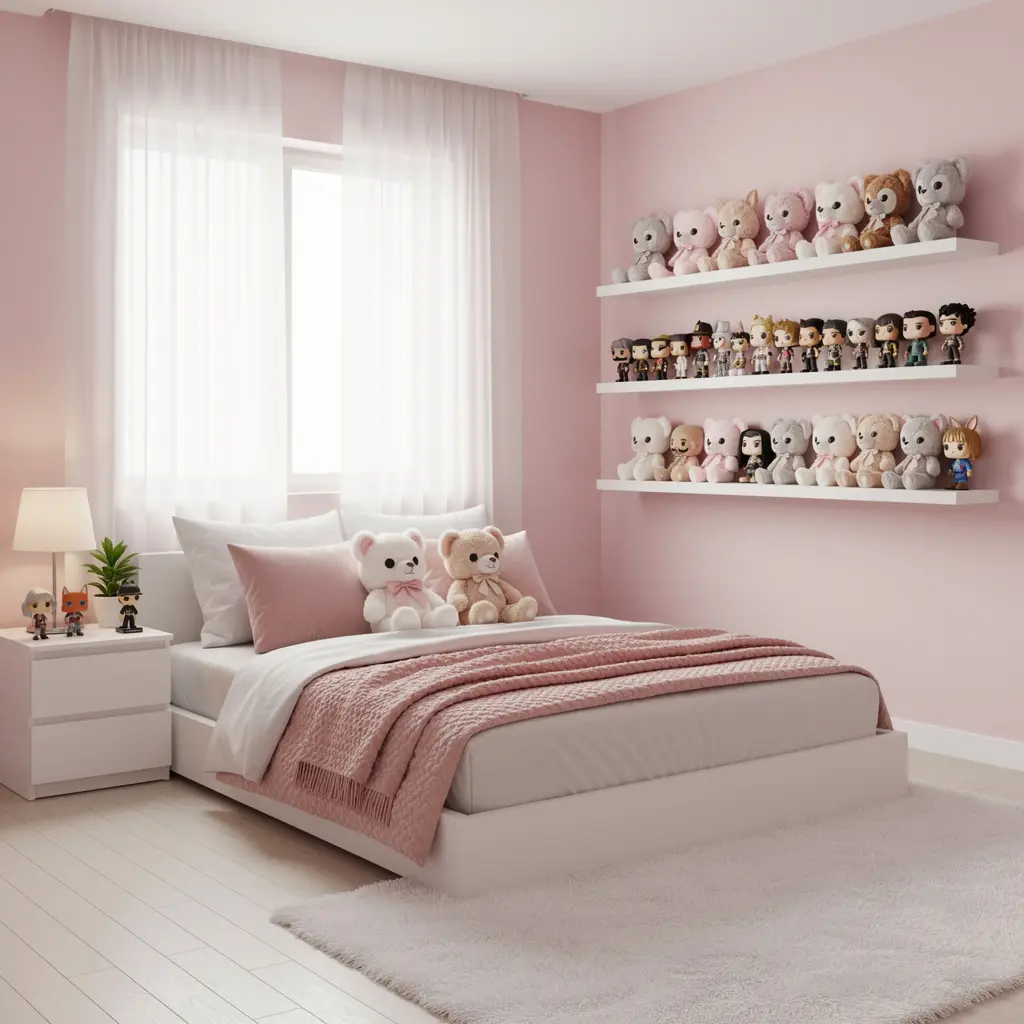
Plushies and collectibles are often the first thing people reach for in a kawaii room, and they’re also the fastest way to tip a room from cozy into cluttered. A dedicated spot, like a shelf, a window seat, or a curated section of the bed, keeps the collection contained and gives it more visual weight than scattering pieces across every surface in the room.
Rotating Instead of Displaying Everything at Once
If the collection is large, rotating which pieces are out on display, and storing the rest in a bin or under bed storage, keeps the room feeling fresh without requiring more shelf space. This also makes cleaning and reorganizing easier, since there’s a clear system instead of everything living wherever it landed.
5. Fairy Lights and Lamps That Set the Mood

Lighting does more work in a kawaii room than almost any other single choice. A single overhead fixture, especially one with a cool white bulb, can wash out a soft pink room and make it feel flat instead of dreamy. Warm fairy lights, a round paper lantern, or a small pastel colored lamp all add the soft, glowing quality that photographs so well in kawaii room inspiration.
For actual usability, look for warm toned bulbs in the 2700 to 3000 Kelvin range rather than cooler daylight bulbs, since warm light is what gives the room that cozy, golden hour feeling in the evening. LED fairy lights on a small battery pack or plug in strand typically cost between 10 and 20 dollars for a decent length, making them one of the cheapest ways to transform how the room feels at night.
6. Storage and Display Ideas for a Cute but Tidy Room
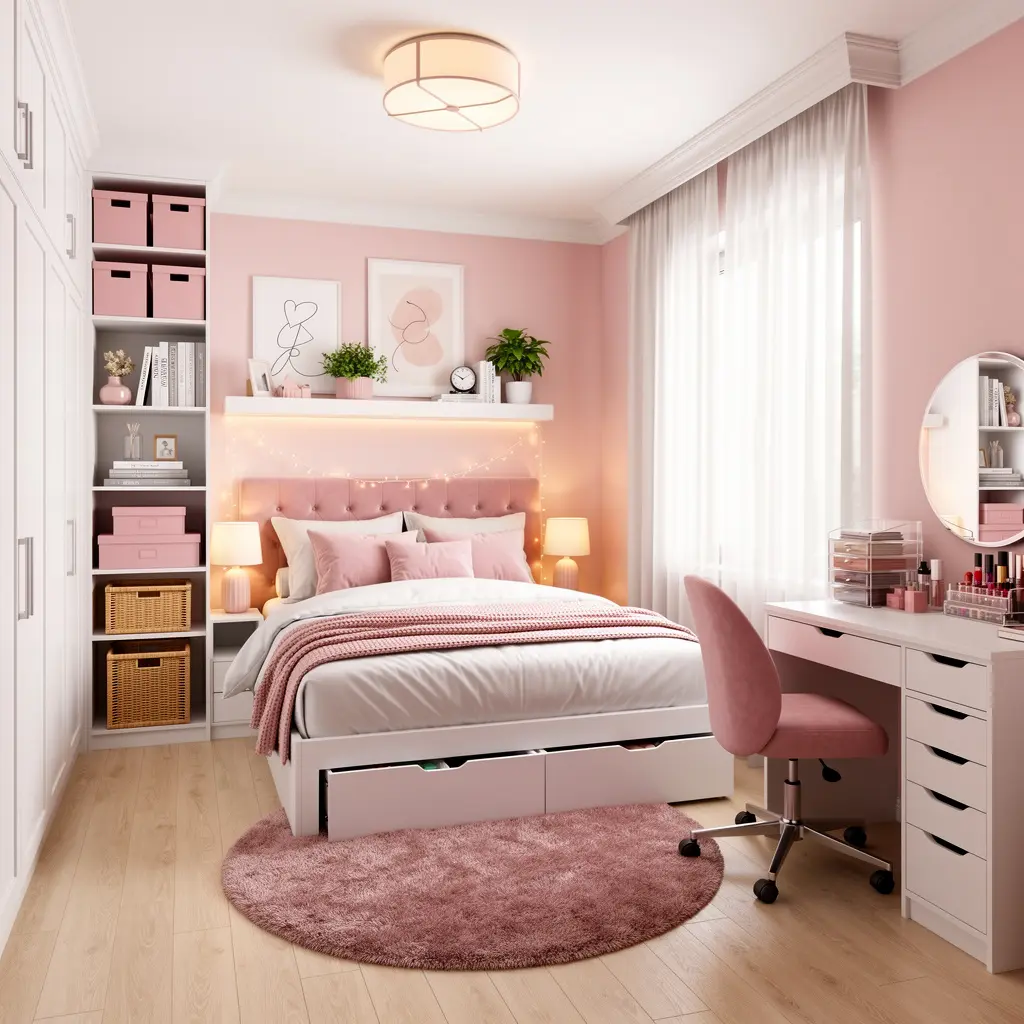
A kawaii room can look effortlessly cute in photos and still be a nightmare to actually keep tidy if there’s no real storage plan behind it. Woven baskets, pastel colored bins, and a small cart with drawers all give scattered items, hair accessories, stationery, small toys, an actual home instead of a pile on the desk or floor.
Labeled bins or clear containers work especially well for smaller collectible items, since they let you see what’s inside without digging through a drawer, and they photograph more cohesively than a mismatched pile of packaging. This is a low cost fix, usually under 50 dollars for a full set, but it has a big effect on how organized the whole room feels.
7. Small Furniture Swaps That Change the Whole Vibe
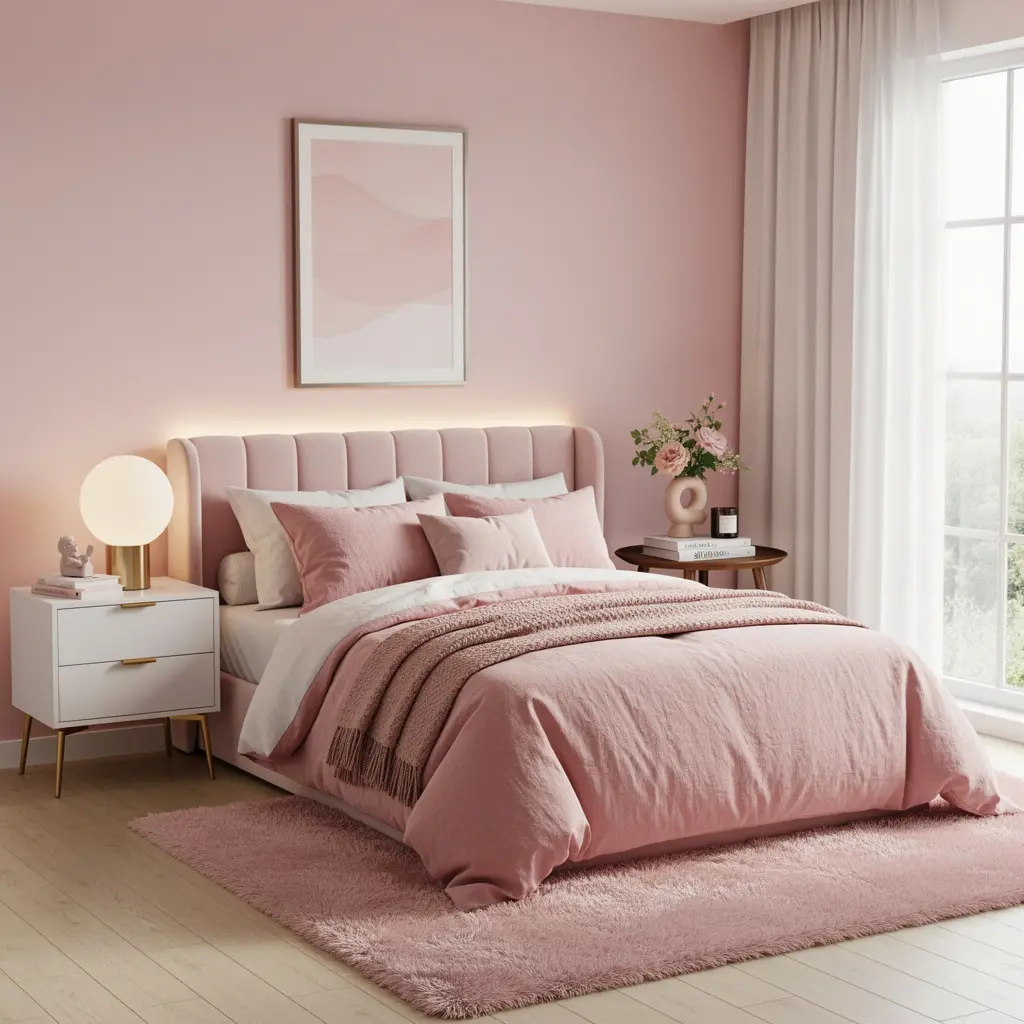
Furniture with rounded edges, soft upholstery, and curved silhouettes fits the kawaii aesthetic more naturally than sharp, angular pieces. A round pouf, a scalloped edge mirror, or a soft upholstered headboard can shift the whole feel of a room even if nothing else about the furniture layout changes.
You don’t need to replace every piece of furniture to get this effect. Swapping one or two key items, often the desk chair or a side table, is usually enough to soften the overall look without the cost of a full furniture overhaul.
8. Wall Decor That Feels Personal, Not Generic
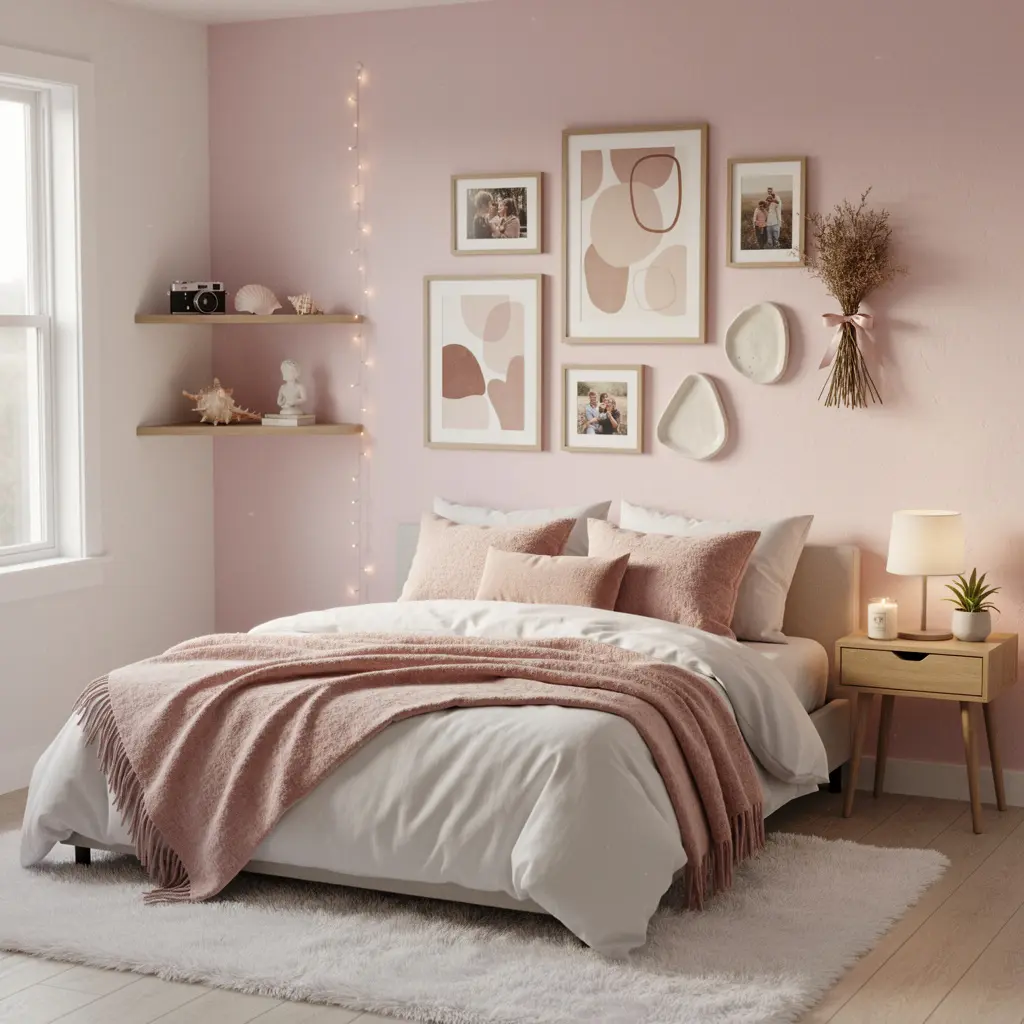
Printed posters and generic decor can only take a kawaii room so far before it starts to feel like every other room using the same trending items. A gallery wall that mixes a few favorite character prints with personal photos, small original art, or handwritten notes tends to feel more genuinely dreamy than a wall covered entirely in mass produced posters.
Keeping the gallery wall to a defined cluster, rather than spreading pieces across the entire wall, gives the eye a clear focal point and avoids making the room feel busy. A simple string of small clips or a cork board can also work as a rotating display for smaller prints and photos without committing to a permanent arrangement.
9. Mixing Pastels So the Room Doesn’t Feel One Note
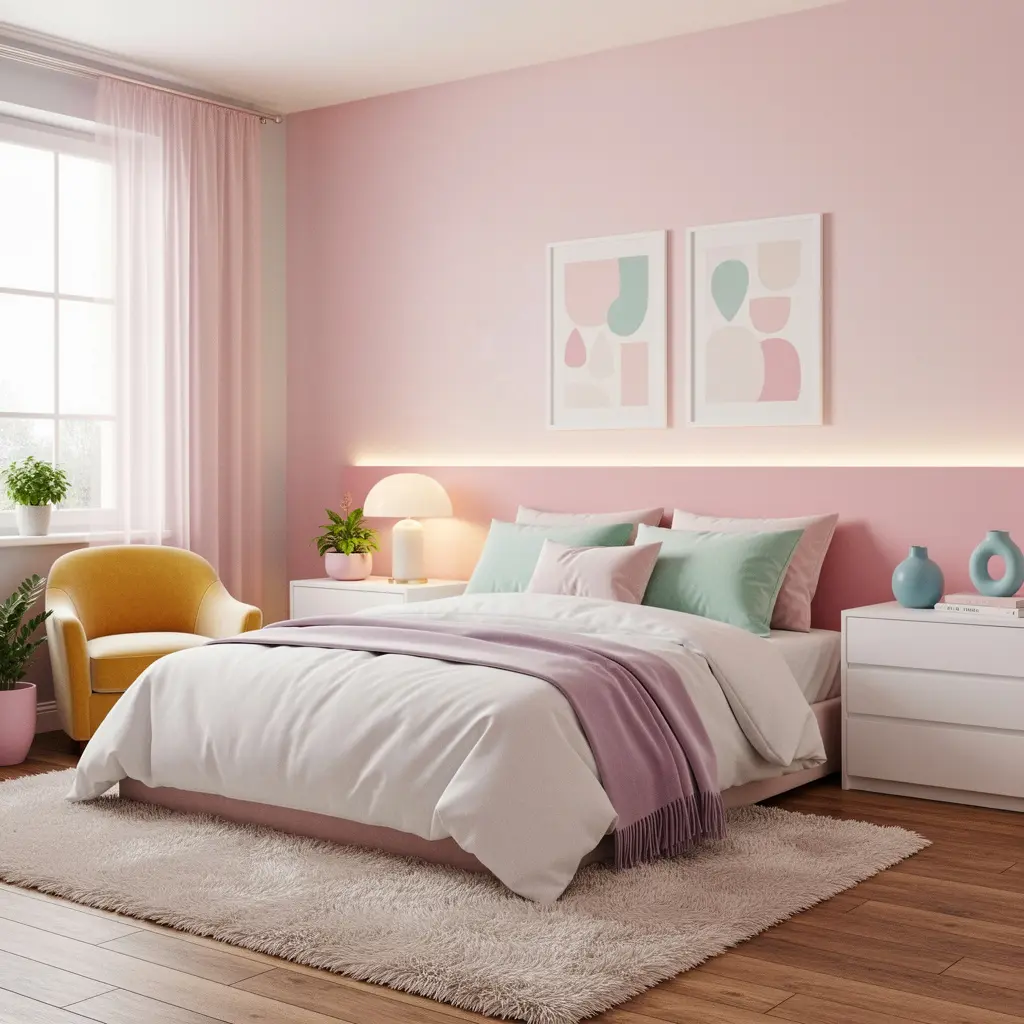
A room that’s entirely one shade of pink, from the walls to the bedding to every accessory, can start to feel flat rather than dreamy. Mixing in adjacent pastels, lavender, mint, soft yellow, or cream, gives the eye more to look at and keeps the room from reading as a single block of color.
A simple approach is to keep the walls and large furniture in one main pink tone, then let smaller items, pillows, a rug, a lamp shade, introduce the supporting pastel colors. That kind of layered color palette is usually what separates a room that feels professionally styled from one that feels like it was decorated all at once from a single collection.
10. Keeping a Kawaii Room Functional as a Real Bedroom
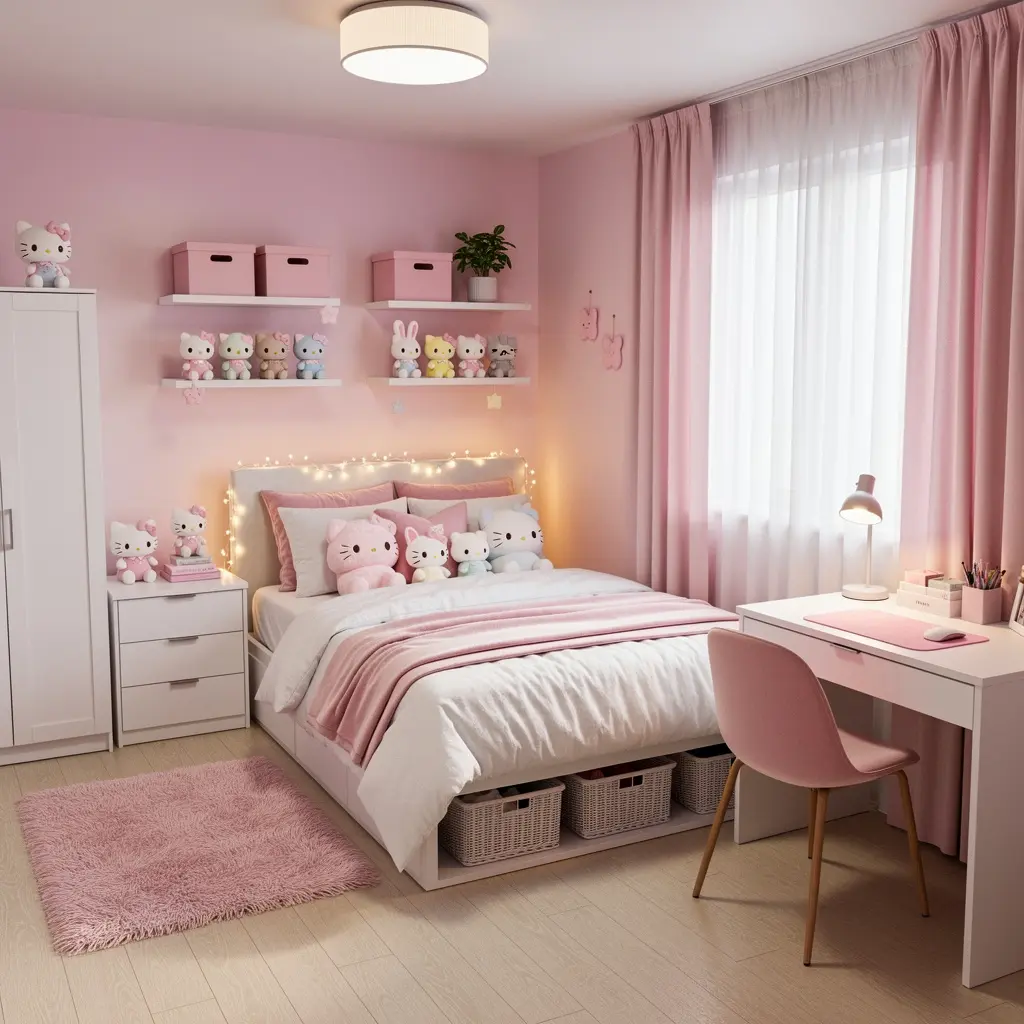
It’s easy to get so focused on the aesthetic that the room stops working as an actual place to sleep, study, or get ready in the morning. Before adding more decor, make sure there’s still a clear desk surface if homework or work happens in the room, that the closet and storage can hold daily clothing, and that walkways aren’t blocked by furniture added purely for looks.
A kawaii room that photographs beautifully but is hard to actually live in tends to lose its charm fast. Prioritizing function first, a real desk setup, accessible storage, a bed that’s comfortable and not just decorative, means the cute layer on top actually gets enjoyed daily instead of becoming something to work around.
Mistakes to Avoid
- Choosing a very saturated, cool toned pink for a full wall, which can feel overwhelming rather than dreamy
- Displaying every plushie and collectible at once instead of rotating and curating a smaller selection
- Relying only on a single overhead light, which can wash out soft pink tones
- Skipping real storage and letting small items pile up on every surface
- Filling the entire room with only one shade of pink instead of layering in complementary pastels
- Prioritizing decor over function, to the point where the desk, closet, or walkways stop working well
Frequently Asked Questions
Is a pink kawaii bedroom only for kids or teenagers? No, plenty of adults build kawaii style rooms as a personal aesthetic choice. Leaning on a more muted, dusty pink instead of a very bright, saturated shade, and pairing it with warm wood or brass accents, helps the room feel intentional at any age.
What is the cheapest way to start a pink aesthetic bedroom? Fairy lights and a change in bedding are usually the lowest cost, highest impact updates, often well under 50 dollars combined, followed by paint if a full wall color change is possible.
How do I keep a kawaii room from looking cluttered? Limit displayed plushies and collectibles to a dedicated shelf or section rather than spreading them everywhere, and use bins or baskets to contain smaller items instead of leaving them out on surfaces.
Can I get a kawaii aesthetic without painting the walls? Yes. A canopy, a fabric wall hanging behind the bed, soft pastel bedding, and fairy lights can create a similar dreamy effect without touching the paint, which works well for renters.
What lighting works best for a dreamy pink bedroom? Warm toned bulbs, generally in the 2700 to 3000 Kelvin range, paired with fairy lights or a soft lamp, tend to give the room that cozy, glowing feeling rather than a flat, overly bright look from a single cool toned overhead fixture.
Conclusion
A dreamy pink aesthetic bedroom works when it’s treated as a full room design, not just a pink wall with plushies added on top. Start with a soft, well tested pink and a cohesive base layer of bedding and curtains, then layer in lighting, curated collectibles, and complementary pastels one deliberate choice at a time. Keep storage real and function front of mind, and the room stays cozy and livable instead of becoming something that only looks good in photos. Done that way, the kawaii aesthetic isn’t just a look, it’s a room that’s genuinely nice to spend time in every day.