10 Cozy Entryway Decor with Warm Hallway Lighting You’ll Love
You walk through your own front door every day, but the entryway still feels like an afterthought, a spot to drop keys and kick off shoes rather than a space that actually welcomes you home. A lot of that comes down to lighting more than furniture. Cozy entryway decor with warm hallway lighting turns that transition space into somewhere that feels intentional the moment you step inside, not just a hallway you pass through. This article covers the specific furniture, lighting, and layout choices that make a real difference, even in a narrow or small entry, and the small missteps that quietly work against a warm first impression.
1. Swap Cool White Bulbs For Warm White
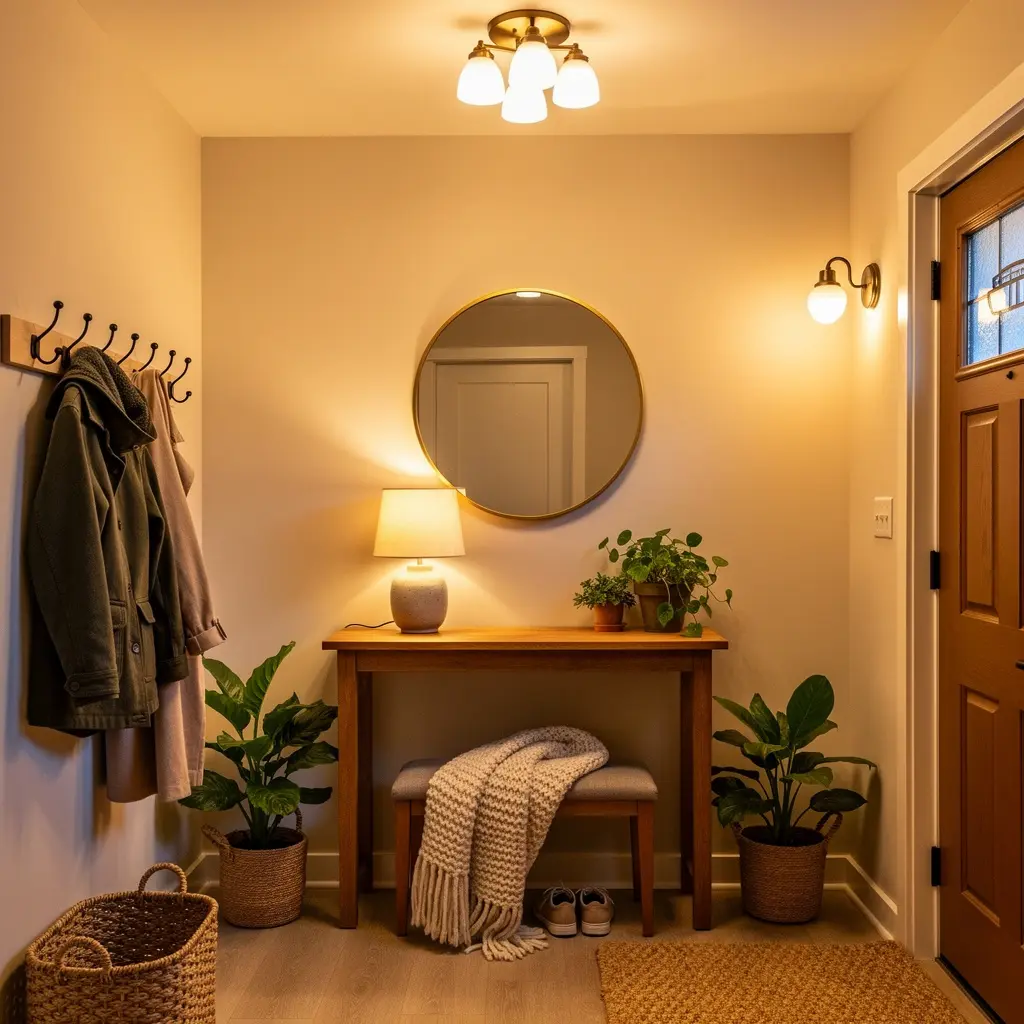
The single fastest change you can make to a hallway or entryway is switching from a cool or daylight toned bulb to a warm white one. Cool lighting can make an entry feel more like a hospital corridor than a welcoming transition into your home, while warm, yellowish toned light creates an immediate sense of coziness as soon as the door opens. This swap usually costs very little and requires no tools beyond changing a bulb.
Choosing The Right Bulb Temperature
Look for bulbs in the 2700K to 3000K range, since this is the temperature most associated with a warm, homey glow, versus 4000K and above, which reads as cooler and more clinical. If you’re unsure which bulbs are currently installed, checking the packaging on a spare bulb elsewhere in the home is often the quickest way to confirm.
2. Layer More Than One Light Source
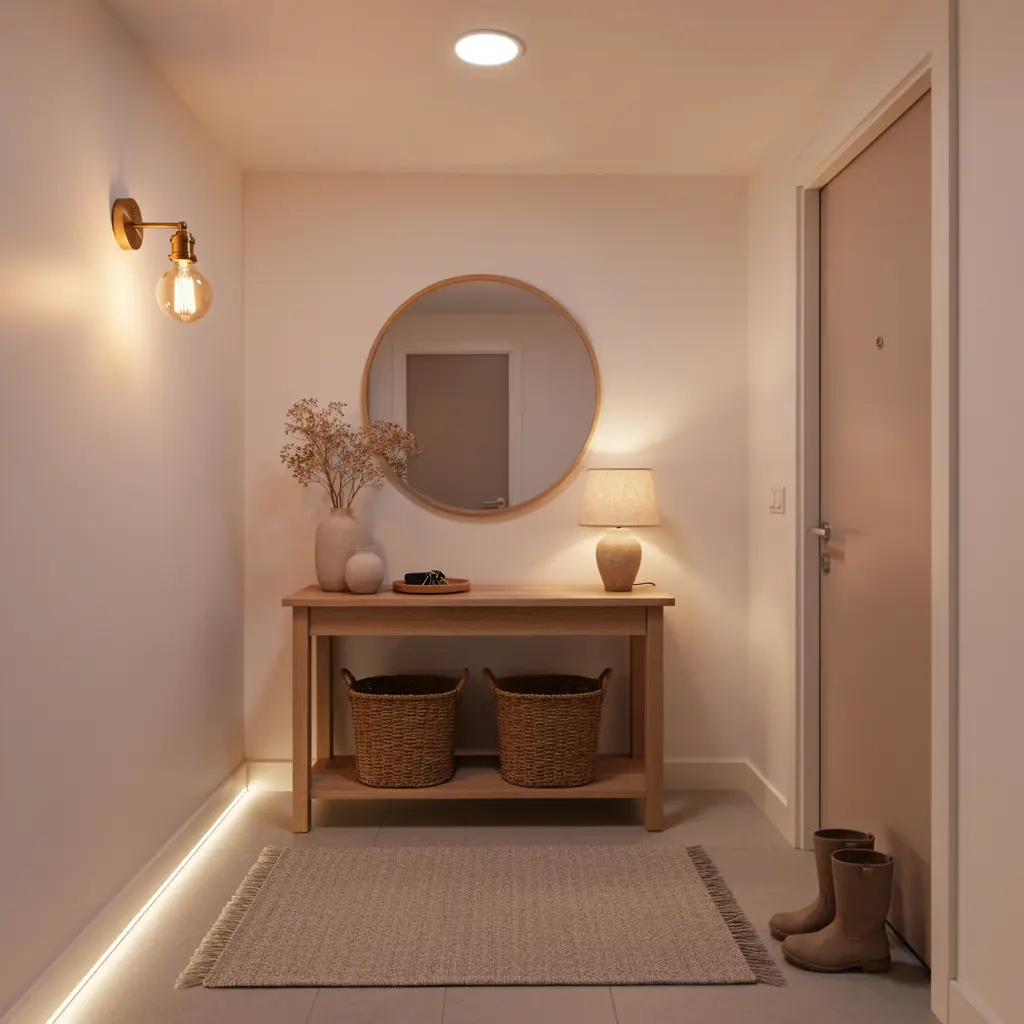
A single overhead fixture leaves an entryway feeling flat, no matter how warm the bulb is. Adding a console table lamp, a wall sconce, or even a small plug in lamp near a bench creates depth and makes the space feel considered rather than purely functional. Layered lighting is also more forgiving practically, since you can turn on just the lamp for a soft evening glow instead of a full overhead flood of light, which matters if you’re coming home late and don’t want to wake the rest of the household.
3. Add Wall Sconces Along A Long Hallway
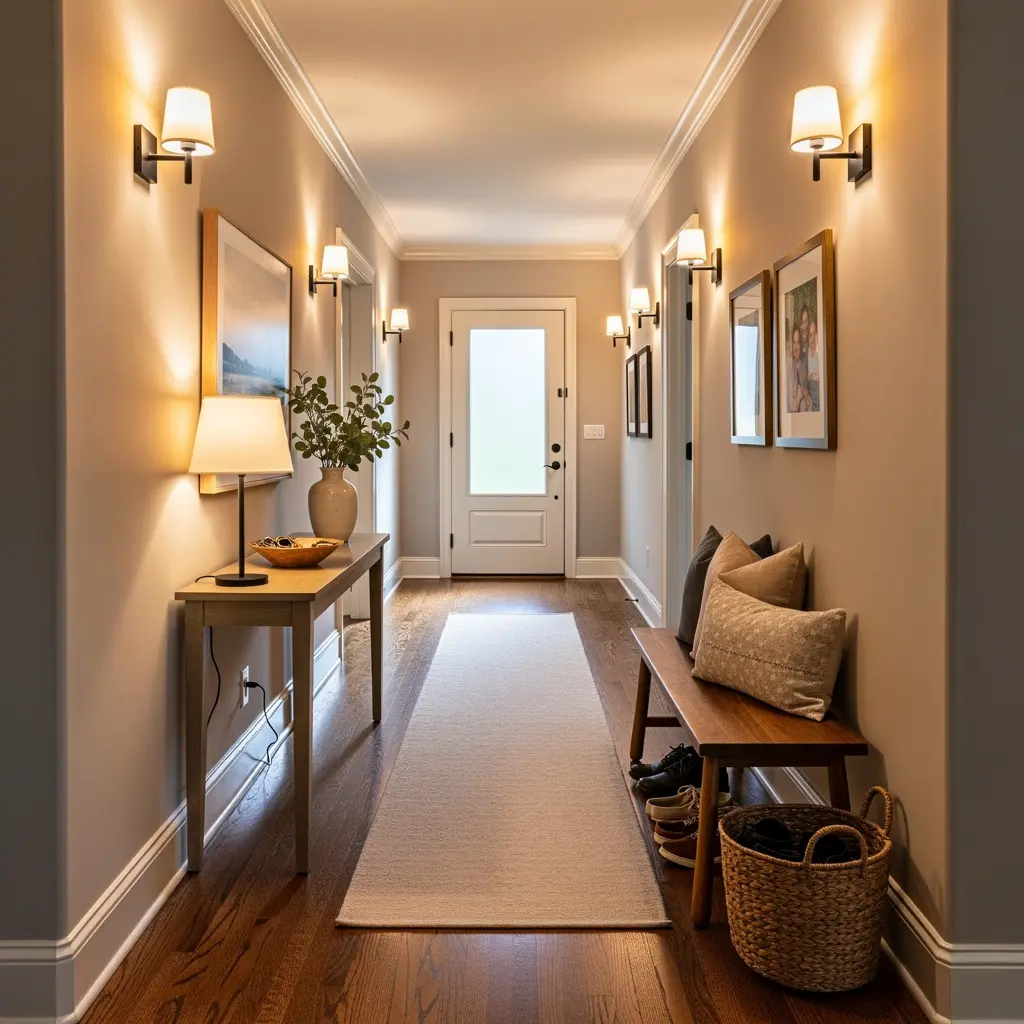
In a long or narrow hallway, evenly spaced wall sconces do more to create a warm, guiding path of light than a single ceiling fixture at one end. Brass or warm toned sconces specifically add a soft, ambient glow while also serving as a decorative element on an otherwise plain wall.
Spacing Sconces Evenly
As a general guide, spacing wall sconces every six to eight feet along a hallway keeps the light feeling consistent rather than leaving dark gaps between fixtures. In a shorter hallway, even two sconces placed at either end can noticeably improve how the space feels compared to relying on a single central light. Battery powered or plug in sconce options are worth considering if running new wiring isn’t practical, since several modern designs no longer require hardwiring to install.
4. Choose A Slim Console Table For Function And Warmth
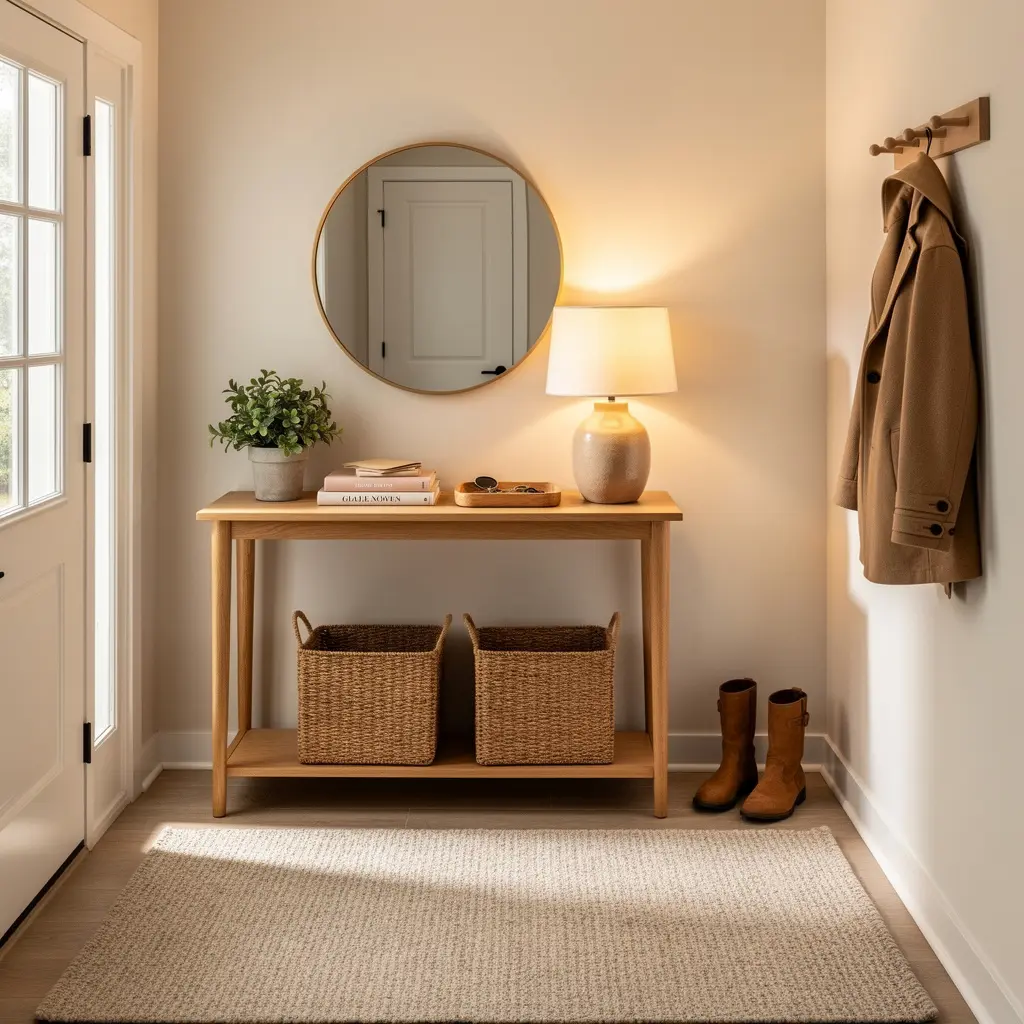
A slim console table against the entry wall gives you a surface for keys, mail, and a lamp, without eating into a narrow walkway the way a deeper piece of furniture would. A console in warm wood tones grounds the space and pairs naturally with brass or gold hardware and lighting, and a small drawer built into the console gives you somewhere to tuck away loose items that would otherwise clutter the top surface.
5. Add A Storage Bench Near The Door
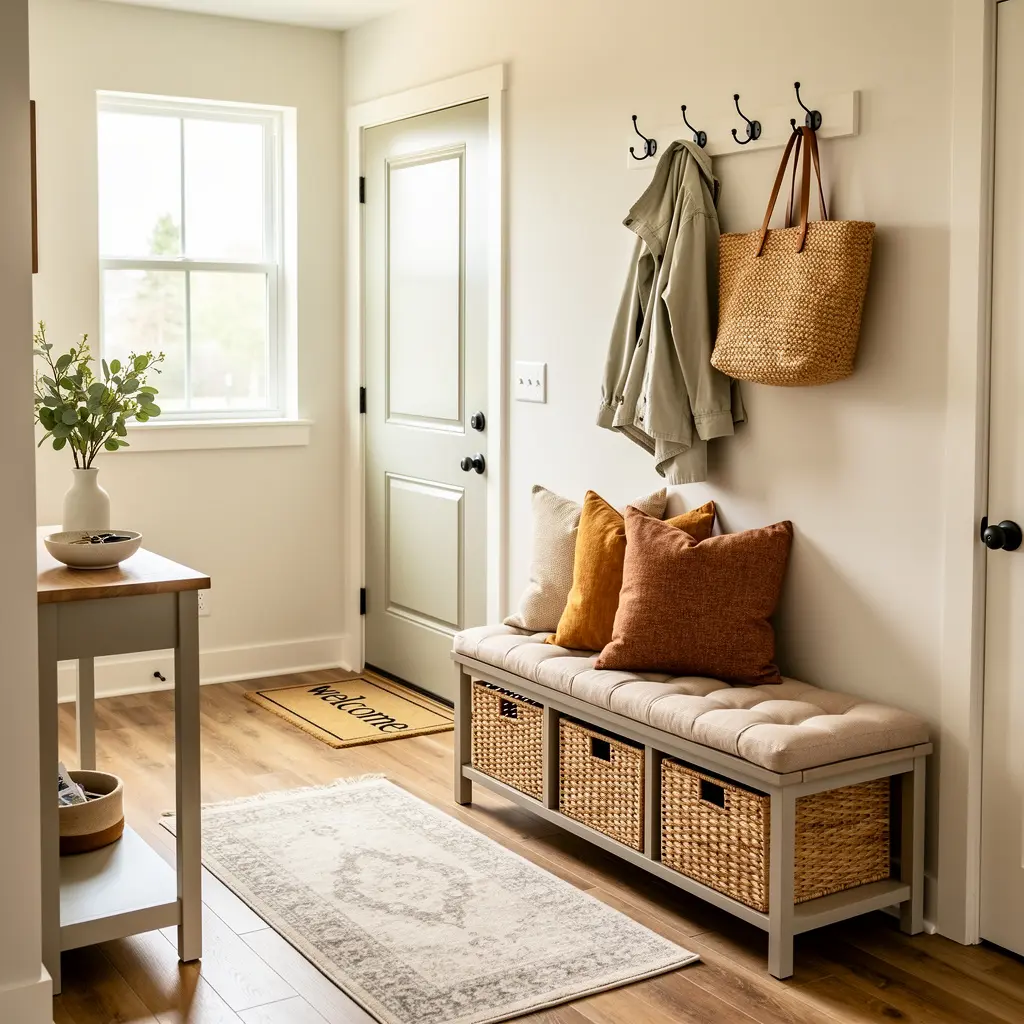
A bench, even a small one, gives you somewhere to sit while putting on shoes and doubles as a spot to corral bags or coats before you leave. Choosing one with built in storage underneath, or pairing it with a couple of woven baskets, keeps the entry functional without looking cluttered. If space is tight, a narrow bench, sometimes as shallow as twelve inches deep, can still provide a useful landing spot without crowding the walkway.
6. Use Woven Baskets For Everyday Storage
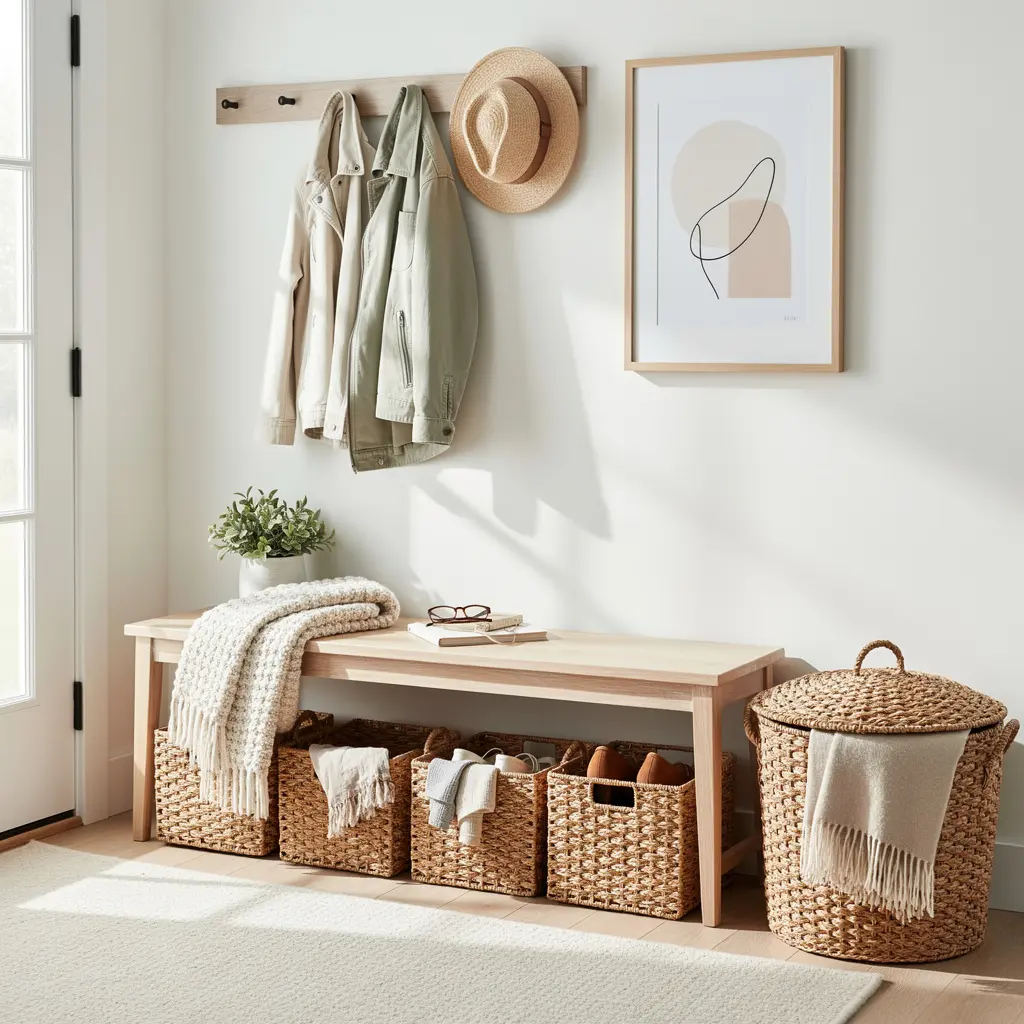
A pair of woven baskets tucked under a bench or console is one of the simplest ways to store shoes, scarves, or hats while adding warmth and texture to the entry. The natural material softens what could otherwise be a purely utilitarian storage solution and fits easily into a cozy, welcoming aesthetic. Labeling baskets for each family member is a practical touch in busier households, since it keeps everyone’s items separated without needing separate cubbies.
7. Hang A Mirror To Reflect The Light
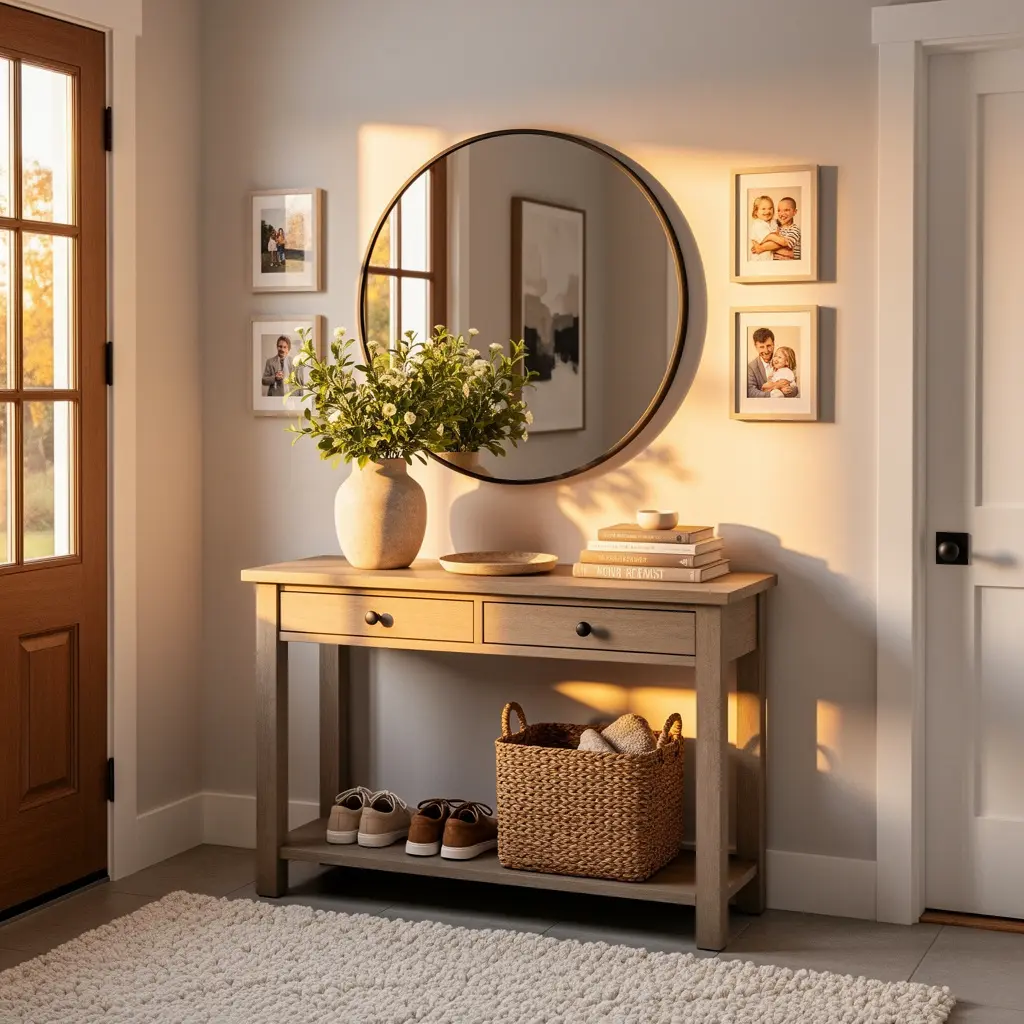
A mirror positioned to reflect either natural light from a nearby window or the warm glow from your lighting fixtures makes a narrow entry feel more open and doubles the visual impact of whatever light source you’ve chosen. A round or softly framed mirror also breaks up the straight lines that tend to dominate hallway spaces.
Where To Hang The Mirror
Position the mirror at a height where it reflects your primary light source, whether that’s a window or a sconce, rather than centering it purely for symmetry, since the reflected glow is doing real visual work. A mirror hung slightly higher than eye level also tends to make a narrow entry feel taller as well as brighter.
8. Add A Runner Rug For Warmth Underfoot
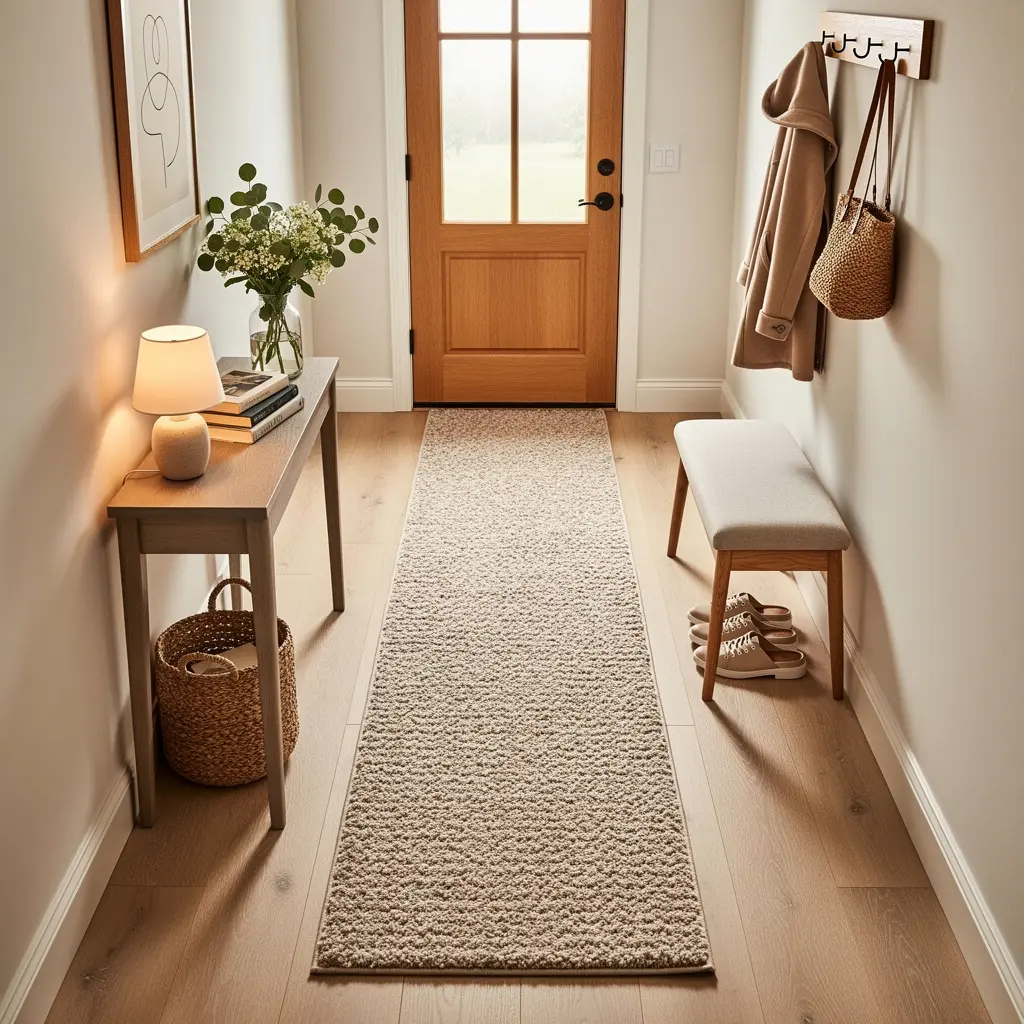
A distressed or textured runner rug adds warmth to a hallway both visually and physically, softening the sound of footsteps and giving the space a finished, layered look. A slightly worn or vintage style runner tends to add more character than a flat, new looking one, and it hides everyday wear better over time, which matters in a spot that sees near constant foot traffic.
9. Bring In A Small Amount Of Greenery
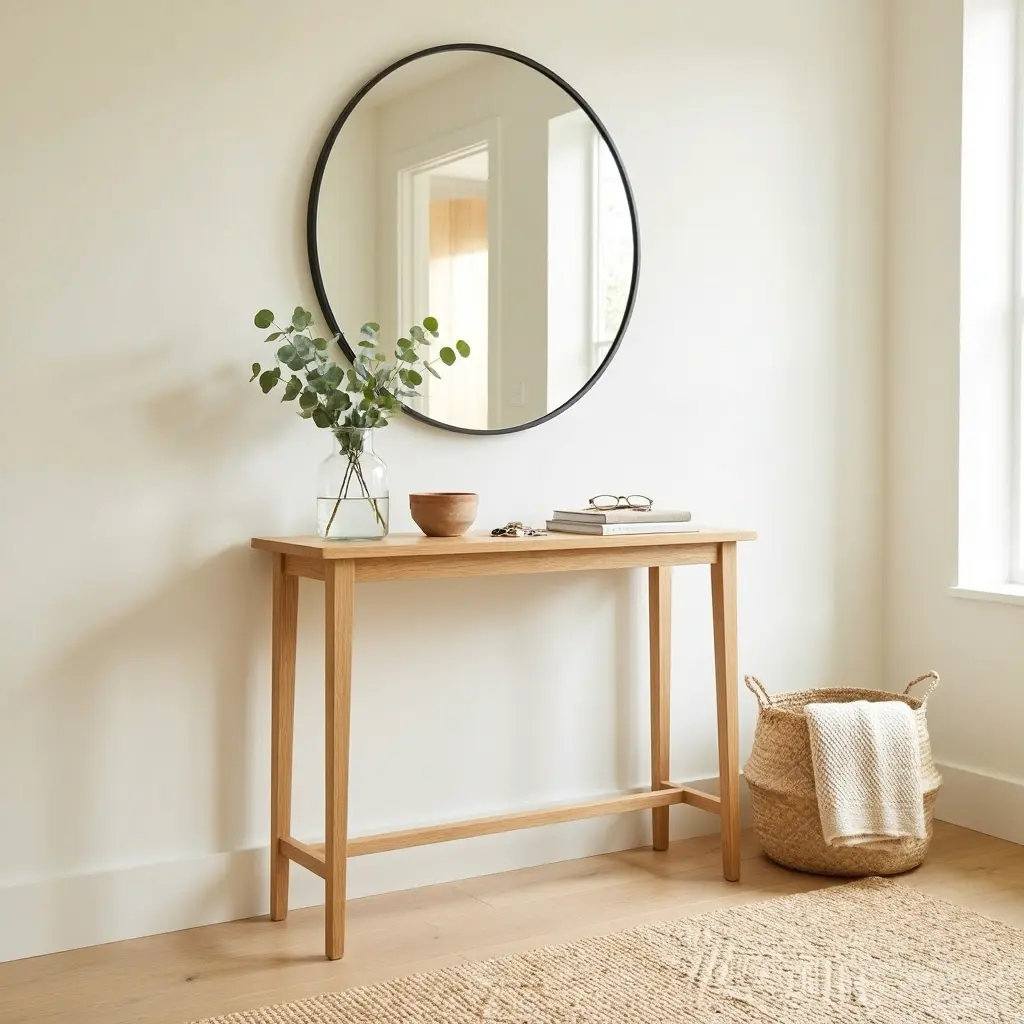
A single plant on the console table, or a small potted tree in a corner if the entry has room, adds a living, welcoming element that pure decor can’t replicate. Choose a low maintenance variety if the entry doesn’t get much natural light, since most true entryways are dimmer than other rooms in the home, and a plant that struggles in low light will end up working against the cozy feeling you’re trying to create.
10. Add A Personal Detail That Feels Warm, Not Formal
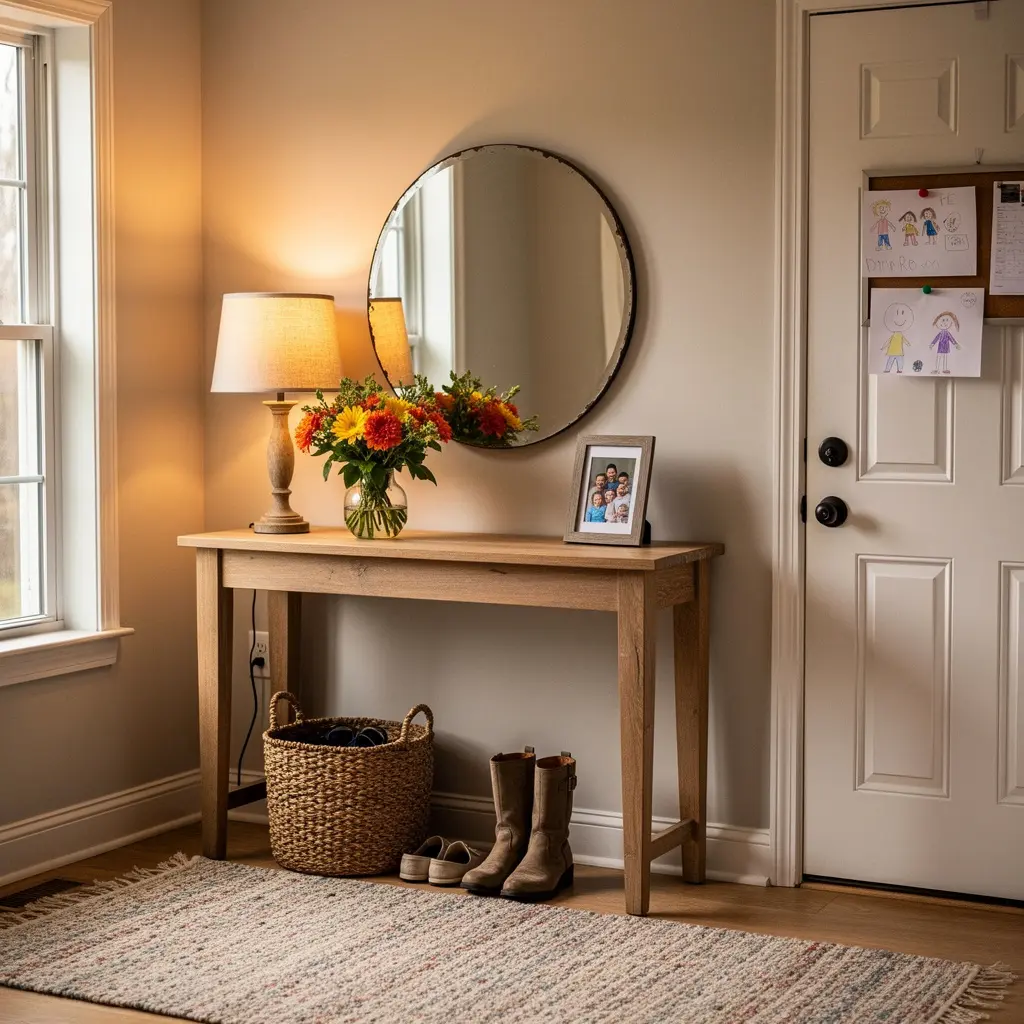
A small stack of books, a dish for keys, or a piece of art that means something to you keeps the entry from feeling like a generic hotel lobby. This is the detail that turns a well lit, well organized hallway into a space that genuinely feels like the start of your home rather than just a transition zone. Rotating a seasonal touch, like fresh flowers or a small seasonal wreath, is another easy way to keep the space feeling current without a full redesign. Even a small natural fiber doormat just inside the door, in a warm tone rather than a stark black or gray, extends that same considered feeling right down to the first thing anyone steps on.
Mistakes to Avoid
- Relying on a single cool toned overhead bulb instead of layering in warm, dimmer light sources
- Choosing furniture too deep for the space, which narrows the walkway and makes the entry feel cramped
- Skipping storage entirely, which leads to a pile of shoes and bags becoming the entry’s default look
- Hanging a mirror without considering what light source it will actually reflect
- Overcrowding a small entry with too many decorative objects instead of a few functional, warm pieces
- Using a rug that’s too thin or slippery for a high traffic entry point
- Placing a light sensitive plant in a dim entryway without checking its actual care needs first
Frequently Asked Questions
What bulb temperature is best for a cozy hallway? A warm white bulb in the 2700K to 3000K range generally creates the cozy, welcoming glow associated with a warm hallway, versus a cooler 4000K or higher bulb, which tends to feel more clinical.
How many light sources should a small entryway have? Even a small entry benefits from at least two, such as an overhead fixture paired with a console lamp or wall sconce, since layered lighting creates more warmth and depth than a single source alone.
Do I need a full console table if my entryway is very narrow? No. A slim, shallow console, sometimes as narrow as eight to ten inches deep, can still provide a surface for keys and a lamp without significantly narrowing the walkway.
What’s the easiest way to add warmth to a hallway without a full renovation? Swapping to warm white bulbs and adding one additional light source, like a small plug in lamp or a battery powered sconce, are both low cost changes that make a noticeable difference without any construction.
Should hallway sconces be evenly spaced? Yes, spacing sconces roughly six to eight feet apart along a long hallway generally keeps the light feeling consistent, avoiding dark gaps between fixtures.
A Genuinely Useful Takeaway
A cozy entryway comes down to warm, layered lighting first, and functional, well chosen furniture second. Swap in warm bulbs, add at least one more light source beyond the overhead fixture, and give the space a slim console or bench with storage. Get the lighting right, and even a narrow, plain hallway will feel like a genuine welcome home.