10 Dream Cottage Home Decor Ideas You’ll Want to Copy
A generic apartment with builder grade finishes can feel a world away from the warm, storybook cottage feeling a lot of people are actually chasing, and that gap is exactly what dream cottage home decor ideas are meant to close. The cottage look isn’t about owning an actual centuries old stone cottage. It’s about warmth, texture, and small collected details that make a home feel lived in rather than staged. This guide covers how to bring that feeling into any home, room by room, using pieces and habits that genuinely hold up over time.
1. Start With a Warm, Earthy Color Palette

Cottage decor leans on warm, slightly muted tones. Cream, soft terracotta, sage green, warm brown, and a dusty rose here and there. These colors mimic the natural materials, stone, wood, aged plaster, that define an actual old cottage, and they create a base that feels cozy rather than sterile no matter what room they’re used in.
Avoid stark whites or cool grays as a dominant palette, since they tend to read as more modern and clinical than cottage, even paired with otherwise cottage style furniture. A warm cream in place of a bright white on walls and trim makes a bigger difference here than most people expect.
2. Bring in Natural Wood Tones and Exposed Textures
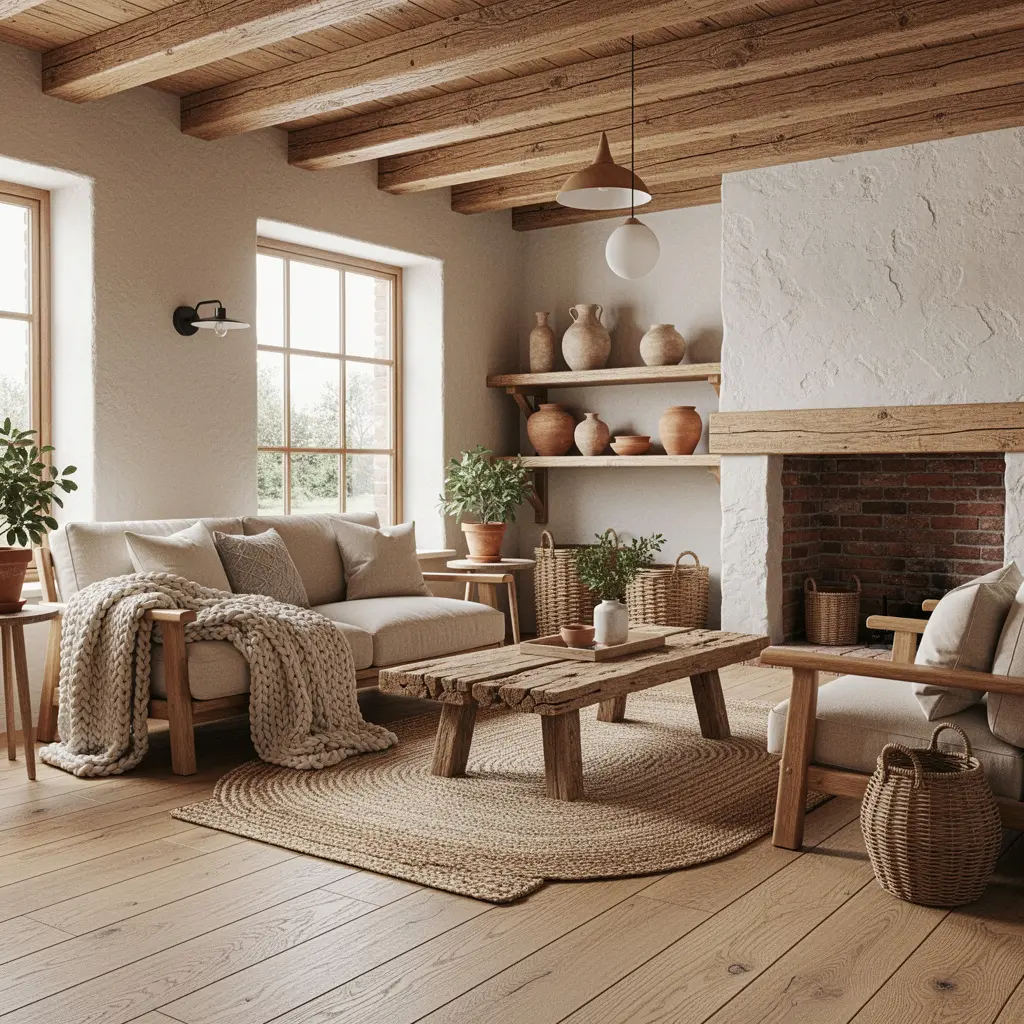
Real or convincing faux wood beams, a wood mantel, or simply furniture in a range of warm, slightly imperfect wood tones brings genuine cottage character into a room. Uniform, perfectly matched wood furniture actually works against this look. A slightly varied mix of wood tones, an oak table paired with a walnut shelf, for example, feels more collected over time than a single matching wood finish throughout.
Exposed brick, natural stone accents, or even textured plaster walls, where possible, add to this same layered, natural feeling. If your home doesn’t have these features built in, smaller touches like a stone hearth accessory or a textured plaster style paint finish can bring a hint of the same warmth.
3. Layer Textiles the Way a Real Cottage Naturally Would
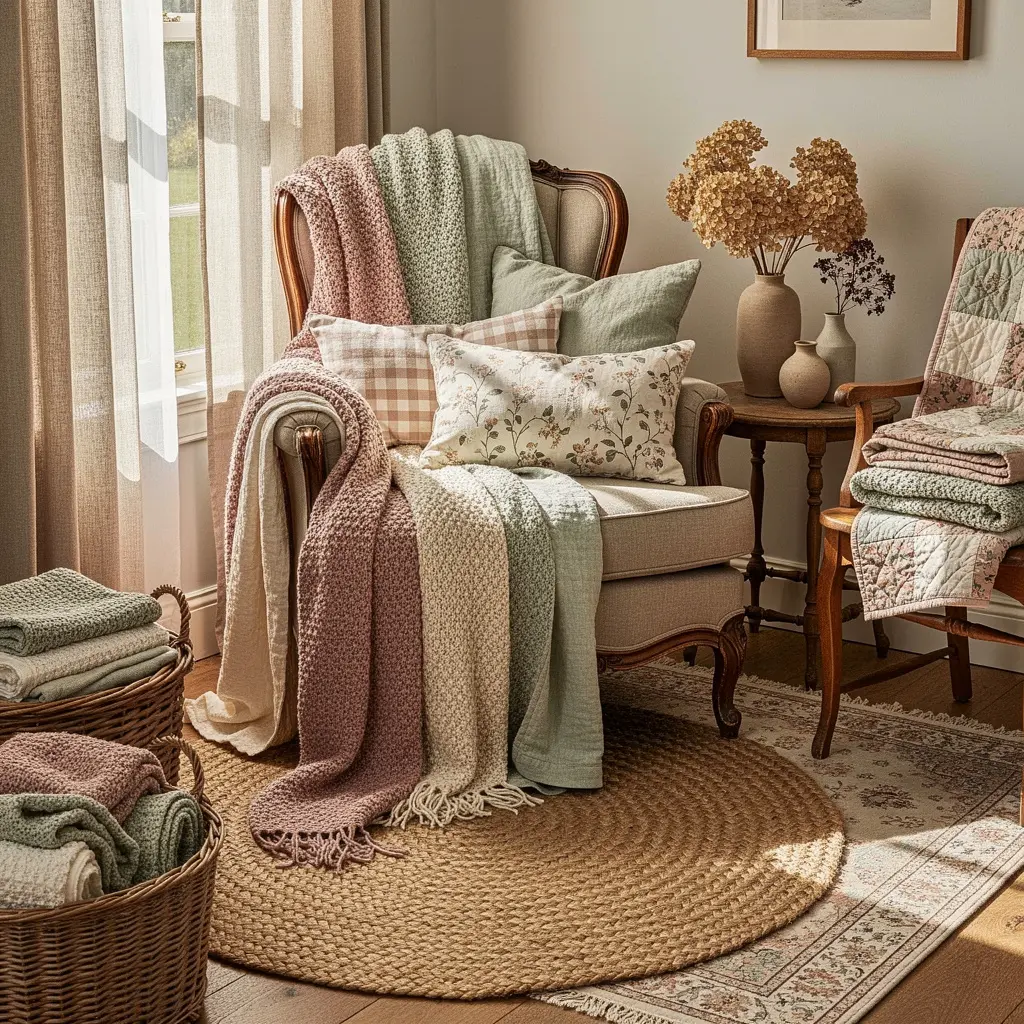
Wool throws, linen curtains, and a mix of textured pillow covers build the layered coziness a dream cottage depends on. The key is genuine variety rather than a matched set. A plaid pillow beside a solid linen one beside a chunky knit throw reads as gathered over years, which is exactly the feeling this style is going for.
Stick to natural fibers wherever it’s practical, wool, linen, cotton, since they tend to hold up better over time and simply feel different than synthetic blends, both visually and to the touch. This one shift makes a noticeable difference in how authentic the whole space feels.
A Simple Layering Approach
Start with one solid base textile, a throw or a set of curtains, then add one small pattern, like gingham or a subtle floral, and one textured piece, like a chunky knit or woven wool. Three layers is usually plenty before it starts tipping into cluttered rather than cozy.
4. Choose Vintage or Vintage Inspired Furniture Pieces

A single genuinely old piece, a weathered wood side table, a worn leather armchair, an antique mirror, gives a room a sense of history that brand new furniture can’t fully replicate on its own. Estate sales, thrift stores, and local marketplace listings are usually the most affordable and reliable sources for this kind of find.
If sourcing true vintage isn’t practical for every piece, newer furniture with visible wood grain, turned legs, or a slightly distressed painted finish can still contribute to the same feeling. The goal is furniture that looks like it has a story, whether that story is genuinely decades old or simply well chosen.
5. Add Gingham, Floral, and Small Print Fabrics

Small scale patterns, gingham checks, tiny florals, subtle stripes, are a defining textile choice in cottage decor, and they work well in curtains, tablecloths, cushion covers, and even lampshades. These patterns read as cheerful and charming without overwhelming a room, especially when kept to one or two patterns per space rather than mixed too widely.
A gingham tablecloth in the kitchen, paired with a floral cushion in the living room, ties the whole home together without requiring every single room to use the exact same fabric. Consistency in style, rather than an identical repeated print, is what makes the look feel cohesive room to room.
6. Use Open Shelving to Display Collected Pieces

Open shelving holding a mix of vintage dishware, small potted herbs, and a stack of well loved cookbooks does a lot of visual work in a cottage style kitchen or living room. This kind of display, mismatched plates, a favorite teapot, a small collection of pottery, is very much part of the decor itself rather than something to hide behind closed cabinet doors.
Keep shelves edited rather than packed edge to edge. A few well chosen, slightly mismatched pieces with visible space between them reads as curated, while a fully crammed shelf starts to look cluttered even with objects that individually fit the aesthetic well.
7. Bring the Garden Inside With Fresh and Dried Florals

A small vase of garden flowers, wildflowers, roses, whatever’s actually growing nearby, or a bundle of dried lavender or wheat, brings the cottage garden connection right into the home. This doesn’t need to be elaborate or expensive. Even a single stem in a small pitcher on a windowsill adds life and color to a room.
Dried florals, hung from a beam or displayed in a pitcher, hold their look for weeks and require essentially no maintenance, which makes them a practical option for keeping the garden feeling going through seasons when fresh flowers aren’t as readily available.
8. Layer in Warm, Low Lighting Instead of Bright Overhead Light
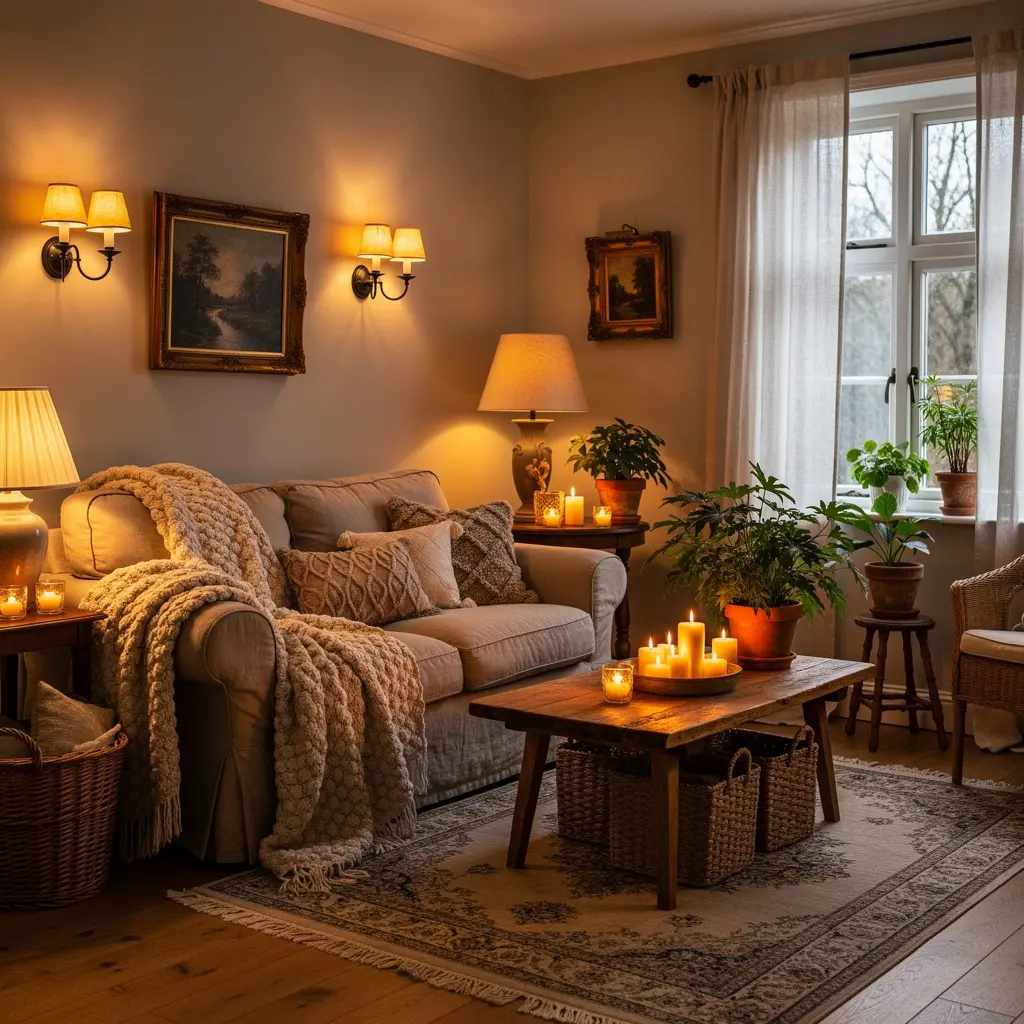
A dream cottage feeling depends heavily on warm, low lighting rather than bright, even overhead light. Table lamps with fabric or woven shades, a few grouped candles, and warm bulbs throughout the home all contribute to that soft, flickering glow that defines a genuinely cozy cottage interior.
Warm white bulbs, in the 2700K range, cast a noticeably softer, more golden light than daylight bulbs, and this one swap alone changes how warm a room feels once evening comes around. Layering lamps at different heights around a room, rather than relying on a single overhead fixture, adds to this same warm, textured atmosphere.
9. Add Personal, Handmade Touches Throughout the Home
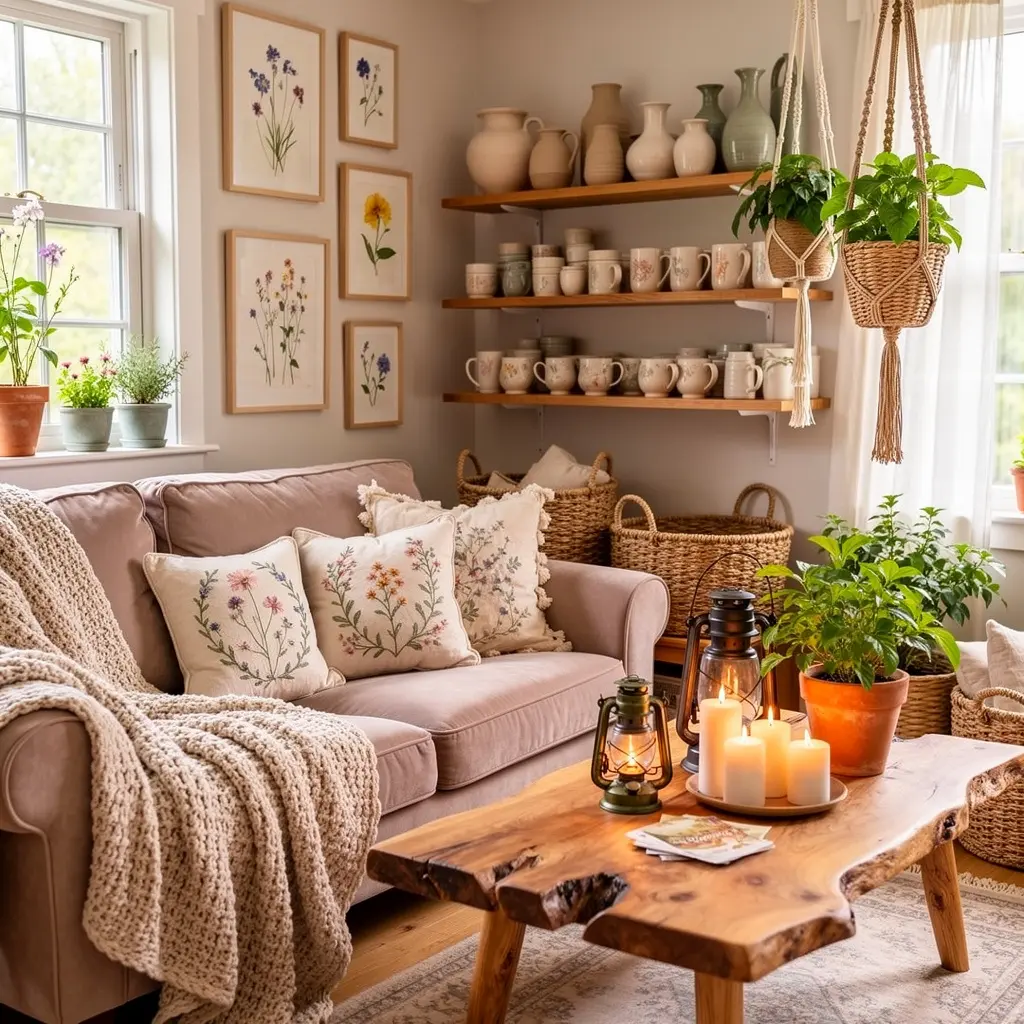
A dream cottage isn’t meant to look like a showroom. Small handmade or personal touches, a crocheted blanket, a hand painted plate, a framed piece of pressed botanical art, add the individual character that separates a genuinely cozy cottage home from a well decorated but impersonal one.
These pieces don’t need to be perfect or expertly made to work in this style, since a bit of visible handmade imperfection actually supports the collected, lived in feeling the whole aesthetic is built around. A piece you made yourself, or one passed down from family, often does more for the space than an expensive new decorative object bought purely to match a color scheme.
10. Keep the Kitchen the Heart of the Cottage Feeling
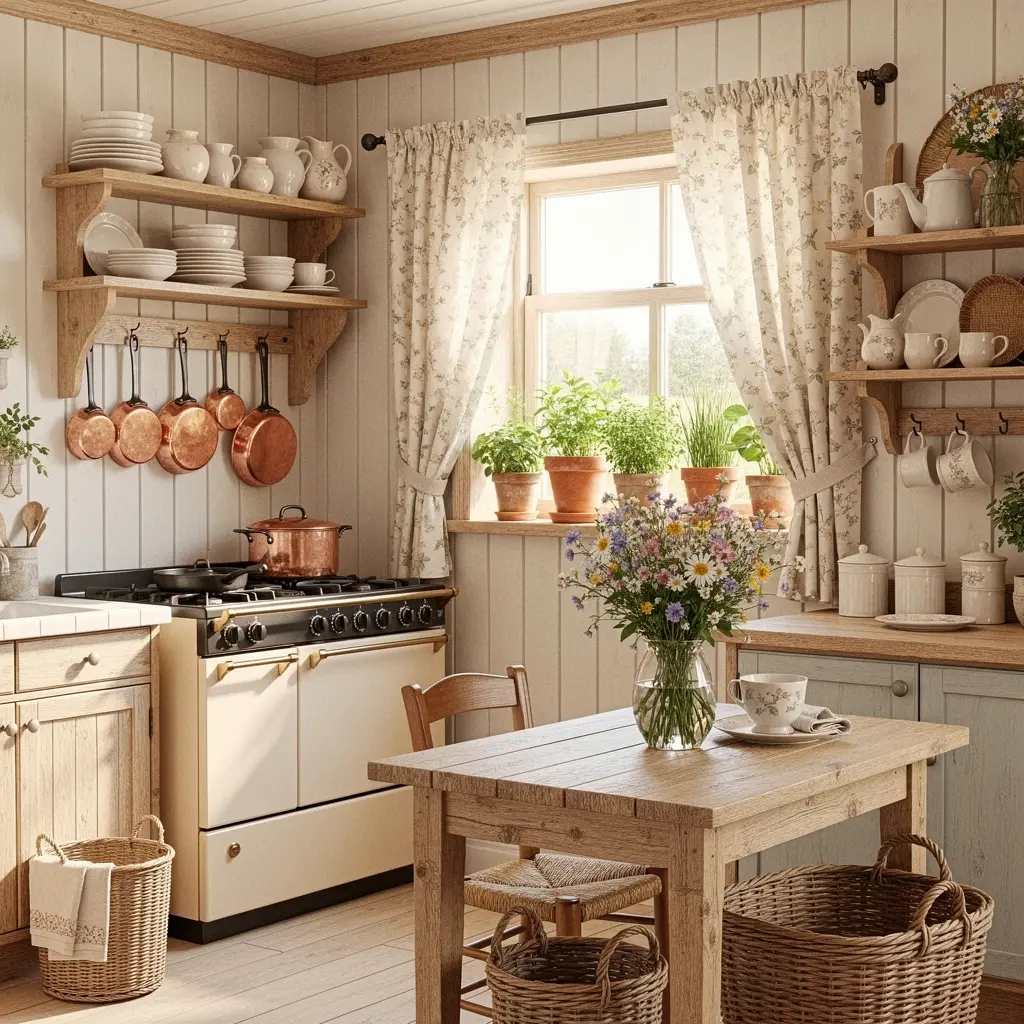
The kitchen tends to carry a lot of the cottage feeling in a home, since it’s naturally full of the textiles, dishware, and warm materials this style depends on. Open shelving with mismatched but coordinated dishware, a wood cutting board left out on the counter, and a small herb garden on the windowsill all reinforce the look in one of the most used rooms in the house.
A simple gingham or striped dish towel, a ceramic pitcher used for utensils instead of a plastic holder, and a bowl of real fruit on the counter are small, low cost swaps that bring the same warmth into daily kitchen use rather than confining the cottage look to just the living room or bedroom.
Mistakes to Avoid
- Choosing a stark white or cool gray palette instead of warm, earthy tones
- Buying a perfectly matched furniture set instead of layering varied wood tones
- Matching every textile too closely, losing the collected, gathered over time feel
- Overcrowding open shelving instead of leaving breathing room between pieces
- Relying only on bright overhead lighting instead of warm, layered lamps
- Skipping personal or handmade touches, leaving the space feeling showroom perfect instead of lived in
Frequently Asked Questions
Can I get a cottage look in a modern apartment? Yes, the cottage feeling comes largely from color palette, textiles, and lighting rather than the building itself, so it translates well into a modern apartment. Focusing on warm tones, layered textiles, and a few vintage or handmade pieces can bring the look into almost any space.
What colors should I avoid in cottage decor? Stark white, cool gray, and very saturated primary colors tend to work against the warm, earthy feeling cottage decor depends on. Sticking to cream, terracotta, sage, and warm browns as a base keeps the palette consistent with the style.
Do I need real antiques for a dream cottage look? No, while genuine vintage pieces add authentic character, newer furniture with visible wood grain, turned legs, or a distressed finish can contribute a similar feeling. A mix of a few real vintage finds alongside newer pieces is a practical, affordable approach.
How do I make my kitchen feel more cottage style? Open shelving with mismatched but coordinated dishware, warm wood accents, gingham or striped textiles, and a small herb garden on the windowsill are all approachable ways to bring the look into a kitchen without a full renovation.
Is cottage decor the same as farmhouse style? They share some overlap, like natural materials and warm tones, but cottage decor tends to lean more toward soft prints, collected vintage pieces, and garden inspired touches, while farmhouse style often leans more toward shiplap, black and white palettes, and industrial accents. The two can blend well, but they aren’t identical.
Conclusion
A dream cottage home comes down to warmth, texture, and small collected details rather than owning any specific type of house. Lean into an earthy color palette, layer your textiles instead of matching them, and mix in a few genuinely vintage or handmade pieces alongside newer furniture. Done consistently across even a few rooms, this approach turns an ordinary home into a space that feels like it’s been gathered and loved over years, which is really the whole heart of the cottage feeling.