10 Warm Minimalist Japandi Kitchen Ideas You’ll Want to Copy
Every all white minimalist kitchen you’ve tried to recreate ends up feeling more like a clinic than a home, sleek but strangely cold, missing the warmth you actually wanted. That gap between minimal and cozy is exactly what Japandi design solves. Warm minimalist Japandi kitchen ideas blend the clean restraint of Japanese design with the natural, textured comfort of Scandinavian style, so the room feels calm without feeling empty. This article covers the specific materials, colors, and details that separate a genuinely warm Japandi kitchen from a kitchen that’s simply been stripped bare.
1. Choose Rift Sawn Or Straight Grain Wood Cabinetry
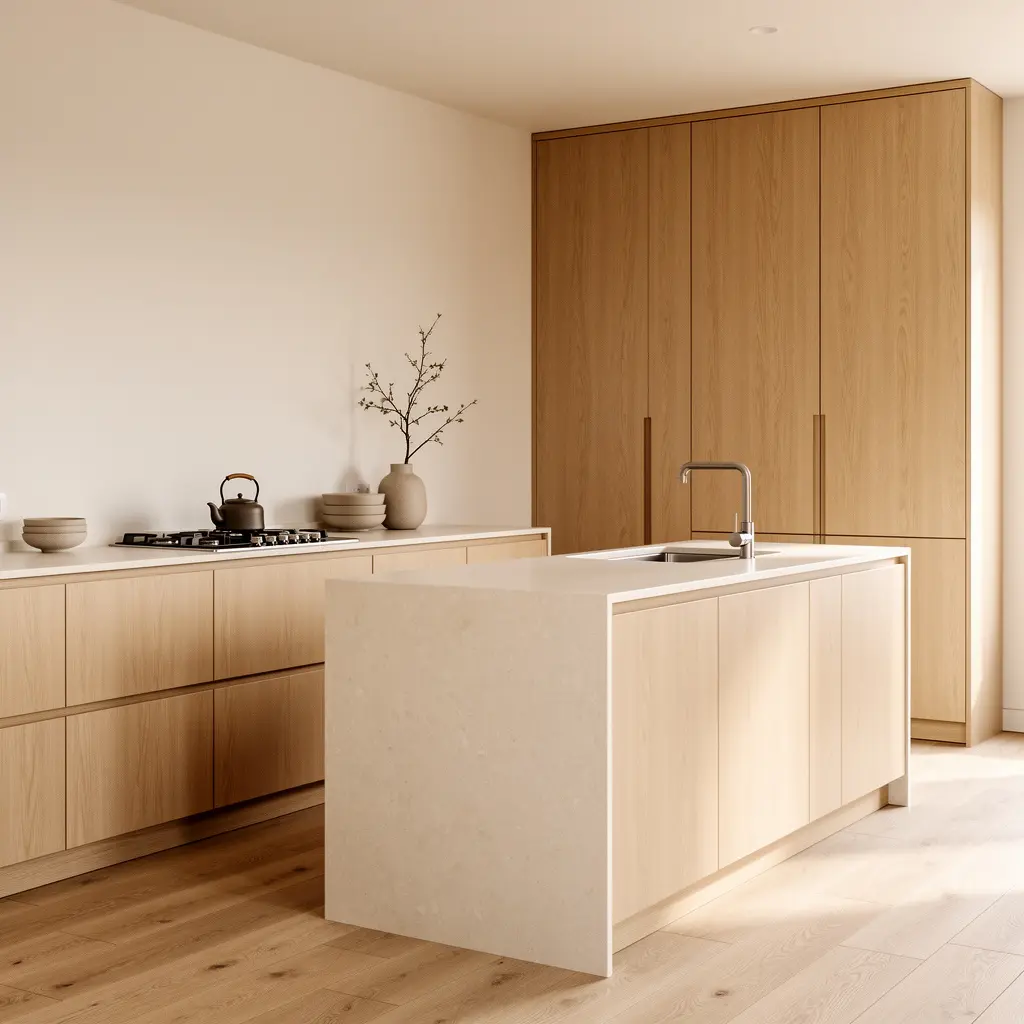
The specific cut of wood used in Japandi cabinetry matters more than most people realize. Rift sawn oak, with its tight, linear grain pattern, creates a calmer, more continuous look than a wood cut with heavy, swirling grain. Treating cabinetry as continuous architectural paneling, rather than a collection of separate boxes, is part of what gives a Japandi kitchen its quiet, unified feel, and it also makes the room easier to keep visually calm as you add appliances and hardware over time.
Choosing Between Light And Dark Wood
Light oak tends to feel airier and works well in kitchens with less natural light, while a darker walnut or a two tone combination, light upper cabinets with a darker wood island, adds depth without breaking the room’s overall calm.
2. Move Away From High Gloss And Reflective Surfaces
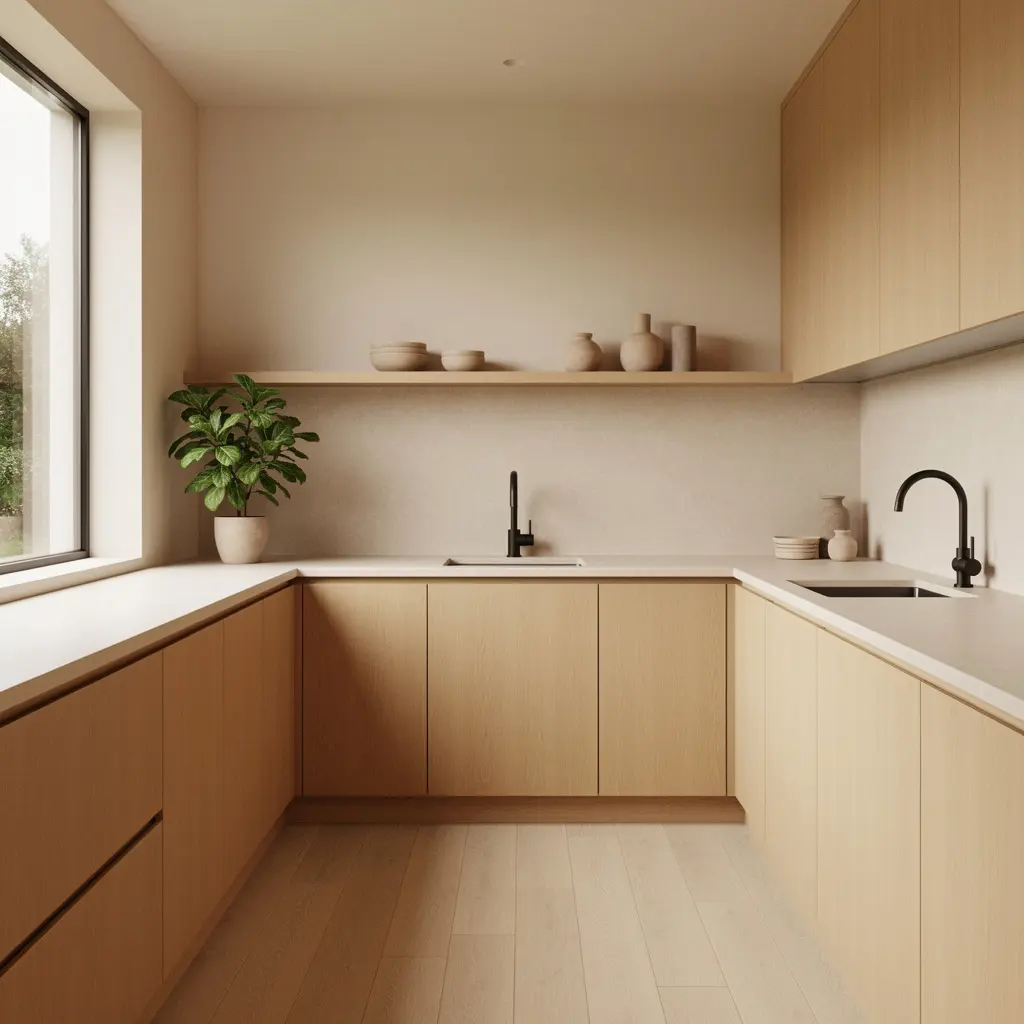
Polished quartz and glossy marble might read as luxurious in some kitchen styles, but in a Japandi kitchen they work against the calm atmosphere by catching and reflecting overhead light harshly. Honed or leathered stone, which has been mechanically finished to remove the shine, absorbs light instead of bouncing it back, creating the soft, matte quality that defines this style.
Where Matte Finishes Matter Most
Countertops and larger surfaces benefit the most from a matte finish, since they cover the largest visual area and are most likely to catch overhead lighting if left glossy.
3. Conceal Function Behind Integrated Cabinetry
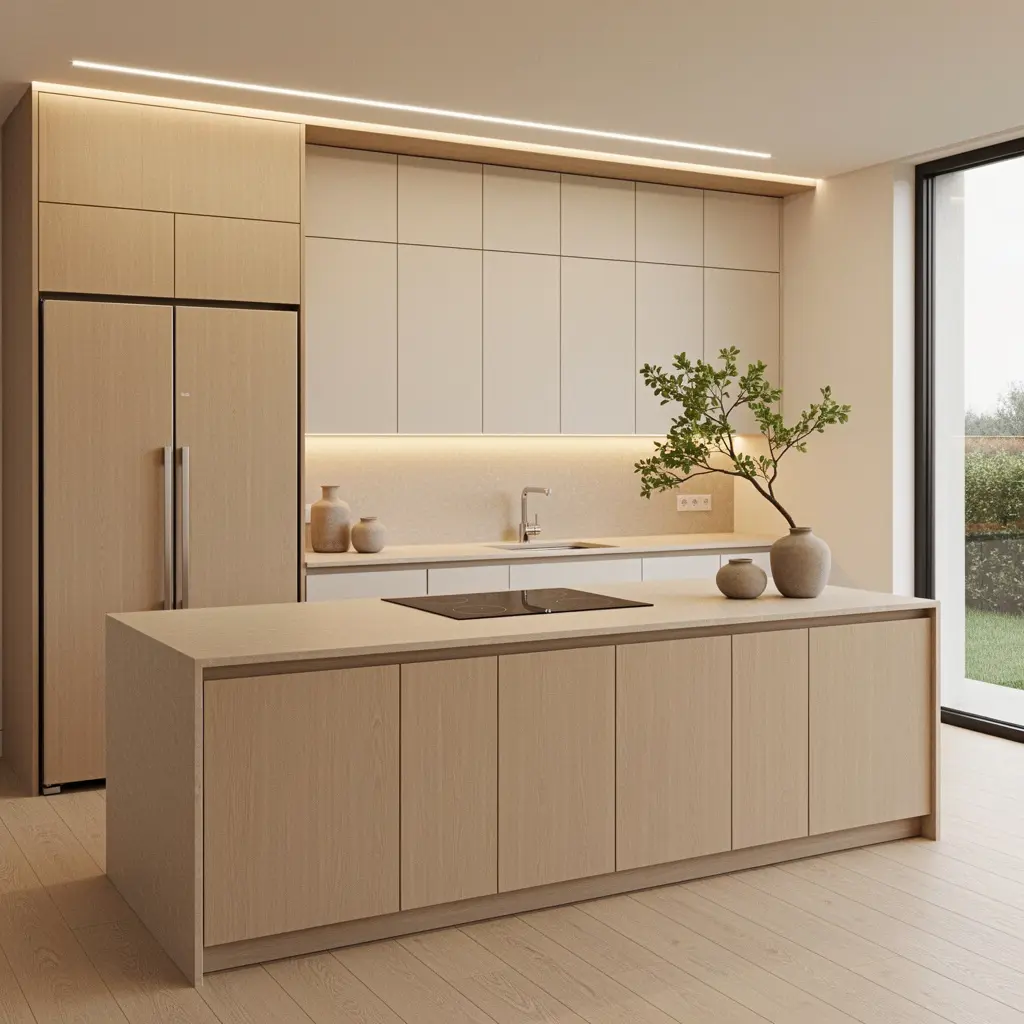
A large, reflective stainless steel refrigerator or a visible microwave can undo a Japandi kitchen’s calm in an instant. Integrated appliances, hidden behind cabinet fronts that match the rest of the kitchen, keep the room reading as continuous and considered rather than as a collection of separate appliances competing for attention. This concealed function approach doesn’t mean sacrificing the tools you actually use, it just means engineering thoughtful boundaries around them, so a coffee maker or toaster can still live in a dedicated cabinet nook rather than sitting exposed on the counter.
4. Use A Warm, Earthy Neutral Palette
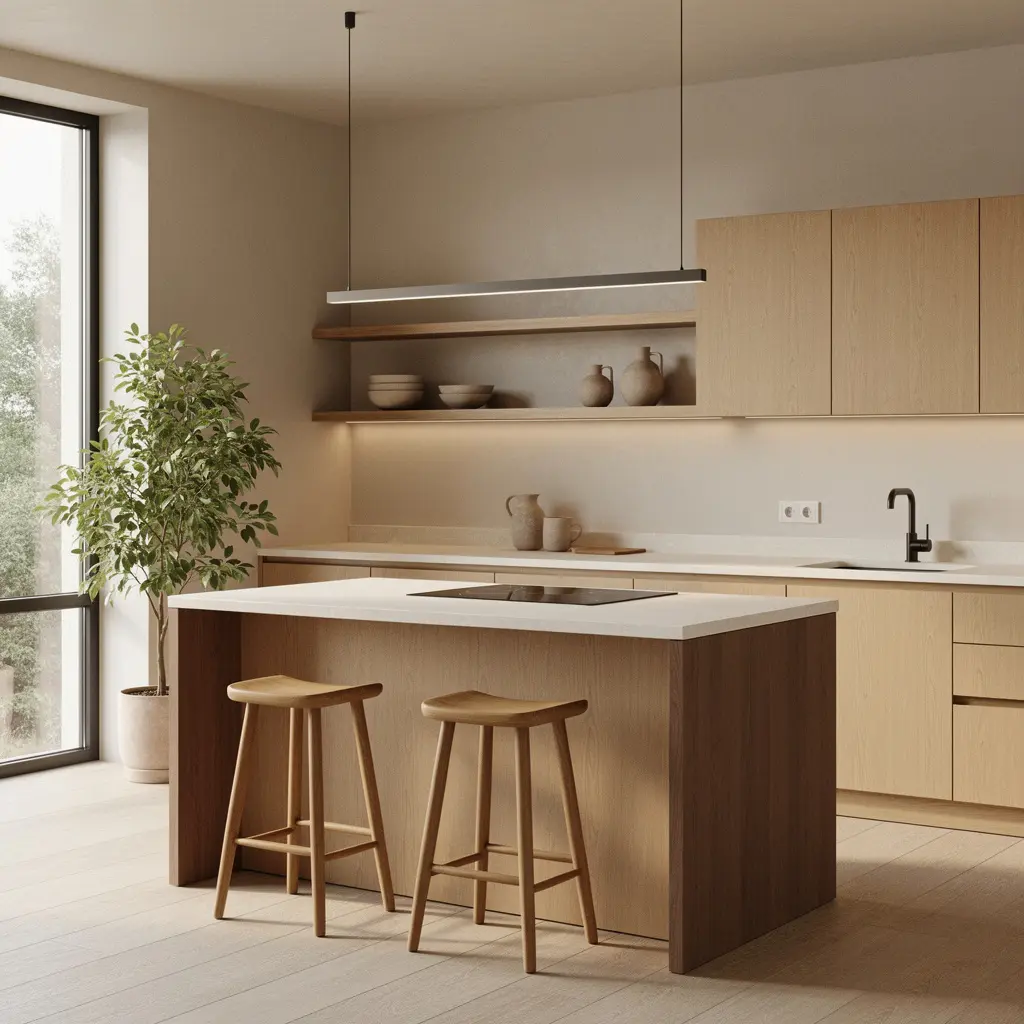
Creams, taupes, warm grays, and soft sage have become the defining color palette for Japandi kitchens, replacing the starker whites and cooler grays of earlier minimalist trends. These tones are intrinsically linked to nature and pair naturally with the wood tones already present in Japandi cabinetry, keeping the whole room feeling cohesive rather than assembled from unrelated pieces. Testing a paint swatch against your actual wood cabinetry sample, rather than choosing each independently, helps confirm the undertones genuinely complement each other before committing to either.
Introducing A Small Amount Of Color
If you want to bring in more color, sage green cabinetry paired with light oak and linen textiles is a combination that stays within the Japandi palette while still feeling distinct from an all neutral room.
5. Add Warmth Through Styling Objects, Not More Furniture
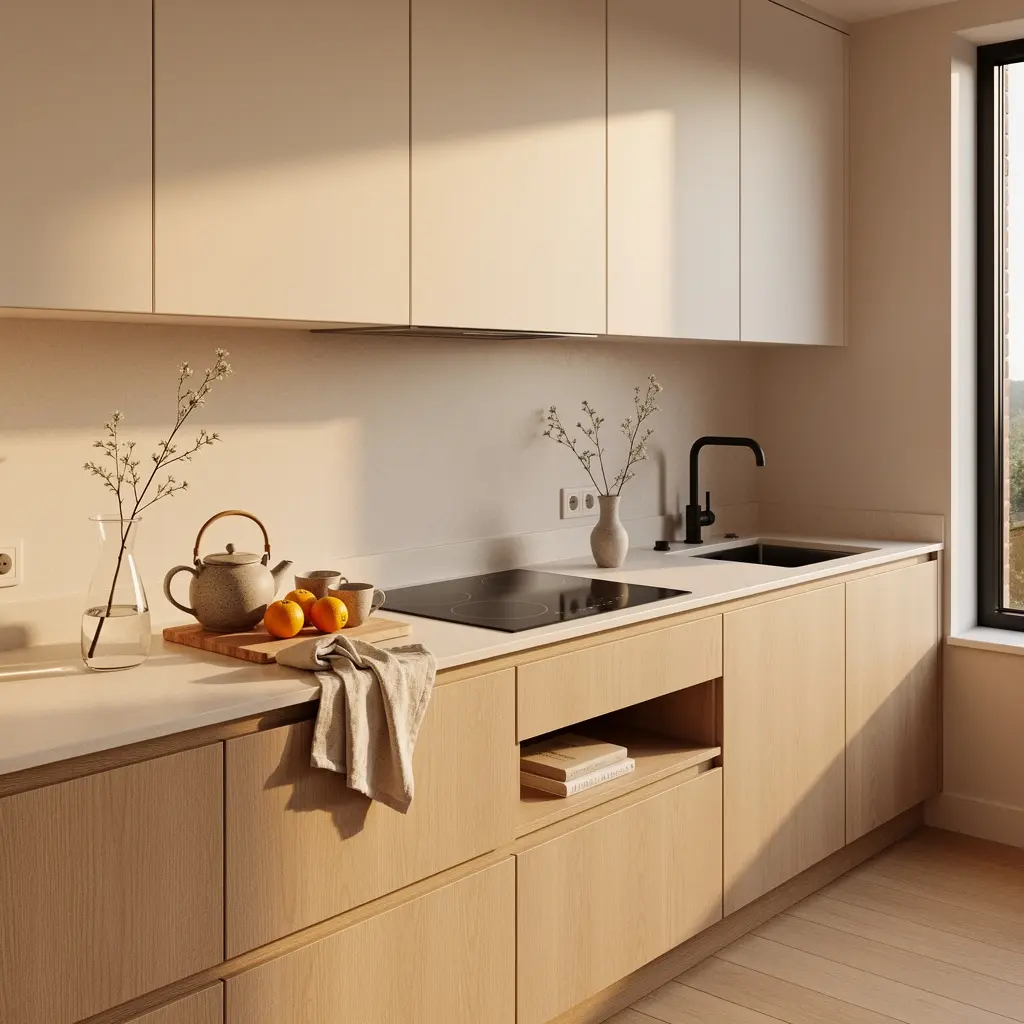
A Japandi kitchen stripped of every decorative object can start to feel like a clinic rather than a home. The fix isn’t adding more furniture, it’s introducing subtle warmth through a few styling objects, a linen tea towel, a bowl of lemons, a wooden cutting board leaning against the backsplash. These small, functional details do more to warm the room than additional decor ever would, largely because they’re actually used rather than simply displayed, which keeps the kitchen feeling lived in rather than staged for a photograph.
6. Choose Hidden Under Cabinet Lighting
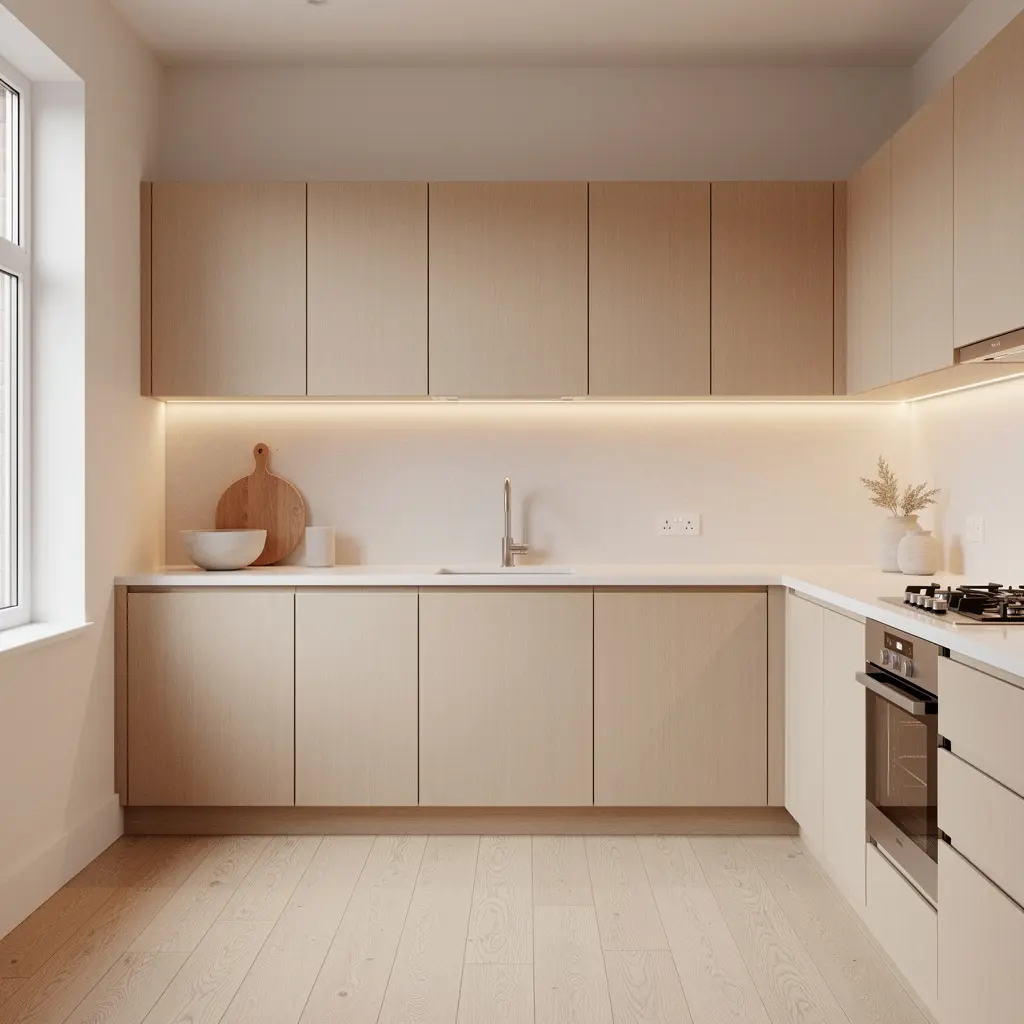
A slim LED strip hidden beneath the upper cabinets creates a soft, functional glow that defines the workspace without a visible fixture interrupting the room’s clean lines. This kind of quiet, integrated lighting reinforces the Japandi principle that architecture, not decoration, should carry most of the room’s visual interest.
Layering Light Without Adding Clutter
Pairing hidden under cabinet lighting with one simple pendant over an island, rather than several decorative fixtures, keeps the lighting plan aligned with the style’s overall restraint.
7. Bring In Cane Or Woven Cabinet Fronts
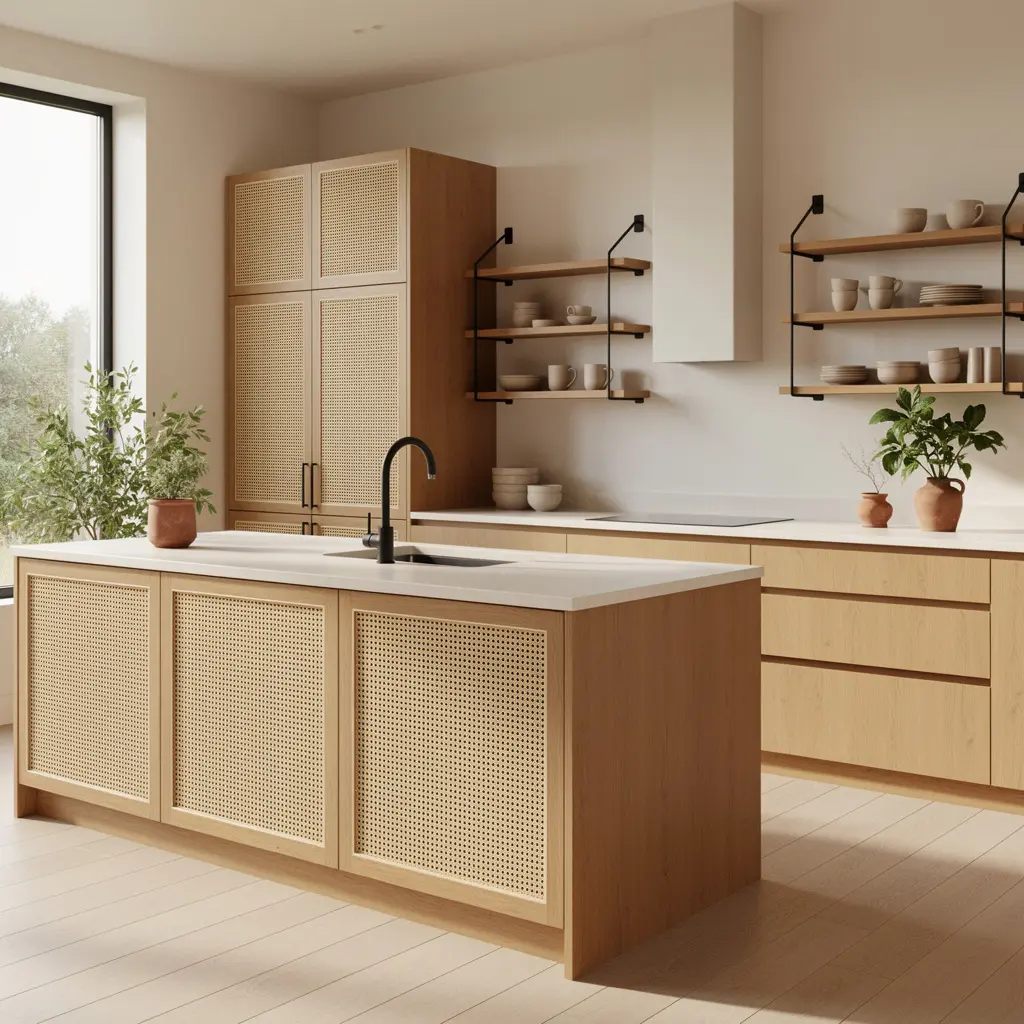
Cane front cabinets add texture without breaking the room’s calm, since the woven panels still read as understated compared to a bold pattern or bright color. Positioned above warm oak lower cabinets, cane fronts introduce a handcrafted quality that keeps the kitchen from feeling too uniform or machine made.
8. Choose A Single Wood Tone For Cohesion
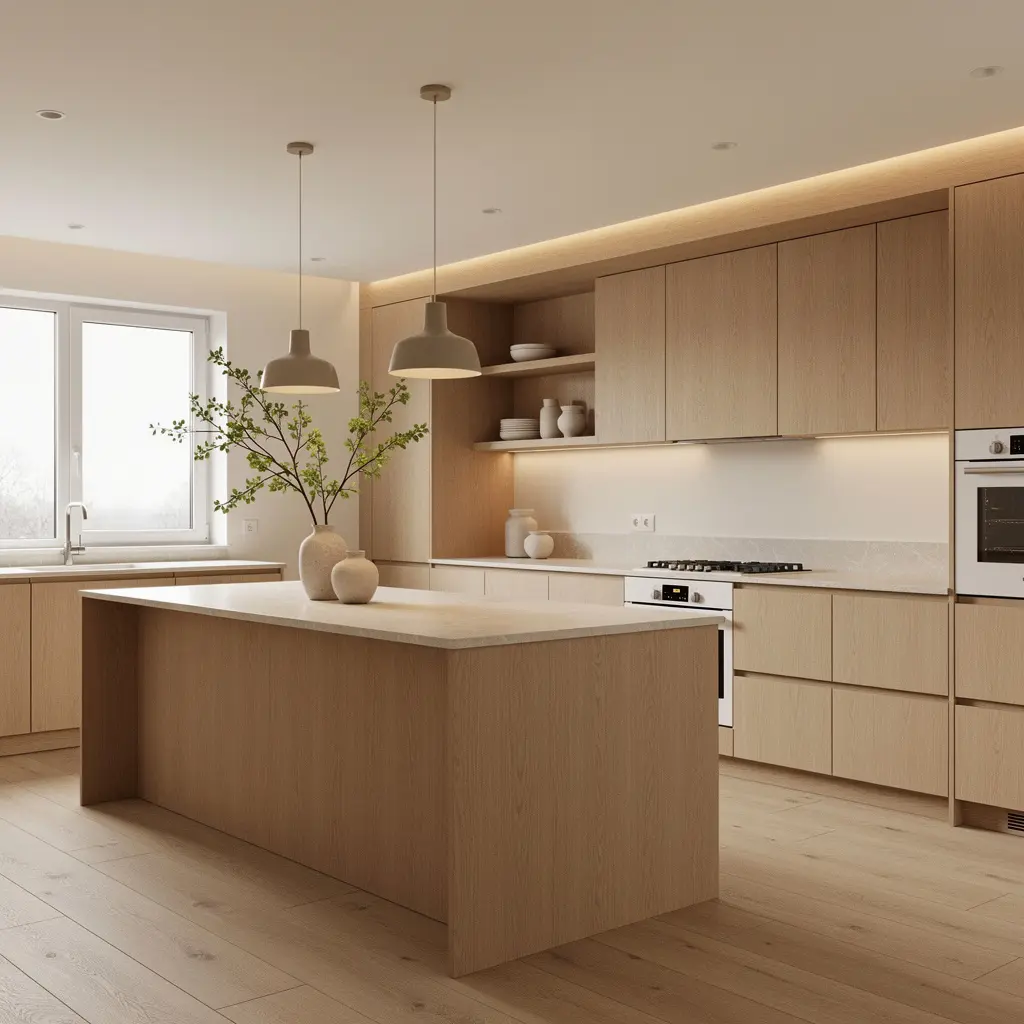
Wrapping a kitchen in one consistent wood tone, rather than mixing several different finishes, makes the whole room feel quiet and continuous. Handleless oak cabinetry that runs from floor to ceiling, broken only by a window or a single live edge table, is a clear expression of this principle, and it reads as more considered than a room where every surface is a slightly different shade of brown.
9. Add A Live Edge Or Natural Wood Table
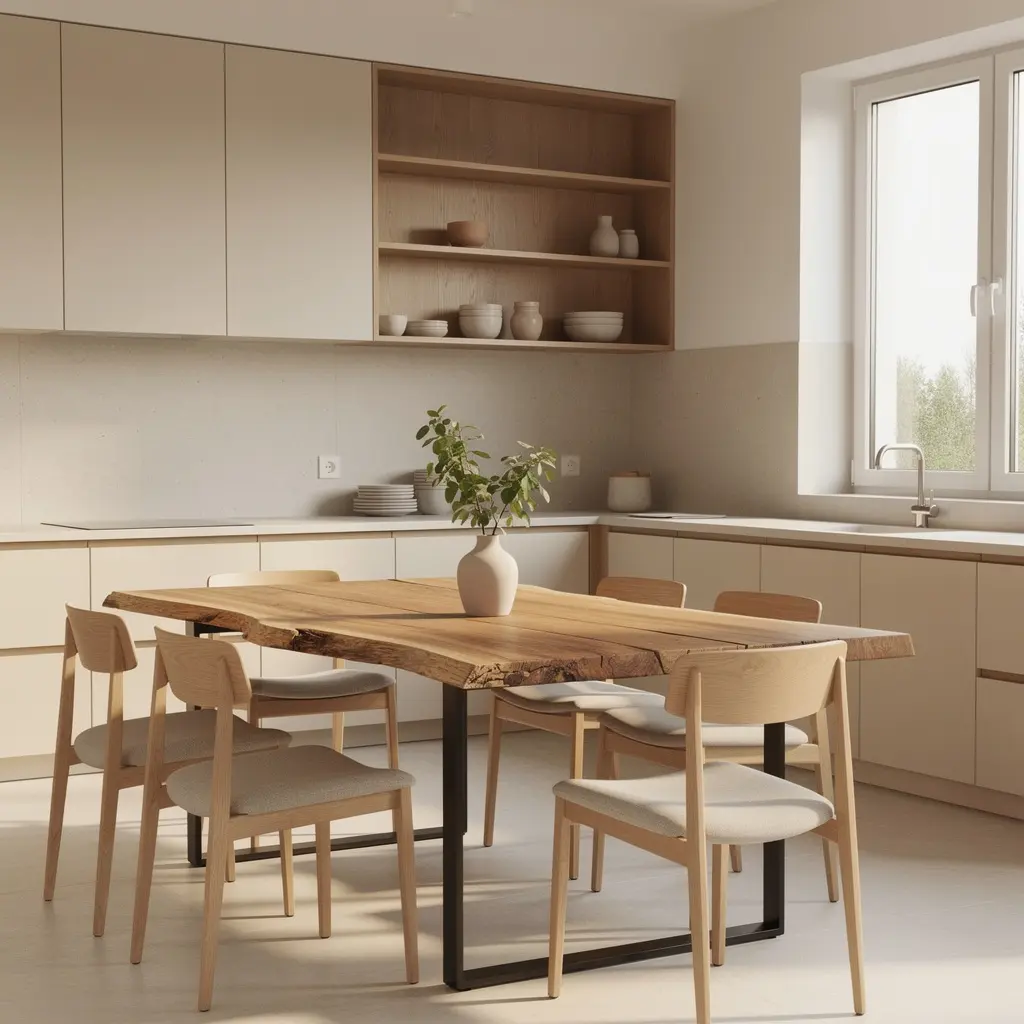
A dining table or island with a visible live edge, where the natural curve of the tree trunk is left intact, grounds a Japandi kitchen in a way that a perfectly rectangular table doesn’t. This single piece often becomes the room’s quiet focal point, celebrating the imperfection and individuality that wabi sabi philosophy values over uniform perfection, and no two live edge pieces ever look quite the same, which adds a sense of individuality that mass produced furniture can’t replicate.
Positioning A Live Edge Piece
Placing a live edge table where it catches natural light from a nearby window highlights the wood grain and texture more effectively than a spot further from any window.
10. Leave Room For A Little Life On The Counter
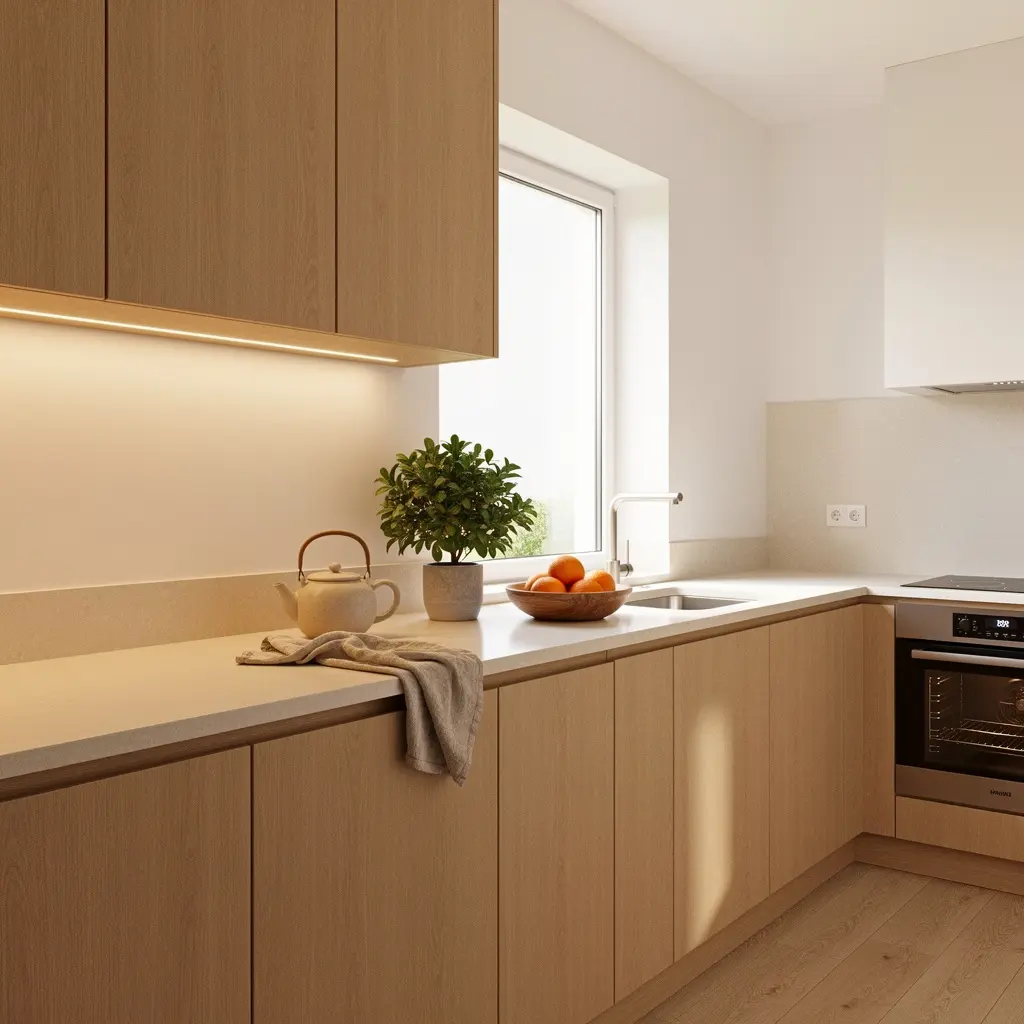
The warmth in a genuinely good Japandi kitchen comes from natural texture and a few considered objects, not from stripping every surface completely bare. A small ceramic bowl, a sprig of greenery in a simple vase, or a stack of everyday dishware left slightly out reads as lived in rather than staged, which is ultimately the difference between a warm Japandi kitchen and a cold, purely minimalist one.
Mistakes to Avoid
- Choosing high gloss quartz or marble, which reflects light harshly and works against the style’s calm atmosphere
- Leaving stainless steel appliances fully exposed instead of integrating them behind cabinet fronts
- Mixing too many different wood tones, which breaks the room’s sense of continuity
- Stripping the kitchen of every decorative object, which can read as cold rather than calm
- Adding several decorative light fixtures instead of relying on hidden, integrated lighting
- Choosing a heavily patterned or contrasting countertop that competes with the cabinetry instead of supporting it
Frequently Asked Questions
What makes a kitchen Japandi rather than just minimalist? Japandi combines Japanese wabi sabi principles with Scandinavian hygge, meaning the room stays visually restrained but is warmed through natural materials, wood grain, and a few considered objects, rather than staying completely bare the way a purely minimalist kitchen might.
What wood works best for Japandi cabinetry? Rift sawn or straight grain oak is commonly used for its tight, linear pattern, which reads as calmer than wood with heavy, swirling grain, though walnut is also popular for a slightly darker, richer tone.
Do I need to replace all my appliances to get a Japandi kitchen? Not necessarily. Adding cabinet panels to conceal a refrigerator or dishwasher front can achieve much of the same integrated look without requiring entirely new appliances.
Is color allowed in a Japandi kitchen, or is it strictly neutral? Sage green has become one of the defining colors within the broader Japandi neutral palette, and it can be introduced through cabinetry or accessories while still staying aligned with the style’s overall calm, earthy feel.
How do I keep a Japandi kitchen from feeling empty or cold? Adding a few functional, textured objects, like a linen towel, a wood cutting board, or a bowl of fruit, brings warmth without cluttering the space, since the goal is restraint paired with a little visible life, not complete emptiness.
A Genuinely Useful Takeaway
A warm minimalist Japandi kitchen comes down to material discipline paired with a few considered, lived in details, not empty countertops. Choose one consistent wood tone, move away from glossy surfaces, conceal appliances behind integrated cabinetry, and leave a little life on the counter. Handled with that balance, the kitchen will feel calm and warm at the same time, rather than simply stripped down.