10 Dreamy Living Room Decor Ideas with Beautiful Plant Styling
A living room with a couch, a coffee table, and nothing green in sight can feel oddly sterile, even when every other design element is perfectly chosen. Dreamy living room decor ideas with beautiful plant styling fix that gap directly, using greenery to bring life and texture that furniture alone can’t provide.
The difference between a room with a few random plants and one that feels intentionally styled comes down to placement, grouping, and variety. A single perfect fiddle leaf fig can do more for a room than a dozen mismatched plants scattered without any real plan. Here are ten ways to style plants so the whole room benefits.
1. Anchor the Room with One Tall Floor Plant
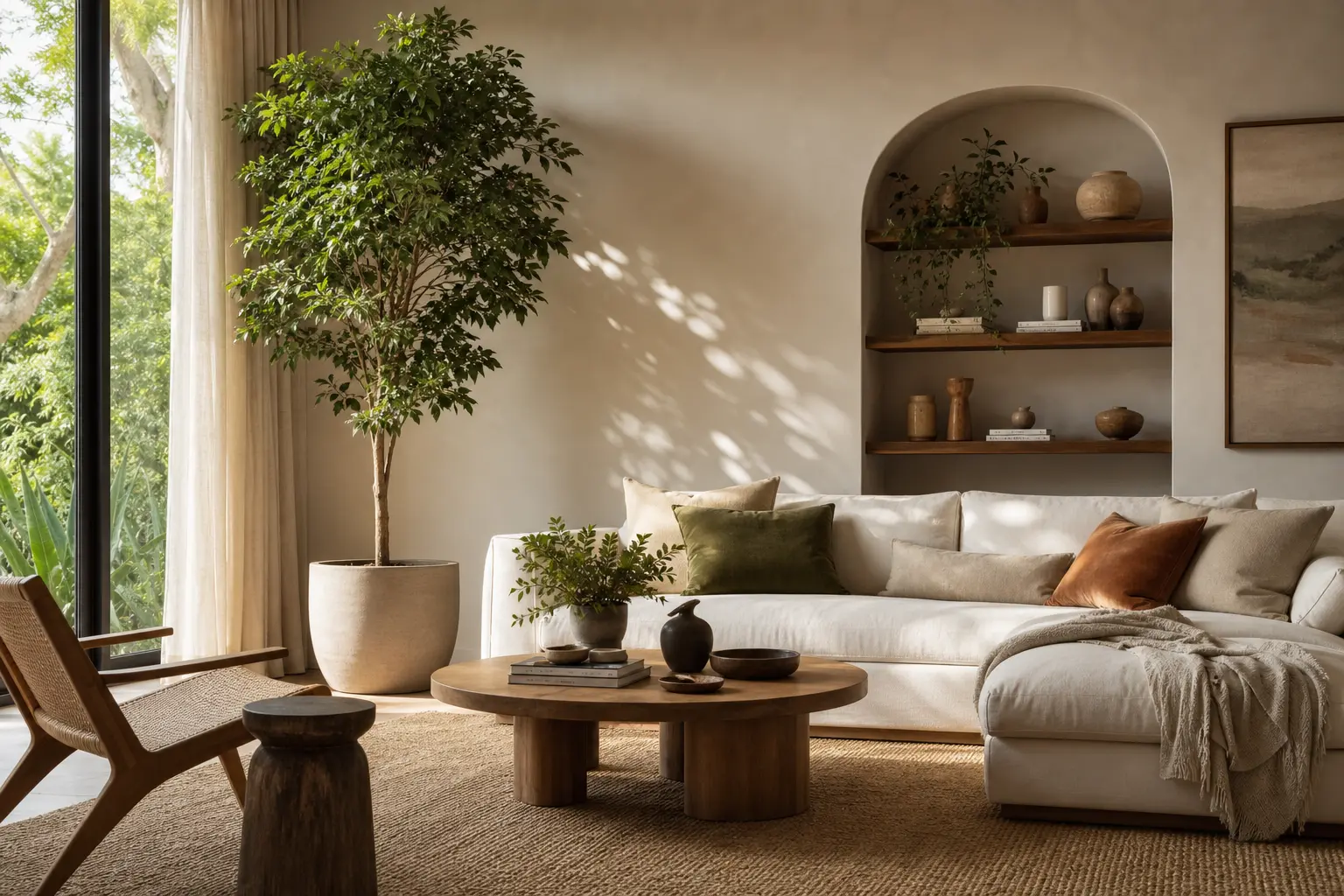
A large floor plant, a fiddle leaf fig, a bird of paradise, or a rubber plant, gives the room genuine vertical presence that smaller tabletop plants can’t provide. Look for something in the 4 to 6 foot range, priced $50 to $200 depending on species and pot size, positioned in a corner that could use extra height.
Choosing a Plant Based on Care Level
A fiddle leaf fig needs bright, consistent light and a fairly stable routine to thrive. A snake plant or a ZZ plant tolerates far more neglect and lower light. That makes either one a better choice for a busy household or a room without much direct sun.
2. Cluster Small Plants in Odd Numbered Groupings

Three small potted plants grouped together on a side table read as far more intentional than the same three plants scattered separately around the room. Odd numbers create a natural visual rhythm that even numbered groupings tend to lack.
A cluster of plants at slightly varied heights looks noticeably more considered than a single row of identical pots lined up straight. Vary the pot size within the group to reinforce this effect further.
3. Vary Pot Materials for Visual Depth

A room filled entirely with plastic nursery pots or identical white ceramic containers misses an easy opportunity to add texture. Mix a woven rattan basket with a smooth ceramic pot and a rougher terracotta planter. Each material catches light a little differently across the room.
This variation matters more than people expect. The pot itself often takes up as much visual space as the plant growing out of it, especially with smaller tabletop varieties.
4. Use Trailing Plants on Shelves and Ledges
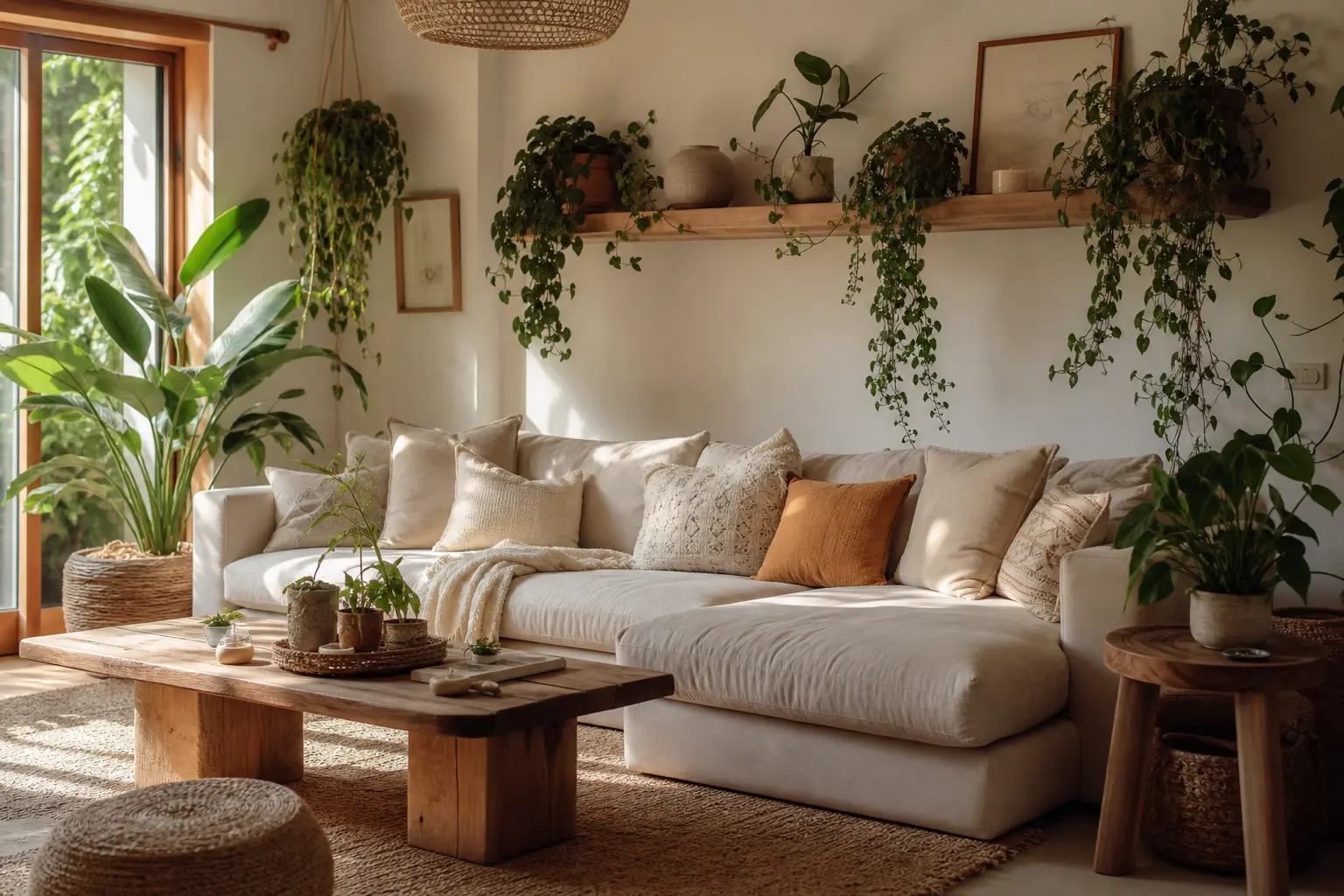
A pothos or a string of pearls cascading over the edge of a bookshelf adds a softening, organic element that breaks up harder architectural lines. This works especially well on a shelf with mostly books or decorative objects, since the trailing greenery adds movement to an otherwise static display.
Position trailing plants at varying shelf heights throughout the room rather than concentrating them all in one spot. That spreads the softening effect more evenly across the whole space.
5. Place Plants Based on Actual Light Levels
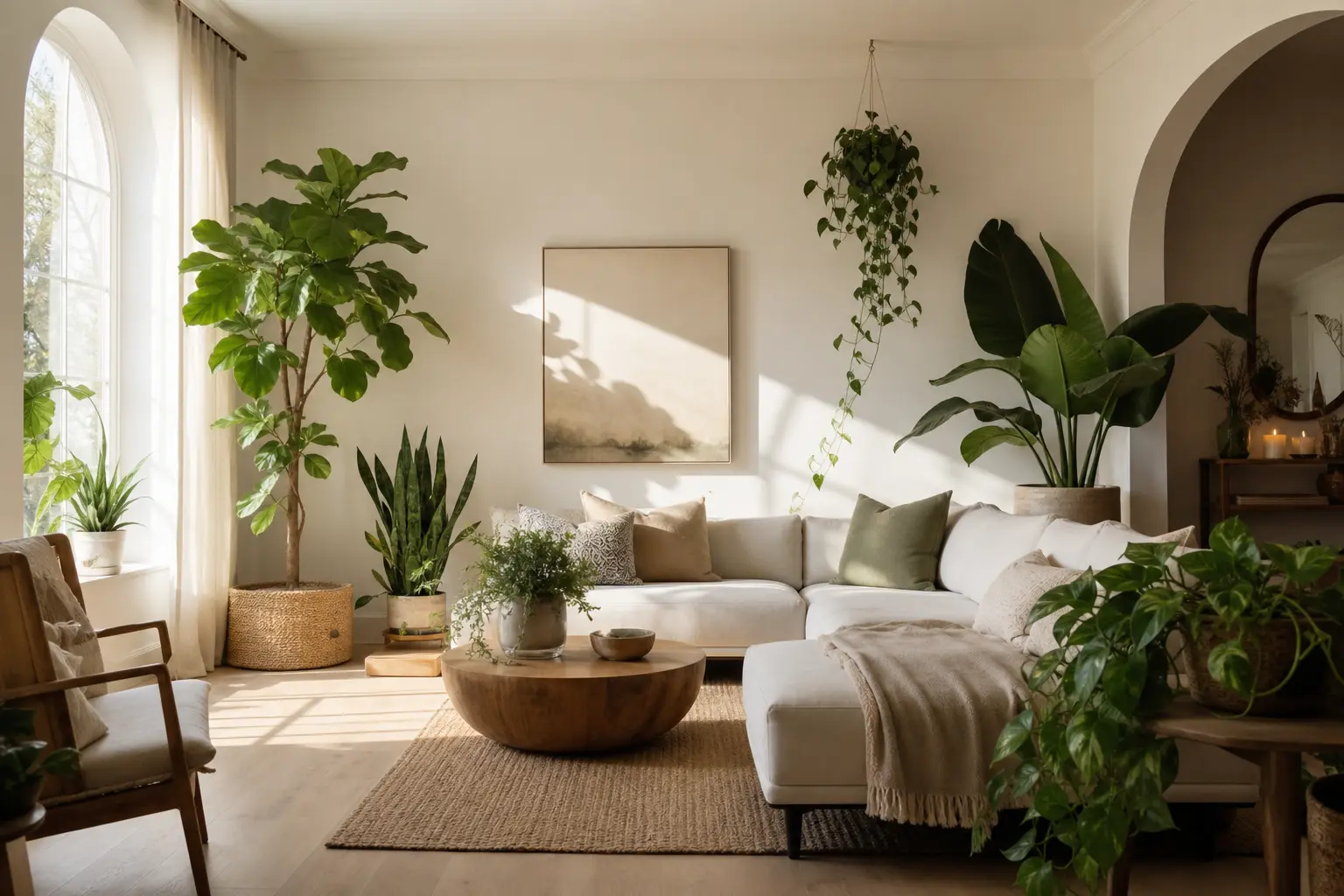
A plant that needs bright, direct sun placed in a dim corner will struggle no matter how well it’s styled. Walk through the room at different times of day and note which spots actually receive real sunlight before deciding where each plant goes.
Succulents and most flowering plants need direct light for several hours daily. Ferns, pothos, and most trailing varieties tolerate lower, indirect light far better. That makes them a safer choice for interior corners away from windows.
6. Add Height Variation Across the Room
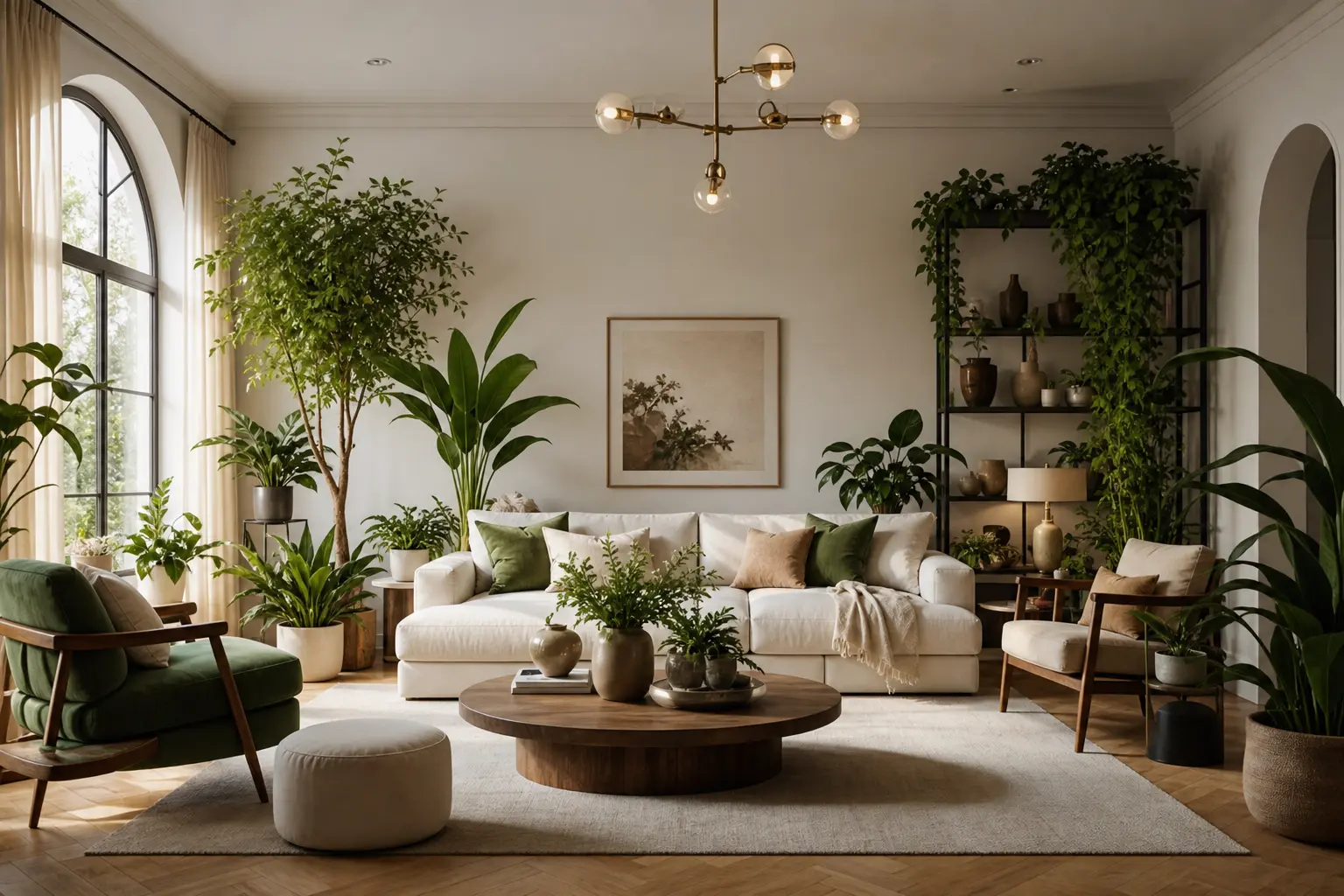
A room with every plant sitting at coffee table height looks flat, regardless of how many plants are actually present. Mix a tall floor plant, a mid height plant on a stand, and a few smaller tabletop varieties to create genuine vertical variety.
This layering technique mirrors how plants grow outdoors, taller ones toward the back, shorter ones toward the front. That arrangement reads as more organic than a uniform, single height display.
7. Choose Planters That Complement the Room’s Palette
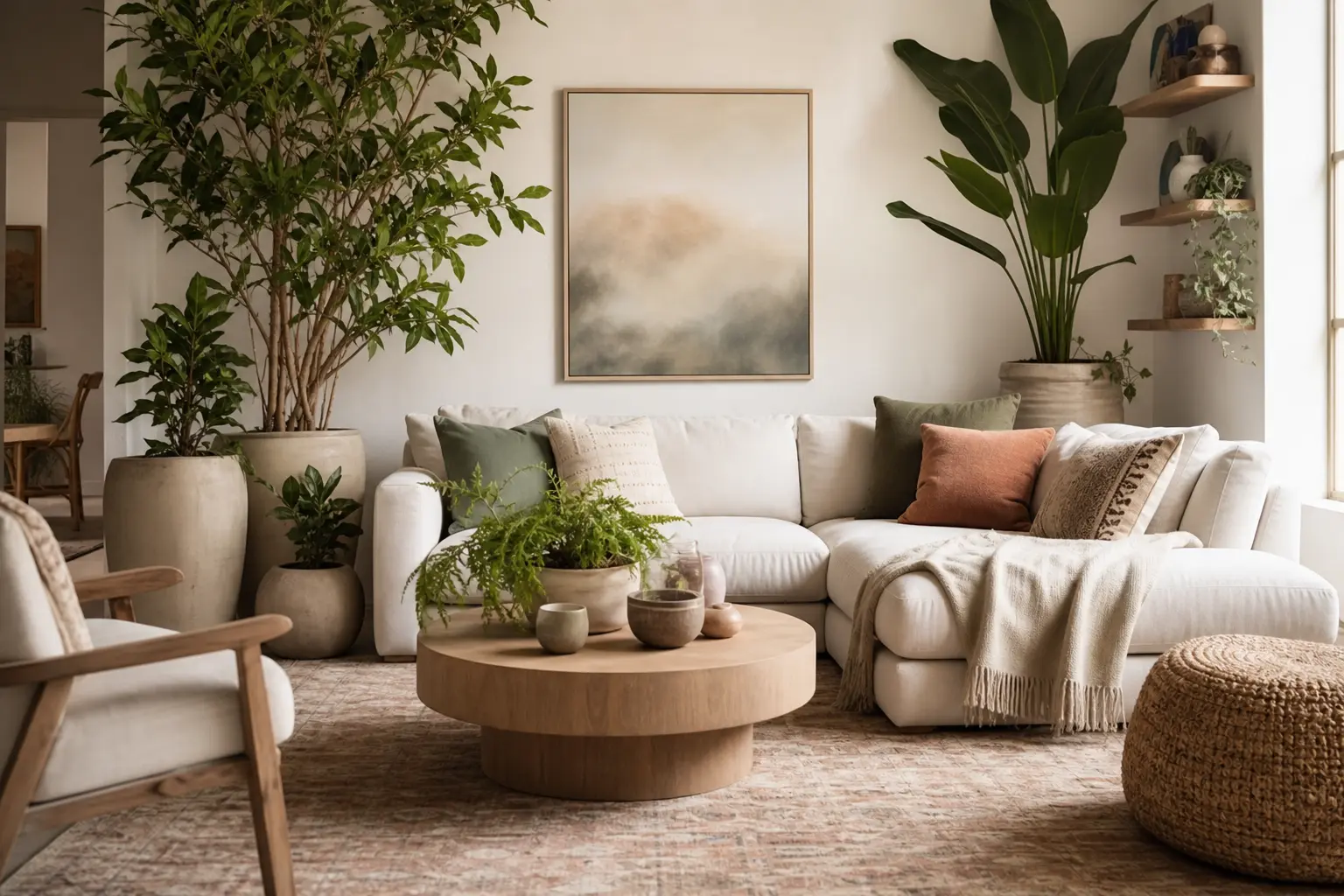
A bright, patterned planter can clash with an otherwise neutral, calming living room. A plain terracotta or cream pot supports the existing color scheme without competing for attention. Match the planter finish to the room’s other metal or material accents, brass, matte black, or natural wood, for a more cohesive look.
A room where the planters share a consistent material language feels considerably more designed than one with a random mix of colors scattered throughout.
8. Group Plants Near Natural Light Sources
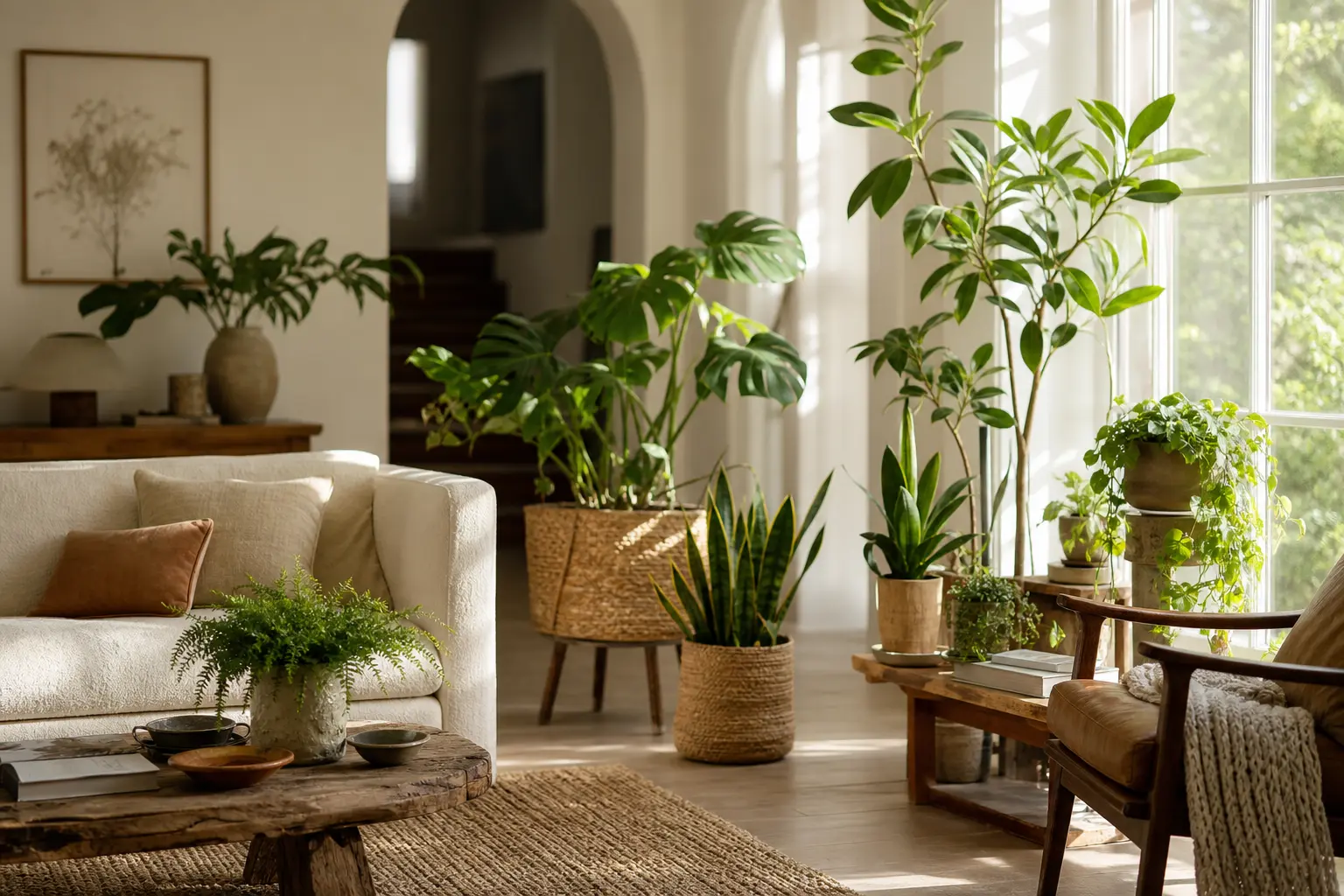
Rather than scattering individual plants evenly around the room, cluster several near the largest window or the brightest natural light source. This creates a genuine focal point, almost a small indoor garden moment, instead of diluting the greenery’s impact across too many separate spots.
This grouping is more practical too. Most plants thrive in similar light conditions and benefit from being positioned together where that light is strongest.
9. Mix Textures Between Different Leaf Shapes
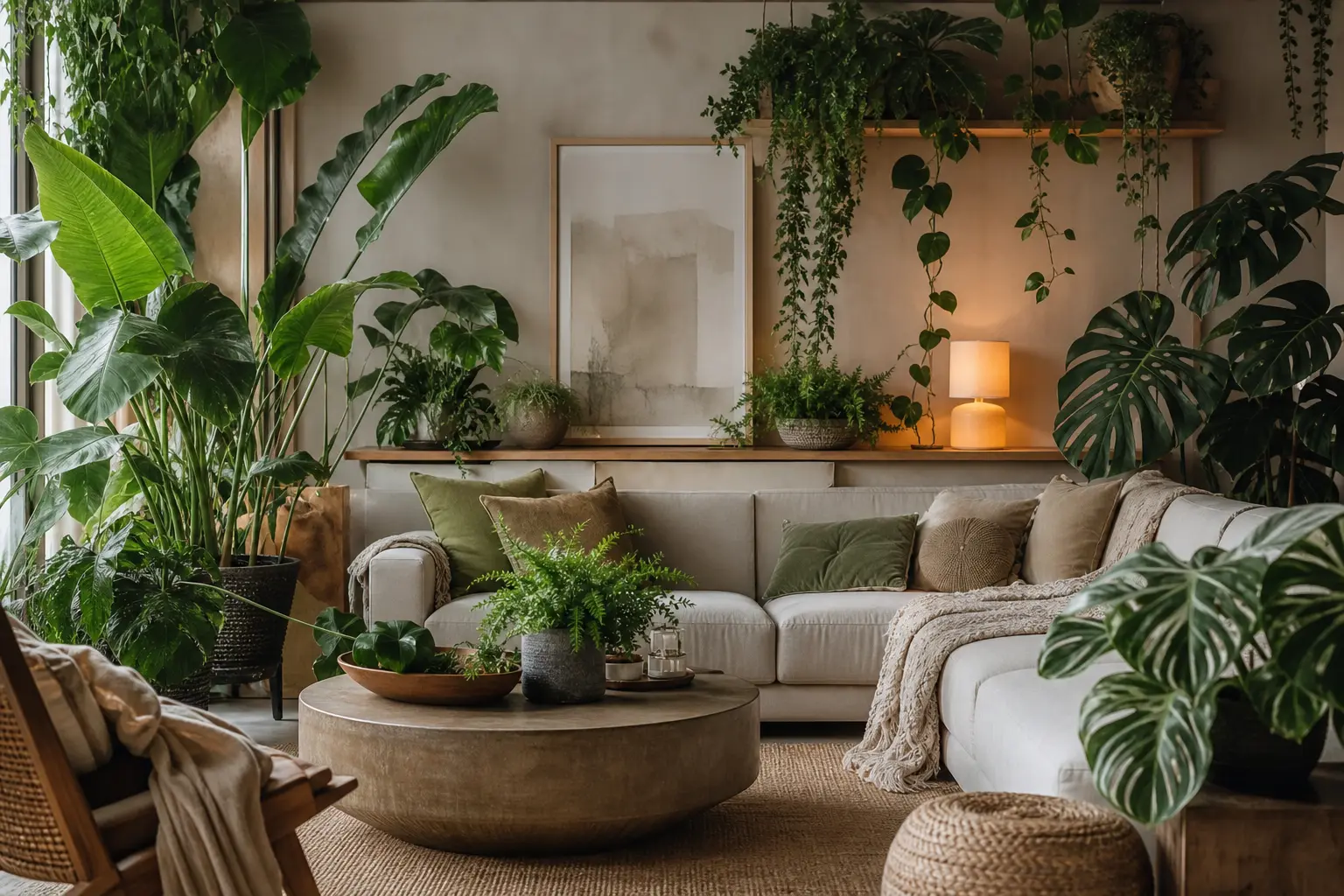
A room filled entirely with the same leaf shape, all broad and glossy, or all thin and spiky, misses an opportunity for real variety. Combine a broad leafed monstera with a fine textured fern and a spiky snake plant for a display that feels layered rather than repetitive.
This textural mixing works the same way fabric layering does elsewhere in a room’s decor. Different shapes and surfaces catch the eye differently, adding depth a uniform selection can’t achieve.
10. Keep the Plant Count Intentional, Not Excessive
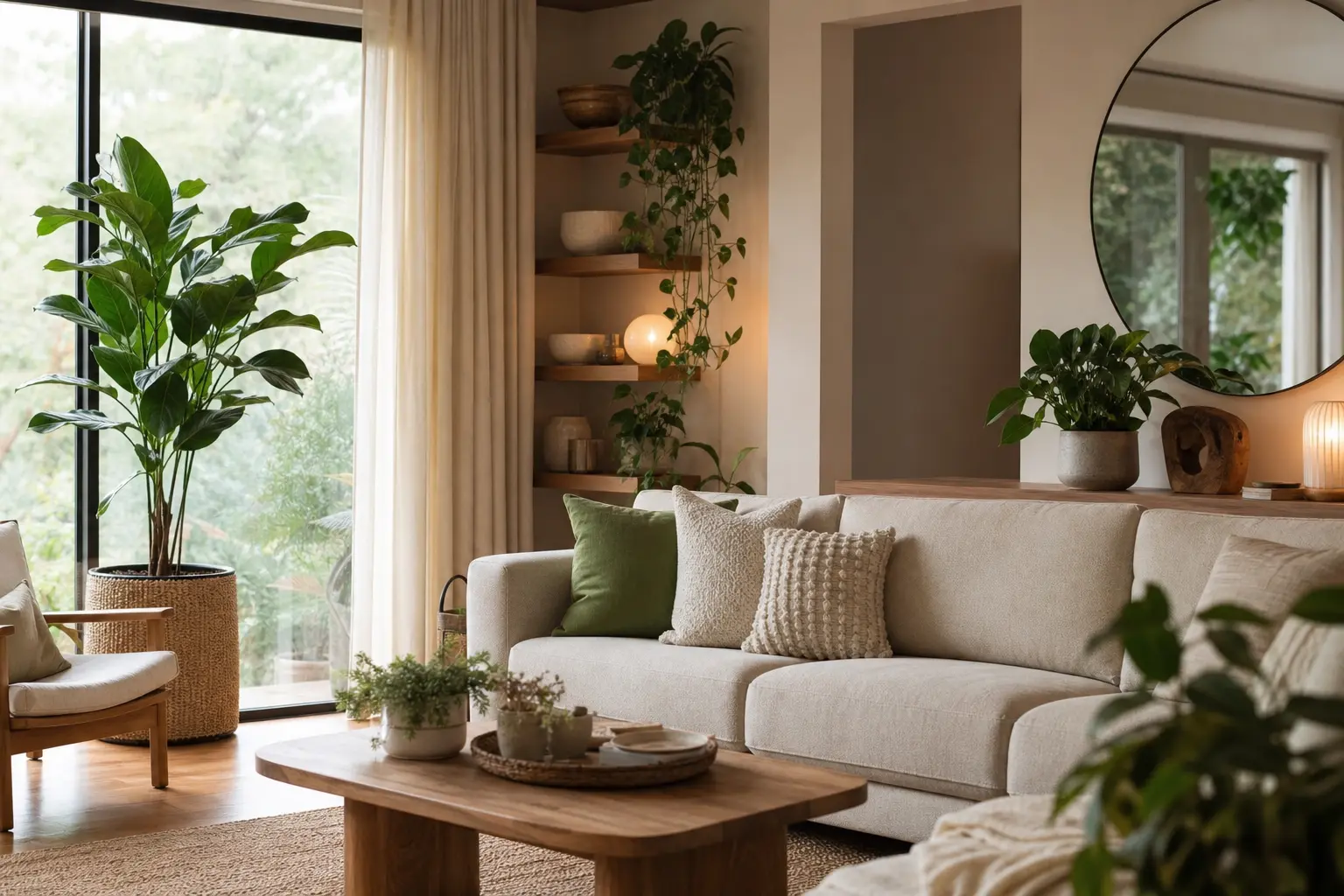
A living room doesn’t need to look like a greenhouse to feel dreamy and lush. Five to eight well placed plants, varied in size and grouped thoughtfully, usually create more impact than twenty scattered without a plan. Quality of placement matters more than sheer quantity.
Start with fewer plants than you think you need, then add gradually as you see how the room actually functions with greenery in it. It’s far easier to add more than to remove an overwhelming collection later.
Mistakes to Avoid
- Placing a high light plant in a dim corner where it can’t actually thrive
- Scattering plants evenly instead of clustering them for real visual impact
- Using identical pots throughout the room instead of varying material and finish
- Keeping every plant at the same height, which flattens the room’s overall look
- Choosing planters that clash with the room’s existing color palette
- Adding so many plants that the room feels overwhelming rather than dreamy
Frequently Asked Questions
How many plants should a living room realistically have? There’s no universal number. Five to eight thoughtfully placed plants tends to create genuine impact without overwhelming most standard sized living rooms.
What’s the easiest plant for a room without much natural light? A snake plant, a ZZ plant, or a pothos all tolerate lower, indirect light better than most other common houseplants. That makes them reliable choices for darker corners.
Should all my planters match, or is variety better? Variety in material and texture generally reads as more curated than an exact matching set. Sticking to a consistent color and finish family still keeps the room feeling cohesive.
How do I know if a spot in my room gets enough light for a plant? Observe the spot at different times of day. Direct sunlight for several hours suits sun loving plants. Indirect or filtered light calls for a shade tolerant variety instead.
Can plant styling really change how a whole room feels? Yes, often more than people expect. Greenery adds color, texture, and a sense of life that furniture and decor alone can’t replicate. That’s part of why professionally styled rooms almost always include plants.
Conclusion
A dreamy, lush living room comes down to thoughtful plant placement more than sheer plant quantity. Anchor the space with one tall floor plant, cluster smaller varieties near natural light, and vary both pot material and leaf texture throughout. Start with one or two key plants in the room’s brightest spot, then build the rest of the greenery collection out gradually from there.