10 Wavy Corner Shelf Decor Ideas for a Sage Green Aesthetic
A standard rectangular shelf in a sage green room does the job, but it doesn’t add much beyond basic storage. The straight lines just repeat what’s already happening everywhere else in the room, the door frame, the window trim, the furniture edges. Wavy corner shelf decor ideas for a sage green aesthetic break that pattern, using a soft curved shape to complement the calming, organic quality sage green already brings to a space.
The wave shape works particularly well with sage because both draw from nature. One borrows from water and rolling hills, the other from moss and eucalyptus leaves. Put them together with the right styling and a plain corner turns into something genuinely soothing to look at. Here are ten ways to build that combination.
1. Choose a Wavy Shelf in a Natural Material
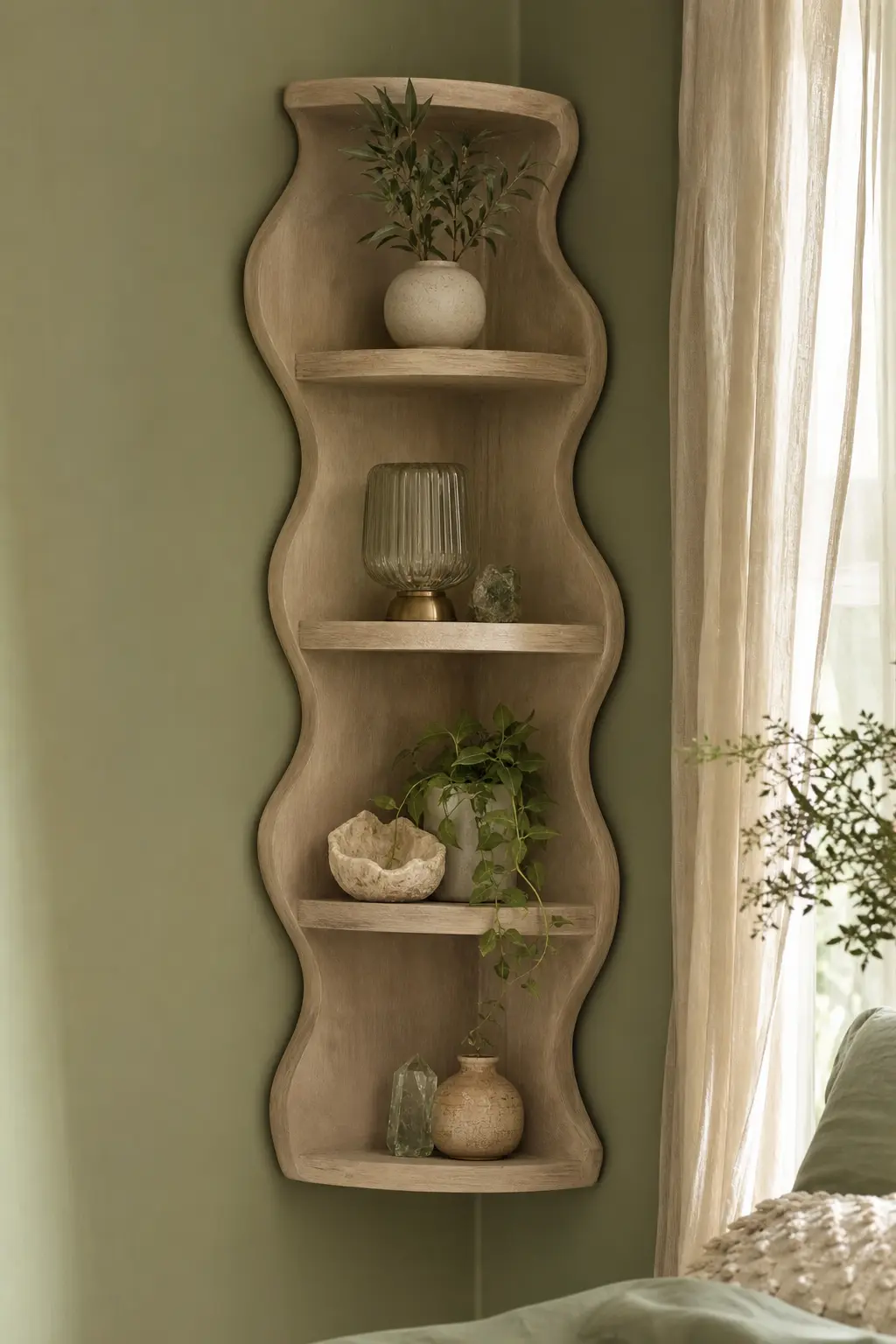
Look for a shelf in solid wood, rattan, or a wood veneer finish rather than painted MDF or plastic. A wavy shelf in a natural material, priced $40 to $120 depending on size, holds up better visually against sage green’s own organic, earthy quality.
Materials That Pair Best with Sage
Light oak and warm walnut both complement sage without competing with it. A painted white or black wavy shelf can work too, though it reads as more modern and slightly less connected to the natural, organic mood sage tends to evoke.
2. Pair the Shape with a Muted Sage Wall

A bright, saturated green can clash with the soft, flowing quality a wavy shelf is meant to convey. A muted, grayed down sage, closer to eucalyptus or dusty olive, supports the calm mood far better than a vivid, high contrast green.
Test a paint swatch directly behind where the shelf will sit before committing. Light shifts sage more than most colors, and the wrong shade can undercut the whole aesthetic you’re building toward.
3. Style with Curved Ceramics That Echo the Shelf’s Shape
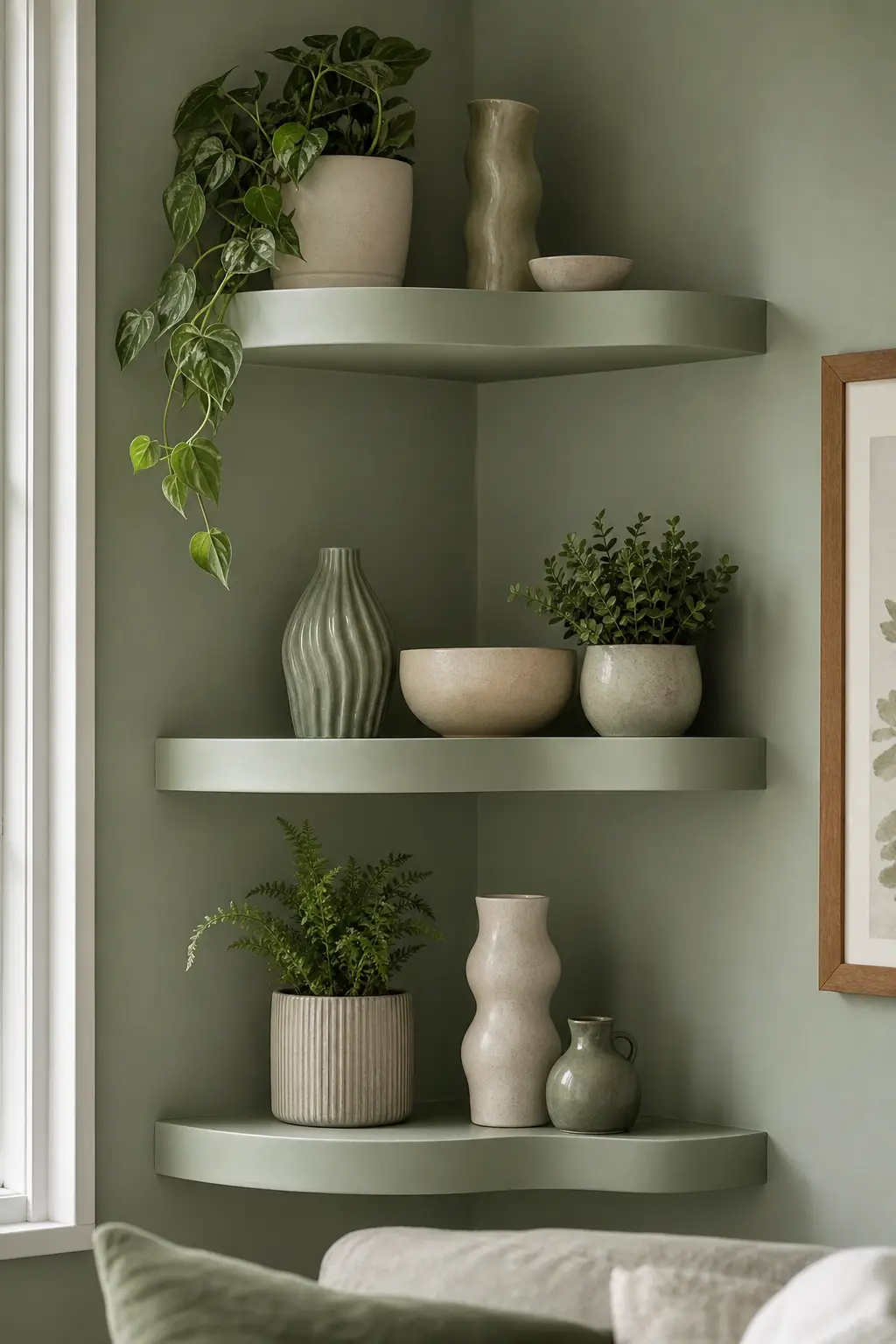
A shelf with a flowing, wavy edge looks best paired with objects that share that same soft geometry. Rounded vases, curved bowls, and organic shaped candle holders reinforce the theme rather than fighting against it with sharp, angular decor.
A wavy shelf styled with straight edged, boxy objects undercuts its own shape, since the eye reads the contrast as jarring rather than intentional. Matching the softness throughout the display matters more than people expect.
4. Add Warm Wood Alongside the Sage Palette
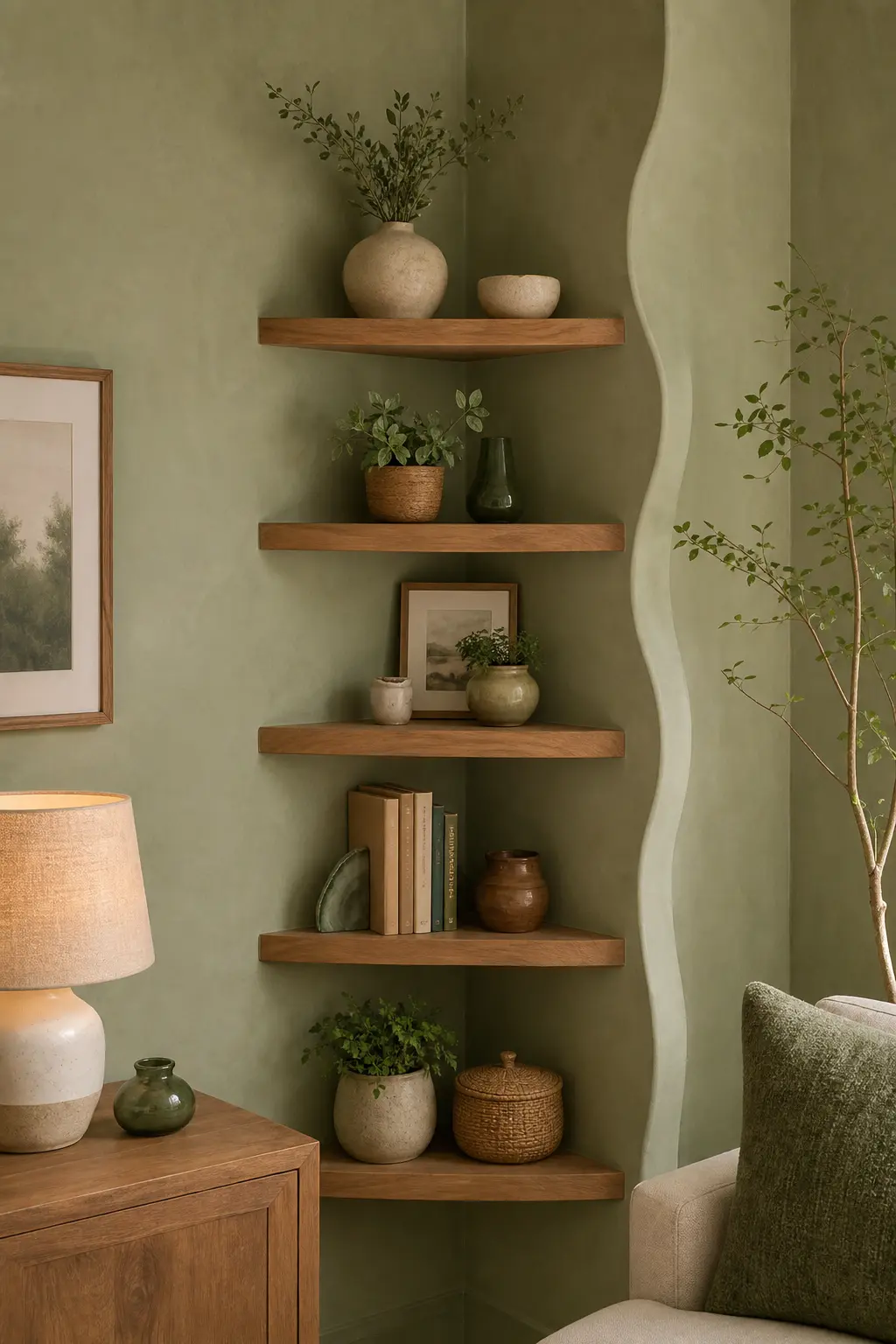
Sage on its own can lean a little cool, so warm wood tones balance it out and keep the corner from feeling flat. A small wood bowl, a carved wood object, or the shelf itself in a natural wood finish adds the warmth sage needs to feel fully grounded.
This pairing shows up throughout home design for good reason. Warm wood and sage green share enough contrast to look intentional together without ever clashing.
5. Keep the Color Palette to Three Tones
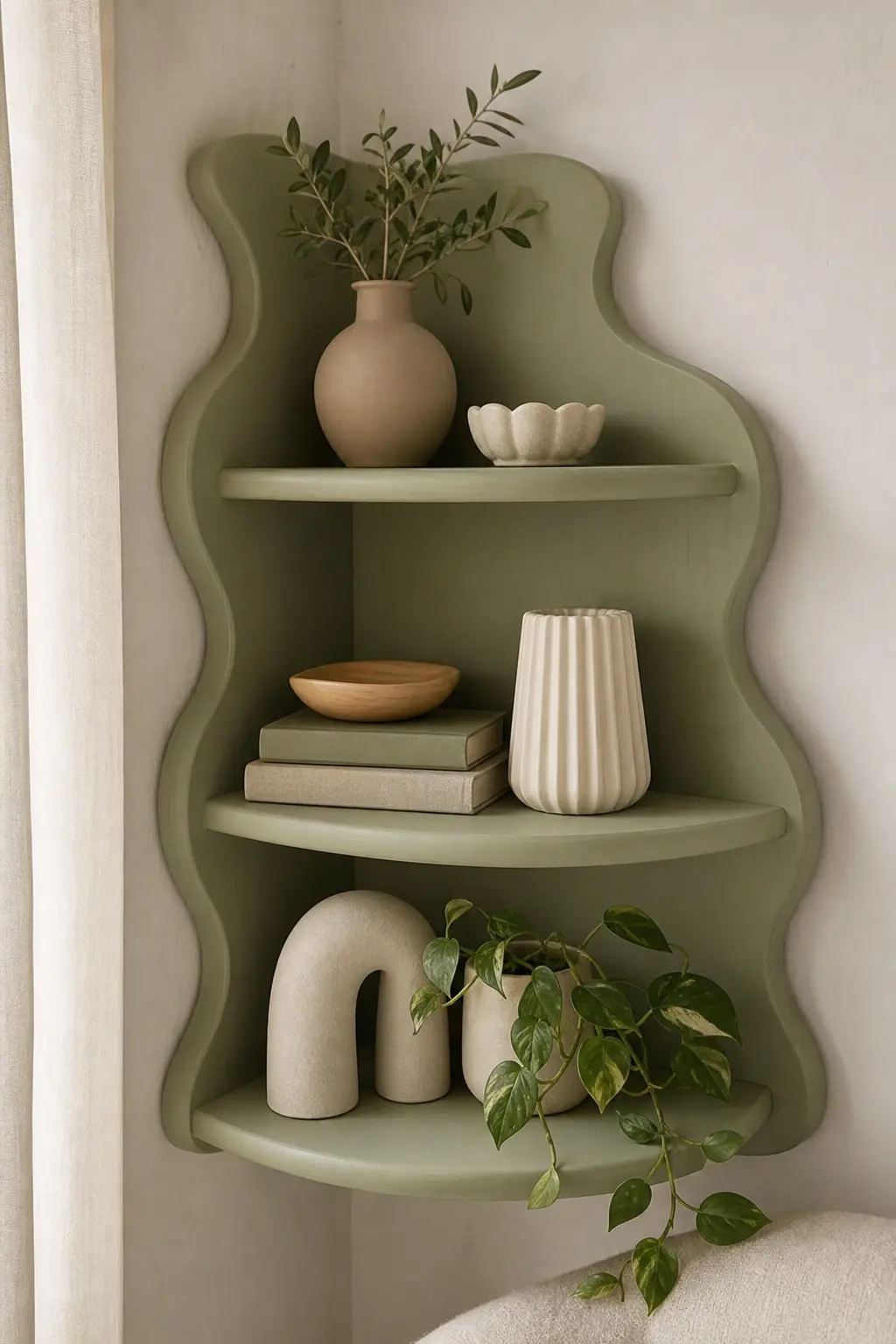
Sage, warm wood, and one neutral, cream or a soft white, is usually enough for this kind of display. Adding a fourth or fifth color competes with the calm, soothing mood the wavy shape and sage tone are working to create together.
A single small accent, a dusty terracotta candle or a muted blush object, can work as an exception, but keep it to one item rather than scattering that accent color across multiple pieces.
6. Use the Wave to Break Up a Sharp Corner

Corners are naturally angular, which is part of why a standard rectangular shelf feels so unremarkable there. A wavy shelf softens that hard architectural line, creating visual relief exactly where the room’s geometry is otherwise at its sharpest.
This effect is especially noticeable in a small room, where every hard corner adds to a sense of visual tension. The soft curve gives the eye somewhere gentler to land.
7. Add a Trailing Plant to Reinforce the Organic Feel

A pothos, a string of pearls, or a small trailing succulent draped over the shelf’s wavy edge doubles down on the organic theme already established by both the shape and the sage color. The plant’s own curved, cascading growth pattern echoes the shelf’s silhouette in a way that feels cohesive rather than accidental.
Choose a planter in cream or a soft terracotta to stay within the limited color palette established earlier, rather than introducing a bright or patterned pot that pulls focus away from the shelf itself.
8. Choose Brass or Matte Black Hardware
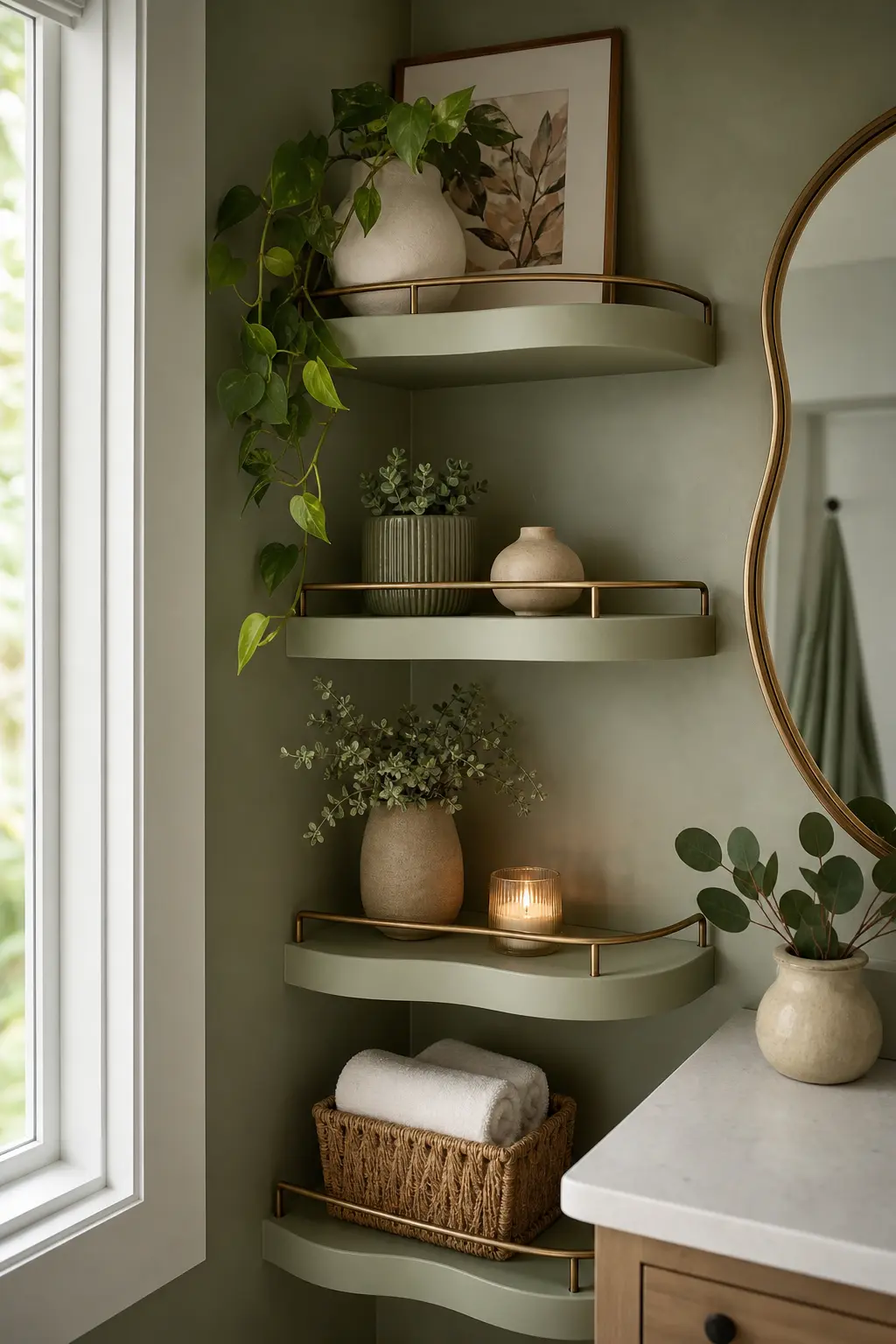
The mounting brackets for a wavy shelf are often visible, so their finish matters more than it would on a standard rectangular shelf mounted flush against the wall. Brass brackets add warmth that complements the wood and sage combination, while matte black offers a slightly more modern, grounded contrast.
Avoid chrome or bright silver hardware here. It tends to read as colder and more clinical, which works against the soft, organic mood the rest of the display is building.
9. Leave Room for the Shape to Stand Out

A wavy shelf loaded with too many objects loses the visual impact of its own curve, since the eye gets pulled toward the clutter rather than the silhouette itself. Style it with only two or three items, leaving enough of the shelf’s edge visible for the wave to actually read clearly.
This restraint matters more with a wavy shelf than a standard one, since the shape itself is the whole point of choosing this style over a plain rectangular alternative.
10. Repeat the Wavy Motif Elsewhere in the Room
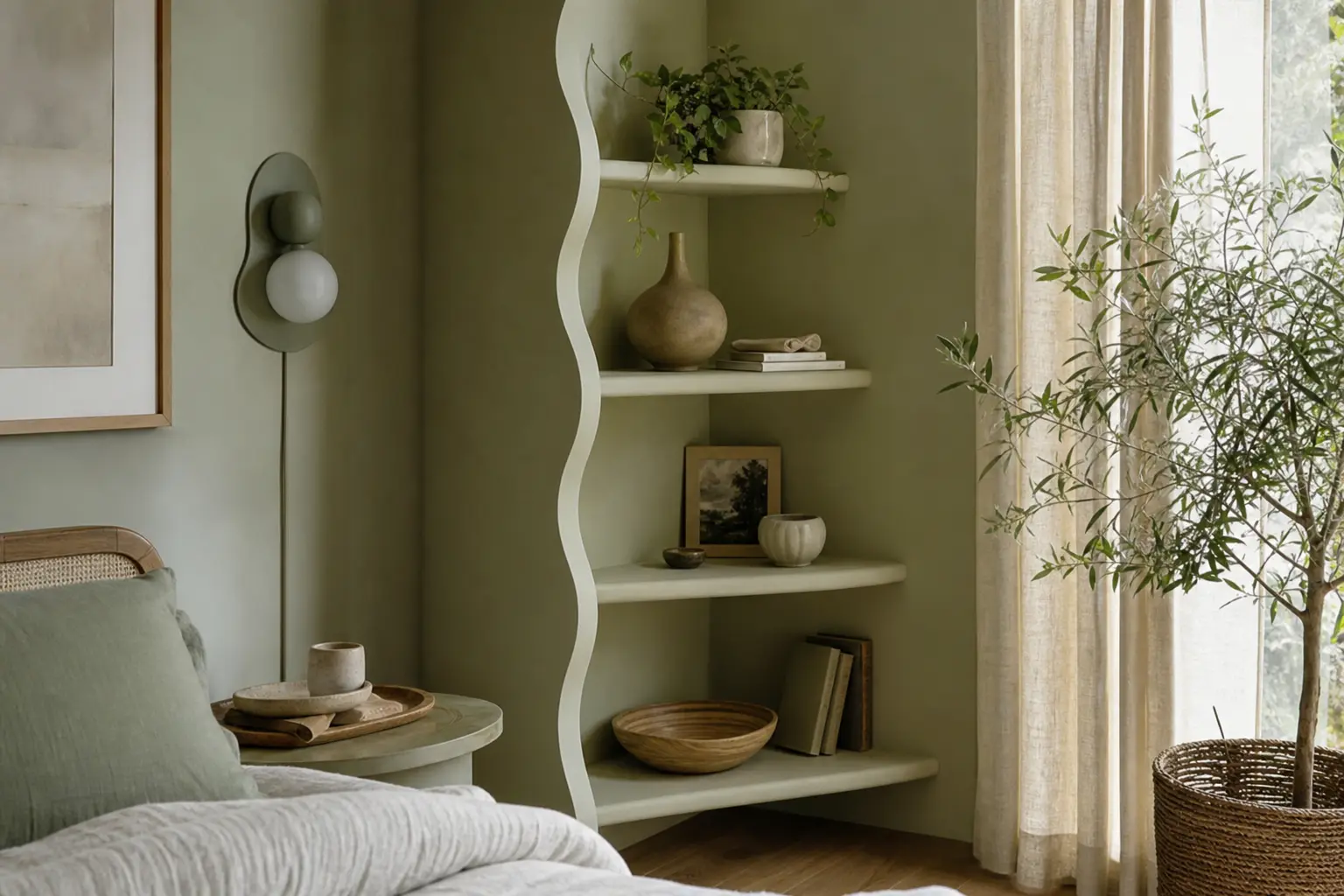
A single wavy shelf can look like an isolated novelty item if nothing else in the room echoes its shape. A curved mirror, a rounded side table, or even a wavy patterned throw pillow ties the shelf back into a broader design language rather than leaving it feeling like a standalone trend piece.
This repetition doesn’t need to be heavy handed. One or two additional curved elements elsewhere in the room is usually enough to make the whole space feel intentionally designed around the same soft, organic aesthetic.
Mistakes to Avoid
- Choosing a bright, saturated sage instead of a more muted, grayed down tone
- Styling the shelf with sharp, angular objects that clash with its soft curve
- Introducing more than three colors into the display and losing the calm mood
- Overloading the shelf with too many objects, hiding the wavy shape entirely
- Choosing chrome or bright silver hardware that reads as cold against the natural palette
- Leaving the wavy shelf as the only curved element in an otherwise very angular room
Frequently Asked Questions
Does a wavy shelf work in a room that isn’t already sage green? Yes, though sage pairs especially well with the shape’s organic quality. A wavy shelf can also work in a warm neutral or terracotta toned room using the same styling principles.
How much weight can a wavy floating shelf typically hold? Most hold 10 to 20 pounds when installed into wall studs, somewhat less than a standard rectangular shelf due to the more delicate silhouette, so check the specific weight rating before loading it up.
What’s the best way to find the right sage green shade? Look at samples under your room’s actual lighting rather than relying on an online product photo, since sage shifts noticeably between warm and cool lighting conditions.
Can I install a wavy shelf without professional help? Most come with standard mounting hardware suitable for a DIY installation, provided you’re comfortable locating wall studs and using a basic level to keep the curve properly aligned.
Is this aesthetic too trend focused to feel timeless? Choosing a natural material and a muted sage tone, rather than a glossy finish or a very saturated green, helps this look age more gracefully than a purely trend driven version might.
Conclusion
A wavy corner shelf paired with a muted sage palette turns an overlooked, purely functional corner into a genuinely calming little display. Choose a natural material, keep the color palette limited to three tones, and style with restraint so the curve itself stays the focal point. Start with the shelf and the wall color, then build the styling and repetition throughout the rest of the room from there.