10 Cozy Bedroom Ideas with Fairy Lights That Feel Magical
Fairy lights have a reputation problem. Say the words and most people picture a dorm room, string lights bought in a rush the week before move in day. Placed with a bit more thought, they do something completely different. These cozy bedroom ideas with fairy lights show how to use string lights in a way that actually feels magical and considered, not like leftover college decor.
1. Why Fairy Lights Get a Bad Reputation and How to Avoid It
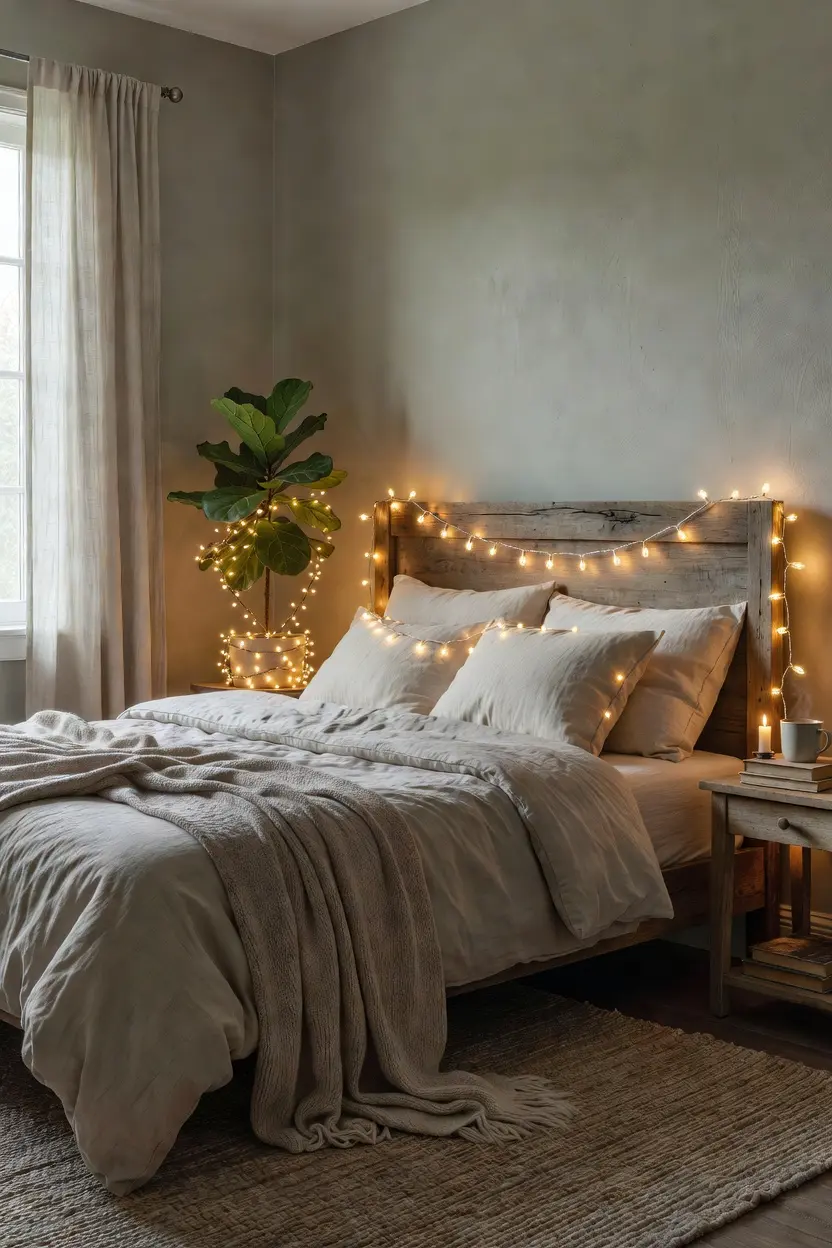
Most of the bad reputation comes down to two things. Cool toned, overly bright bulbs, and lights strung up with no real plan behind the placement. A single strand tossed loosely over a headboard, in harsh white light, reads as an afterthought, not a design choice.
The fix isn’t skipping fairy lights altogether. It’s being deliberate about both of those things. Warm toned bulbs and intentional placement turn the exact same basic string lights into something that elevates the room instead of cheapening it.
2. Choosing a Bulb Tone That Feels Elegant
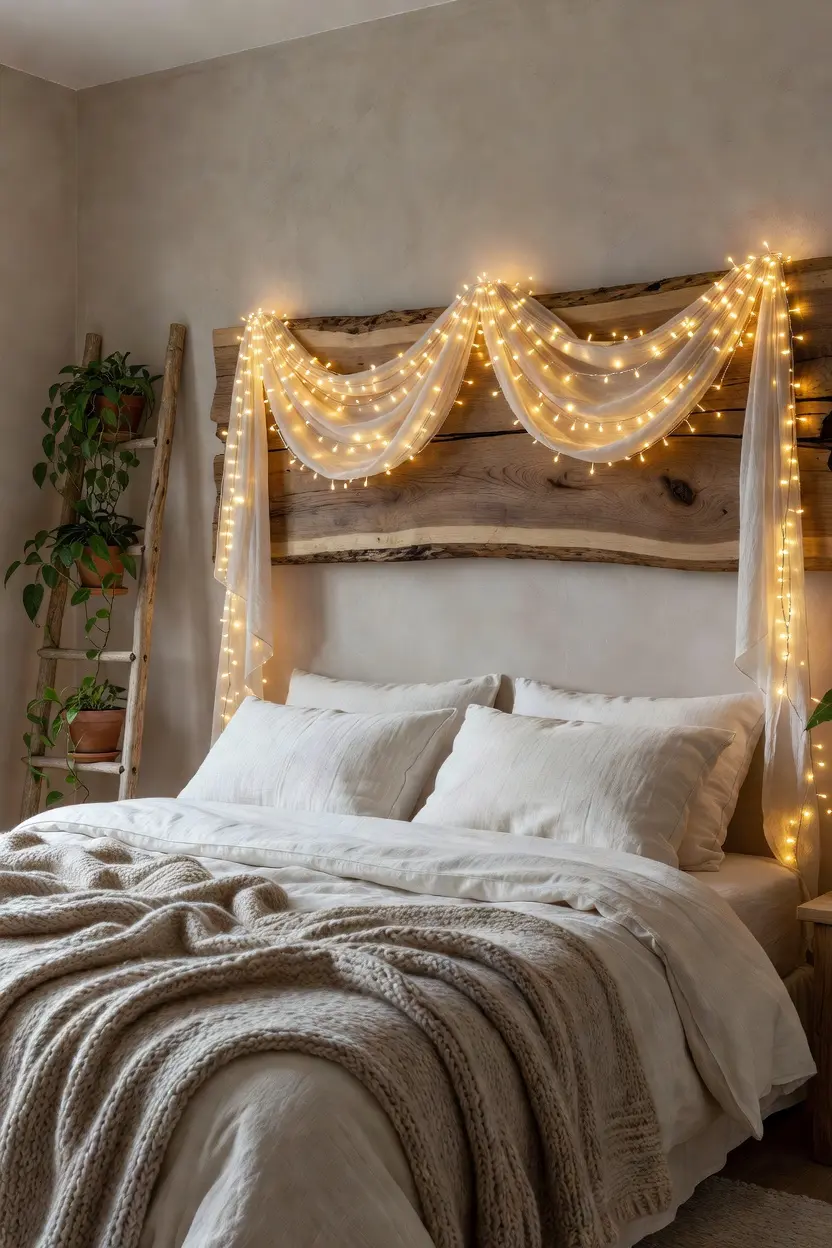
Fairy lights come in a range of tones, from cool blue white to warm amber, and that tone matters more than almost anything else in how elegant the result looks. Warm white, generally listed as 2700K to 3000K on the packaging, reads as soft and golden, closer to candlelight than a cool, clinical white.
Cool white or blue toned lights tend to read as more novelty or holiday themed. Fine for certain looks, but it works against a calm, cozy bedroom most people are actually going for. Check the packaging for “warm white” specifically, not just “white,” or you might end up with a cooler tone than you wanted.
A quick tip that helps: buy a single small strand first and test it in the room before committing to a bigger, more elaborate setup. Tone can look surprisingly different once it’s actually lit in your own space.
3. Placement Ideas Beyond a Basic Headboard Wrap

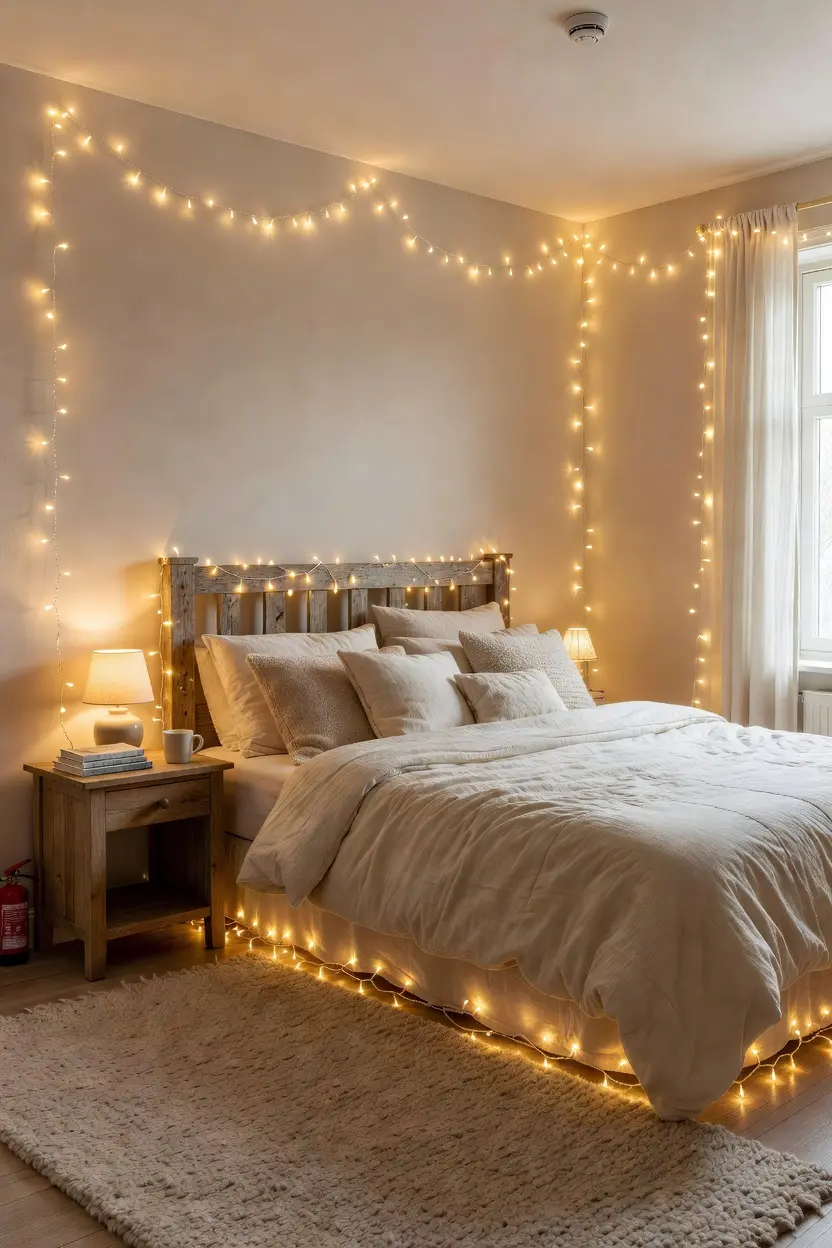
Wrapping a headboard is the most common placement. It’s also far from the only option, and often not the most elegant one. Drape lights along a wall in a loose, curved shape instead of a tight wrap, and you get a softer, more intentional look right away.
Framing a window with fairy lights, following the shape of the window rather than the whole wall, adds a subtle glow that works year round, not just during one season. Tucking a strand into a clear glass vase or jar on a nightstand creates a soft, contained glow, and it reads as more elevated than an exposed strand draped across furniture.
Ceiling and Corner Placement
Running a strand along the top of a wall, just below the ceiling, adds ambient light without needing to touch the furniture or headboard at all. This works especially well in a room with higher ceilings, where the light naturally draws the eye upward.
4. Pairing Fairy Lights With Other Textures and Materials
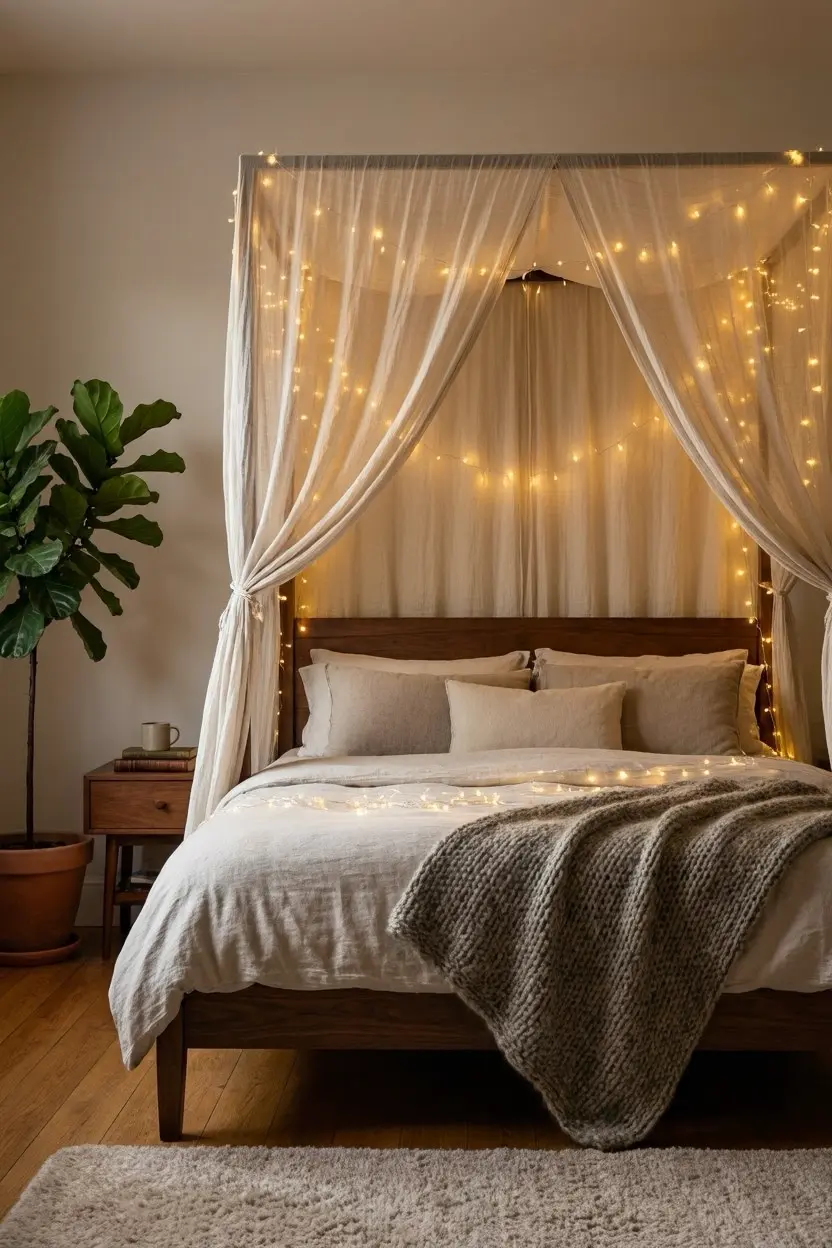
Fairy lights against a wood surface, a headboard or a shelf, cast a warm glow that brings out the wood grain in a way overhead lighting never quite manages. This pairing suits a room already leaning into warm, natural materials especially well.
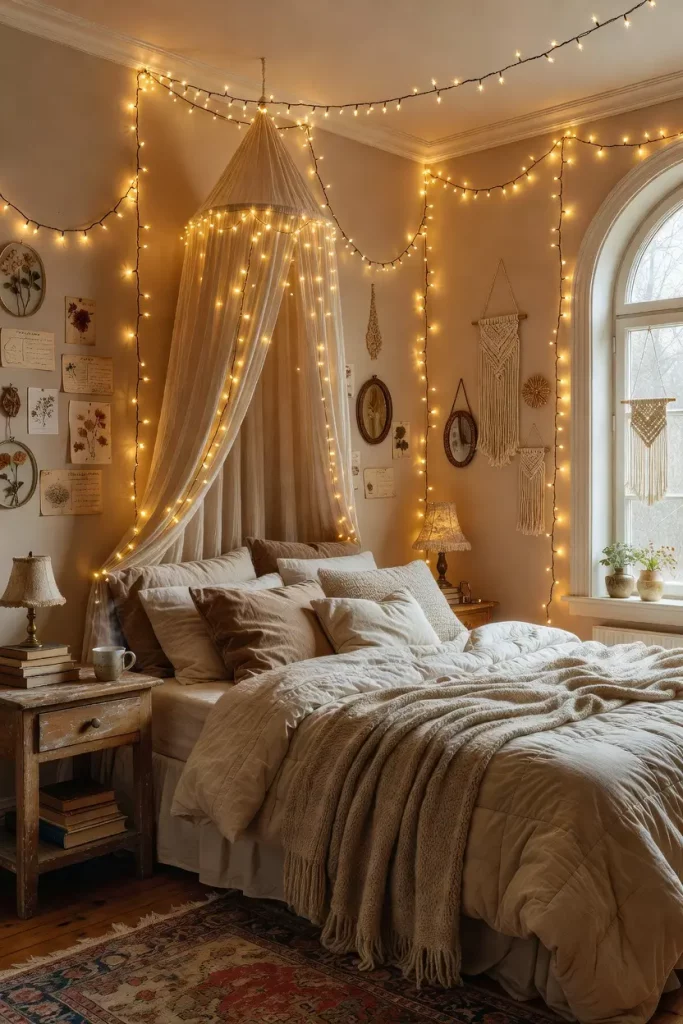
Sheer curtains or a light linen canopy diffuse fairy lights into something softer and more ambient, rather than showing every individual bulb as a sharp point of light. Placed behind a textured item, a macrame wall hanging or a woven piece, they add depth and shadow a flat wall on its own just can’t offer.
5. Canopy and Draped Lighting Setups
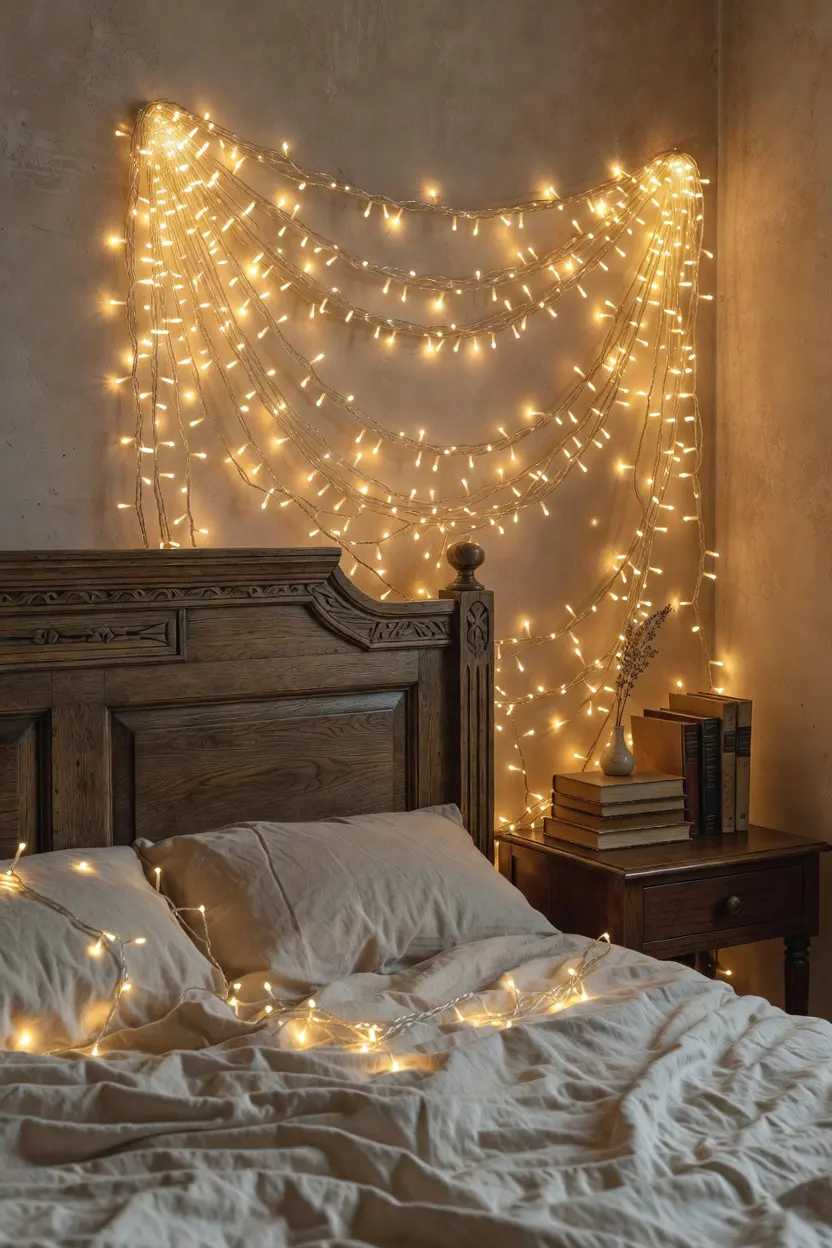
A canopy setup, lights draped across a frame or from a ceiling mounted hook above the bed, creates a soft, enclosed feeling. It reads as romantic and considered rather than casual, especially combined with sheer fabric, which softens the light further as it filters through.
Want something lower commitment? Drape a single strand loosely from two points on the ceiling instead of building a full frame. Similar effect, far less setup, and no permanent installation needed. Command hooks, rated for the weight of the lights, make this kind of draped setup possible in a rental without any damage to the ceiling or walls.
Key takeaway: the drape and drama of a canopy setup usually reads as more elevated than a straight, taut line of lights, since it brings in natural curves instead of sharp angles.
6. Fairy Lights Behind Furniture for Subtle Glow
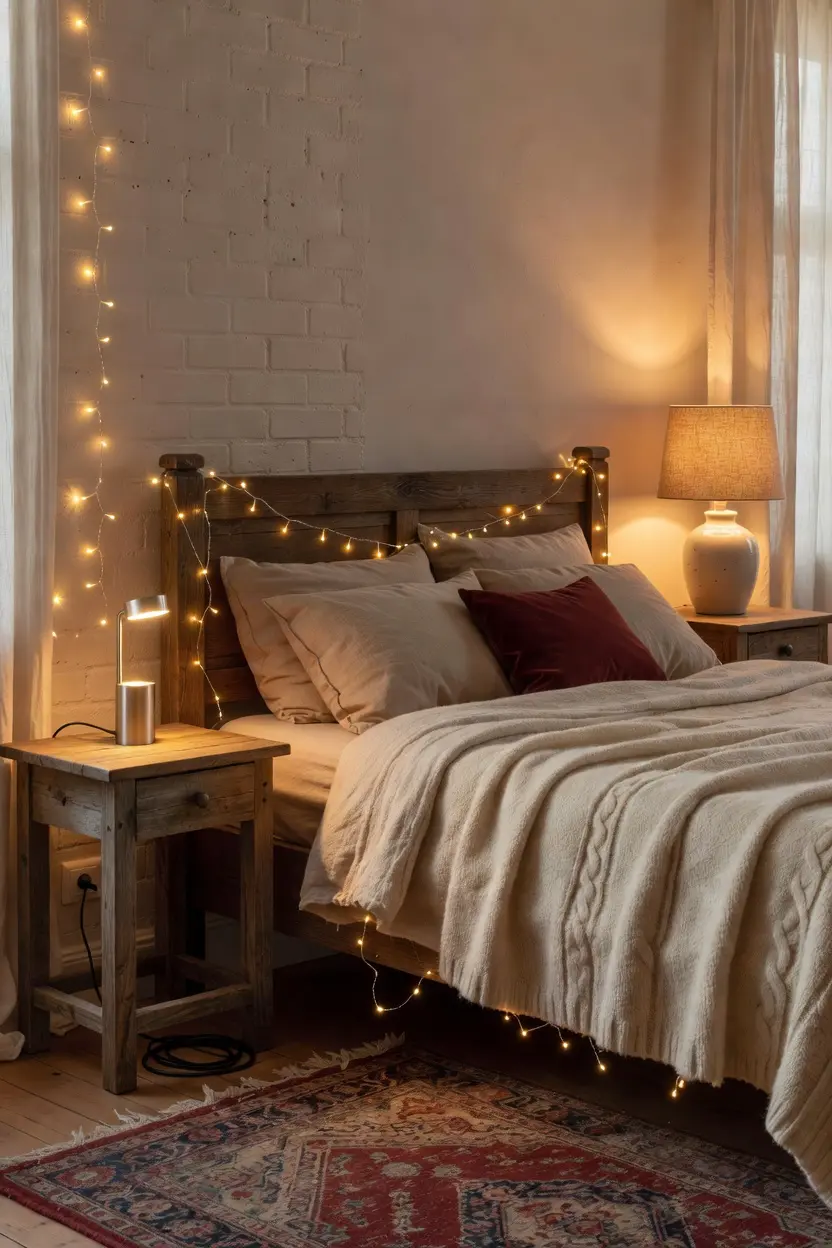
Place a strand behind a dresser, headboard, or bookshelf, rather than out in front where it’s fully visible, and you get a soft, ambient glow along the wall instead of a display of the lights themselves. That subtle approach tends to read as far more sophisticated than a fully exposed strand.
A strand tucked behind a mirror, along the edges but out of direct view, adds a soft halo effect that catches the eye without looking like an obvious string of lights at all. This works particularly well if you want the warm ambient effect without the lights becoming an obvious focal point in the room.
7. Battery Powered vs Plug In Options
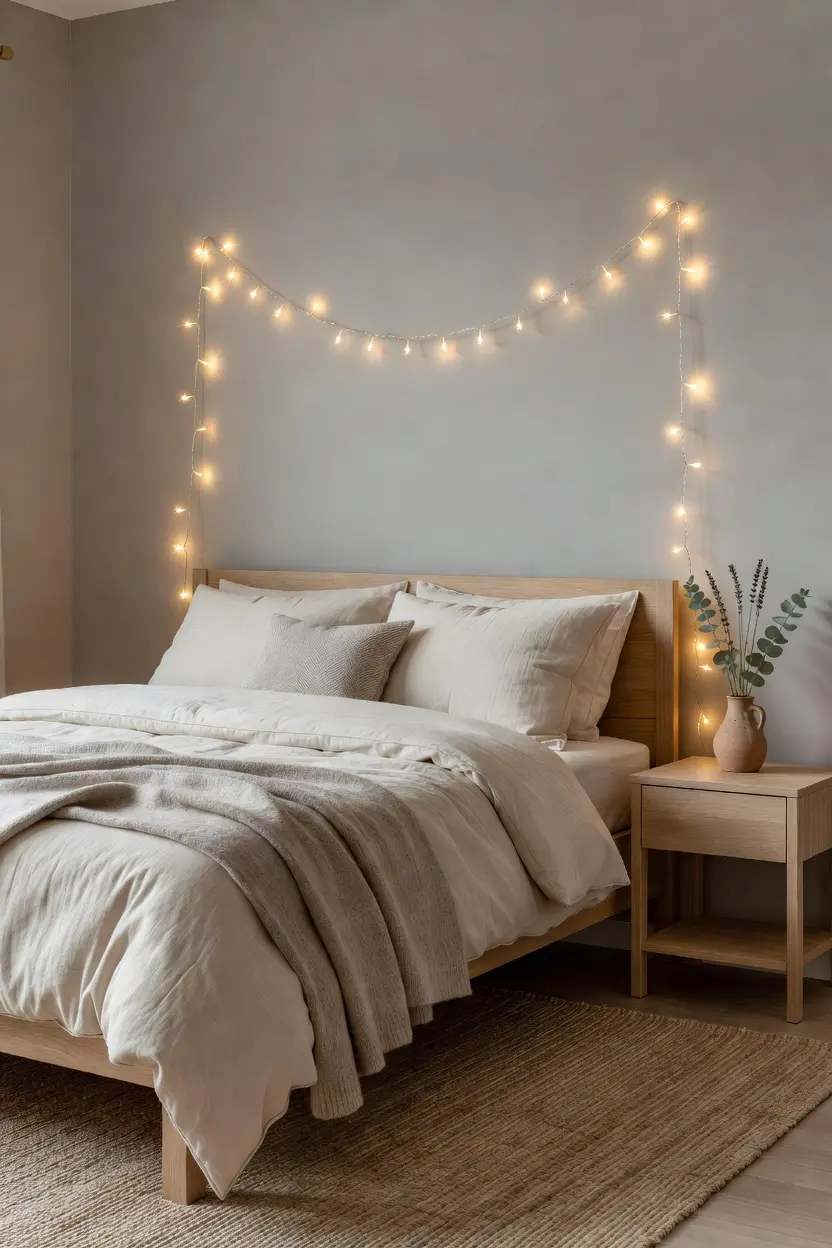
Battery powered fairy lights give you more placement flexibility, since they don’t need to sit near an outlet. That matters for placements like inside a jar or along a far wall with no nearby wiring. Most battery versions run on a timer or remote too, so the lights turn on automatically each evening without any manual switching.
Plug in versions tend to offer more consistent brightness over time, since batteries can dim slightly as they wear down. For a permanent setup near an existing outlet, a plug in version with a cord cover looks cleaner than a battery pack sitting out in view.
8. Avoiding a Cluttered or Overdone Look
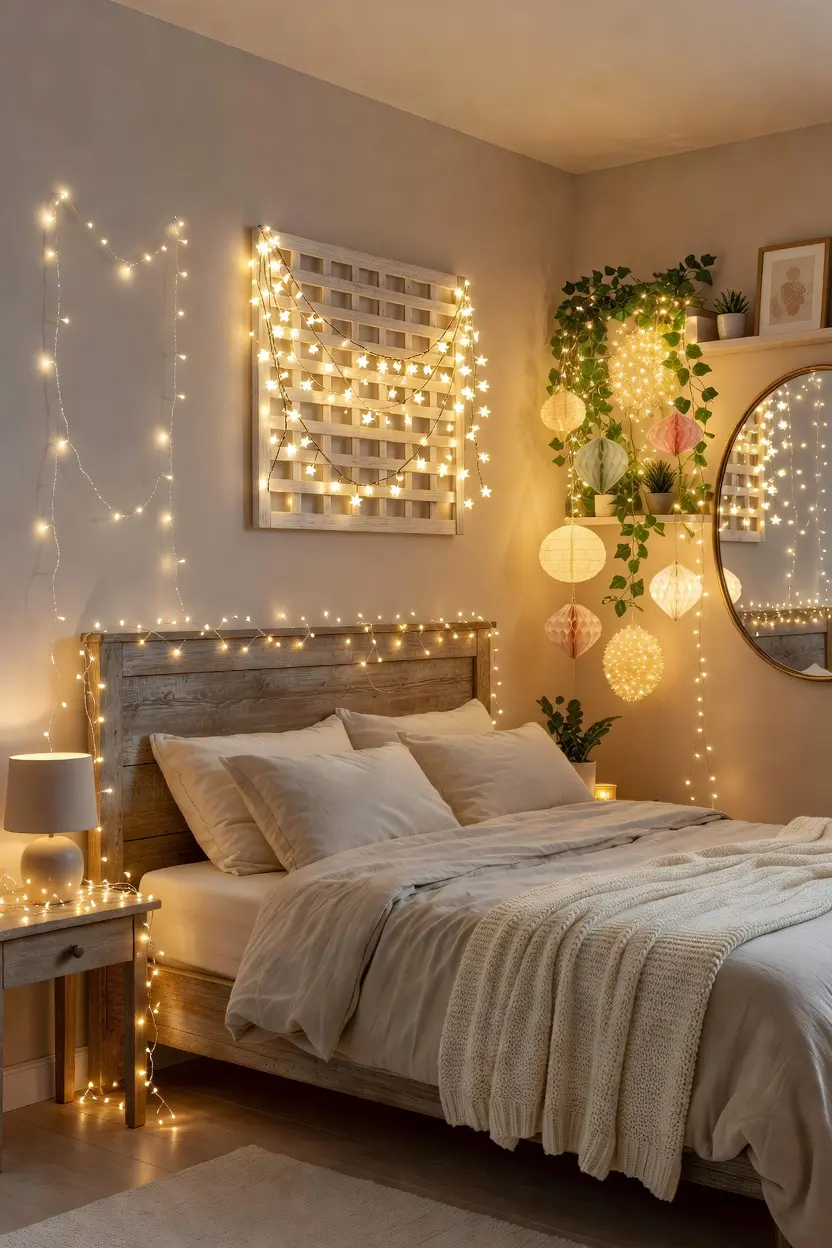
More isn’t always better with fairy lights. An overly dense, tangled placement can undercut the elegant look this whole approach is going for pretty quickly. A single, well placed strand following one clear line or shape usually looks more considered than several strands layered without a plan.
Combining fairy lights with too many other light sources in the same area can create visual competition instead of a cohesive glow. Let fairy lights be one layer among a few, not the only or dominant light source in the room, and the whole space stays balanced instead of looking like one feature taking over.
9. Budget Ranges for Different Fairy Light Setups
Basic warm white fairy light strands, battery powered, typically run 10 to 25 dollars for a single strand of reasonable length. Plug in versions with a longer strand or extras like a remote or timer generally run 15 to 35 dollars.
A full canopy setup, frame or ceiling hooks, sheer fabric, and one or two strands of lights, often costs 40 to 100 dollars total depending on the fabric and hardware you pick. Want something more elaborate, several strands across different areas of the room? A budget of 60 to 150 dollars usually covers a well considered, layered result.
10. Key Precautions Worth Knowing While Using Lights
Fairy lights, especially battery powered LED versions, generally run cool to the touch and carry a lower fire risk than older style incandescent string lights. Still, it’s worth checking that any strand used near bedding is actually rated for that use. Keep lights away from direct, extended contact with fabric, even LED versions, and you cut the risk down further.
Unplug or turn off plug in versions before falling asleep, or set a timer to turn them off automatically, rather than leaving any electrical component running unattended overnight. For canopy setups using command hooks, check the weight rating against the actual weight of the lights and fabric involved. It’s a quick check that keeps the whole setup from coming loose over time.
Mistakes to Avoid
- Choosing cool white or blue toned lights instead of a warm white tone
- Wrapping lights tightly around a headboard with no real shape or plan
- Overcrowding the room with too many strands layered without direction
- Skipping a check on weight ratings for hooks used in a canopy setup
- Leaving plug in lights running unattended overnight without a timer
- Placing lights in direct, prolonged contact with fabric or bedding
Frequently Asked Questions
What bulb tone should I look for in fairy lights for a bedroom? Look specifically for “warm white,” generally in the 2700K to 3000K range. Cool white or blue toned lights tend to read as more novelty and work against a calm, cozy bedroom look.
Are fairy lights safe to leave on overnight? Battery powered LED versions run cool and carry a lower risk than older incandescent lights. Still, it’s safer to use a timer or turn them off before falling asleep rather than leaving any light source running unattended for hours.
Can I use fairy lights in a rental without damaging the walls? Yes. Command hooks rated for the weight of the lights and any fabric involved allow for canopy or draped setups without permanent damage, and they come off cleanly when it’s time to move.
How do I keep fairy lights from looking messy or cluttered? Stick to one well placed strand following a clear line or shape, rather than layering multiple strands without a plan. Avoid combining them with too many other bright light sources in the same area too.
Do fairy lights work well in a grown up, elegant bedroom, or are they better suited to a kid’s room? With a warm bulb tone and intentional placement, behind furniture or diffused through sheer fabric, fairy lights suit a grown up bedroom just fine. It’s the overdone, cluttered look that reads as juvenile, not the lights themselves.
Conclusion
Fairy lights can genuinely elevate a bedroom once the bulb tone and placement get real thought instead of an afterthought. Stick to warm white, pick one or two placements with a clear shape rather than scattering lights everywhere, and pair them with textures like wood or sheer fabric that soften the glow further. Get that right, and fairy lights make a bedroom feel magical without ever reading as messy or unfinished.