10 Mezzanine Bedroom Ideas for a Cozy & Stylish Space
A mezzanine bedroom sounds like a dream on paper, an elevated, open sleeping loft with a view over the rest of the home. In practice, it can feel exposed, echoey, and strangely impersonal if it’s furnished the same way as a standard enclosed bedroom. Mezzanine bedroom ideas need to account for the openness of the space itself, since the usual rules of bedroom design don’t always translate to a loft with a railing instead of walls.
The goal is making an open, elevated space feel intimate and cozy without closing it in completely, since the openness is often the whole appeal of a mezzanine in the first place. Layered lighting, the right bed choice, and soft textiles do most of that work. Here are ten ways to build a mezzanine bedroom that feels genuinely cozy rather than just architecturally interesting.
1. Choose a Low Profile Bed for the Space

A low platform bed keeps the visual weight of the room down, which matters in a mezzanine where ceiling height is often more limited than in a standard bedroom below. It also reduces the sense of exposure that can come with an open, railing bordered sleeping area.
Look for a platform frame without a tall headboard, in the $200 to $600 range, so the bed doesn’t compete with the low ceiling that often comes with mezzanine construction.
Ceiling Height Considerations
Measure the ceiling height directly above where the bed will sit, not just the average height of the space, since mezzanines often have a sloped or lower ceiling toward the edges closest to the railing.
2. Soften the Railing Without Compromising Safety

The railing is often the most utilitarian, least cozy element of a mezzanine bedroom. Adding a woven textile panel, a curtain on a slim rod, or simply draping a soft throw over part of the railing can soften its appearance without blocking the view or compromising the safety barrier itself.
Never remove or modify a structural railing for aesthetic reasons. Any softening should be purely visual, added on top of the existing safety structure rather than altering it.
3. Add Layered Lighting for an Intimate Feel

A single overhead light in an open mezzanine can feel harsh and exposing, especially since the light often spills into the room below as well. Add a plug in table lamp or a wall mounted sconce near the bed, plus a set of warm string lights along the railing, for a softer, more contained glow.
Warm, layered lighting does more to make a mezzanine feel like an intimate bedroom rather than an open loft platform than almost any other single change. It’s the detail that shifts the space from architectural feature to genuine retreat.
4. Use a Rug to Ground the Elevated Floor

Mezzanine flooring is often the same hard material used throughout the rest of the home, which can feel cold and impersonal for a bedroom. A soft, plush rug under and around the bed adds warmth underfoot and visually defines the sleeping area as distinct from the open platform surrounding it.
Choose a rug large enough to extend well beyond the sides of the bed, since a small rug can look lost in the open expanse of a typical mezzanine layout.
5. Choose Bedding That Feels Enclosed and Cozy
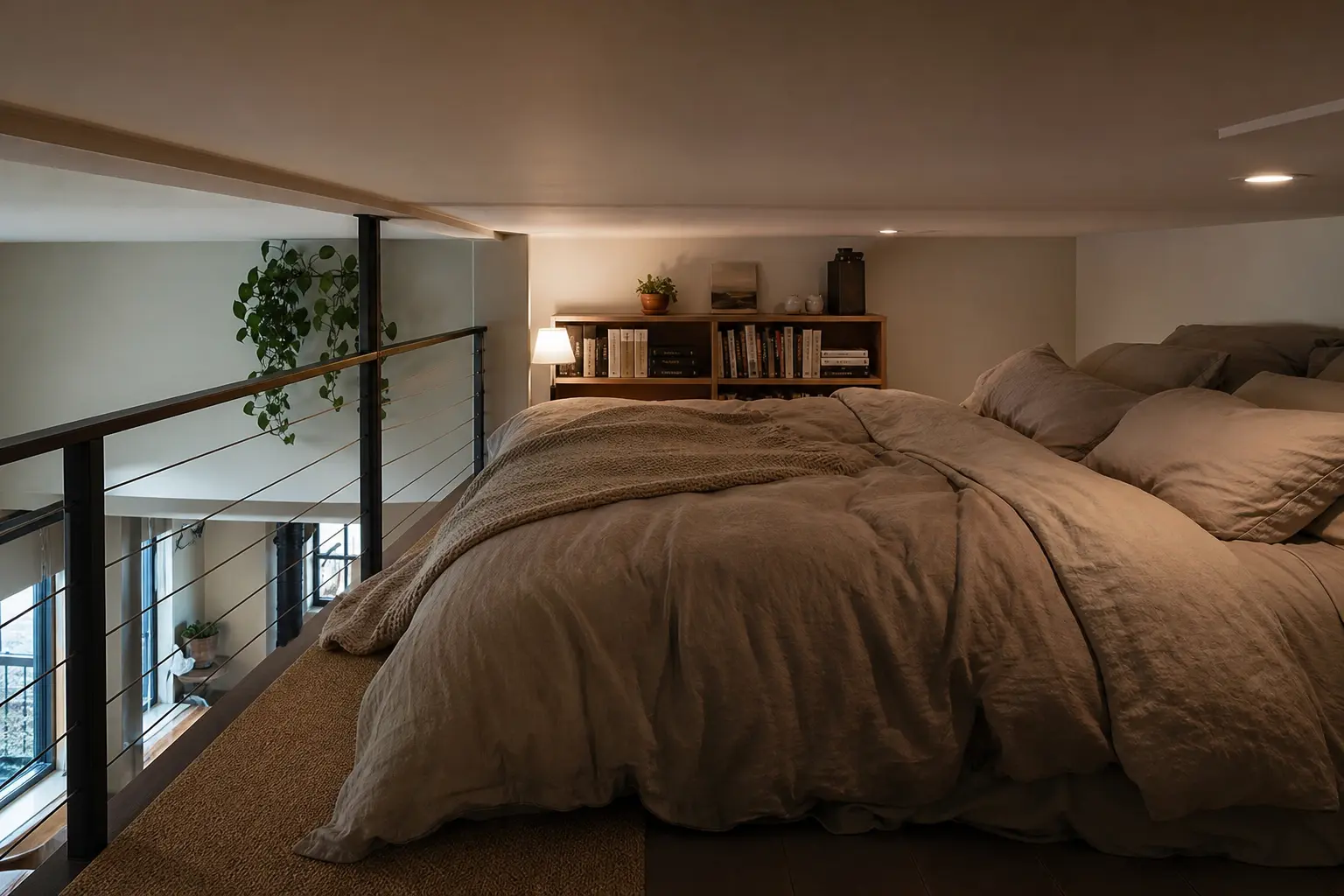
Since a mezzanine bedroom often lacks the enclosed feeling of four walls, the bedding itself needs to do more work to create a sense of coziness. Choose a thicker duvet, layered pillows, and a substantial throw blanket, rather than minimal, sparse bedding that can feel underwhelming in an already open space.
Deeper, richer colors in the bedding, a warm charcoal, a deep terracotta, a rich navy, tend to feel more grounding in an open loft space than very light, airy tones that can wash out against the surrounding openness.
6. Add Curtains or a Canopy for Softness

A canopy frame with sheer or lightweight curtains around the bed creates a sense of enclosure within the larger open mezzanine, giving the sleeping area its own soft boundary without walling off the whole space. This works especially well in a mezzanine with enough ceiling height to accommodate a canopy structure.
Alternatives to a Full Canopy
If a full canopy frame isn’t practical given the ceiling height, a single curtain panel hung from a ceiling mounted rod on one side of the bed can create a similar sense of partial enclosure with a much smaller footprint.
7. Keep Furniture to the Essentials
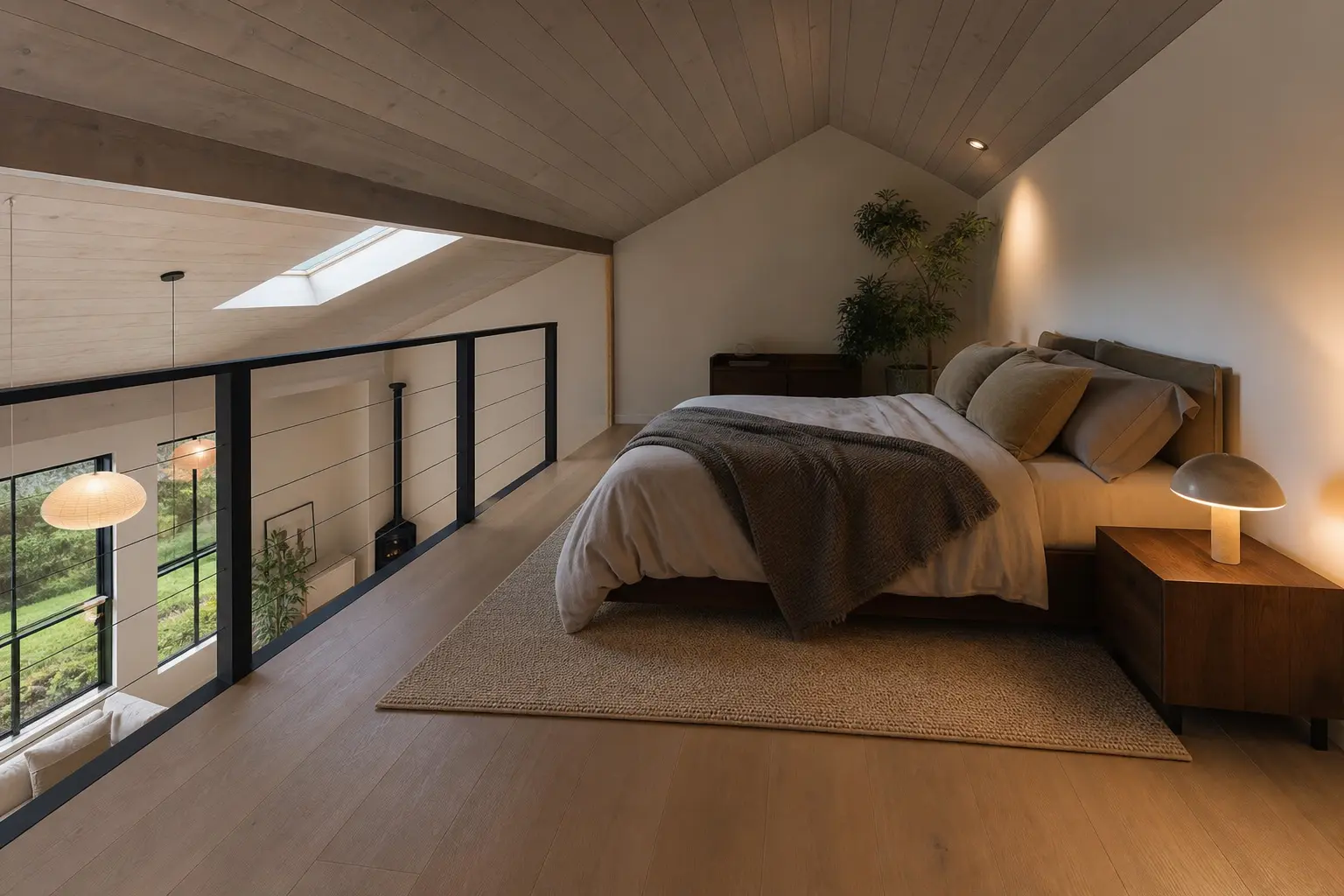
An open mezzanine layout usually works better with fewer, more considered furniture pieces than a fully furnished bedroom below. A bed, a small nightstand, and perhaps a slim bench are often enough. Overfilling the space with furniture can make an already open area feel cluttered rather than intentional.
This restraint also matters for safety and flow, since a mezzanine typically has less usable floor space than it initially appears to have once you account for the railing perimeter and any support beams.
8. Use Color to Make the Space Feel Warm

A mezzanine painted or left in the same neutral tone as the walls below can feel like an extension of open, undefined space rather than its own bedroom. A deeper, warmer wall color, where the mezzanine’s own walls or knee walls allow for it, helps define the space as distinctly its own room.
Even where full walls aren’t an option, warm colored bedding, a rug, and a curtain panel can achieve a similar effect by visually anchoring the space in a specific, intentional palette.
9. Add Storage That Doesn’t Interrupt the Openness

Under bed storage bins, a slim nightstand with a drawer, or hooks mounted along an available knee wall keep everyday items organized without adding bulky furniture to an open space. This matters more in a mezzanine than in a standard bedroom, since floor space is often more limited and more visually exposed.
Avoid tall dressers or wardrobes in the mezzanine itself if possible, since their height can feel disproportionate in a space that often already has a lower ceiling than a standard room.
10. Bring in a Small Amount of Greenery

A single plant near the bed or on a small shelf adds a natural, softening element to an otherwise architectural, hard edged space. Choose a low maintenance option, a pothos or a small succulent, that tolerates the light conditions typical of a mezzanine, which often has less direct natural light than the floor below.
A plant in a warm toned planter also reinforces the cozy color palette established through the bedding and rug, tying the small details of the space together.
Mistakes to Avoid
- Choosing a tall headboard or bulky bed frame in a space with limited ceiling height
- Removing or altering the safety railing for purely aesthetic reasons
- Relying only on a single overhead light instead of layered, warmer lighting
- Skipping a rug and leaving the mezzanine floor feeling cold and impersonal
- Overfurnishing the space and losing the open, airy quality that makes a mezzanine appealing
- Choosing very light, minimal bedding that gets visually lost in an already open space
Frequently Asked Questions
How do I make a mezzanine bedroom feel private? Softening the railing with a curtain panel or textile, combined with a canopy or partial curtain around the bed itself, creates a sense of enclosure without fully closing off the open layout.
What ceiling height do I need for a mezzanine bedroom? At least 6 to 7 feet at the tallest point is generally comfortable for sitting up in bed, though a lower ceiling can still work well with a very low profile bed and careful furniture placement.
Will noise from the rest of the home be a problem in a mezzanine bedroom? Since a mezzanine is typically open to the space below, sound does travel more freely than in an enclosed bedroom. Soft textiles, a rug, and curtains can help absorb some sound, though full sound isolation isn’t usually possible in this kind of layout.
Can I add a full canopy if my mezzanine has a sloped ceiling? It depends on the available height. A single curtain panel on one side of the bed is often a better fit than a full four post canopy frame when ceiling height is limited or uneven.
What’s the most affordable way to cozy up an existing mezzanine bedroom? A rug, a set of warm string lights, and a thicker duvet usually cost under $150 combined and make a noticeable difference in how enclosed and inviting the space feels.
Conclusion
A cozy, stylish mezzanine bedroom comes down to softening an inherently open space without closing it off entirely. Layered lighting, a grounding rug, and richer bedding do most of the work, while a canopy or curtain panel adds a further sense of intimacy where the ceiling height allows. Start with the lighting and the rug, then build out bedding, curtains, and small personal touches from there.