10 Cozy Crochet Daisy Blanket Ideas You’ll Want to Make
A store bought throw blanket does the job, but it rarely feels like it belongs to you the way something handmade does, and that’s exactly the gap cozy crochet daisy blanket ideas fill. A blanket built from individual daisy motifs, or one with daisy accents worked into a solid base, brings texture, color, and a bit of cheerful nostalgia that a mass produced throw just can’t match. This guide covers how to choose, style, and take care of one, whether you’re buying from a maker or picking up a hook yourself.
1. Understand What Makes a Daisy Blanket Different From a Standard Throw
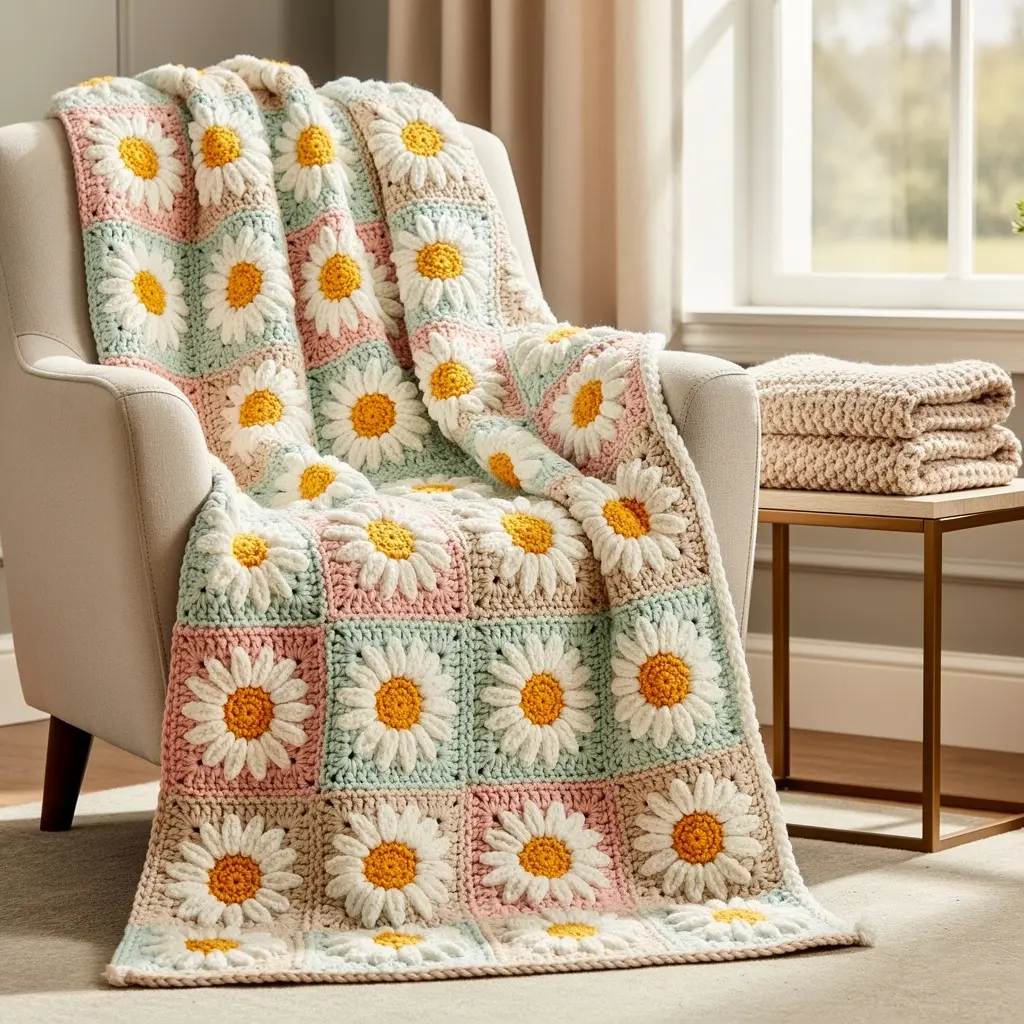
A crochet daisy blanket usually comes together one of two ways. Either it’s made from individual daisy granny squares, stitched or joined together into a full blanket, or it starts as a solid crochet or knit base with daisy motifs sewn on as accents. Both bring in that handmade charm, but they read pretty differently. One feels like an all over pattern, the other more like a decorated piece with a few standout details.
Part of the appeal here is the imperfection. Small variations in stitch tension, or daisies that aren’t perfectly uniform in size, are part of what makes the piece feel handmade instead of something that rolled off a factory line. Worth leaning into that instead of chasing perfect uniformity.
2. Choose a Daisy Pattern Style That Fits Your Skill Level
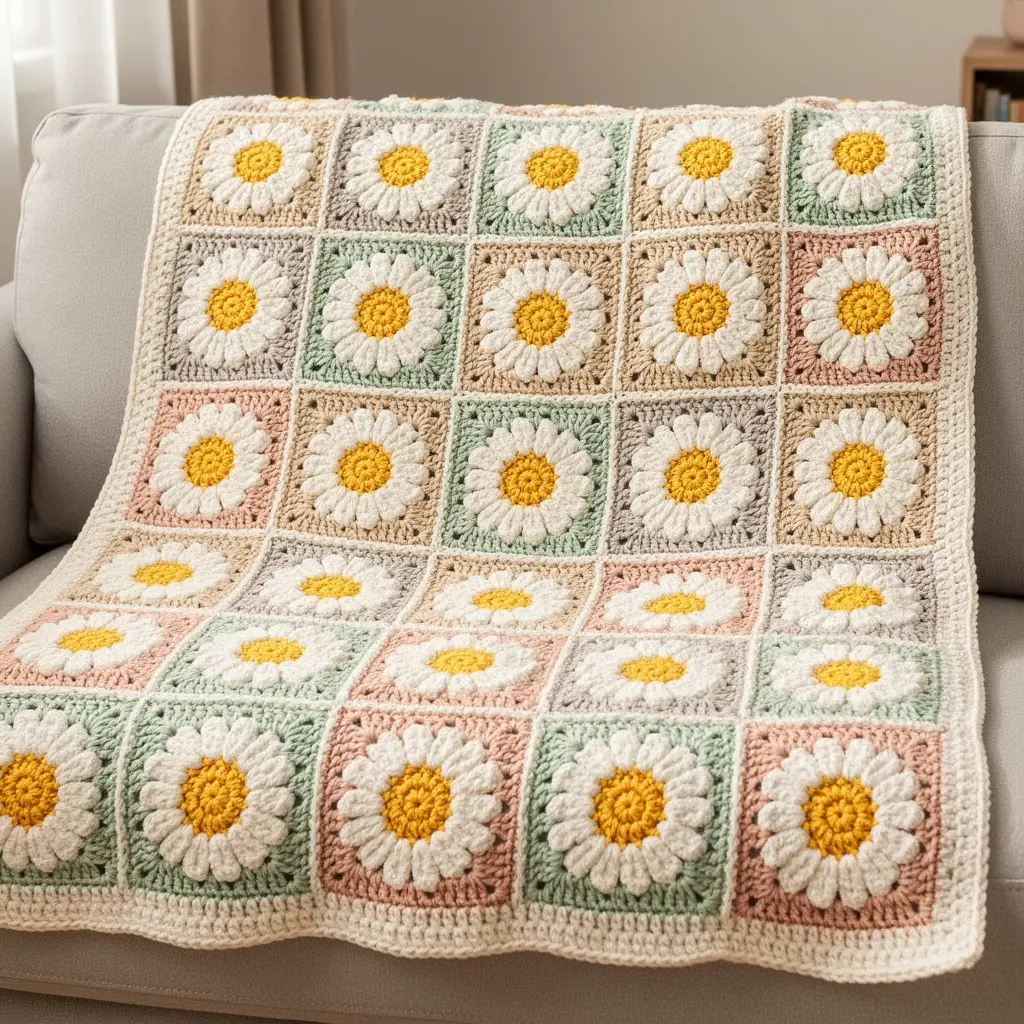
Daisy granny squares come in a range of complexity, from a simple five petal square worked in just two colors to more layered designs with multiple rounds and shading. If you’re newer to crochet, starting with a basic daisy square, one that only needs a handful of stitch types, gets you a finished blanket faster and with less frustration than jumping straight into an intricate pattern.
A blanket made from a repeated simple square often looks more cohesive than one built from a complicated pattern rushed through unevenly. So there’s an argument for keeping it simple even beyond just ease, it can genuinely look better finished.
3. Pick Yarn Colors That Match Your Room’s Existing Palette
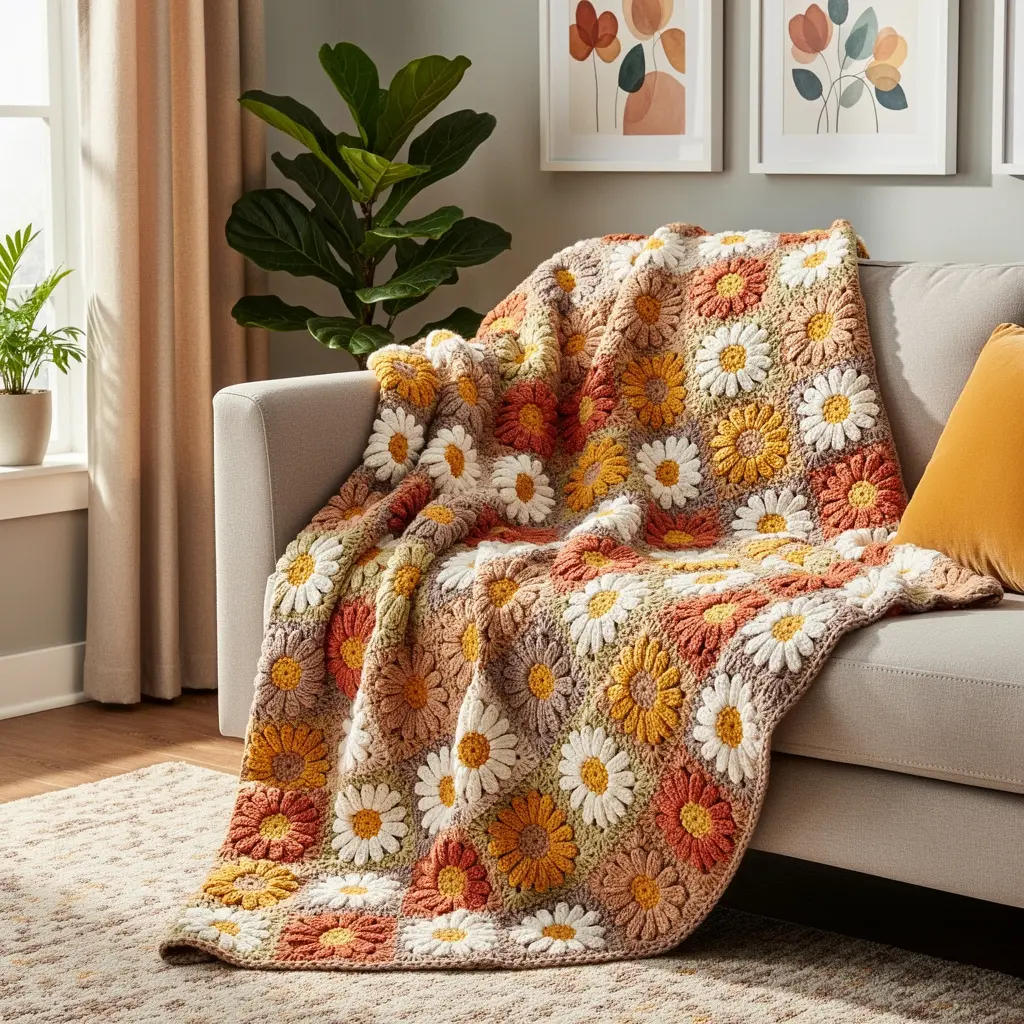
Daisy blankets get associated with bright whites and yellows, since that’s the classic daisy color combo, but working the same pattern in a room’s existing neutral or muted palette blends it into a wider range of home styles. Soft cream with a butter yellow center, dusty rose petals, or sage green leaves all fit cottagecore and general cozy, eclectic rooms without looking like a kids room throw.
If your space already leans bold or maximalist, a brighter, more classic daisy color combo can work as an intentional statement piece instead of something to tone down. Either way, picking the palette on purpose beats grabbing whatever yarn happens to be on sale.
A Note on Mixing Shades
Using two or three slightly different yellows or whites across different daisies, rather than one uniform shade throughout, actually helps the blanket feel more handmade and less like a printed pattern. This is one spot where a little inconsistency works in your favor.
4. Decide Between a Full Daisy Motif Blanket and Daisy Accents Only
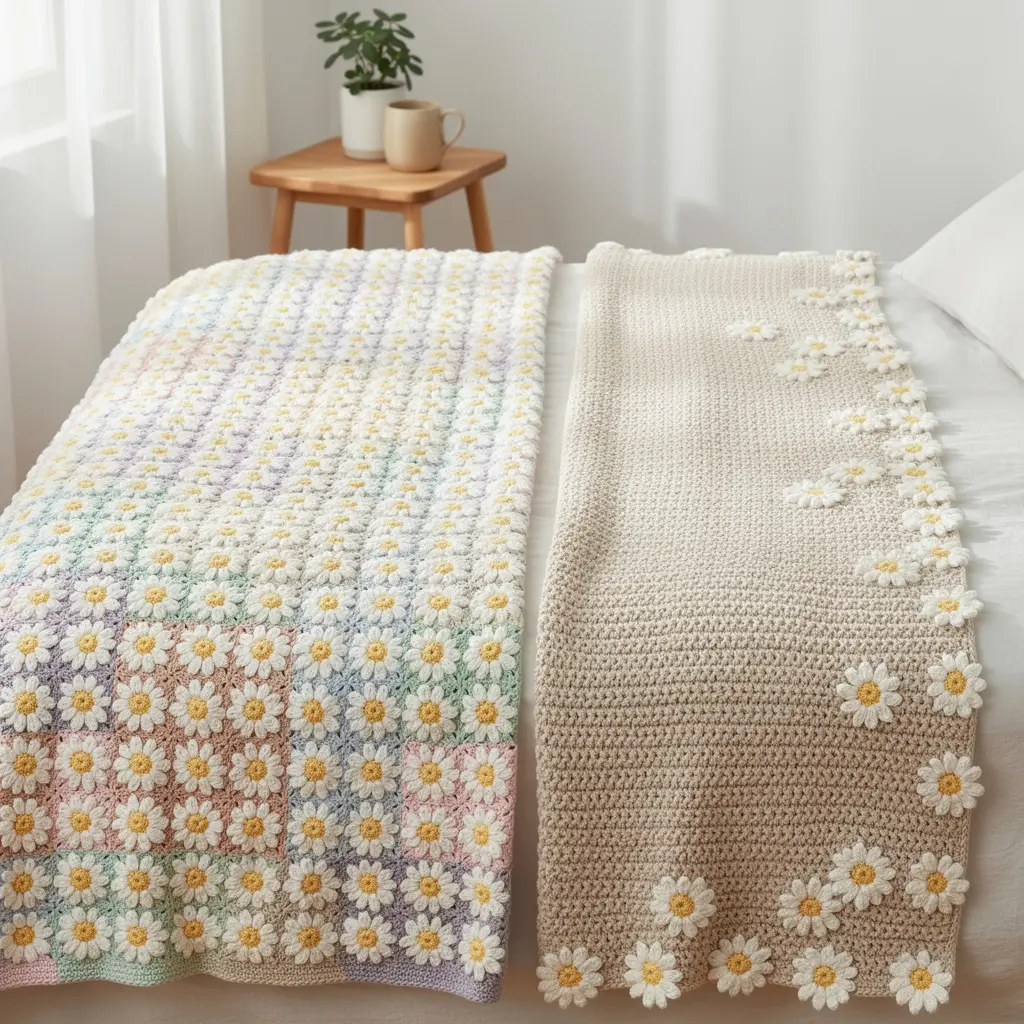
A full daisy motif blanket, made entirely of joined daisy squares, is a bigger project but gives you an all over pattern that reads clearly from across the room. It also tends to be heavier and warmer than a solid base blanket, since granny square construction naturally has more layers of yarn.
A solid crochet or knit blanket with a few daisy motifs sewn on as accents, maybe scattered across one corner or along a border, is a faster project and gives a subtler, more restrained look. If you want the daisy detail without a full statement piece, this is generally the easier route.
5. Consider Yarn Weight and Blanket Size for How You’ll Use It
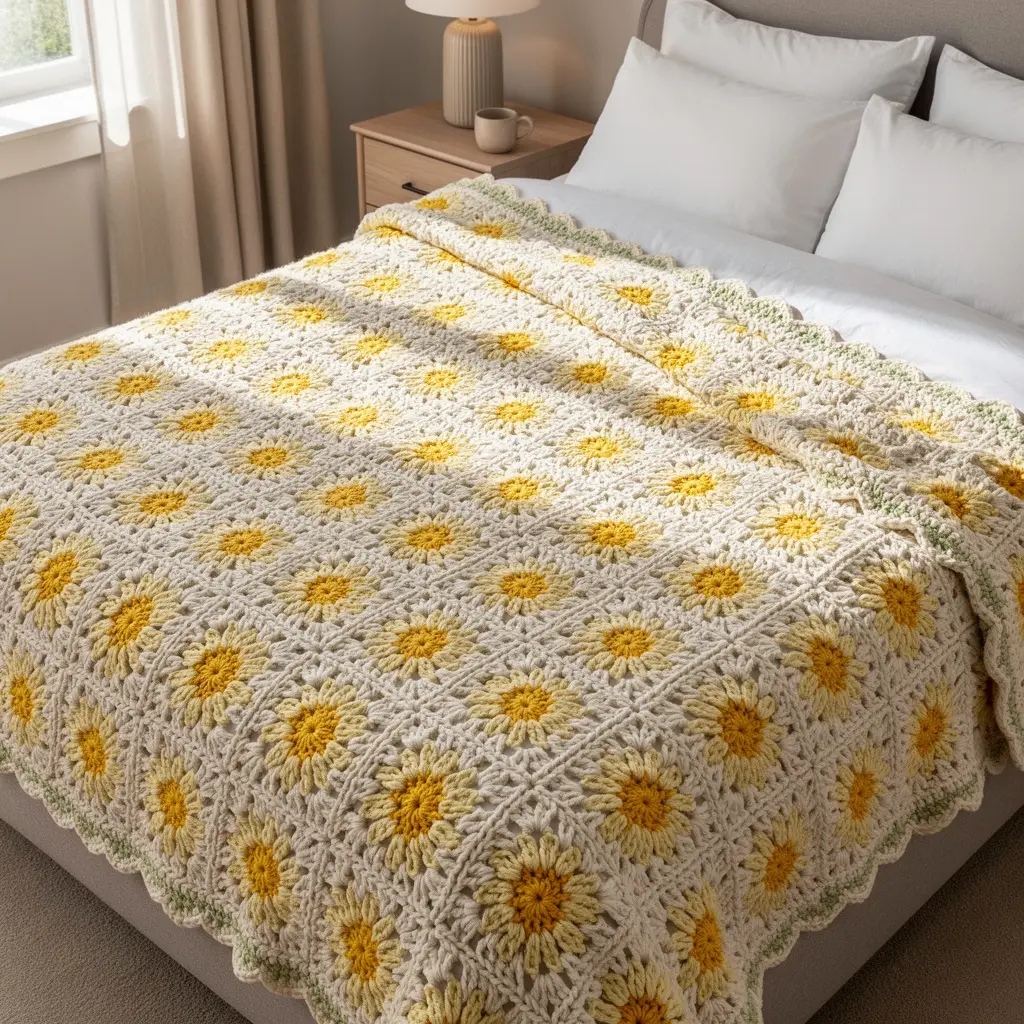
Yarn weight changes both how the blanket feels and how long it takes to finish. A worsted weight yarn strikes a good middle ground, warm enough for actual use on the couch, without being so bulky that a full size blanket becomes an enormous, slow project. Bulkier yarn works up faster but can make individual daisy motifs look chunkier and less detailed.
For size, a lap blanket, somewhere around 36 by 48 inches, is a manageable first project and works well as a couch accent. A full throw, closer to 50 by 60 inches, takes considerably longer but gives you enough coverage to actually use it while sitting or as a bed topper.
6. Find the Right Room and Spot to Display the Blanket
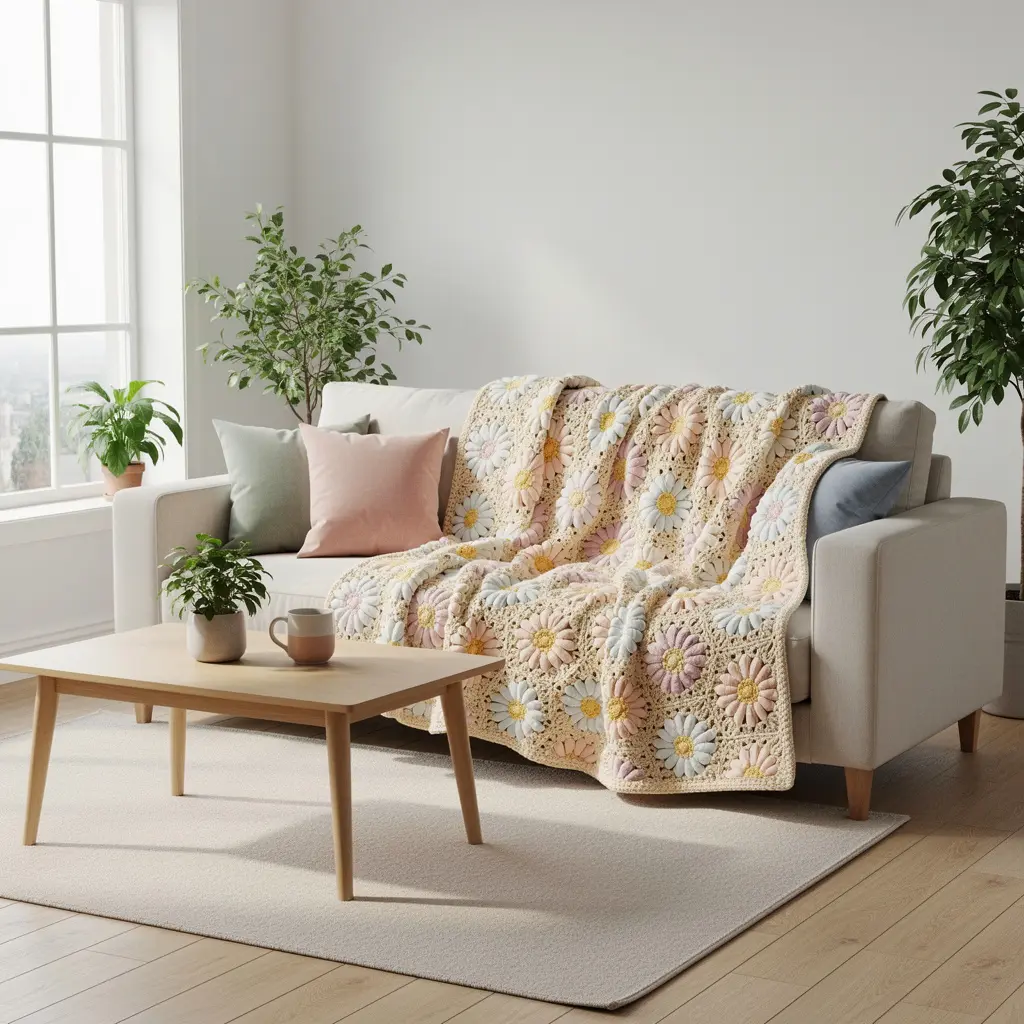
A crochet daisy blanket suits a living room sofa, an armchair, or the foot of a bed more naturally than, say, a home office or bathroom, both because of the cozy aesthetic and because those higher traffic living spaces get more actual use out of it. Draping it somewhere you’ll genuinely reach for it, rather than folding it away in a closet, means you get real use out of a piece that likely took real time to make.
A ladder style blanket rack near a reading chair is another good option if you want the blanket displayed and easy to grab at the same time. This works especially well if you’re rotating between a couple of different throws seasonally.
7. Pair the Blanket With Other Handmade or Natural Textures
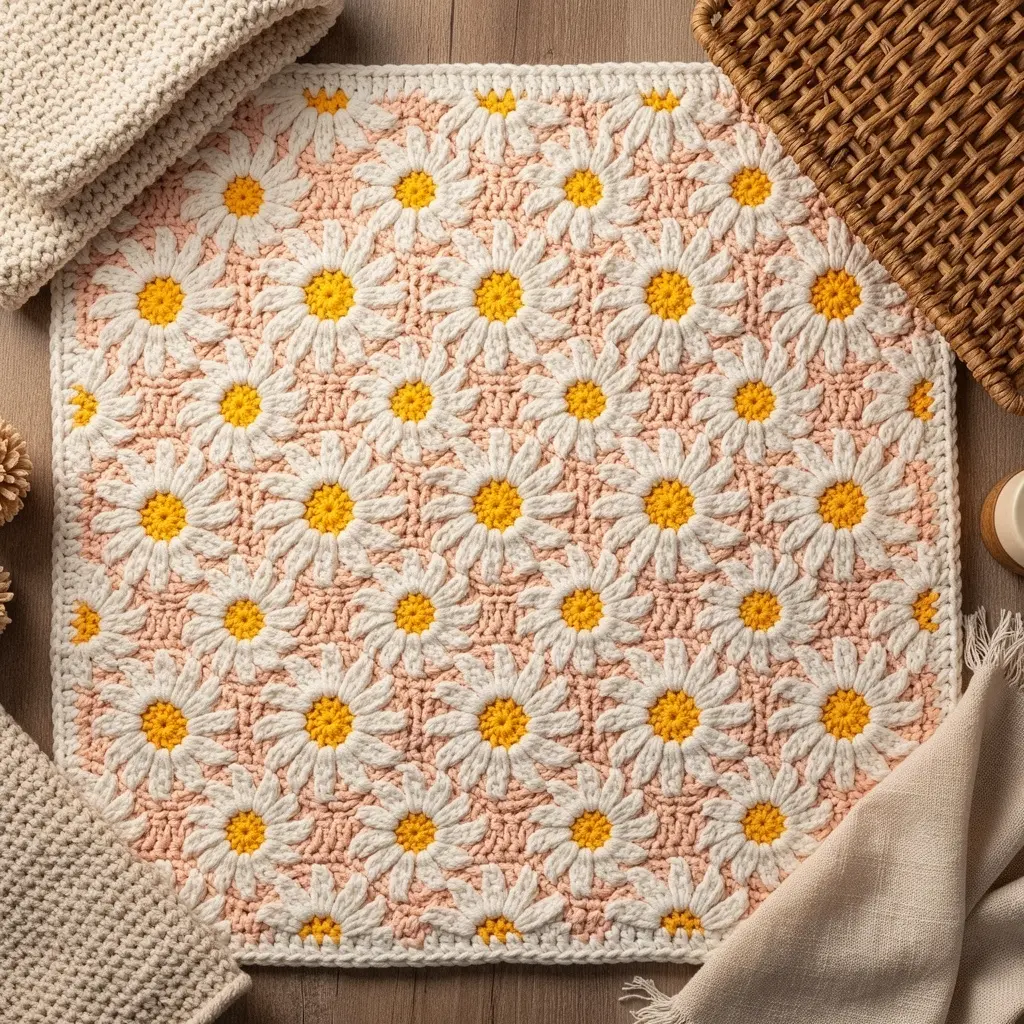
A crochet daisy blanket tends to look most at home surrounded by other natural or handmade textures rather than sitting alone against an otherwise sleek, entirely smooth surface. A woven basket nearby, a linen or textured pillow cover, or a ceramic vase with visible hand thrown texture all complement the blanket’s handmade quality instead of clashing with it.
You don’t need the whole room to match this style. One or two other textured pieces nearby is usually enough for the blanket to feel intentionally placed rather than randomly tossed into a very different aesthetic.
8. Know the Basics of Caring for a Crochet Daisy Blanket
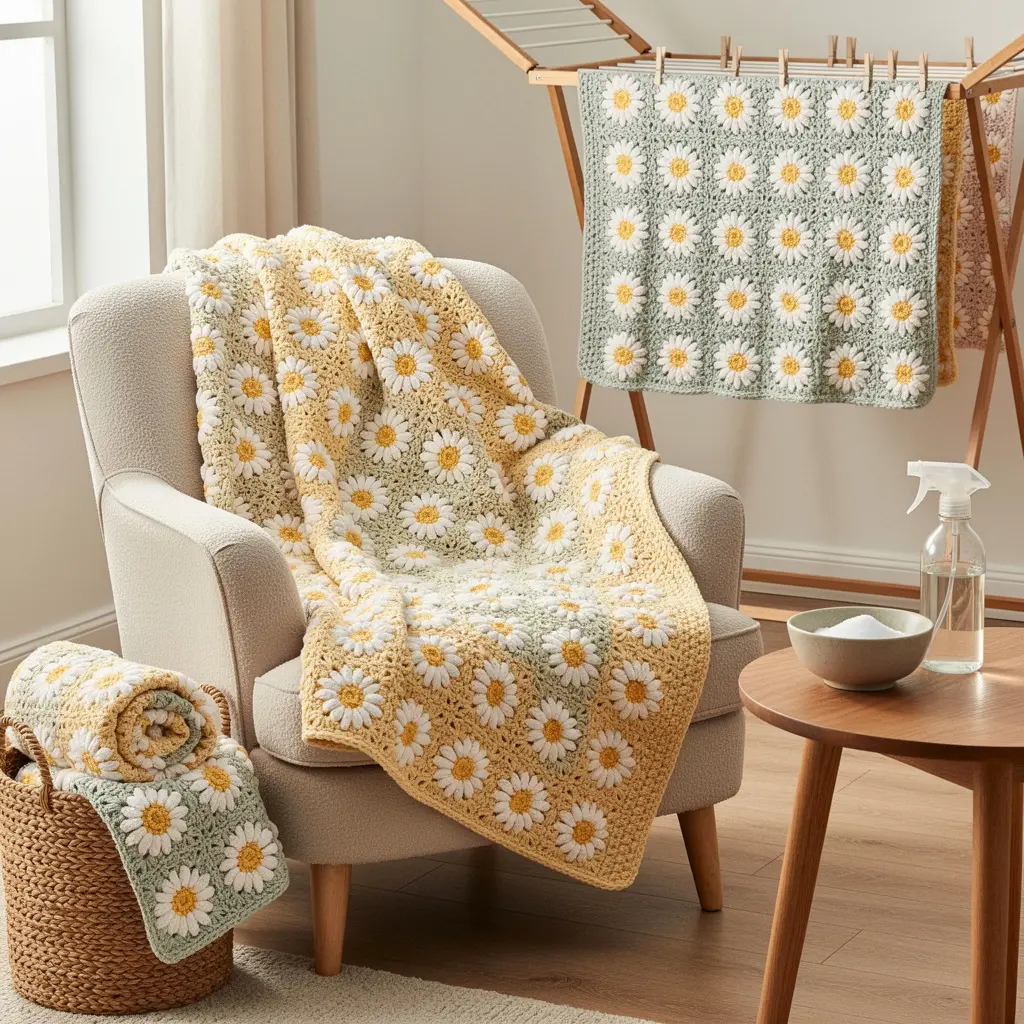
Handmade crochet blankets generally hold up better with gentle washing rather than a standard hot cycle, especially if the yarn is a natural fiber like cotton or wool. A cold, gentle machine cycle in a mesh laundry bag, or hand washing for more delicate pieces, keeps the stitches from stretching or the colors from bleeding into each other.
Lay the blanket flat to dry rather than hanging it, since a wet crochet piece can stretch out of shape under its own weight if left hanging for too long. This is a small extra step, but it matters more for a handmade piece than it would for a machine knit throw.
9. Decide Whether to Buy Handmade or Make Your Own
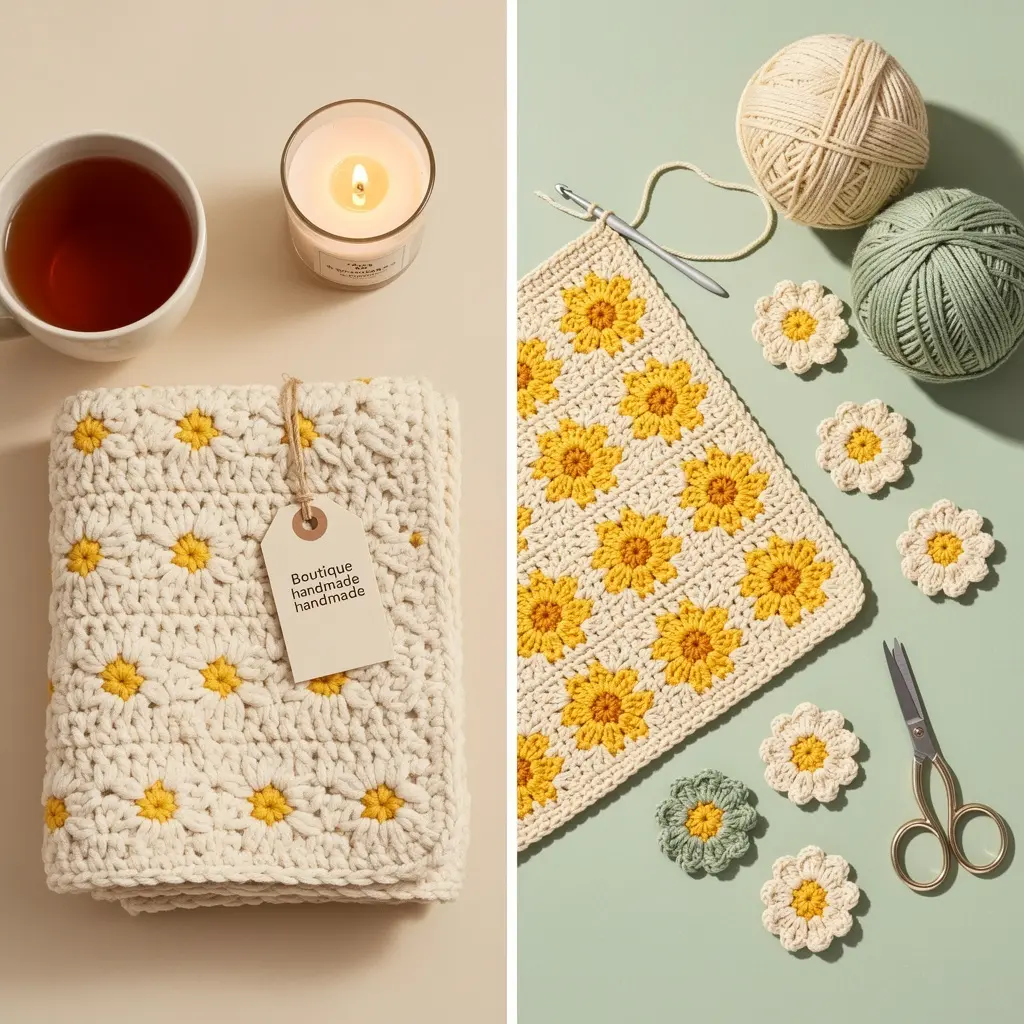
Handmade crochet daisy blankets are widely available through independent sellers and craft marketplaces, and buying one supports an actual maker’s time, which is worth factoring into the price compared to a mass produced throw. Prices vary a fair amount based on size and yarn quality, so it’s worth comparing a few sellers before settling on one.
If you already crochet, or you’re interested in picking it up, a daisy blanket is a genuinely approachable project, since it’s built from small repeated motifs rather than one continuous complicated pattern. That makes it easier to pick up and put down over time compared to a project you have to work in one continuous piece.
10. Style Around the Blanket Instead of Letting It Compete for Attention
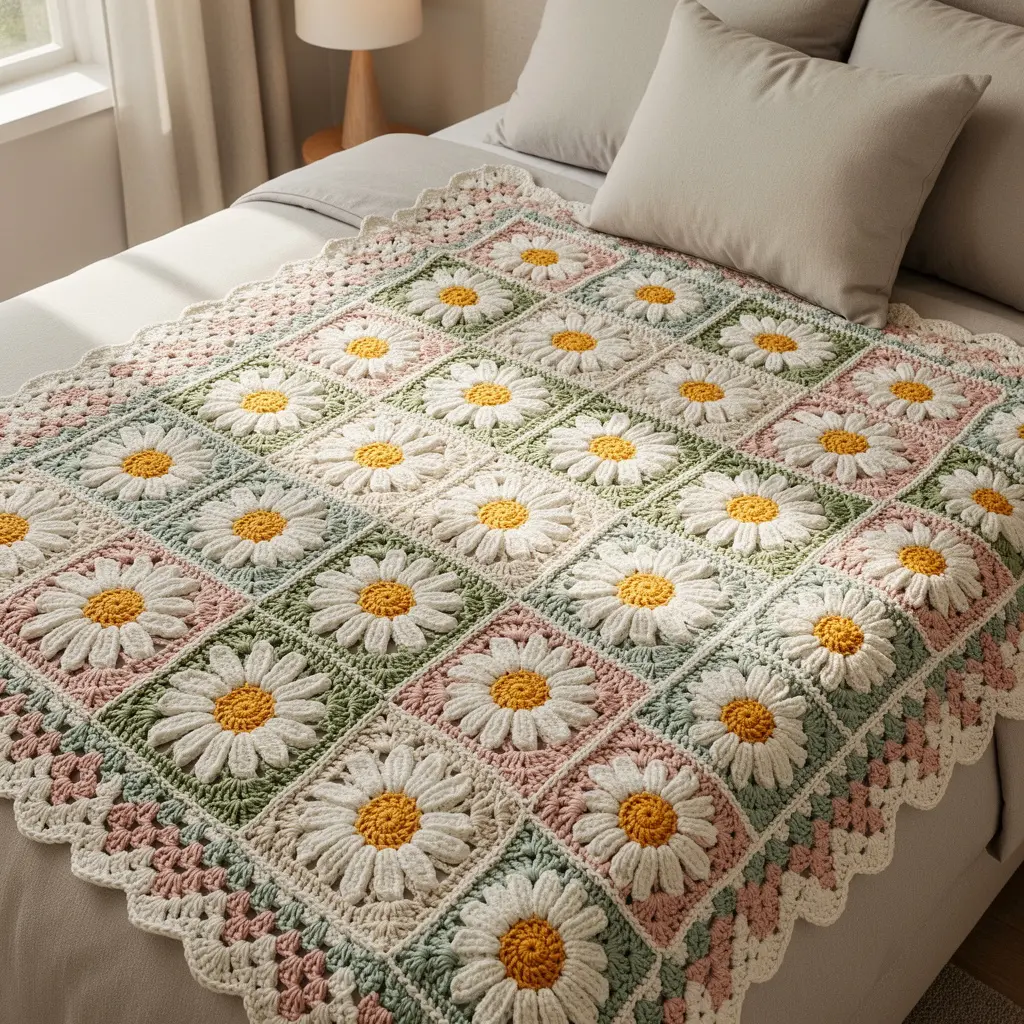
Since a crochet daisy blanket already brings in color, pattern, and texture, it works best as the star of whatever surface it’s on rather than one of several competing patterns. Keep nearby pillows and throws relatively simple, solid colors or subtle texture, so the blanket stays the clear focal point rather than getting lost in a pile of competing patterns.
This is a case where restraint elsewhere actually helps the handmade piece stand out more, instead of getting buried under too many other colors and textures on the same couch.
Mistakes to Avoid
- Jumping into a complicated daisy pattern before building basic stitch confidence
- Using a single flat yellow shade for every daisy instead of mixing slightly different tones
- Choosing bulky yarn for a design that depends on visible motif detail
- Skipping gentle wash instructions and shrinking or stretching the finished blanket
- Overcrowding the couch with too many other patterned pillows and throws
- Folding the blanket away instead of keeping it somewhere it actually gets used
Frequently Asked Questions
How long does it take to crochet a daisy blanket? This depends heavily on size and skill level, but a lap size blanket made from simple daisy squares often takes a beginner several weeks of casual evening work. Working in individual squares makes it easy to pick up in short sessions rather than needing large blocks of time.
What yarn weight works best for a daisy blanket? Worsted weight is a common, practical choice, since it balances warmth and workability without being too bulky for detailed motif work. A finer yarn shows more stitch detail but takes noticeably longer to finish a full size blanket.
Can I make a daisy blanket if I’m a beginner? Yes, individual daisy granny squares are a common beginner project, since they use basic stitches and don’t require advanced shaping. Starting with a simple five petal square design is the easiest entry point before trying more layered daisy patterns.
Do crochet daisy blankets work in a modern, minimalist room? They can, especially with a single neutral or muted color palette rather than the classic bright white and yellow combo, letting the texture and pattern stand out more than bold color. Keeping the rest of the room simply styled around it also helps it fit a more minimal space.
How do I wash a crochet daisy blanket without damaging it? A cold, gentle cycle in a mesh laundry bag works well for most cotton or acrylic blends, while more delicate wool blends may need hand washing. Always lay the blanket flat to dry rather than hanging it, to keep the shape and stitches from stretching.
Conclusion
Cozy crochet daisy blanket ideas bring a genuinely handmade warmth into a room that a store bought throw usually can’t replicate, whether you buy a piece from an independent maker or pick up a hook yourself. Choose a pattern that matches your actual skill level, pick a color palette on purpose, and keep the blanket somewhere it will actually get used rather than tucked away. Styled with a little restraint around it, this kind of handmade piece often becomes one of the coziest, most personal details in the whole room.