10 Blue and White Kitchen Color Coordinated Decor That Actually Works Together
You paint the lower cabinets a beautiful navy, add a blue and white striped rug, and pick up a set of blue ceramic canisters, and somehow the whole kitchen still looks off. That’s the trap with blue and white kitchen decor. Every piece can be pretty on its own and still clash the moment they’re in the same room, because blue comes in dozens of undertones that don’t automatically match. Getting a coordinated blue and white kitchen right comes down to picking one blue family and building everything else, tile, hardware, textiles, and accents, around it on purpose.
1. Why Blue and White Kitchens Are So Easy to Get Wrong
Blue is one of the widest color families in home decor, running from icy powder blue to deep navy to teal leaning shades that edge toward green. Two blues that look similar on a paint chip can read completely differently once they’re on a large cabinet surface under kitchen lighting.
The most common mistake is mixing a cool, gray leaning blue with a warm, slightly purple leaning blue in the same room. Individually they’re both fine colors. Together, they create a subtle clash that most people can feel without being able to name it.
Lighting makes this harder to catch while shopping. A paint chip or fabric swatch under fluorescent store lighting can look noticeably different once it’s sitting in a kitchen with warm bulbs or bright north facing windows, which is exactly why so many blue and white kitchens end up slightly mismatched despite careful planning.
2. Pick One Dominant Blue and Stick to It
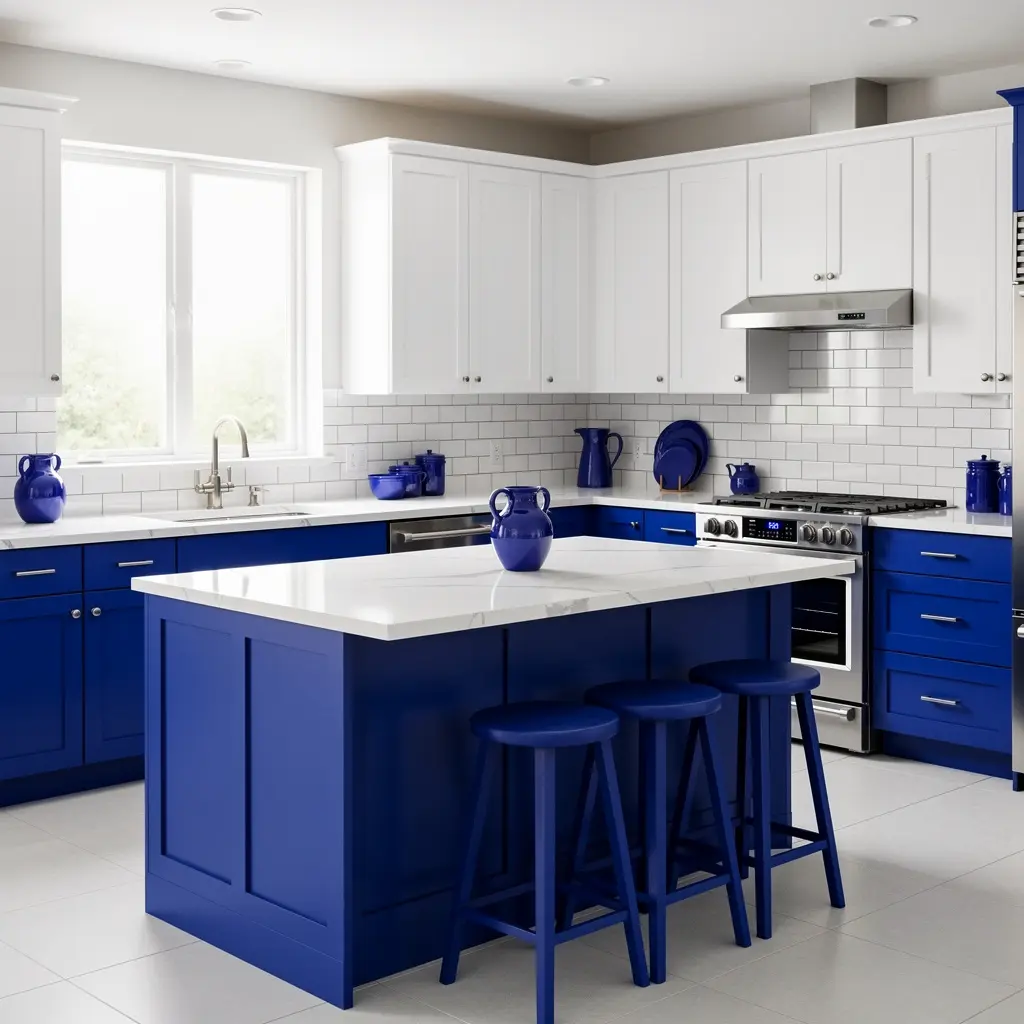
Before buying anything, choose a single blue as your anchor, whether that’s a soft coastal blue, a classic navy, or a deep denim shade, and treat every other blue item in the kitchen as either matching it or staying out of the room. This applies to cabinets, an island, a rug, and any large textile.
Building a Simple Swatch Board
Grab paint chips or fabric swatches in your chosen blue and hold them against anything else blue you’re considering, from a runner rug to a set of bar stools. If a piece doesn’t sit comfortably next to your anchor swatch, it’s safer to leave it out entirely rather than force it into the room.
3. Pair Cabinet Color With the Right Undertone of White
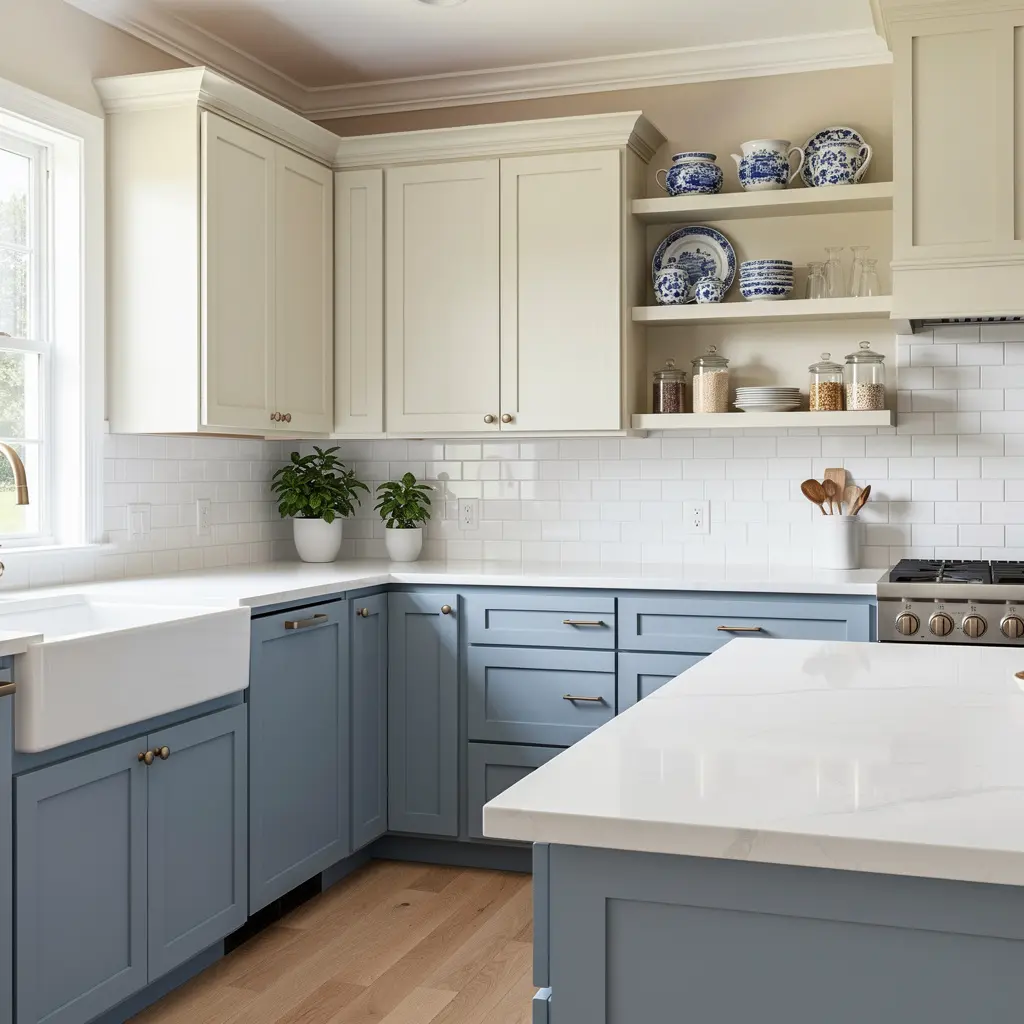
White cabinets or trim paired with blue lower cabinets need to share an undertone with your chosen blue. A navy with cool gray undertones pairs best with a crisp, slightly cool white, while a softer denim blue often looks better against a warmer, creamier white.
Putting a warm white next to a cool blue can make both colors look muddy rather than crisp, even though each one is a perfectly nice color by itself. If you’re unsure, bring a cabinet door sample and a paint chip into daylight together before committing to either color.
4. Choose Backsplash Tile That Bridges Both Colors
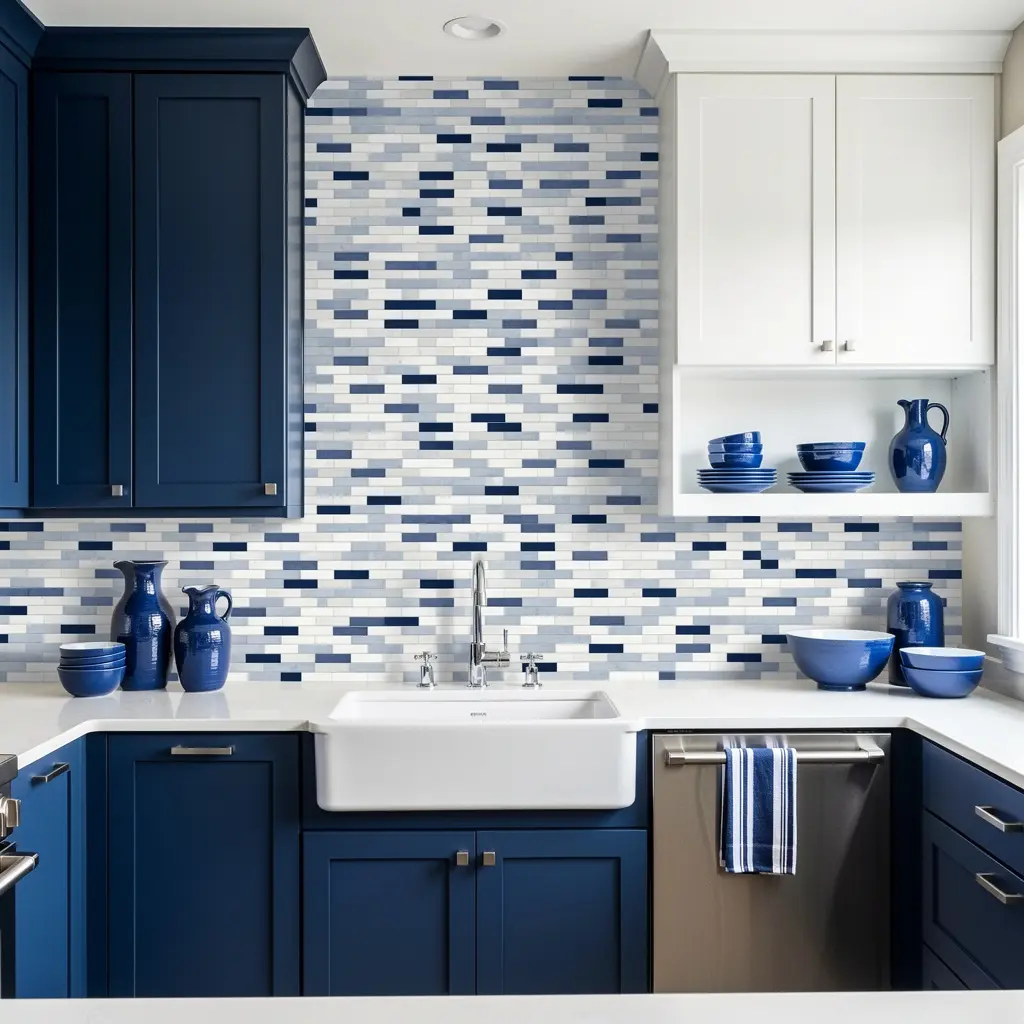
A backsplash is one of the easiest ways to visually connect blue cabinets and white walls without adding a third competing color. Classic white subway tile with a hint of the same undertone as your cabinets keeps things simple, while a patterned tile that includes both your exact blue and white can do even more of the connecting work.
Tile in the $3 to $12 per square foot range covers most standard ceramic and porcelain options, with hand painted or artisan tile running significantly higher depending on the pattern and origin.
5. Bring in Brass, Nickel, or Black Hardware Deliberately
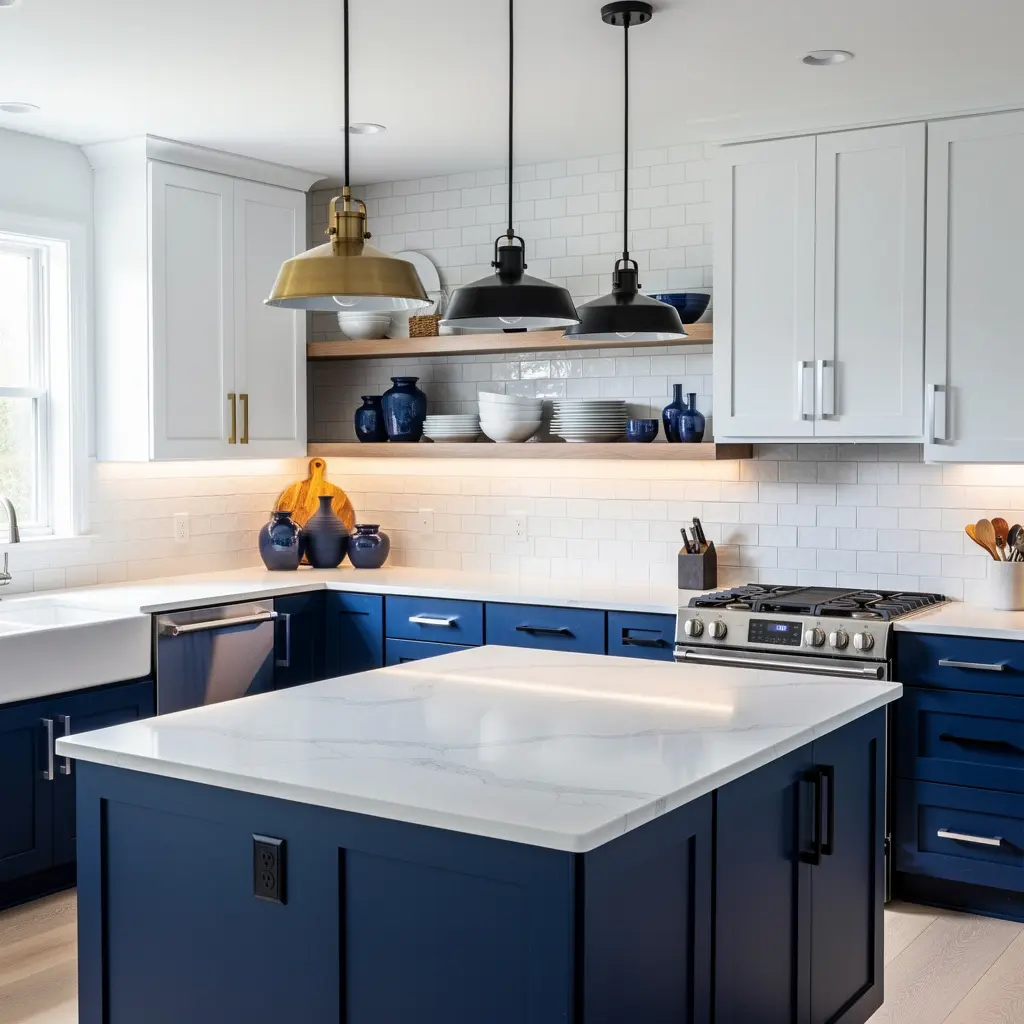
Hardware finish matters more in a blue and white kitchen than in a neutral one, because metal tones either warm up or cool down the whole palette. Brass and unlacquered brass add warmth against navy, brushed nickel keeps things cool and modern, and matte black adds contrast without leaning warm or cool in either direction.
Staying Consistent Across the Room
Mixing three different metal finishes across cabinet hardware, faucet, and light fixtures tends to make a coordinated color scheme feel accidental. Pick one primary finish and, at most, one secondary finish for a light fixture or a single statement piece.
6. Layer in Textiles Without Overdoing the Pattern
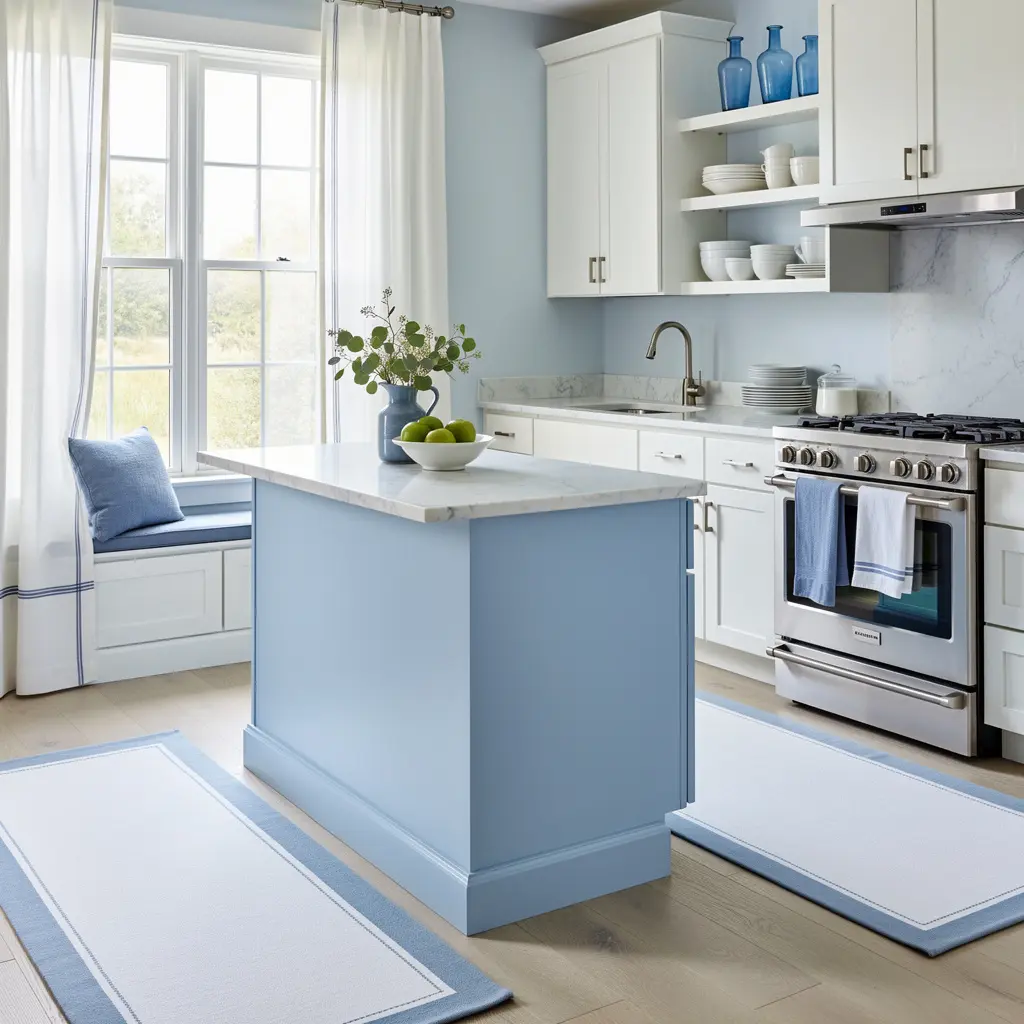
A striped runner, a set of woven placemats, and patterned curtains can each be lovely, but stacked together in the same small kitchen they compete for attention. Choose one patterned textile as the star, like a striped or block print runner, and keep everything else solid or very subtly textured.
Cotton and linen textiles in this range typically run $20 to $80 depending on size, and a single well chosen piece does more for the room than three competing patterns ever will.
7. Use Open Shelving to Break Up Solid Color Blocks
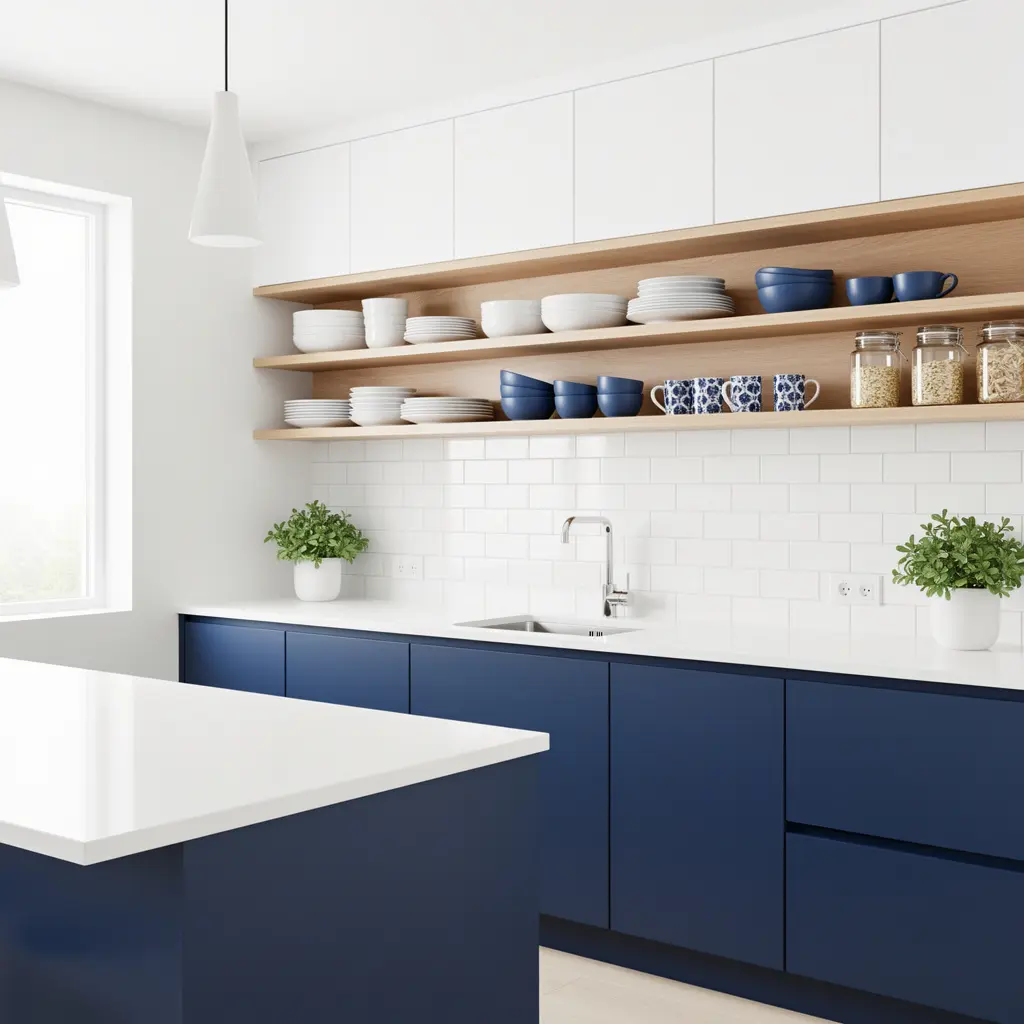
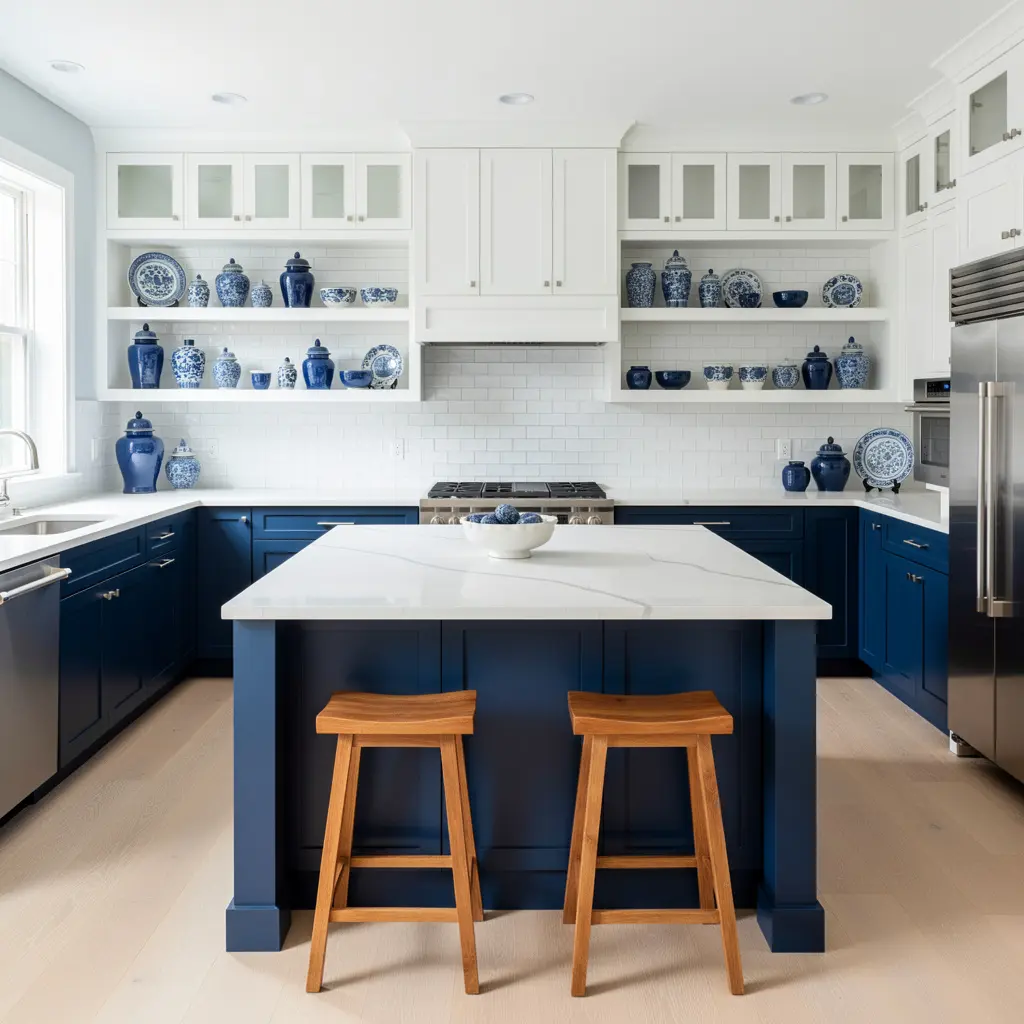
A full wall of solid blue cabinets, however well chosen the color, can start to feel heavy in a smaller kitchen. Replacing one or two upper cabinets with open shelving breaks up that solid color block and gives you a spot to display white or cream dishware against the blue backdrop.
This works especially well directly above a stretch of countertop near the stove or sink, where dishes in daily use naturally get displayed anyway rather than sitting in a closed cabinet.
8. Add Greenery to Soften a Cool Color Palette
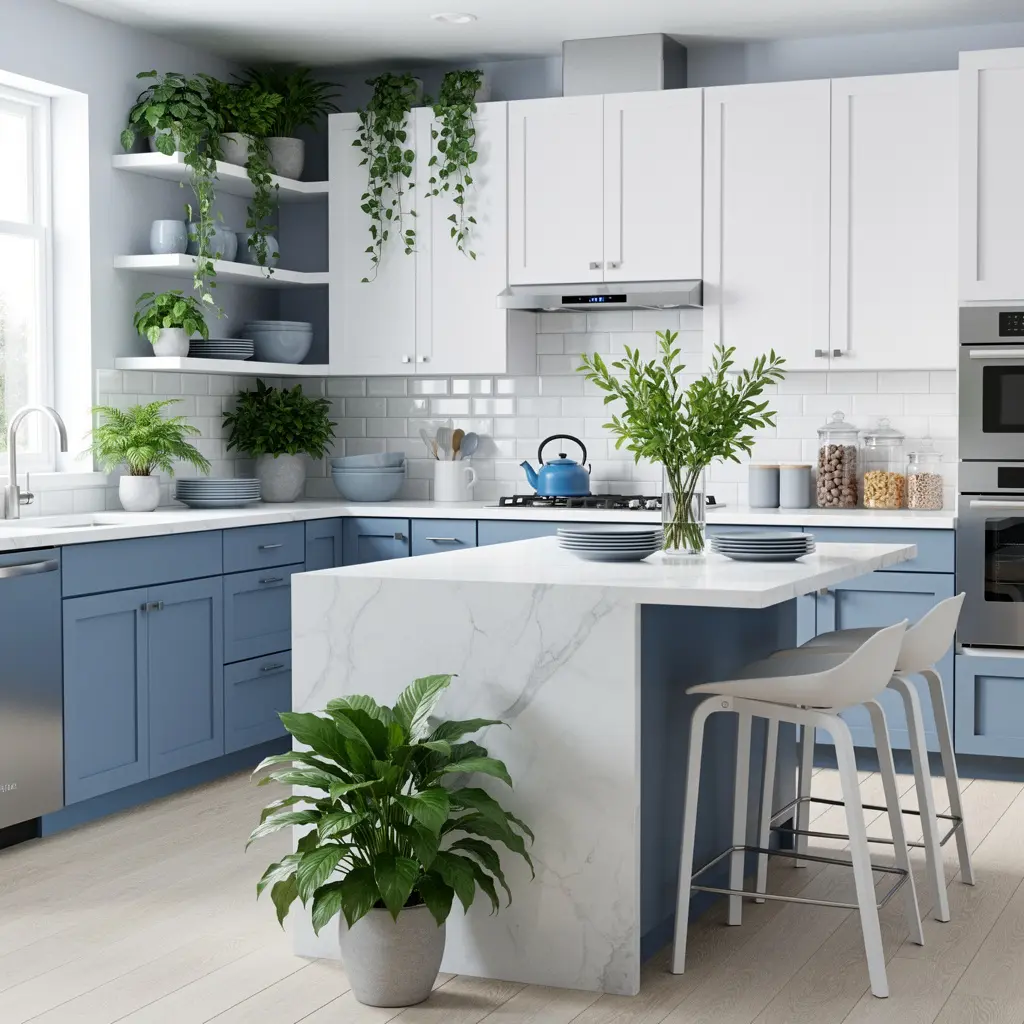
Blue and white together, especially a cooler navy and crisp white pairing, can start to feel a little sterile without a warmer element to balance it. A few plants, whether real herbs on a windowsill or a trailing pothos on top of a cabinet, add a warm, organic note that a strictly blue and white palette can’t provide on its own.
Even a simple bunch of eucalyptus or a small potted basil plant does real visual work here, softening hard cabinet lines and adding a bit of life to an otherwise cool color scheme.
9. Coordinate Countertops So They Don’t Compete With Cabinets
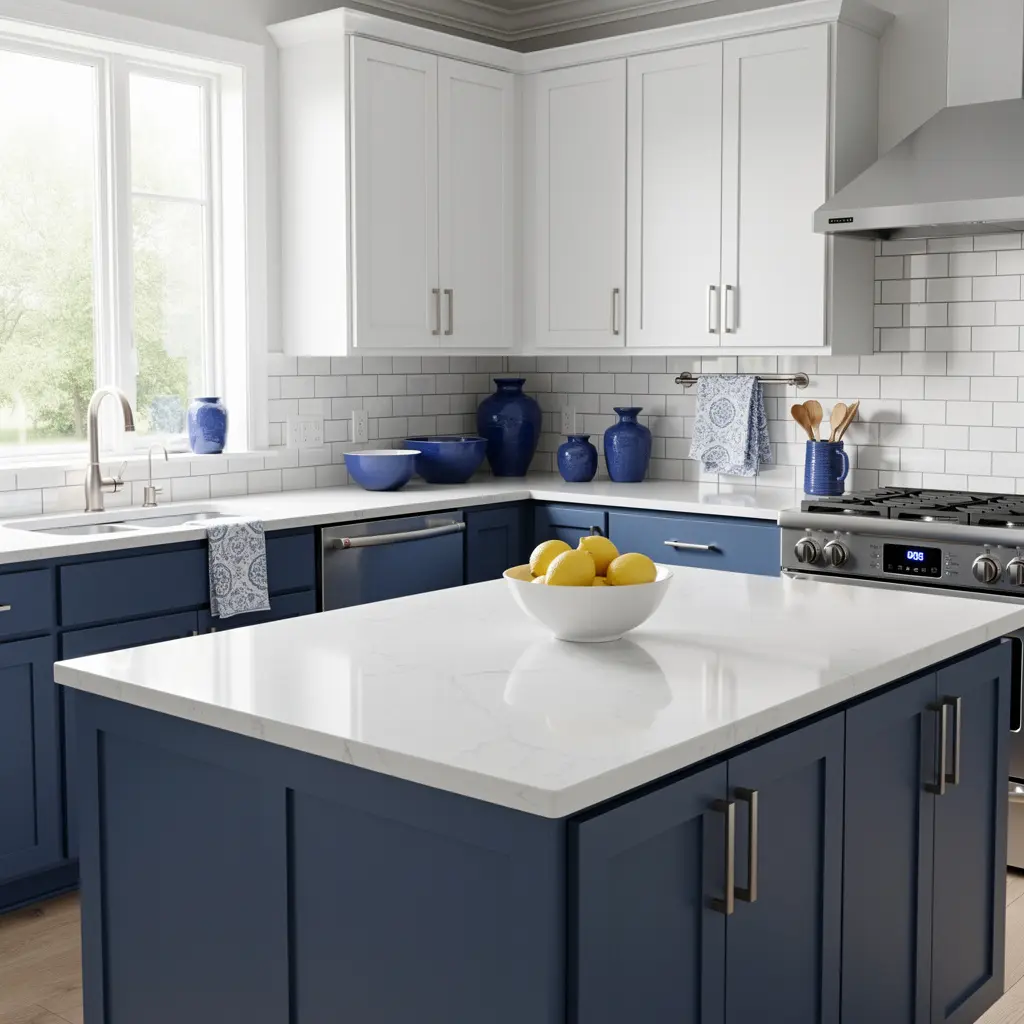
Busy, high veining countertops can pull focus away from a carefully chosen blue and white palette instead of supporting it. A quieter countertop, whether that’s a soft white quartz, a honed marble look, or a simple butcher block, tends to let the cabinet color do the visual work it’s meant to do.
If you already have a busy countertop and aren’t replacing it, lean toward simpler cabinet colors and skip a heavily patterned backsplash so the countertop doesn’t end up fighting two other elements at once.
10. Small Blue and White Accents for Renters and Small Budgets
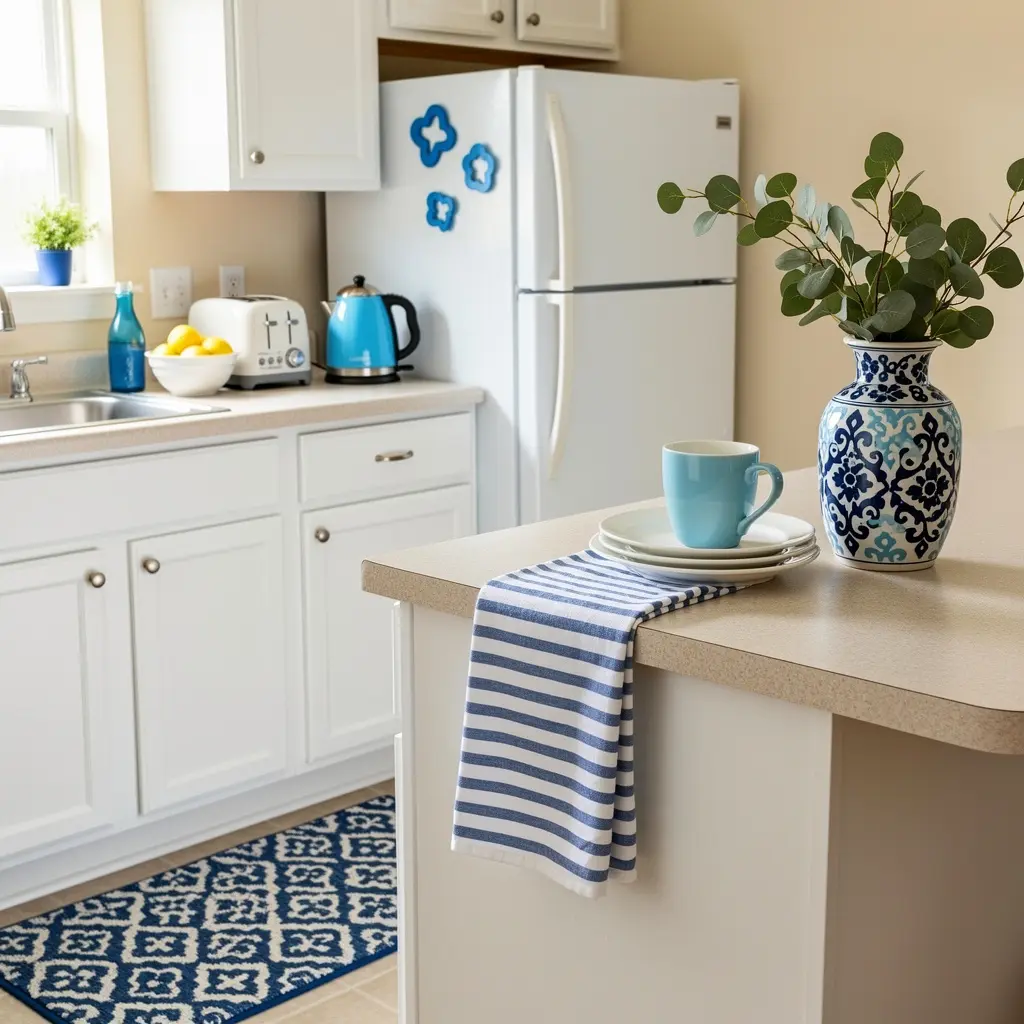
Not everyone can repaint cabinets or install new tile, and a coordinated look doesn’t require either. A blue and white patterned rug, a set of ceramic canisters, striped dish towels, and a few pieces of blue and white pottery on open shelving can carry the color story in a rental kitchen for well under $150 total.
Removable wallpaper on the inside of glass front cabinets or on a small accent wall is another renter friendly option, often costing $30 to $60 per roll and removable without damaging paint underneath.
Mistakes to Avoid
- Mixing warm and cool undertones of blue in the same kitchen
- Choosing white trim or walls that clash with the cabinet’s undertone
- Layering three or more patterned textiles in one small space
- Using too many different metal finishes across hardware and fixtures
- Skipping a swatch check in natural daylight before buying paint or tile
- Filling every open shelf with blue items and leaving no visual breathing room
Frequently Asked Questions
What shade of blue works best for kitchen cabinets? There’s no single best shade, but navy and soft coastal blue are the two most forgiving options because they pair easily with both warm and cool whites.
Should upper and lower cabinets be different colors? Many coordinated kitchens use blue on lower cabinets and white on upper cabinets, since it keeps the room feeling grounded without making the whole space feel heavy or dark.
How do I avoid a blue and white kitchen looking too coastal or themed? Mix in a warm material like brass hardware, wood open shelving, or a rattan light fixture so the palette reads as intentional decor rather than a strict beach theme.
Is white subway tile always the safest backsplash choice? It’s a reliable, budget friendly option, but a patterned tile that repeats your exact blue can tie the room together even more effectively if you’re willing to spend a bit more.
Can I do a blue and white kitchen with painted, not replaced, cabinets? Yes. Painting existing cabinets is one of the most affordable ways to get this look, as long as you sand and prime properly so the paint holds up to daily kitchen use.
Bringing Blue and White Together in the Kitchen
A coordinated blue and white kitchen comes down to discipline more than decorating skill. Pick one blue, match your whites and metals to its undertone, and resist the urge to add every pretty blue item you find into the same room. When every choice supports the same anchor color instead of introducing a new one, the kitchen ends up looking pulled together rather than assembled piece by piece. That discipline is what separates a kitchen that feels styled on purpose from one where every item is nice but the room as a whole never quite clicks.