10 Moody Cafe Vibes Living Room Setup Ideas Worth Copying
There’s a reason moody living rooms keep dominating design feeds this year. In a world still catching up from bright white minimalism, dark and dramatic spaces feel rich, intentional, and a little theatrical, exactly the kind of atmosphere a favorite coffeehouse tends to have. Done well, a moody café inspired living room isn’t about making a space feel small or gloomy. It’s about depth, warmth, and controlled light working together, and the difference between a room that feels cozy and one that feels claustrophobic almost always comes down to balance.
1. Choose a Deep Wall Color as the Foundation
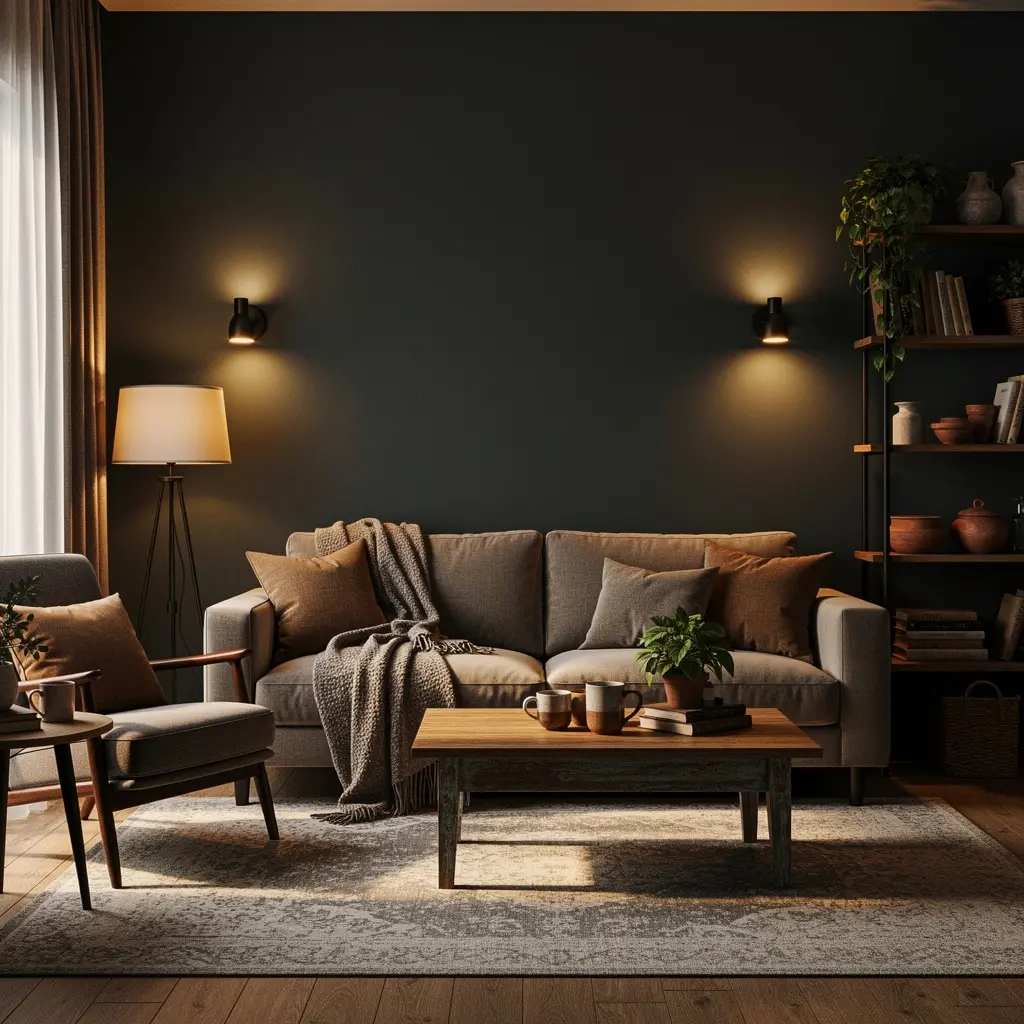
Deep charcoal, forest green, or navy walls create the rich backdrop this whole aesthetic depends on, wrapping the room the way a favorite corner booth wraps around you at a coffeehouse. If moody interiors had a signature color, deep navy would likely be it, since it reads as bold but still elegant, especially when paired with warm wood and a sculptural light fixture to break up the darkness.
Choosing Between Charcoal, Green, and Navy
Charcoal tends to feel the most neutral and versatile, forest green leans slightly more sophisticated and library like, and navy adds the most drama while still reading as calm rather than harsh. The right choice usually comes down to how much natural light the room actually gets, since a darker color needs at least some daylight to keep from feeling flat.
2. Layer Warm, Low Wattage Lighting Instead of Overhead
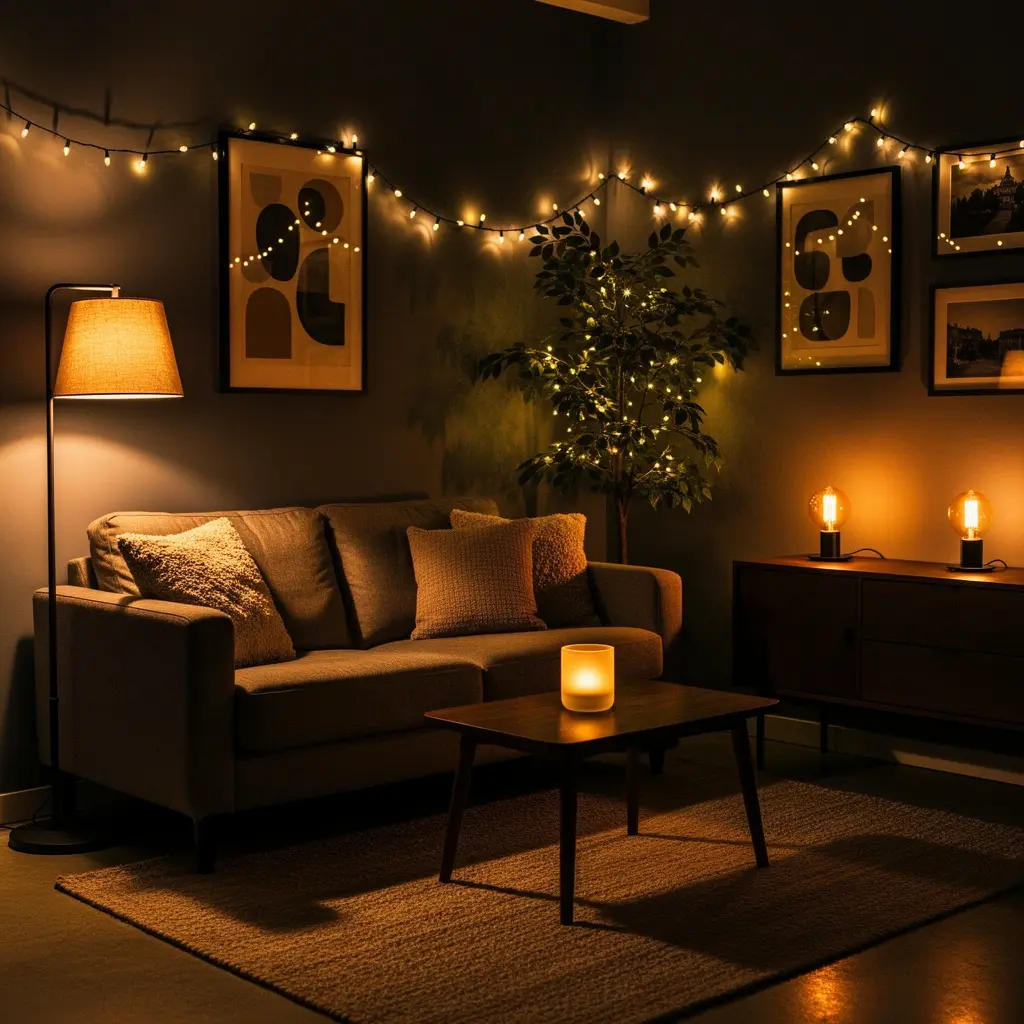
Moody rooms fail when they’re actually dark rather than intentionally atmospheric, and the fix is layering multiple low wattage warm bulbs, generally in the twenty seven hundred kelvin range, across several fixtures rather than relying on a single overhead light. Overhead lighting in particular tends to work against the whole effect, since it flattens the room and removes the pooled, café like glow that makes a moody space feel genuinely inviting.
3. Ground the Room With a Soft, Neutral Sofa
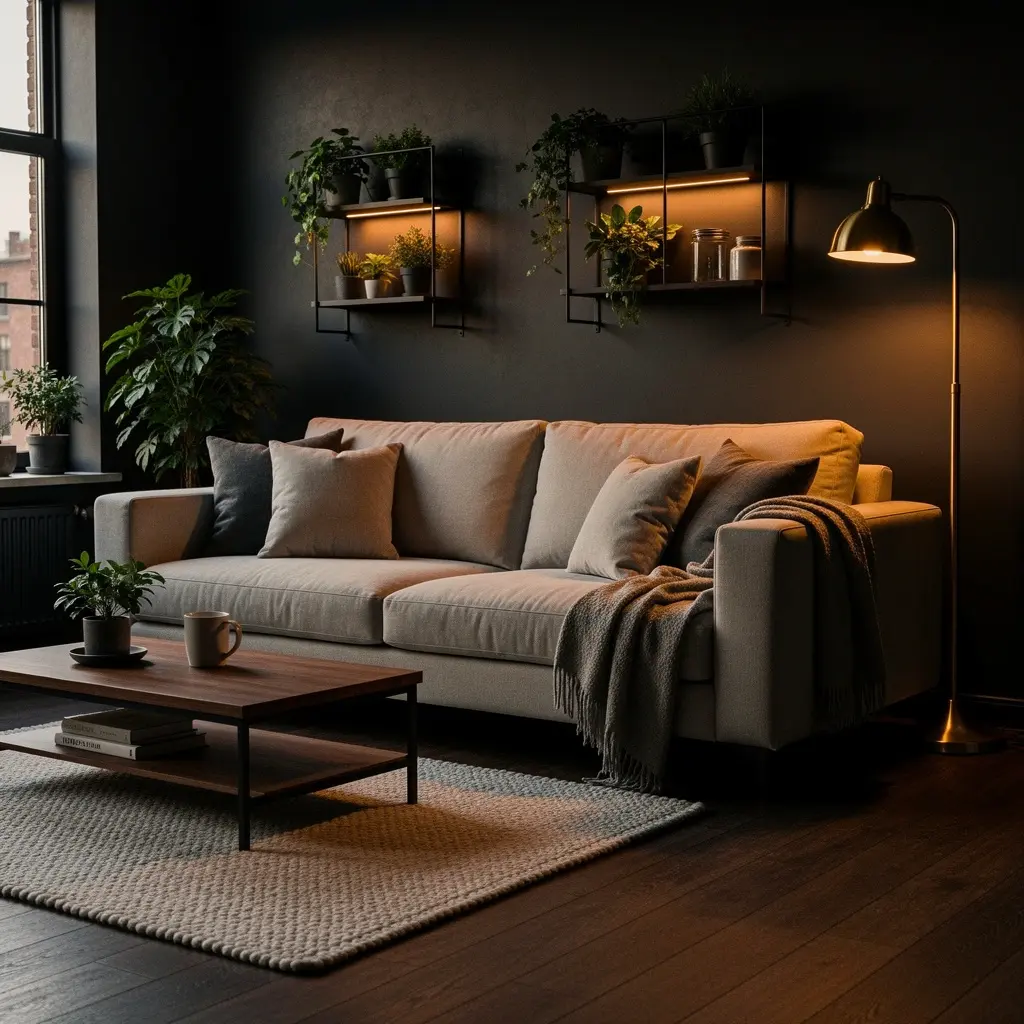
A mid tone neutral sofa in cream, warm gray, or oatmeal softens the drama of a dark wall color, or alternatively, a richly colored sofa that matches the wall family, deep sage against lighter sage walls, for example, creates a monochromatic depth instead. Either approach works, but the sofa’s job either way is to keep the room from feeling like one flat block of darkness with nothing to break it up.
A sofa in a performance fabric holds up especially well in a room meant for genuine daily use rather than just photographs, since a moody living room built around comfort should still function as somewhere to actually spend an evening.
4. Mix Velvet, Leather, and Wood for Depth
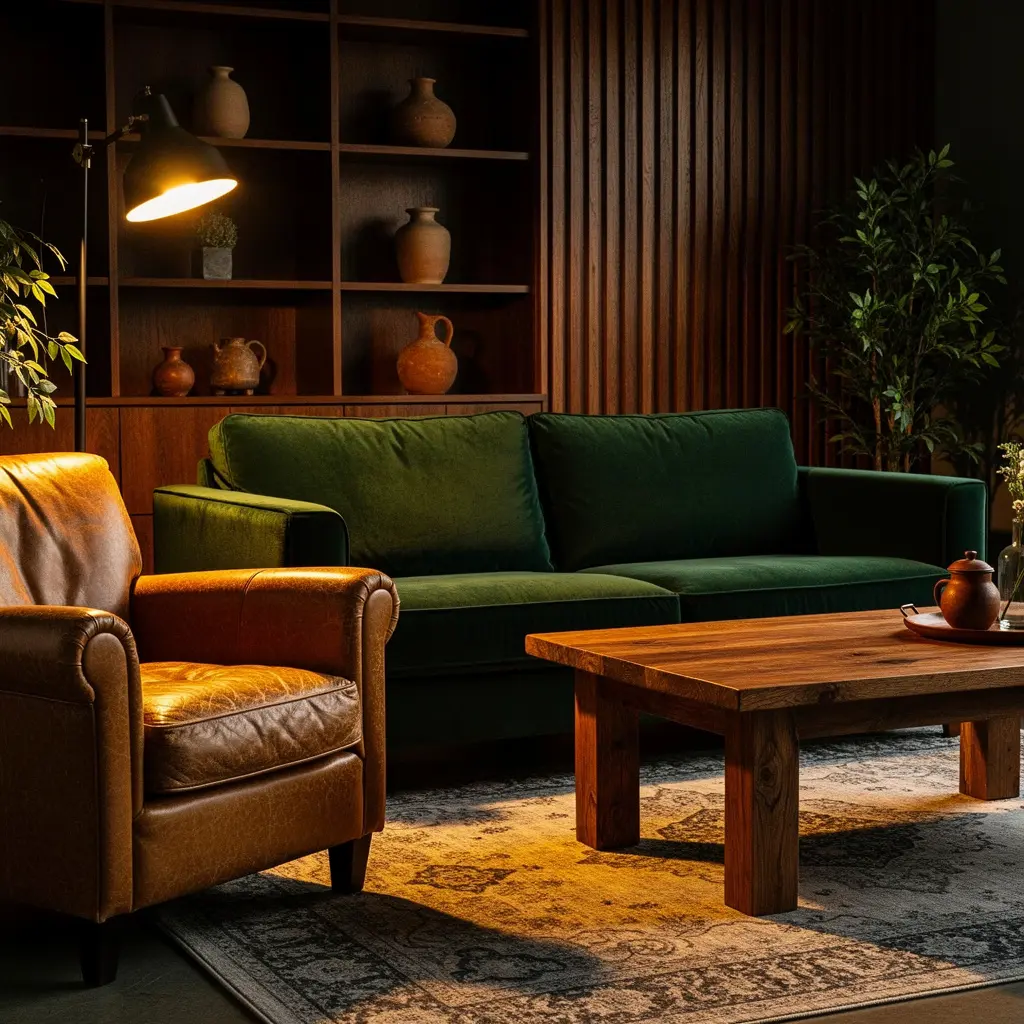
The mix of textures, velvet, leather, wood, is what adds real depth and personality to a moody room, and it’s part of what keeps the space from reading as one dimensional despite the darker overall palette. A warm leather sectional paired with velvet throw pillows and a walnut console table brings in enough material variety that the eye has plenty to explore even in dim, atmospheric lighting.
5. Add One Lighter Element to Prevent Heaviness
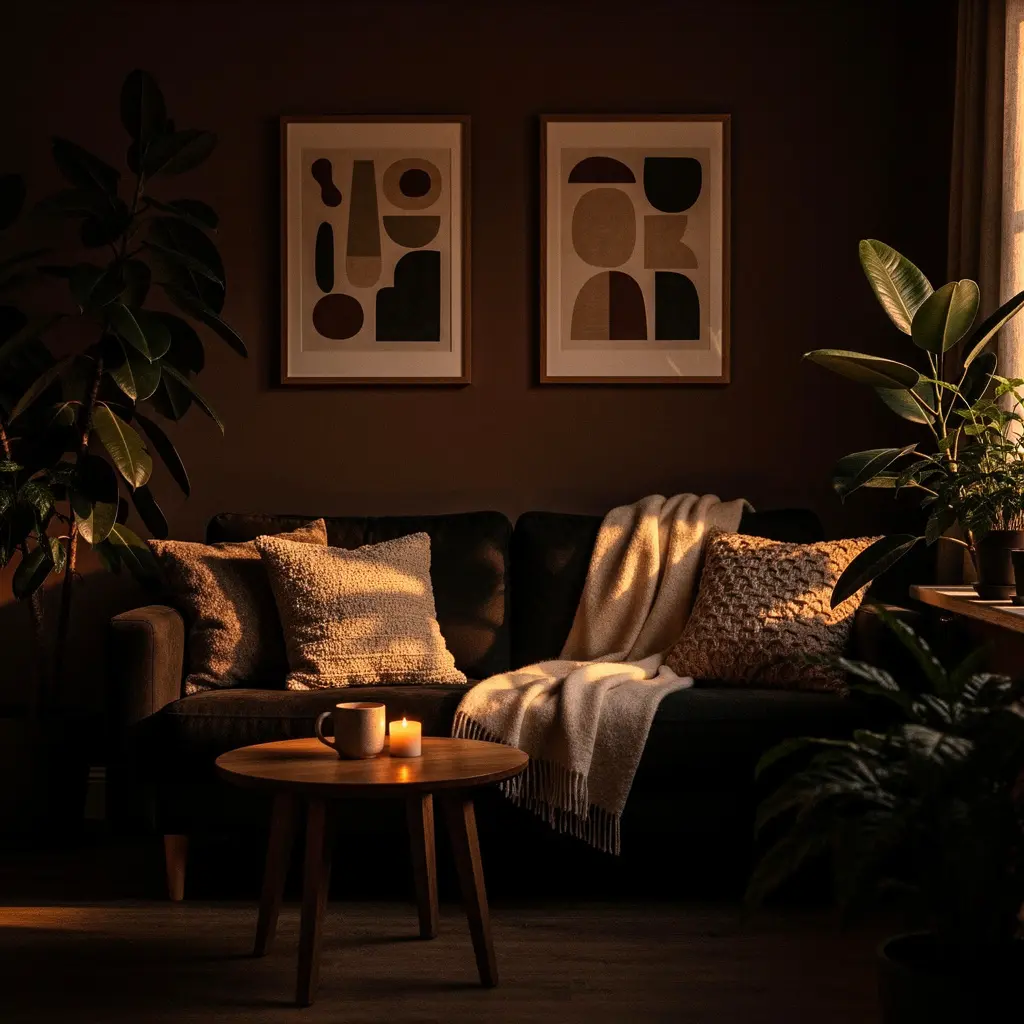
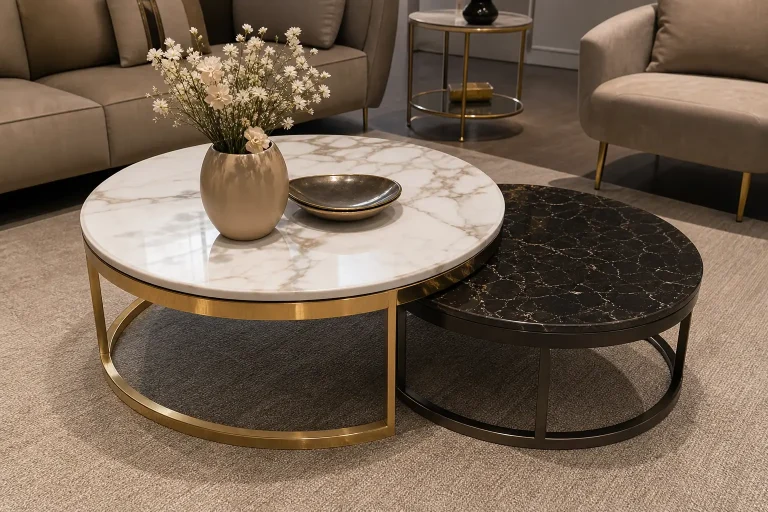
Every moody room needs one lighter element to give the eye a place to rest, since dark walls plus dark furniture plus dark rugs together become oppressive rather than cozy. A cream rug, a pale stone coffee table, or simply a wall of large windows letting in natural light all work as this kind of counterbalance, and skipping this step is one of the most common reasons a moody room tips into feeling closed in.
Where to Place the Lighter Element
The floor is often the easiest place to introduce this contrast, since a lighter rug grounds the room visually without competing with the darker walls the way a lighter piece of furniture sometimes can.
6. Bring In Brass Accents to Catch the Light
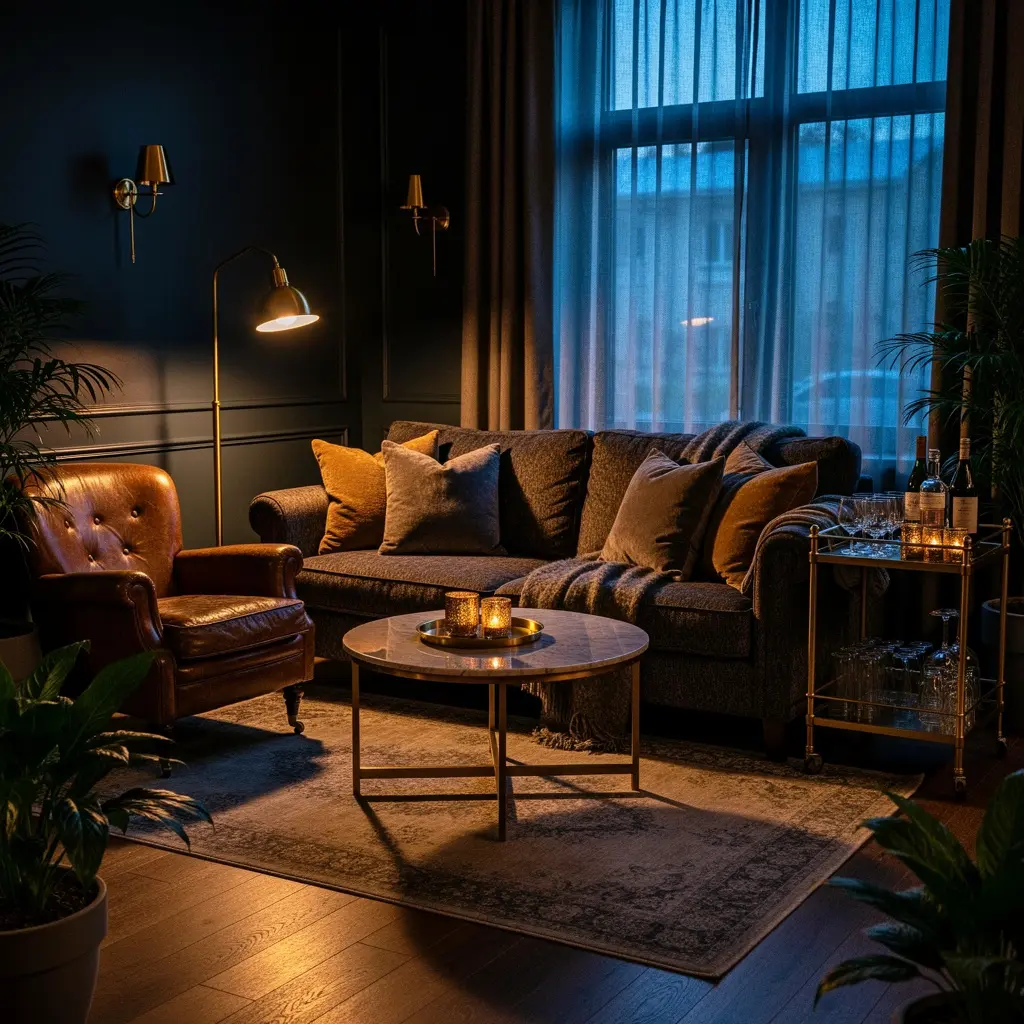
Brushed brass floor lamps, a sculptural chandelier, or simple brass hardware on a console table add just enough shine to break up the darkness without disrupting the room’s overall mood. A gold chandelier floating in the middle of an otherwise deep, monochromatic room does real visual work here, catching whatever light exists and scattering it back into the space.
Sticking to one warm metal finish throughout the room, rather than mixing brass with chrome or black in equal amounts, keeps the shine feeling like a deliberate accent instead of a scattered collection of unrelated fixtures.
7. Layer Textiles Without Overcrowding the Space
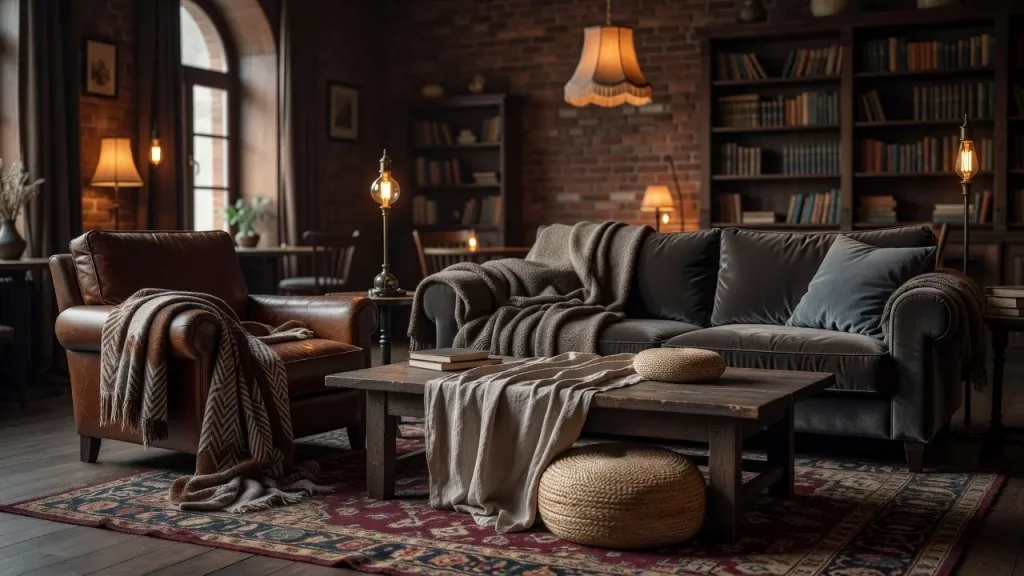
Soft pillows, woven throws, and an oversized ottoman create real layers in a moody room without feeling cluttered, as long as each piece earns its place rather than being added simply to fill space. This kind of textile layering is often what separates a room where you sink in and lose track of time from one that just looks dramatic in photos but isn’t actually comfortable to spend an evening in.
8. Use Built In Shelving for a Library Feel
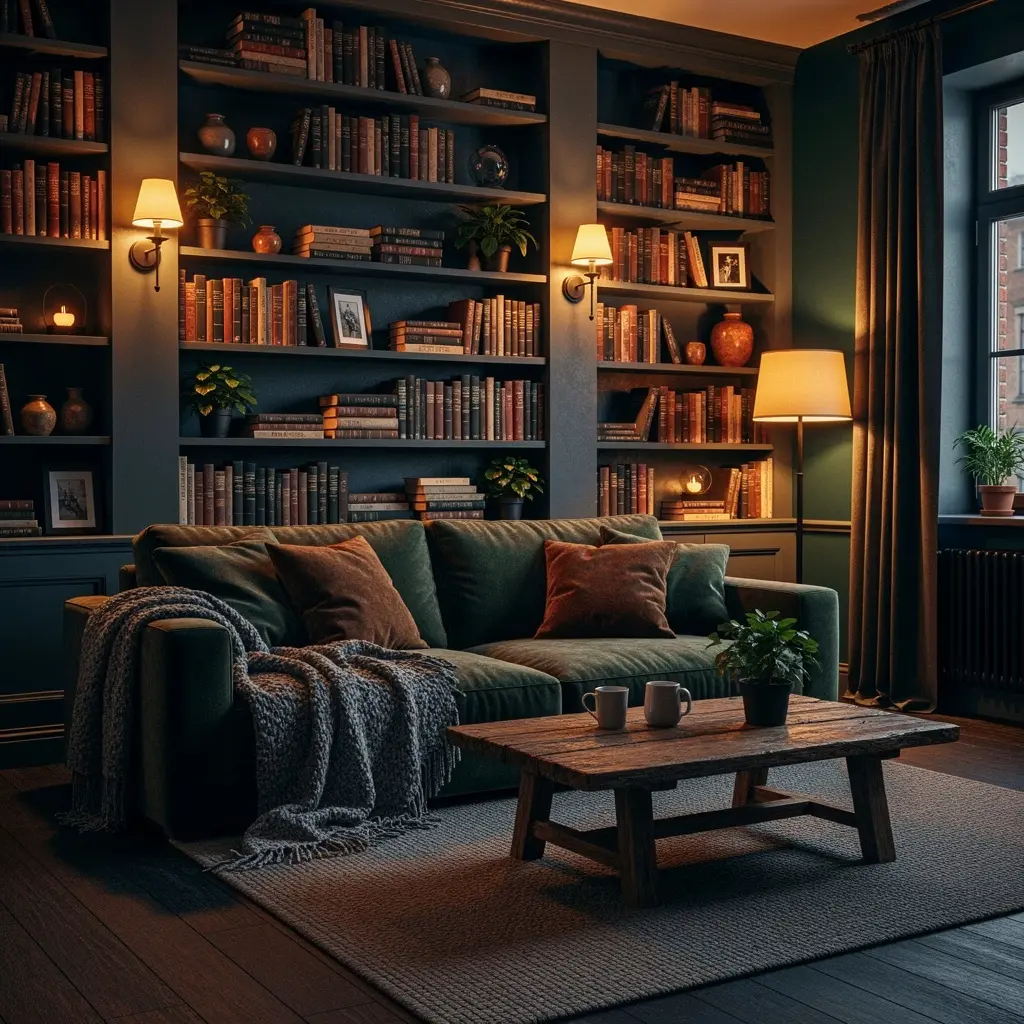
Built in shelving paired with dark textiles and vintage style lighting gives a moody room a subtle library atmosphere, echoing the same intimate, book lined feeling a favorite café corner often has. This detail works especially well in a room already leaning into deep green or charcoal tones, since the shelving adds architectural structure that a flat wall alone can’t provide.
9. Choose Natural Materials to Soften the Drama
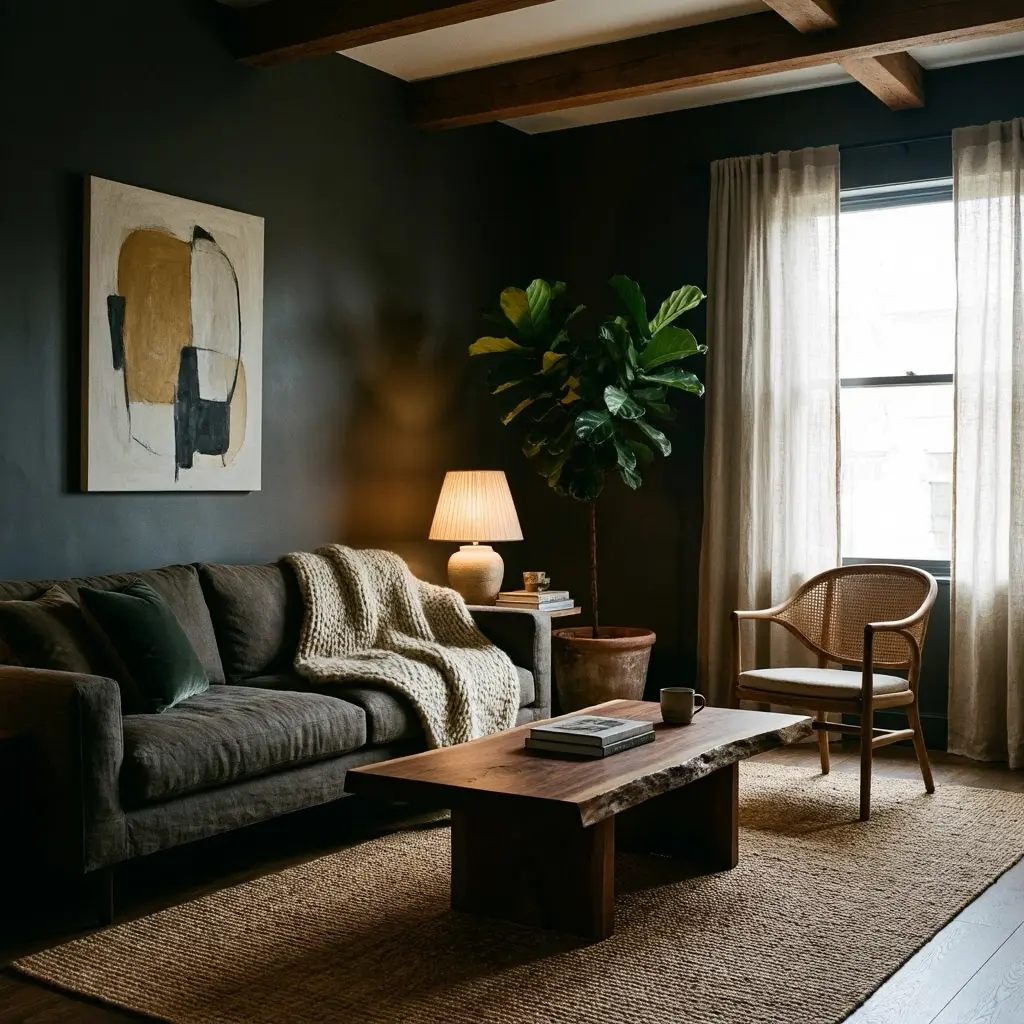
Natural stone surfaces, soft linen upholstery, and warm wood tones keep a moody room feeling grounded rather than heavy, since these materials introduce texture and organic variation that pure dark paint alone doesn’t achieve. A well designed moody space is never really about removing light. It’s about controlling it, and natural materials play a real role in that balance by reflecting and absorbing light differently than flat, painted surfaces.
10. Keep the Furniture Layout Intimate, Not Sparse
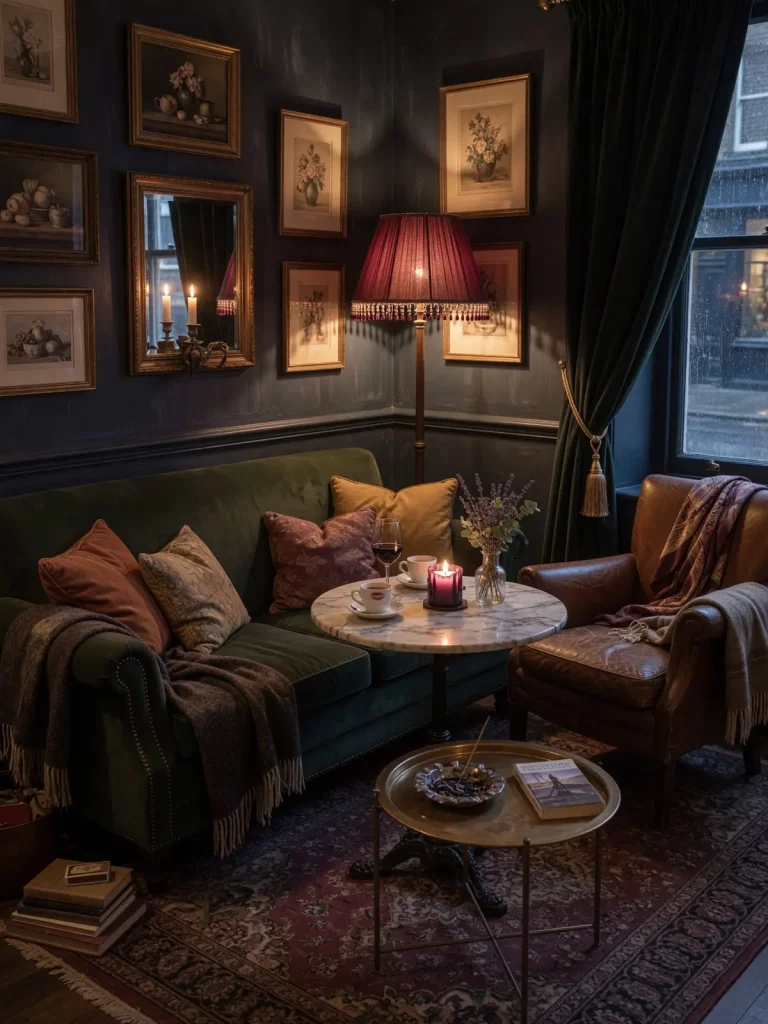
A café’s charm often comes from close, intimate seating rather than furniture spread thinly across a large room, and a moody living room benefits from that same principle. Pulling seating in slightly closer together, rather than pushing every piece against the walls, reinforces the cocoon like, gathered feeling this aesthetic is meant to create.
Mistakes to Avoid
- Relying on a single overhead light instead of layering multiple warm, low wattage sources
- Combining dark walls, dark furniture, and dark flooring with no lighter element to give the eye somewhere to rest
- Choosing furniture and textiles in only one material instead of mixing velvet, leather, and wood for depth
- Pushing all furniture against the walls instead of pulling seating in for a more intimate, café like layout
- Skipping natural materials like stone and linen, which keeps a dark room feeling heavy rather than grounded
- Adding too many competing metal finishes instead of choosing one, like brass, to catch the light consistently
Frequently Asked Questions
What’s the best wall color for a moody café inspired living room? Deep forest green, navy, or charcoal are the most consistently recommended choices, each offering a slightly different mood while still reading as sophisticated rather than gloomy.
Will a moody living room feel too small or closed in? Not if it’s balanced correctly. One lighter element, like a cream rug or a stone coffee table, along with layered warm lighting, keeps a dark room from tipping into oppressive.
What lighting works best for a moody, atmospheric room? Multiple low wattage warm bulbs across several fixtures work far better than a single overhead light, which tends to flatten the room and remove the pooled, café like glow this aesthetic depends on.
Should the sofa be dark or light in a moody living room? Both approaches work. A lighter neutral sofa softens the drama of dark walls, while a sofa in the same color family as the walls creates a richer, monochromatic depth instead.
What materials help keep a moody room from feeling heavy? Natural stone, linen, and warm wood all introduce texture and organic variation that pure dark paint alone can’t achieve, which is part of what keeps the space feeling grounded rather than oppressive.
Conclusion
A moody café vibes living room comes down to controlled darkness rather than an absence of light. Choose a deep wall color, layer in warm, low wattage lighting instead of a single overhead fixture, and mix textures like velvet, leather, and wood for real depth. Add one lighter element to keep the room from feeling closed in, and pull the furniture layout in for that intimate, gathered feeling a favorite coffeehouse corner always seems to have.
The room doesn’t need to be finished all at once either. Start with the wall color and lighting, live with those two changes for a while, and layer in texture and brass accents gradually as the space starts to reveal what it’s actually missing.