10 Black Corner Floating Shelf Ideas for Stylish Wall Mounted Storage
Every room seems to have one corner that never quite works. It’s too small for furniture, too awkward for a plant stand, and it usually just ends up empty or catching clutter. Black corner floating shelves are one of the most reliable fixes for this exact problem, adding both storage and visual interest to a space that would otherwise sit unused.
These ten ideas cover how to plan, mount, and style corner floating shelves so they look intentional rather than like an afterthought. From spacing and weight limits to styling tricks for different rooms, here’s how to make a wasted corner genuinely useful.
1. Understand Why Corners Are Ideal for Floating Shelves
A corner is a natural stopping point for the eye, which makes it a good spot for shelving that draws attention on purpose. Unlike a flat wall, where a shelf can feel like it’s just floating in empty space, a corner shelf has two walls supporting it visually, even before you add anything to it.
Corners are also often underused for anything else. A corner rarely fits a full piece of furniture well, but it’s perfect for a shelf unit that only needs a few inches of depth. This makes corner floating shelves one of the more efficient ways to add storage without losing floor space.
2. Choose the Right Number of Shelves for Your Corner Height
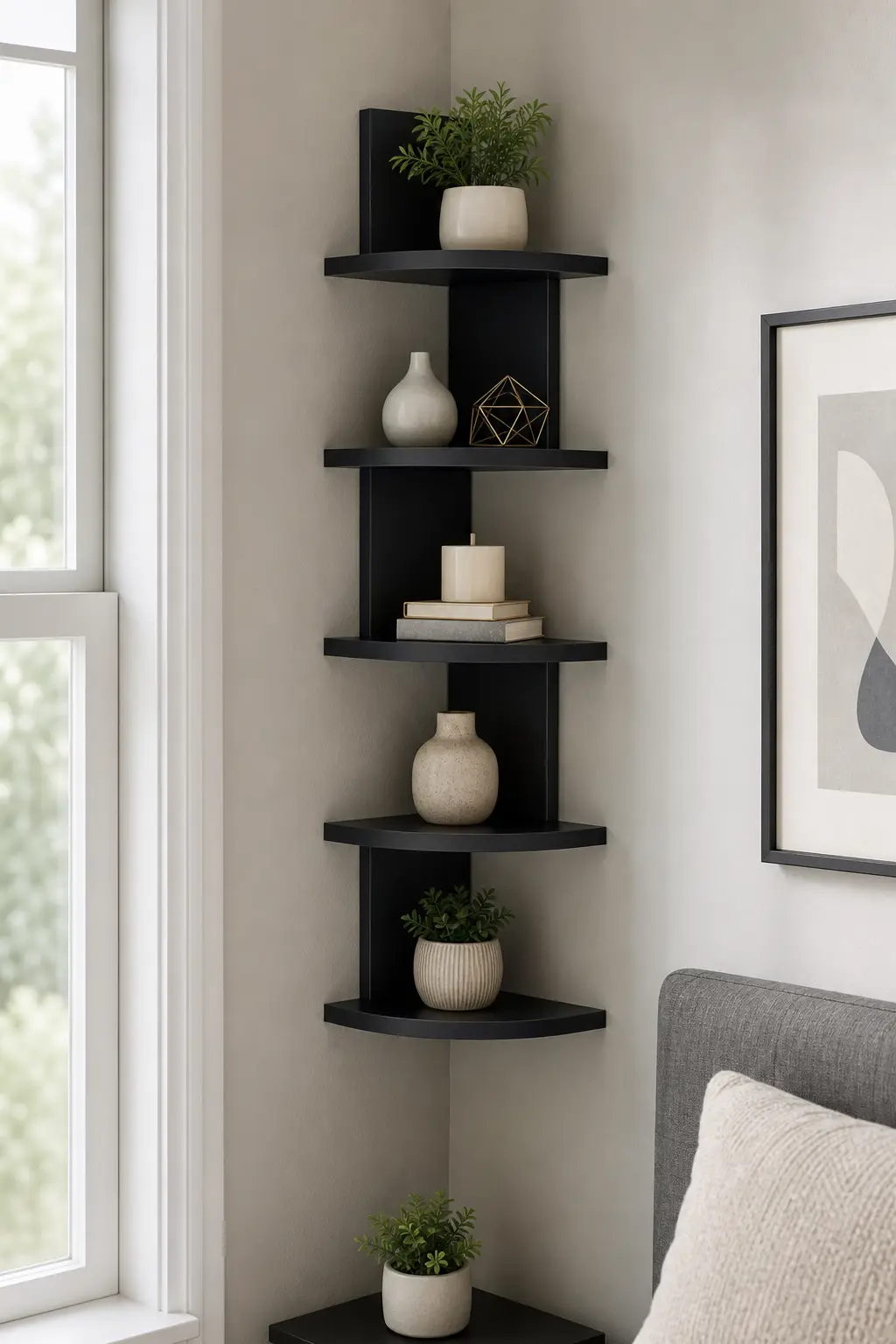
For a standard 8 foot ceiling, three shelves is usually the sweet spot for a corner unit, giving enough storage without feeling like a full bookcase crammed into a small space. In a room with taller ceilings, four or even five shelves can work, especially if you want the eye to travel further up the wall.
Working With Lower Ceilings
In a room with a lower ceiling, or a smaller corner overall, two shelves often looks more balanced than forcing in a third. Overcrowding a small corner with too many shelves can make the whole area feel busy rather than functional, even if each individual shelf is useful.
3. Get the Spacing Between Shelves Right
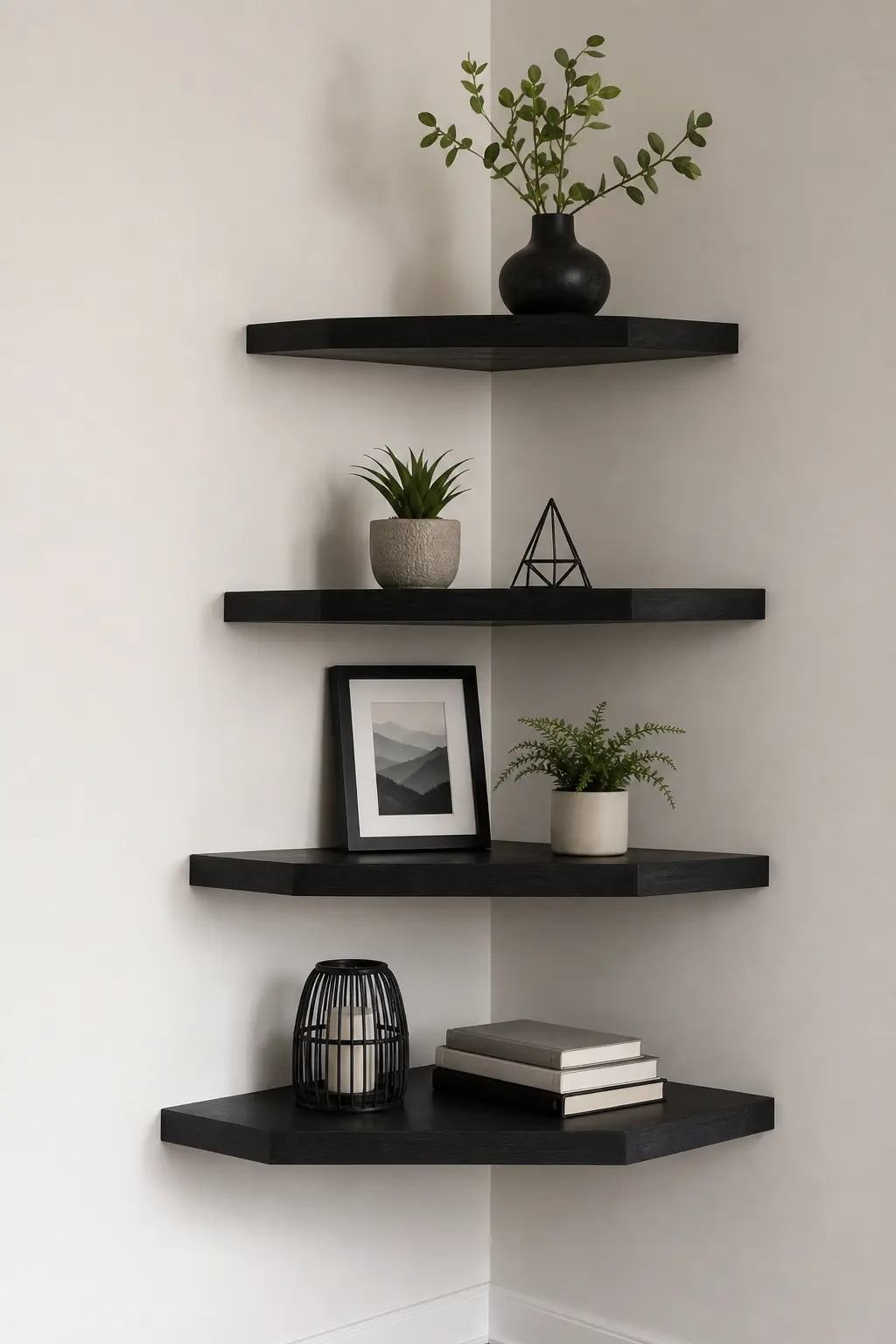
Even spacing between shelves looks correct on paper, but slightly uneven spacing often reads as more intentional and considered in person. Try leaving about 10 to 12 inches between the lowest shelves, where you’re likely storing taller items like books or vases, and slightly less, around 8 to 10 inches, between the top shelves reserved for smaller objects.
This staggered spacing also gives you more flexibility. Taller items go on the shelf with more clearance, so you’re not stuck rearranging everything if you add a taller lamp or vase later on.
4. Style Each Shelf With a Different Purpose in Mind
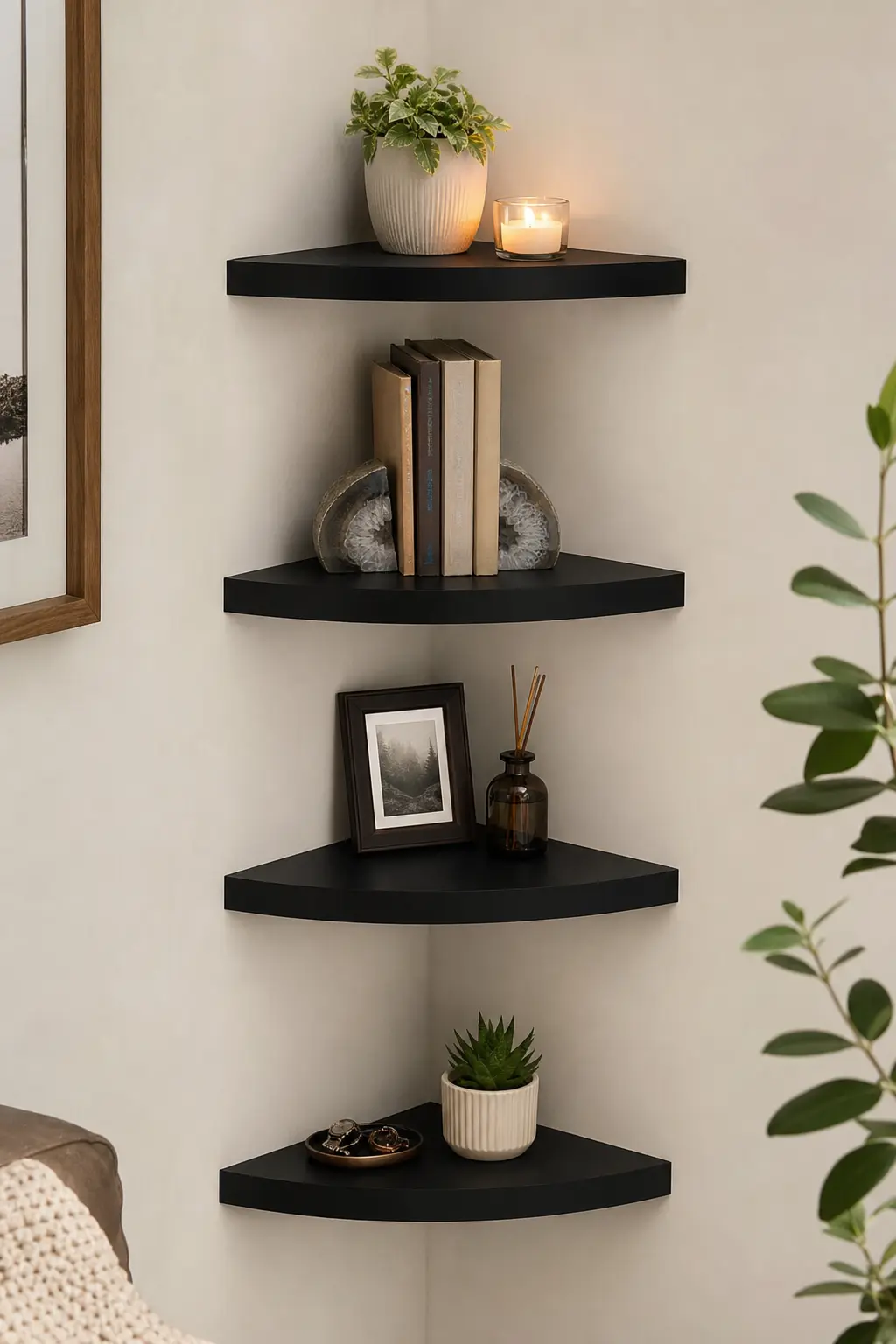
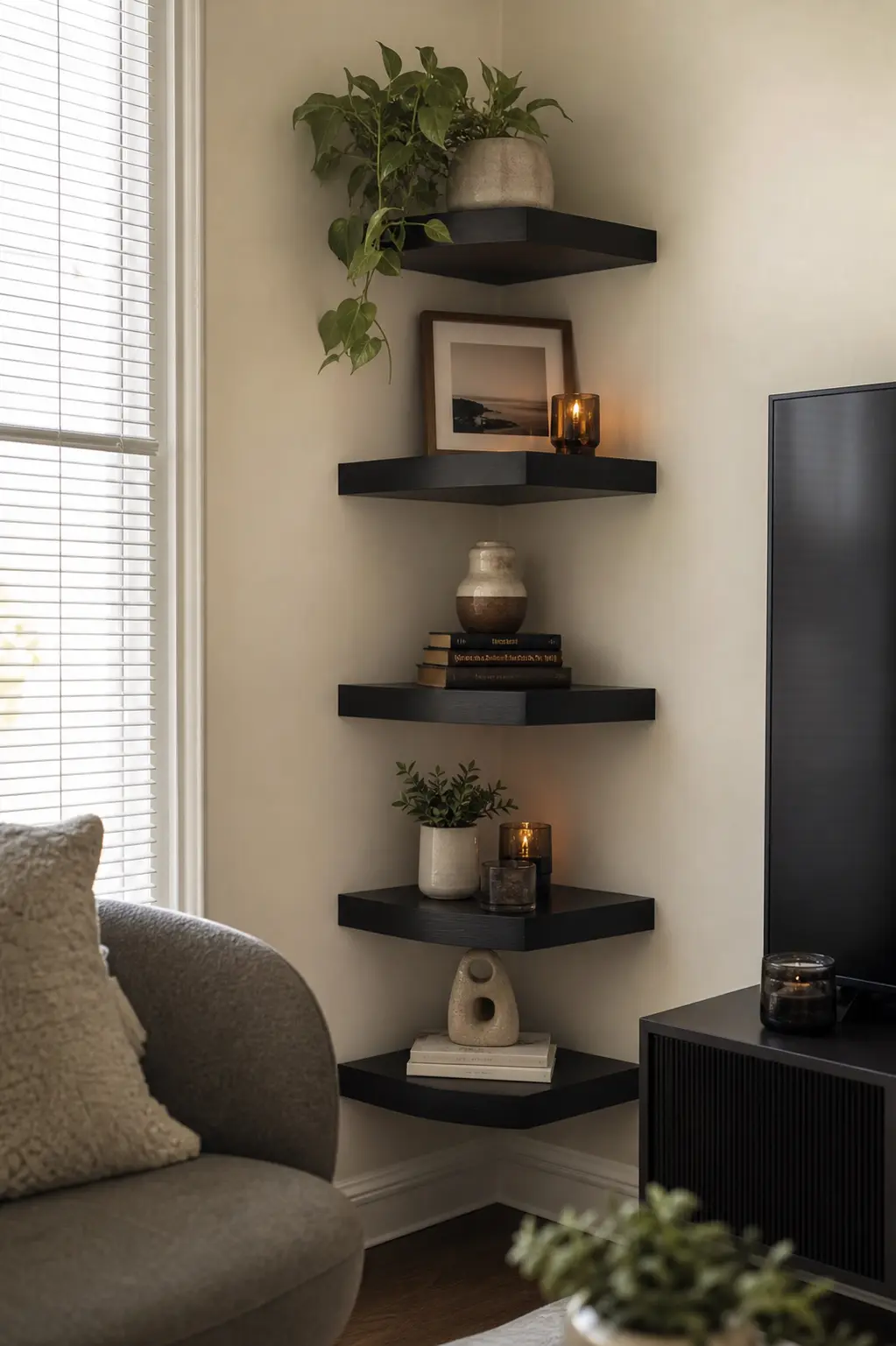
Rather than treating all your shelves the same way, give each one a slightly different role. The bottom shelf might hold a small stack of books and a plant, the middle shelf a framed photo and a candle, and the top shelf something more sculptural, like a single vase or a small piece of art leaned against the wall.
This approach naturally avoids the common mistake of cramming every shelf full of small objects, which can start to look cluttered rather than styled. Varying what each shelf holds also gives the whole unit a more curated, gallery like feel.
5. Use Black Shelves to Anchor a Light, Neutral Room
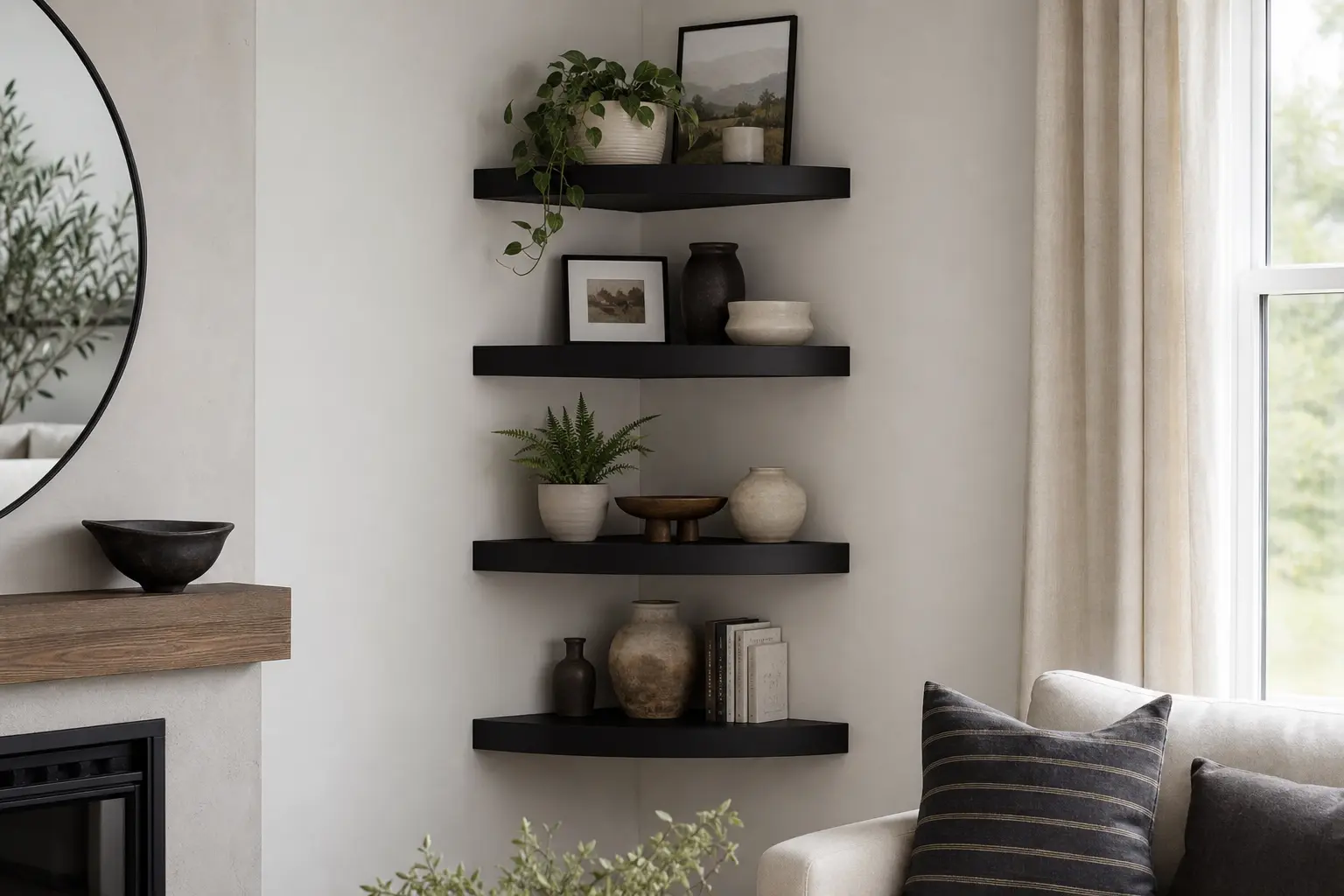
In a room with mostly white or light neutral walls, black corner shelves act as a strong visual anchor. The dark color draws the eye and gives the room a clear point of contrast, which is especially useful in a space that might otherwise feel a little flat or under decorated.
Because the shelves themselves already provide contrast, you don’t need much else on the walls nearby to make the corner feel finished. This makes black corner shelves a good option for renters or anyone who wants a big visual impact without a lot of additional decor.
6. Mount Corner Shelves Correctly for the Weight They’ll Hold
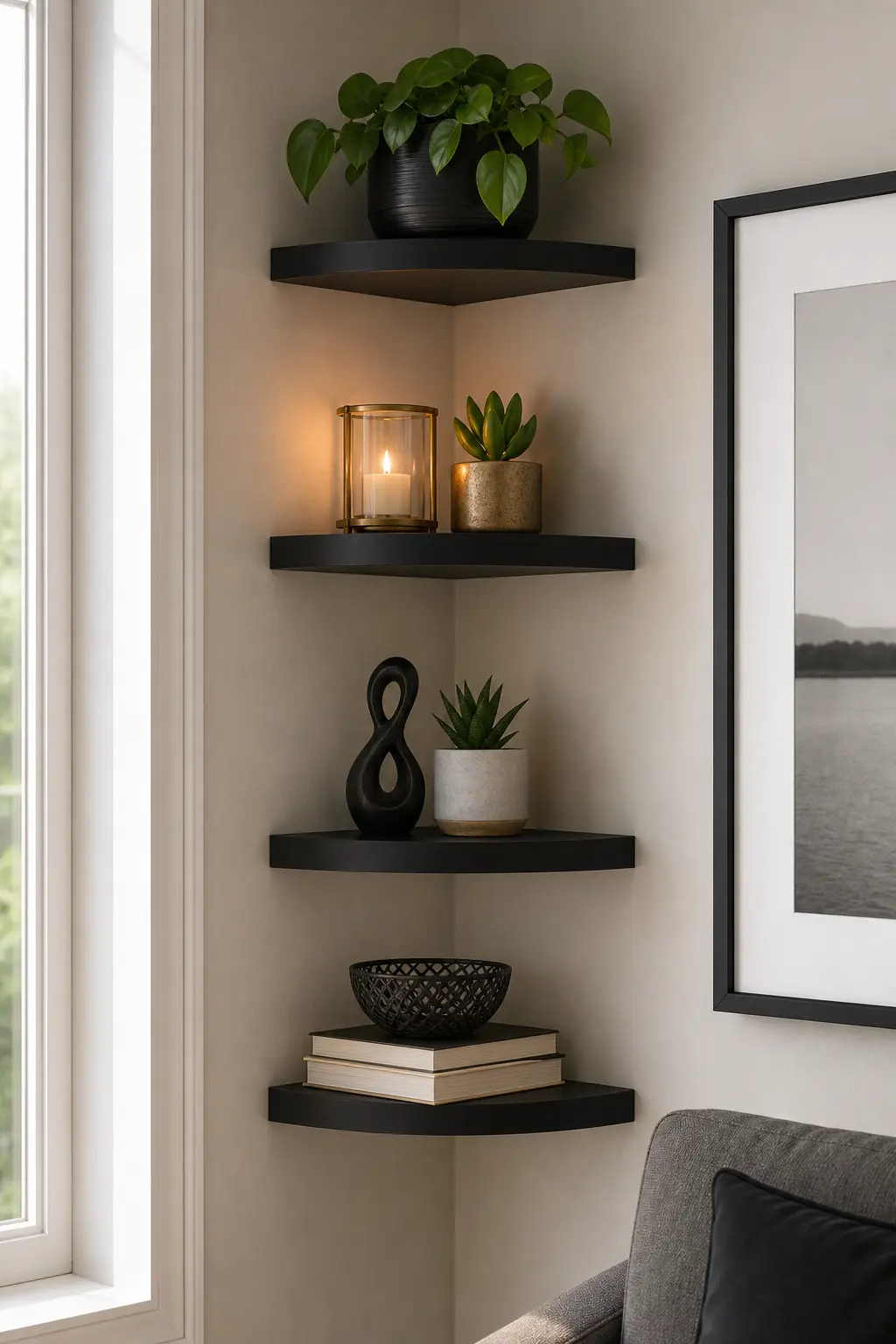
Most floating shelves rely on a hidden bracket system, and weight limits vary quite a bit depending on the shelf material and how it’s mounted. As a general guide, a well mounted shelf into wall studs can typically hold anywhere from 20 to 50 pounds, while a shelf mounted only into drywall anchors will hold considerably less, often closer to 10 to 15 pounds.
Always check the specific weight rating listed by the shelf manufacturer rather than assuming. If you’re not confident locating studs or installing anchors correctly, it’s worth having the shelves professionally mounted, especially if you plan to display anything heavy like books or ceramics.
7. Add Corner Shelves in a Home Office for Functional Storage
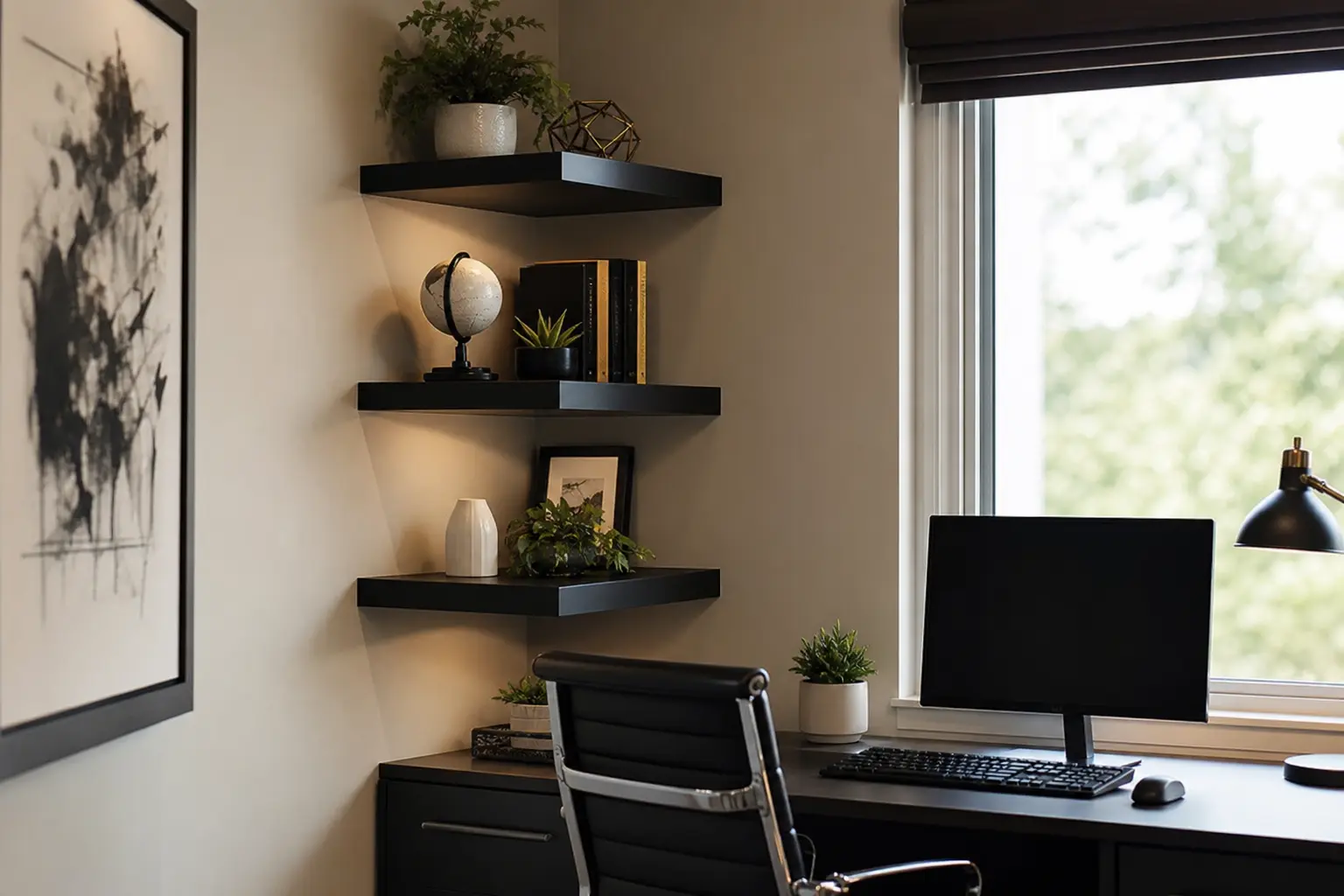
A corner floating shelf setup works especially well in a home office, where desk space is often limited. Use the shelves to hold reference books, a small printer, or storage boxes for supplies, keeping your actual desktop clearer for daily work.
Because a home office corner is used functionally rather than just for display, it’s fine to style it a little less precisely than a living room corner. A mix of practical storage boxes and a few personal touches, like a small plant or photo, keeps it useful without looking sterile.
8. Use Corner Shelves in a Kitchen for Everyday Items
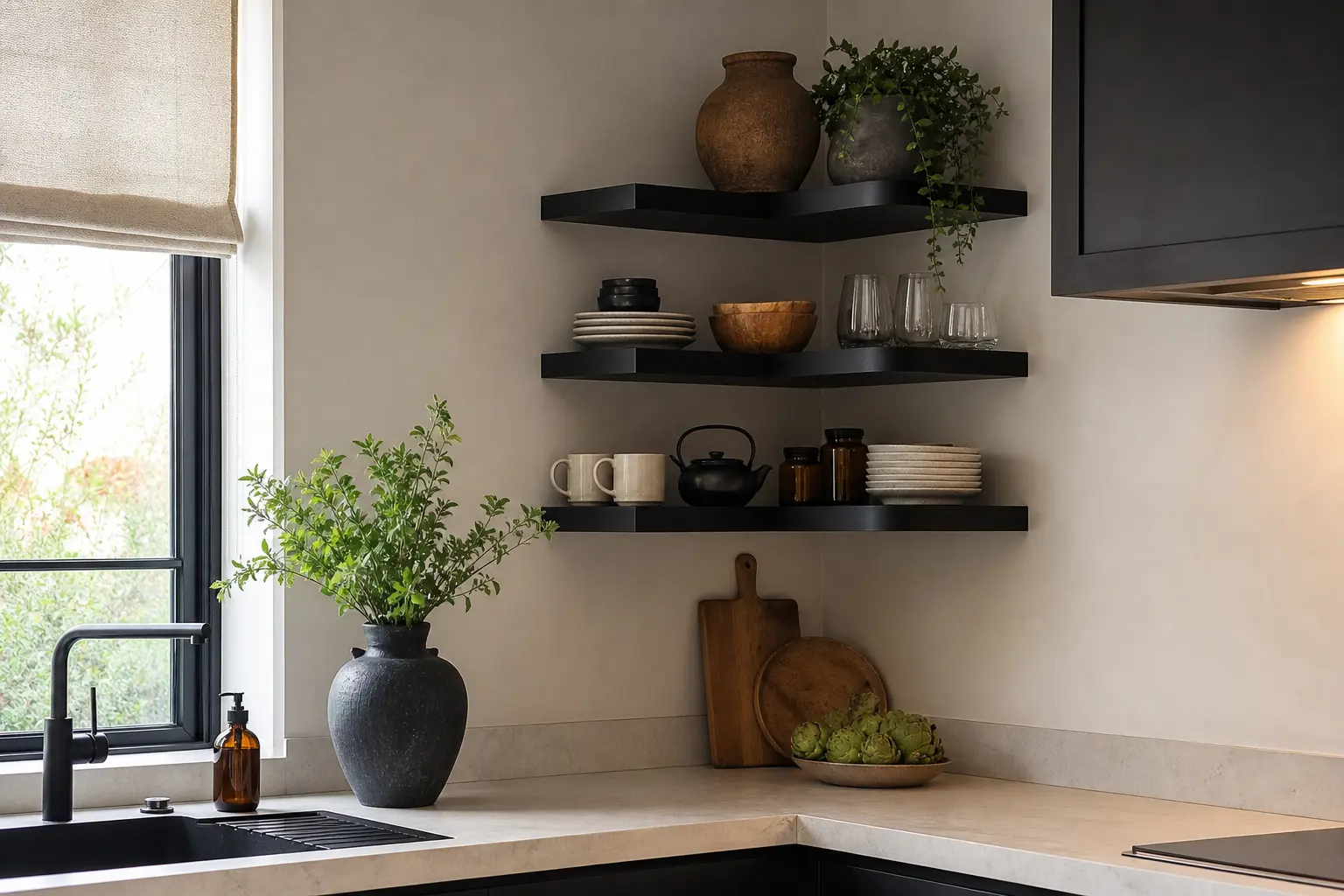
An empty kitchen corner, especially in a smaller kitchen without room for a full pantry cabinet, is a good spot for two or three black floating shelves. Use them for everyday items like a stack of bowls, a set of glass jars for pasta or grains, or a small collection of cookbooks.
Because kitchen shelves see more daily handling than a living room display shelf, keep the spacing a bit more generous, around 12 to 14 inches, so items are easy to grab without knocking into the shelf above.
9. Balance Open Shelving With Some Negative Space
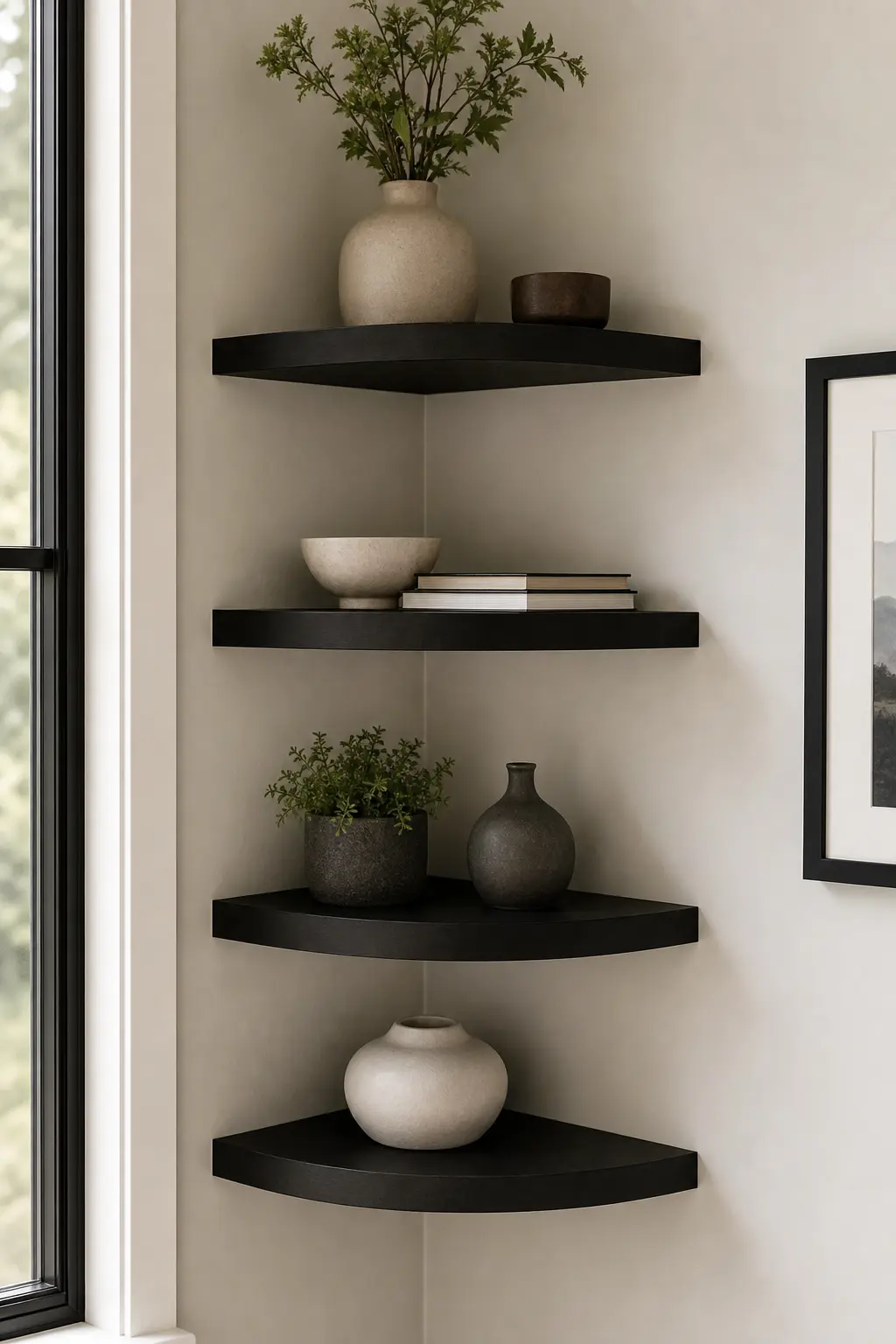
Filling every inch of every shelf can quickly tip a corner unit from styled to cluttered. Leave some visible empty space on each shelf, roughly a third of the surface, so the eye has somewhere to rest. This matters even more with dark shelves, since black draws more visual weight than a lighter wood tone would in the same amount of space.
A simple test is to step back about six feet and look at the corner as a whole. If it reads as busy or hard to focus on, remove one or two items rather than adding anything new.
10. Light the Shelves to Make Them a Real Feature
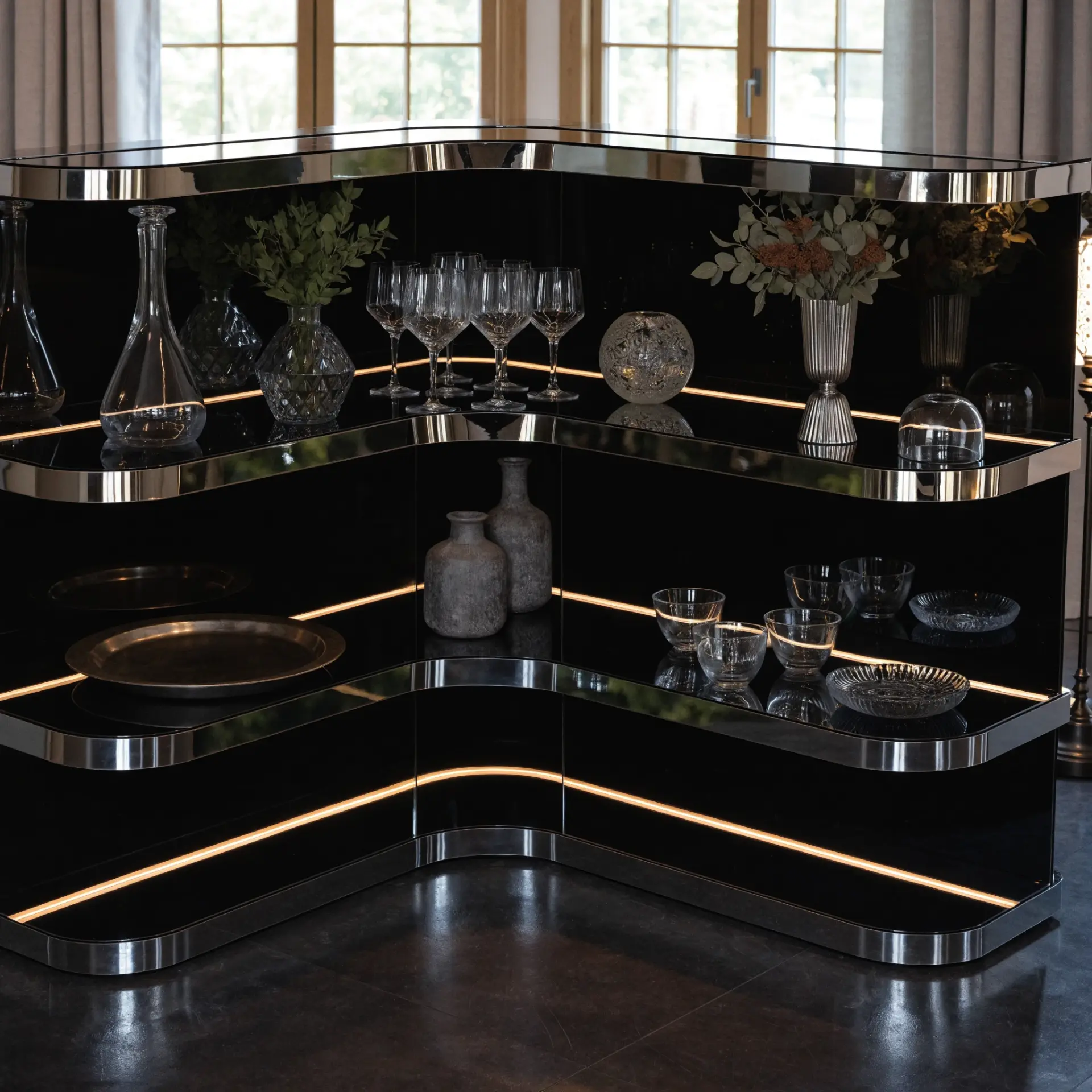
A small plug in puck light or a battery powered LED strip tucked under each shelf turns a simple storage solution into a genuine design feature, especially in the evening. This works particularly well with black shelves, since the contrast between the dark shelf and the warm light draws even more attention to the corner.
Look for lighting in the 2700 to 3000 Kelvin range for a warm, inviting glow rather than a stark white light, which can feel more like task lighting than ambiance in a living space.
Mistakes to Avoid
- Mounting shelves into drywall alone when displaying anything heavier than light decor
- Spacing every shelf exactly the same distance apart, which can look mechanical rather than intentional
- Filling every shelf completely full, leaving no visual rest for the eye
- Skipping the weight rating check before loading up shelves with books or ceramics
- Using corner shelves in a spot with heavy foot traffic where they could get bumped
- Choosing shelves too deep for a narrow corner, which can make the space feel tighter rather than open
Frequently Asked Questions
How much weight can a black corner floating shelf hold? It depends on the mounting method and the shelf material, but a shelf properly mounted into wall studs typically holds somewhere between 20 and 50 pounds. Always check the manufacturer’s specific weight rating before loading it up.
Do black shelves work in every room, or only modern spaces? Black corner shelves work well beyond strictly modern rooms, including traditional, farmhouse, and eclectic spaces, since the dark color reads as a neutral rather than a specific style choice. What matters more is how the shelf is styled once it’s mounted.
How many items should I put on each shelf? There’s no fixed number, but leaving roughly a third of each shelf empty generally looks more balanced than filling it completely. Three to five varied items per shelf is a reasonable starting point for most sizes.
Can I install floating shelves myself? Many floating shelves can be installed with basic tools if you can locate wall studs accurately. If you’re mounting anything heavy, or you’re not confident finding studs, it’s worth hiring help to avoid a shelf that pulls away from the wall over time.
What’s the best corner in the house for floating shelves? Living room corners, home office corners, and underused kitchen corners all work well. The best spot is usually a corner that currently sits empty or collects clutter, since that’s where added storage and visual interest will have the most impact.
Conclusion
An awkward empty corner is one of the easiest problems to solve with black floating shelves, as long as you plan the spacing, styling, and mounting carefully. Start with a simple two or three shelf setup, mount it properly for the weight it needs to hold, and style each shelf with a slightly different purpose. That approach turns a wasted corner into one of the more interesting spots in the room.