10 Cozy Bedroom Ideas with Plants and Natural Light You’ll Love
A bedroom with good natural light and a few well placed plants has a different energy than one relying entirely on artificial lighting and empty corners. It feels lived in, calm, a little more alive. These cozy bedroom ideas with plants and natural light cover how to actually pair the two well, not just place a plant near a window and hope for the best.
1. Why Plants and Natural Light Work So Well Together

Plants need light to survive, obviously, but the relationship works both ways in terms of how a room feels too. Natural light on its own can leave a room looking a bit sparse if there’s nothing catching or softening it. Plants fill that gap, adding movement, color, and texture exactly where the light lands.
There’s a calming effect worth mentioning as well. Rooms with visible greenery and daylight tend to read as more restful than rooms lit entirely by artificial bulbs, which matters more in a bedroom than almost anywhere else in the house.
2. Reading Your Room’s Actual Light Before Choosing Plants

Before buying a single plant, it helps to actually track how light moves through the room across a full day. A south facing window gets the most consistent direct light, while a north facing one offers softer, indirect light for most of the day.
East facing windows get bright morning light that fades by afternoon, and west facing ones do the opposite, staying dim until a stronger afternoon and evening light comes through. Matching a plant’s light needs to this pattern matters more than picking whatever looks nice at the store, since even a beautiful plant struggles in the wrong light.
A quick tip that helps: spend a day watching where direct sunlight actually falls in the room, not just near the window but across the floor and walls as the sun moves. That patch of light tells you more than a general guess about which side the room faces.
3. Low Maintenance Plants for Beginners

Snake plants tolerate a wide range of light conditions and need infrequent watering, which makes them a solid starting point for anyone new to keeping plants alive in a bedroom. Pothos, especially trailing off a shelf or hanging planter, handles lower light well and forgives the occasional missed watering.
ZZ plants handle low light better than almost any other common houseplant, making them a good fit for a north facing bedroom or a corner further from the window. For a bit more color, a peace lily tolerates indirect light and signals when it needs water by drooping slightly, an easy visual cue for a beginner still learning a plant’s needs.
Plants to Avoid in Low Light Bedrooms
Fiddle leaf figs and most flowering plants need more consistent, bright light than a typical bedroom offers, and they tend to struggle or drop leaves without it. Save those for a brighter room and stick to more forgiving options in a bedroom with limited light.
4. Window Treatments That Maximize Natural Light

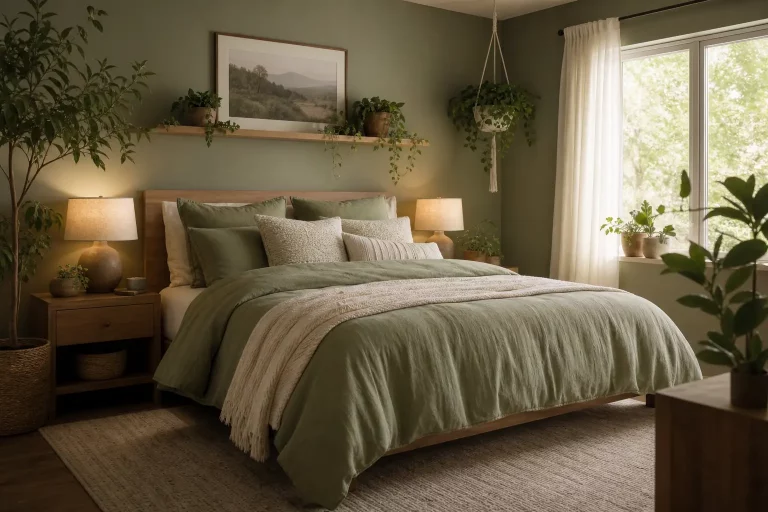
Sheer curtains let light filter through softly throughout the day while still offering some privacy, a better option than heavy blackout curtains for anyone wanting plants to actually thrive. Hanging curtains slightly wider than the window frame, and closer to the ceiling than the window itself, lets more light in around the edges when they’re open.
For bedrooms needing darkness for sleep, layering sheer curtains with a separate blackout panel offers flexibility, sheers open during the day for plants and mood, blackout panels closed at night for rest. Keeping windows free of heavy furniture or large decor items in front of them matters too, since blocked light affects both the room’s overall feel and any plants nearby.
5. Plant Placement Ideas Beyond a Single Windowsill

A windowsill is the obvious spot, but it’s rarely the only usable one. Hanging planters, positioned a few feet back from a bright window, let trailing plants like pothos or string of pearls cascade down without taking up any surface space at all.
A plant stand positioned at a slight angle to the window, rather than directly in front of it, still catches good light while leaving the windowsill itself clear for other styling. Grouping two or three plants of varying heights on a dresser or shelf near natural light adds a fuller, more intentional look than a single plant placed alone.
Key takeaway: plants don’t need to sit directly on the windowsill to thrive, they just need to be within the light’s actual reach, which often extends several feet into the room.
6. Mirrors and Light Colored Surfaces That Amplify Sunlight

A mirror positioned across from a window bounces natural light deeper into the room, which benefits both the room’s overall brightness and any plants placed further from the window itself. This works especially well in a room with only one light source and a few darker corners that could use the extra reach.
Light colored walls and furniture reflect more of the available light than dark surfaces do, which matters in a room trying to make the most of limited natural light. A pale rug or light wood furniture, rather than dark upholstery or flooring, keeps the room feeling bright rather than absorbing what light does come through.
7. Pairing Plants With Warm Materials and Textures

Terracotta and unglazed ceramic pots suit a natural, plant filled bedroom better than plastic, both visually and functionally, since unglazed terracotta allows some moisture to evaporate through the pot itself. Woven baskets used as planter covers add texture that complements the plants rather than competing with them.
Rattan or cane furniture details, a headboard, a chair, or a plant stand, echo the same organic feel plants bring into a room, tying the whole look together rather than treating plants as a separate addition. Wood tones, particularly warmer ones like oak, pair especially well with greenery, since both share a similar natural, grounded quality.
8. Caring for Bedroom Plants Without Overcomplicating It

Overwatering kills more houseplants than underwatering, so checking the soil with a finger before watering, rather than sticking to a fixed schedule, prevents most common care mistakes. Most common bedroom plants only need water when the top inch or two of soil feels dry.
Wiping dust off larger leaves every few weeks keeps a plant looking fresh and helps it photosynthesize more effectively, since a layer of dust blocks some of the light a leaf would otherwise absorb. Rotating a plant a quarter turn every week or two encourages even growth toward the light rather than a lopsided lean toward the window.
9. Budget Ranges for Plants and Light Focused Decor

Low maintenance starter plants, snake plants, pothos, ZZ plants, typically run 15 to 40 dollars each depending on size, with smaller starter pots costing less than a more mature, established plant. Ceramic or terracotta pots generally add another 10 to 30 dollars per plant, depending on size and finish.
Sheer curtains, budget friendly versions, typically run 20 to 50 dollars per panel, while a well made blackout layer for anyone needing both adds another 30 to 60 dollars. A hanging planter setup, including the hardware, generally costs 20 to 45 dollars total. A full plant and natural light focused refresh, several plants, pots, and updated curtains, often lands somewhere between 150 and 350 dollars total.
10. Seasonal Adjustments for Changing Light Levels

Light levels shift noticeably between summer and winter, and a plant that thrived in a bright spot during summer months may need to move closer to the window once daylight hours shorten. Paying attention to a plant’s appearance, leggy growth or paler leaves, often signals it needs more light than its current spot provides during darker months.
Watering frequency generally decreases in winter as plants grow more slowly with less available light, so continuing a summer watering schedule into winter is a common mistake that leads to overwatering. Rotating plants closer to south or west facing windows during winter, if the room has more than one option, helps offset the lower overall light levels those months bring.
Mistakes to Avoid
- Choosing plants without first tracking how light actually moves through the room
- Watering on a fixed schedule instead of checking the soil first
- Blocking windows with furniture or heavy decor that limits both light and plant health
- Placing a high light plant in a north facing room where it will likely struggle
- Skipping mirrors or light colored surfaces that could help distribute available light
- Continuing a summer watering routine through the lower light winter months
Frequently Asked Questions
What are the easiest plants to keep alive in a bedroom? Snake plants, pothos, and ZZ plants are generally the most forgiving, tolerating a range of light conditions and infrequent watering, which makes them solid choices for anyone new to plant care.
Can plants survive in a bedroom with very little natural light? Some can. ZZ plants and pothos handle lower light better than most common houseplants, though even low light plants generally do better with at least some indirect natural light rather than none at all.
How do I know if my bedroom gets enough light for plants? Track how light moves through the room across a full day, noting which walls or floor areas get direct sun and for how long. That observation tells you more than assuming based on which direction the window faces.
Should I use blackout curtains if I want to keep plants in my bedroom? Layering sheer curtains with a separate blackout panel offers the best of both worlds, sheers open during the day for plants and natural light, blackout panels closed at night for better sleep.
How often should bedroom plants actually be watered? It depends more on the specific plant and the season than a fixed schedule. Checking the top inch or two of soil for dryness before watering prevents the overwatering that kills more houseplants than neglect does.
Conclusion
A cozy bedroom with plants and natural light comes down to working with the light your room actually gets, not the light you wish it had. Track how sunlight moves through the space, choose plants suited to that pattern, and use mirrors or light colored surfaces to stretch what light is available even further. Done well, a plant filled bedroom feels calm and alive in a way artificial lighting alone never quite manages.