10 Cozy Sage Green Bedroom Ideas with Aesthetic Decor Inspiration
Walking into a bedroom that actually calms you down, instead of just being a place to sleep, comes down to a few real choices. Sage green is one of the easiest colors to build that feeling around, since it sits right between calming and warm without tipping into either cold or overly bright. This article covers ten real ways to bring sage green into a bedroom through walls, bedding, and small details, so the whole room reads as intentional and restful rather than randomly decorated.
1. Why Sage Green Works So Well for a Calm Bedroom
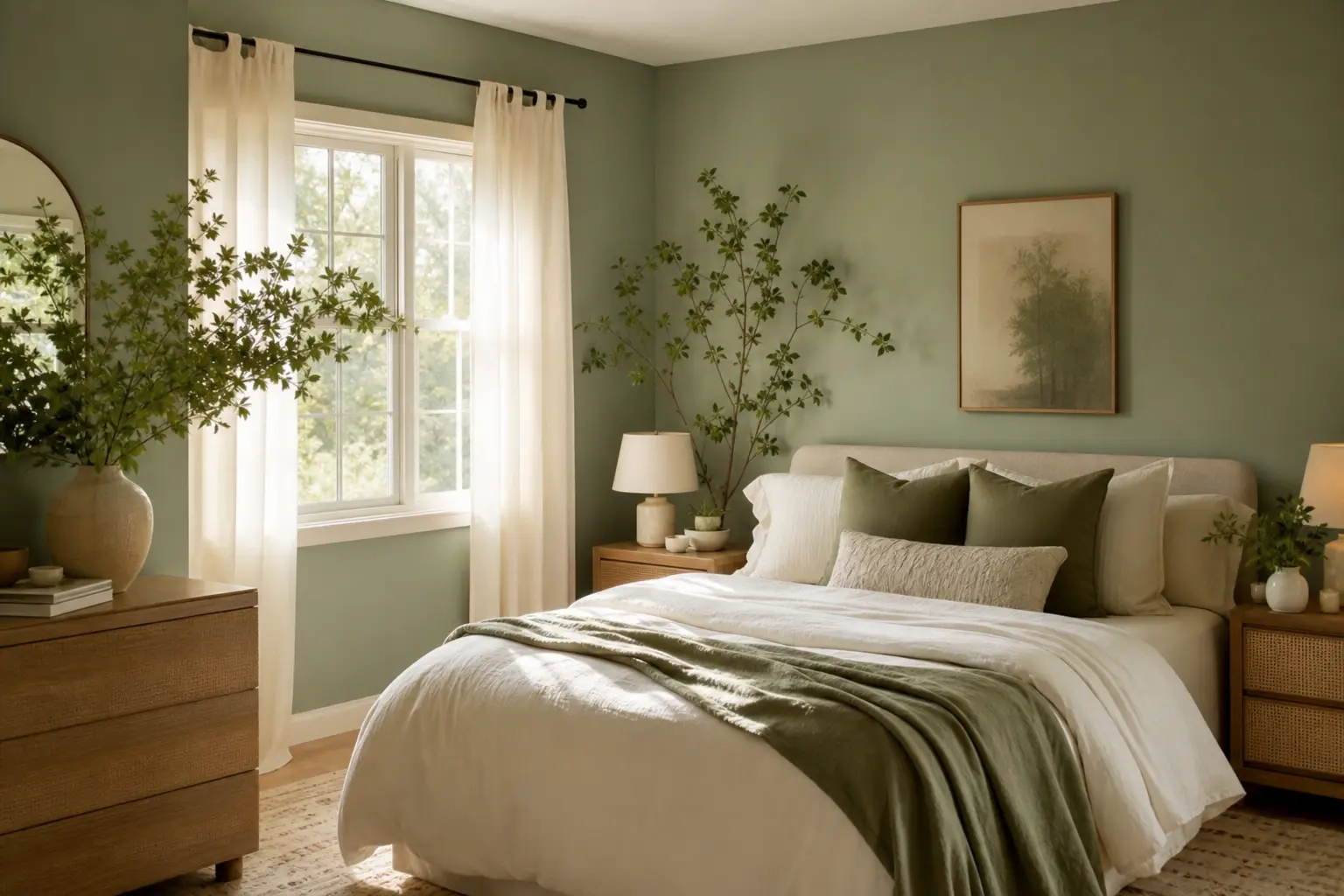
Sage green sits in a strange, useful middle ground. It has enough gray in it to feel muted and calm, but enough green to still read as a natural, warm color rather than a cold neutral.
Colors closer to nature, greens, soft browns, muted blues, tend to have a genuinely calming effect in a bedroom, which is part of why sage has become such a popular choice for a restful space rather than a bold, energetic one.
It also pairs easily with almost anything else in a room. Wood tones, cream fabrics, black metal accents, sage green sits in the background of all of them without clashing.
A sage green room feels calm without feeling boring, which is a harder balance to strike than it sounds.
2. Choosing the Right Shade of Sage for Your Light

North facing rooms, which get cooler, less direct light throughout the day, tend to look better with a slightly warmer, more yellow toned sage rather than a shade that leans gray or blue.
South facing rooms, with brighter, warmer light, can handle a cooler, more muted sage without the color looking washed out or flat.
Always test a paint sample directly on your wall before committing to a full room. Sage green shifts noticeably between morning and evening light, and a color that looks perfect on a paint chip can read differently once it’s actually on your wall.
Undertones to Watch For
Some sage greens lean slightly blue, others lean slightly yellow or gray. Hold the sample next to your existing furniture and flooring to check which undertone actually complements what’s already in the room.
3. Deciding Between an Accent Wall and Full Room Color
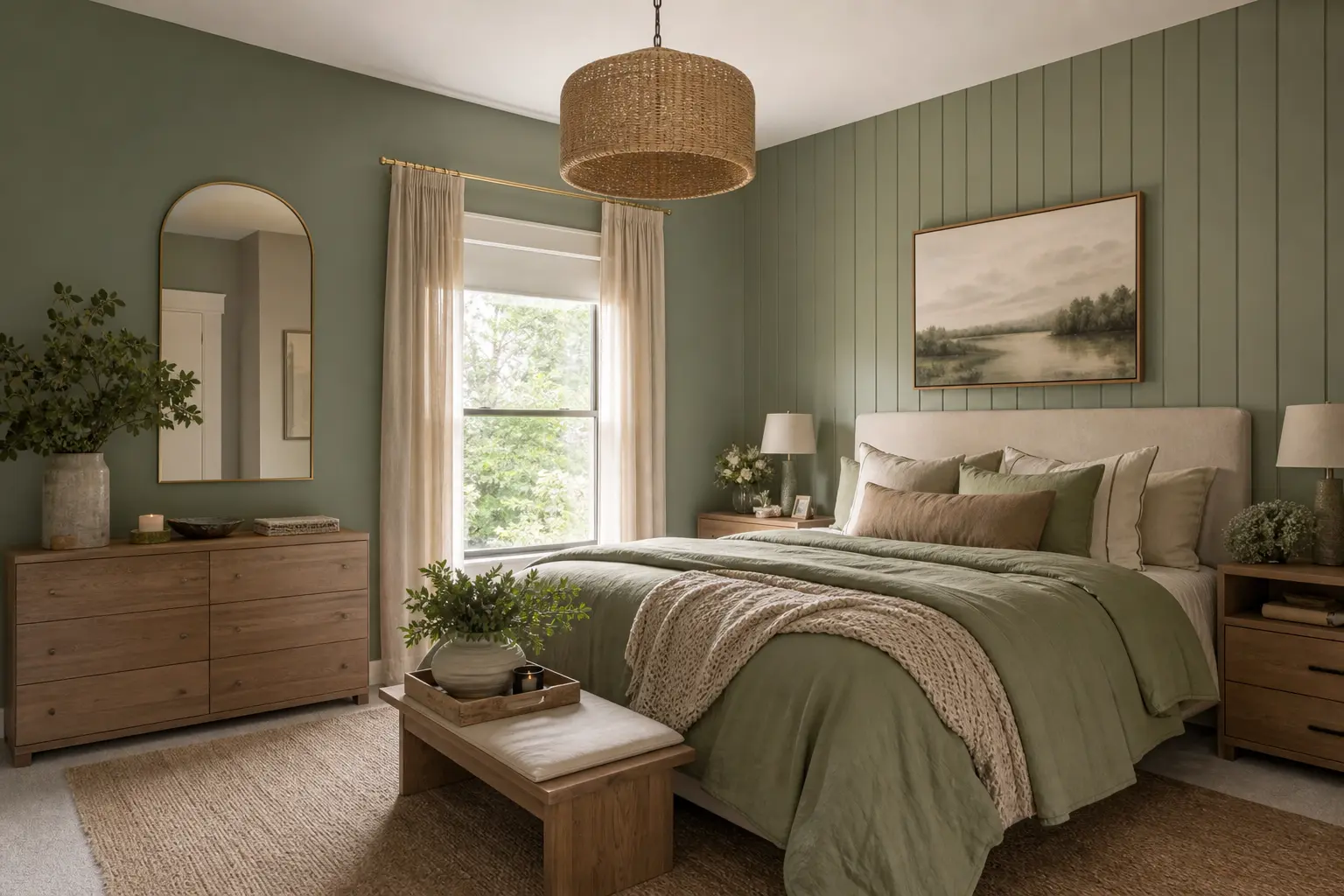
A single accent wall, usually the one behind the headboard, gives you the sage green effect without committing the entire room to one color. This works especially well in a rental, since repainting one wall back to neutral before moving out is a smaller job than an entire room.
Painting all four walls in sage green creates a more immersive, cocoon like feeling, which works well in a larger bedroom with good natural light. In a smaller or darker room, four full walls of sage can feel a bit heavy without enough light to balance it.
If you’re unsure which to choose, start with an accent wall. It’s easier to expand to a full room later than it is to undo a full room commitment you’re not happy with.
4. Pairing Sage Green with Wood Tones and Metals
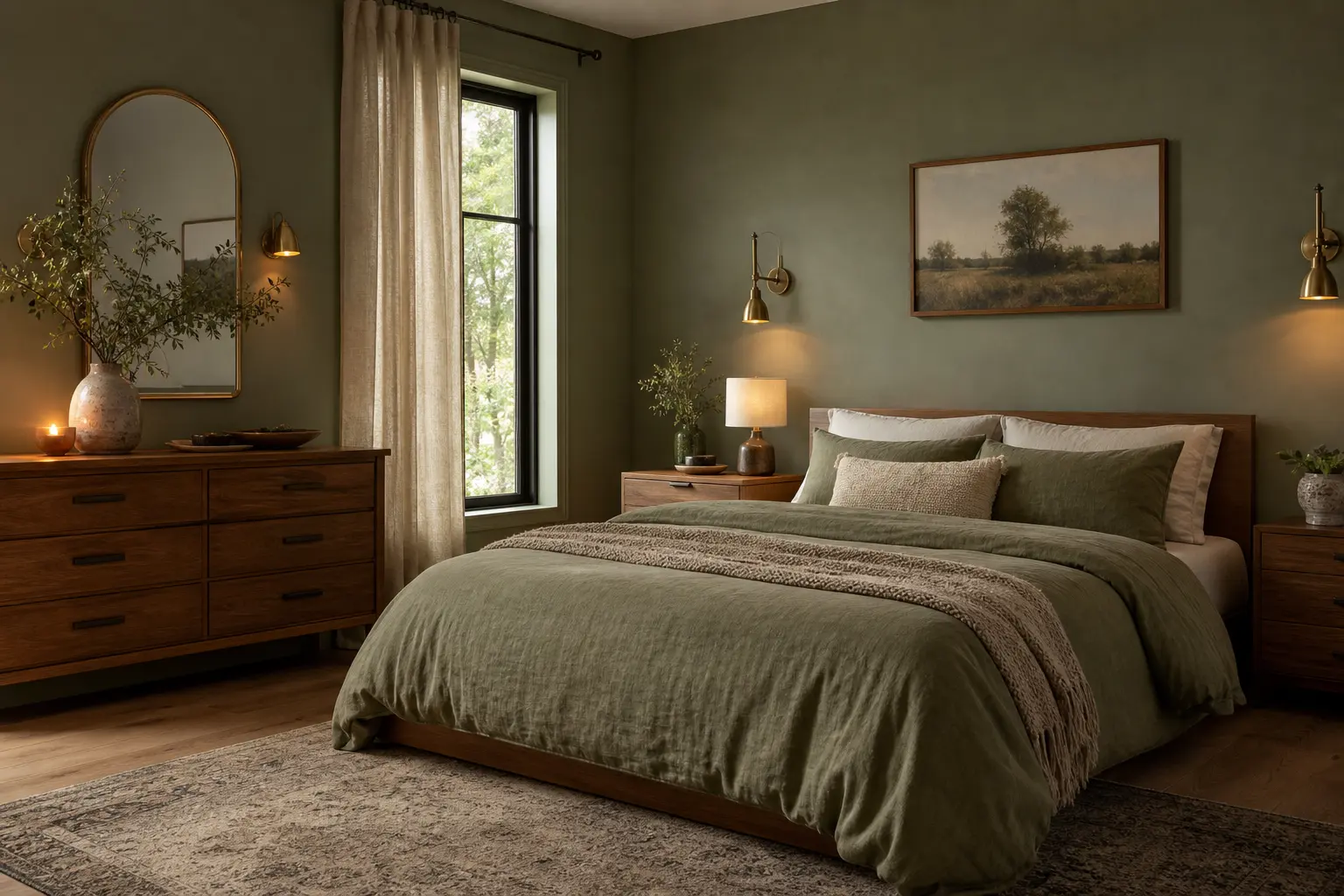
Warm wood tones, oak, walnut, or a lighter pine, bring out the natural, earthy side of sage green rather than the cooler, more muted side. This pairing tends to feel more organic and less styled straight out of a catalog.
For metal accents, brushed brass or aged bronze hardware on nightstands, lamps, or drawer pulls complements sage better than bright chrome or stark black, which can feel a bit too sharp against a soft, muted wall color.
Black accents still work, but use them sparingly, maybe on a single frame or a small lamp base, rather than throughout the whole room, since too much black can pull the space toward a more modern, less cozy feel.
5. Choosing Bedding That Complements Rather Than Competes
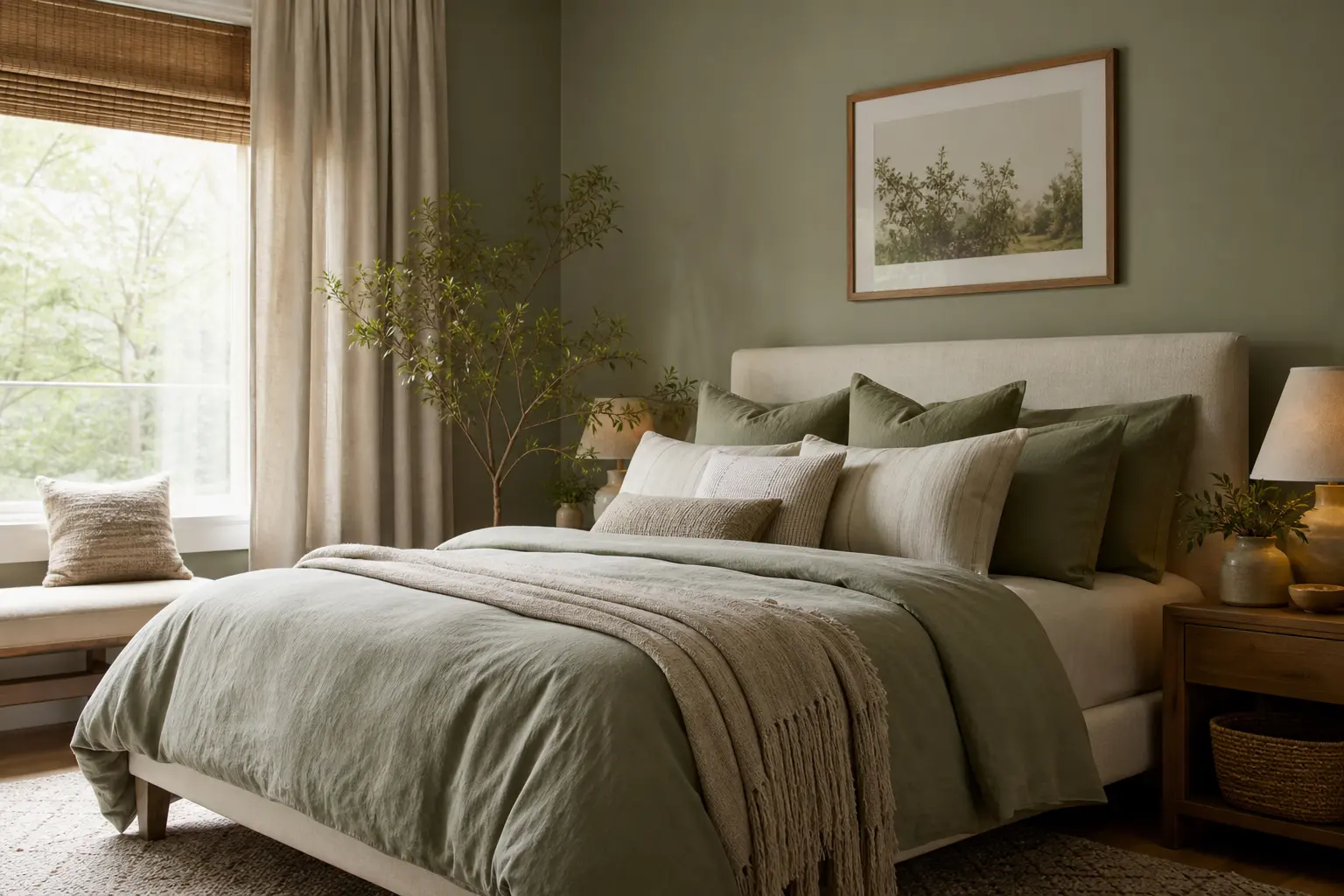
Cream, warm white, or soft oatmeal bedding lets the sage green wall stay the visual focus of the room, rather than competing with a bold pattern or a strongly contrasting color.
A textured throw or knit blanket in a slightly deeper sage or a warm terracotta tone adds a small accent layer on top of neutral bedding, without overwhelming the palette.
Avoid pairing sage green walls with very cool toned white bedding, since the contrast can feel a bit stark. A warmer, slightly off white tone bridges the gap between the wall color and the bedding more smoothly.
6. Layering Texture with Rugs and Textiles
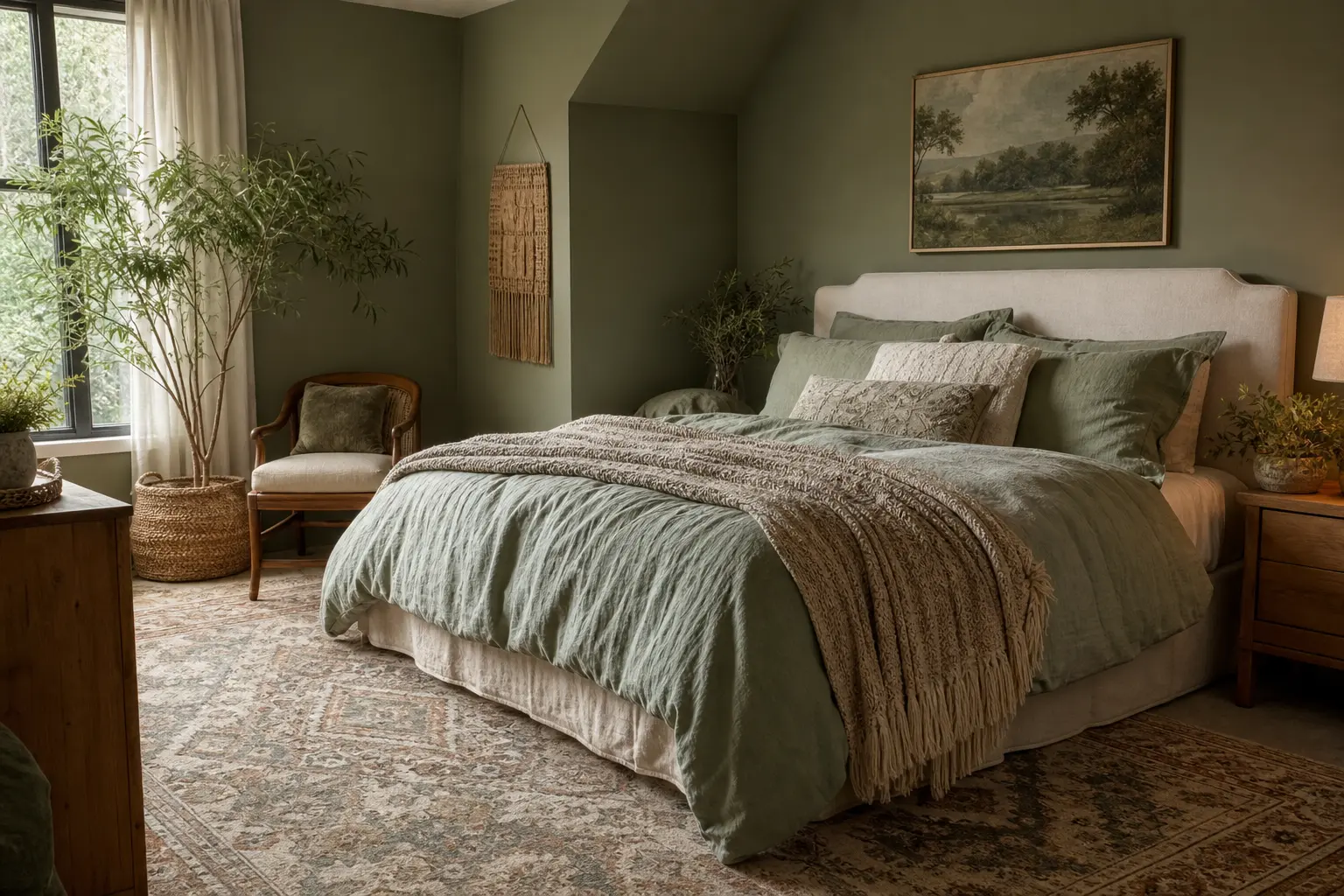
A jute or woven rug at the foot of the bed adds natural texture that pairs well with the earthy tone of sage green, more so than a smooth, synthetic rug would.
Layer in a few textured pillows, linen, boucle, a light knit, rather than relying on flat cotton alone. Texture does a lot of the visual work in a room that’s mostly working with a muted, single color palette.
Curtains in a soft linen or cotton, in cream or a slightly deeper sage, help frame the window without introducing a competing pattern or color into the room.
7. Lighting That Makes Sage Green Feel Warm, Not Cold
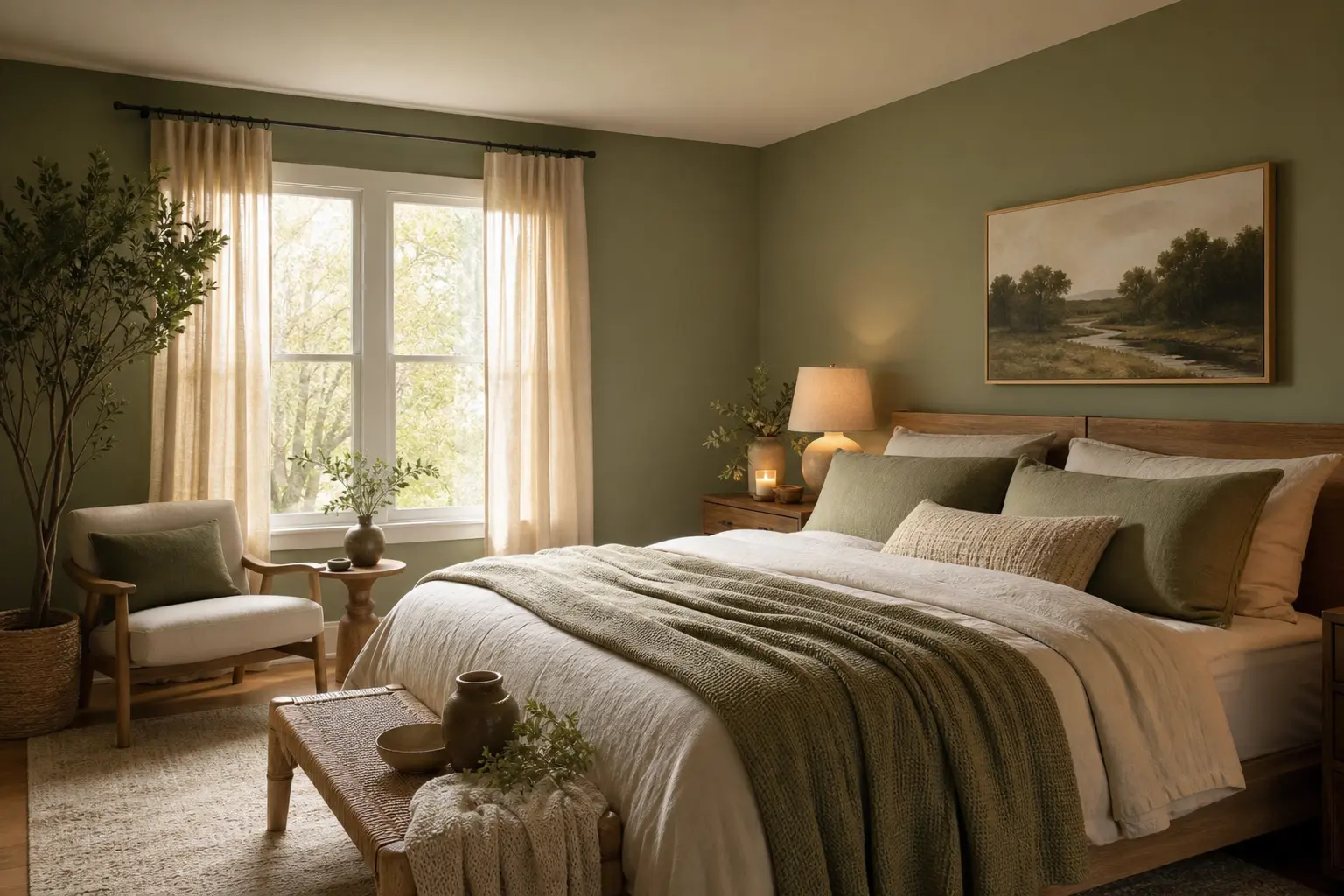
Warm white bulbs, in the 2700K to 3000K range, keep sage green looking soft and inviting rather than pulling it toward a colder, more gray tone under harsher light.
Bedside lamps with a fabric or frosted shade diffuse light more gently than an open bulb, which suits the calm, muted mood sage green is generally used to create.
Avoid bright, cool toned overhead lighting as the main light source in the evening. It tends to flatten the wall color and undercut the cozy effect the room is going for.
8. Budget Friendly Ways to Get the Look
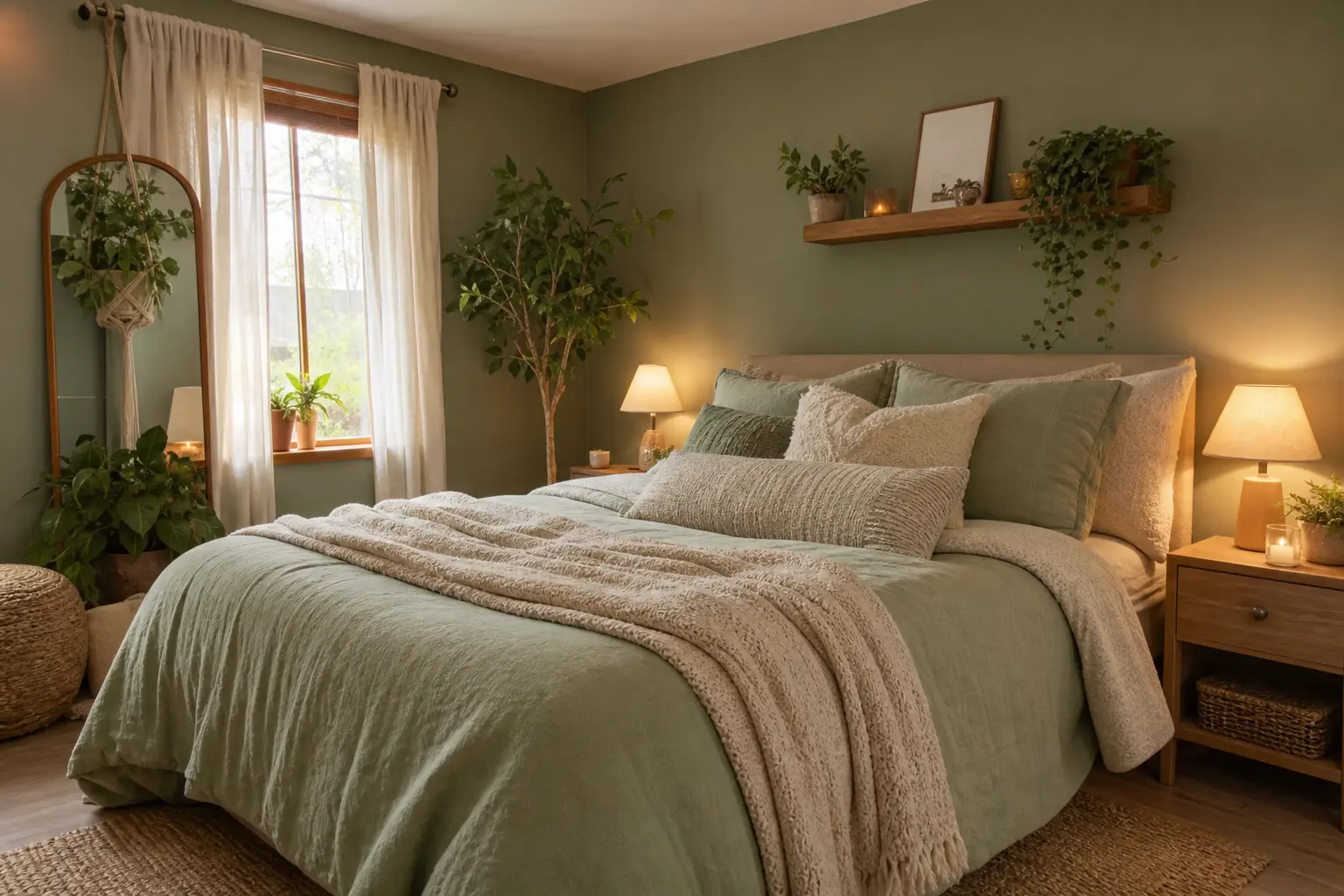
A gallon of quality paint typically covers one accent wall for 30 to 50 dollars, making this one of the more affordable ways to transform a bedroom’s entire mood.
Secondhand wooden nightstands or dressers, refreshed with a bit of sanding and new hardware, often cost far less than new furniture while still fitting the warm, natural aesthetic sage green pairs well with.
A single accent wall, a set of cream bedding, and a couple of warm toned lamps can transform a plain bedroom for well under 150 dollars total.
9. Adding Plants to Reinforce the Natural Feel
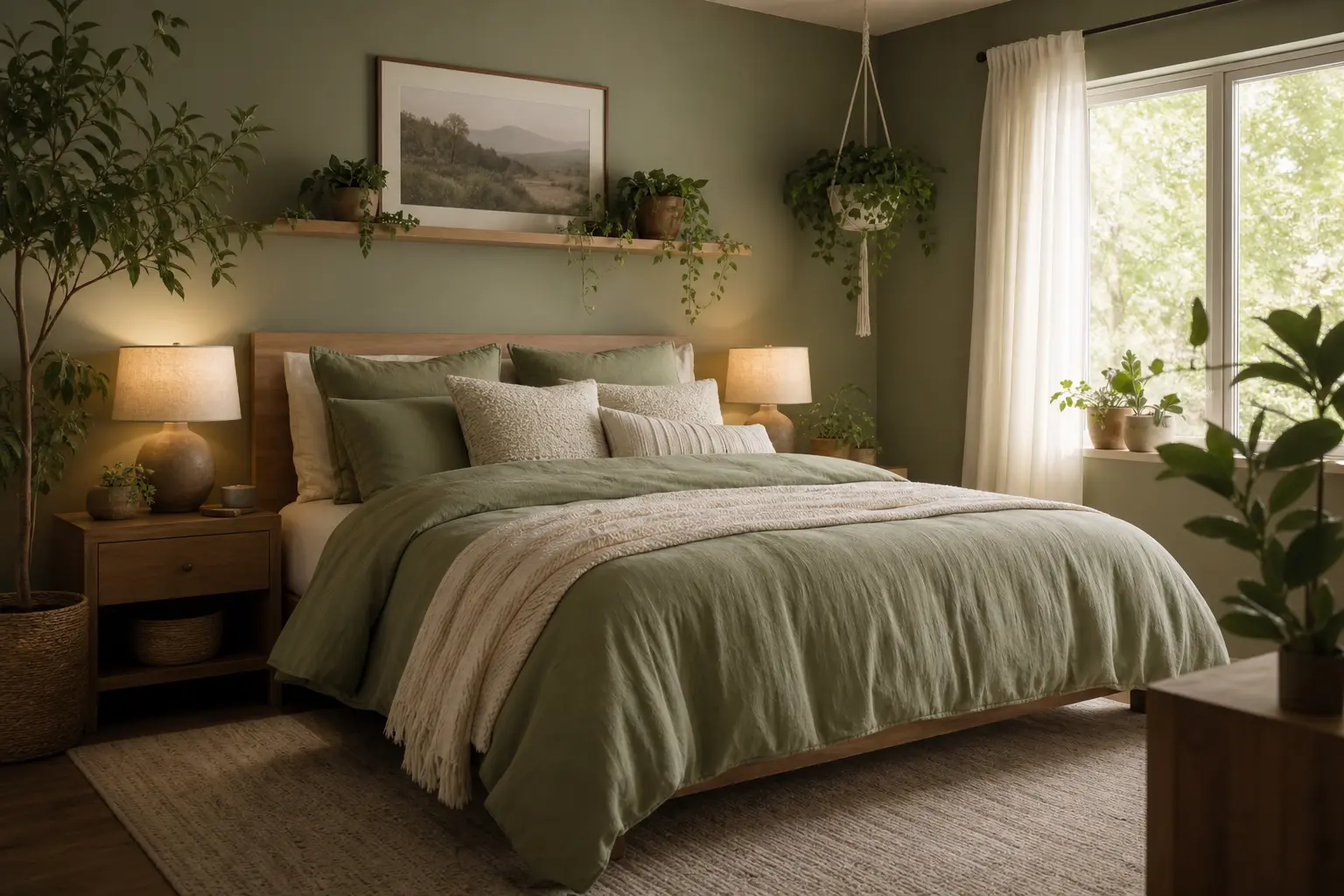
A few potted plants, snake plants or pothos for lower light bedrooms, reinforce the natural, earthy direction sage green already sets, without needing much maintenance.
Place a small plant on a nightstand or a dresser rather than directly on the floor near the bed, both for practicality and to keep some greenery at eye level where it has more visual impact.
Dried or preserved branches in a simple vase work as a lower maintenance alternative if live plants aren’t practical in your space, and they still bring in the same natural, textured element.
10. Small Bedroom Adjustments for a Sage Green Aesthetic
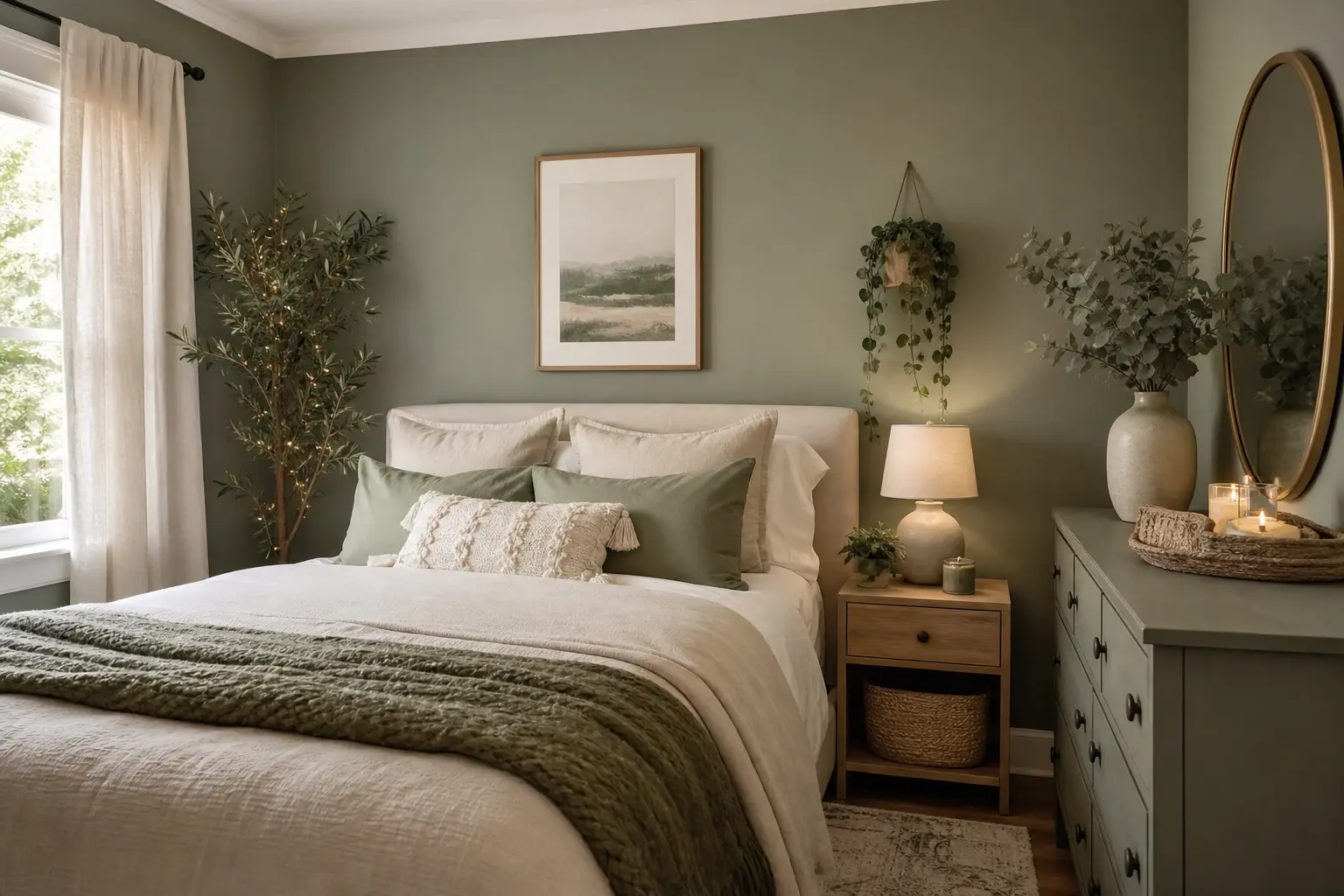
In a small bedroom, stick to an accent wall rather than painting the whole room, since four walls of a darker, muted color can make a tight space feel smaller than it actually is.
Keep furniture pieces lighter in visual weight, a slim nightstand rather than a bulky dresser, so the room doesn’t feel crowded on top of the deeper wall color.
Mirrors placed opposite the sage green wall help bounce light back into the room, which keeps a small space from feeling too enclosed once the deeper color is introduced.
Mistakes to Avoid
- Skipping a paint sample test and committing to a shade that looks different once it’s on the wall
- Painting all four walls in a small, dark room without enough natural light to balance it
- Pairing sage green with very cool toned white bedding that creates a stark contrast
- Relying on cool, bright overhead lighting instead of warm toned lamps in the evening
- Overcrowding the room with too many competing patterns or colors alongside the sage
Frequently Asked Questions
Does sage green work in a room with little natural light? Yes, but lean toward a warmer, more yellow toned sage rather than a cooler, grayer shade, since warmer tones read better in dimmer, indirect light.
Can I use sage green in a small bedroom without it feeling cramped? An accent wall works better than painting all four walls in a small room. Keep furniture lighter in visual weight to avoid the space feeling boxed in.
What color curtains go best with a sage green wall? Cream, soft white, or a linen texture in a neutral tone generally works best, letting the wall color stay the visual focus of the room.
Is sage green a trend that will look dated quickly? Muted, earthy greens have stayed popular across many design periods rather than spiking and disappearing quickly, though personal taste always plays a role in how long any color feels current to you.
Can I mix sage green with other colors besides neutrals? Soft terracotta, warm mustard, or dusty blue in small doses, a pillow or a piece of art, can pair well with sage green without overwhelming the calm base the color sets.
Do I need a specific type of paint finish for a bedroom accent wall? An eggshell or matte finish generally works well for bedroom walls, since it hides minor imperfections better than a glossy finish while still being easy to clean.
Conclusion
Sage green gives a bedroom a calm, natural feeling without tipping into cold or sterile, which is part of why it works so well as a base for a cozy, aesthetic room. Start with an accent wall if you’re unsure, pair it with warm wood and soft textures, and keep the lighting warm in the evening. Those choices matter more than chasing every trend detail, and together they build a room that actually feels restful to be in.