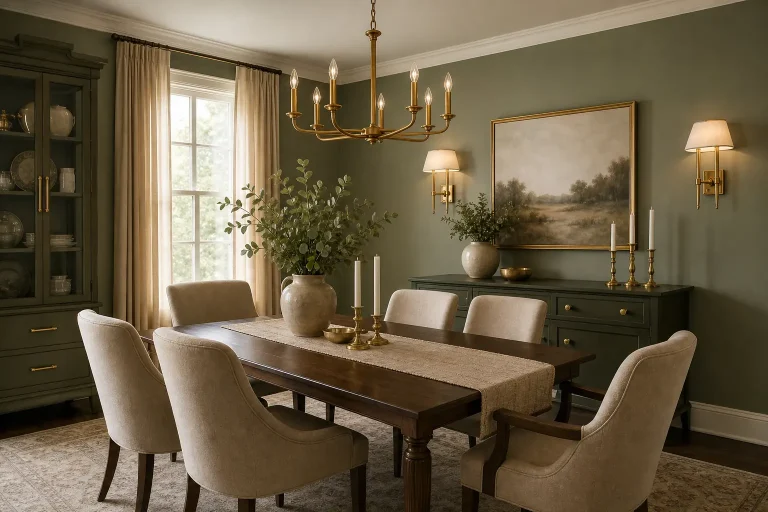
10 Modern Sage Green Bedroom Decor Ideas for a Luxurious & Cozy Space
Your bedroom looks fine in photos, but it never quite feels restful in person. That’s a common problem with sage green rooms that stop at the paint color and never get the layering right. Modern sage green bedroom decor ideas work best when the color is treated as a starting point, not the whole plan. Add the right textures, lighting, and warm accents, and the same wall color that looked flat before starts to feel genuinely cozy and a little luxurious.
Sage green sits between gray and green, which makes it flexible but also easy to get wrong. Too cool, and the room feels sterile. Too bright, and it stops feeling calm. The ten ideas below build a bedroom around sage that leans warm, textured, and considered from the moment you walk in.
1. Choose a Muted Sage Over a Bright Green
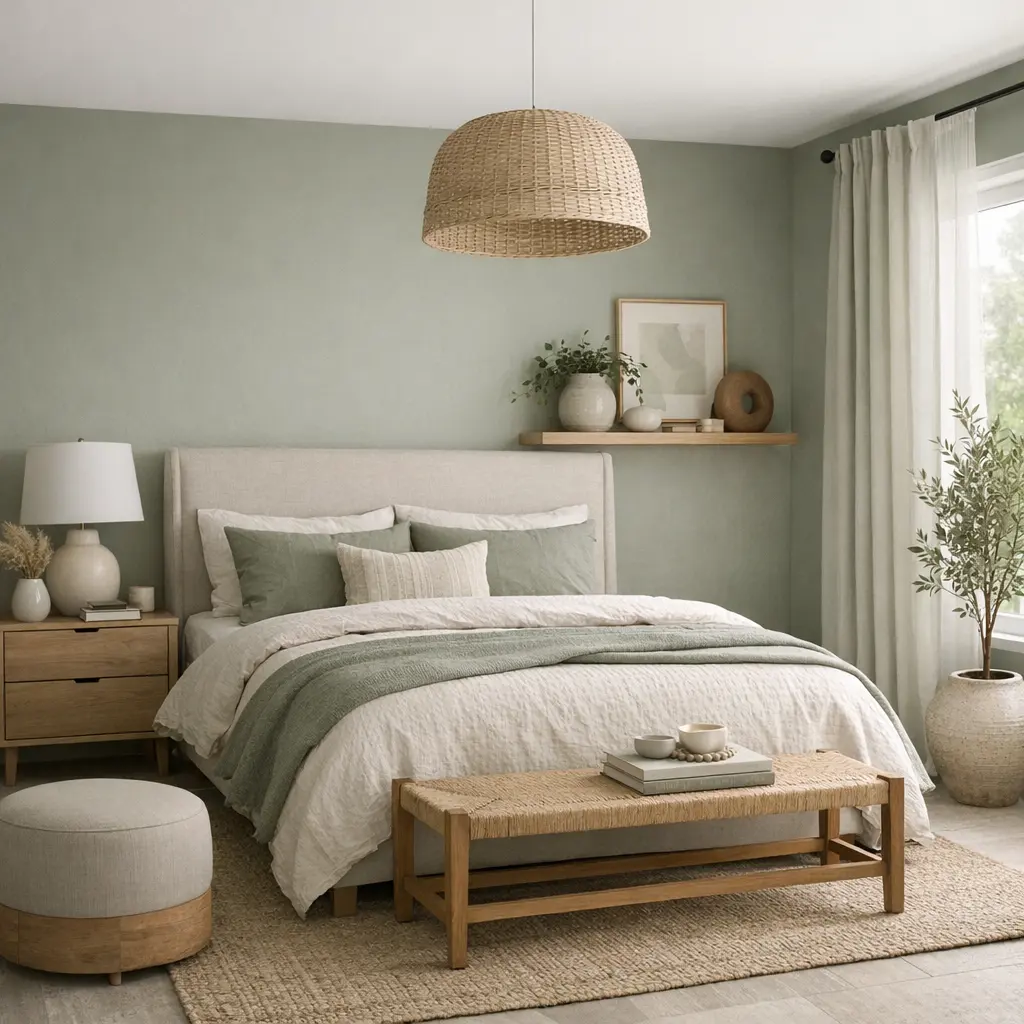
A true, saturated green can feel more like an accent wall in a nursery than a grown up bedroom. A muted, grayed down sage, closer to a dusty olive or soft eucalyptus tone, reads calmer and more expensive. This matters most on a full wall, where a bright shade has more room to overwhelm.
Test a swatch on the actual wall before committing to a full can of paint. Light shifts sage more than most colors, and a shade that looks perfect at noon can look almost gray by evening.
Undertones That Read as Luxury
Sage greens with a slight gray undertone tend to pair more easily with warm wood and brass. Ones with a yellow undertone lean more olive and can feel heavier in a smaller room. Neither is wrong, but the gray leaning version is usually the safer starting point.
2. Build the Bed as the Focal Point
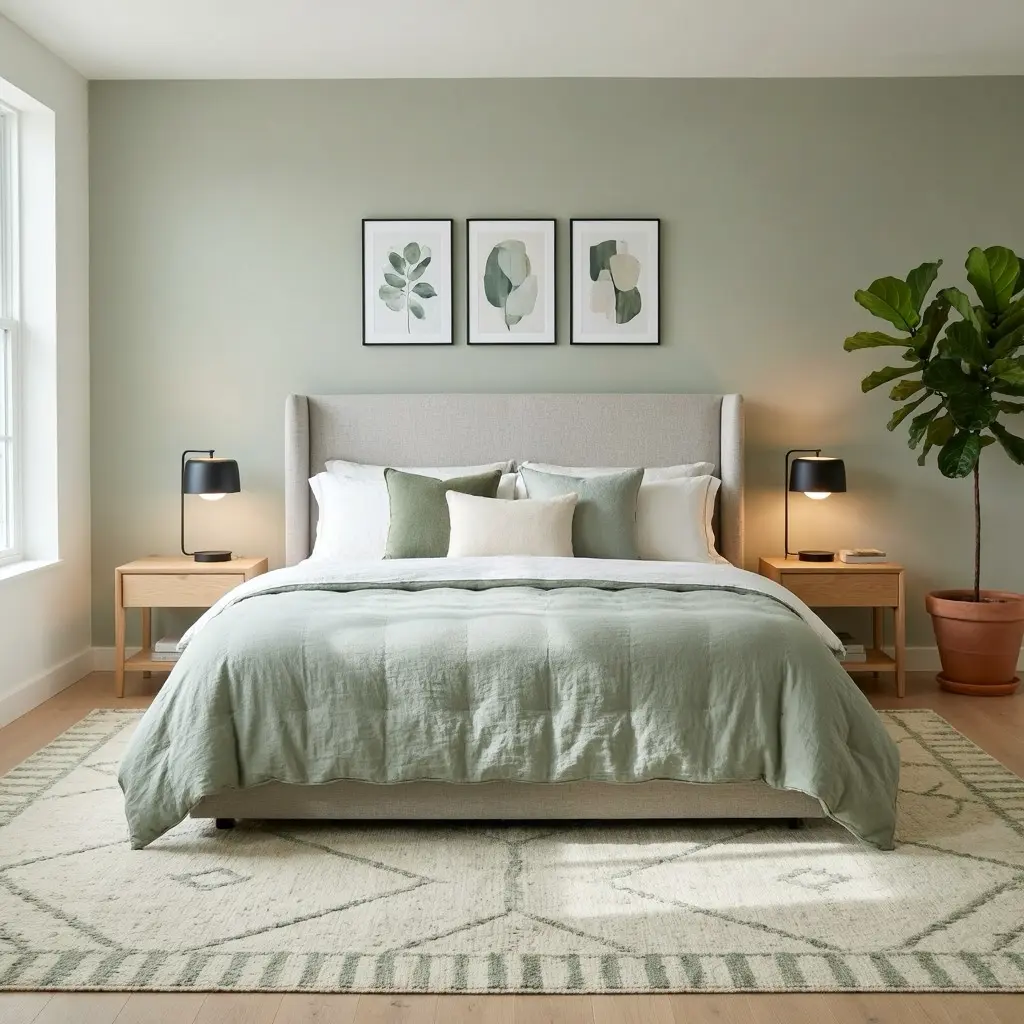
The bed takes up the most visual space in a bedroom, so it should carry most of the design weight. A tall, upholstered headboard in velvet or boucle, in the $200 to $600 range depending on size, instantly makes the room feel more intentional than a bare frame ever could.
Choose a headboard color that contrasts gently with the sage walls. Cream, warm taupe, or a deep charcoal all work well. Matching the headboard too closely to the wall color can flatten the whole room.
3. Layer Bedding in Three Textures
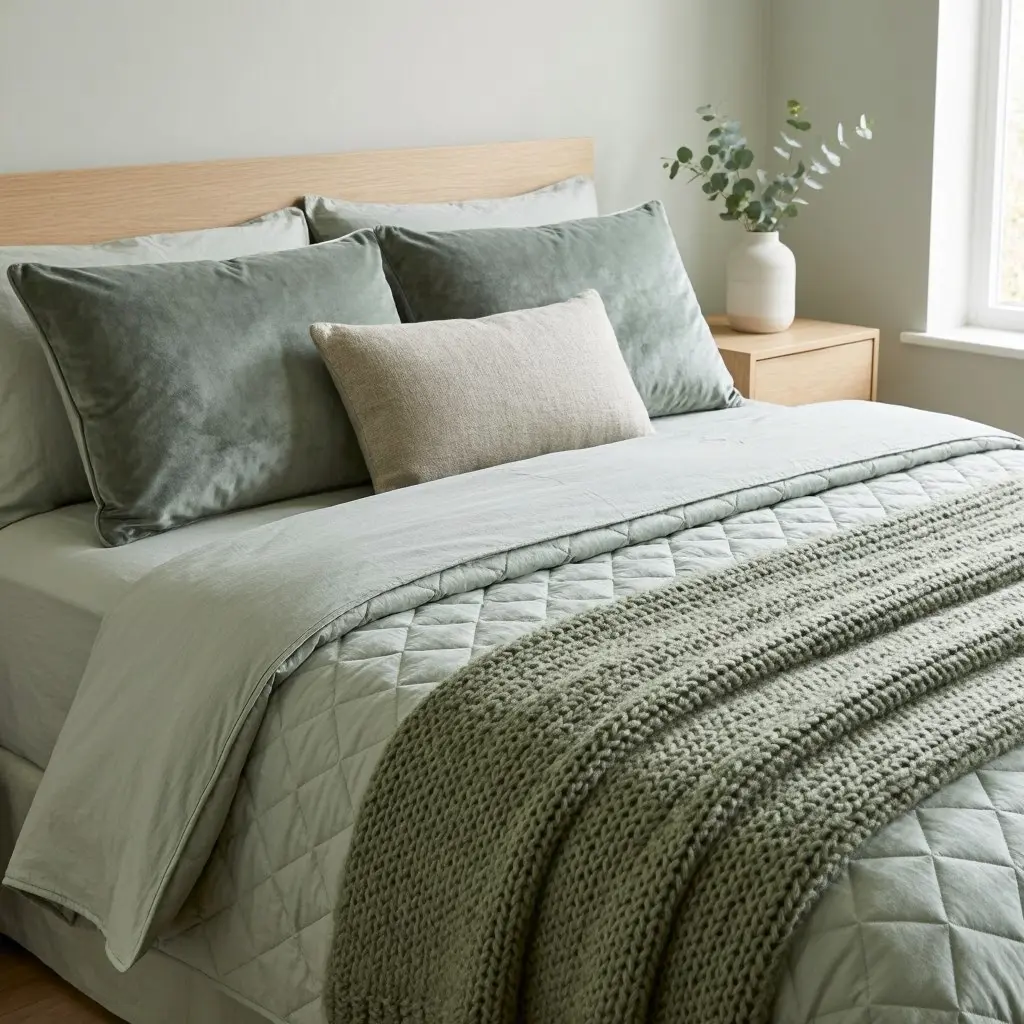
A single flat comforter, no matter how nice the color, reads as unfinished. Layer a textured duvet, a knit or waffle weave throw, and two or three pillows in mixed but coordinated fabrics. Linen, velvet, and boucle together create depth without adding more color into the mix.
A bed with three layered textures photographs better and feels better to actually sleep in. It’s one of the fastest ways to make a room look considered rather than assembled in a rush.
4. Add Warm Wood Furniture to Ground the Room
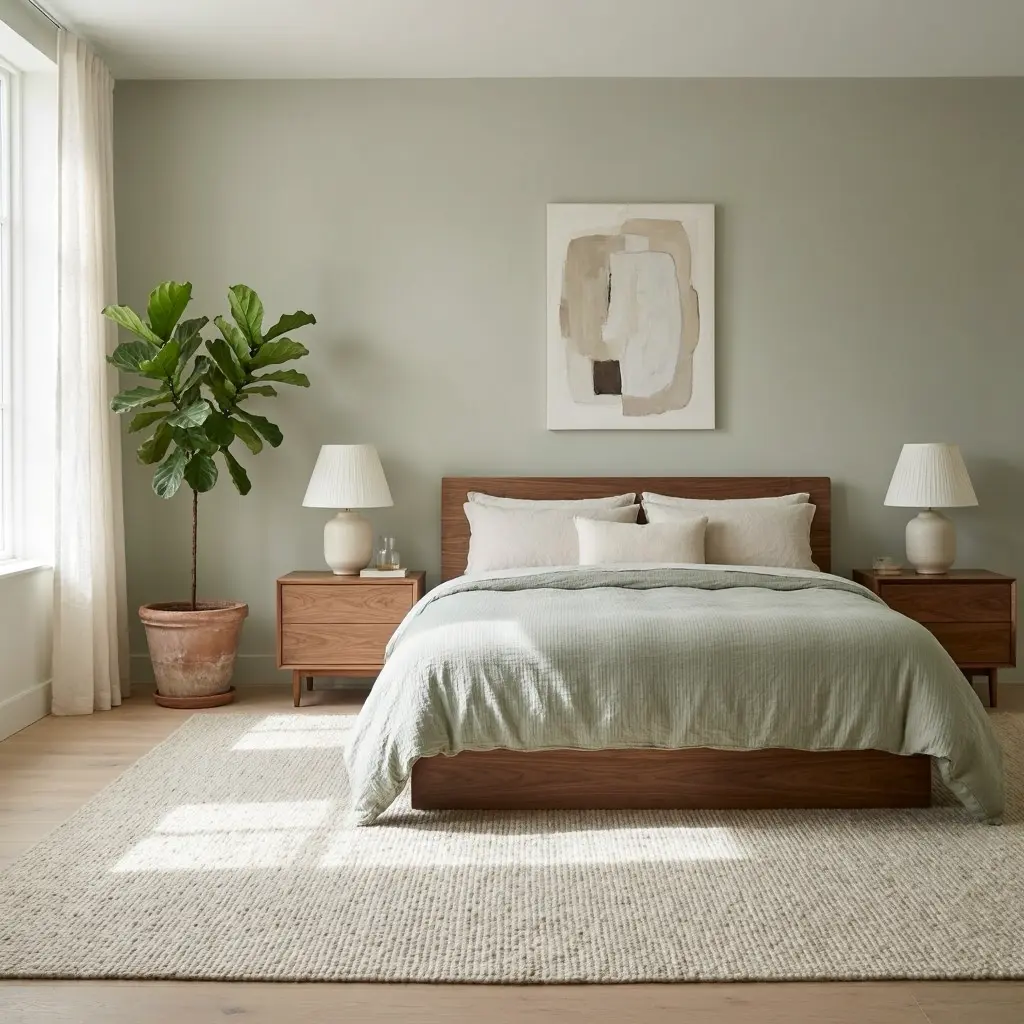
Sage green can lean cool on its own, so warm wood tones balance it out. A wood nightstand, a wood bed frame, or even wood floating shelves adds warmth that keeps the room from feeling sterile. Medium oak or walnut tones both work well against sage.
You don’t need to replace every piece of furniture at once. Start with the nightstands, since they’re close to eye level and have an outsized effect on how warm the room feels.
5. Bring in Brass or Warm Gold Accents
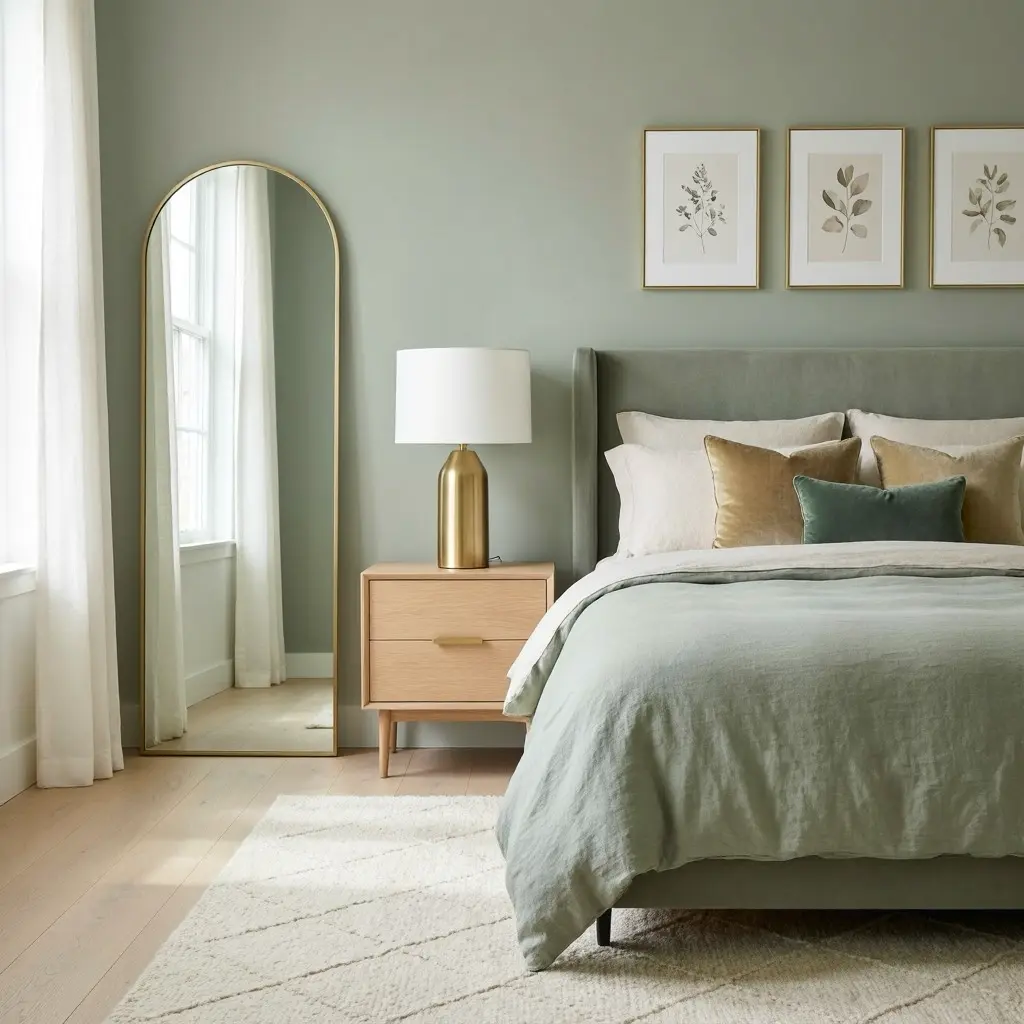
Sage pairs especially well with warm metals rather than cool ones. Brass drawer pulls, a gold framed mirror, or brushed gold sconces add contrast and a touch of luxury against the green. Silver and chrome tend to read colder and less cozy in this palette.
A Low Cost Way to Test This
Swap just the drawer pulls on an existing dresser before committing to bigger brass pieces. It’s a small, inexpensive change that shows you how the warmer tone shifts the room before you invest in furniture or lighting.
6. Use Warm Lighting Instead of Overhead Only
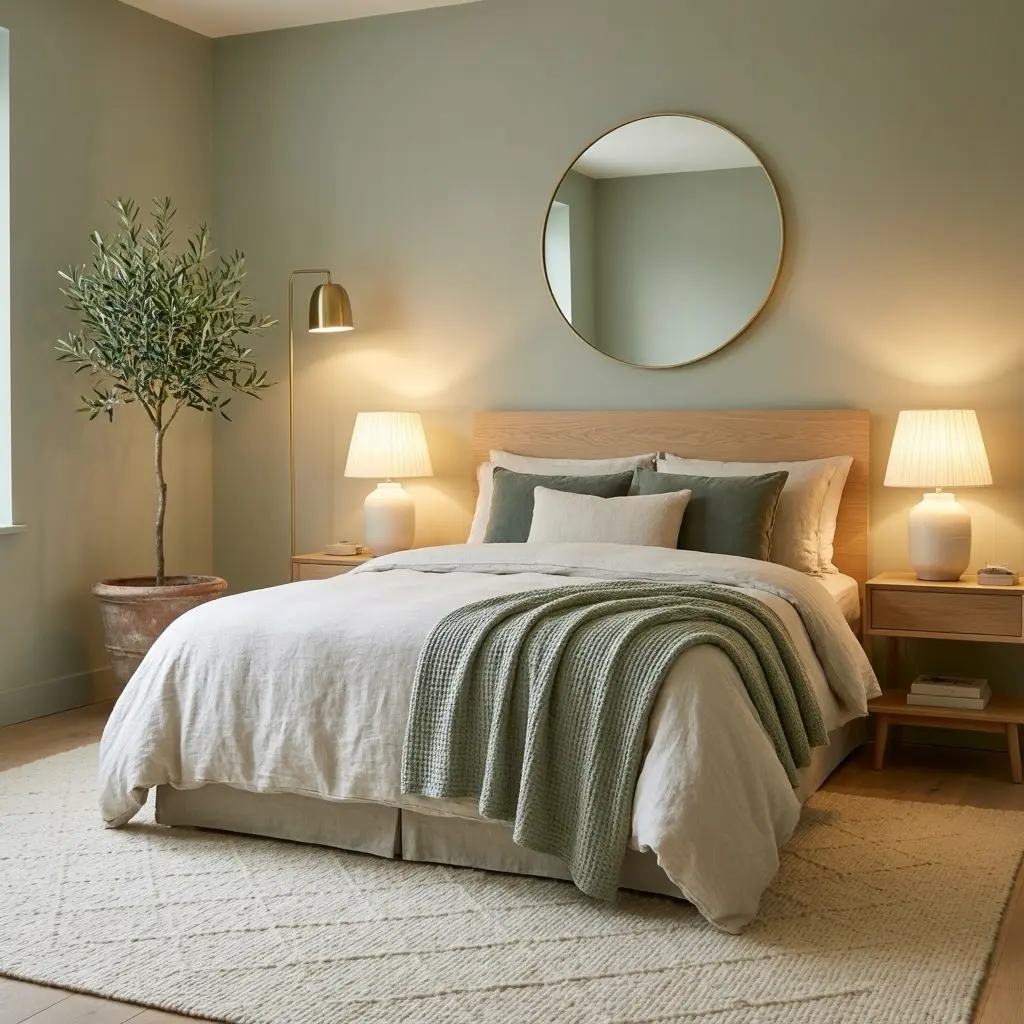
Cool white bulbs make sage look gray and a little flat. Warm white bulbs, in the 2700K to 3000K range, deepen the green and make the room feel more inviting after dark. Two lamp sources at different heights, a nightstand lamp and a floor lamp, do more for the room’s mood than one overhead fixture.
A room lit only from above tends to feel like an office rather than a bedroom, no matter how nice the color palette is. Layered lighting fixes that almost immediately.
7. Add a Reading Nook or Bench at the Foot of the Bed

A small bench or an upholstered stool at the foot of the bed gives the room a second purpose beyond just sleeping. A bench in the $100 to $300 range, in a fabric that echoes the headboard, adds both function and visual balance to a large wall of bed.
This also gives you a place to set clothes, a bag, or a throw blanket, which keeps the rest of the room from becoming a catch all surface.
8. Choose Curtains That Soften the Windows

Bare windows or basic blinds can leave a sage green room feeling unfinished. Floor length curtains in linen or a soft cotton blend add height and softness, and they help control how much cool daylight washes out the wall color. Cream or soft taupe curtains work especially well against sage.
Hang the rod slightly higher and wider than the window frame itself. This small trick makes the ceiling feel taller and the window feel larger than it actually is.
9. Keep Decor Minimal but Intentional
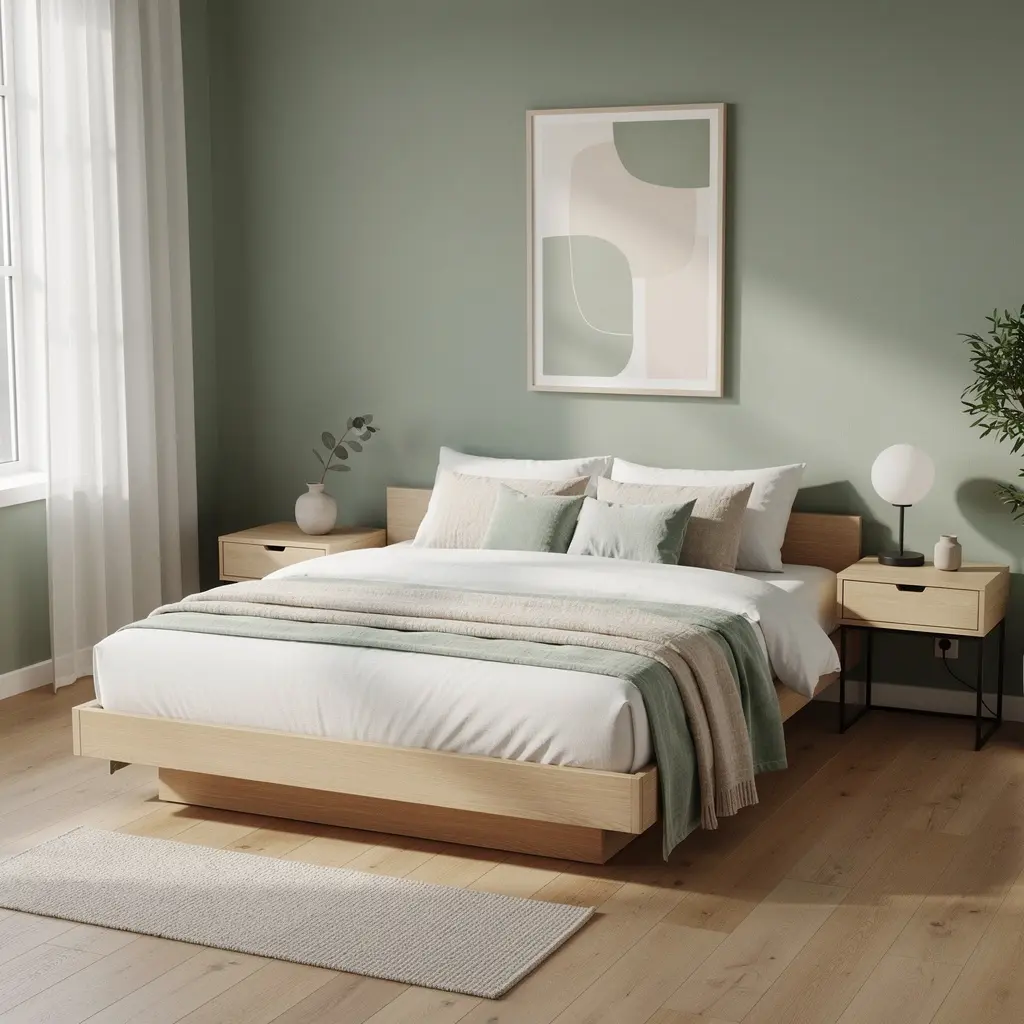
A sage green room reads as more luxurious when it feels edited rather than filled. One or two framed pieces, a single decorative object, and a small plant usually say more than a wall crowded with mismatched items. Let the color, the texture, and the lighting carry most of the visual weight.
If you want art, choose something in a muted palette that echoes the room, warm neutrals, soft blues, or deeper greens, so it extends the mood instead of interrupting it.
10. Add Greenery to Echo the Wall Color

A few real plants, especially ones with rounded or trailing leaves, tie the wall color back to something living in the room. A snake plant on the floor or a small pothos on the nightstand adds texture and softens the hard edges of furniture without adding another decor color to manage.
Terracotta or woven planters also add warmth, which loops back to the wood and brass tones already in the room.
Mistakes to Avoid
- Choosing a bright, saturated green that reads more nursery than grown up bedroom
- Matching the headboard color too closely to the wall and flattening the whole room
- Relying only on overhead lighting instead of layered lamp light
- Skipping texture in the bedding and ending up with a flat, one note look
- Mixing too many metal finishes, like silver, gold, and black, in one small room
- Overcrowding the walls with too many frames or mismatched decorative pieces
Frequently Asked Questions
Does sage green work in a small bedroom? Yes, as long as the shade stays muted and the room has enough warm wood and lighting to balance it. A bright, saturated sage can make a small room feel more closed in.
What bedding colors pair best with sage green walls? Cream, warm taupe, and soft white all pair well, since they contrast gently without competing with the wall color. A deep charcoal or navy accent pillow also works for added depth.
Can I do this look without repainting the whole room? Yes. A single accent wall behind the headboard, sage bedding, or even a large piece of art in sage tones can bring in the color without a full repaint.
What’s the most affordable luxury touch to start with? Swapping hardware to brass and adding layered bedding usually gives the biggest visual return for the lowest cost, often under $150 combined.
Does this palette work with wood floors, or only with carpet? It works well with both. Warm wood floors actually reinforce the warm undertone approach used throughout this list, while a soft rug over carpet or wood adds another texture layer.
Conclusion
A luxurious, cozy sage green bedroom isn’t about finding the perfect paint color and stopping there. It comes from layering texture, warm wood, warm lighting, and a few intentional accents around that base color. Start with the bed, since it carries the most visual weight, then build the rest of the room around it one piece at a time.