10 Cozy Living Room Decor That Everyone Wants to Recreate
You sit down on the couch after work, turn on the overhead light, and the room still feels stiff, like it belongs to a catalog rather than your actual evening. That flat, showroom feeling is exactly what cozy living room decor is meant to solve. A cozy living room isn’t about spending a lot of money on new furniture. It’s about warmth, texture, and layers that make a space feel lived in rather than staged, and it works whether you’re in a studio apartment or a full sized family home.
1. Start With a Warm Neutral Base
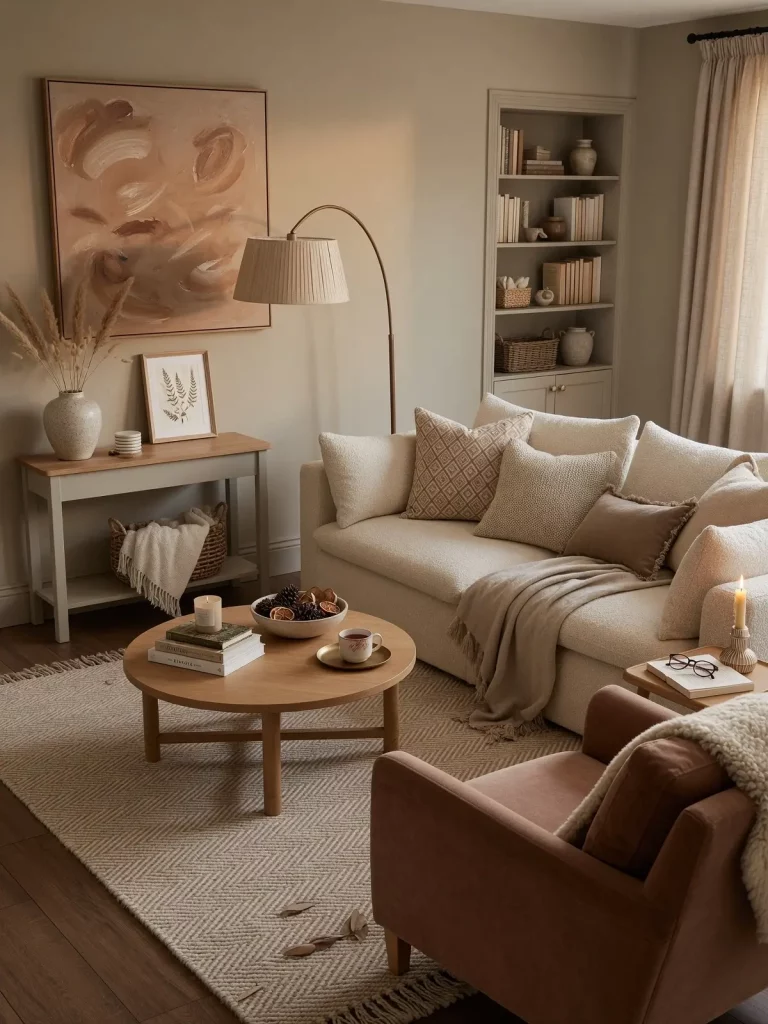
Cool grays and stark whites dominated living rooms for years, but warm neutrals are what actually make a room feel inviting. Mushroom, soft beige, warm taupe, and creamy off white all read as calm and grounded rather than cold. These tones also do double duty: they brighten the room in daylight and soften into something cozier once the lamps come on in the evening. Paint alone won’t create coziness, but it’s the foundation everything else builds on.
Why Warm Beats Cool Here
A cool gray wall reflects light in a flat, almost clinical way. Warm neutrals absorb and reflect light differently, giving the room a gentler glow at any time of day. That small shift is part of why so many living rooms that felt sterile a few years ago now feel dated next to warmer palettes.
2. Layer Your Lighting Instead of Relying on One Overhead Fixture
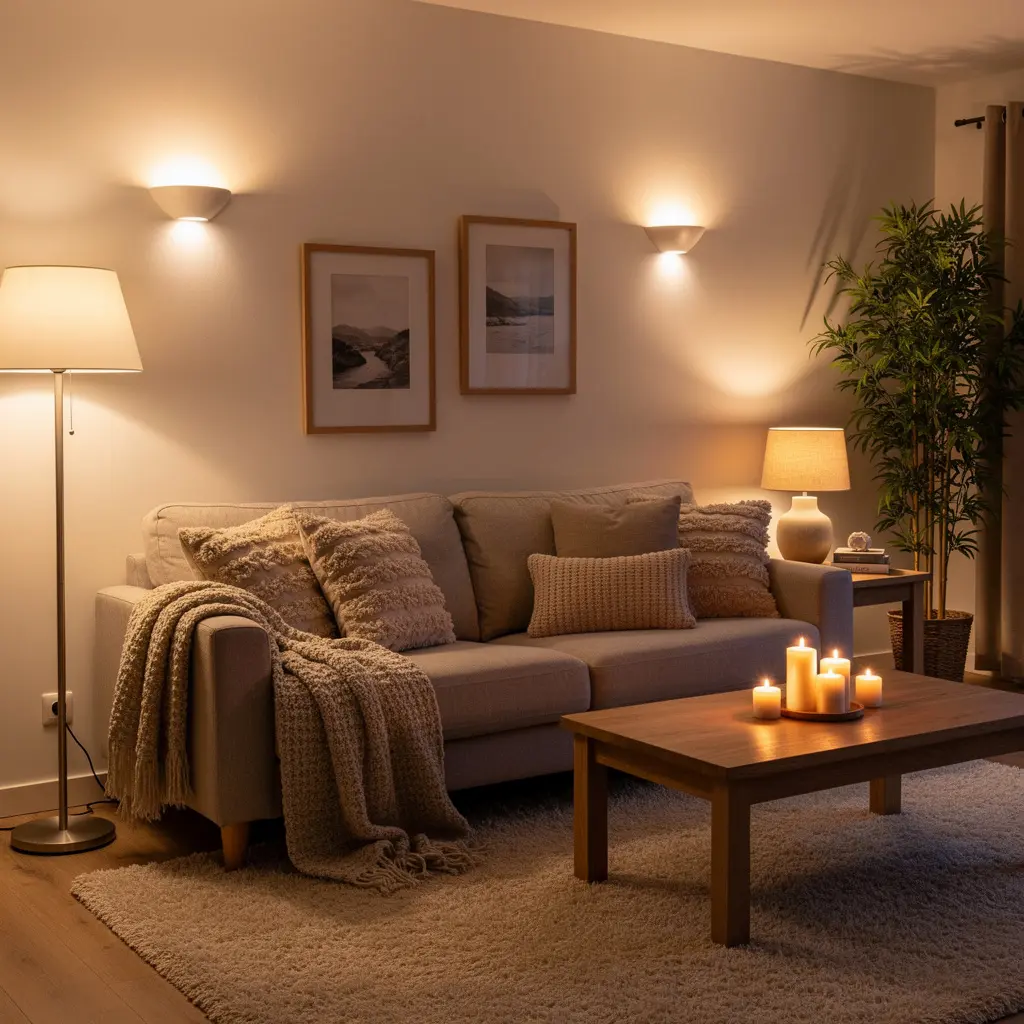
A single ceiling light creates flat, harsh illumination that makes a room feel more like an office than a living space. Cozy living rooms use at least two or three light sources: a floor lamp in the corner, a table lamp near the sofa, and maybe a set of candles or string lights for evening ambiance. Layered lighting lets you adjust the mood of the room depending on the time of day, which is something a single overhead fixture simply can’t do.
3. Add a Plush, Textured Rug
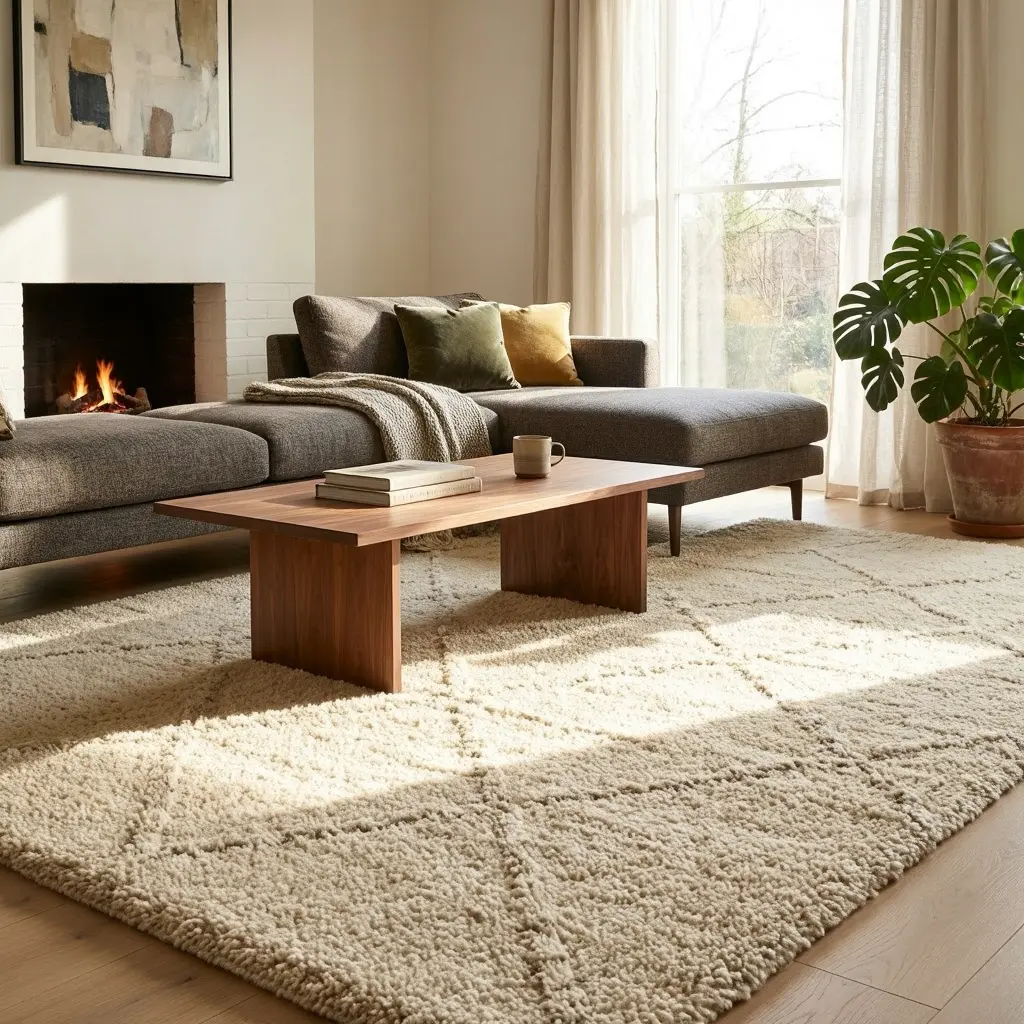
A thin, flat rug does very little for warmth, but a high pile or textured wool rug changes how a room feels underfoot and visually. Rugs in the eight by ten range typically run anywhere from one hundred fifty to five hundred dollars depending on material, and they’re one of the fastest ways to add both color and texture to a room that otherwise leans neutral.
Choosing the Right Texture
Chunky knit and shag style rugs read as the coziest, but they aren’t always practical for high traffic households with kids or pets. A looped wool or a dense berber style rug offers a similar visual softness with more durability, which matters if the living room sees daily use.
4. Mix Wood Tones Instead of Matching Everything
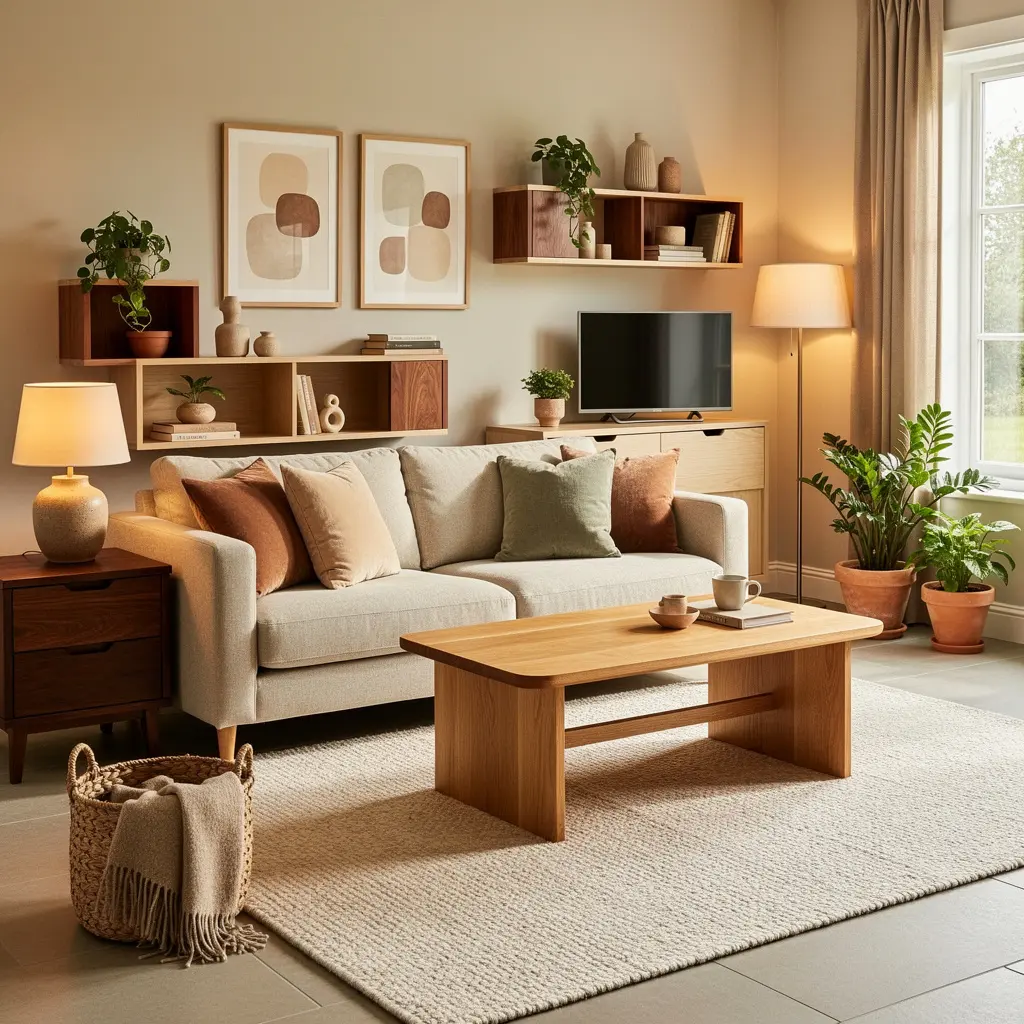
For a long time, matched wood furniture sets were the standard. In 2026, mixing wood tones, a lighter oak coffee table next to a darker walnut side table, for example, is what actually reads as collected and intentional rather than mismatched. This approach also lets you add furniture over time instead of buying a full set at once, which is easier on both budget and timeline.
5. Bring In Soft, Layered Textiles
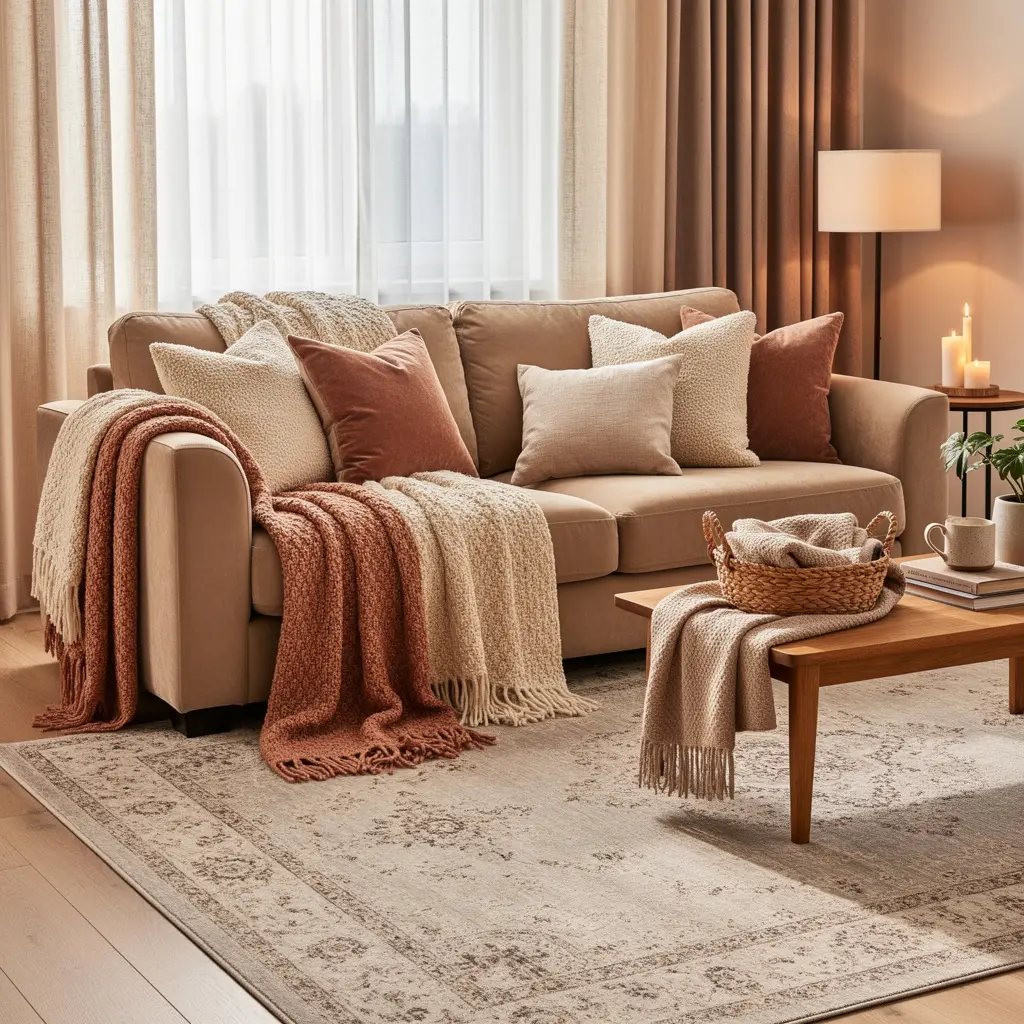
Throw pillows in mixed textures (a knit, a linen, a velvet) and a chunky knit throw blanket draped over the arm of the sofa do more for coziness than almost any single piece of furniture. Textiles are also the cheapest way to update a room seasonally. A few new pillow covers in the fifteen to forty dollar range can shift the whole feel of a room without touching the furniture underneath.
6. Choose Low Profile, Comfortable Seating
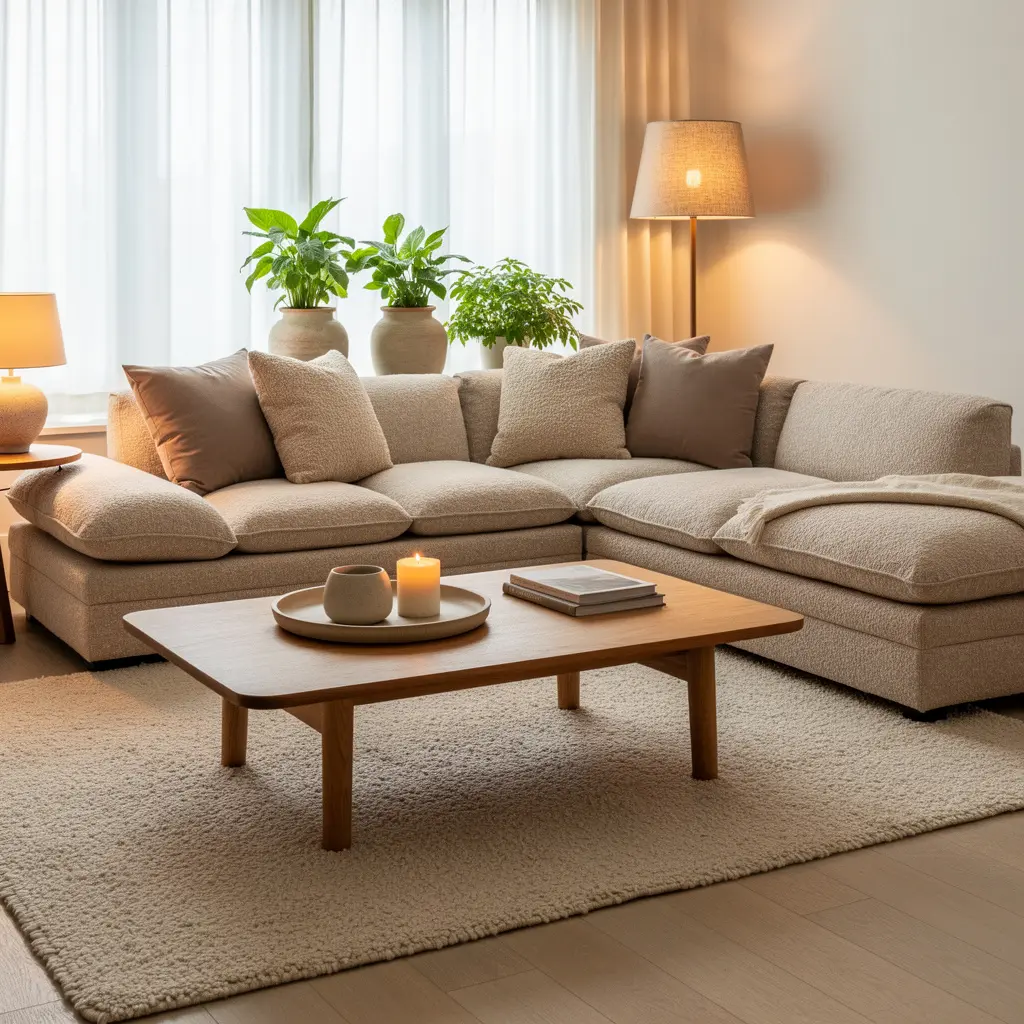
Furniture with a lower silhouette tends to feel more relaxed and inviting than tall, boxy pieces. A low slung sofa with deep cushions, paired with a soft ottoman instead of a hard coffee table edge, signals to anyone walking in that this room is meant for sinking in and staying a while, not sitting up straight for a formal visit.
7. Use Stone or Organic Materials as an Anchor
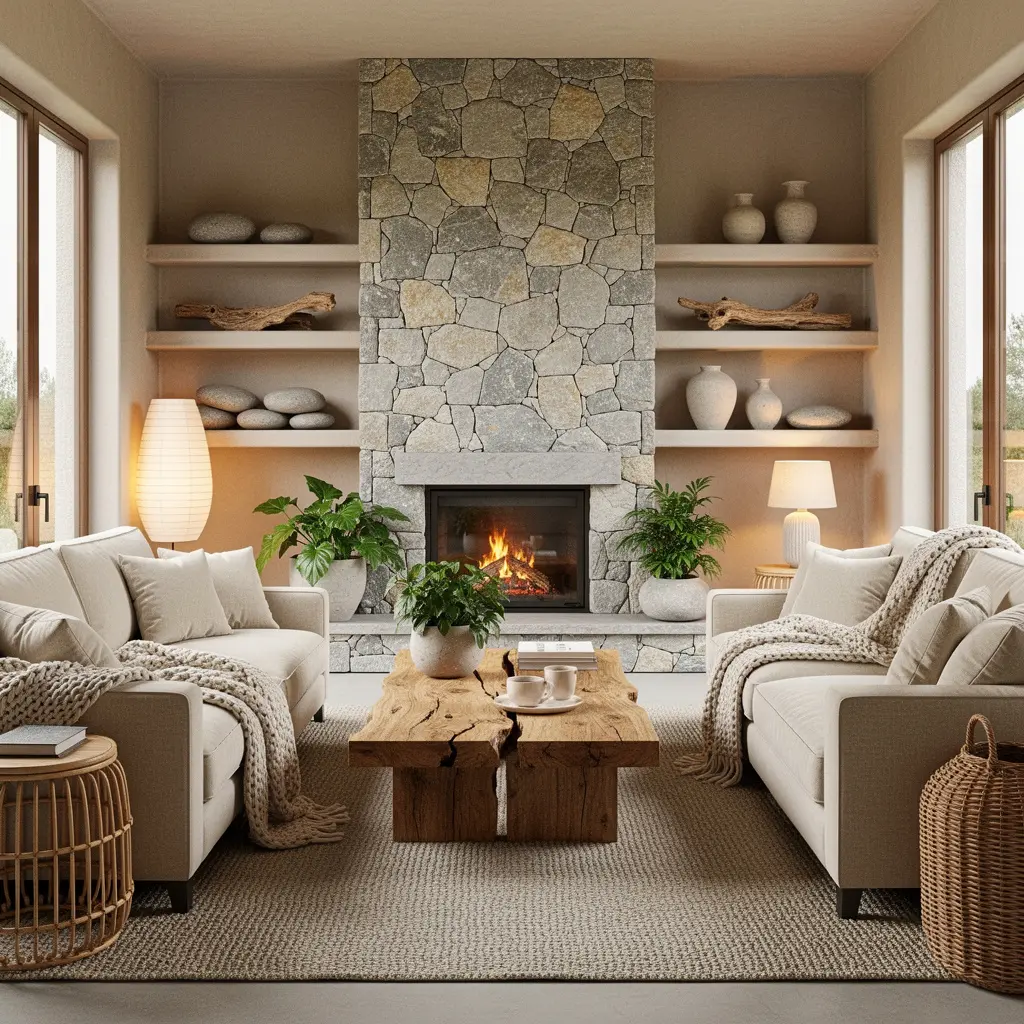
A stone coffee table, a ceramic vase, or a piece of pottery on a shelf grounds a room that might otherwise feel too soft or one note. The contrast between something solid and textural against soft fabrics is part of what makes a space feel curated rather than accidental. Even one stone or ceramic piece is often enough to add that grounded quality.
Where to Place an Anchor Piece
A coffee table is the most obvious spot, but a stone bookend on a shelf or a ceramic lamp base works just as well in a smaller room where a full stone table isn’t practical.
8. Add Greenery for Life and Softness
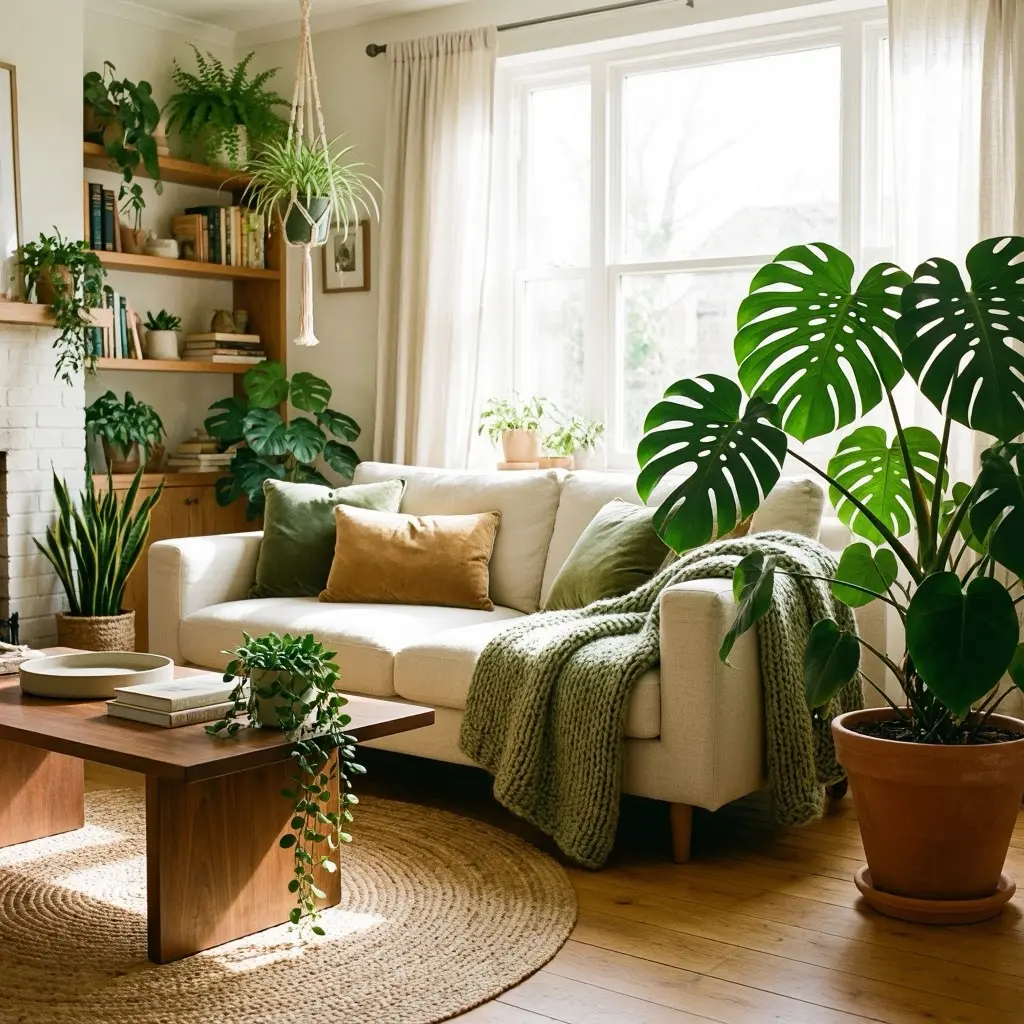
A trailing plant on a bookshelf, a large leafy plant in the corner, or a small collection of potted herbs on a windowsill brings a living element into the room that static decor can’t replicate. Plants also soften hard corners and edges, which adds to the overall relaxed feeling a cozy living room is going for.
9. Display Items That Actually Mean Something to You
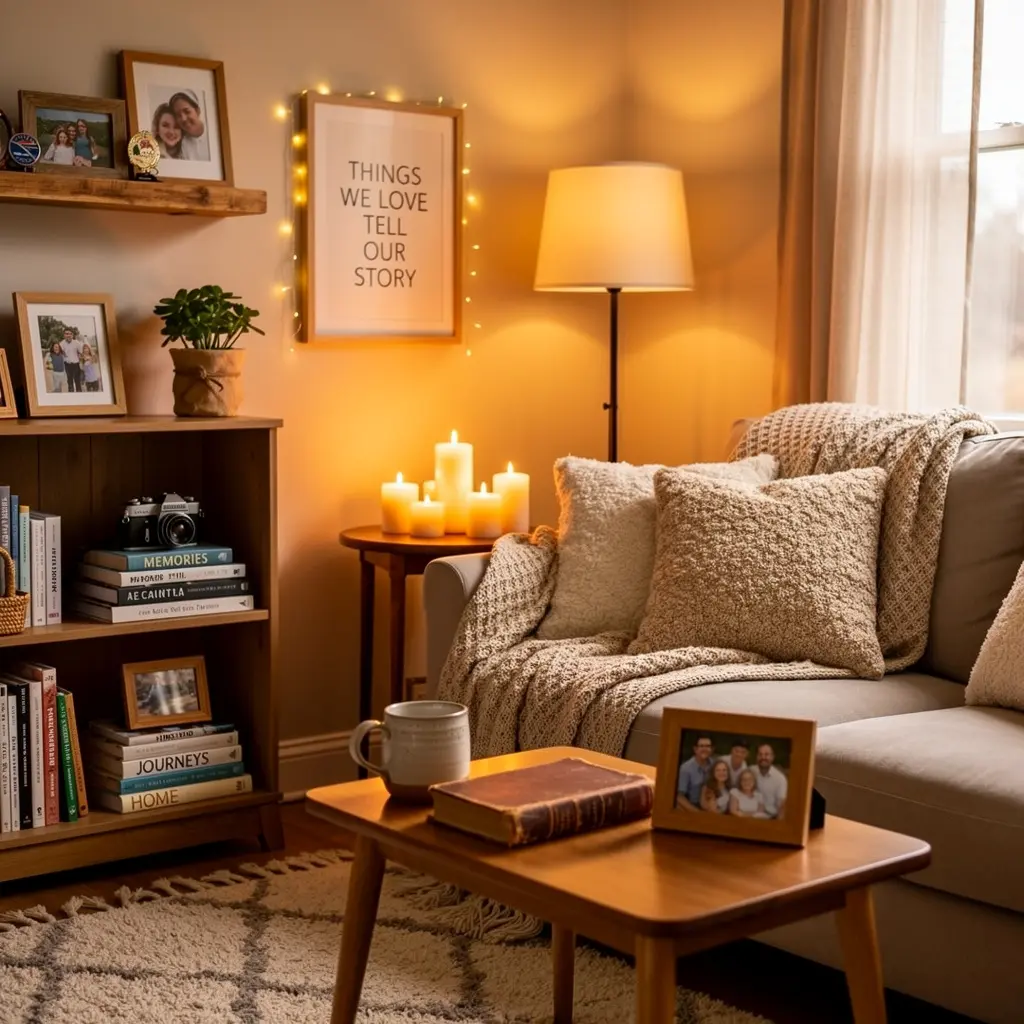
Books you’ve actually read, a piece of art from a trip, a family photo in a simple frame. The biggest shift in living room decor over the past couple years has been away from purely trend driven styling and toward rooms filled with objects that have real meaning. A shelf of curated, personal items reads as far cozier and more authentic than anything bought purely because it matched a color scheme.
10. Arrange Furniture for Conversation, Not Just the TV
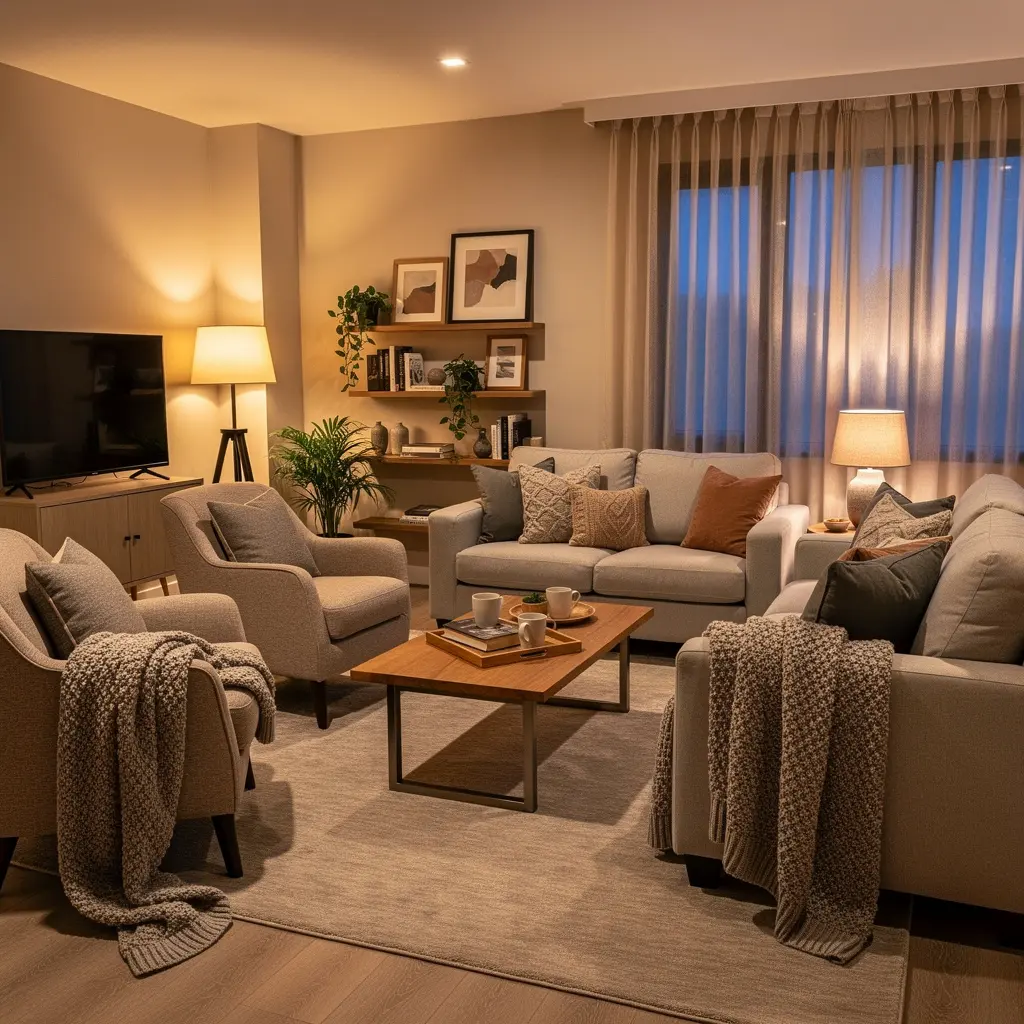
A living room laid out with every chair facing a television can feel oddly formal and disconnected. Angling a chair toward the sofa, adding a second small seating cluster near a window, or pulling furniture slightly away from the walls creates a layout built around actual conversation and use rather than a single sightline. This single change, without buying anything new, can make an existing room feel warmer almost instantly.
Mistakes to Avoid
- Relying on one overhead light instead of layering multiple light sources
- Choosing an all matched furniture set instead of mixing wood tones and textures
- Skipping a rug or choosing one too thin and flat to add real warmth
- Overcrowding every surface with decor instead of leaving some visual breathing room
- Pushing all furniture flush against the walls, which flattens the layout and discourages conversation
- Ignoring texture and relying on color alone to create a cozy feeling
Frequently Asked Questions
What’s the fastest way to make a living room feel cozier without buying furniture? Add layered lighting with a floor or table lamp, a textured throw blanket, and a few mixed texture pillows. These changes cost relatively little and make an immediate difference without touching the furniture layout.
What colors make a living room feel the coziest? Warm neutrals like mushroom, taupe, and soft beige tend to feel the warmest and most versatile. Deeper accent colors like olive, rust, or burgundy work well in smaller doses, such as a pillow or a single accent chair.
Is a matched furniture set out of style? Matched sets aren’t wrong, but mixed wood tones and gathered, collected looking furniture are what most designers are favoring right now, since they read as more personal and less like a showroom display.
Do I need a big room for this look to work? No. Cozy living room decor actually tends to work especially well in smaller spaces, since warm colors, soft lighting, and texture all help a compact room feel intimate rather than cramped.
How many light sources does a living room actually need? Two to three is a good target: one ambient source like a floor lamp, one task oriented source like a table lamp near a reading chair, and something soft like candles or string lights for evening.
Conclusion
A cozy living room comes down to layers: warm color, soft lighting, mixed textures, and a few objects that genuinely mean something to you. None of it requires a full renovation or a big budget. Start with lighting and textiles, since they’re the cheapest and fastest changes, and let the rest of the room build from there over time. The goal isn’t a perfectly styled photo. It’s a room you actually want to spend your evening in.