10 Cozy Cottage Kitchen Ideas for a Warm & Charming Home
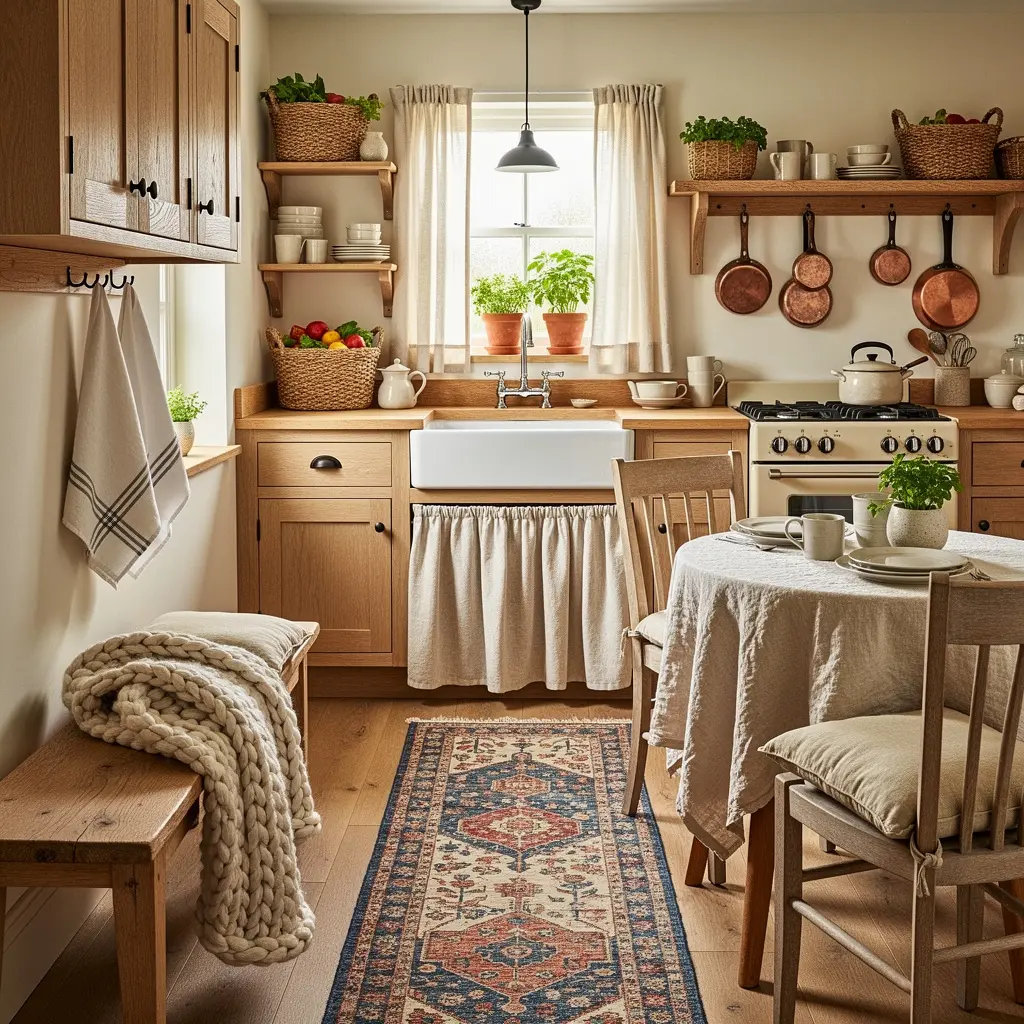
You walk into your kitchen after a long day, flip on the overcast light, and it still feels like a showroom. Cold counters, bare walls, nothing that says this is where you actually live. That flatness is the exact problem cozy cottage kitchen ideas are meant to fix. A cottage kitchen leans into warmth instead of polish, texture instead of shine, and small personal details instead of a catalog look. It borrows from old farmhouses and countryside homes, but it works just as well in a suburban ranch or a city apartment kitchen, because the ideas are really about materials, color, and lived in touches rather than square footage or architecture.
1. Choose a Warm, Earthy Color Palette

Skip the cool grays that dominated kitchens for the last decade and lean into warmth instead. Sage green, olive, terracotta, and warm off white are the colors doing the heavy lifting in cottage kitchens right now, and for good reason. They read as grounded and natural rather than trendy, which means they age well instead of looking dated in three years. Pair a muted green lower cabinet with warm white uppers and the room instantly feels less clinical.
Why Earth Tones Work Here
Earth tones borrow directly from things already found in nature: clay, moss, wheat, wood bark. Because your eye already associates them with organic material, they read as calm rather than stimulating. A stark white kitchen can feel efficient, but efficient is not the same as cozy. Warm neutrals soften the room the moment you walk in, before you’ve even noticed a single decor object.
2. Bring in Natural Wood Wherever You Can
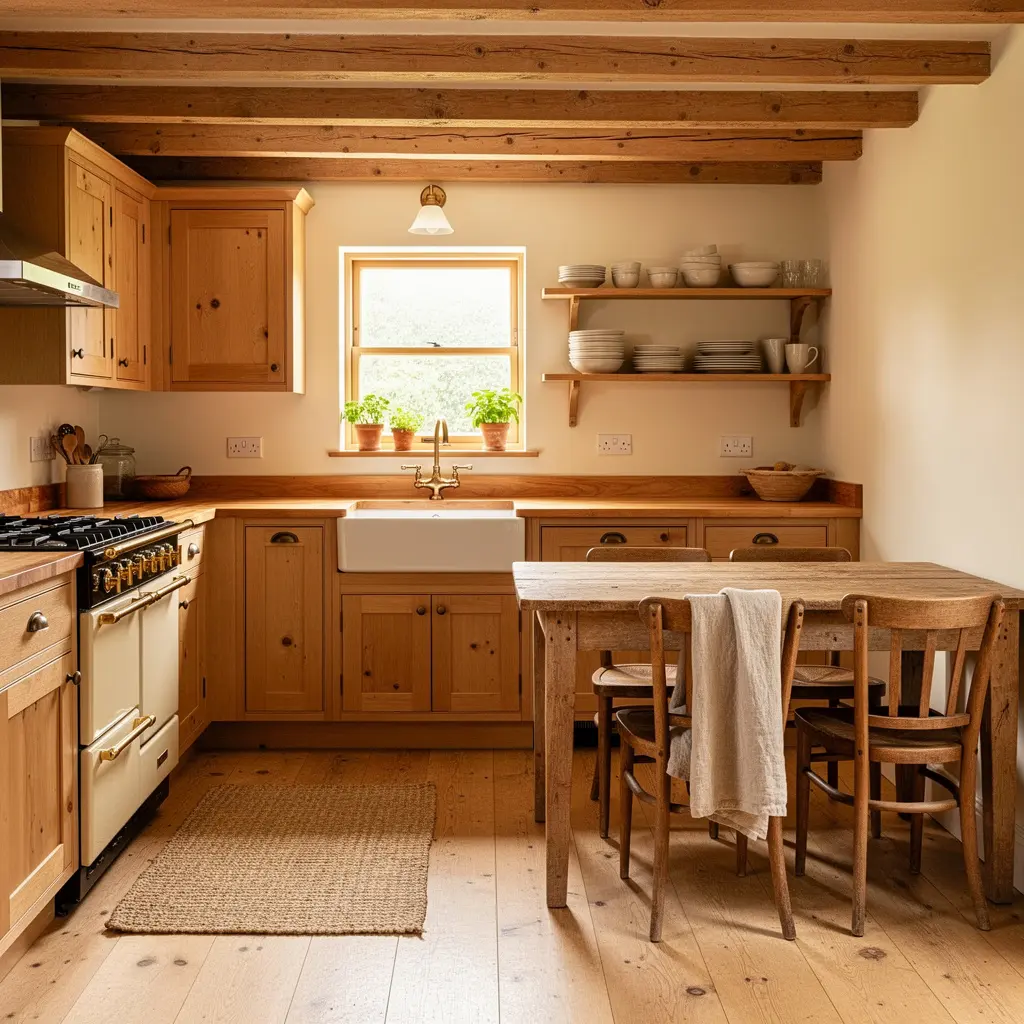
Wood is the backbone of the cottage kitchen look. A butcher block counter, open wood shelving, or simply a wood cutting board leaned against the backsplash all add warmth that paint alone cannot. If a full wood counter isn’t in the budget, a small wood island cart or a wood framed mirror can carry the same visual weight for under a hundred dollars.
Open shelving in a light or medium wood tone, styled with everyday dishes instead of decorative pieces that never get touched, makes the kitchen feel used and loved rather than staged. That’s the whole point of a cottage kitchen: it should look like real life happens in it.
3. Choose Shaker Style Cabinets Over Flat Slab Doors
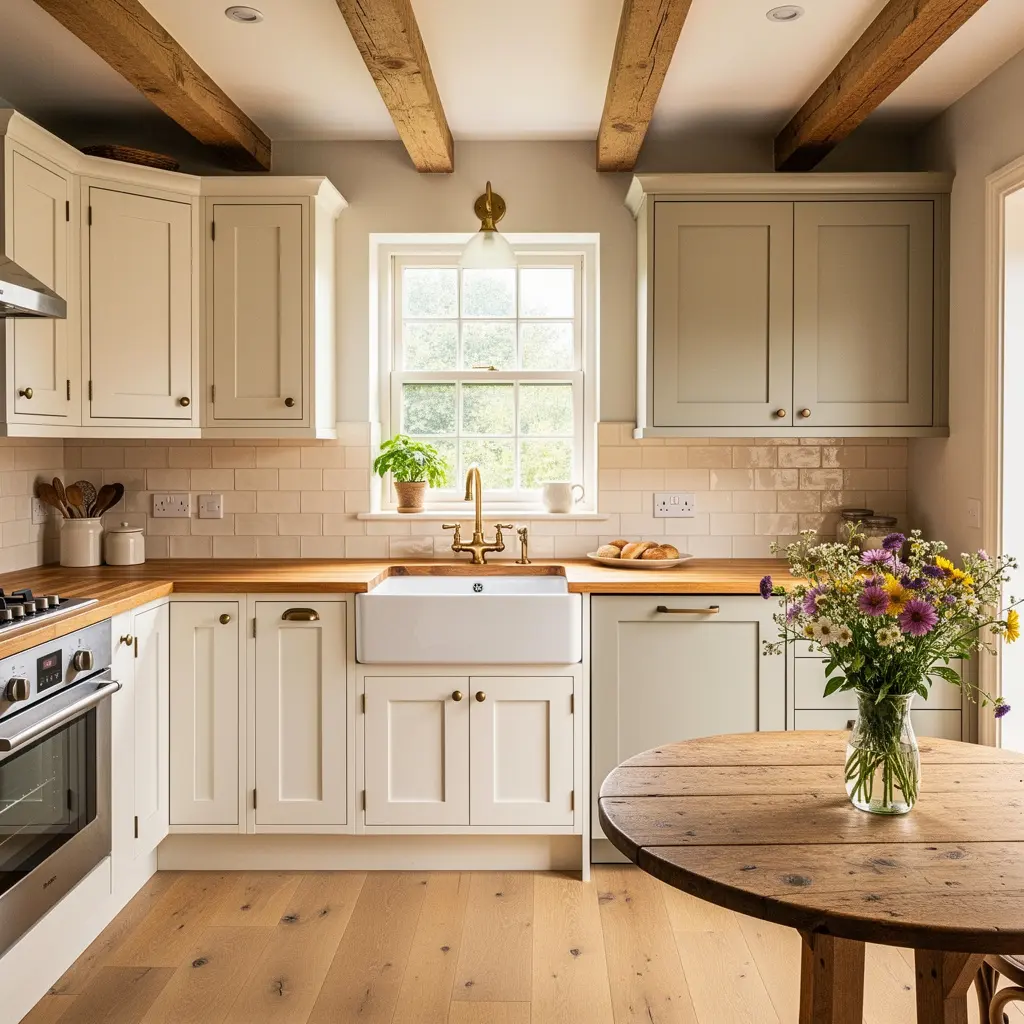
Flat slab cabinet doors read as modern and sleek, which is the opposite of what a cottage kitchen is going for. Shaker style doors, with their simple recessed panel, have been the standard in cottage and farmhouse kitchens for generations, and they still look right today. The small shadow line around each panel adds texture without adding clutter, which matters in a style built on subtle detail rather than bold statement pieces.
4. Layer in Vintage or Vintage Inspired Hardware
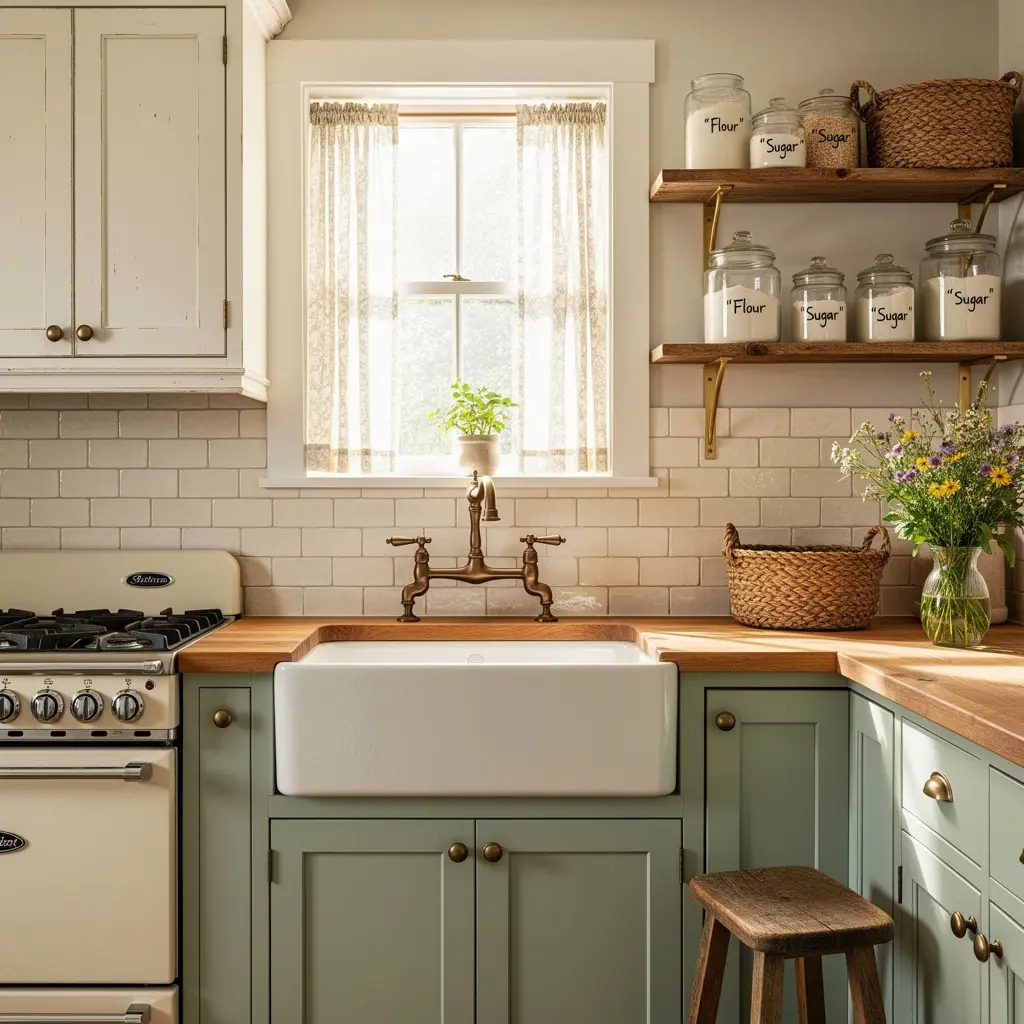
Swap builder grade silver pulls for brass, aged bronze, or black iron hardware. This one change costs relatively little (most cabinet pulls run somewhere between eight and thirty dollars each) but it shifts the entire feel of the kitchen. Mixed metal finishes, like a brass faucet with black cabinet pulls, are common in cottage kitchens and keep the space from feeling too matched or too formal.
A Simple Swap That Pays Off
If a full renovation isn’t happening anytime soon, hardware is one of the highest impact, lowest cost updates available. A weekend project with a screwdriver can genuinely change how the whole room reads.
5. Add a Farmhouse Sink as a Focal Point

An apron front farmhouse sink is one of the most recognizable cottage kitchen features, and it earns its popularity. The deep basin is genuinely useful for washing large pots, and the exposed front panel gives the kitchen a built in focal point below the window. White fireclay is the classic choice, though a fluted or beadboard front adds even more texture for a slightly more decorative version of the same idea.
6. Use Open Shelving to Show Off Everyday Dishes
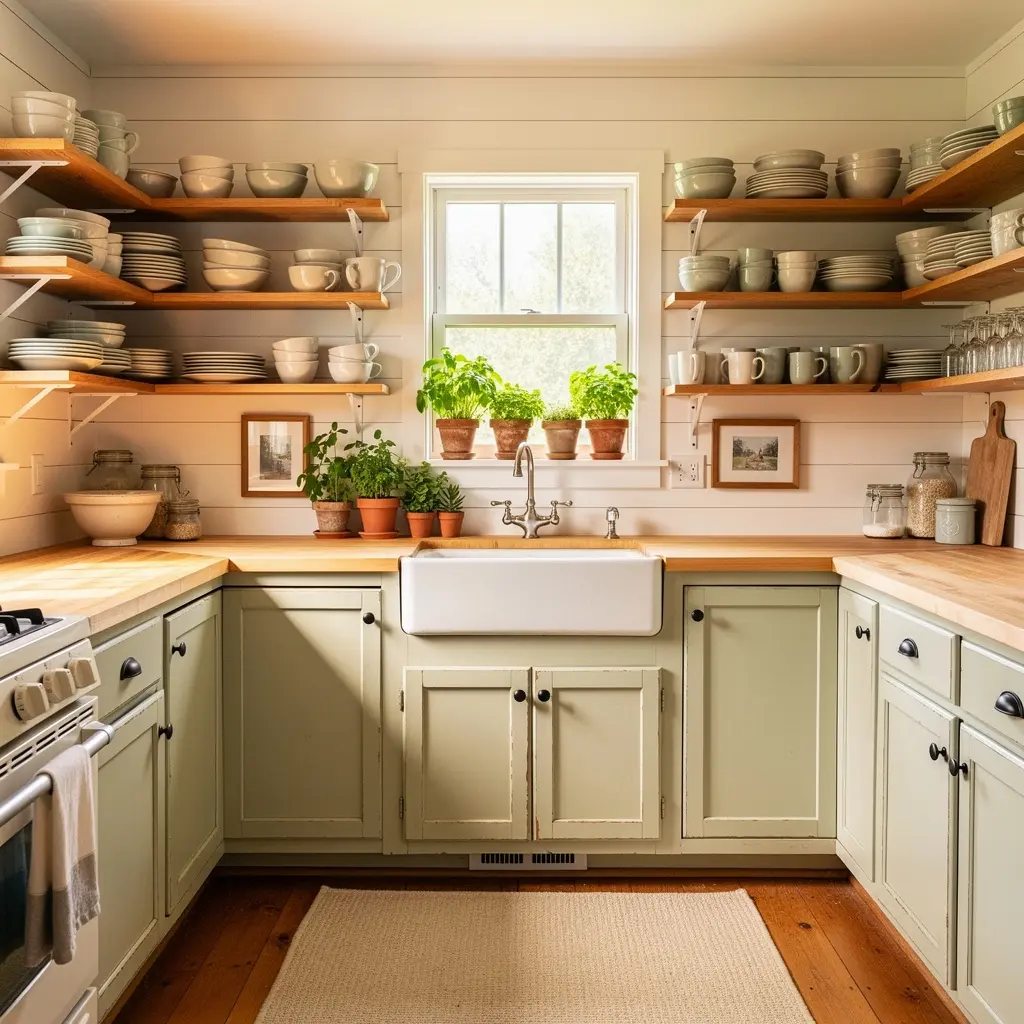
Closed cabinets hide clutter, but open shelving builds character. A few floating wood shelves holding stacked plates, a stoneware pitcher, and a small collection of mismatched mugs turns storage into decor. The trick is restraint: leave breathing room between objects instead of packing every shelf edge to edge, or the look tips into cluttered rather than curated.
What to Actually Put on Open Shelves
Stick to items you use often: everyday plates, glasses, a favorite teapot, a stack of linen napkins. Anything purely decorative and rarely touched tends to collect dust and start looking staged rather than lived in, which undercuts the whole cottage kitchen point.
7. Bring in Texture Through Textiles
A linen curtain under the sink, a woven runner on the counter, a set of cloth napkins folded on the open shelf. These small textile touches do more for warmth than almost anything else on this list, and they cost very little. Textiles are also the easiest thing to swap seasonally if you want the kitchen to shift slightly with the time of year without a full redecorate.
8. Choose Pendant Lighting With Character
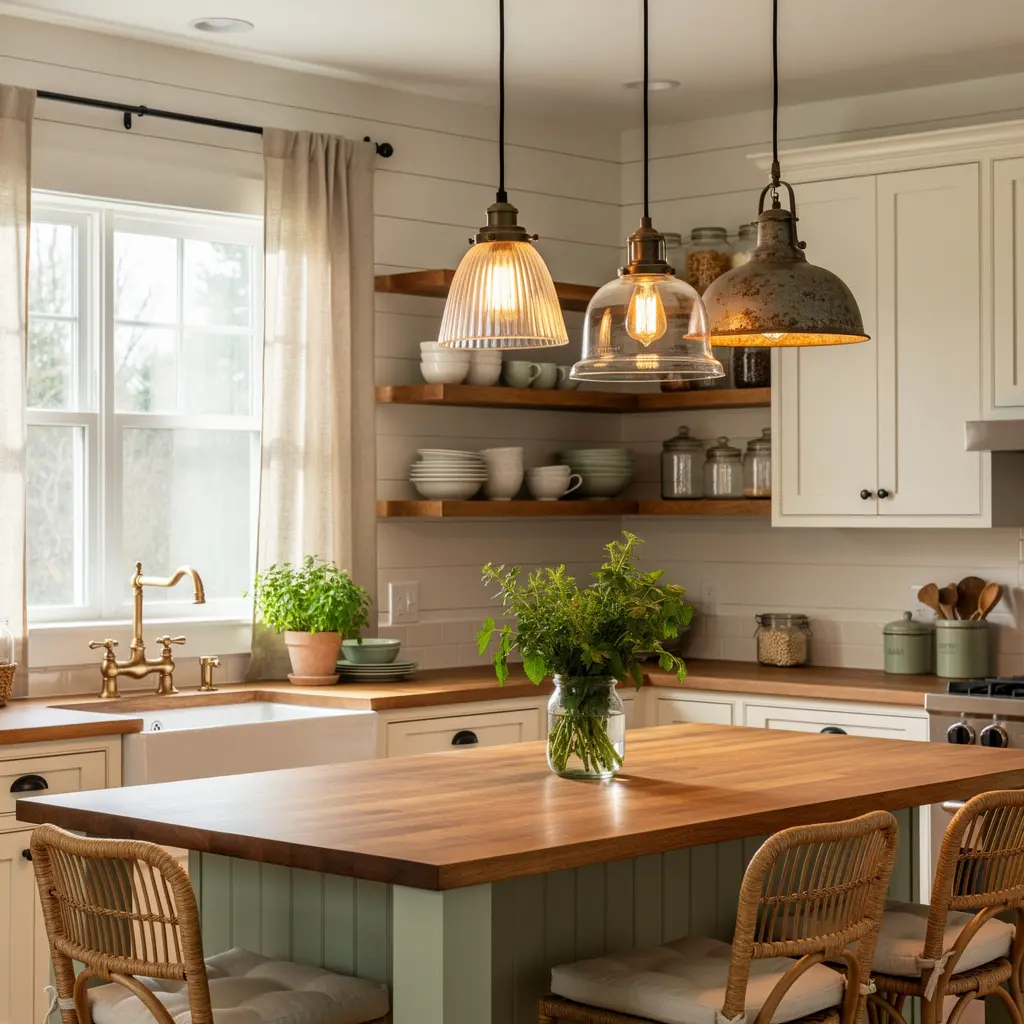
Skip the recessed can lights or a plain flush mount fixture and add one or two pendant lights over the sink or island instead. A glass globe pendant, a woven rattan shade, or an antique looking schoolhouse fixture all fit the cottage aesthetic and give the room a warm, ambient glow in the evening instead of harsh overhead light. Pendant lighting in the eighty to two hundred dollar range covers most of the style options that work here.
9. Add Greenery and Fresh (or Dried) Flowers
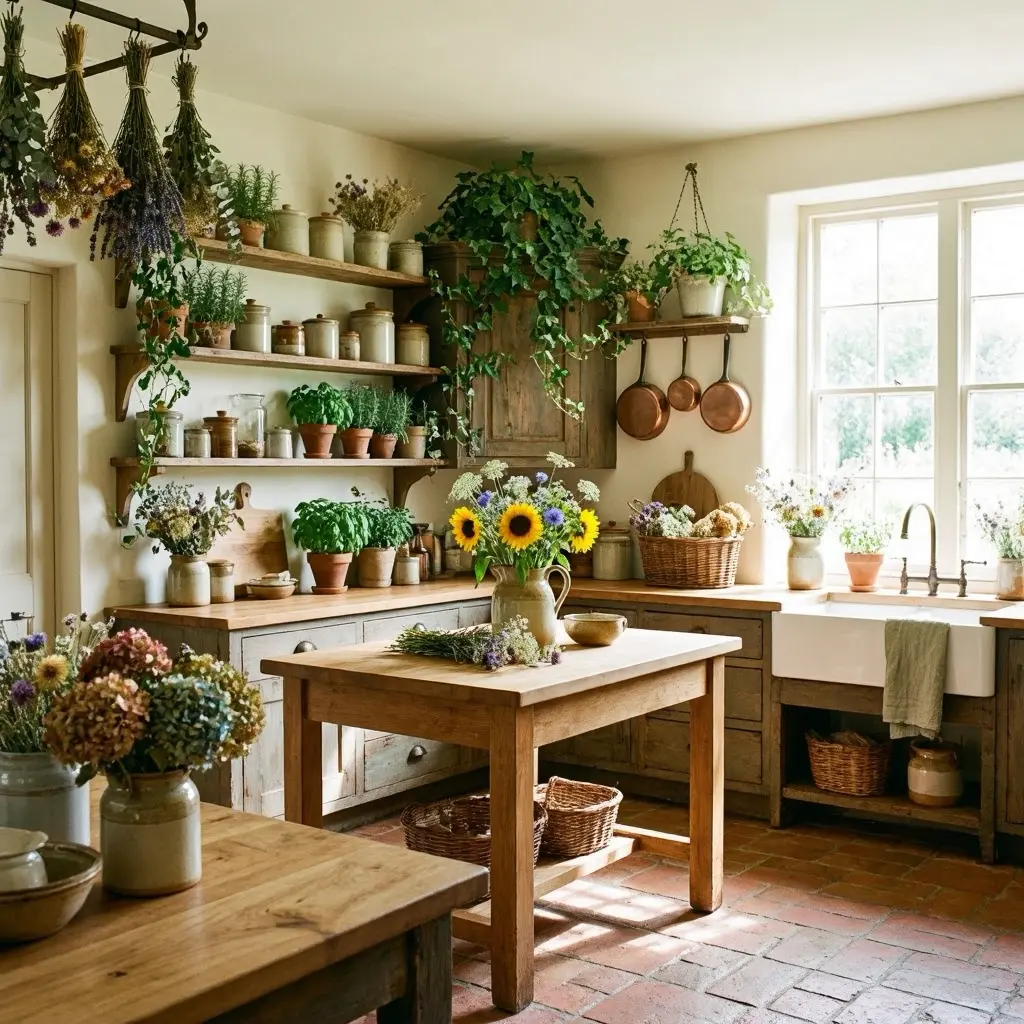
A small potted herb garden on the windowsill, a trailing plant on top of the cabinets, or a simple jar of dried flowers on the counter brings life into the kitchen without any renovation at all. Herbs like basil, thyme, and rosemary are genuinely useful in a kitchen setting too, so the greenery isn’t purely decorative. This is one of the lowest cost, highest return ideas on this entire list, often costing under twenty dollars to start.
10. Mix In a Few Antique or Vintage Pieces
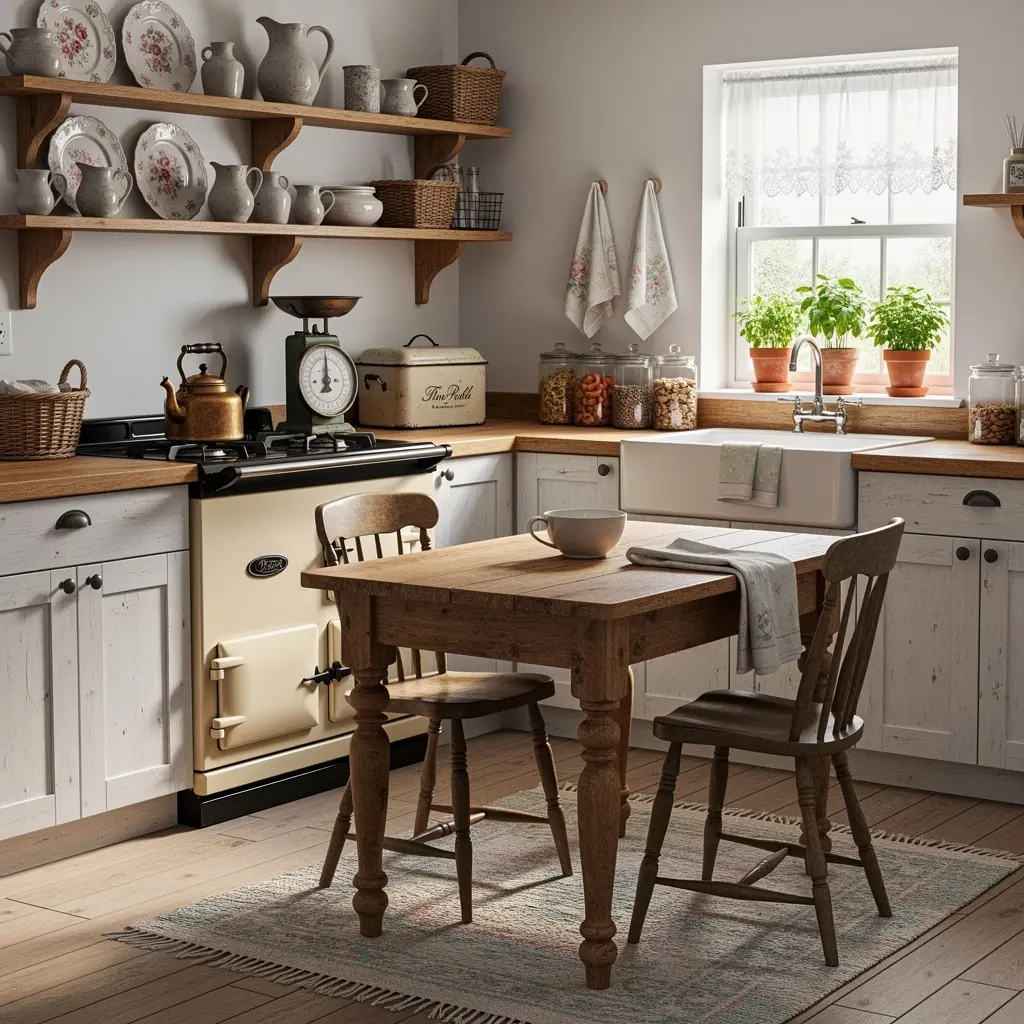
A single antique piece, whether it’s a worn wood stool tucked under the counter, a vintage tin canister set, or a chipped enamel pitcher used to hold utensils, gives the kitchen a sense of history that new furniture alone can’t replicate. Estate sales, thrift stores, and flea markets are the best (and cheapest) sources here. You don’t need many. Even one or two well chosen pieces do the job, since the goal is character, not clutter.
Mistakes to Avoid
- Going too matched: a cottage kitchen should feel gathered over time, not bought as a coordinated set
- Overcrowding open shelves until they look cluttered instead of curated
- Choosing cool gray tones that fight against the warm, earthy palette the style depends on
- Skipping texture and relying on color alone to create coziness
- Using harsh, cool white overhead lighting instead of warm bulbs and layered lighting
- Forgetting function: a cottage kitchen still needs to work as a real kitchen, not just look good in photos
Frequently Asked Questions
Is a cottage kitchen the same as a farmhouse kitchen? They overlap a lot, but a farmhouse kitchen tends to be a bit more rustic and utilitarian, while a cottage kitchen leans slightly more delicate and romantic, often with softer colors and more vintage decor. In practice, most real kitchens borrow from both.
What colors work best in a small cottage kitchen? Warm off whites, soft sage, and light terracotta tend to work well in smaller spaces because they keep the room feeling bright while still adding warmth. Save deeper, moodier colors like olive or forest green for an accent, such as a lower cabinet or an island, rather than the whole room.
Do I need to renovate to get this look? No. Hardware swaps, open shelving styling, textiles, and a fresh coat of paint on existing cabinets can shift a kitchen toward the cottage style without a full remodel.
What’s the most budget friendly way to start? Hardware and textiles. New cabinet pulls and a linen curtain or runner cost relatively little and make an immediate visual difference before you commit to anything bigger.
Does this style work in a modern or newer home? Yes. The cottage look is really about materials, color, and texture rather than architecture, so it adapts well to a newer build. A few wood and vintage touches soften even a very modern kitchen shell.
Conclusion
A cozy cottage kitchen isn’t built in a single weekend, and it isn’t really about spending a lot of money either. It comes from warm colors, natural materials, a little bit of texture, and a few pieces that actually mean something to you. Start with one or two changes, like swapping the hardware or styling a shelf with dishes you love, and let the rest build from there. The goal isn’t a finished showroom. It’s a kitchen that feels like yours the moment you walk in.