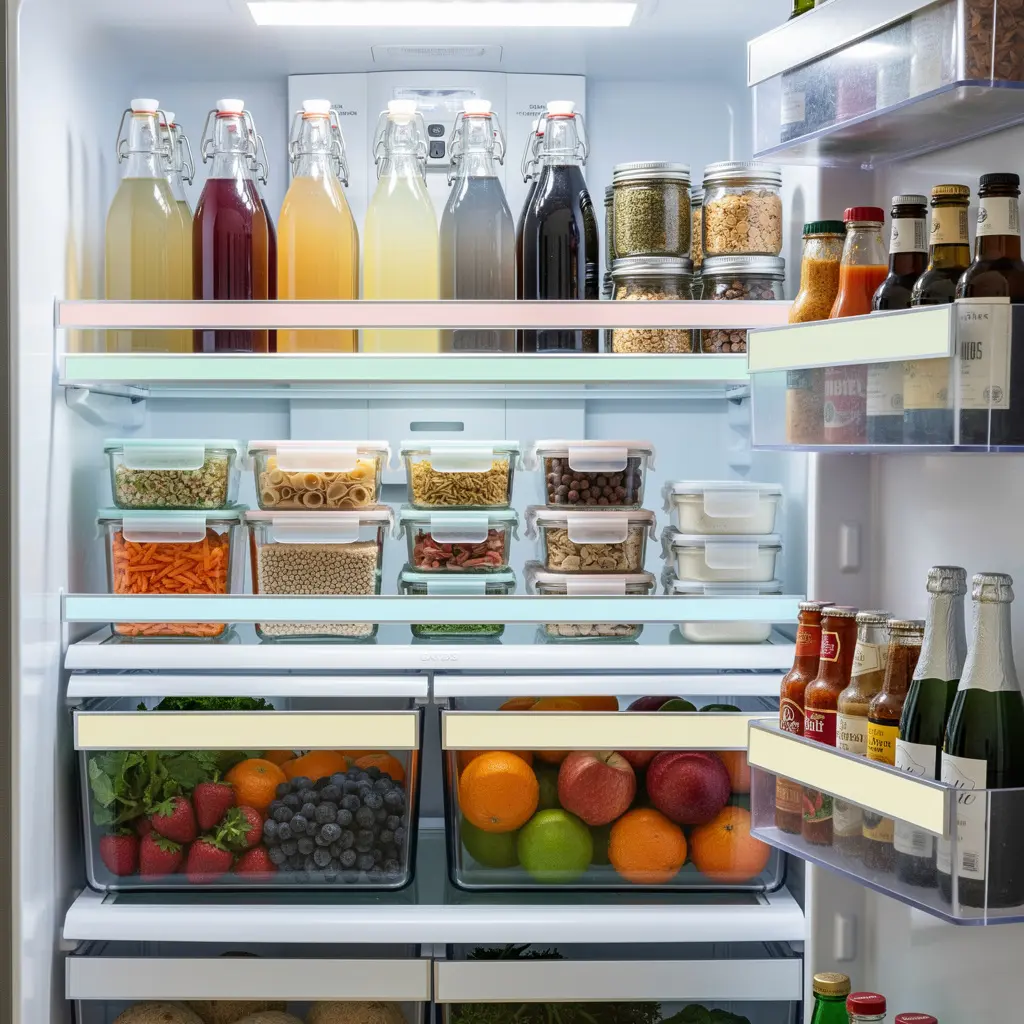
10 Fridge Organization Hacks That Make Life Easier
You spend a Sunday afternoon decanting everything into matching containers, and by Thursday the fridge looks exactly like it did before, jars pushed to the back, produce forgotten in the crisper, leftovers shoved wherever there’s room. That’s the real problem with most fridge organization hacks. They look great in a photo but don’t survive actual daily use. The fixes that stick are built around how you actually cook and shop, not around how the fridge looks on the day you set it up.
The good news is that a working system doesn’t require a full overhaul or an expensive container set. It requires a few structural decisions, where things live, how leftovers get tracked, how produce is stored, that make putting groceries away correctly the easiest option instead of the extra effort option.
1. Why Most Fridge Organization Systems Fall Apart Fast
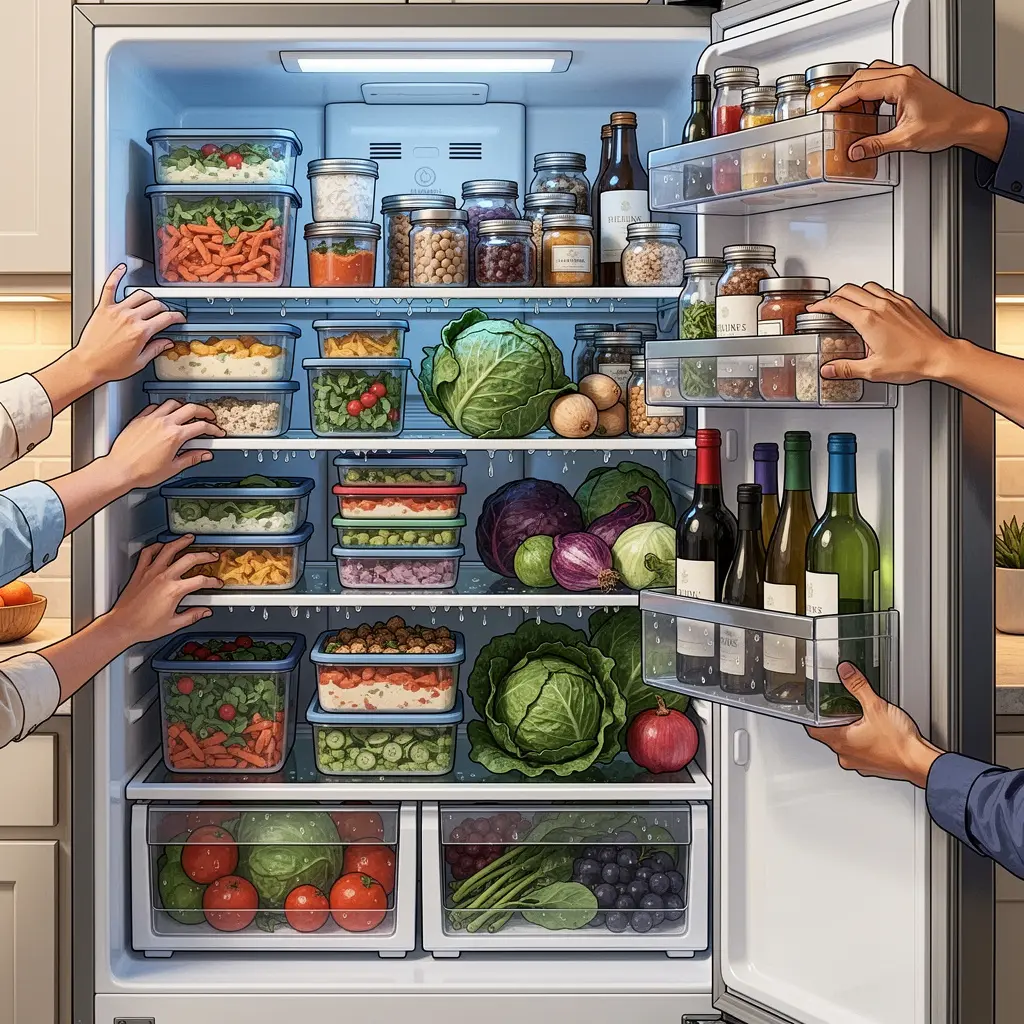
A fridge organization system usually fails for one of two reasons. Either it requires too much daily effort to maintain, like transferring every single item into a matching container, or it was designed around an ideal kitchen routine instead of your actual one.
The systems that hold up are simple enough that putting groceries away correctly takes the same amount of time as putting them away randomly. If a system takes longer than your old habits, it gets abandoned within a few weeks, no matter how good it looks on day one.
This is why photo perfect fridges you see online can be misleading. What they actually show is one moment in time, right after setup, not how the system performs after three weeks of real grocery trips, leftovers, and rushed weeknight dinners.
2. Set Up Zones Based on How You Actually Cook
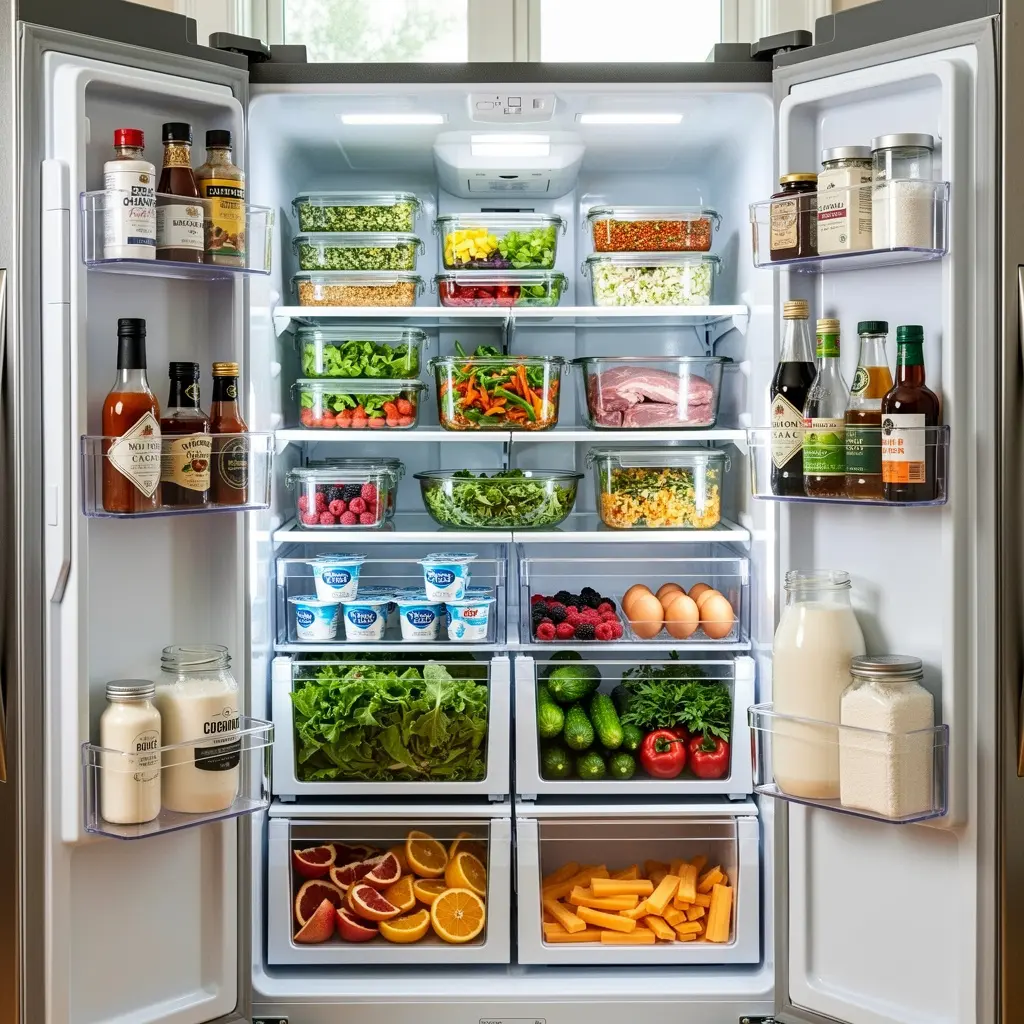
Rather than organizing by food category alone, group items by how you use them. A “grab and go” zone for snacks and drinks near the front, a “cooking ingredients” zone for things you use together, like sauces and marinades, and a “leftovers” zone that’s checked first before anything new goes in.
Matching Zones to Real Habits
Watch what you reach for most during a normal week and put those items at eye level in the most accessible spot. Items you use rarely, like specialty condiments or ingredients for one recipe, can live on a lower shelf or in the door without slowing down daily cooking.
3. Use Clear Bins So Nothing Gets Forgotten
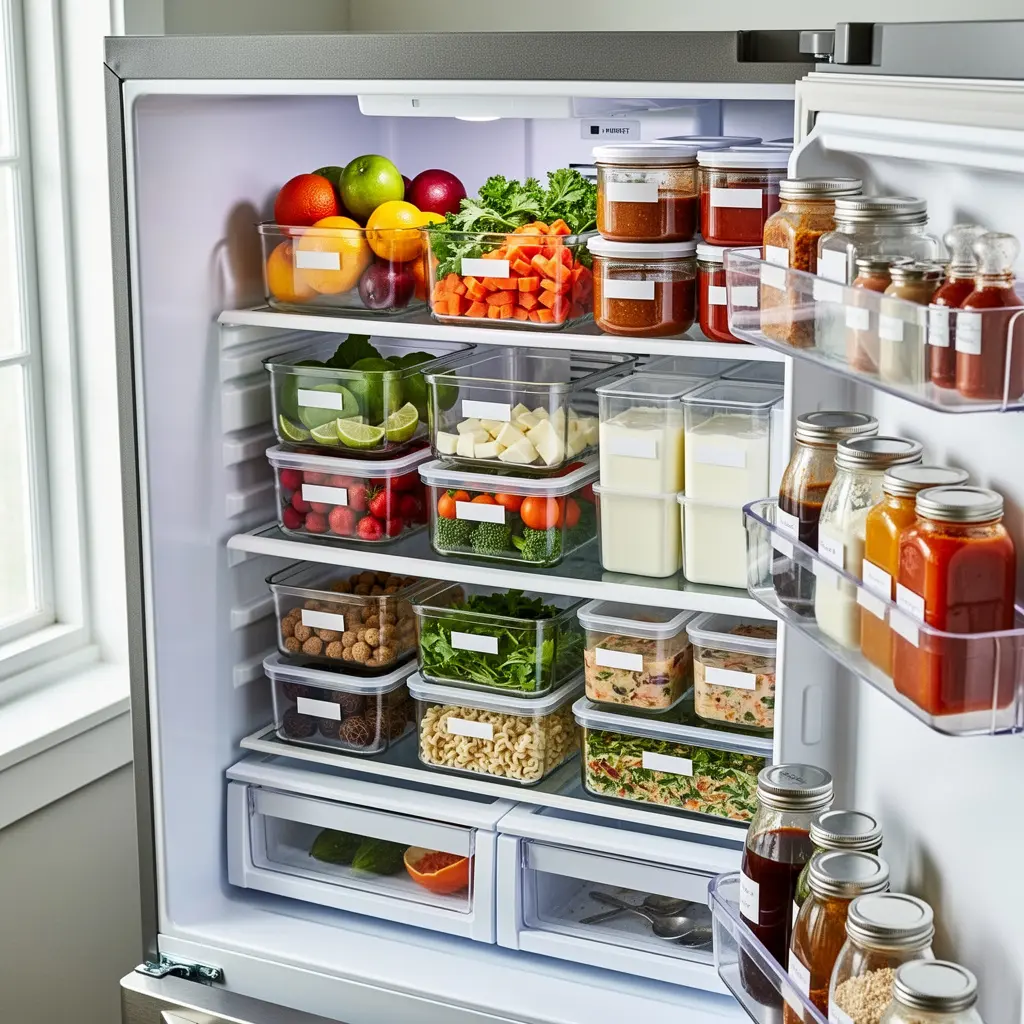
Opaque containers are one of the biggest reasons food gets lost and eventually wasted in the back of a fridge. Clear plastic or acrylic bins in the $8 to $25 range let you see contents at a glance without pulling everything out to check what’s inside.
Grouping similar items into one bin, all the cheese in one, all the deli meat in another, also means you’re moving one bin instead of digging through loose packages every time you need something from the back of a shelf.
4. Add a Lazy Susan for Condiments and Small Jars
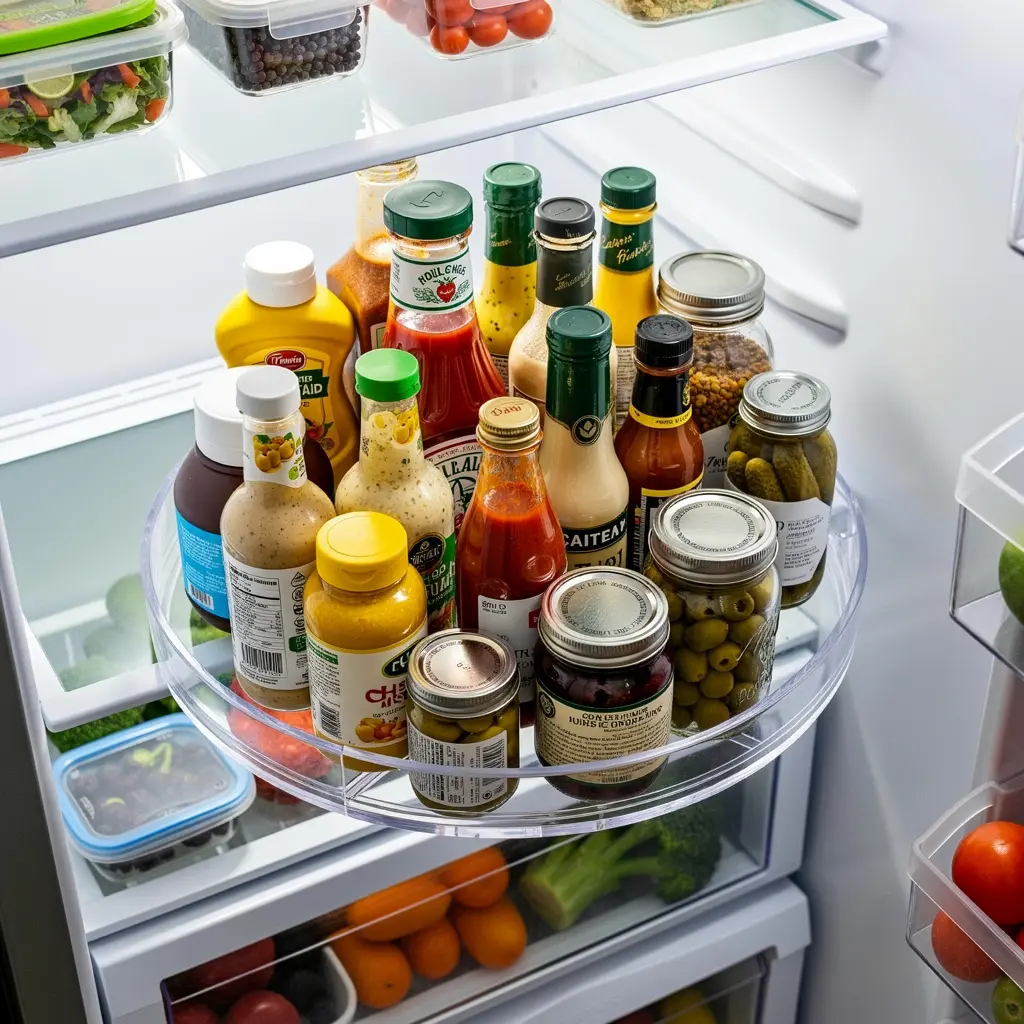
A round turntable, usually $10 to $20 for a fridge safe version, solves the problem of condiment jars getting pushed to the back and forgotten. Spinning the turntable brings every jar into view without removing anything else on the shelf.
This works especially well on a middle or lower shelf where jars tend to accumulate, mustard, jam, salad dressing, hot sauce, items that get used inconsistently but take up real shelf space when they’re not organized.
5. Store Produce With Airflow, Not in Sealed Drawers
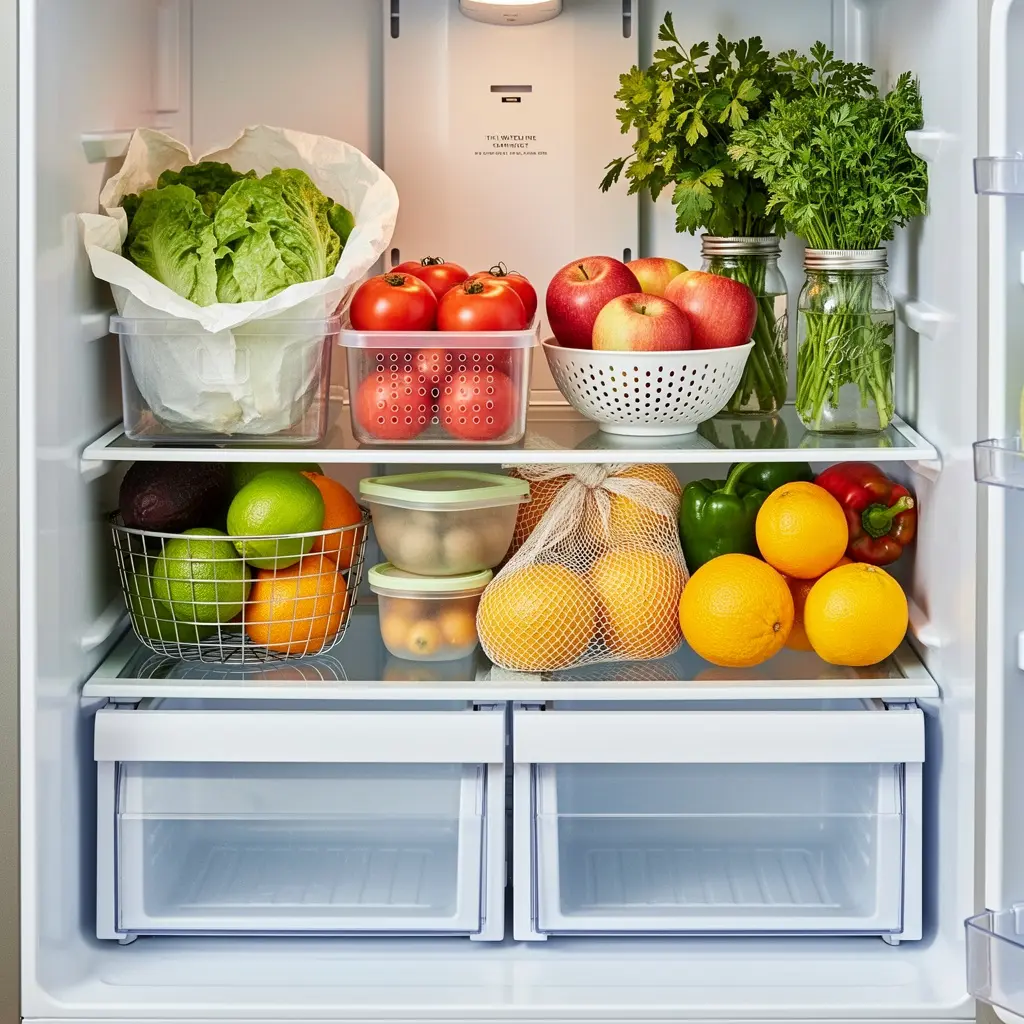
Produce packed tightly into a sealed crisper drawer often spoils faster because trapped moisture and ethylene gas from certain fruits speed up decay. A mesh or vented bin, or produce stored upright rather than piled on top of itself, gives air room to circulate and slows spoilage.
Separating Ethylene Producers From Sensitive Produce
Apples, bananas, and avocados release ethylene gas as they ripen, which can cause nearby leafy greens and berries to spoil faster. Keeping high ethylene producers in a separate drawer or bin from delicate produce is a small habit that noticeably extends how long vegetables actually last.
6. Label Shelves Instead of Just Containers
Labeling individual containers helps, but labeling the shelves themselves keeps a system consistent even when someone else puts groceries away or a new item doesn’t have a matching container yet. A simple label like “dairy,” “leftovers,” or “eat this week” on the shelf edge tells anyone using the fridge exactly where things belong.
This matters most in households where more than one person shops or cooks, since a system only one person understands tends to break down the first time someone else restocks the fridge. Painter’s tape and a marker work fine for this, and labels can be repositioned easily as the system evolves over time.
7. Keep a Front and Back System for Leftovers
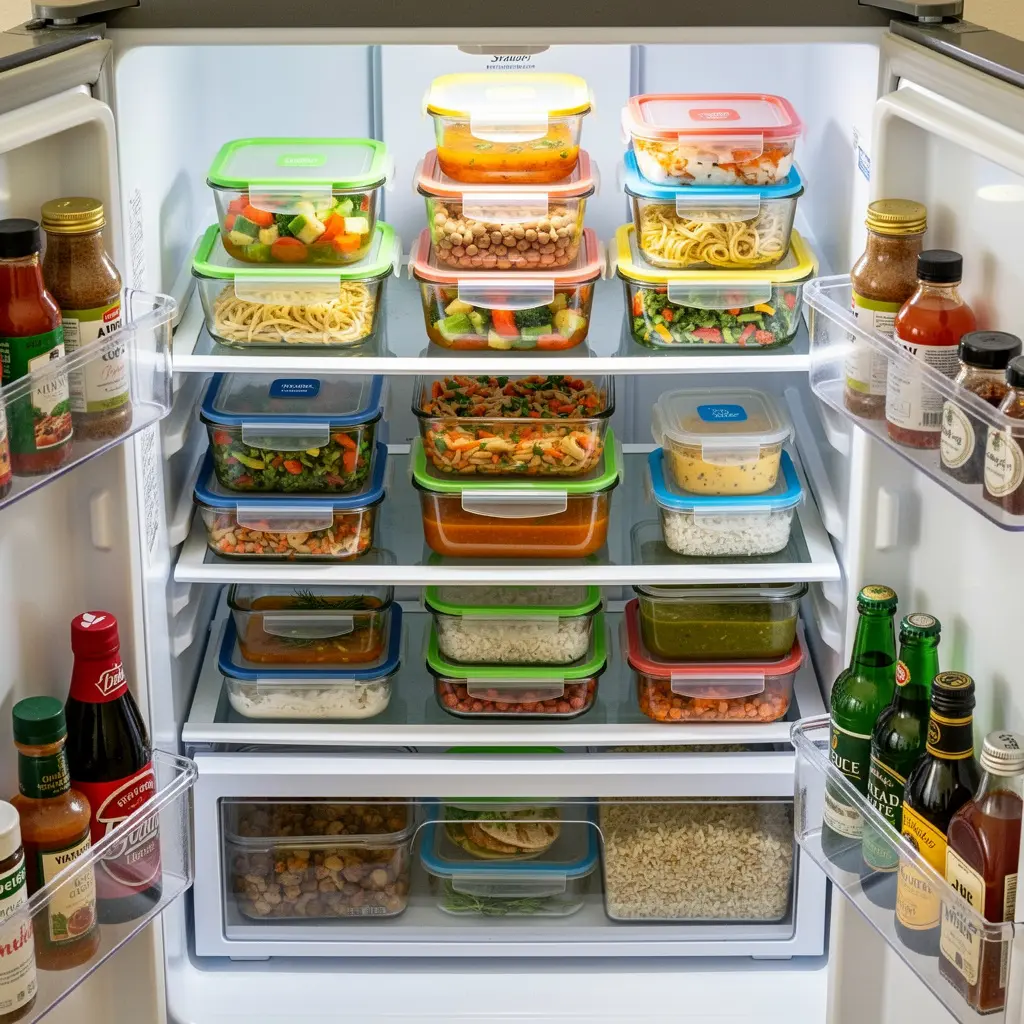
A dedicated “eat this week” spot at the front of a shelf, ideally at eye level, keeps leftovers and items nearing their use by date visible instead of buried behind newer groceries. New items go toward the back, and anything moved to the front gets used before it’s replaced.
This single habit, more than any container purchase, is usually the biggest factor in reducing food waste, since forgotten leftovers are one of the most common things thrown out unused.
8. Use the Door for Items That Don’t Need Deep Cold
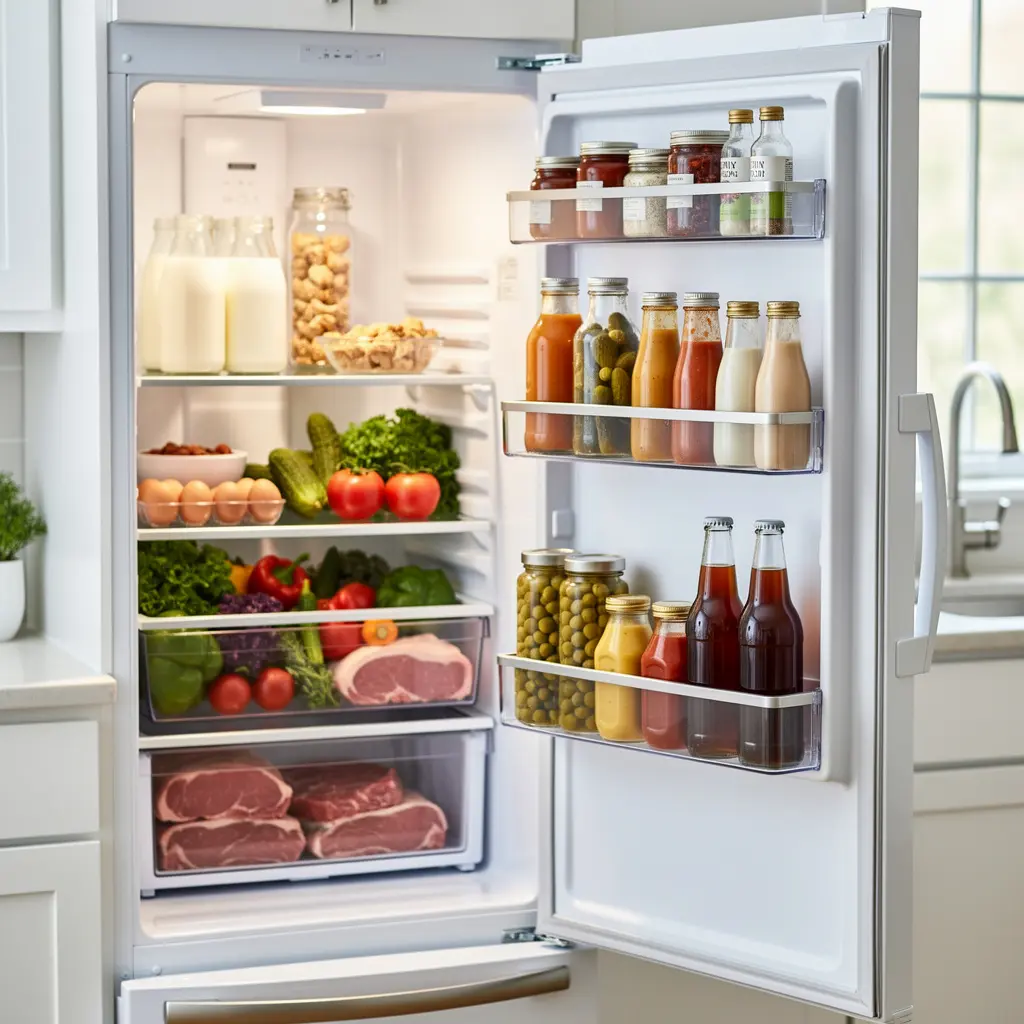
The door is the warmest part of a fridge, since it’s exposed to room temperature air every time it opens. Condiments, juice, and other shelf stable once opened items handle this temperature swing fine, while dairy and eggs, which need more consistent cold, are better kept on an interior shelf even if the door has designated slots for them.
Reserving the door for items that tolerate temperature fluctuation frees up more stable interior shelf space for things that actually need it.
9. Do a Five Minute Reset Once a Week
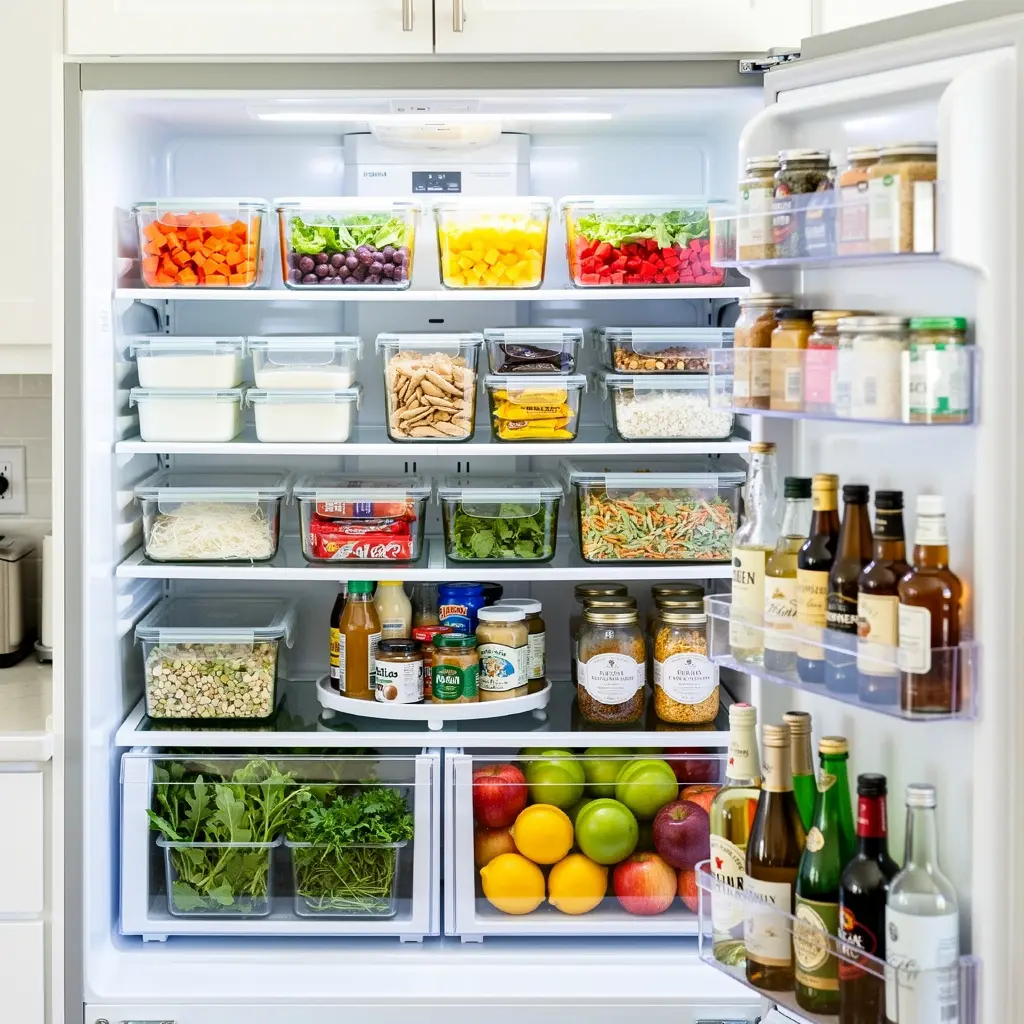
Before a weekly grocery trip, spend five minutes checking expiration dates, tossing anything spoiled, and moving items that need to be used soon to the front. This small habit prevents the slow buildup of forgotten jars and wilted produce that eventually turns into a full weekend reorganizing project.
Doing this reset right before shopping, rather than after, also helps you see what you actually still have before buying duplicates you didn’t need. It only takes a few minutes, but it’s the single habit that keeps a good system from quietly sliding back into clutter over the following weeks.
10. Budget Friendly Containers That Actually Hold Up
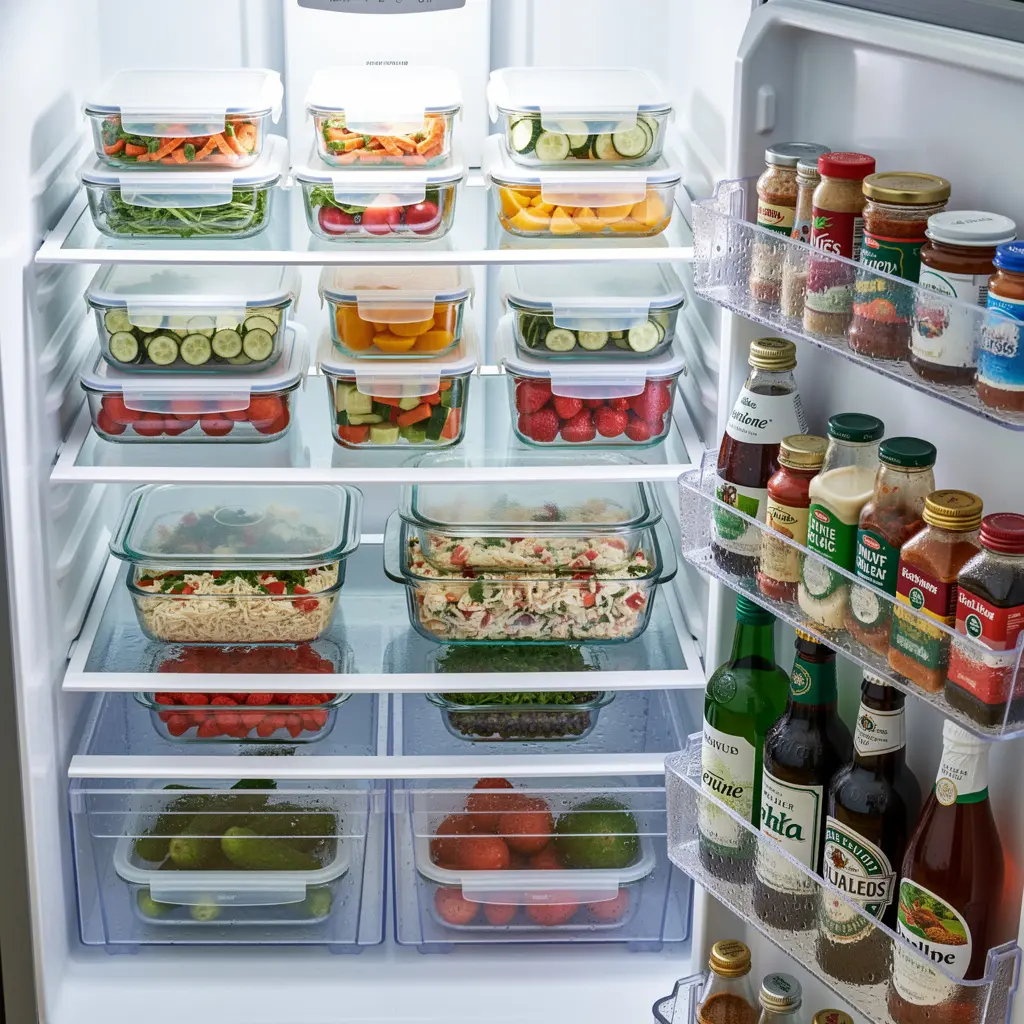
A full matching container set isn’t necessary to get real organization benefits. A few clear bins from a dollar store or big box retailer, a basic turntable, and a roll of painter’s tape and marker for labeling can set up a working system for under $30 total.
Repurposed containers, like a cleaned out deli container or a glass jar, work just as well as purchased organizers for most items, as long as they’re clear enough to see what’s inside without opening them.
Mistakes to Avoid
- Buying matching containers before figuring out how you actually use the fridge
- Packing produce tightly into sealed drawers without airflow
- Storing high ethylene fruits next to delicate greens and berries
- Labeling containers but never labeling the shelves themselves
- Skipping a regular reset until the fridge becomes overwhelming again
- Keeping dairy and eggs in door slots instead of interior shelves
Frequently Asked Questions
How often should I clean out my fridge? A quick five minute check weekly, ideally before grocery shopping, along with a deeper clean every one to two months, keeps most fridges from getting out of control.
What’s the best container material for fridge organization? Clear plastic or glass containers work best because you can see contents without opening them, which matters more for daily usability than the specific material.
Should I organize my fridge by food category or by how I cook? Organizing loosely by category but placing frequently used items at eye level, regardless of category, tends to hold up better than a strict category only system.
Does fridge organization actually reduce food waste? Yes. Keeping items visible, especially leftovers and produce nearing its use by date, is one of the most effective ways to catch food before it spoils unused.
Is a lazy Susan worth it for a small fridge? Even in a smaller fridge, a compact turntable can help with condiments and small jars that tend to get lost at the back of a shelf.
Making Fridge Organization Actually Last
Fridge organization hacks work when they match your real habits instead of an idealized version of how you’d like to cook. Set up zones around what you actually reach for, keep produce and leftovers visible, and build in a quick weekly reset so small messes never turn into a full overhaul. A system that takes five minutes a week to maintain will always outlast one that looks perfect for exactly one day. Start with just one or two changes, a labeled front zone for leftovers or a produce bin swap, before overhauling the whole fridge at once, so the new habits actually have a chance to stick.