10 Aesthetic Backlit Floating Shelf Ideas for a Modern Home
A plain floating shelf against a blank wall does its job. It rarely gets a second look though. Add backlighting and the same shelf becomes something people actually stop to notice. Aesthetic backlit floating shelf ideas turn a purely functional display spot into a genuine design feature, using hidden LED glow to add depth that flat, unlit shelving just can’t match.
The technique itself isn’t complicated. It comes down to where the light sits relative to the shelf, what color temperature you choose, and how you style what sits on top. Get those three details right and even a single shelf can anchor an entire wall. Here are ten ways to pull it off.
1. Decide Between Front Glow and Back Glow
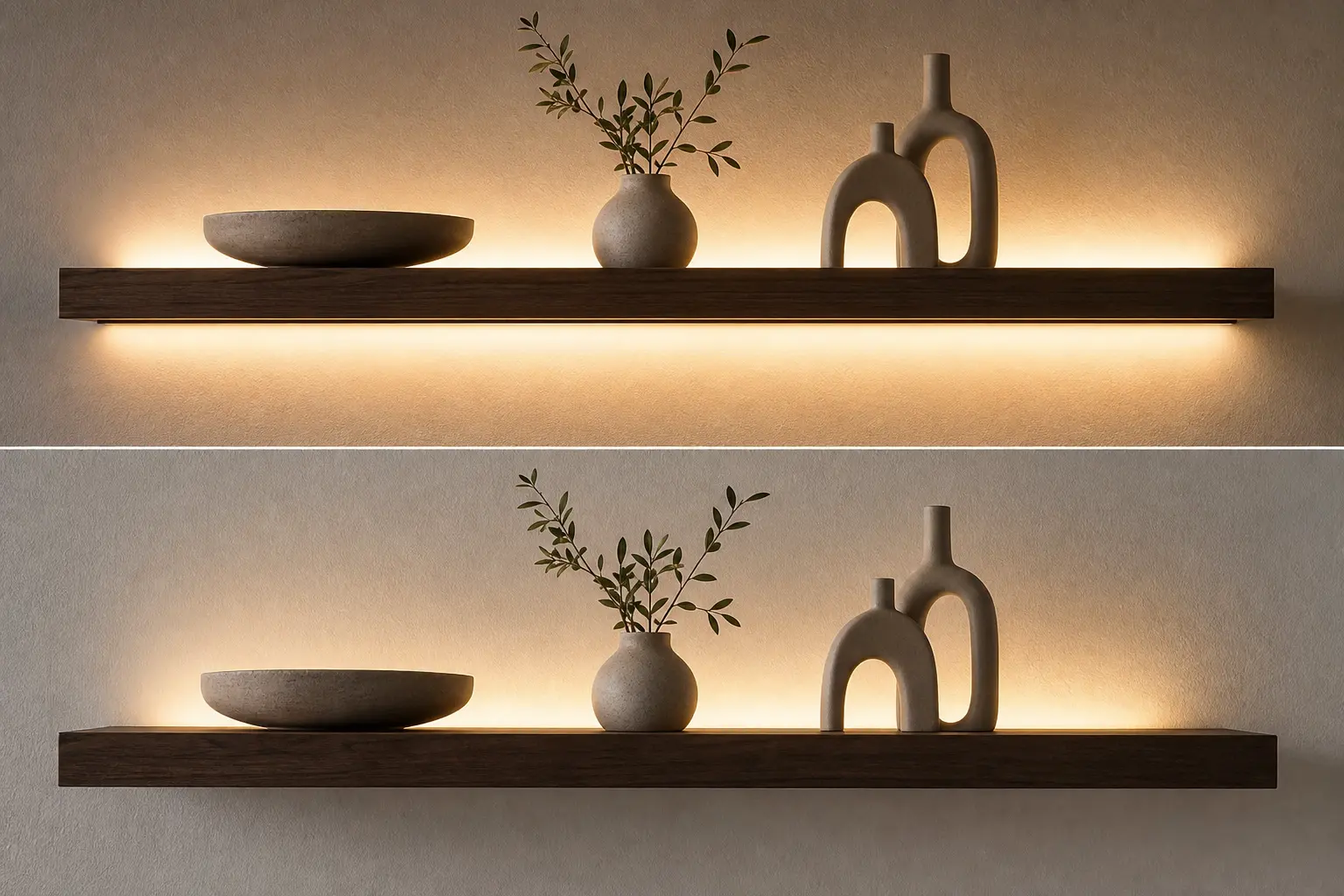
Front glow lighting sits along the front edge of the shelf, casting light downward and highlighting whatever’s displayed on top. Back glow sits behind the shelf itself. That creates a halo effect against the wall, making the shelf appear to float even more dramatically.
Back glow suits a minimalist, architectural look. Front glow does more to highlight the actual objects on display. Choose based on whether the wall or the objects should get more attention.
Combining Both for Maximum Effect
A shelf with both front and back lighting creates the most dramatic result. It also requires more careful cord management and typically costs more in materials. Save this combination for a single statement shelf rather than every shelf in the room.
2. Choose a Slim Shelf Profile for a Cleaner Look
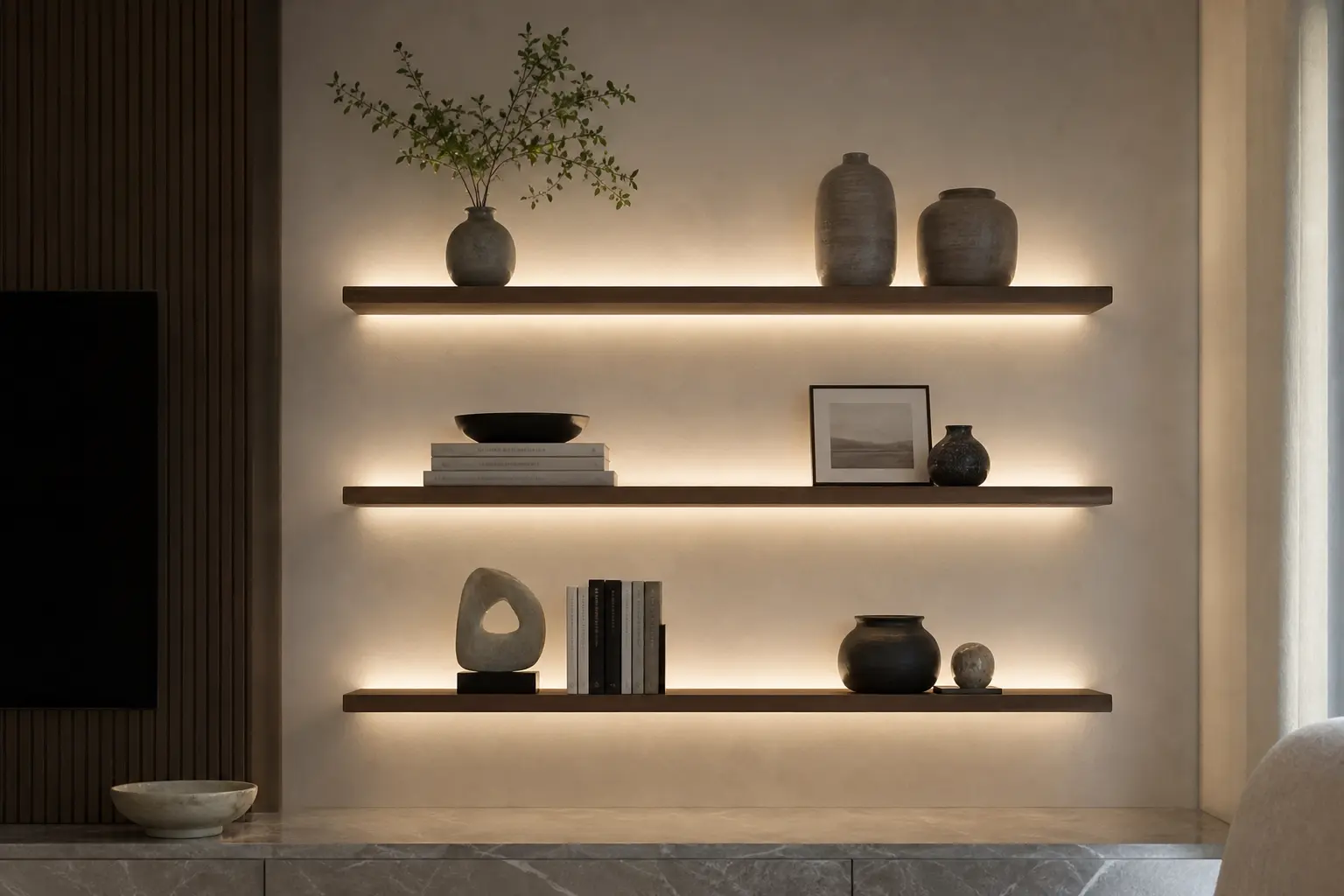
A thick, chunky shelf can visually compete with the glow underneath or behind it. Look for a slim profile, generally under 2 inches thick, in a matte finish that lets the lighting do most of the visual work.
Floating shelves in this style typically run $40 to $120 depending on length and material. Metal and engineered wood both hold up well to the wiring needed for backlighting.
3. Pick a Single Color Temperature and Stick to It
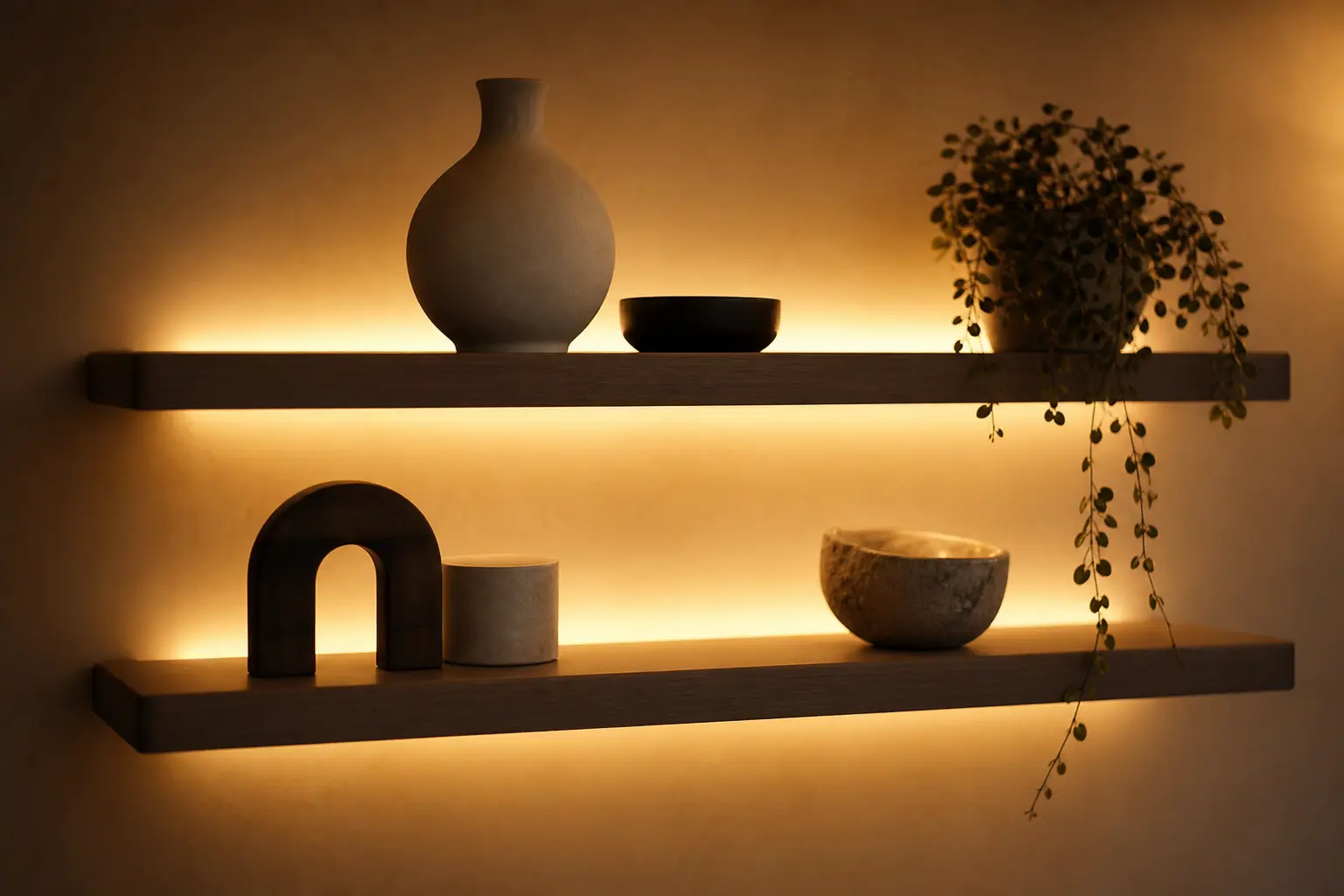
Mixing warm white on one shelf with a cooler tone on another creates visual confusion rather than interest. Choose one temperature. Warm white in the 2700K range gives a cozy feel, while a slightly cooler 3500K reads crisper and more gallery like. Use it consistently across every backlit shelf in the room.
A single consistent color temperature reads as intentional, while mismatched tones across shelves make the whole setup look accidental. This consistency matters more than the specific temperature you pick.
4. Use Frosted Diffusers to Soften Harsh LED Points
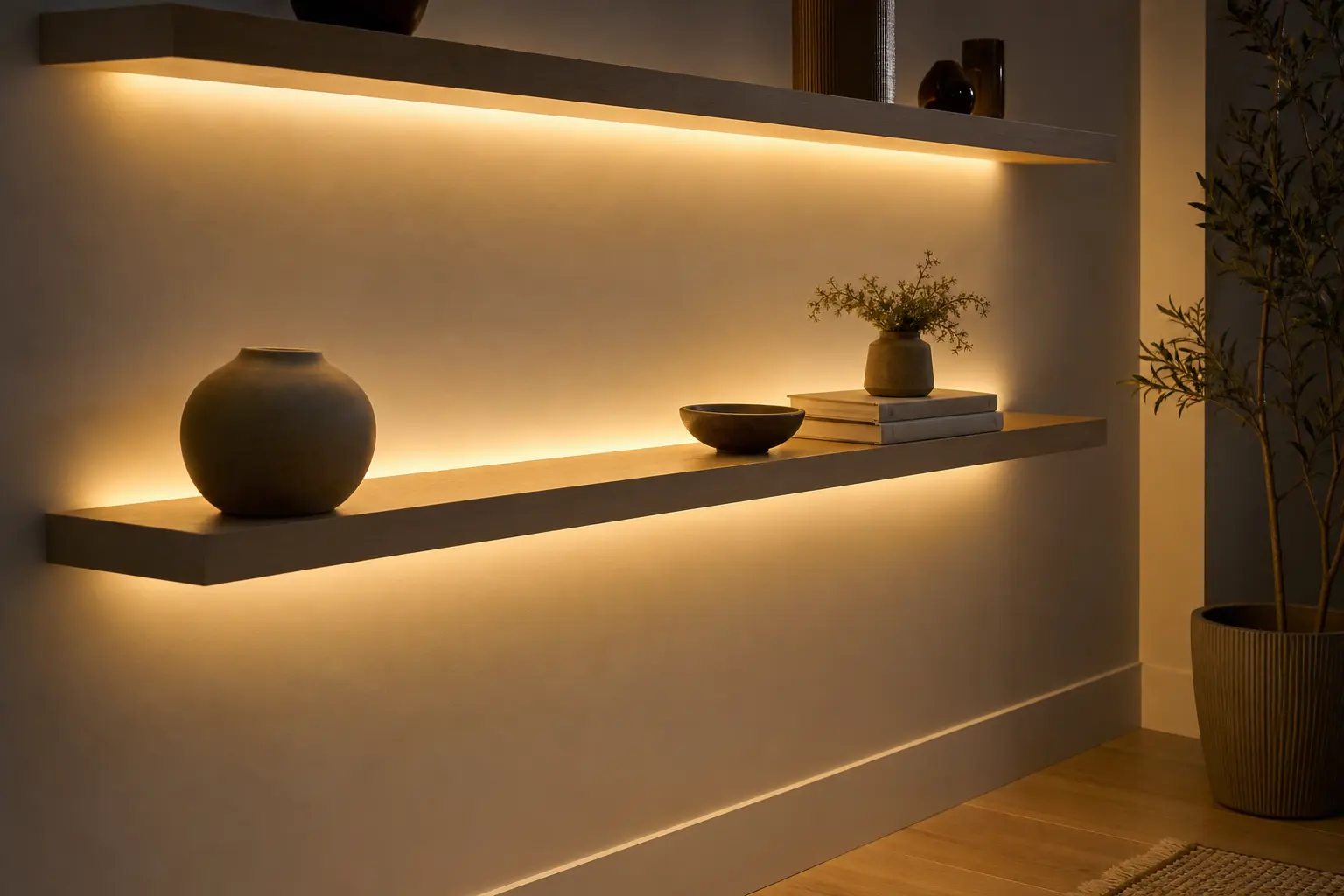
Raw LED strips can create visible hot spots rather than an even glow. A frosted acrylic diffuser channel, which most quality LED strip kits include, spreads that light evenly and removes the harsh points entirely.
Skipping the diffuser might save a few dollars. The visual difference is significant though. A diffused glow looks considered. Raw LED dots look unfinished, almost like a display still under construction.
5. Display Sculptural Objects That Cast Interesting Shadows
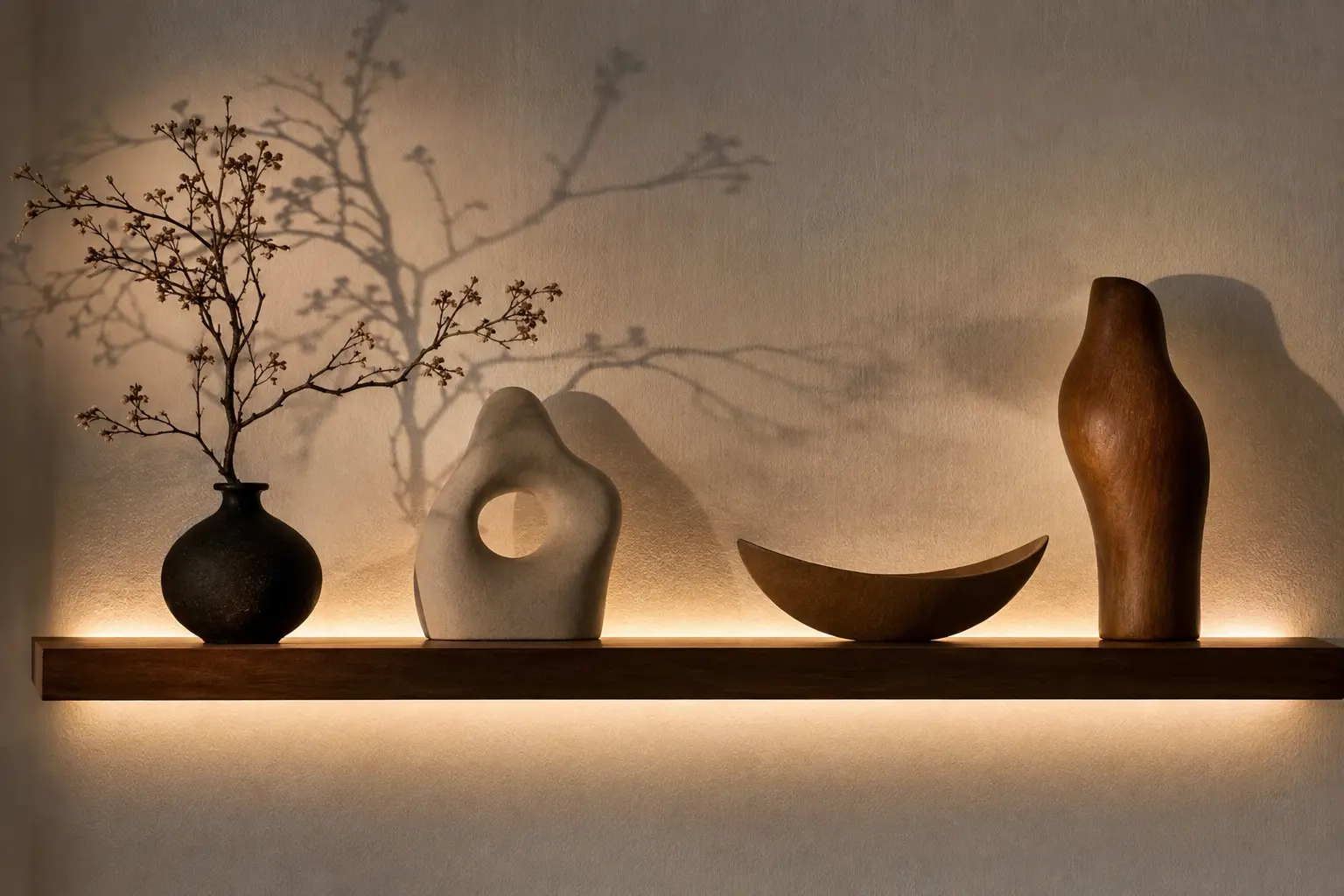
Backlighting does more than illuminate. It creates shadow too, and objects with texture or an irregular silhouette make the most of that. A ceramic vase with a carved pattern, a small sculptural piece, or a cluster of dried branches all throw shadows that add real depth to the display.
Flat, uniformly shaped objects don’t take advantage of the lighting the same way. Save your smoothest, most uniform pieces for a differently lit spot in the room.
6. Add a Dimmer for Flexible Mood Lighting

A dimmable LED controller lets you shift the shelf’s brightness from a subtle evening glow to a brighter daytime accent. Most warm white LED kits come with a small remote or app based dimmer, typically adding only a few dollars to the total cost.
This flexibility matters more than it might seem. A shelf that’s perfect for a dinner party at low brightness can also serve as functional accent lighting during the day at a higher setting.
7. Position the Shelf at the Right Eye Level

A backlit shelf installed too high loses much of its visual impact. The glow reads best at or slightly above standing eye level, typically 60 to 66 inches from the floor. Too low, and the shelf competes visually with furniture below it instead of standing out on its own.
Measure twice before drilling. Once the wiring is run and the shelf is mounted, adjusting the height means redoing the whole installation.
8. Keep Cord Management Invisible
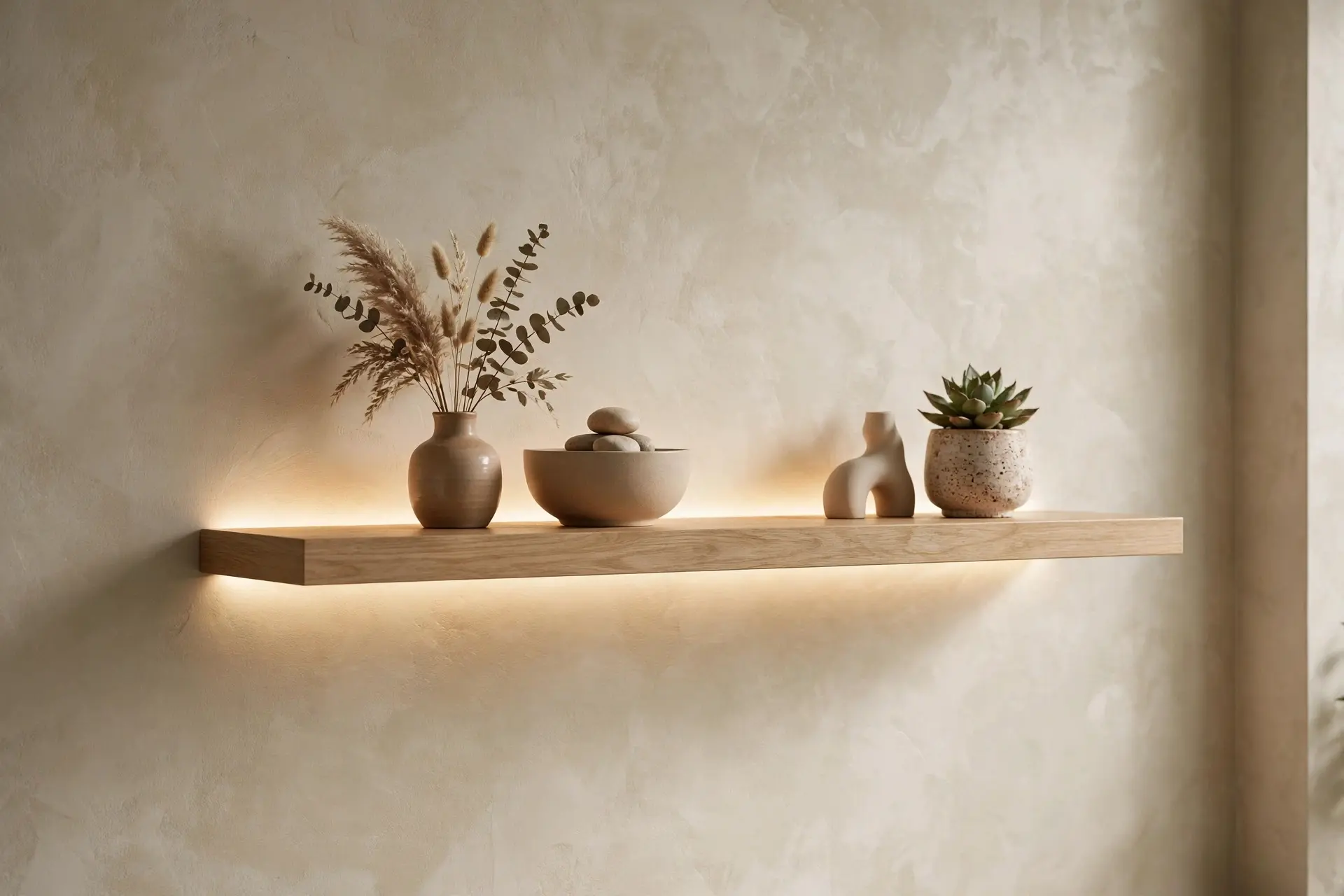
Nothing undercuts a sleek, modern backlit shelf faster than a visible power cord dangling down the wall. Route the cord through a small channel cut into the wall if you’re comfortable with that level of work, or run it behind the shelf bracket and down inside nearby furniture instead.
For rentals, a cord cover kit in a matching wall color can disguise the cord’s path. No permanent modification needed.
9. Pair Backlighting with a Textured Accent Wall
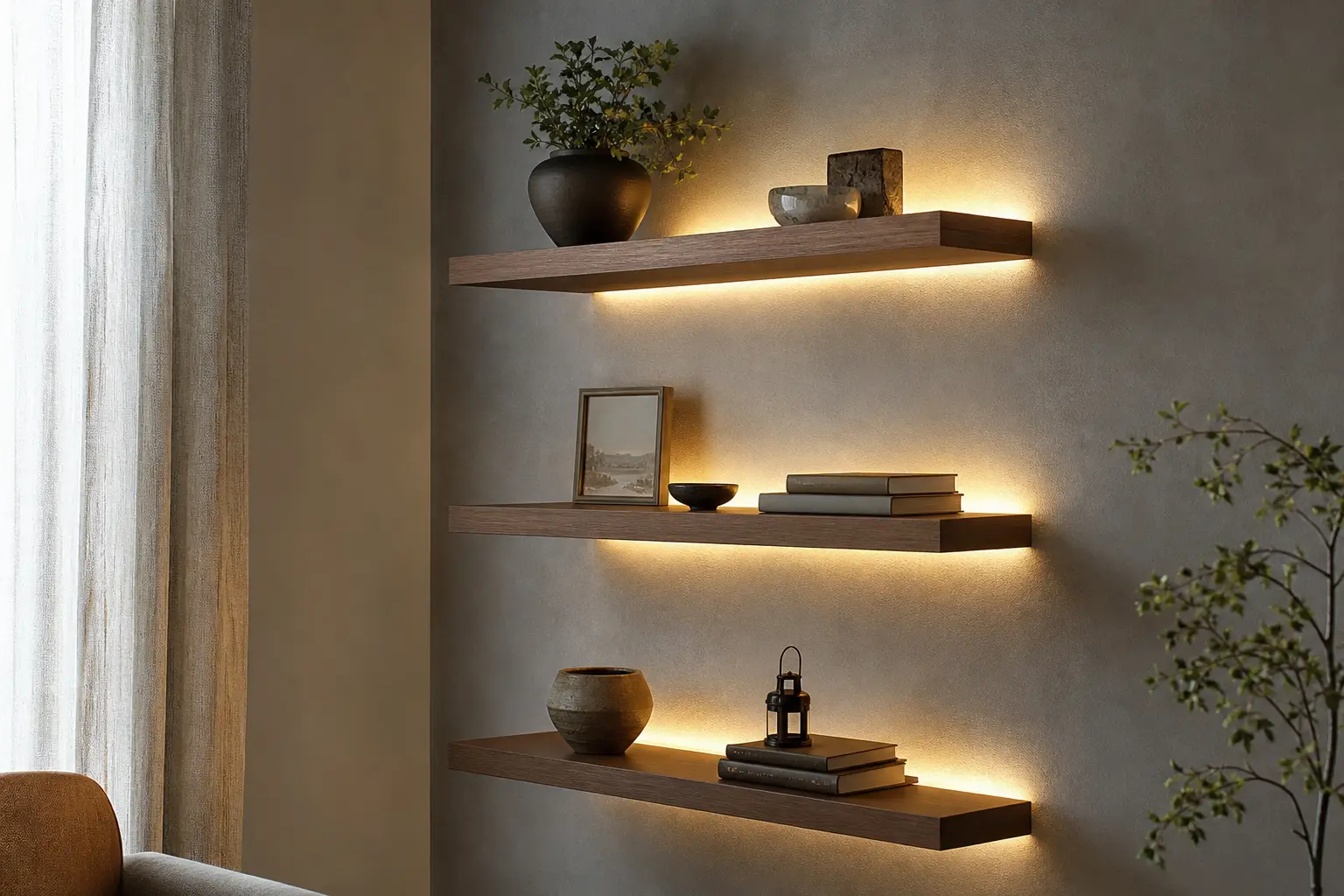
A backlit shelf mounted against a smooth, flat wall looks nice. The same shelf against a wall with subtle texture, a limewash finish, a wood slat panel, or a bold paint color, makes the glow noticeably more dramatic. Texture catches and scatters light in ways a flat surface simply can’t.
This pairing works especially well as a bedroom feature. The shelf and wall together become the room’s clear focal point without needing much else to compete for attention.
10. Use Multiple Shelves to Create a Layered Glow
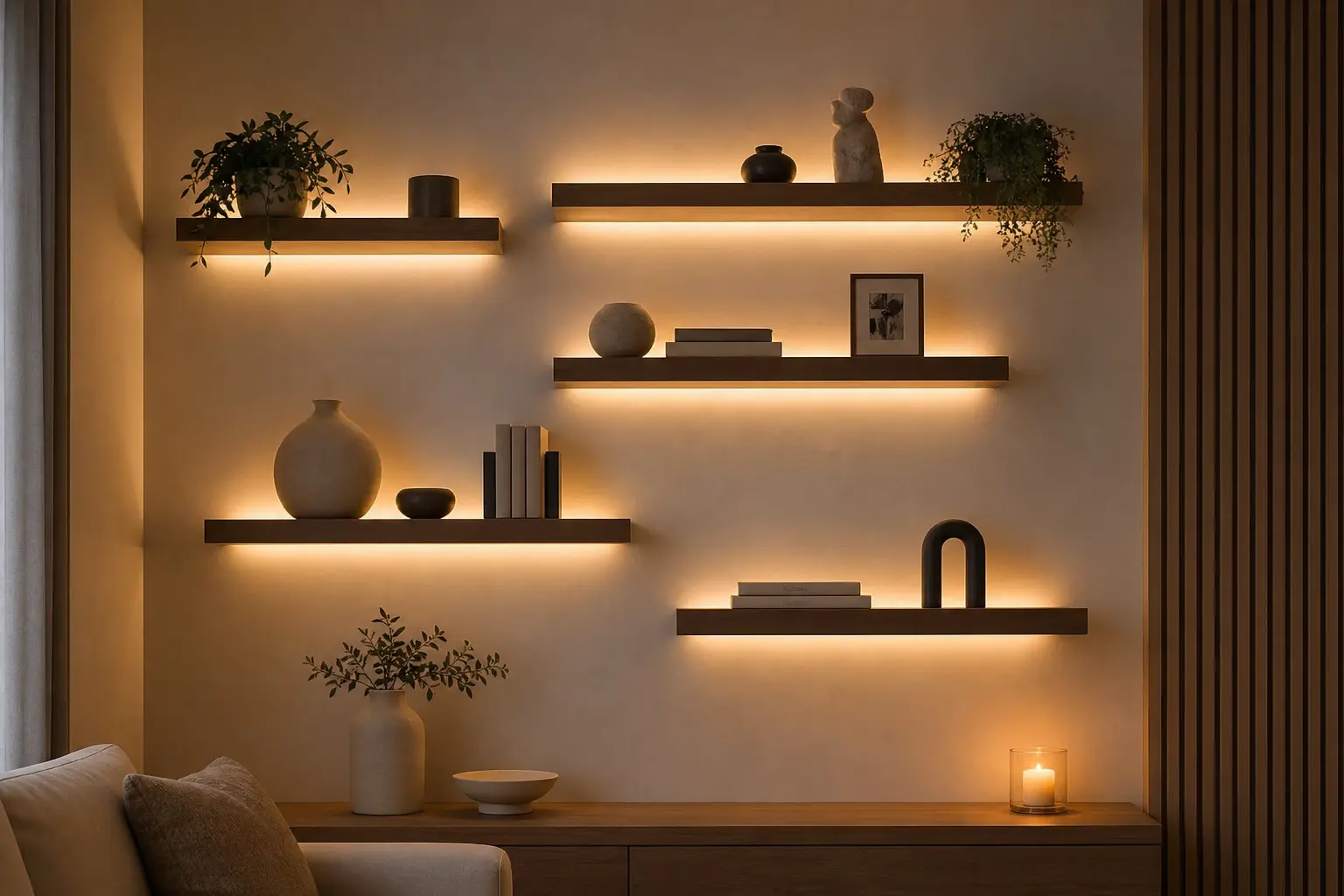
A single backlit shelf makes a statement. Two or three installed at varied heights on the same wall create a layered lighting effect that reads as far more sophisticated. Space them at least 12 inches apart, so each shelf’s glow stays distinct instead of blending into one blurry band.
This layered approach works particularly well in a living room or entryway. The multiple glow points draw the eye up and down the wall instead of to a single fixed spot.
Mistakes to Avoid
- Mixing warm and cool color temperatures across different shelves
- Skipping a diffuser and leaving harsh, visible LED hot spots
- Choosing a thick, bulky shelf that competes with the lighting effect
- Leaving power cords visible instead of routing them out of sight
- Installing the shelf well above or below the ideal eye level height
- Displaying only flat, uniform objects that waste the shadow potential
Frequently Asked Questions
Is backlighting a floating shelf difficult to install myself? Basic LED strip kits are largely plug and play, so the lighting itself is fairly simple. Cord management is often the trickier part, especially for a fully hidden result.
How much does it typically cost to add backlighting to an existing shelf? A quality warm white LED strip kit with a diffuser and dimmer usually runs $20 to $50. That makes this one of the more affordable ways to transform a shelf you already own.
Will backlighting work on a shelf I already own? Usually, yes. Adhesive backed LED strips can attach to the underside or back edge of most existing shelves, though a slimmer profile tends to give a cleaner result overall.
What color temperature works best for a modern, minimalist look? A slightly cooler white, around 3000K to 3500K, reads more gallery like and modern. A warmer 2700K leans cozier and more traditional. Either works depending on the room’s style.
Can backlit shelves serve as a primary light source for a room? Not really. They work best as accent lighting, since the glow is generally too soft and localized to provide adequate general illumination on its own.
Conclusion
A backlit floating shelf turns a purely functional display spot into a genuine design statement. The difference comes down to a few deliberate choices. Pick one consistent color temperature, use a diffuser to soften the glow, and choose objects with enough texture to catch real shadow. Start with a single shelf as a test, then expand to a layered setup once you’ve settled on the look that works for your space.