10 Cozy Living Room Wall Decor Ideas with LED Mirror That Look Expensive
A plain mirror on a living room wall does its job, but it rarely draws the eye the way people expect it to. Add LED backlighting and the same wall suddenly reads as considered, layered, and genuinely elevated. Cozy living room wall decor ideas with LED mirror accents rely on exactly that shift, using a single glowing feature to anchor the whole space without a full renovation.
The trick to making an LED mirror look expensive instead of gimmicky comes down to a few specific choices. Glow color matters. Frame material matters. So does what surrounds the mirror on the rest of the wall. Get those details right and a $200 mirror can look like a custom architectural feature. Here are ten ways to pull that off.
1. Choose an LED Mirror with a Warm, Not Cool, Glow
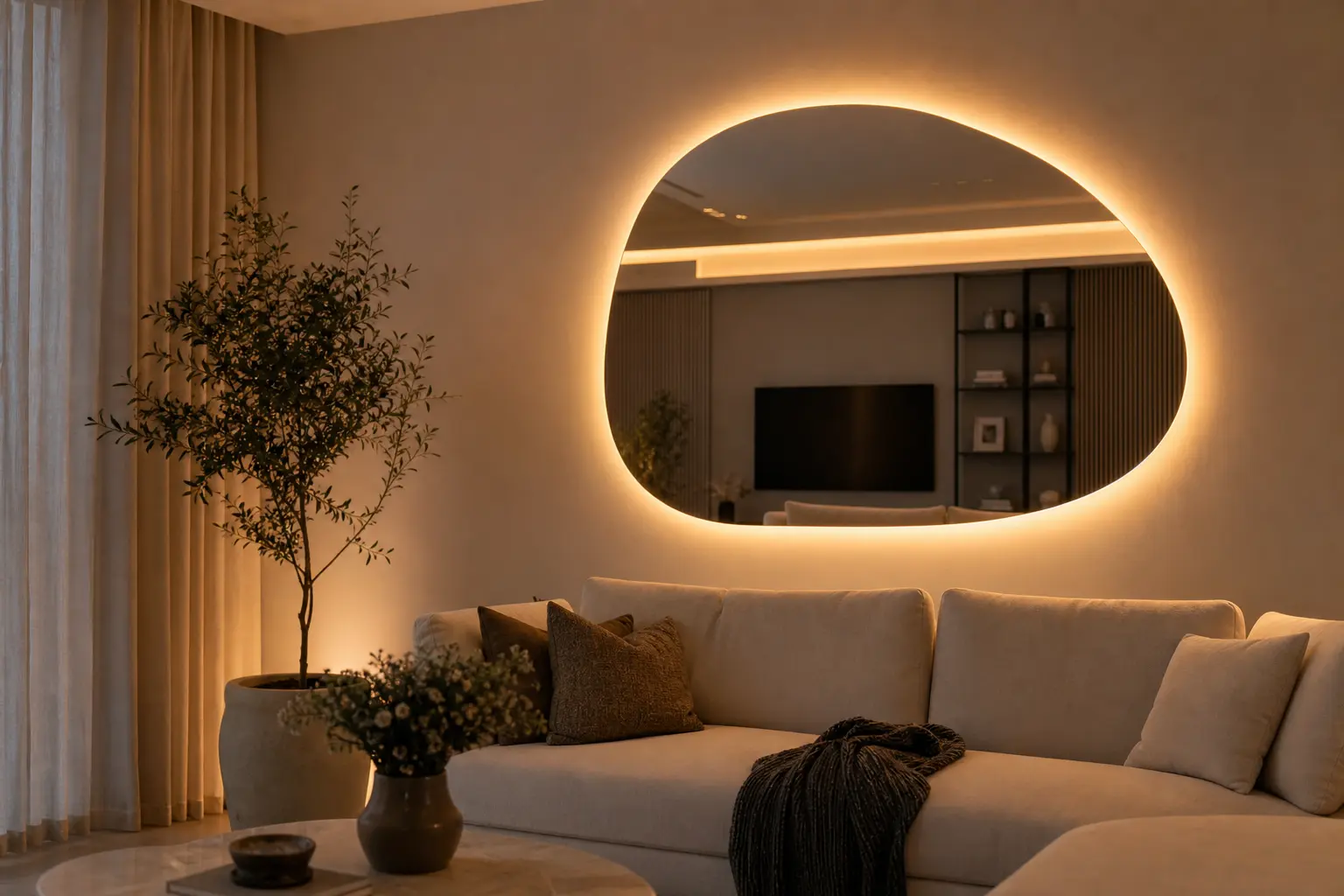
Many budget LED mirrors default to a cool, bluish white light that reads as clinical rather than cozy. Look specifically for a mirror with a warm white setting, generally in the 2700K to 3000K range, priced $150 to $400 depending on size and frame quality.
Why Bulb Temperature Changes Everything
A cool toned LED mirror can make an otherwise beautiful living room feel like a bathroom vanity got moved into the wrong room. Warm light does the opposite. It softens the glow and makes the mirror feel like part of the room’s overall ambiance rather than a standalone gadget.
2. Position the Mirror to Reflect a Light Source
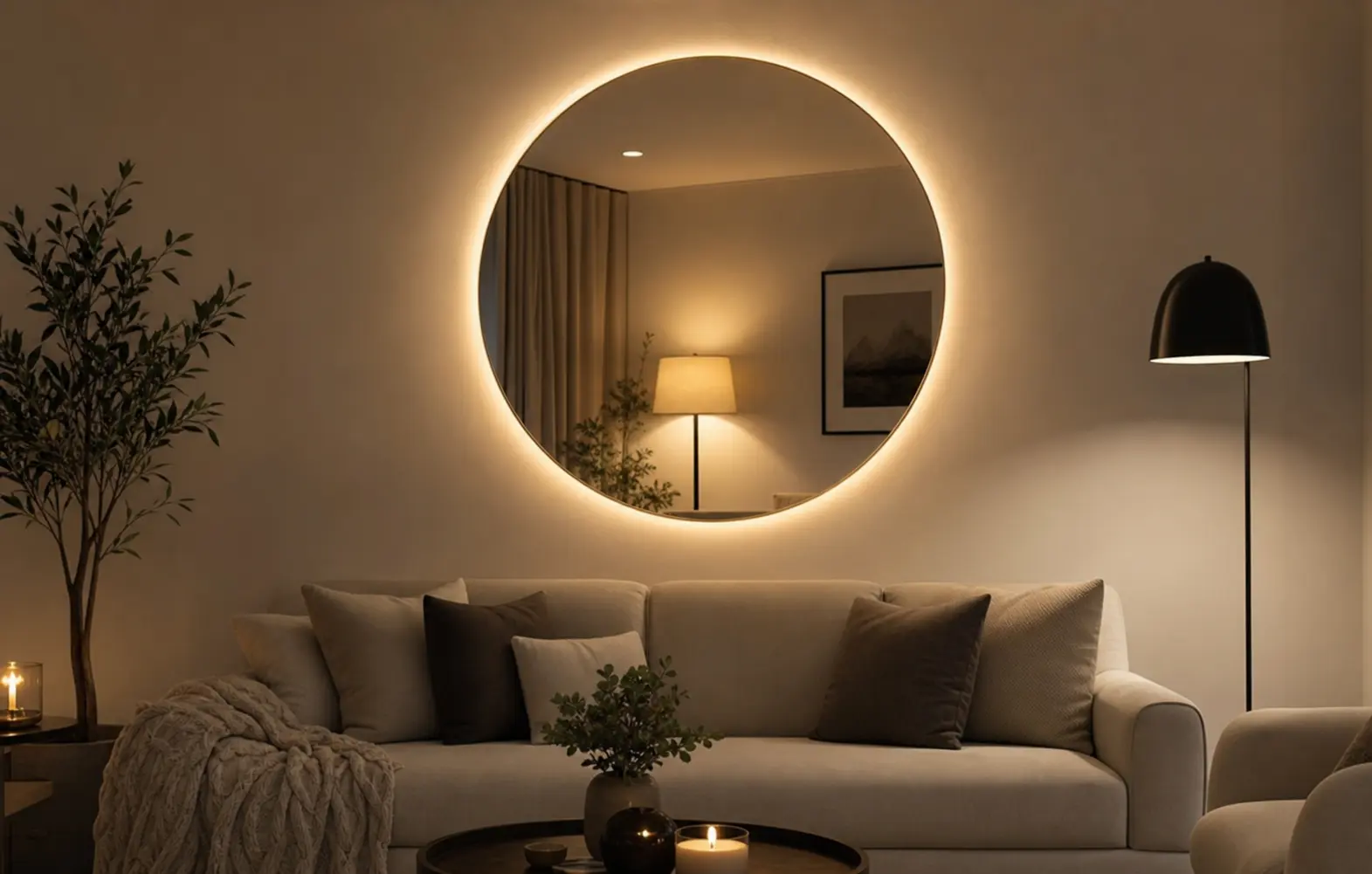
An LED mirror positioned across from a window or a floor lamp doubles the light in the room during the day and reflects the warm glow of a lamp once the sun sets. This placement does more visual work than the mirror’s own lighting alone, since it multiplies whatever light already exists nearby.
Avoid placing the mirror where it only reflects a blank wall or a dark corner. That wastes the reflective potential the mirror is meant to provide.
3. Pick a Frame Material That Reads as Refined
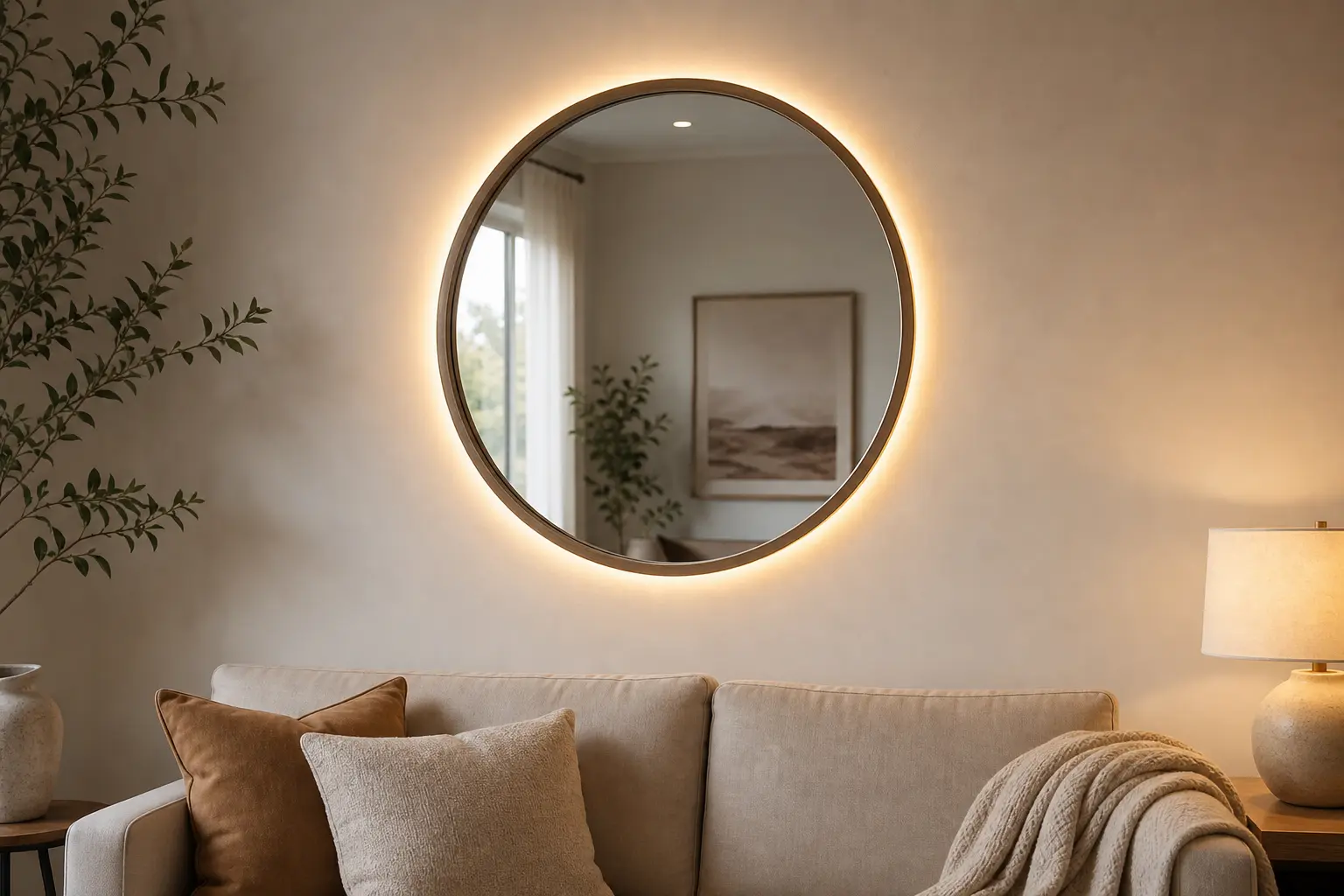
A thin metal frame in brushed gold, aged brass, or matte black tends to look more expensive than a plain plastic or unfinished edge. Even a modest LED mirror looks considerably more elevated once it’s housed in a frame material that matches the room’s existing hardware finishes.
A well chosen frame does more to signal quality than the LED feature itself, since the frame is what people notice first before they even register the glow.
4. Balance the Mirror with Warm Wood Accents
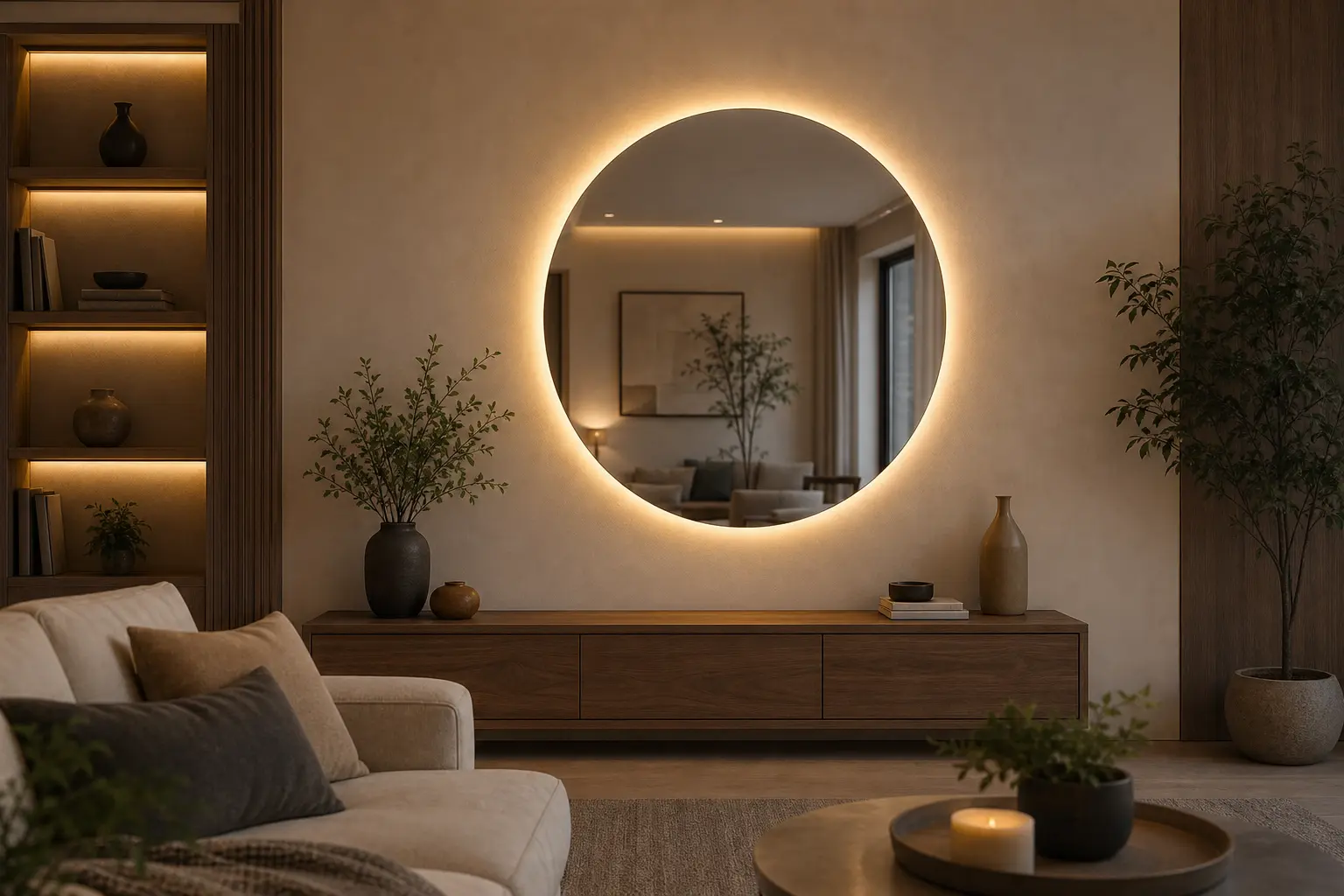
An LED mirror alone can feel a bit cold or tech forward if it’s the only feature on an otherwise bare wall. Adding a wood console table beneath it, or wood floating shelves nearby, grounds the mirror and keeps the whole wall from feeling like a showroom display.
Medium oak or walnut tones pair especially well with both brass and matte black mirror frames, bridging the gap between the mirror’s modern feature and the room’s more traditional furniture.
5. Layer in Additional Ambient Lighting
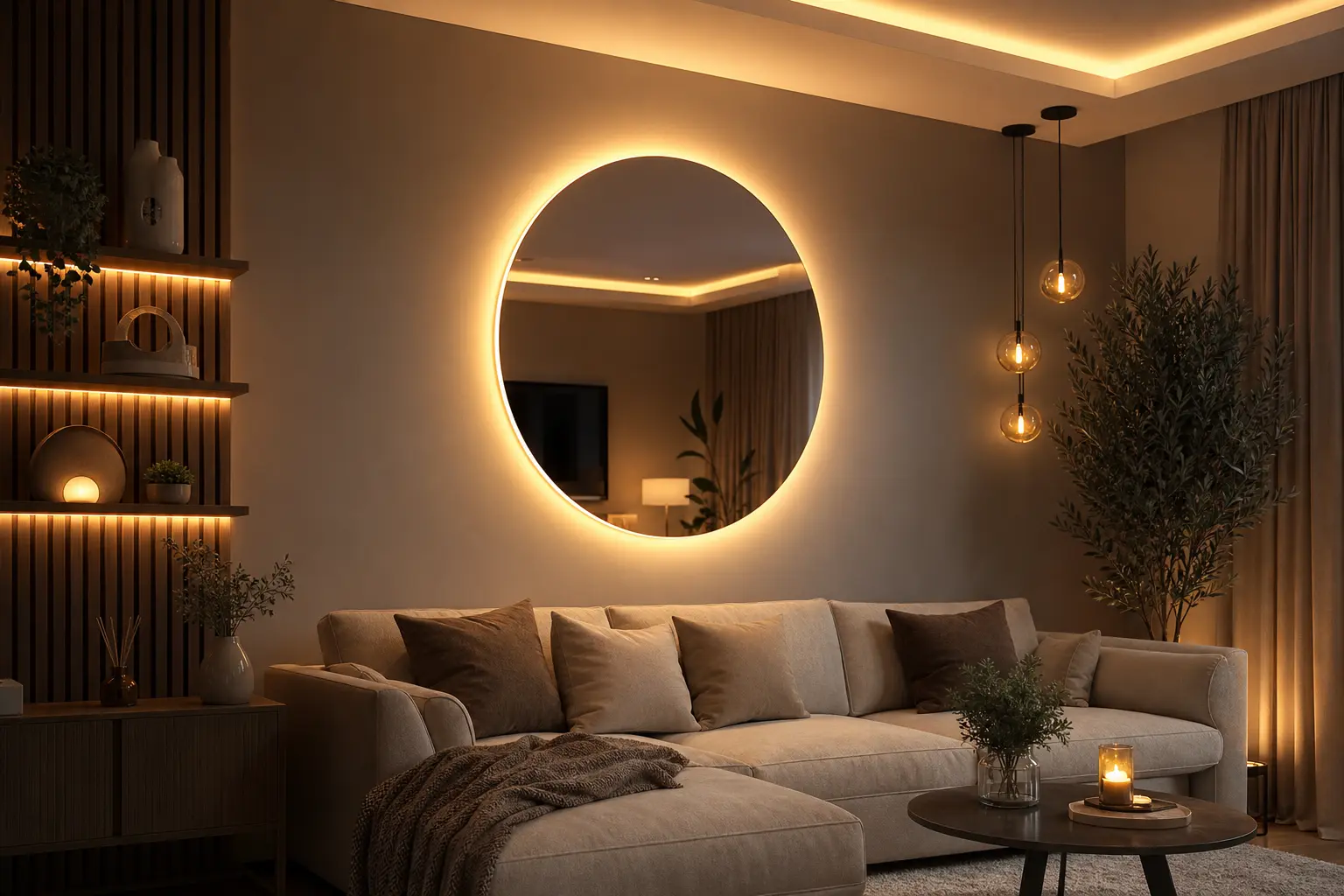
A single LED mirror shouldn’t be the only light source shaping the wall’s mood. Add a pair of small sconces flanking the mirror, or a floor lamp nearby, so the glow from the mirror blends with other warm light rather than standing alone as an isolated feature.
This layering is part of what separates a genuinely cozy, expensive looking wall from one that just has a lit mirror stuck on it. The mirror should feel like one piece of a larger lighting plan, not the whole plan by itself.
6. Add Texture Around the Mirror

A smooth painted wall behind a smooth glass mirror can start to feel flat. Introduce texture nearby, a woven wall hanging, a boucle throw pillow on a nearby chair, or a textured ceramic vase on the console below, to add depth that pure smooth surfaces can’t provide on their own.
This textural contrast is subtle, but it’s part of what makes a space feel curated rather than assembled from a single online order.
7. Choose a Scale That Suits the Wall
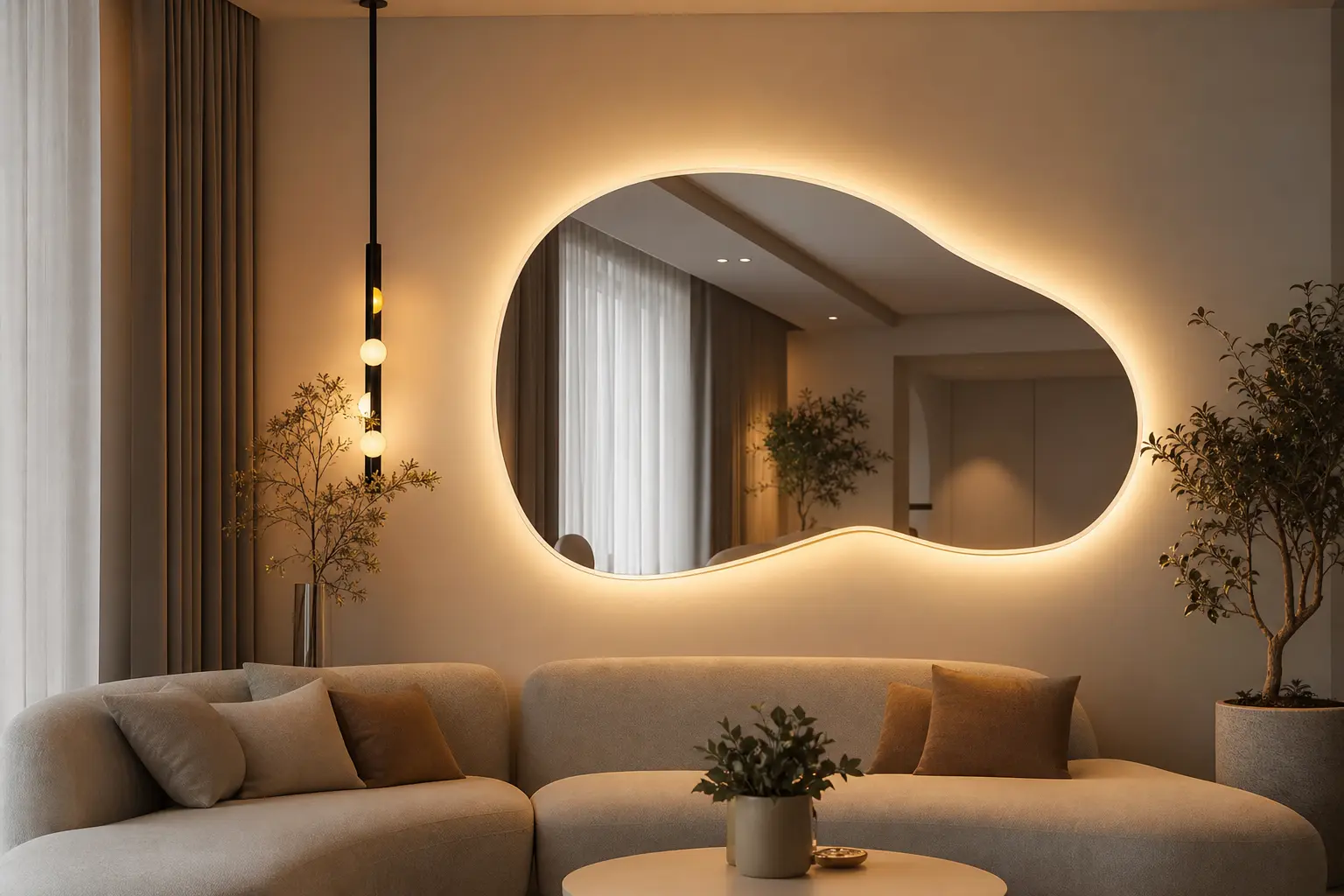
An LED mirror too small for the wall can look like an afterthought, while one too large can overwhelm a smaller living room. A general rule places the mirror at roughly two thirds the width of the furniture beneath it, whether that’s a console table or a sofa positioned against the same wall.
Measure the wall and the nearby furniture before ordering. A mirror that’s proportionally wrong undercuts the expensive, considered look no matter how nice the LED feature itself might be.
8. Group the Mirror with Complementary Art
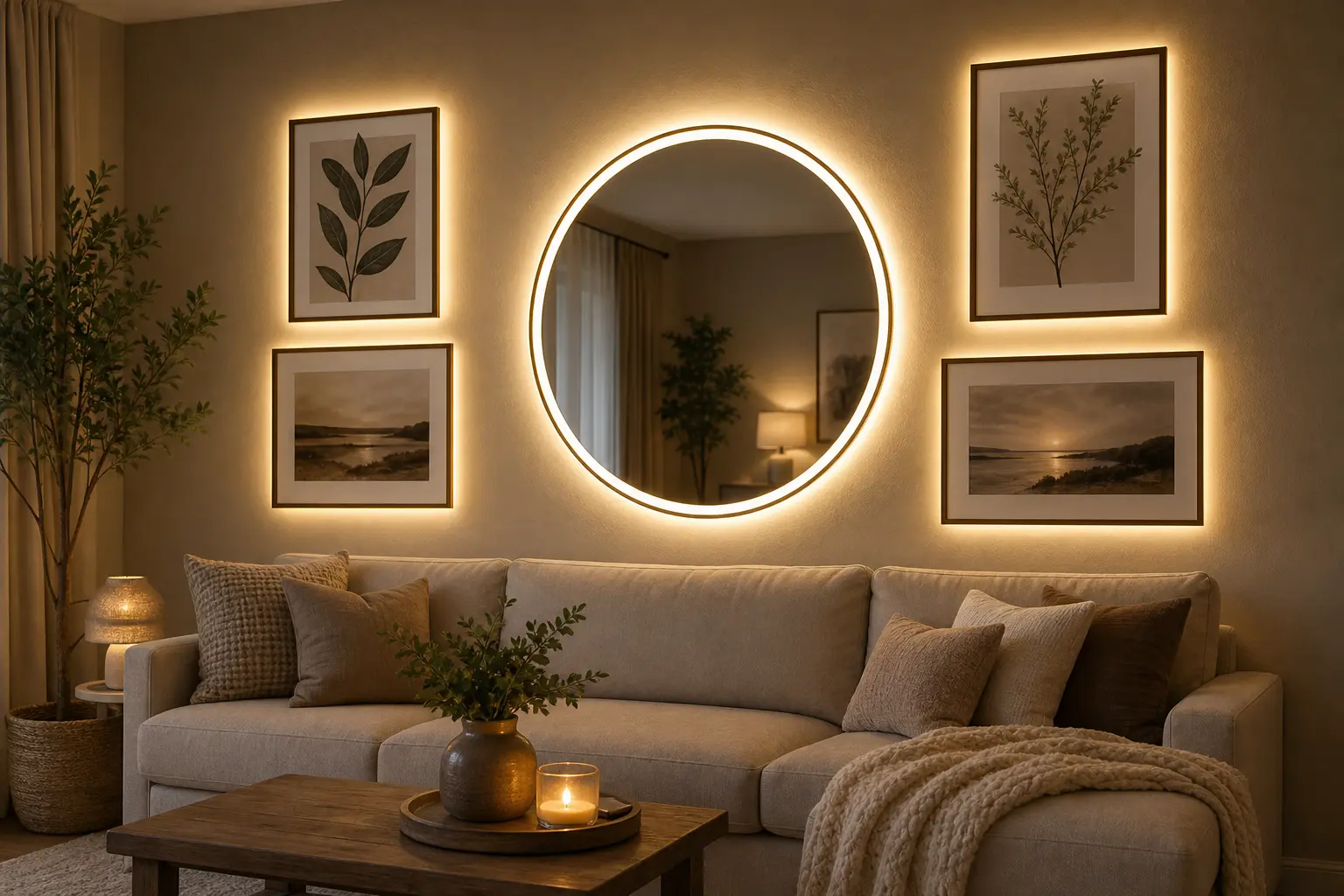
Rather than letting the mirror stand entirely alone, pair it with one or two smaller framed pieces nearby, in a coordinating frame finish. This grouping approach reads as more gallery like and intentional than a single mirror mounted in isolation on an otherwise bare wall.
Keep the additional art relatively simple and muted in color, so it supports the mirror rather than competing with its glow for attention.
9. Use a Dimmer to Control the Mood
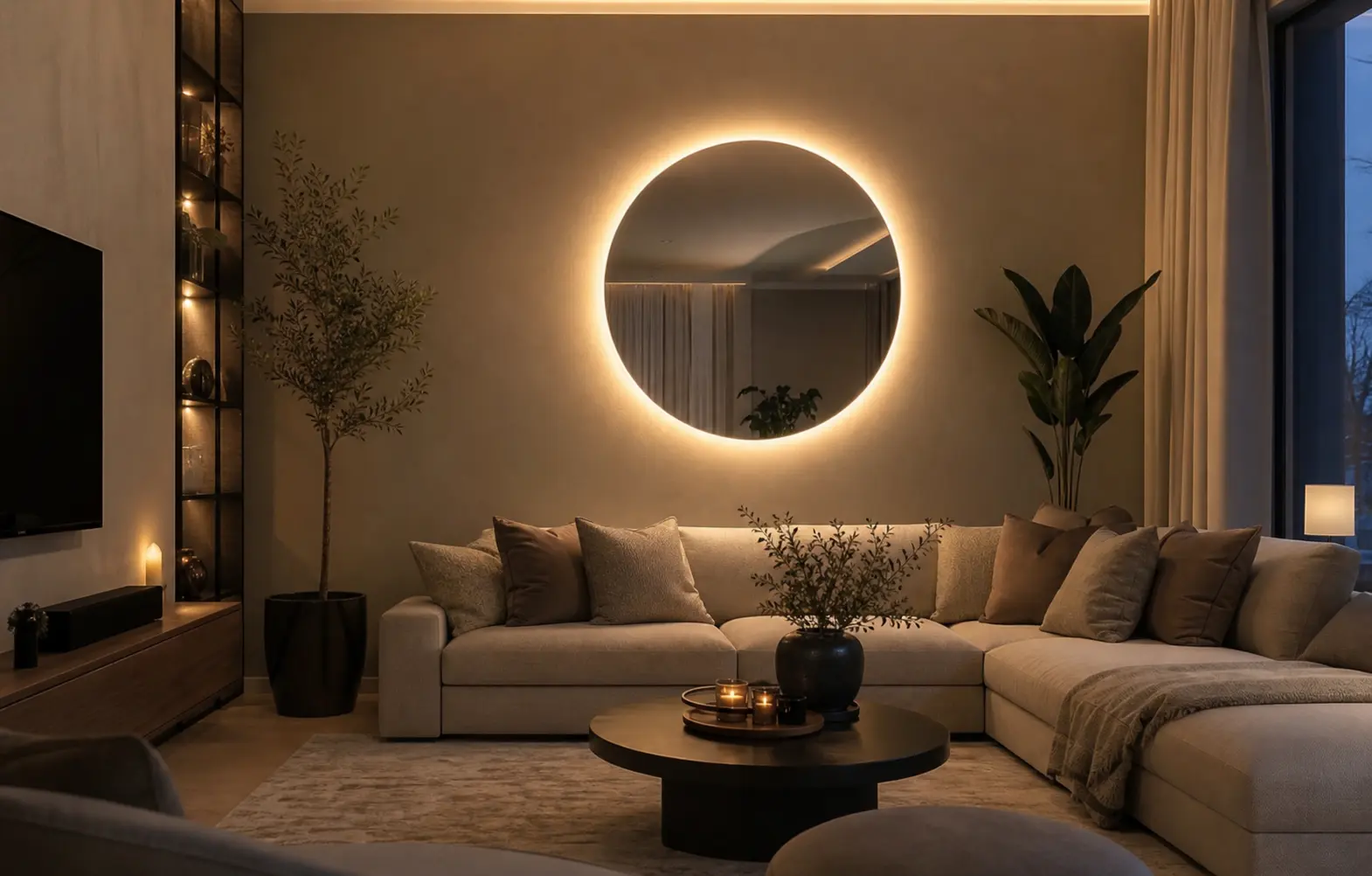
Many LED mirrors come with a built in touch dimmer, letting you shift from a brighter, more functional glow to a soft, subtle wash of light for evening relaxation. This flexibility matters for a living room specifically, where lighting needs shift dramatically between daytime activity and evening downtime.
Check for this feature before purchasing, since not every LED mirror on the market includes adjustable brightness as a standard option.
10. Keep the Surrounding Wall Simple
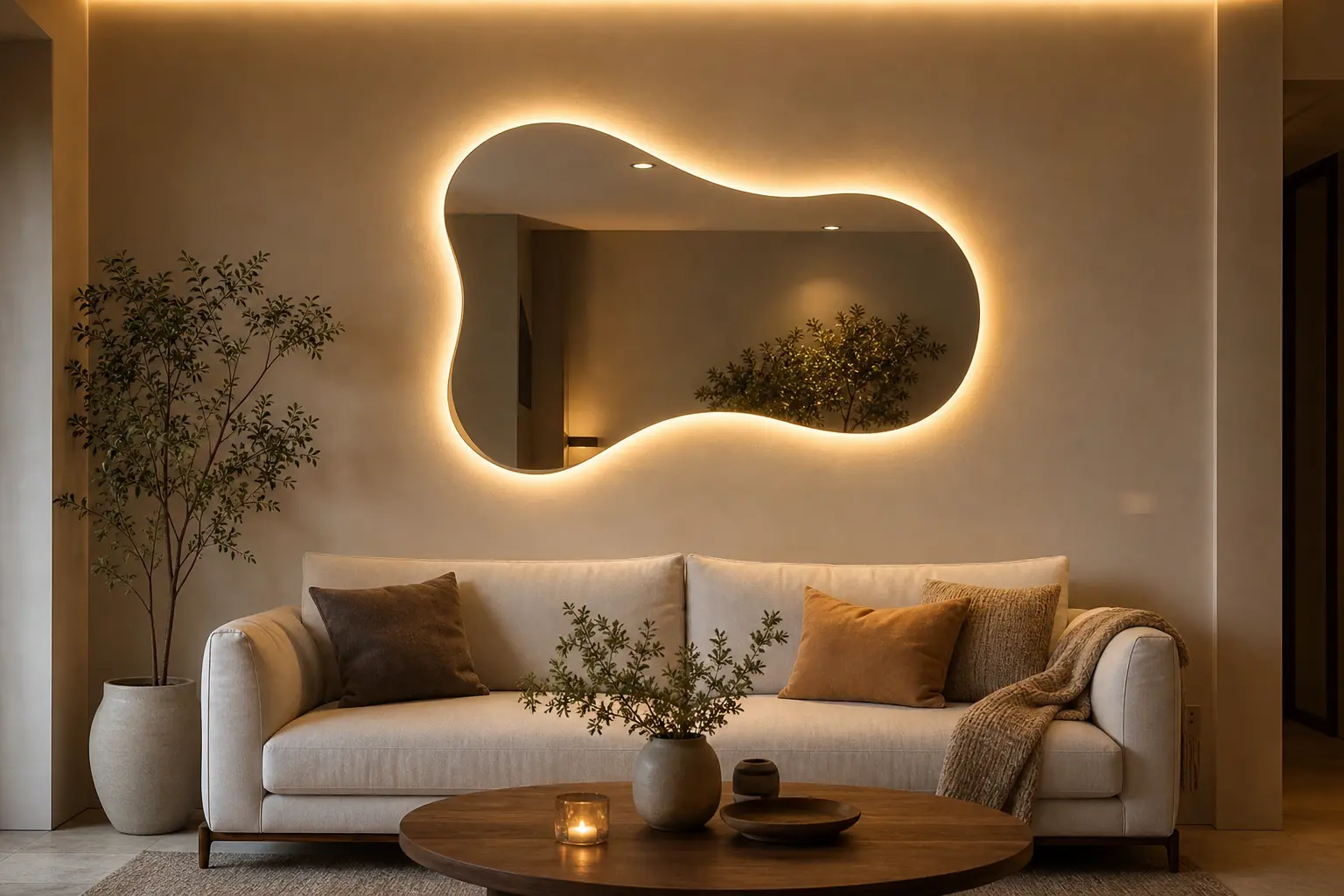
Since the mirror already provides a strong visual and lighting feature, avoid cluttering the rest of the wall with too many additional decorative elements. One or two supporting pieces are usually enough. A wall crowded with competing art, shelves, and decor dilutes the mirror’s impact rather than enhancing it.
A single confident feature surrounded by restraint reads as far more expensive than a wall trying to do five things at once.
Mistakes to Avoid
- Choosing a cool white LED mirror instead of one with a warm glow setting
- Positioning the mirror where it reflects only a blank wall or dark corner
- Selecting a frame material that clashes with the room’s existing metal finishes
- Skipping additional ambient lighting and relying only on the mirror’s glow
- Choosing a mirror too large or too small for the wall and nearby furniture
- Overcrowding the surrounding wall with too many competing decorative pieces
Frequently Asked Questions
Do LED mirrors require an electrician to install? Most plug into a standard outlet or run on rechargeable batteries, so no electrical work is needed. A hardwired option does exist for a more permanent installation, though that typically does require professional help.
Will an LED mirror work well in a living room without much natural light? Yes, and it can actually help in that scenario, since the mirror’s own warm glow adds a light source the room might otherwise be missing, especially positioned to reflect whatever light does exist nearby.
What size LED mirror works best above a console table? A mirror close to two thirds the width of the console beneath it usually looks proportional, though a slightly wider option can work if the wall itself is unusually large.
How do I keep an LED mirror from looking too modern for a traditional living room? Choose a frame in a warmer, more classic finish like aged brass, and pair it with wood furniture and softer textiles nearby to bridge the gap between the modern feature and a more traditional room.
Are LED mirrors difficult to keep clean? They clean similarly to a standard mirror, with a soft cloth and glass cleaner, though it’s worth avoiding excess moisture directly on the LED strip or touch dimmer if the mirror includes one.
Conclusion
A cozy, expensive looking living room wall with an LED mirror comes down to a handful of deliberate choices working together. Warm glow, a refined frame, and enough surrounding texture and lighting turn a single feature into a genuinely elevated design moment. Start with the mirror’s color temperature and frame, then layer in the supporting details around it.