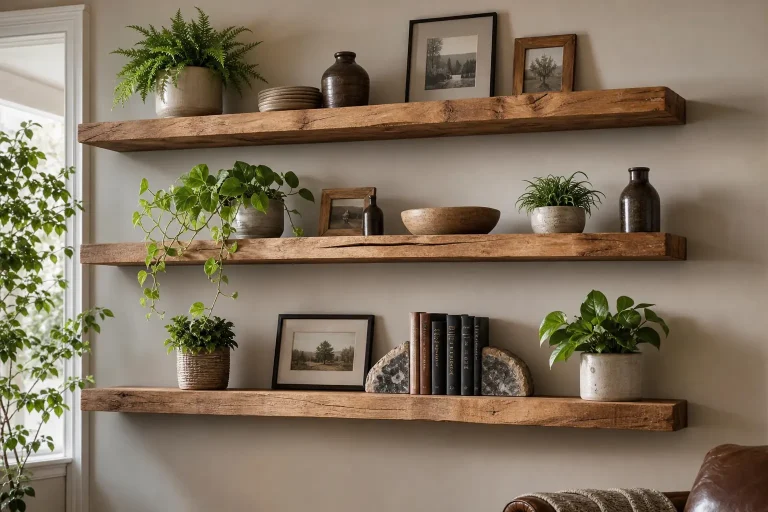
10 Cozy Floating Corner Shelf Ideas with Warm Lighting You’ll Want to Copy
An empty corner does nothing for a room. It just sits there, catching dust and collecting nothing but bad ideas about what to shove into it. Cozy floating corner shelf ideas with warm lighting solve that problem directly. A few well placed shelves and the right bulb temperature turn dead space into one of the most inviting spots in the room.
Corners are awkward to furnish with anything standard. A chair looks strange jammed into an angle. A floor lamp can feel like an afterthought. Floating shelves work because they follow the shape of the wall instead of fighting it. Here are ten ways to make that corner genuinely worth looking at.
1. Choose the Right Corner Before Buying Anything

Not every corner deserves a shelf. Look for one that’s already visible from the main seating area, since a corner tucked behind a door rarely gets seen. A corner near a reading chair or beside a bed tends to work best, simply because it’s already part of your regular sightline.
Measure the space before ordering shelves. A standard corner shelf runs 8 to 12 inches deep on each side, so check that nothing else in the room, a light switch or an outlet, gets blocked once it’s installed.
Corners to Avoid
Skip a corner directly behind a door swing or one that sits in constant shadow with no nearby light source. Both make the eventual display harder to see and harder to actually enjoy day to day.
2. Stagger Shelves at Varied Heights
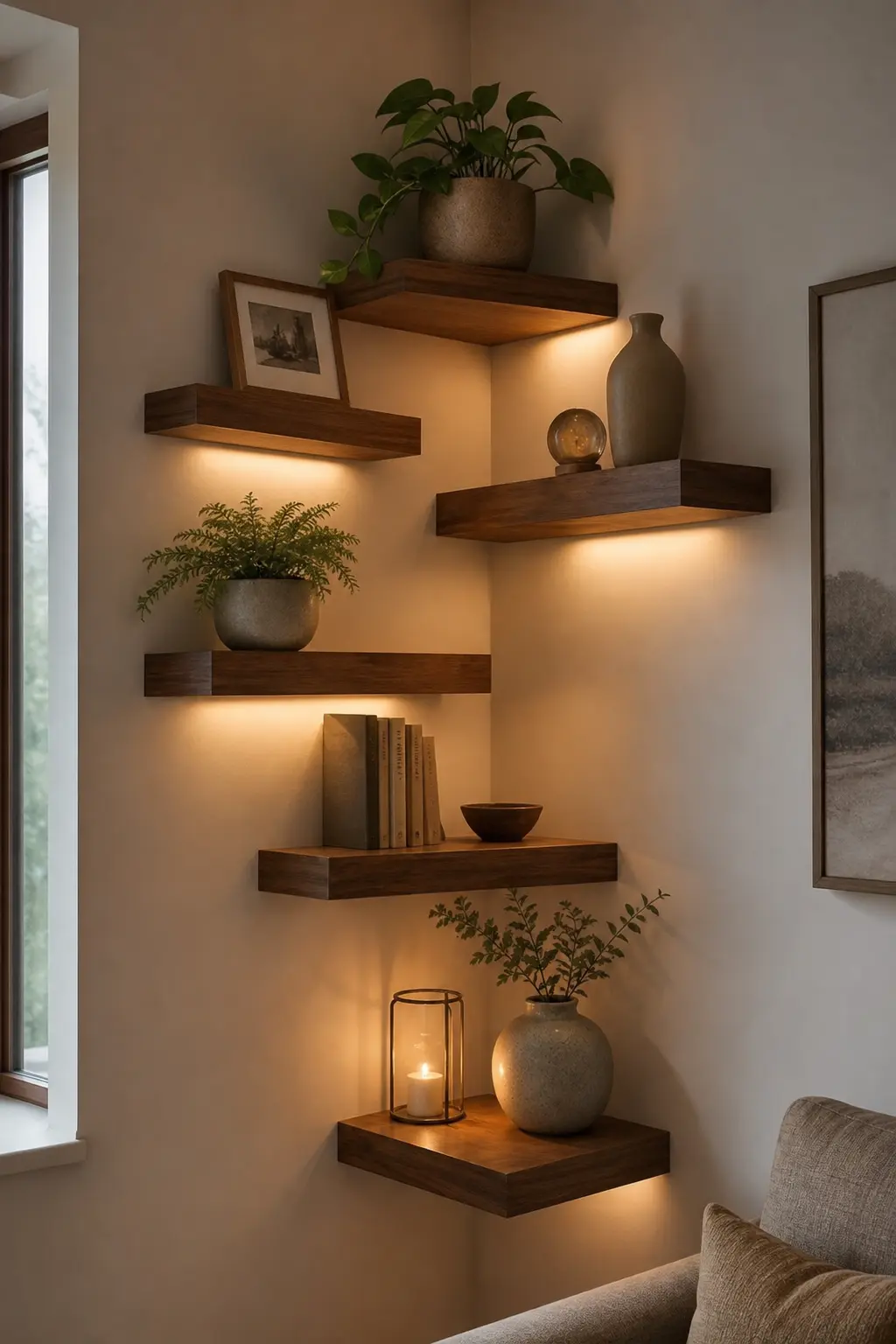
Three shelves spaced at identical intervals look mechanical rather than intentional. Stagger the gaps instead. Leave more space between two shelves and less between another pair. That small variation gives the whole display a sense of rhythm instead of a rigid grid.
A typical setup uses shelves at roughly 10, 20, and 30 inches apart rather than three even 12 inch gaps. The difference sounds minor, but it changes how the whole corner reads.
3. Add Warm LED Strip Lighting Underneath
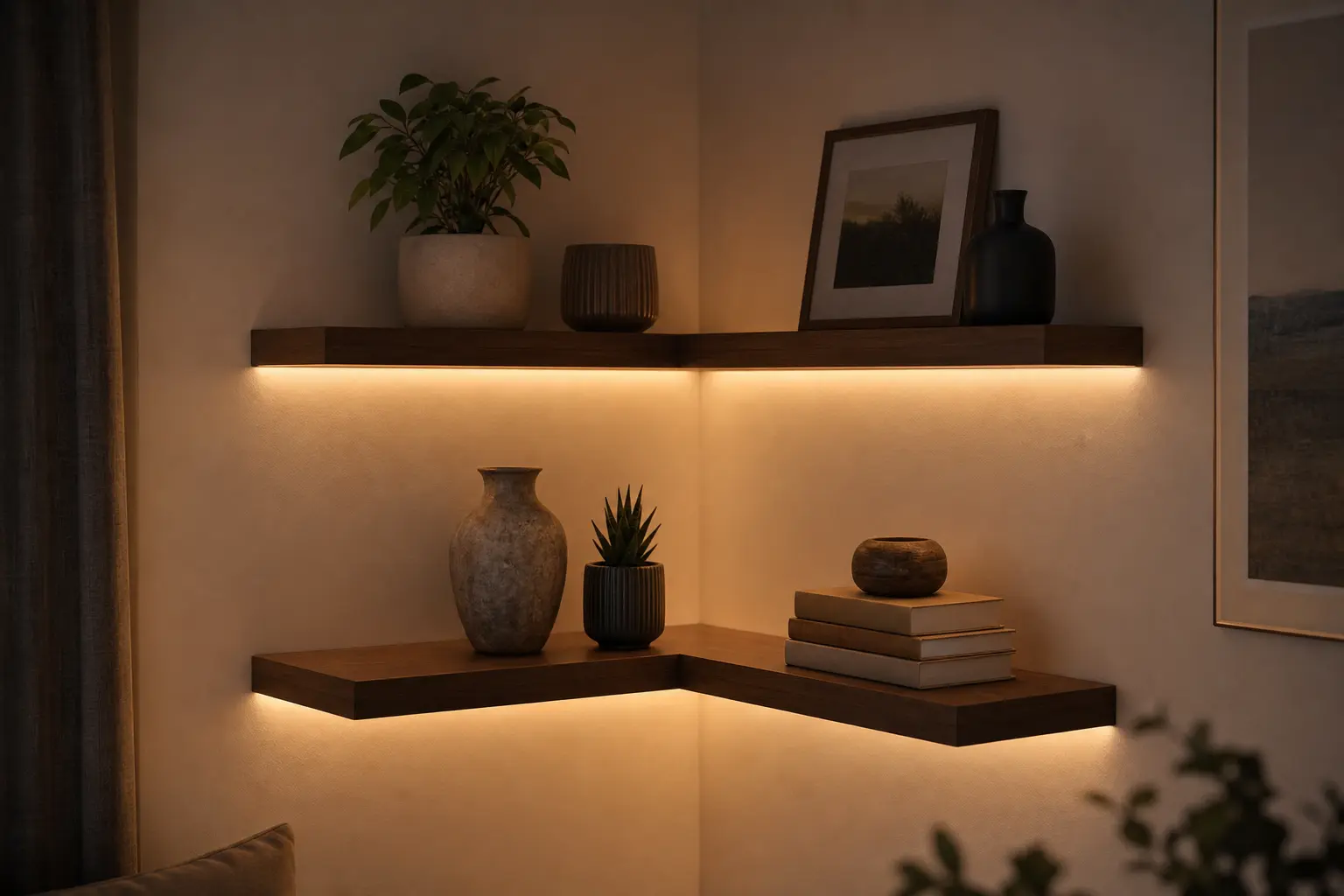
A thin LED strip tucked under the front edge of each shelf casts a soft glow downward onto whatever sits below it. Look for warm white strips in the 2700K to 3000K range, priced $15 to $40 depending on length and brightness.
Warm lighting under a floating shelf does more to make a corner feel cozy than almost any styling choice you could make on top of it. Cool white strips wash out the wood tone and flatten the whole display instead.
4. Style with Odd Numbered Groupings
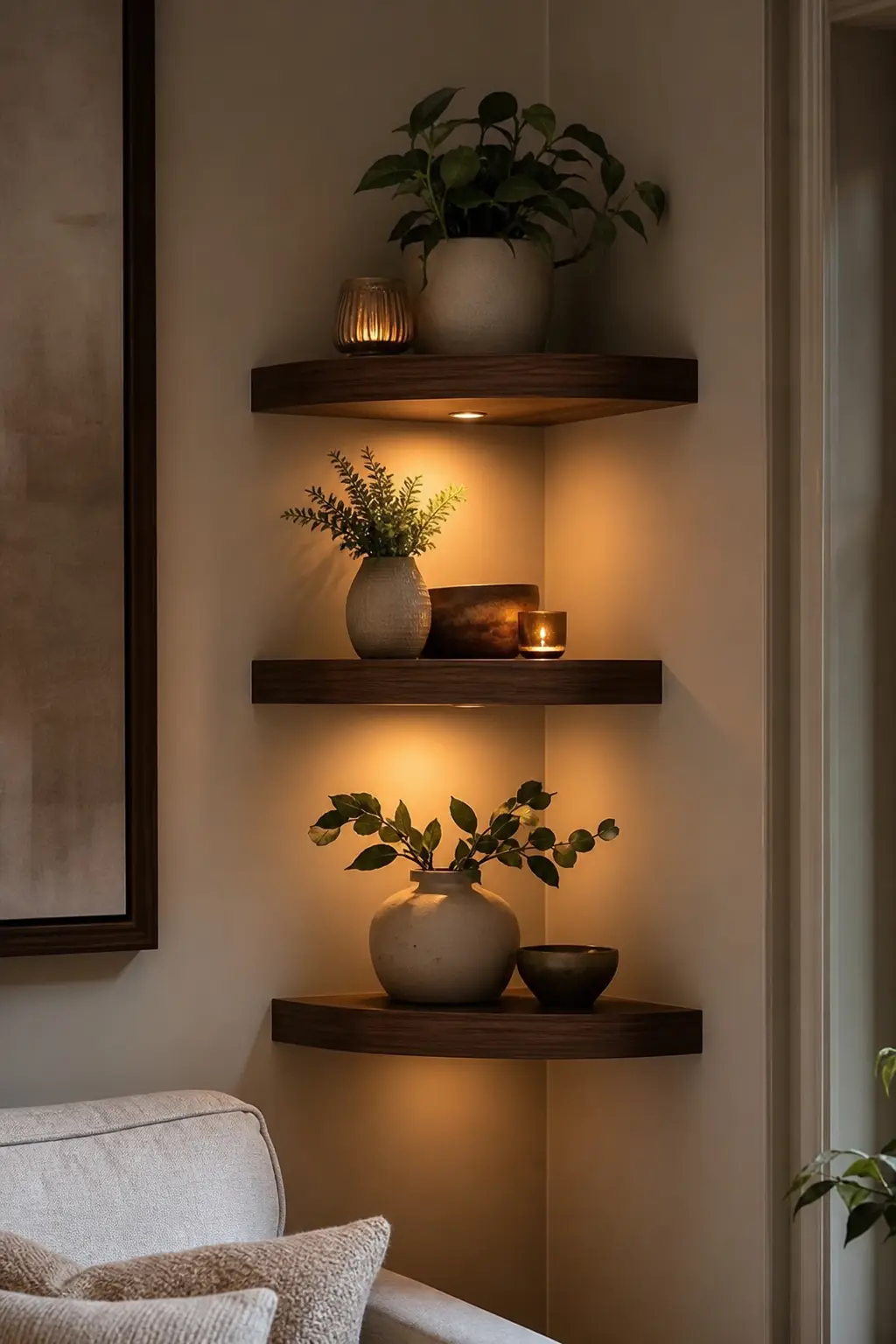
Group objects in threes or fives rather than pairs. A cluster of three, one tall candle, one small plant, one stack of books, reads as more natural than two matching items placed symmetrically. Odd numbers create visual tension that the eye finds more interesting to look at.
This principle applies across all three shelves, not just one. Repeat the odd number grouping on each level for a display that feels consistent from top to bottom.
5. Mix Materials for Visual Interest
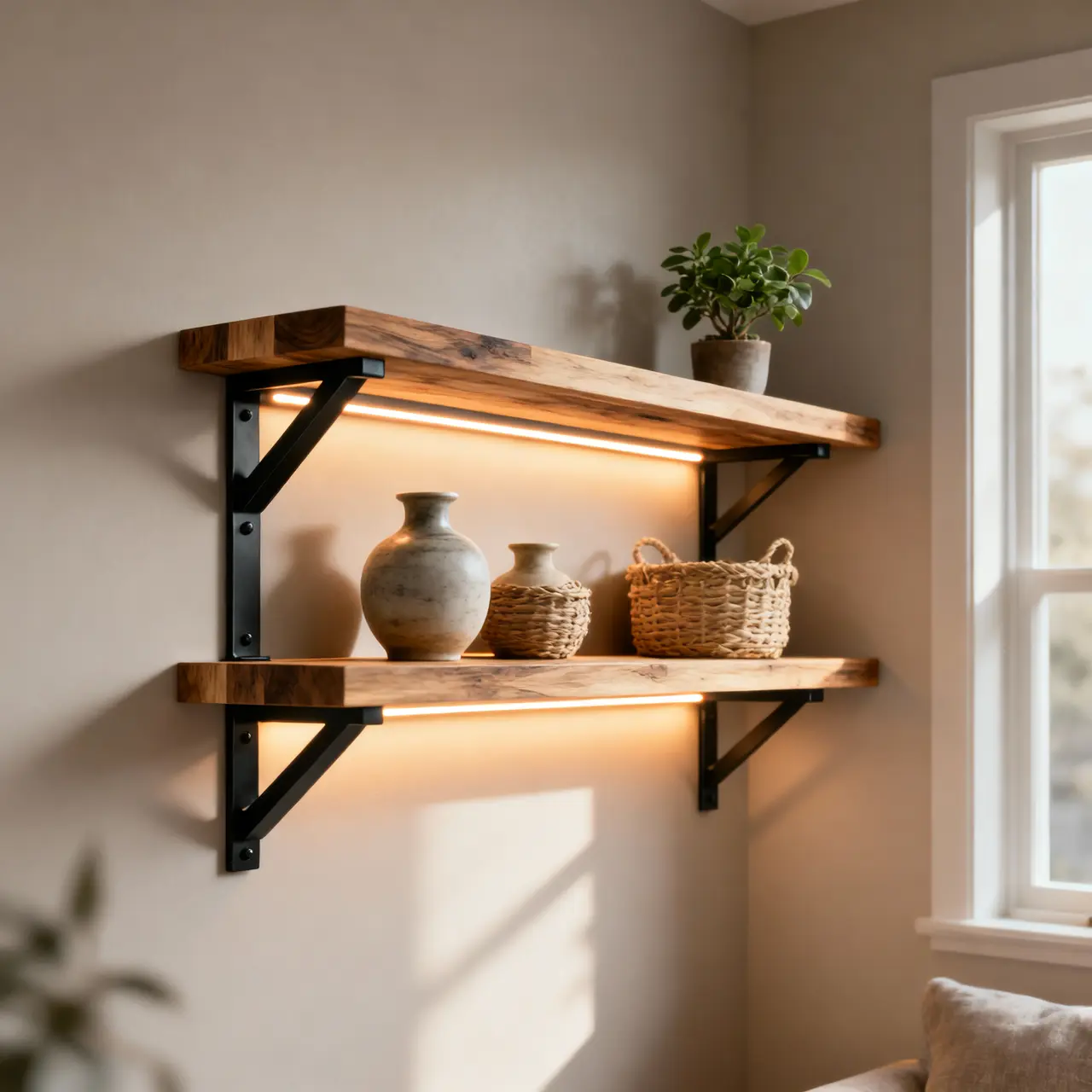
A shelf filled entirely with ceramic looks flat next to one that mixes ceramic, wood, and a bit of woven texture. Combine a smooth vase with a rough textured basket and a warm wood bowl. Each material catches the LED glow differently, which adds real depth to a small space.
Glass objects deserve a mention here too. A small glass vase or candle holder catches light in a way solid materials can’t, adding a bit of sparkle to the warm glow beneath it.
6. Add a Small Plant for Life and Texture
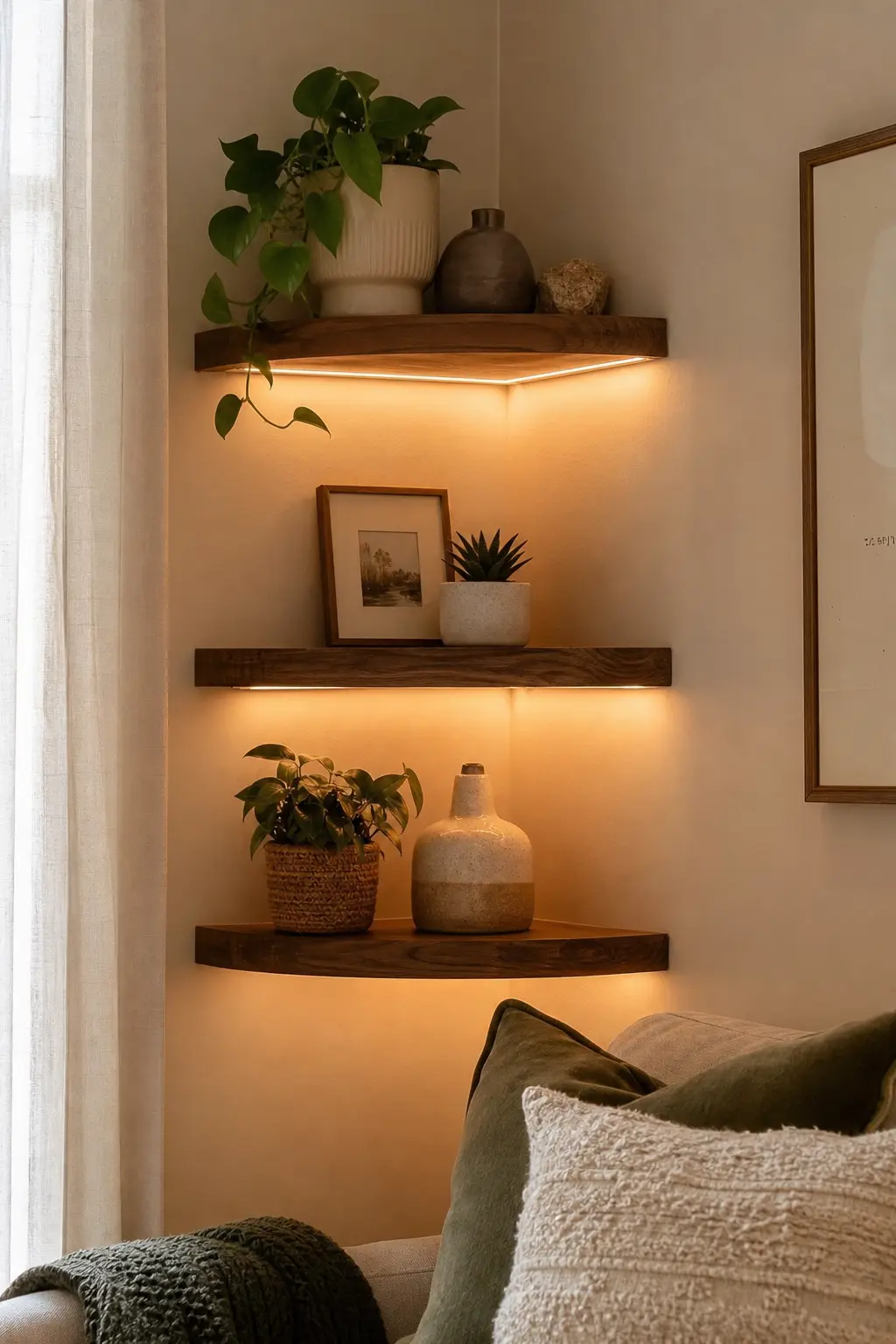
A trailing plant, something like a pothos or a small string of pearls, softens the hard lines of the shelves themselves. Its leaves also cascade over the edge, which breaks up the straight geometry of the corner in a way that feels organic rather than forced.
Choose a plant that tolerates lower light if the corner doesn’t get much natural sun. A snake plant or a ZZ plant handles that kind of spot far better than something that needs direct sunlight to thrive.
7. Keep One Shelf Mostly Empty
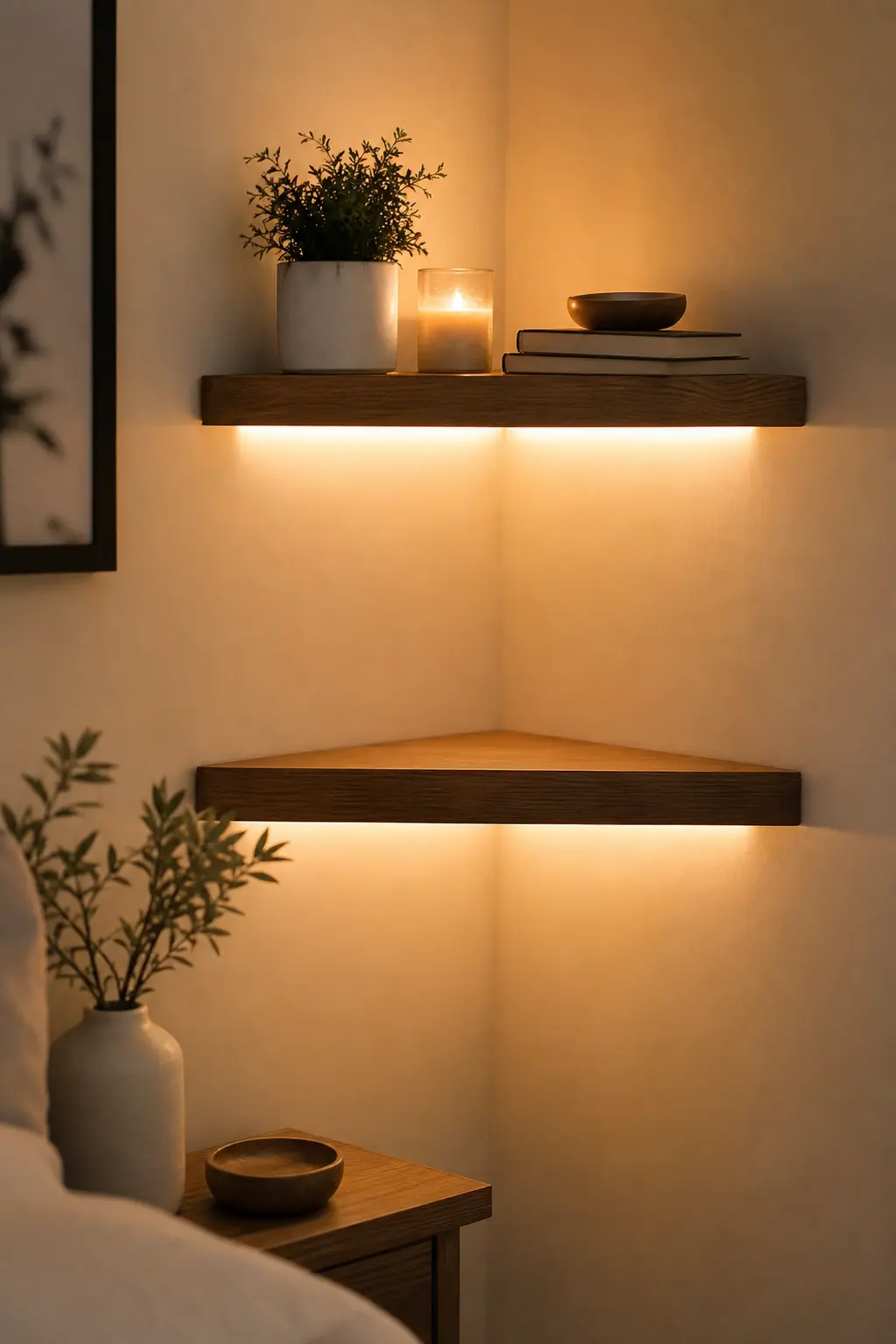
Not every shelf needs to be full. Leaving one level with just a single object, or nothing at all, gives the eye a place to rest. A fully packed set of three shelves can start to look cluttered no matter how carefully each item was chosen.
This restraint matters more than people expect. A shelf display with one deliberately empty level almost always reads as more curated than one crammed edge to edge.
8. Choose a Warm Bulb Temperature for the Whole Display
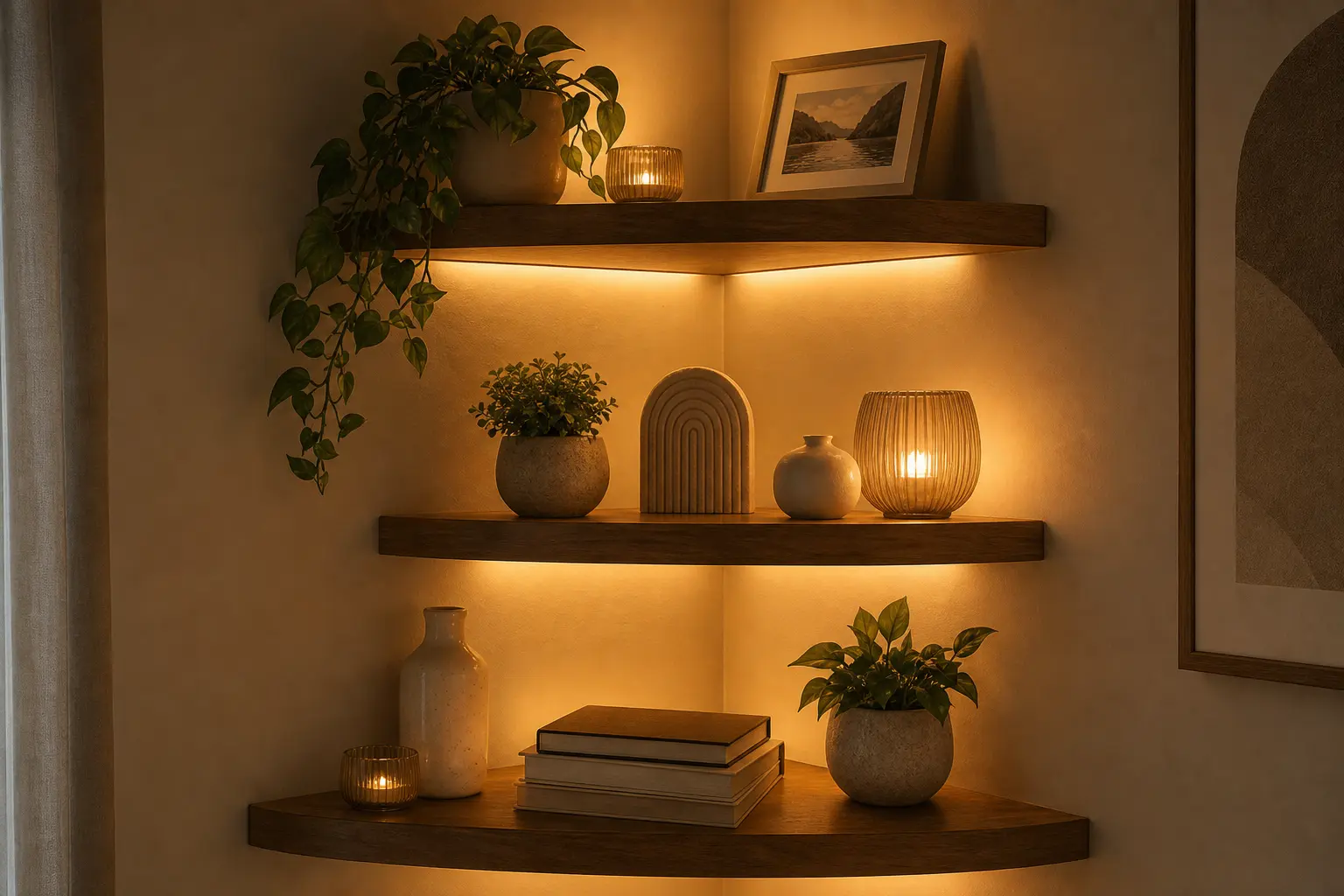
If the corner already has a nearby lamp or overhead fixture, match its bulb temperature to the LED strips under the shelves. Mixing a cool white overhead light with warm strips underneath creates a jarring contrast that undercuts the cozy effect you’re going for.
Stick to the 2700K to 3000K range throughout the whole corner, from the shelf lighting to any nearby lamp. Consistency here matters as much as the warmth itself.
9. Use the Shelf to Display Meaningful Objects
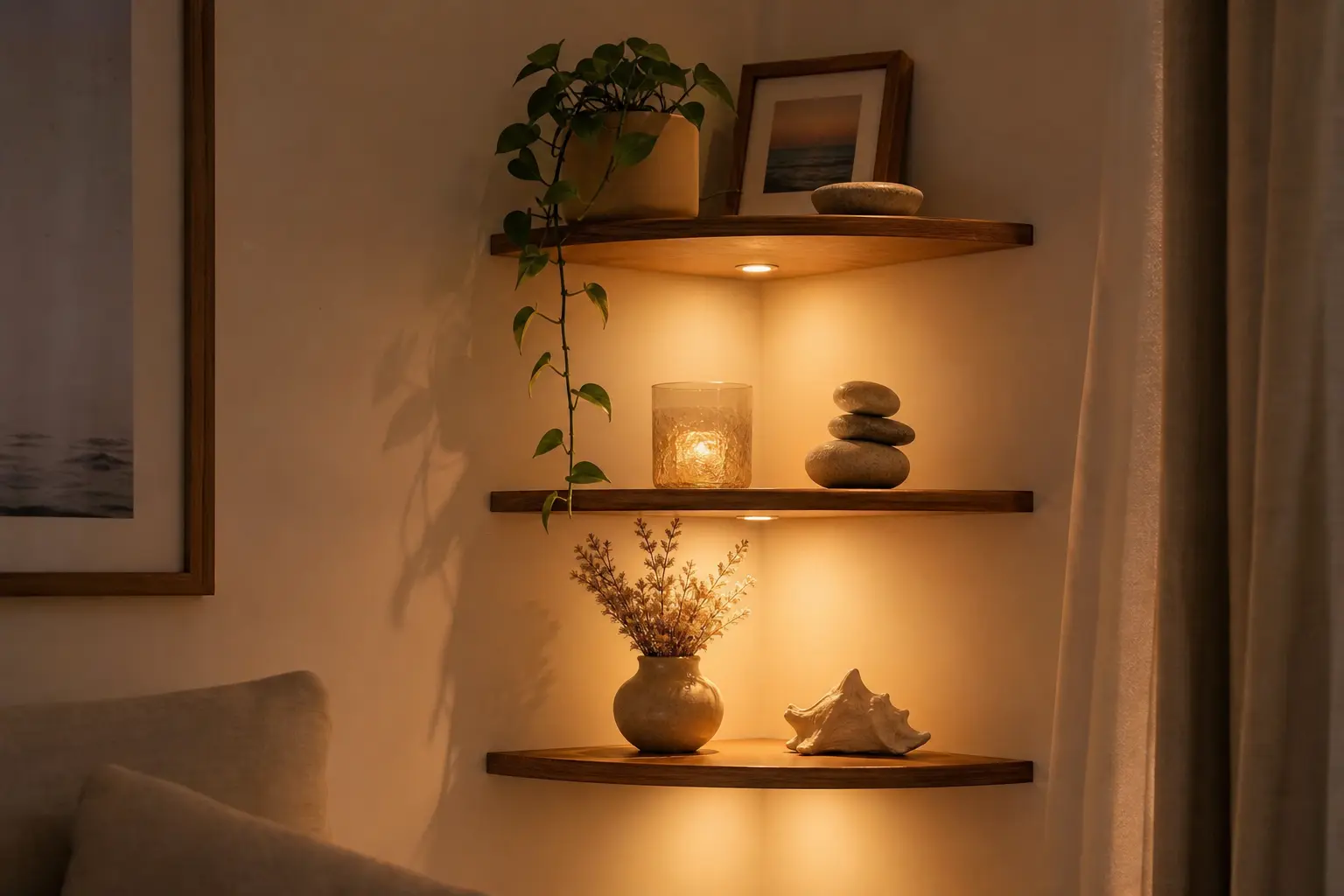
A framed photo, a small souvenir from a trip, or a book with genuine sentimental value adds a layer of personality that generic decor never quite achieves. These pieces also give you something to actually look at and enjoy, rather than objects chosen purely because they matched the color scheme.
Rotate a few items seasonally if you want the display to stay feeling fresh. Swapping one or two pieces every few months keeps the corner from becoming background noise you stop noticing.
10. Match the Shelf Finish to the Room’s Existing Wood Tones
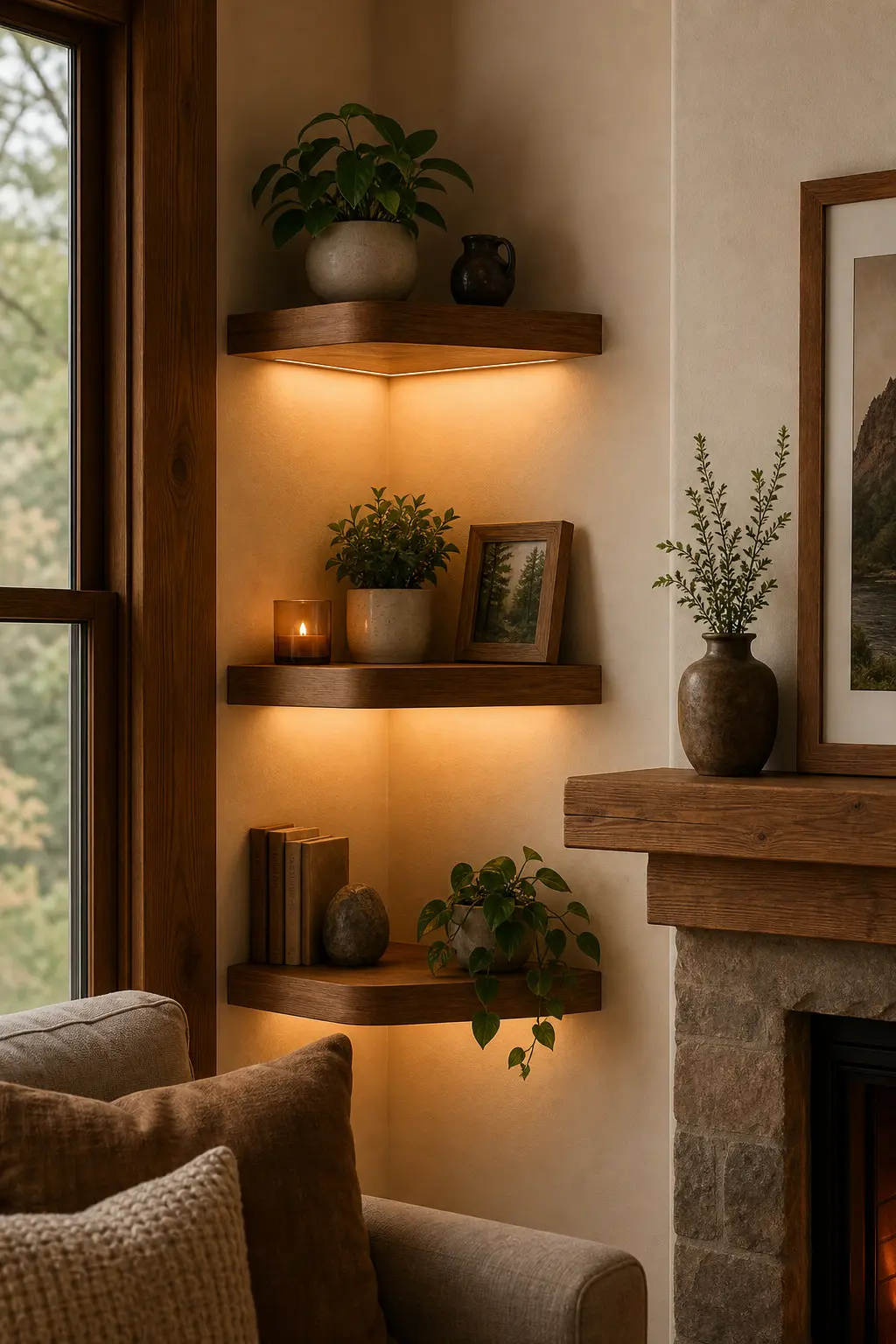
A bright white floating shelf can look disconnected in a room full of warm oak or walnut furniture. Choose a shelf finish that pairs with what’s already in the room, medium wood tones work well against most existing furniture, while a black or dark walnut shelf adds contrast in a lighter, more neutral space.
This detail is easy to overlook when shopping online, so check the actual wood tone against a photo of your room before ordering if possible.
Mistakes to Avoid
- Choosing a corner that’s rarely seen from the main part of the room
- Spacing shelves at perfectly even intervals instead of varying the gaps
- Using cool white lighting that flattens the warm wood and washes out the glow
- Filling every single shelf completely, leaving no visual breathing room
- Mixing bulb temperatures between the shelf lighting and nearby lamps
- Choosing a shelf finish that clashes with the room’s existing wood tones
Frequently Asked Questions
How much weight can a floating corner shelf typically hold? Most standard floating shelves support 15 to 25 pounds when installed into wall studs properly. Check the specific weight rating before loading up heavier items like books or ceramics.
Do I need an electrician to add LED strip lighting under a shelf? No. Most warm white LED strips designed for this use are battery powered or plug into a nearby outlet, so no wiring or electrical work is required.
How many shelves should I install in one corner? Three shelves tends to be the sweet spot for most rooms, offering enough visual interest without overwhelming the space. Two can work in a smaller nook, while four risks feeling crowded.
What’s the best way to hide the cord for LED strip lighting? Run the cord along the wall behind the shelf bracket, tucked against the corner itself, and secure it with small adhesive clips so it stays out of view.
Can I install corner shelves without drilling into the wall? Some lighter duty options use strong adhesive mounting strips instead of screws, though these typically hold less weight and work best for lightweight decor rather than books or heavier ceramics.
Conclusion
A cozy corner shelf display comes down to three things: the right corner, warm lighting underneath, and restraint in how much you actually put on display. Start with the lighting and the shelf placement, since those two choices shape the whole mood. Add the styling and personal objects once the foundation feels right.