10 Small Space Hacks for Tiny Rooms That Make a Small Space Feel Bigger
You measure a tiny bedroom, buy furniture that technically fits, and the room still feels like you can’t move without bumping into something. That’s the real challenge with small space hacks for tiny rooms. It’s rarely about squeezing in more storage. It’s about choosing furniture and layout that work with the room’s proportions instead of just filling every available inch. A tiny room can genuinely function well, but it takes more deliberate planning than a larger space does.
The good news is that most of the fixes don’t require a renovation or a big budget. They require rethinking where storage lives, what furniture is asked to do, and how much empty space you’re willing to protect on purpose rather than fill in automatically.
1. Why Tiny Rooms Feel Cramped Even When They’re Not That Full
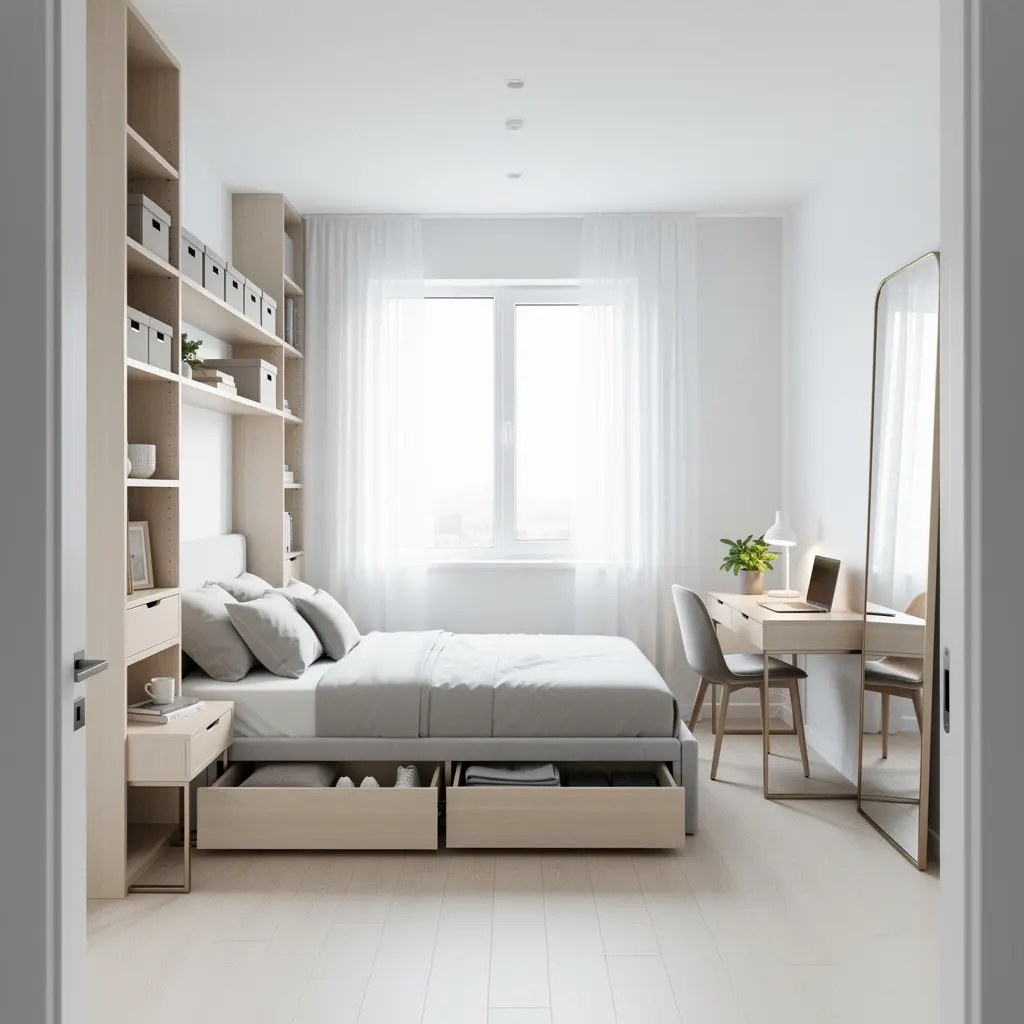
A small room often feels cramped not because it holds too much, but because everything in it is placed at the same height and depth, creating a flat, boxed in feeling. Furniture that all sits low and close to the walking path leaves no visual variation for the eye to move through.
The fix isn’t necessarily removing items. It’s redistributing where storage and furniture live, moving some of it vertically and off the floor plane, so the room reads as more open even when it’s holding the same amount of stuff.
This is a genuinely different approach than the common advice to simply own less. Plenty of tiny rooms hold a reasonable amount of belongings but still feel chaotic purely because of how those belongings are arranged and where the eye lands first when walking in.
2. Go Vertical Before You Go Wide
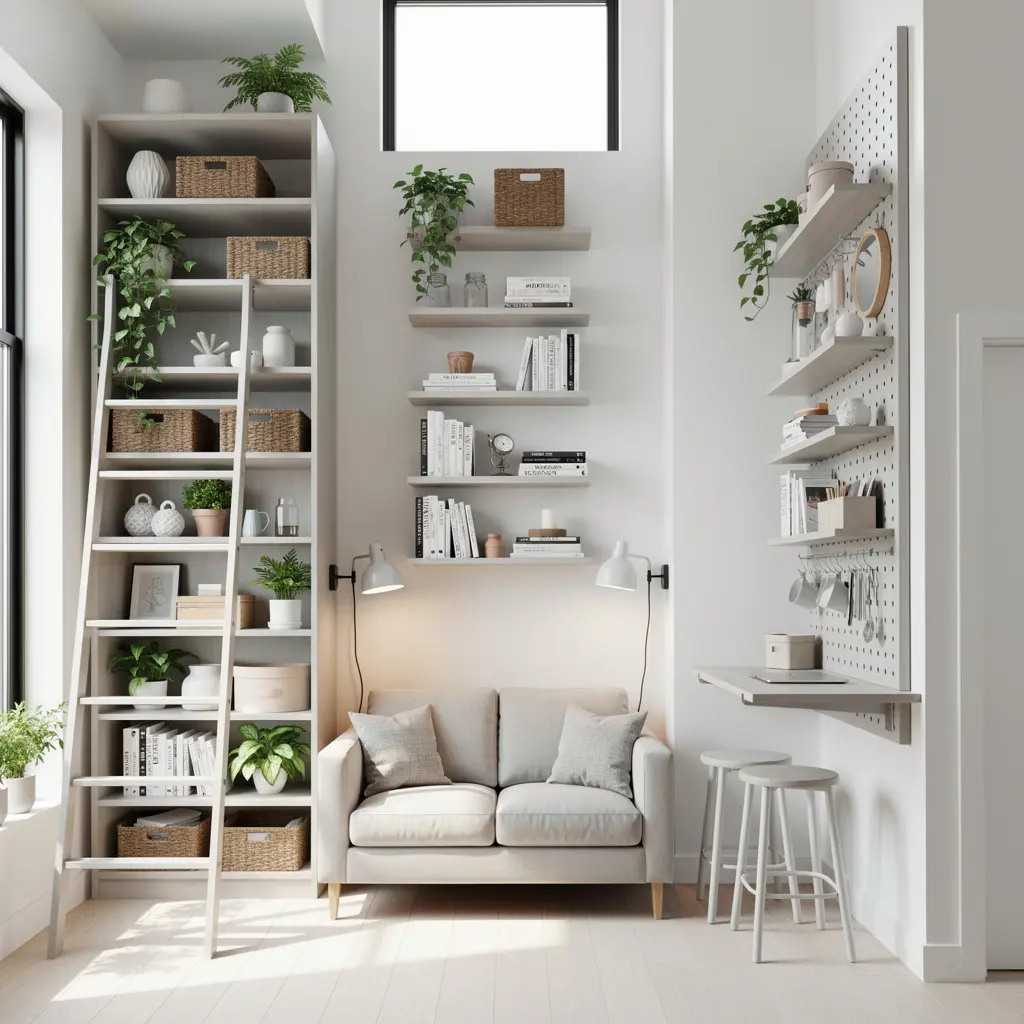
Floor space is the most valuable resource in a tiny room, so storage should climb the walls before it spreads across the floor. Tall, narrow bookshelves, wall mounted cabinets near the ceiling, and hooks or pegboards above eye level all add real storage capacity without taking up walking room.
What to Store Up High
Items used less frequently, seasonal clothing, extra bedding, decor you rotate occasionally, are ideal for higher storage, while daily essentials stay within easy reach lower down. This keeps the vertical storage functional rather than just visually taller.
3. Choose Furniture That Does at Least Two Jobs
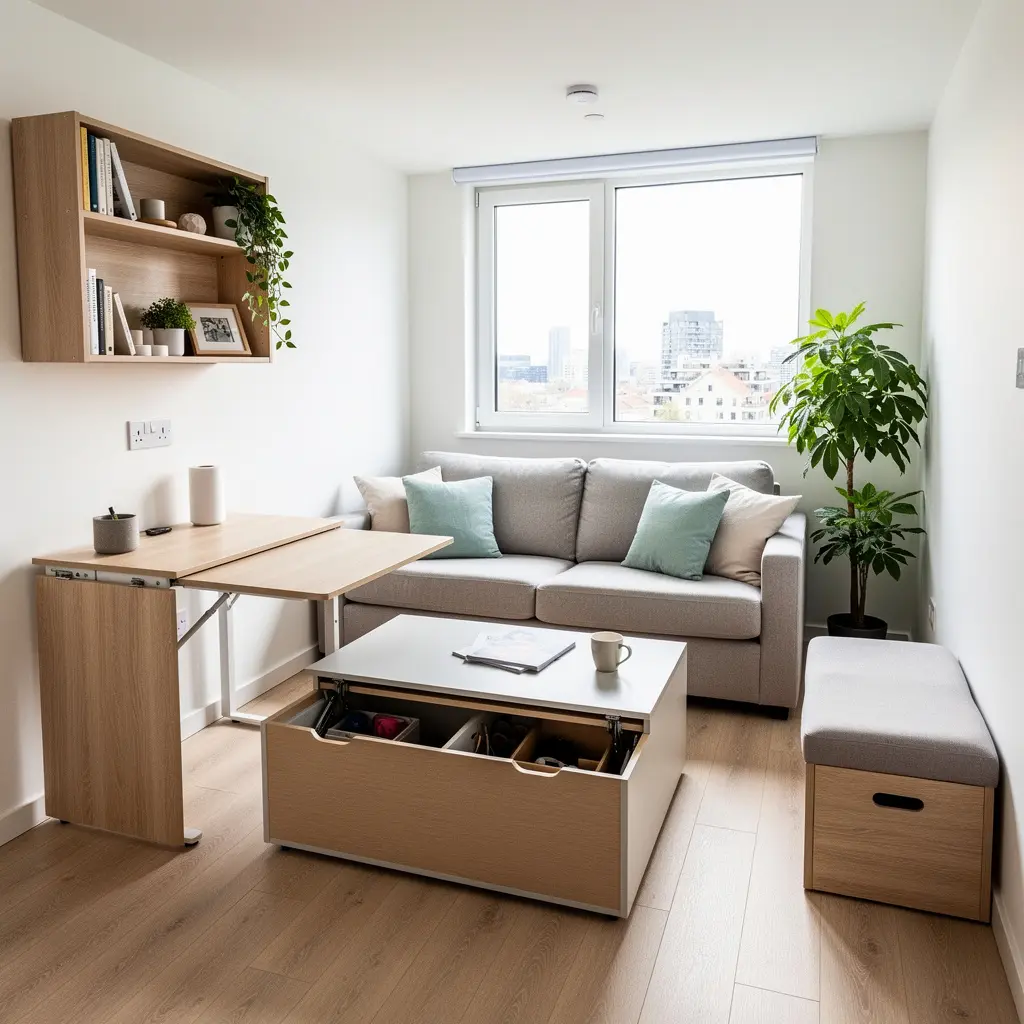
A single piece of furniture that handles two functions, an ottoman with storage inside, a desk that folds flat against the wall, a daybed that also seats guests, effectively doubles the room’s functional capacity without adding a second piece of furniture. This matters more in a tiny room than almost any other space saving trick.
Before buying anything for a small room, ask whether it could reasonably serve a second purpose. If the answer is no and floor space is tight, it’s worth looking for an alternative that can.
4. Use a Bed With Built In Storage Underneath
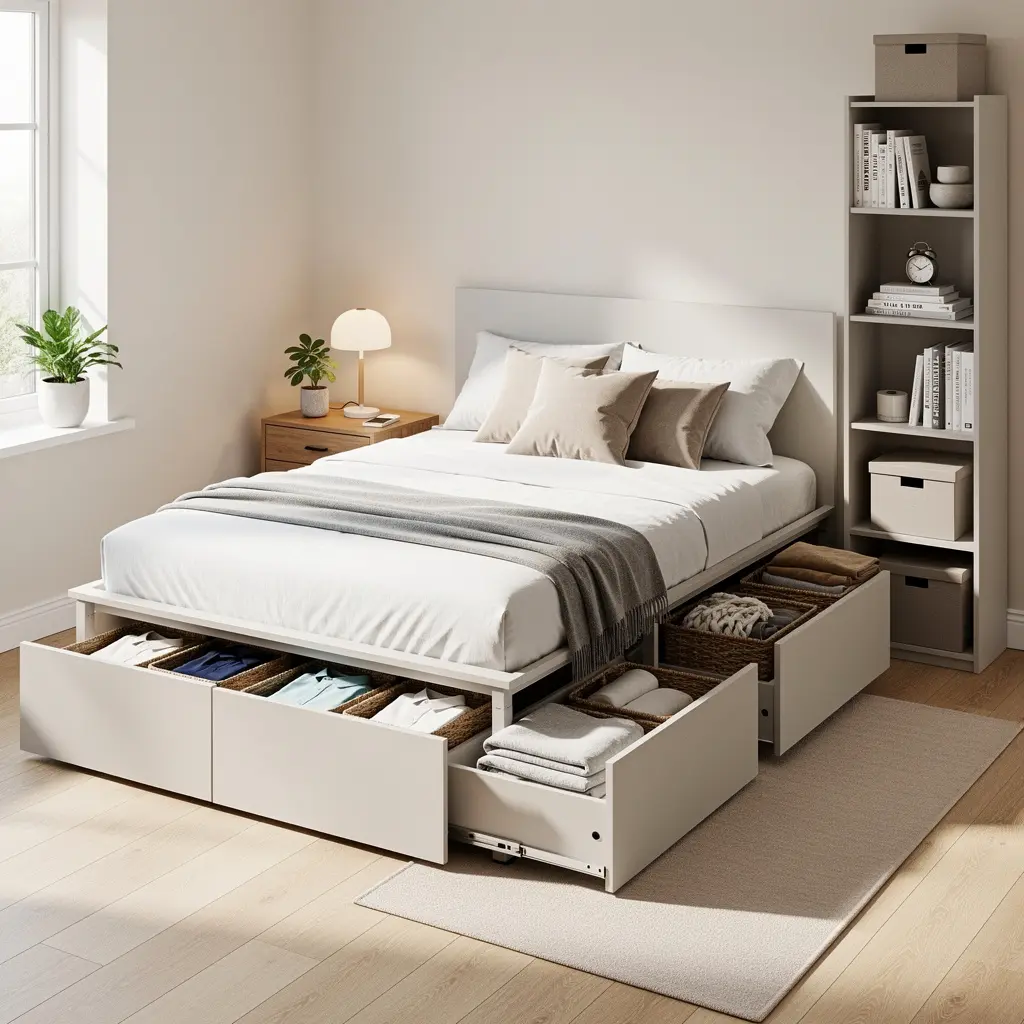
A platform bed with drawers, or a simple bed frame paired with rolling storage bins underneath, turns otherwise wasted under bed space into genuine storage capacity. This is usually enough space for off season clothing, extra linens, or bulky items that don’t fit elsewhere in a small closet.
Bed Height Considerations
A bed frame with at least 8 to 10 inches of clearance underneath fits most standard storage bins, while a lower profile platform bed with built in drawers avoids the clearance question entirely and tends to look more streamlined in a small room.
5. Mount Instead of Placing Wherever Possible
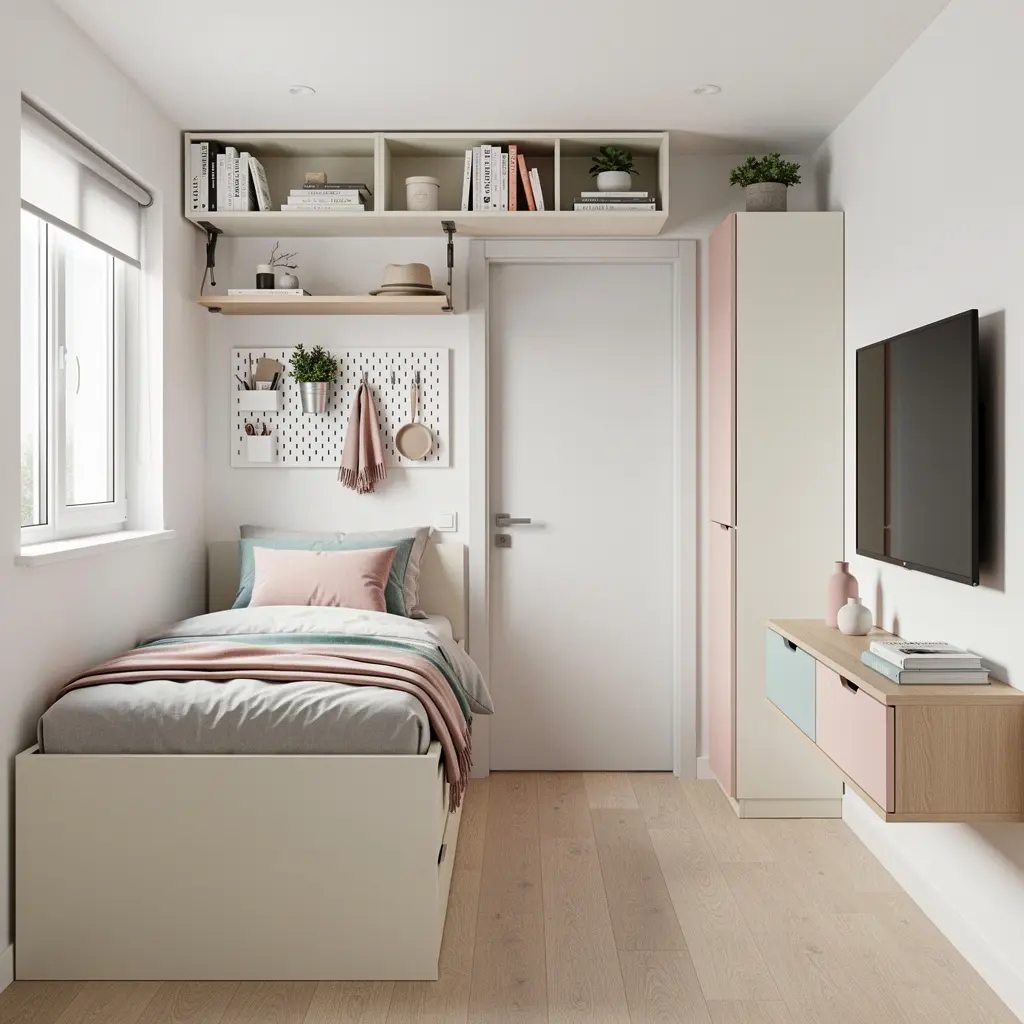
A nightstand, a small desk, or even a reading lamp mounted to the wall instead of sitting on the floor frees up visual and physical floor space, which matters enormously in a room where every square foot counts. Wall mounted, fold down desks in particular can turn into a fully usable workspace during the day and fold flat against the wall at night.
Floating shelves in place of a traditional dresser can serve a similar purpose for smaller wardrobes, keeping the floor clear while still providing accessible storage.
6. Keep the Color Palette Light and Consistent

A tiny room painted in several different colors, or filled with furniture in mismatched wood tones and finishes, tends to visually chop the space into smaller segments. A consistent, light color palette across walls, furniture, and larger textiles helps the room read as one continuous space rather than a series of separate zones.
This doesn’t mean every tiny room needs to be white. A soft, consistent tone, whether that’s a warm cream or a pale sage, does the same visual smoothing work as long as it stays consistent across the major surfaces in the room.
7. Use Mirrors to Add Visual Depth, Not Just Style
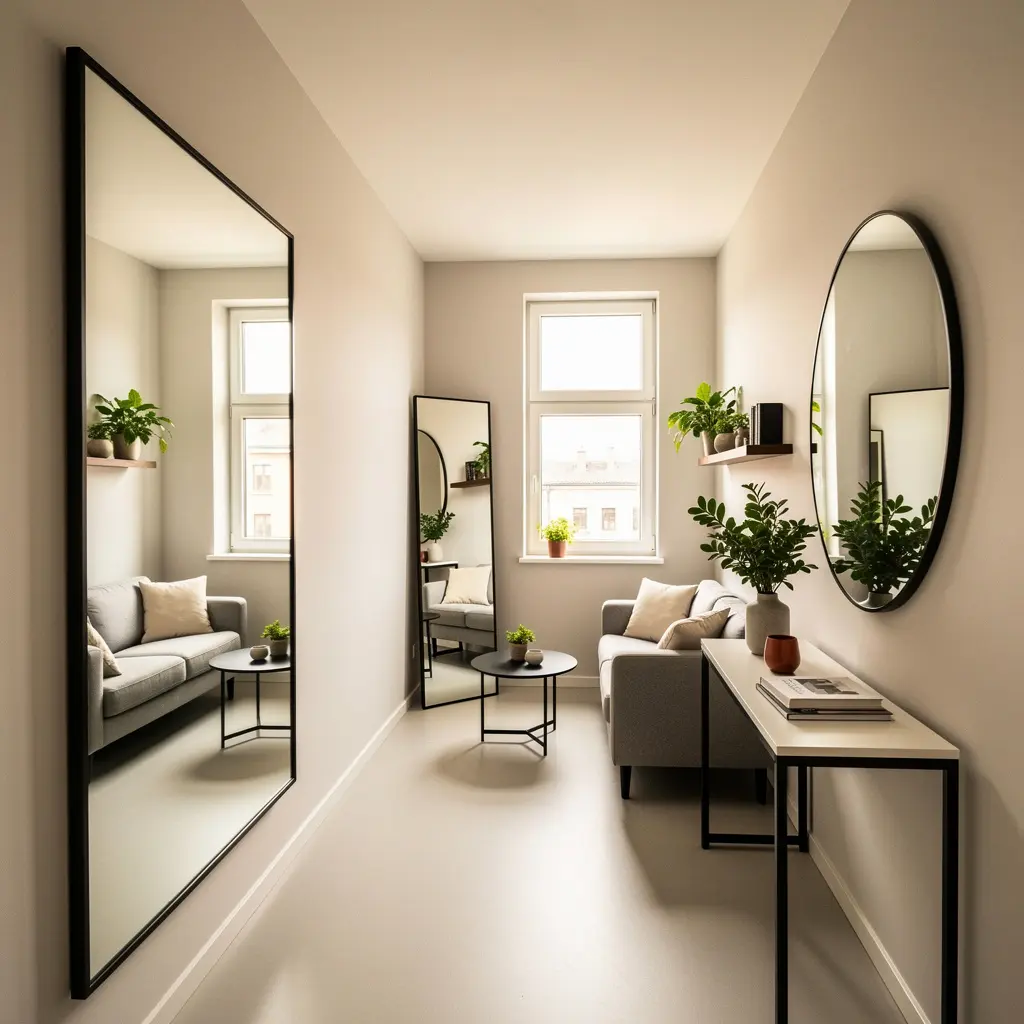
A well placed mirror, especially one positioned to reflect a window or a light source, genuinely adds a sense of depth to a small room rather than just serving as decor. A floor length or oversized wall mirror placed opposite the room’s main light source does more visual work than several smaller mirrors scattered around.
Mirrored closet doors or a mirrored wardrobe front can serve this same function while also handling storage, which fits the two job furniture principle covered earlier in this guide.
8. Rethink the Closet Before Adding More Furniture
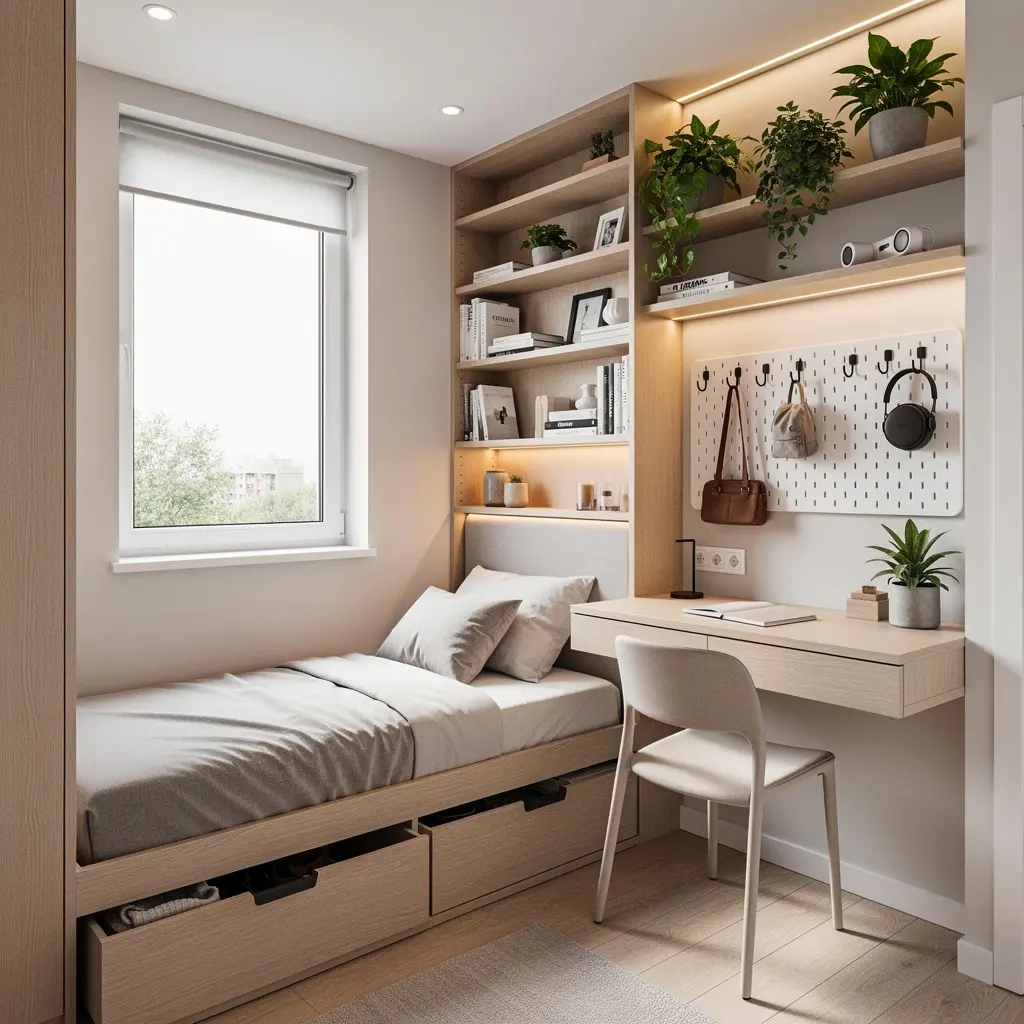
A standard closet setup, one single hanging rod and a shelf above it, wastes an enormous amount of vertical and floor space in a small room. Adding a second, lower hanging rod for shorter items, stackable bins on the closet floor, and door mounted organizers can significantly increase usable storage without touching the room itself.
Before assuming a tiny room needs more furniture, it’s worth fully maximizing the existing closet first, since closet reorganization is usually cheaper and less disruptive than adding new pieces to an already tight floor plan.
9. Leave Deliberate Empty Space Near the Entry
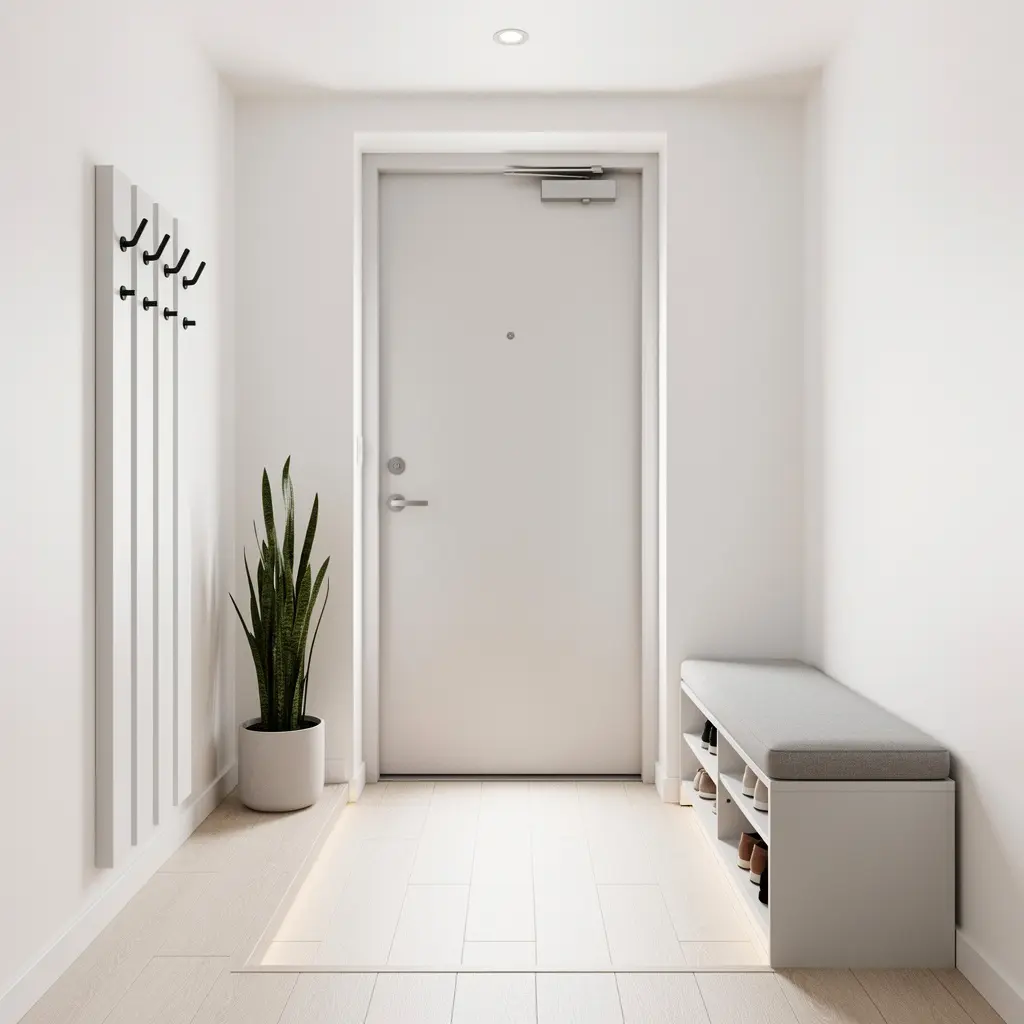
It’s tempting to use every inch of a small room, but leaving a small clear area near the door, even just enough for one person to comfortably enter and turn around, keeps the room from feeling like an obstacle course the moment you walk in. This clear zone also gives the eye a resting point before taking in the rest of the room’s storage and furniture.
A room that’s fully packed right up to the doorway tends to feel smaller than one with the same amount of storage but a bit of breathing room at the entry point.
10. Small Space Furniture Worth the Investment
Not every small space solution needs to be expensive, but a few pieces are worth spending more on because they’re used daily and directly affect how functional the room feels. A well made storage bed frame, a genuinely sturdy wall mounted desk, and quality closet organization systems tend to earn their higher price tags through daily use in a way that decorative items don’t.
Cheaper decorative accessories, on the other hand, are a reasonable place to save, since they contribute less to how well the room actually functions day to day.
Mistakes to Avoid
- Filling every available inch of floor space instead of going vertical
- Buying furniture that only serves one function when a small room needs more
- Painting or finishing furniture in multiple mismatched tones
- Skipping under bed storage in a room that badly needs it
- Overloading the entry area so the room feels blocked from the doorway
- Assuming more furniture is needed before maximizing existing closet space
Frequently Asked Questions
What’s the single most effective small space hack? Going vertical with storage, using wall space and higher shelving instead of relying only on floor space, tends to make the biggest difference in how functional a tiny room feels.
Do multipurpose furniture pieces cost more than regular furniture? Often somewhat more, but the added function usually replaces the need for a second piece of furniture entirely, which can save money and floor space overall.
Does painting a small room white make it feel bigger? White helps, but any light, consistent color across the room’s major surfaces creates a similar effect, so it doesn’t have to be strictly white to work.
How much floor space should I leave clear in a tiny room? Enough for one person to comfortably walk and turn around, generally at least a two to three foot clear path from the door to the main furniture pieces.
Is under bed storage worth it if my bed frame doesn’t have built in drawers? Yes. Rolling storage bins under a standard bed frame with enough clearance work nearly as well as built in drawers for a fraction of the cost.
Making a Tiny Room Genuinely Livable
Small space hacks for tiny rooms work best when they focus on redistributing storage and function rather than simply removing belongings. Go vertical, choose furniture that pulls double duty, and leave a bit of deliberate breathing room near the entry so the room doesn’t feel like a packed storage unit. Handled this way, even a genuinely small room can function as well as a much larger one. Start with the closet and under bed storage before buying anything new, since those two areas often hold more untapped capacity than most tiny rooms ever end up using.