10 Terracotta Living Room Ideas with an Accent Wall for a Warm & Stylish Space
A living room with plain white or gray walls can feel technically finished but emotionally flat. Nothing draws the eye, nothing feels warm, and the room ends up looking more like a rental listing photo than somewhere you actually want to sit. Terracotta living room ideas with an accent wall fix that by giving the room one bold, warm focal point that the rest of the space can build around.
An accent wall works especially well with terracotta because the color needs room to breathe. Used across every wall, it can feel heavy. Used on just one, it becomes a statement that grounds the whole room without overwhelming it. Here are ten ways to build a warm, stylish living room around that single wall.
1. Choose the Right Wall for Your Terracotta Accent
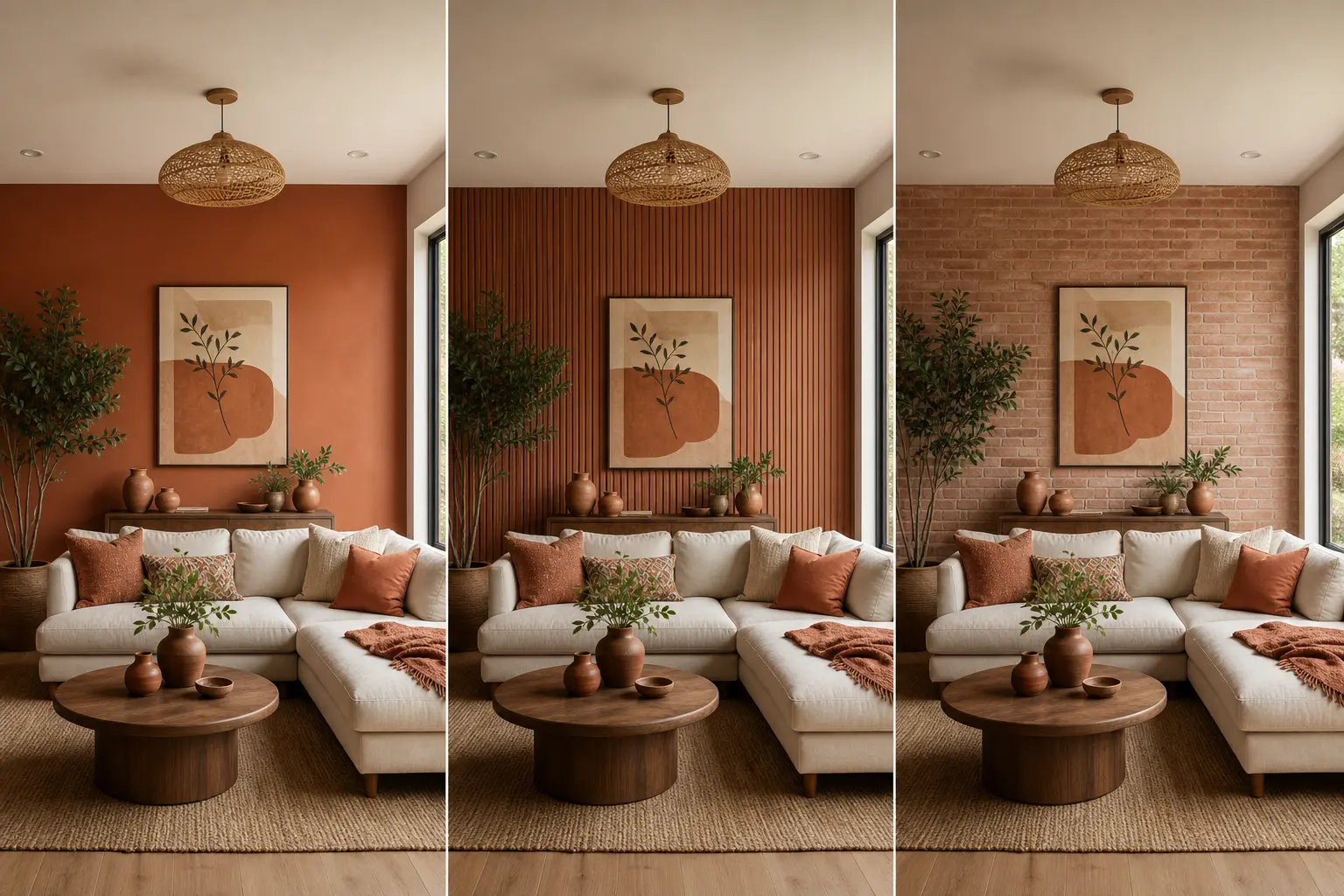
The wall behind the sofa is usually the strongest choice, since it becomes the natural backdrop when you’re sitting in the main seating area. A fireplace wall or the wall directly across from the entry also works well, since it’s the first thing you see when you walk into the room.
Avoid choosing a wall interrupted by too many windows or doorways. A wall with fewer breaks gives the terracotta color a larger, more impactful surface to work with.
Why One Wall Works Better Than Two
Painting two walls terracotta in a smaller living room can make the space feel like it’s closing in, especially in a room with lower ceilings. One wall gives the color impact without sacrificing the sense of openness in the rest of the room.
2. Pick a Terracotta Shade with the Right Undertone
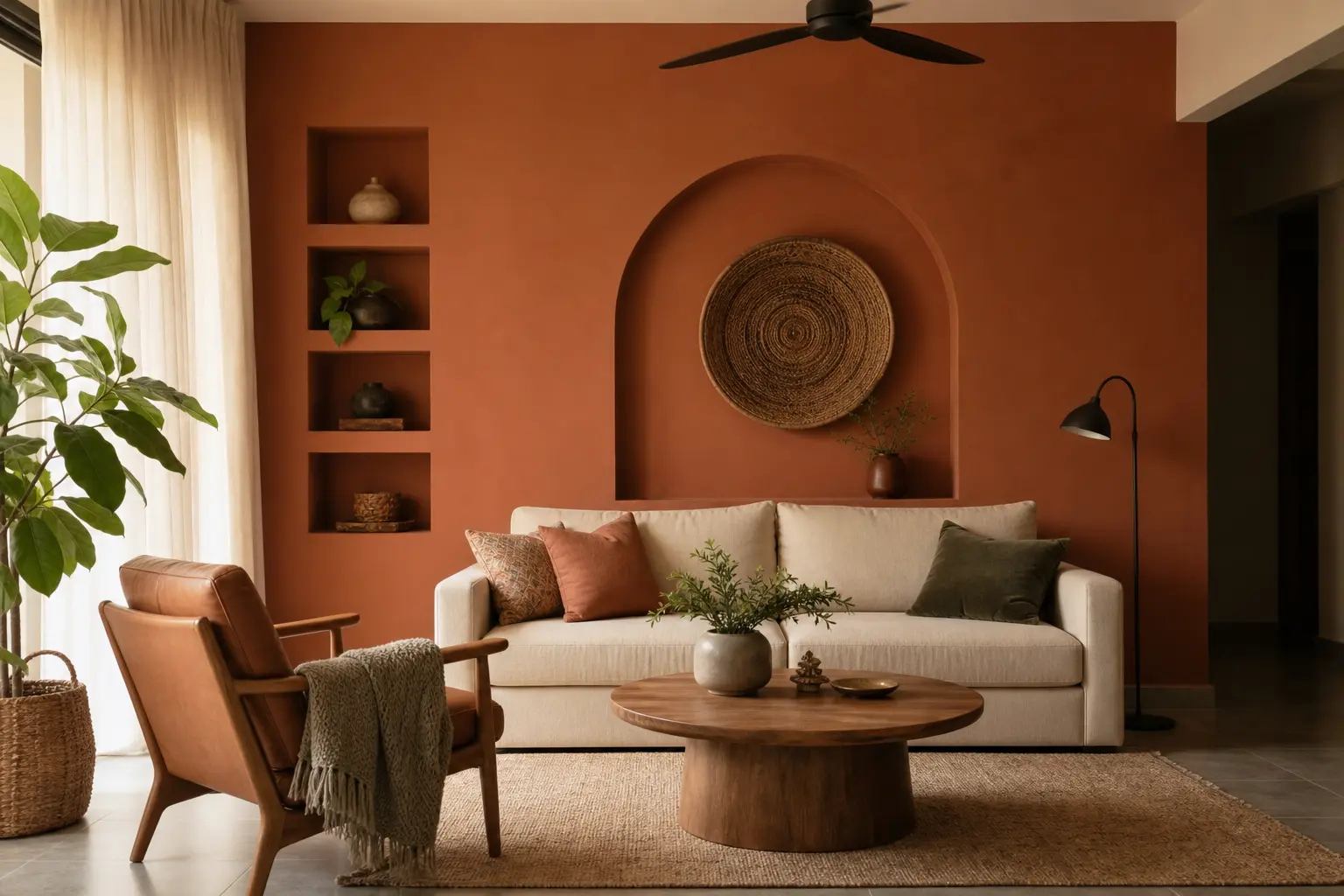
Terracotta ranges from a soft, muted clay to a deep, almost rust red. A muted, slightly dusty terracotta tends to read as more sophisticated and versatile, while a deeper, more saturated shade makes a bolder, more dramatic statement.
Test a large swatch, at least two feet wide, on the actual wall before committing. Terracotta shifts significantly under different lighting, and a shade that looks perfect at noon can look almost brick red by evening under warm bulbs.
3. Balance the Wall with a Light, Neutral Sofa
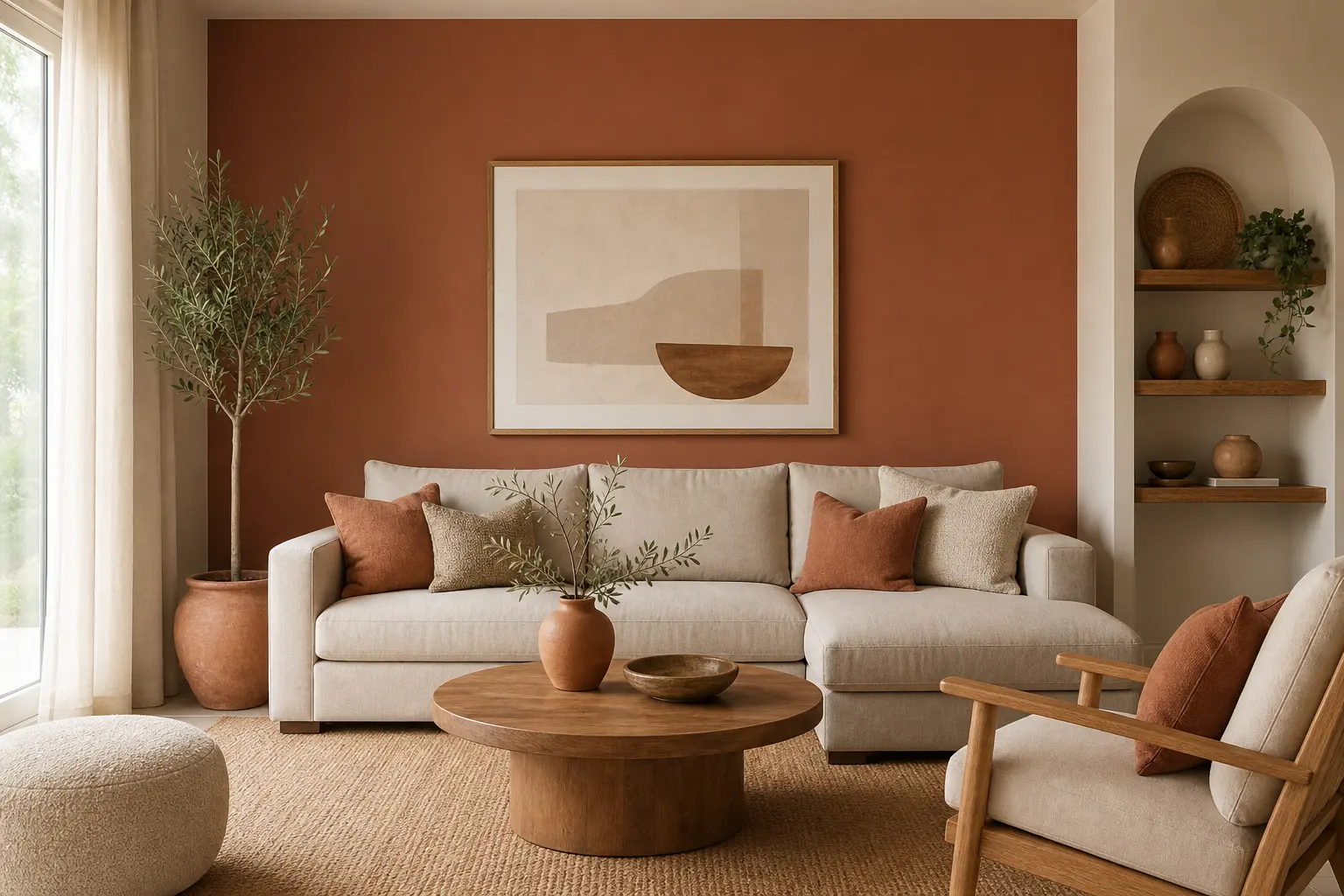
A cream, warm white, or light taupe sofa gives the terracotta wall room to stand out without competing for attention. Prices for a quality sofa in this range typically run from $700 to $2,000 depending on size and fabric.
Avoid pairing the wall with a sofa in another bold color. Two saturated colors competing in the same sightline usually reads as busy rather than intentional, even when both colors look great individually.
4. Add Warm Wood Furniture to Match the Wall
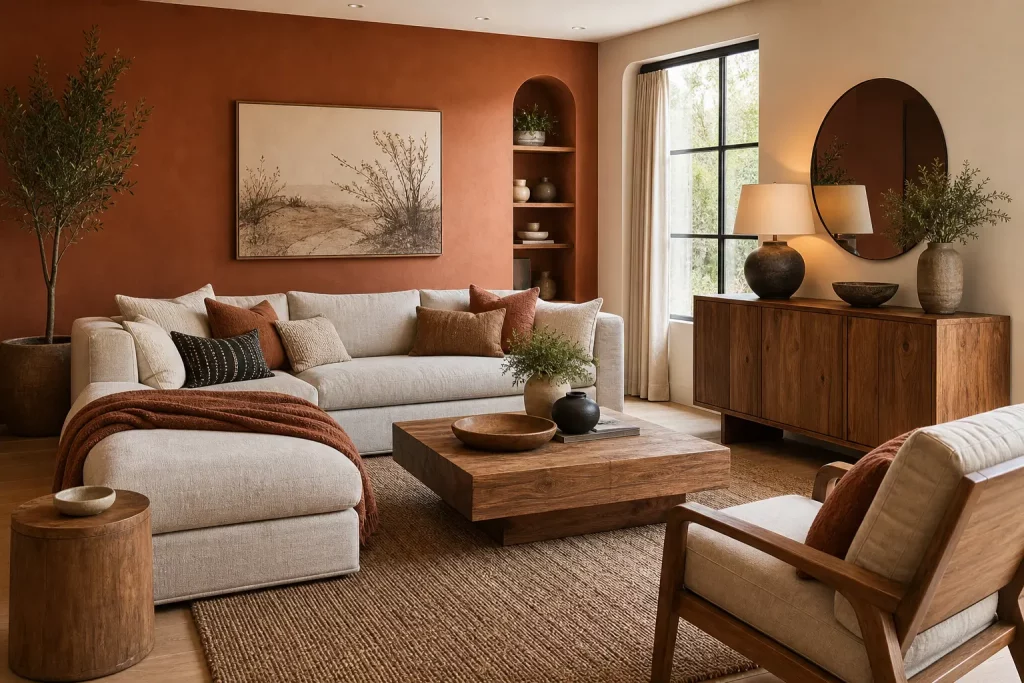
Terracotta pairs naturally with warm wood tones, since both come from the same earthy, grounded color family. A wood coffee table, wood shelving, or a wood media console reinforces the warmth of the accent wall throughout the rest of the room.
A room with terracotta on the wall but only cool, gray toned furniture elsewhere can feel disconnected, as if the wall and the furniture belong to two different design plans. Repeating the warm tone in the furniture ties the whole room together.
5. Bring in Brass or Warm Metal Accents
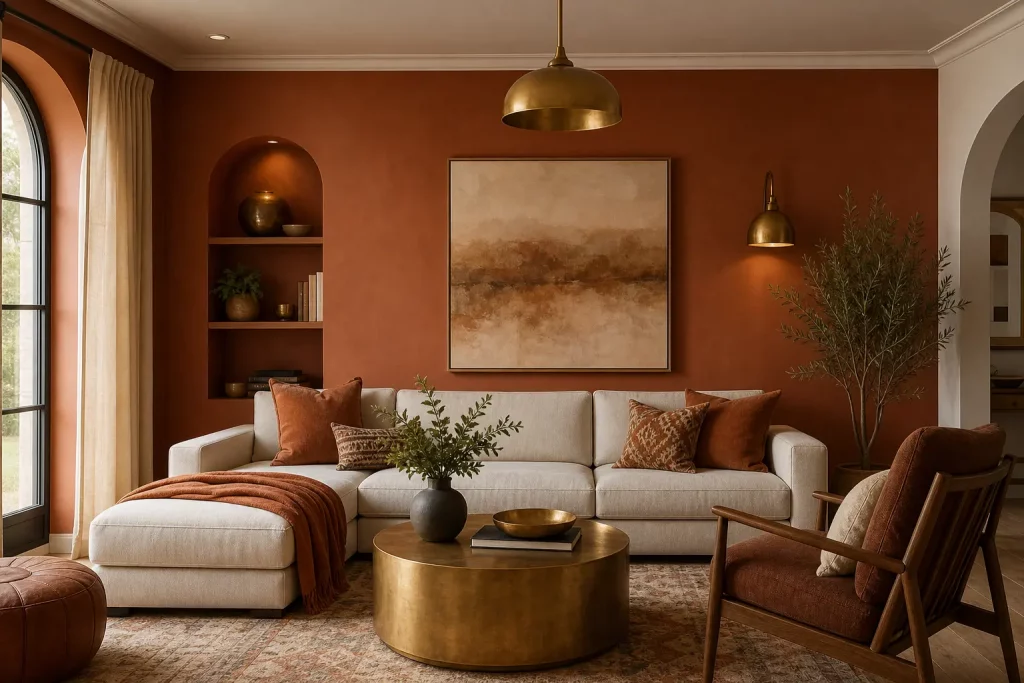
Terracotta pairs especially well with warm metals rather than cool ones. Brass lamp bases, a gold framed mirror, or warm bronze drawer pulls add a polished, slightly elevated feel against the earthy wall color. Chrome and silver can still work, but they tend to read a little colder in this particular palette.
A Simple Way to Test This Pairing
Add a single brass table lamp before committing to larger metal pieces throughout the room. It’s a low cost, low commitment way to see how the warm metal tone interacts with the terracotta wall in your actual lighting.
6. Layer Textures So the Room Doesn’t Feel Flat
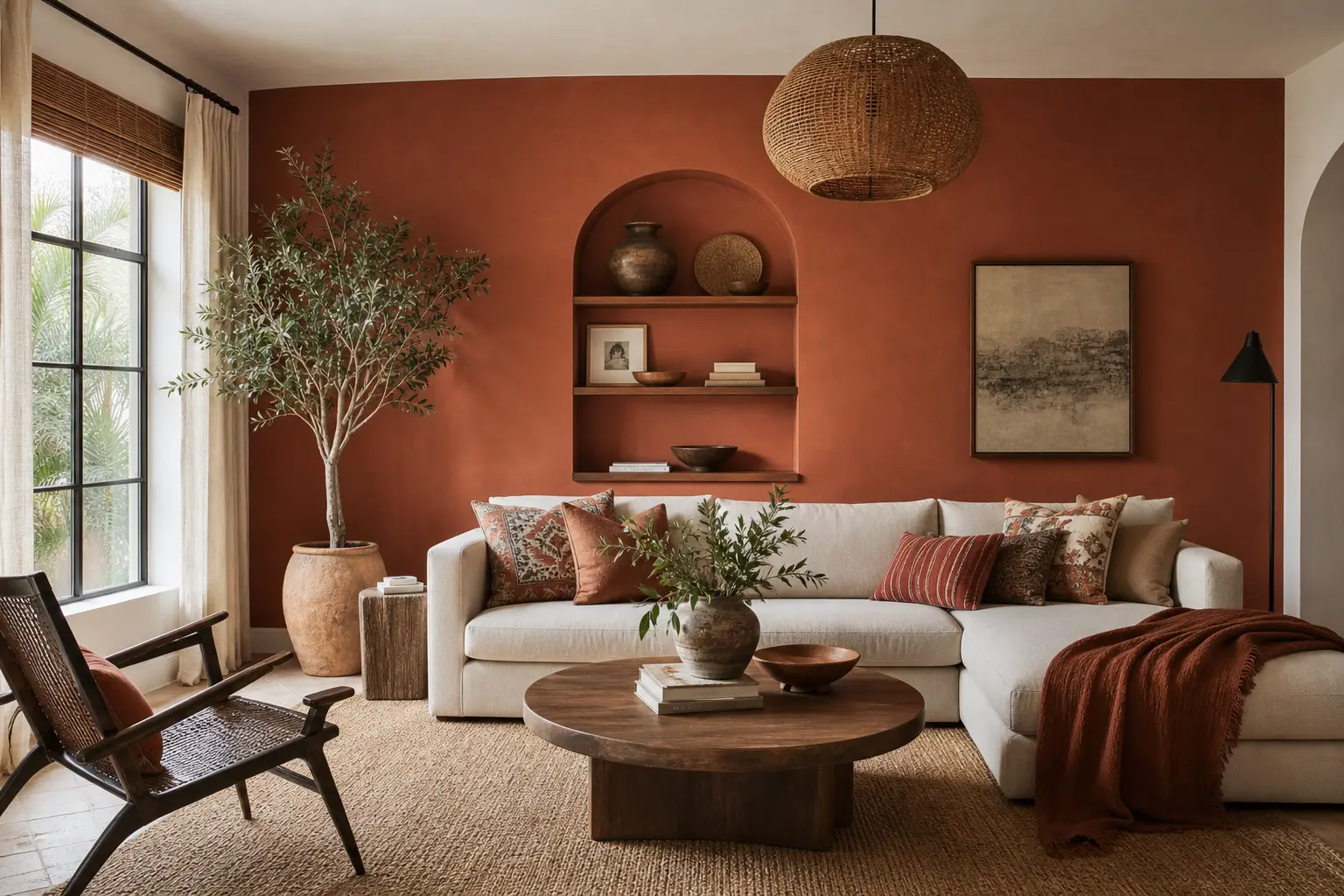
A smooth painted wall paired with a smooth sofa can start to feel one dimensional. Add a boucle or linen throw pillow, a chunky knit blanket, and a woven jute or wool rug to introduce texture variety. Each material catches light a little differently, which adds depth to the whole room.
This matters especially with a bold accent wall, since texture elsewhere helps balance the visual weight of the strong color rather than letting the wall feel isolated from the rest of the room’s materials.
7. Choose a Rug That Bridges the Wall and Floor
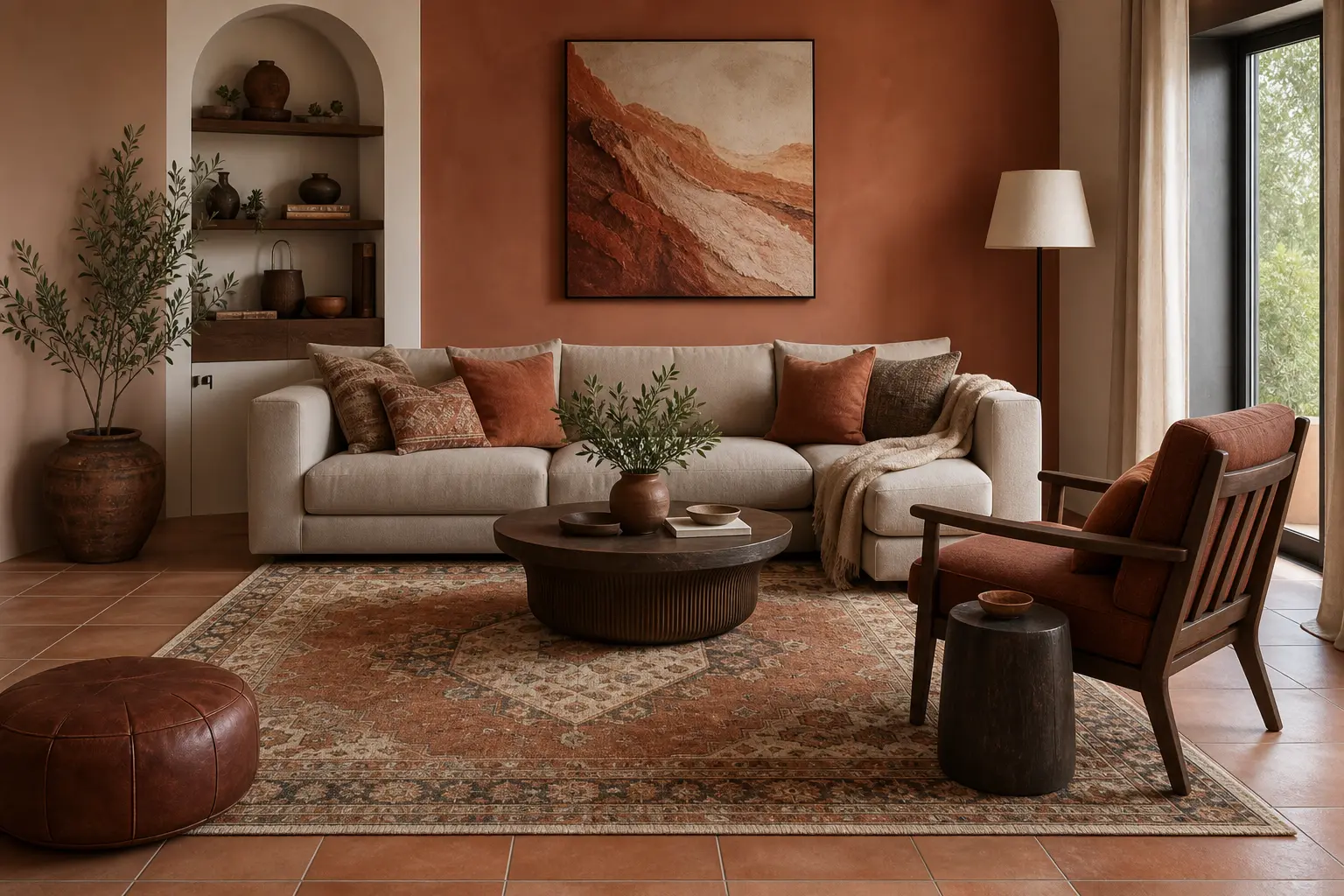
A rug in cream, warm taupe, or a subtle pattern that includes a hint of terracotta ties the wall color down into the floor level of the room. A rug in the $150 to $500 range, depending on size and material, works well as a grounding piece under the main seating area.
Choose a rug large enough for at least the front legs of the sofa and chairs to rest on it. A rug that’s too small tends to make the whole seating arrangement feel disconnected from the floor.
8. Use Warm Lighting to Support the Accent Wall
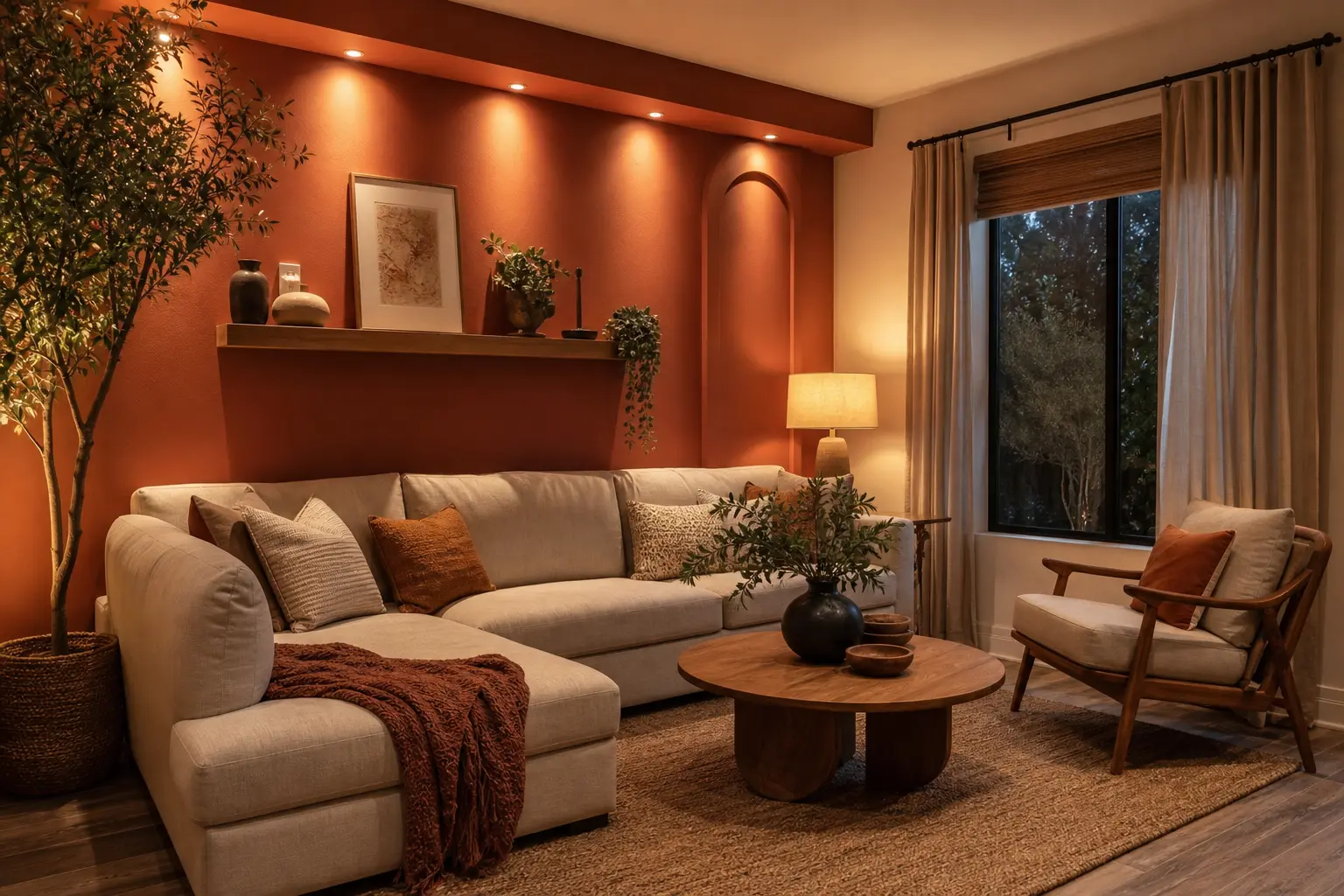
Cool white bulbs can make a terracotta wall look almost muddy or gray instead of warm and rich. Warm white bulbs, in the 2700K to 3000K range, deepen the color and make the accent wall feel intentional rather than accidental, especially in the evening.
Table lamps and floor lamps positioned near the accent wall highlight the color more effectively than overhead lighting alone. A room lit only from above tends to flatten a bold wall color instead of letting it show its full depth.
9. Keep Art and Decor Minimal Against the Bold Wall
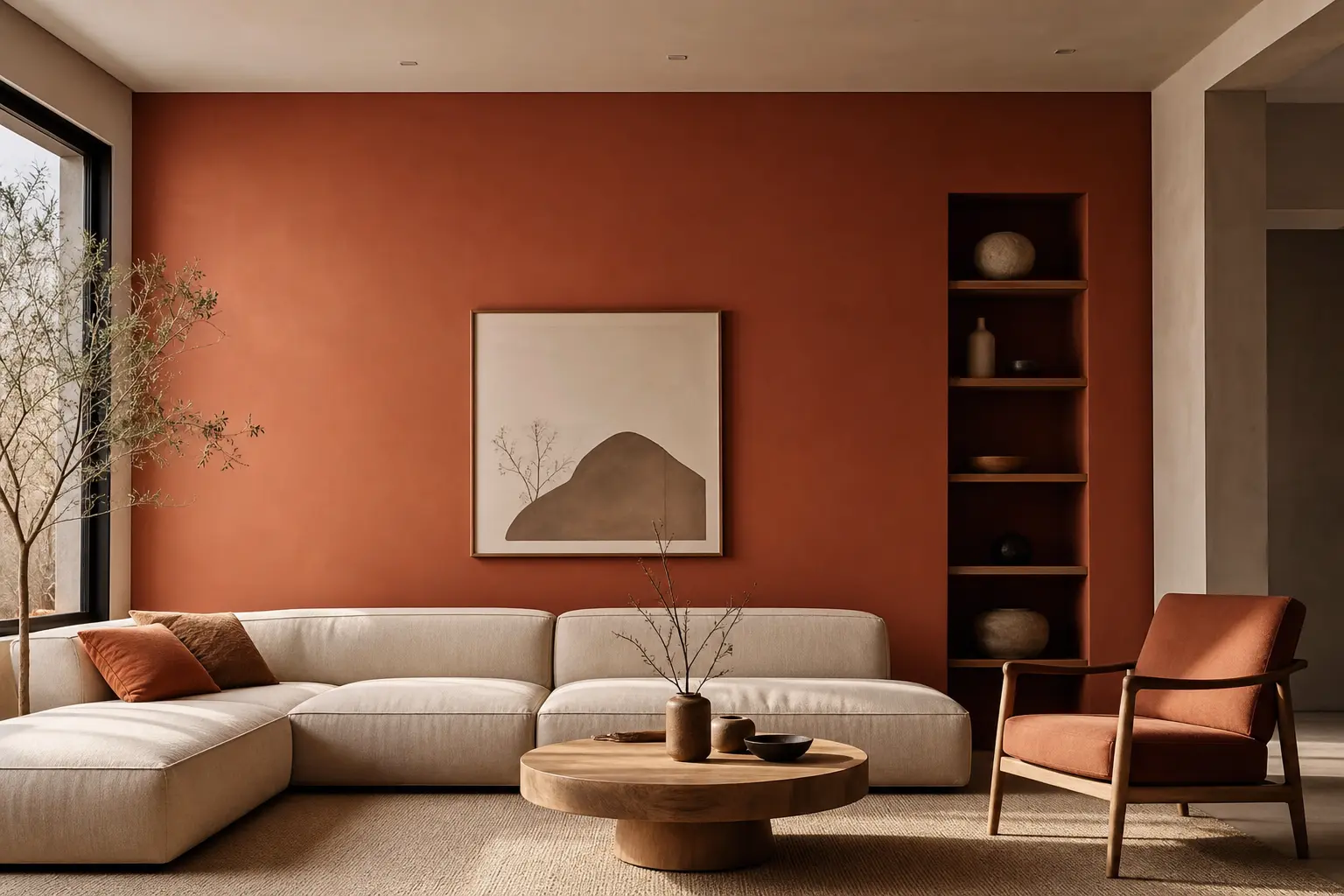
A busy gallery wall or multiple colorful pieces hung directly on the terracotta wall can compete with the color itself. One large piece of art, in a simple frame and a muted palette, usually reads as more intentional than several smaller pieces crowded together.
If you want to display more art, save the additional pieces for a different wall in the room, letting the terracotta wall stay the singular, uncluttered focal point.
10. Add Greenery to Soften the Warm Palette
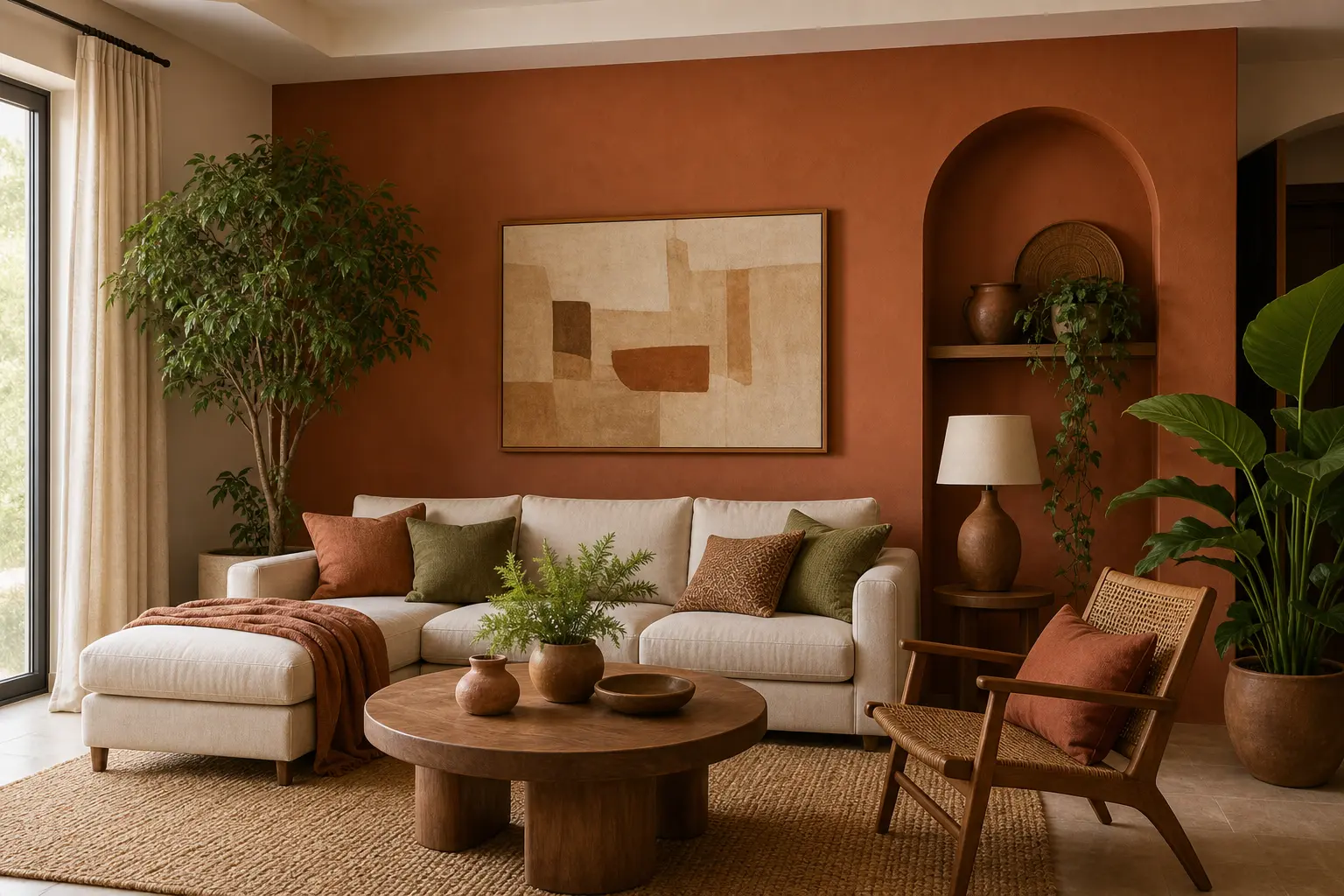
A few plants, especially ones with large, rounded leaves like a fiddle leaf fig or a rubber plant, add a cooling, natural contrast against the warm terracotta wall. A plant in a terracotta or woven planter also ties back into the room’s overall palette without introducing a competing color.
Place at least one plant near the accent wall itself, rather than only on the opposite side of the room. This helps soften the wall’s visual weight and keeps it from feeling like a flat block of color.
Mistakes to Avoid
- Painting more than one wall terracotta in a smaller living room and making the space feel closed in
- Choosing a sofa in another bold, competing color instead of a neutral base
- Skipping warm wood furniture and leaving the room feeling disconnected from the accent wall
- Using only cool white lighting, which flattens the richness of the terracotta color
- Overcrowding the accent wall with multiple pieces of art instead of one intentional focal piece
- Choosing a rug too small for the seating area to visually connect with the floor
Frequently Asked Questions
Which wall should I choose for a terracotta accent in a small living room? The wall behind the main seating area or directly opposite the entry usually works best, since it becomes a natural focal point without needing to interrupt the flow of the room.
Does terracotta work in a living room with limited natural light? Yes, though a slightly more muted, less saturated terracotta shade tends to work better in lower light rooms, since a deep, dark shade can feel heavier without much daylight to balance it.
What sofa color pairs best with a terracotta accent wall? Cream, warm white, and light taupe all pair well, since they let the wall stand out without competing for visual attention in the room.
Can I test this look before committing to a full wall of paint? Yes. A large piece of terracotta colored fabric or art displayed on the wall can give you a sense of the effect before committing to paint, and it’s fully reversible if your taste shifts later.
How do I keep a terracotta accent wall from feeling too intense? Balance it with plenty of neutral furniture, warm wood tones, and greenery, and keep the art on that specific wall minimal. Those choices together keep the wall feeling grounding rather than overwhelming.
Conclusion
A warm, stylish terracotta living room comes down to one confident accent wall, balanced by neutral furniture, warm wood, and a few intentional metal and greenery accents. Start with the wall and the sofa, since those two choices set the tone for the whole room, then build out lighting, texture, and decor from there.