10 Minimalist Small Living Room Ideas That Actually Feel Bigger
A small living room stops feeling small the moment you stop trying to fit a big room’s worth of furniture into it, and that is the real problem behind most minimalist small living room searches. People buy a sectional because it looked good in a showroom, then wonder why their 11 by 13 foot room feels like an obstacle course. The fix is not fewer things for the sake of fewer things. It is choosing the right scale, the right color story, and the right layout so the room reads as open instead of packed. This guide walks through exactly how to do that, room by room decision by decision.
1. Start With a Furniture Layout That Matches the Room’s Actual Shape
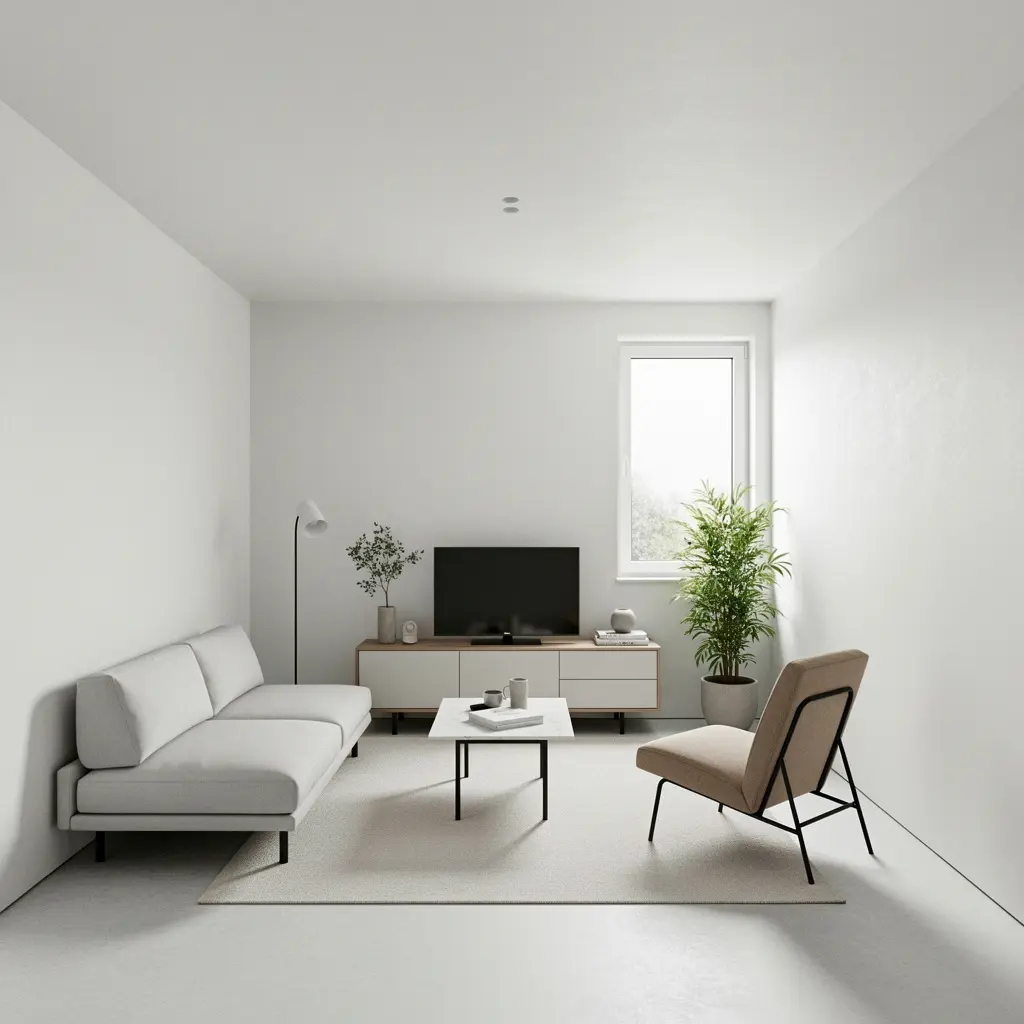
Before you buy anything, measure the room and sketch it out, even roughly on paper. A square room and a long narrow room need completely different furniture arrangements, and most small living room mistakes start here, not with the furniture itself. In a narrow room, a sofa against the long wall usually works better than one floating in the middle, because floating furniture eats walking space you don’t have to spare.
Leave at least 30 inches of clearance for main walking paths, and 14 to 18 inches between a sofa and coffee table. If the numbers don’t work on paper, they won’t work in the room either, so this is worth doing before furniture arrives, not after.
Why Traffic Flow Matters More Than People Think
A room can have beautiful furniture and still feel chaotic if you have to angle your body sideways to get past the coffee table. Clear traffic paths are one of the biggest visual cues your brain uses to judge whether a space feels calm or cramped. So this step, boring as it sounds, does more for the minimalist feel than any paint color will.
2. Choose Low Profile Furniture to Keep Sightlines Open

Furniture height affects a small room more than furniture footprint does. A sofa with a low back, somewhere around 30 to 32 inches, keeps your eye traveling across the room instead of stopping at a wall of upholstery. The same goes for bookshelves and media consoles. A low console under 24 inches tall lets you see the wall above it, which reads as more breathing room even though the console takes up the same floor space as a taller one.
This is one of those details that costs nothing extra but changes how a room feels almost immediately. And it’s the reason showroom sectionals, which are often built tall and deep for comfort in large rooms, tend to overwhelm small ones.
3. Stick to a Tight, Calm Color Palette

A minimalist small living room usually works with two to three main colors total, including the wall color. Warm neutrals like oatmeal, warm white, and soft greige are popular because they don’t compete with each other, but a small room in a deeper tone like sage or clay can also feel intentional and calm if you keep the palette consistent throughout.
What actually shrinks a room visually is not a dark color itself, it’s too many competing colors and patterns fighting for attention. Pick your base neutral, pick one accent tone, and repeat both across the rug, pillows, and any art. Consistency reads as calm. Randomness reads as clutter, even in a spotless room.
4. Let Multi Function Furniture Do Double Duty
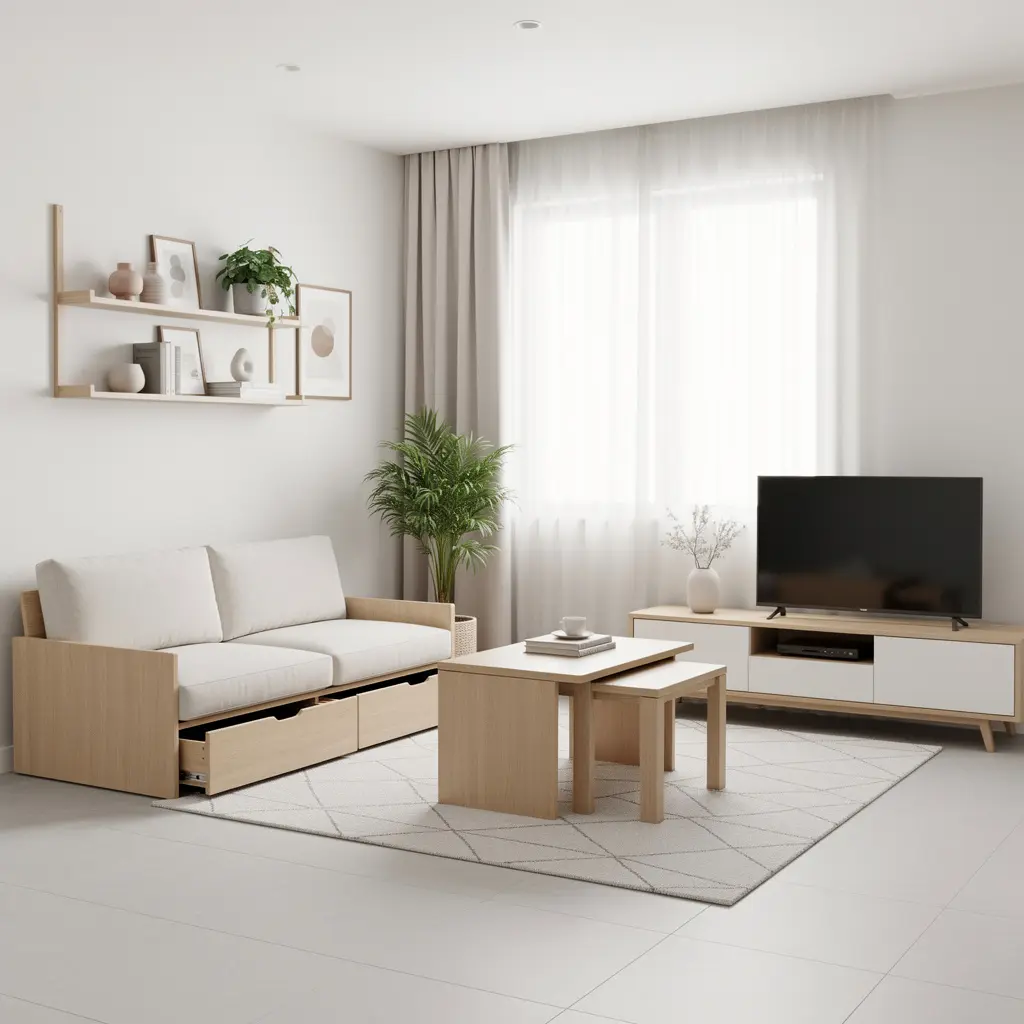
In a small space, every piece of furniture should earn its spot. A storage ottoman that works as a coffee table and hides blankets is doing three jobs at once. A console table with drawers can hold remotes, coasters, and mail instead of letting those things pile up on open surfaces.
Look for furniture with built in storage before you look for furniture that’s just decorative. A nesting side table set is another good option, since you can tuck the smaller tables away when you don’t need the extra surface. This one habit, buying for function first, is probably the single biggest difference between a small room that feels curated and one that feels crowded.
5. Use Vertical Storage Instead of Floor Space
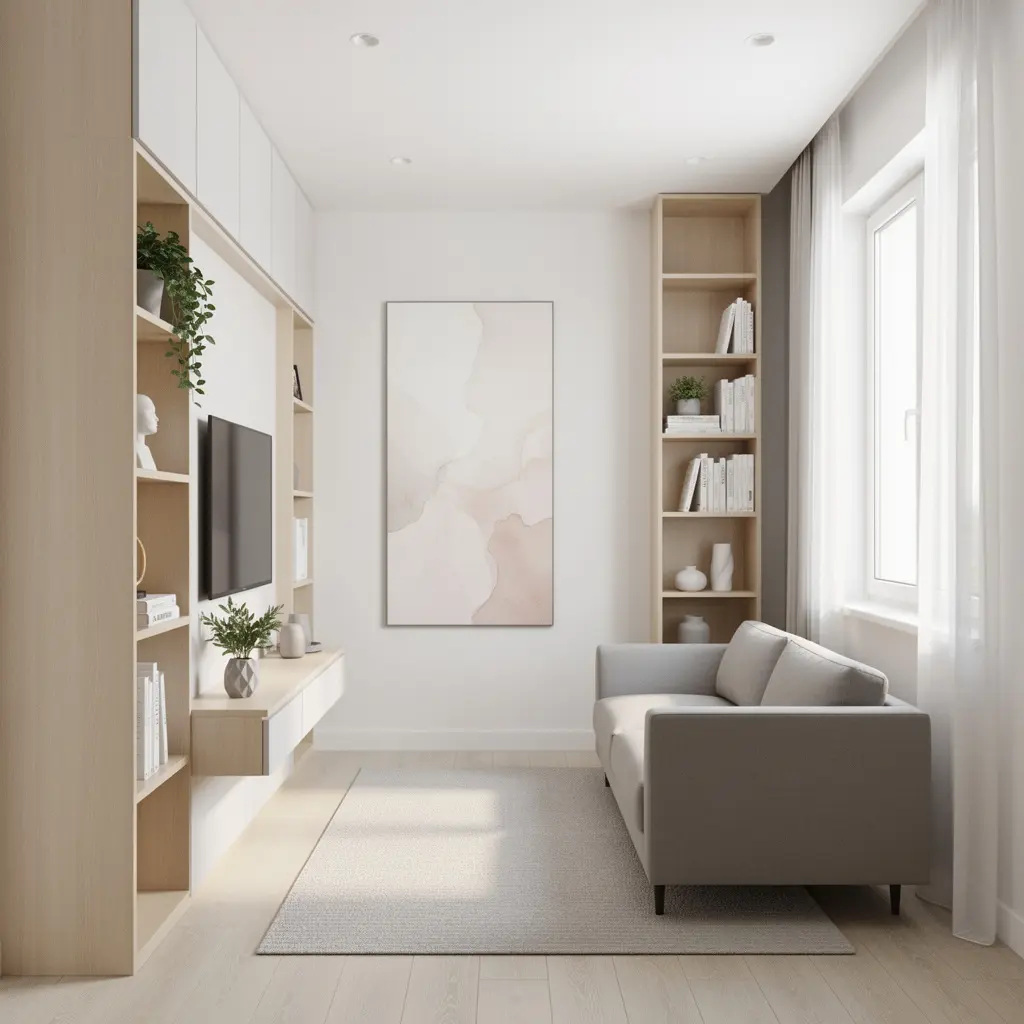
Floor space is the most valuable real estate in a small living room, so anything that can move up the wall should. Floating shelves above a console, a tall narrow bookcase in a corner, or wall mounted media storage all free up square footage that floor furniture would otherwise take.
A Quick Note on Shelf Styling
Vertical storage only helps the minimalist look if you don’t fill every shelf. Leave visible empty space between grouped objects, roughly a third of the shelf, so the eye has somewhere to rest. A shelf packed edge to edge undoes the calm effect you’re going for, no matter how nice the storage itself looks.
6. Keep the Coffee Table Small or Skip It Entirely
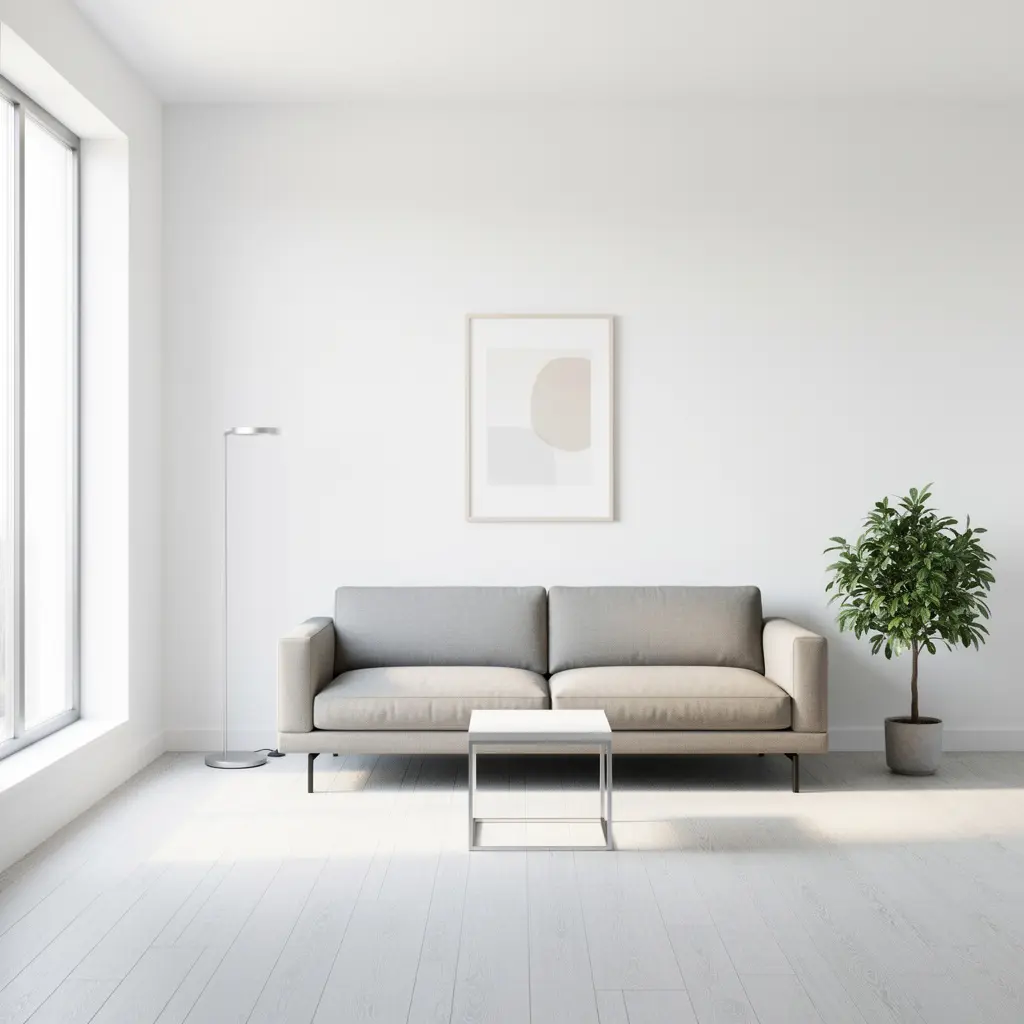
A standard coffee table can be one of the biggest space hogs in a small living room, especially the boxy 48 inch versions built for larger spaces. A round table with a 24 to 30 inch diameter takes up noticeably less visual and physical room, and rounded edges are easier to walk around in a tight layout.
Some small living rooms skip the coffee table altogether and use a stack of two nesting tables instead, pulling one out only when needed. If your room is under 150 square feet, it’s worth trying the space without a coffee table for a week before committing to one, just to see how much easier the room feels to move through.
7. Layer Lighting Instead of Relying on One Overhead Fixture
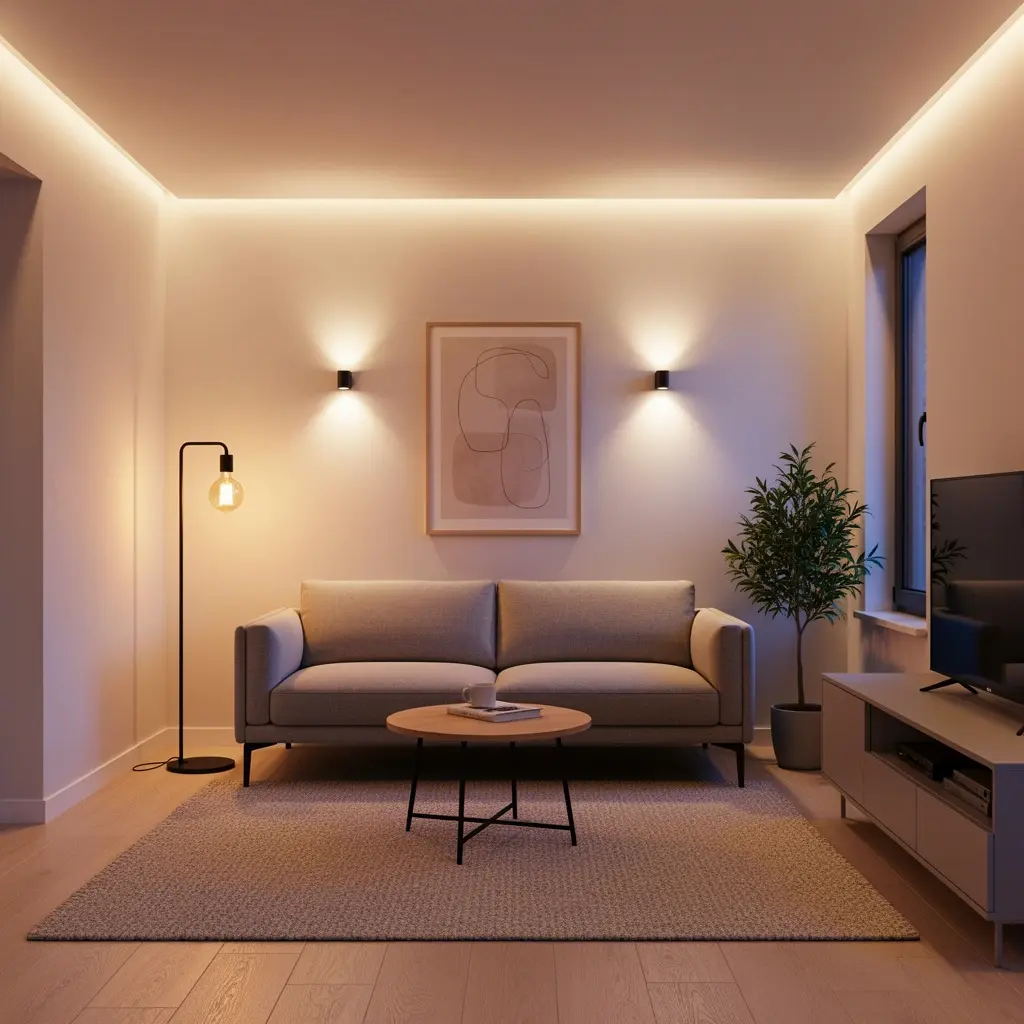
A single overhead light flattens a small room and makes every corner equally, harshly bright, which is the opposite of the soft, calm feel most minimalist spaces go for. Layering in a floor lamp, a table lamp, and maybe one wall sconce creates pools of light that make the room feel larger because your eye has to travel to take it all in.
Warm white bulbs, in the 2700K to 3000K range, read as cozier than cool white bulbs in a living space. This is a small detail, but it’s one of the most noticeable ones once you actually swap the bulbs out.
8. Choose One Statement Piece and Let Everything Else Stay Quiet
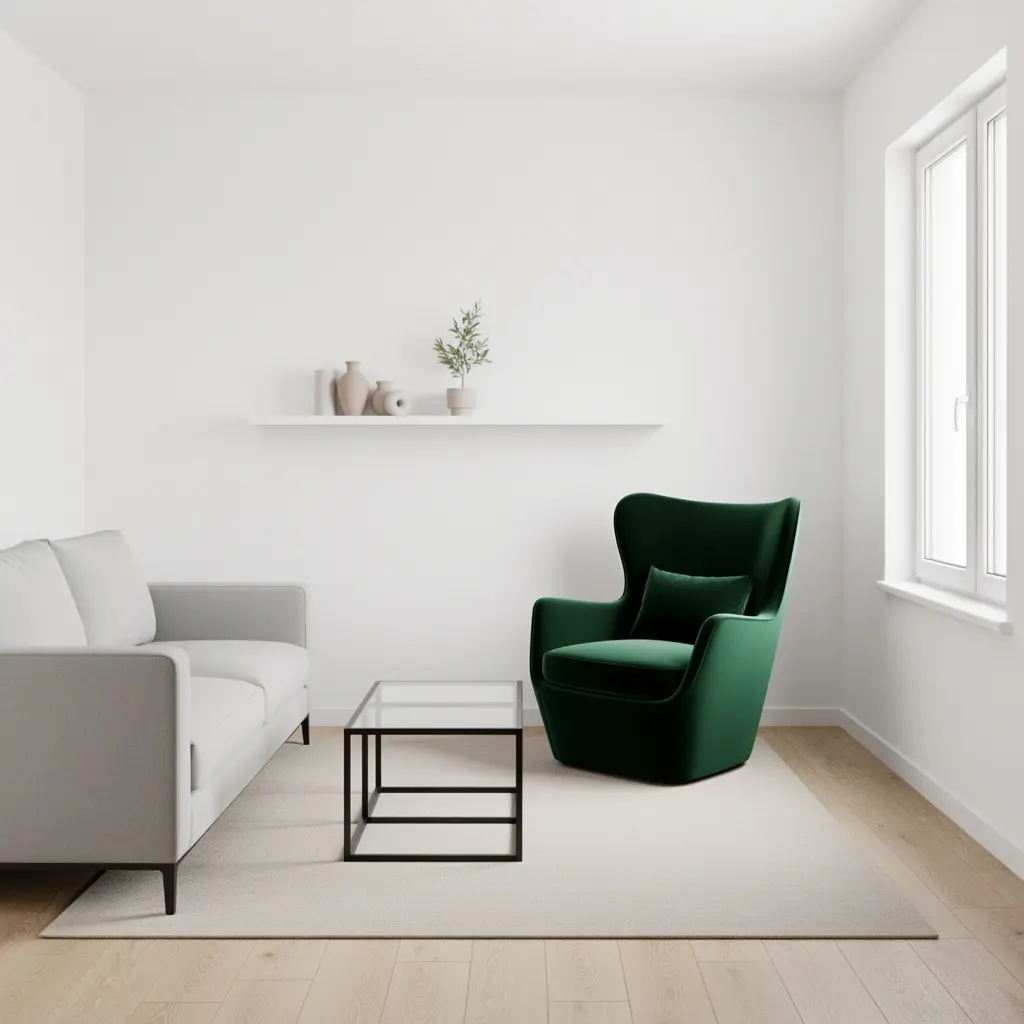
Minimalist doesn’t mean boring, but it does mean restraint everywhere except one focal point. That could be an oversized piece of art, a sculptural floor lamp, or a textured accent chair in a color that pops against your neutral base. Everything else in the room should support that one piece instead of competing with it.
This is where a lot of small living rooms go wrong. People add a few too many “interesting” pieces, and instead of one focal point, the room has five smaller ones pulling attention in different directions. Pick your one moment, and let the rest of the room go quiet around it.
9. Use Mirrors and Reflective Surfaces to Extend the Room Visually
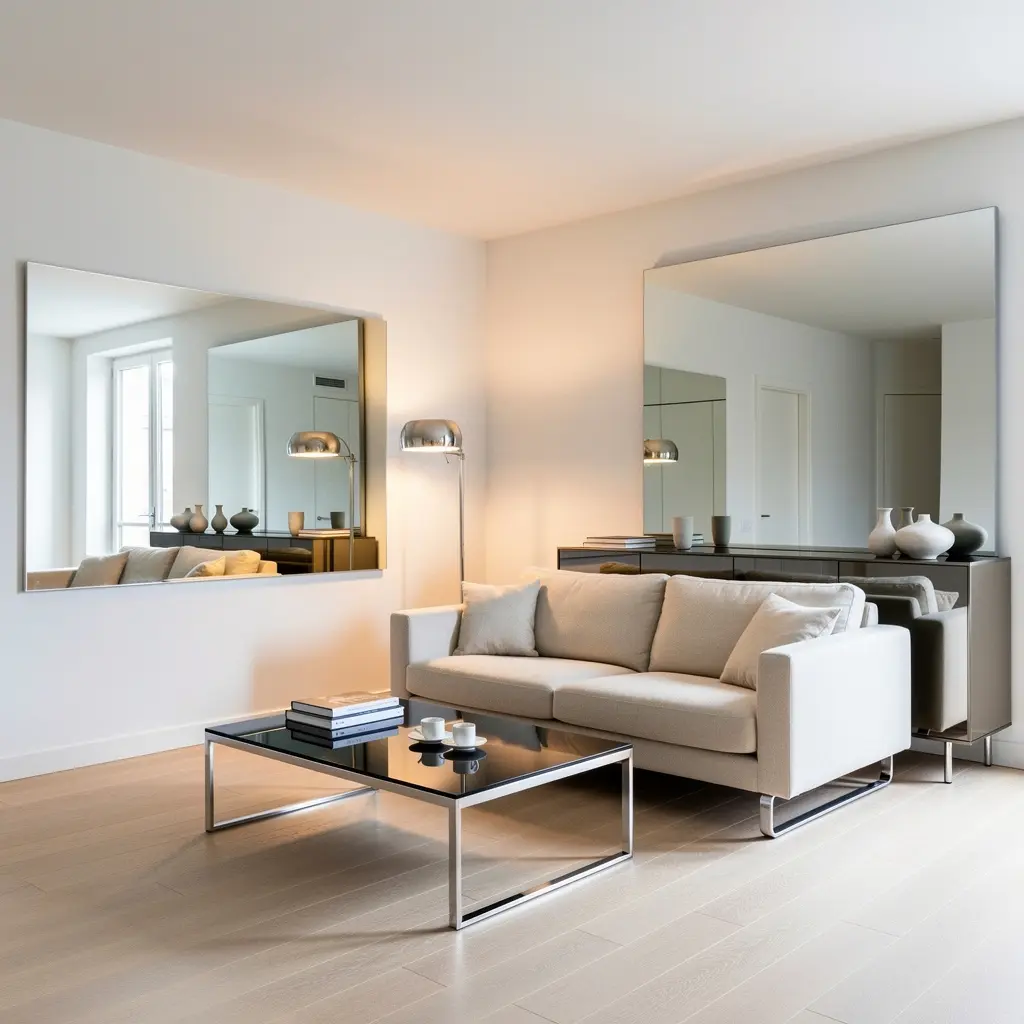
A well placed mirror, ideally one that reflects a window or a light source, can make a small living room feel noticeably larger without changing a single piece of furniture. Lean a large floor mirror against an empty wall, or hang one above the console table where the console would otherwise leave blank space.
Glass and metal surfaces do a similar job on a smaller scale. A glass top side table or a metal framed shelf lets light pass through instead of blocking it, which keeps the room feeling open even when every surface is technically in use.
10. Edit Ruthlessly, Then Edit Again
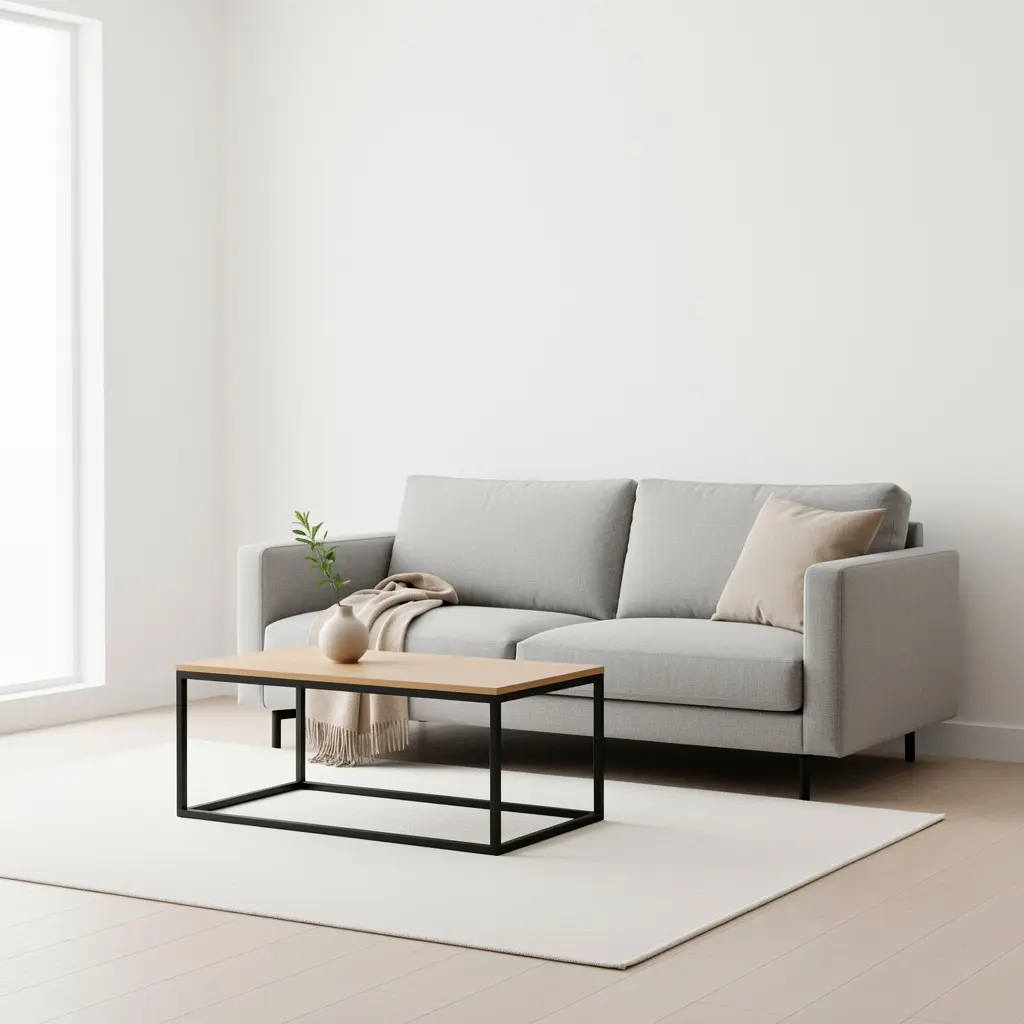
Once the room is set up, live in it for two weeks, then go back through and remove anything that isn’t earning its place. This includes decorative objects, extra throw pillows, and any furniture piece you keep working around rather than using.
A genuinely minimalist small living room is never really finished, it’s maintained. Things creep back in over time, mail piles up, new decor gets added for a holiday and never leaves. Building in a seasonal reset, even just twenty minutes every few months, keeps the room from slowly drifting back into clutter.
Mistakes to Avoid
- Buying furniture sized for a showroom instead of measuring your actual room first
- Choosing a coffee table that’s too large or too tall for the sofa in front of it
- Mixing more than three colors across furniture, rug, and art
- Filling every shelf and surface completely instead of leaving visual breathing room
- Relying on a single overhead light instead of layering in lamps
- Adding too many “statement” pieces instead of committing to just one
Frequently Asked Questions
What is the ideal sofa size for a small living room? A loveseat or a compact two seat sofa, typically 60 to 72 inches wide, works well in most small living rooms. Measure your available wall space first and leave at least a few inches of clearance on either side.
Can a small living room be dark and still feel minimalist? Yes, a darker wall color can absolutely work in a minimalist small space, as long as the overall palette stays limited to two or three tones and the lighting is layered well. Dark walls paired with good natural light and warm lamp light can feel cozy rather than cramped.
Do I need a rug in a small living room? A rug can help define the seating area and add warmth, but it should be sized to fit under the front legs of your main furniture at minimum. A rug that’s too small for the room actually makes the space look choppier and smaller.
How much furniture is too much for a small living room? As a general guide, a sofa, one or two accent pieces, a small coffee or side table, and one storage piece is usually the ceiling for a room under 150 square feet. If you’re debating whether to add another piece, that hesitation is usually your answer.
What colors make a small room look bigger? Warm whites, soft neutrals, and light warm grays tend to make small rooms feel more open, especially when the wall color continues onto trim for a seamless look. That said, a single deeper accent wall or a cohesive darker palette can also work if it’s used consistently rather than randomly.
Conclusion
A minimalist small living room isn’t about owning less for the sake of owning less. It’s about making sure every piece in the room is doing real work, whether that’s storage, seating, or light, and nothing is just taking up space out of habit. Start with the layout, keep the palette tight, and edit down over time rather than all at once. The room will feel calmer almost immediately, and it will stay that way if you keep checking in on what’s actually earning its spot.