10 Lavender Bathroom Ideas for a Soothing, Elegant Retreat
A bathroom might be the smallest room in the house, but it’s also one of the most forgiving places to experiment with a color like lavender. One good choice in a small bathroom makes the whole scene convincing, and lavender in particular keeps showing up across new remodels and design coverage this year specifically because it evokes calm without sacrificing a genuine sense of elegance. Whether the plan is a full repaint or something as simple as a new shower curtain, there’s a version of this color that fits almost any budget and commitment level.
1. Choose Your Commitment Level Before Picking a Shade
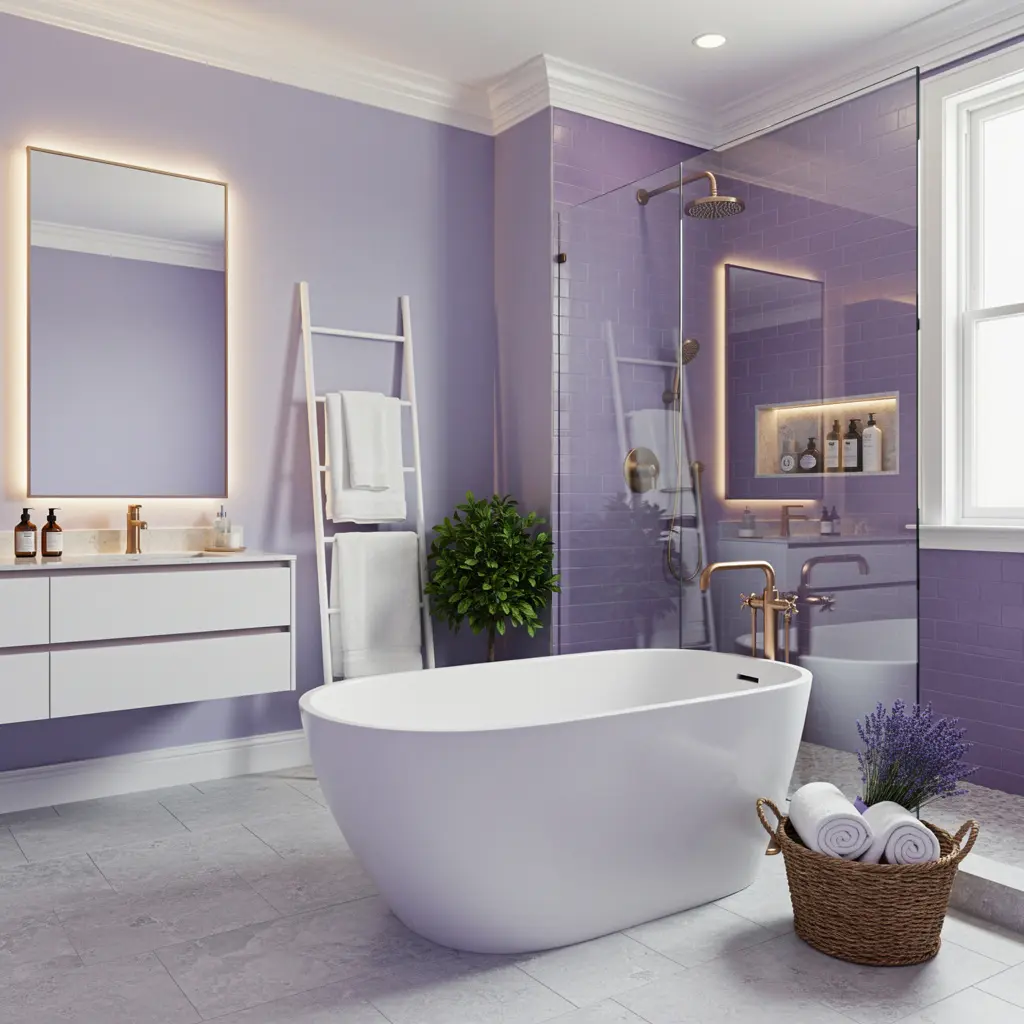
Lavender works at every level of commitment, from a full wall repaint to something as simple as swapping a shower curtain or a hand towel. Deciding upfront how much of the bathroom is actually changing shapes which specific approach makes sense, since a fully committed wall color calls for a different kind of planning than a lower risk accessory swap that can be undone in an afternoon. Starting with a clear vision and one bold element tends to work better than trying to change everything about the room at once.
Matching Commitment to Budget
A full vanity repaint or wall color change is the biggest financial and time commitment on this list, while textiles and a framed mirror sit at the opposite end, both reversible and inexpensive if the look doesn’t end up working the way you hoped.
2. Pair Muted Lavender With Honey Oak or Teak
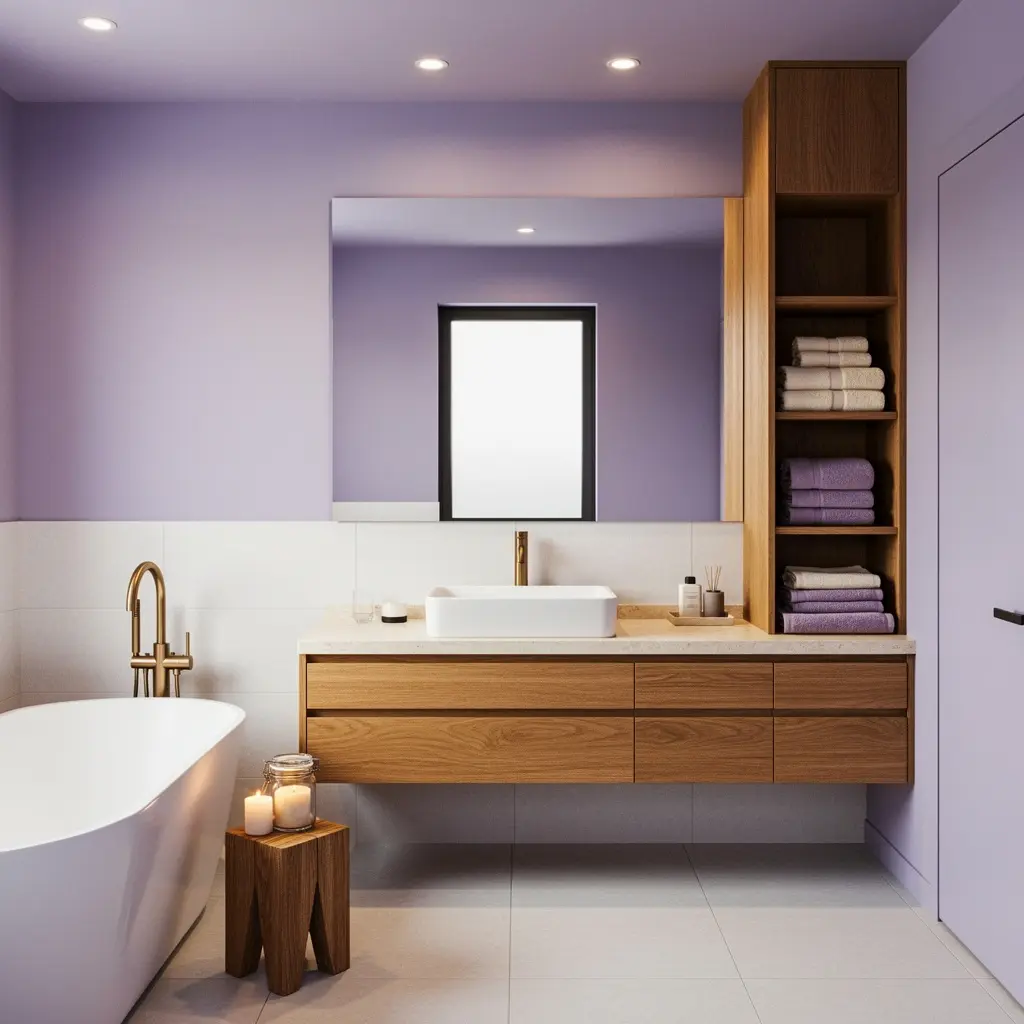
A muted lavender wall paired with honey oak or teak vanities balances the coolness of purple and adds warmth without competing for attention. This wood pairing works the same grounding trick lavender relies on in bedrooms and kitchens, giving a cool pastel color a warm anchor point so the room doesn’t end up feeling flat or overly clinical.
3. Use Marble Counters for a Fresh, Classic Look
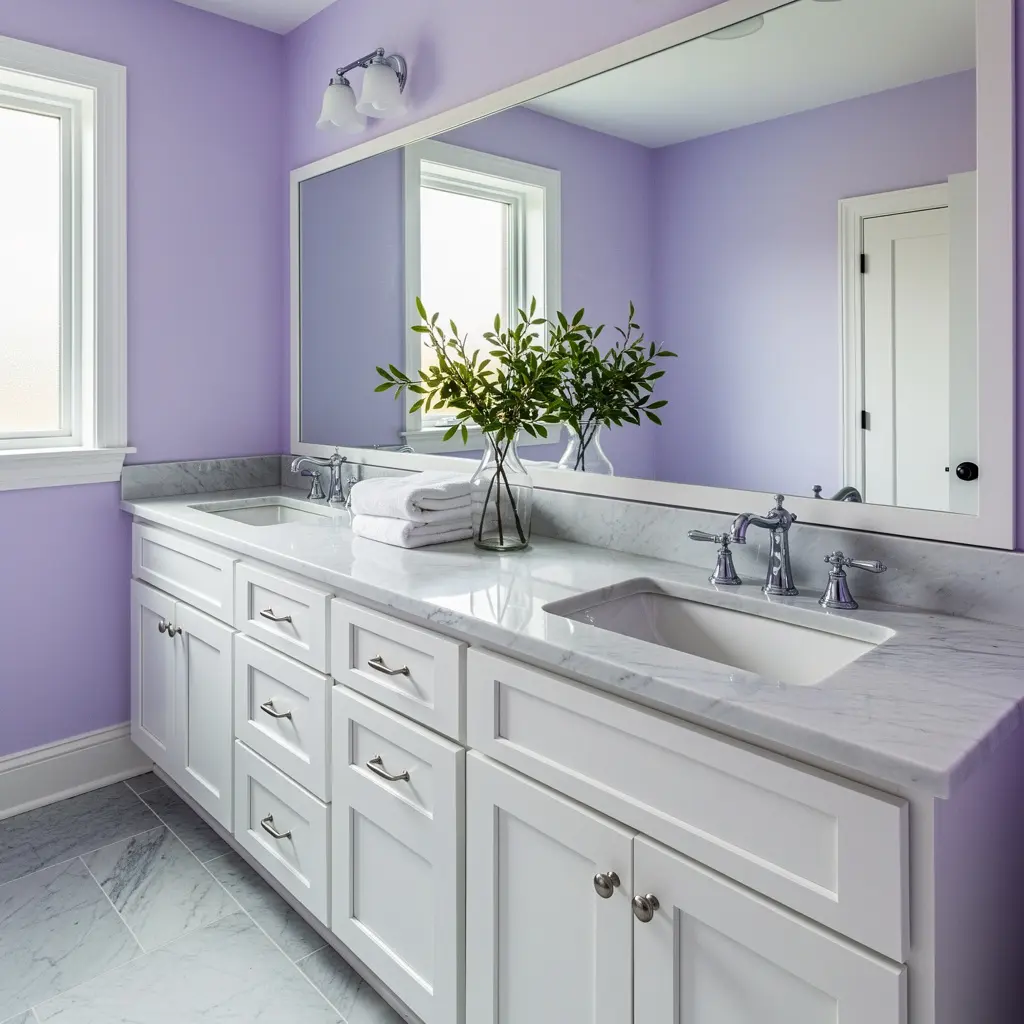
Light lavender cabinetry paired with marble counters creates a look that feels fresh but still classic, with soft purple tones echoed through florals and towels to tie the whole room together. This combination suits a slow morning routine especially well, the kind of bathroom that feels a bit more peaceful with candles lit and sunlight filtering through a sheer curtain.
Engineered quartz with a similar veined look is worth considering if natural marble feels like too much upkeep for a bathroom, since it delivers a comparable visual effect while standing up better to daily splashes and cleaning products.
4. Try an Ombre Shower Curtain for Low Commitment Color
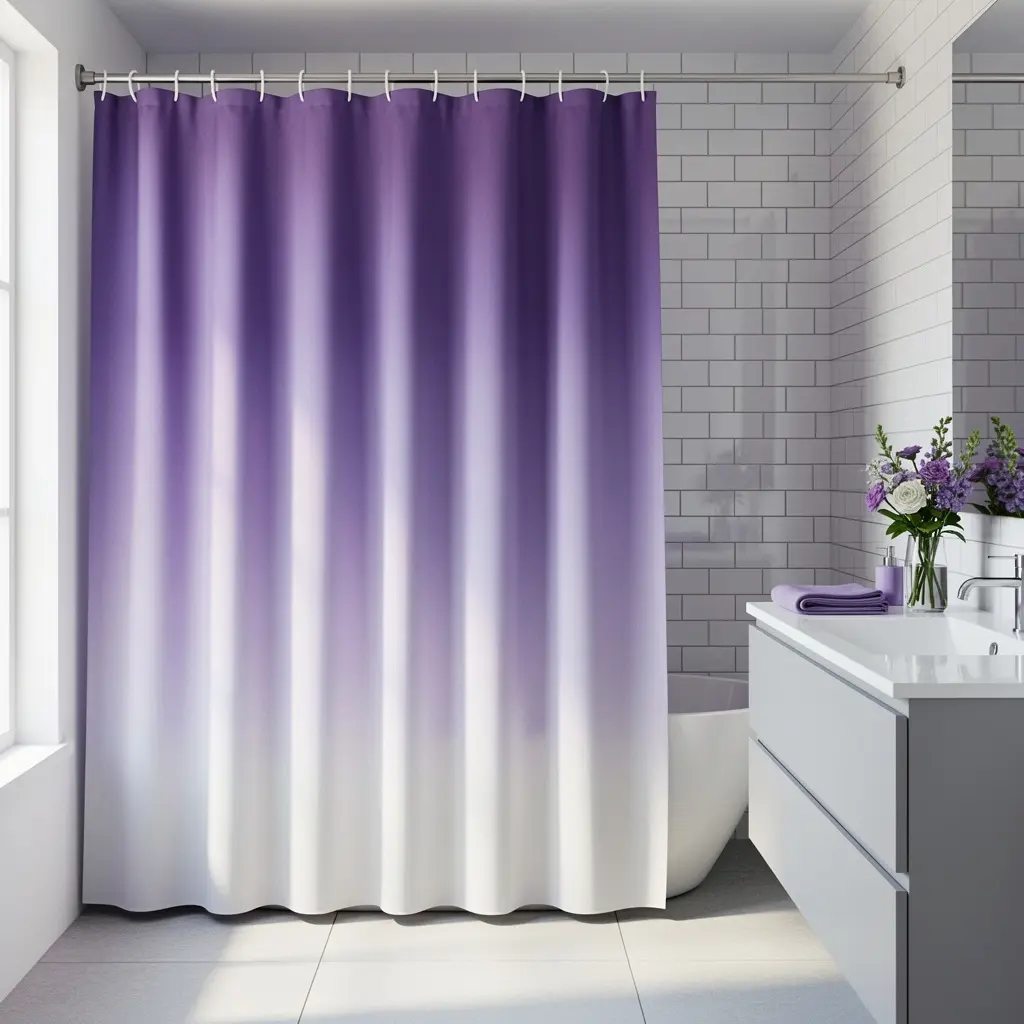
An ombre shower curtain that transitions from deep purple to soft lavender adds gentle depth to the space without any irreversible changes to the room itself. This is one of the easiest ways to bring real visual interest into a lavender bathroom while keeping every other surface completely neutral, which matters for anyone renting or not ready to commit to paint.
5. Add a Lavender Framed Mirror Against White Tile
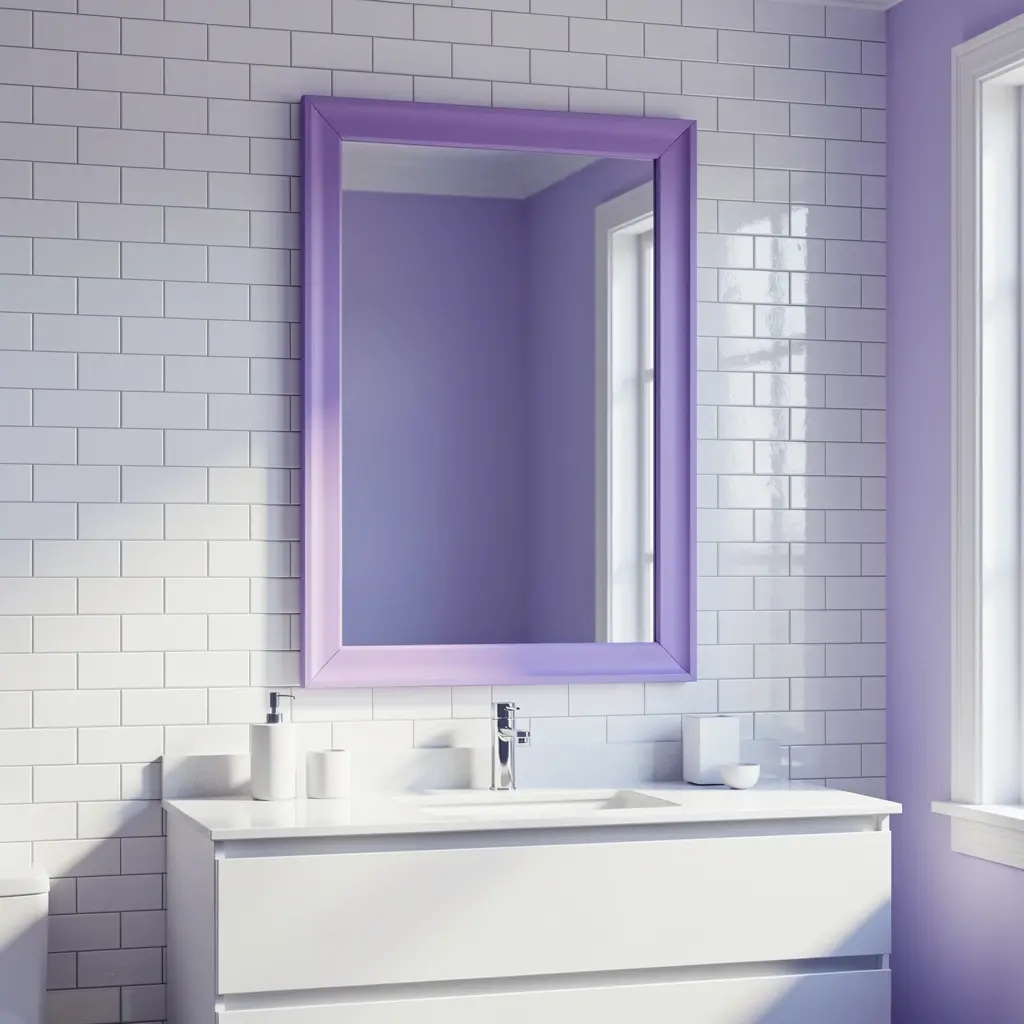
A lavender framed mirror set against white tile is a cost effective detail that pairs especially well with white or neutral tile work already in the bathroom. This kind of accent creates a cozy yet sophisticated feel while asking for a much smaller commitment than painting the entire room, and it’s simple to swap out later if the color story shifts.
6. Layer Lavender Tile on the Lower Half of the Wall
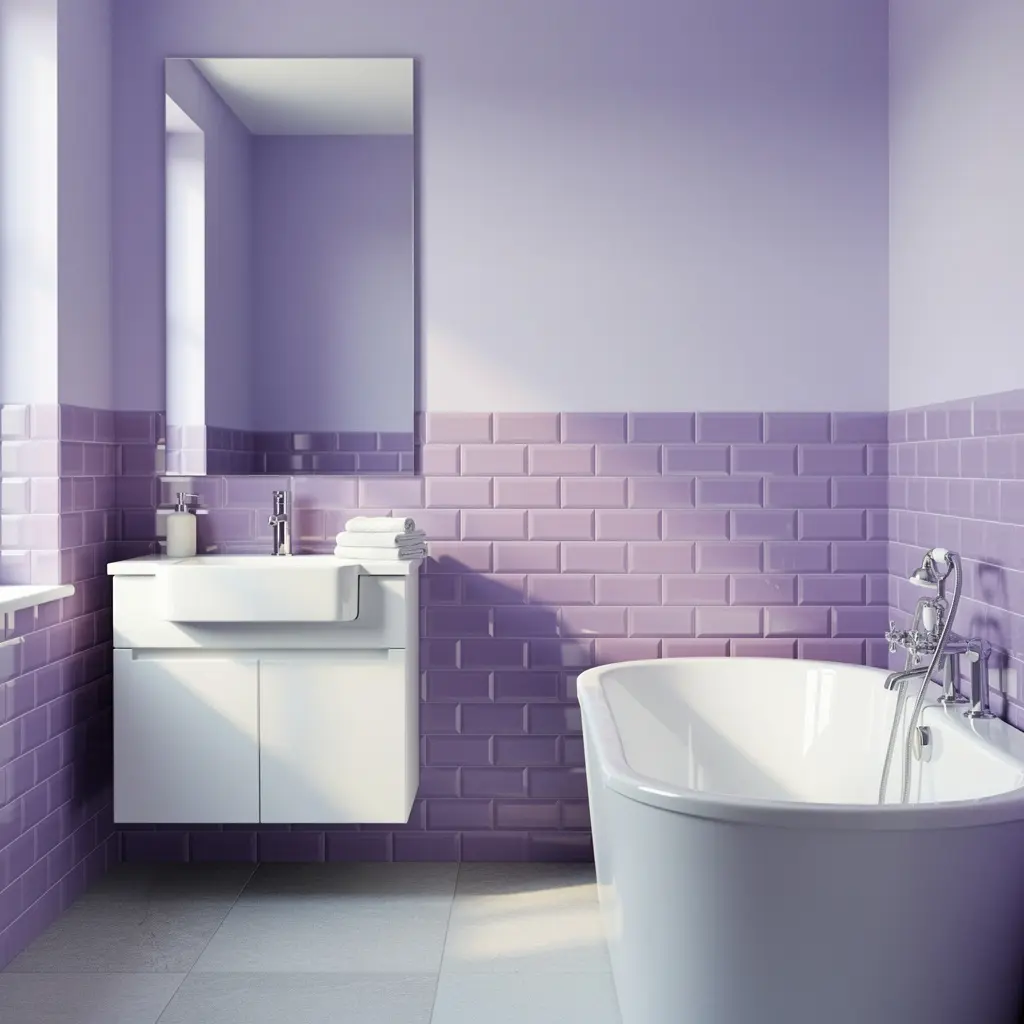
Lavender tile applied to the bottom half of the wall, topped with clean white above, creates strong visual harmony without the intensity of a fully saturated lavender room. This half and half approach gives the color real presence while keeping the upper portion of the room bright, which works particularly well in a bathroom without a lot of natural light.
A simple chair rail or trim strip at the transition point between the two tile sections adds a finished, intentional line rather than leaving the color change to read as an abrupt stopping point partway up the wall.
7. Go Deeper With Purple Walls and Gold Fixtures

Deeper purple walls paired with gold fixtures bring a sense of old world elegance, especially alongside a freestanding tub and an ornate mirror that lean into a timeless, boutique hotel feel. The trick to keeping this bolder approach from tipping into overwhelming is a focused palette elsewhere in the room, letting each detail shine without competing for attention rather than layering in several other bold choices at once.
Balancing a Deep Wall Color
A deeper plum or purple wall paired with sleek marble tile and a simple black framed mirror keeps the look sharp rather than heavy, with lighting doing much of the work to pull the whole room together in the evening.
8. Add Warm, Layered Lighting for an Evening Glow
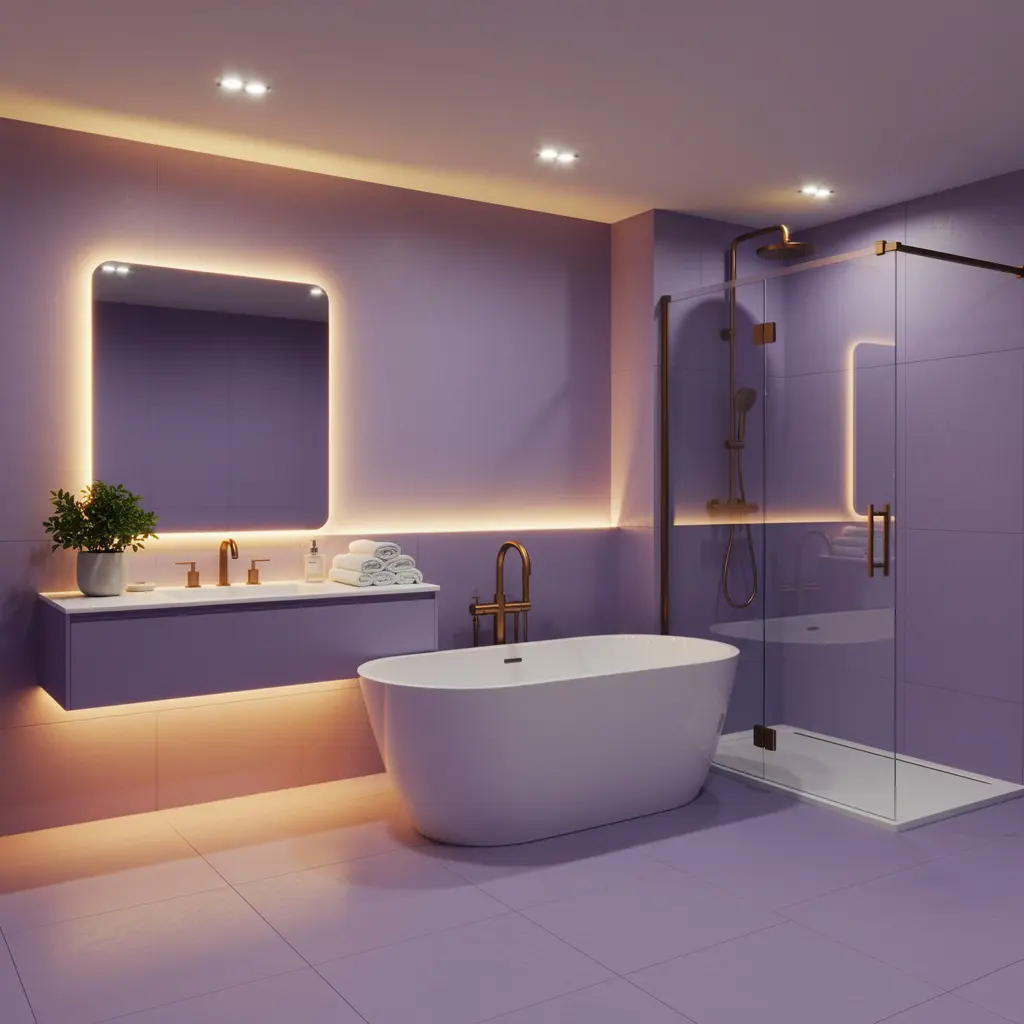
Soft, warm lighting against darker or deeper lavender walls creates a cozy, evening ready atmosphere that’s especially suited to winding down at the end of the day. This matters more in a bathroom leaning toward a deeper, moodier lavender specifically, since warm light keeps the richer color from reading as cold or heavy once natural daylight fades.
9. Bring In Lavender Through Swappable Textiles
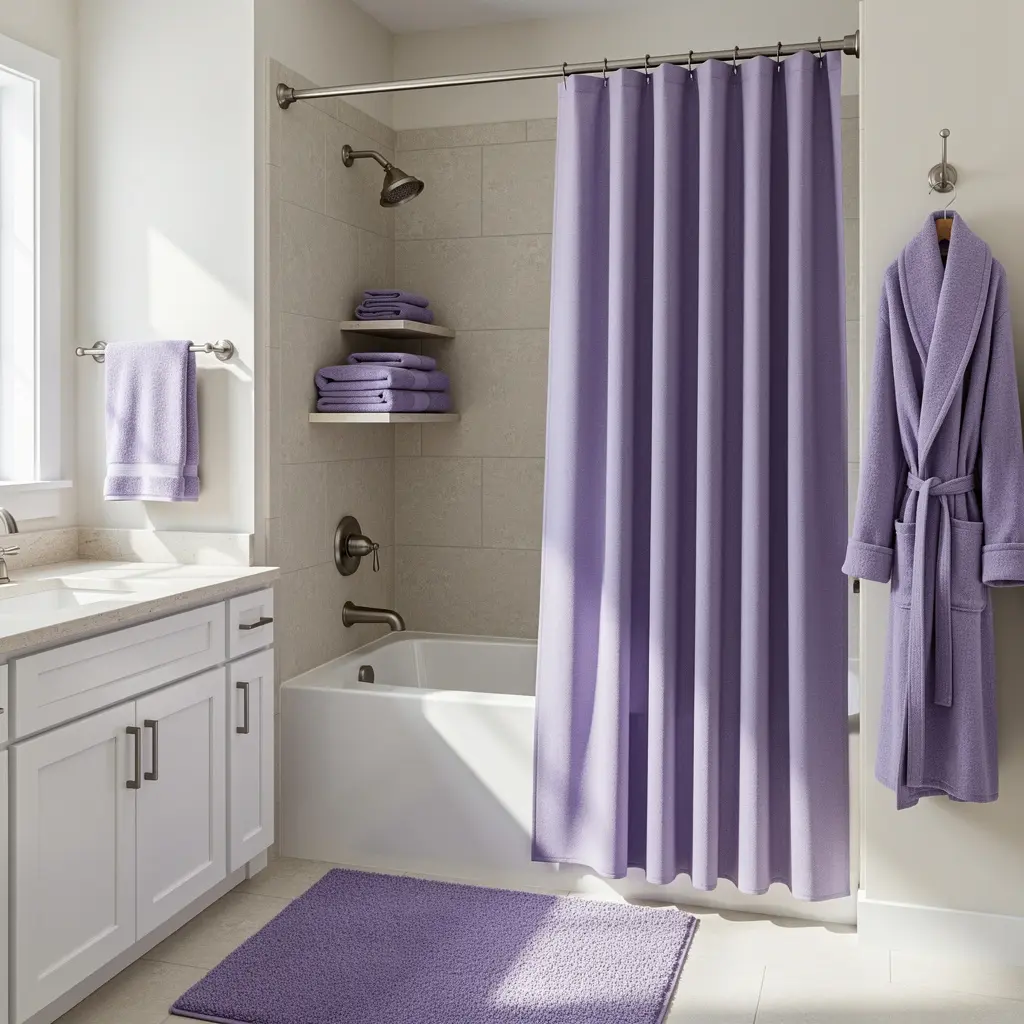
Shower curtains, towels, rugs, and bath mats in various shades of lavender are among the easiest elements to swap out entirely as preferences change, keeping the bathroom feeling fresh without any permanent commitment. A lavender scented candle or essential oil diffuser nearby extends the theme into an actual sensory experience rather than a purely visual one.
Rotating these textiles seasonally, a deeper plum toned towel set in cooler months and a paler lilac in spring, keeps the bathroom feeling current without any repeat purchases of larger, more expensive items.
10. Keep the Space Feeling Personal, Not Overdone
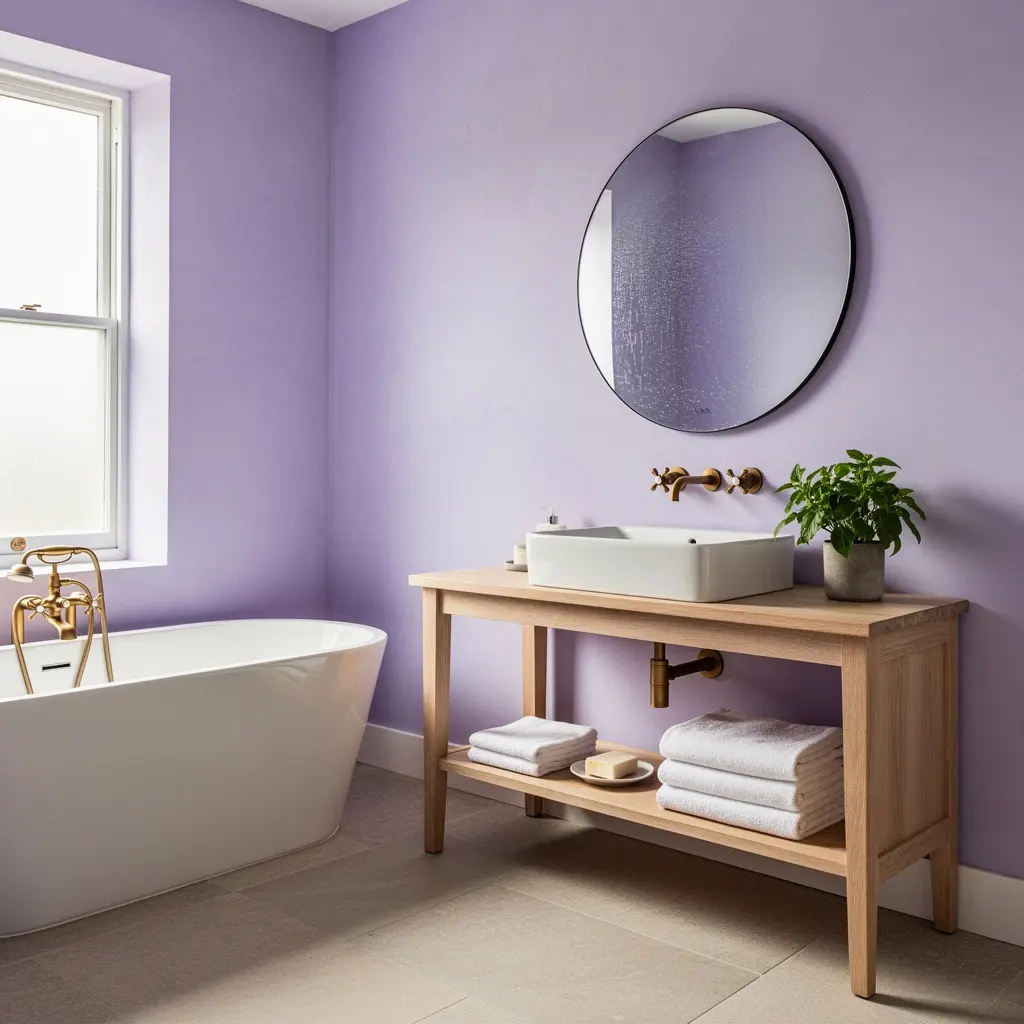
Small plants, a stack of books, and a few collected objects bring real character into a lavender bathroom without trying too hard, proving that even a compact space can carry a strong point of view. This personal, slightly imperfect styling is part of what separates a lavender bathroom that feels curated but relaxed from one that reads as a themed showroom display.
Mistakes to Avoid
- Committing to a full wall repaint before testing the shade through a lower risk accessory like a shower curtain
- Pairing lavender only with cool tones instead of warm wood, which can leave the room feeling flat and clinical
- Choosing a deeper, saturated purple without a focused supporting palette, which can tip the room toward overwhelming
- Skipping warm lighting in a bathroom with darker lavender walls, leaving the color feeling cold once the sun goes down
- Overcrowding the space with too many themed lavender accessories instead of keeping the styling personal and restrained
- Ignoring moisture resistant paint specifically formulated for bathroom humidity when repainting a vanity or wall
Frequently Asked Questions
What’s the lowest commitment way to try lavender in a bathroom? A shower curtain, a set of towels, or a lavender framed mirror are all easy, swappable ways to test the color without touching the walls or vanity.
What colors pair best with lavender in a bathroom? White, gray, and sage green are among the most consistently recommended pairings, along with warm wood tones like honey oak or teak for balance.
Is a deep lavender or purple bathroom too much for a small space? Not necessarily, as long as the rest of the palette stays focused. A deeper wall color paired with simple marble tile and minimal styling can feel elegant rather than overwhelming even in a compact bathroom.
Do I need to repaint the whole vanity for a lavender look? No. A fresh coat of moisture resistant lavender paint on an existing vanity, or simply a lavender framed mirror, can achieve a similar effect without a full replacement.
How do I keep a lavender bathroom from feeling dated? Lean on swappable textiles and accessories rather than permanent, heavily themed finishes, so the specific shade or styling can evolve over time without requiring a full renovation.
Conclusion
A lavender bathroom works at almost any level of commitment, from a full wall and vanity transformation to something as simple as a new shower curtain or a framed mirror. Pair the color with warm wood or marble to keep it from feeling cold, add layered lighting if you go deeper and moodier, and keep the styling personal rather than overly matched. The result is a small room that feels genuinely soothing, whether it’s a five minute accessory swap or a full remodel.
Start with whichever option matches your actual budget and timeline rather than the most dramatic version you’ve seen online. A bathroom this size rewards small, well chosen changes just as much as a full renovation, and there’s no rule that says the more permanent option is automatically the better one.