10 Budget Friendly Crochet Wall Hanging Ideas That Look Expensive
A crochet wall hanging is one of the most forgiving beginner projects out there, and it’s also one of the cheapest. A single piece rarely needs more than one skein of yarn and a basic wood dowel. Keeping it looking polished instead of rough isn’t about spending more money. It’s choosing the right materials and a couple of simple techniques that make a budget piece look considered instead of unfinished.
Most of the difference between a wall hanging that looks store bought and one that looks like a rushed first attempt comes down to a handful of small decisions, tension, blocking, how the fringe gets trimmed. The materials themselves matter far less than how carefully those small decisions get handled.
1. Why Wall Hangings Are One of the Cheapest Crochet Projects
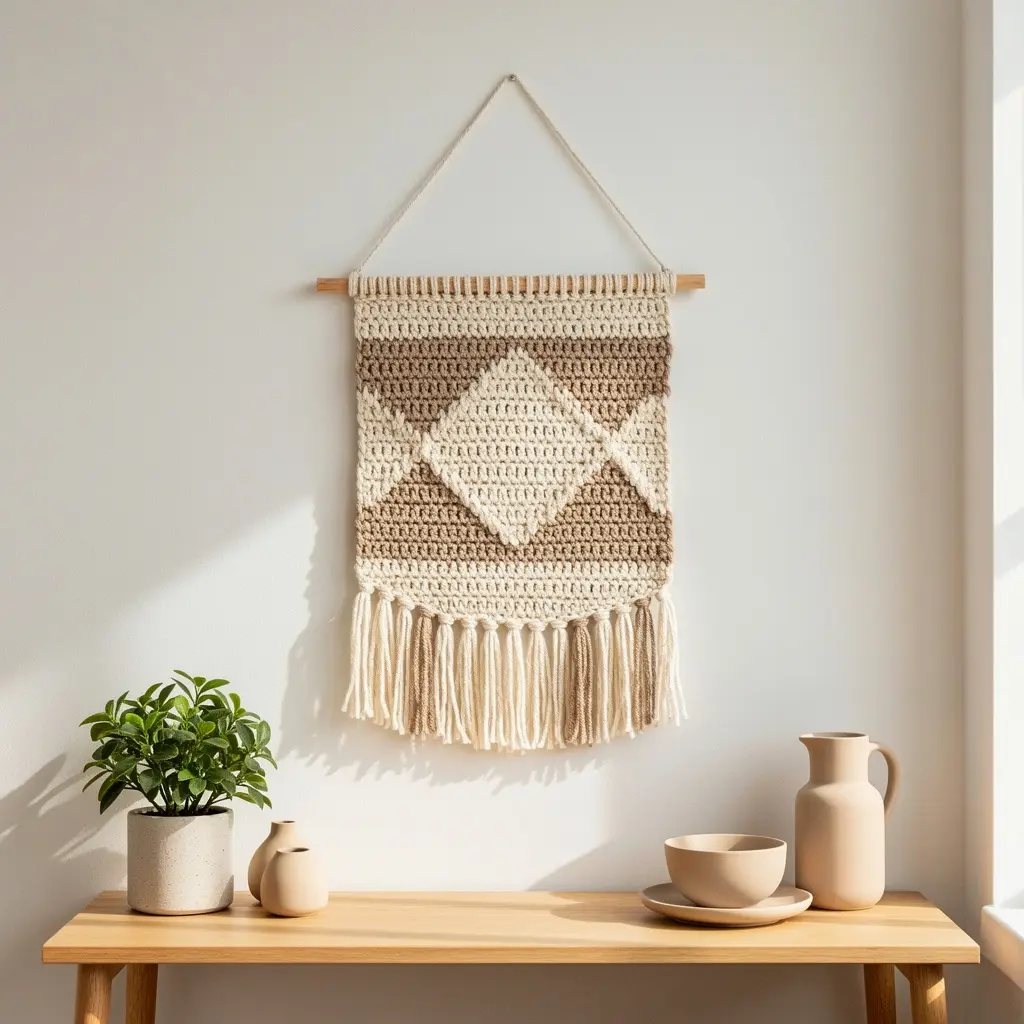
Unlike a blanket or a sweater, a wall hanging uses a relatively small amount of yarn, often just one or two skeins depending on size, which keeps material costs low even with a nicer yarn. The dowel or rod, the only other required material, can be as simple as a stick found outside or an unfinished piece of wood from a hardware store.
This makes wall hangings a good project to actually practice new stitches on. A mistake costs very little yarn and time to redo compared to a larger project.
A sweater that goes wrong mid project can mean starting over with a whole skein or more wasted. A wall hanging that goes wrong might cost you an hour and a few feet of yarn, which makes it a much lower stakes way to build confidence with a new technique.
2. Choose a Single Affordable Yarn Instead of Several Skeins
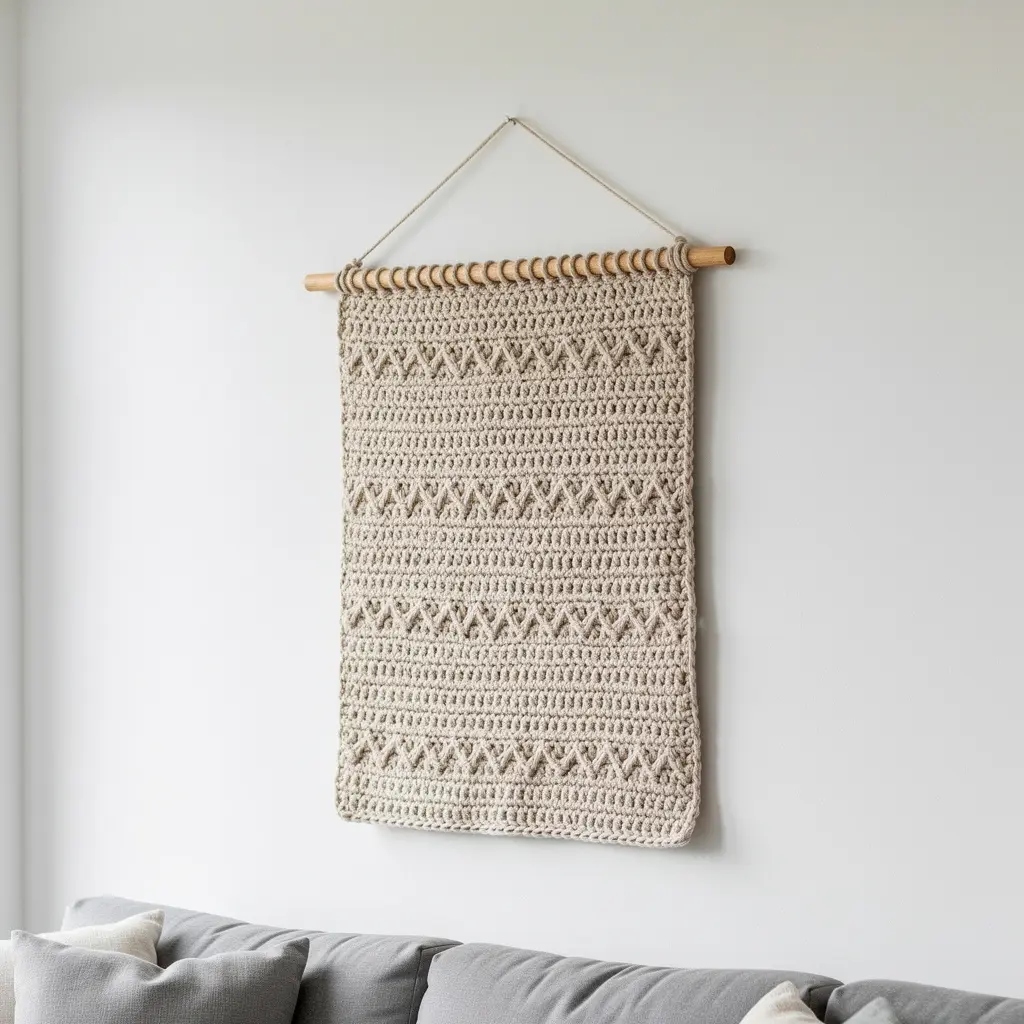
A worsted or bulky weight cotton or cotton blend yarn, in one neutral shade like cream, oatmeal, or soft gray, keeps the project cohesive and the cost down to a single skein purchase, often $6 to $12 depending on brand and fiber content. Cotton in particular holds its shape well for wall art, unlike some acrylic yarns that can look slightly limp once hung.
Why One Color Often Looks More Polished
A single color lets the stitch pattern and texture carry the visual interest, which looks more intentional than mixing several colors in a beginner piece where color transitions can look uneven.
3. Use a Basic Wood Dowel Instead of a Fancy Rod
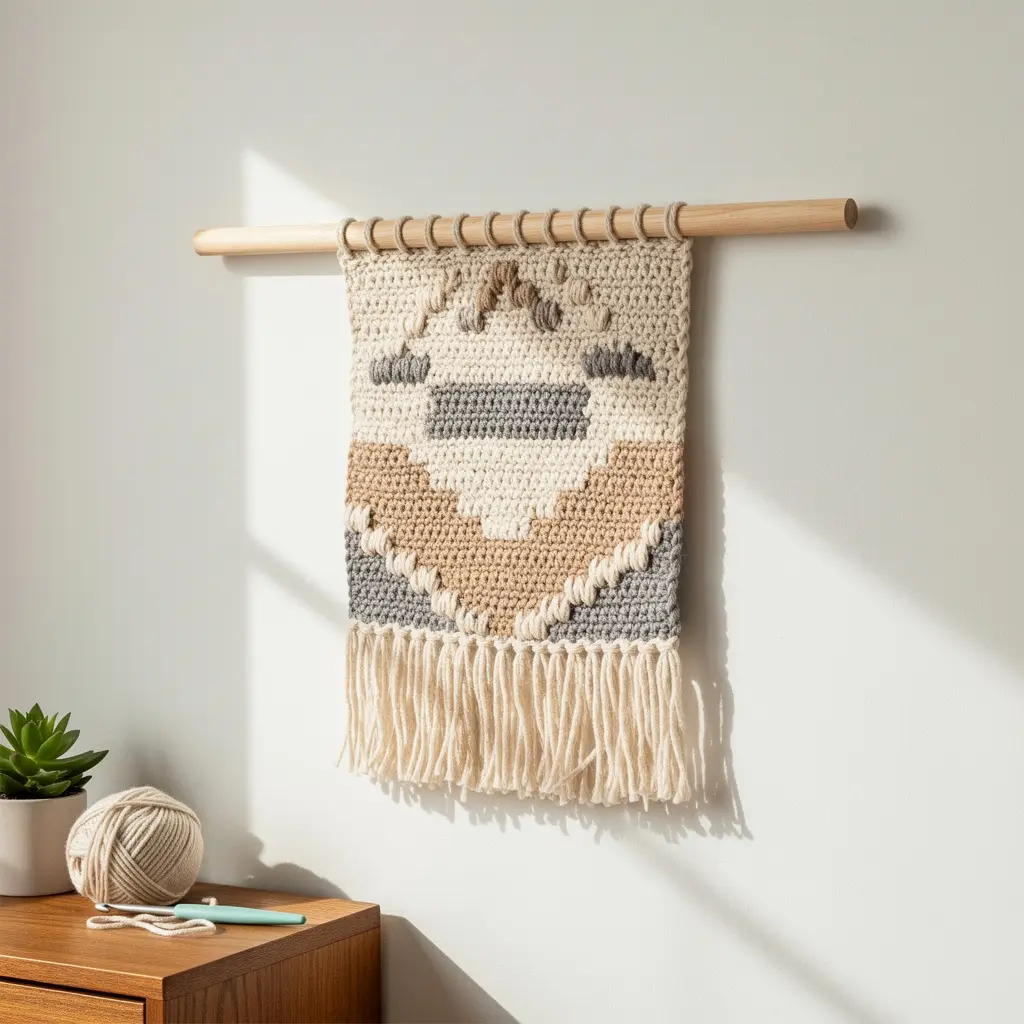
A plain, unfinished wood dowel from a hardware store, usually under $5, works just as well as a decorative brass or ceramic rod that can cost significantly more. Sanding the dowel lightly and adding a coat of wood stain or a simple wipe of oil gives it a finished look for pennies compared to a specialty rod.
A dowel with a diameter between half an inch and three quarters of an inch suits most wall hanging sizes without looking too thick or too flimsy for the piece hanging from it.
4. Stick to Two or Three Simple Stitches

A wall hanging made entirely from basic single crochet, double crochet, and a simple shell stitch can look just as intentional as a piece using a dozen complicated techniques, as long as the stitches are applied cleanly and consistently. Trying to cram too many different stitch patterns into one small piece often looks busy instead of skilled.
Picking one main stitch for the body of the piece and one accent stitch for a border or highlighted section is usually enough variation to keep a beginner project visually interesting without overcomplicating the work.
5. Vary Length Instead of Pattern for Visual Interest
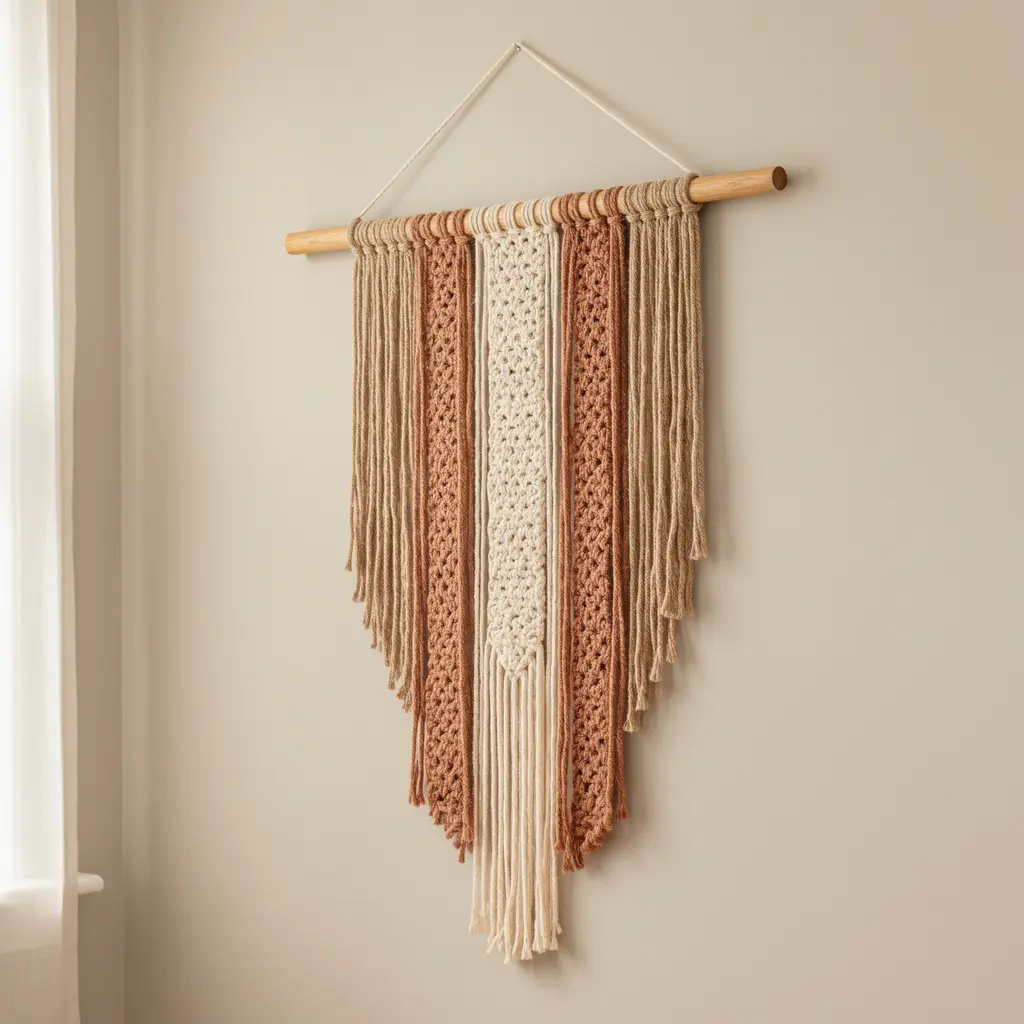
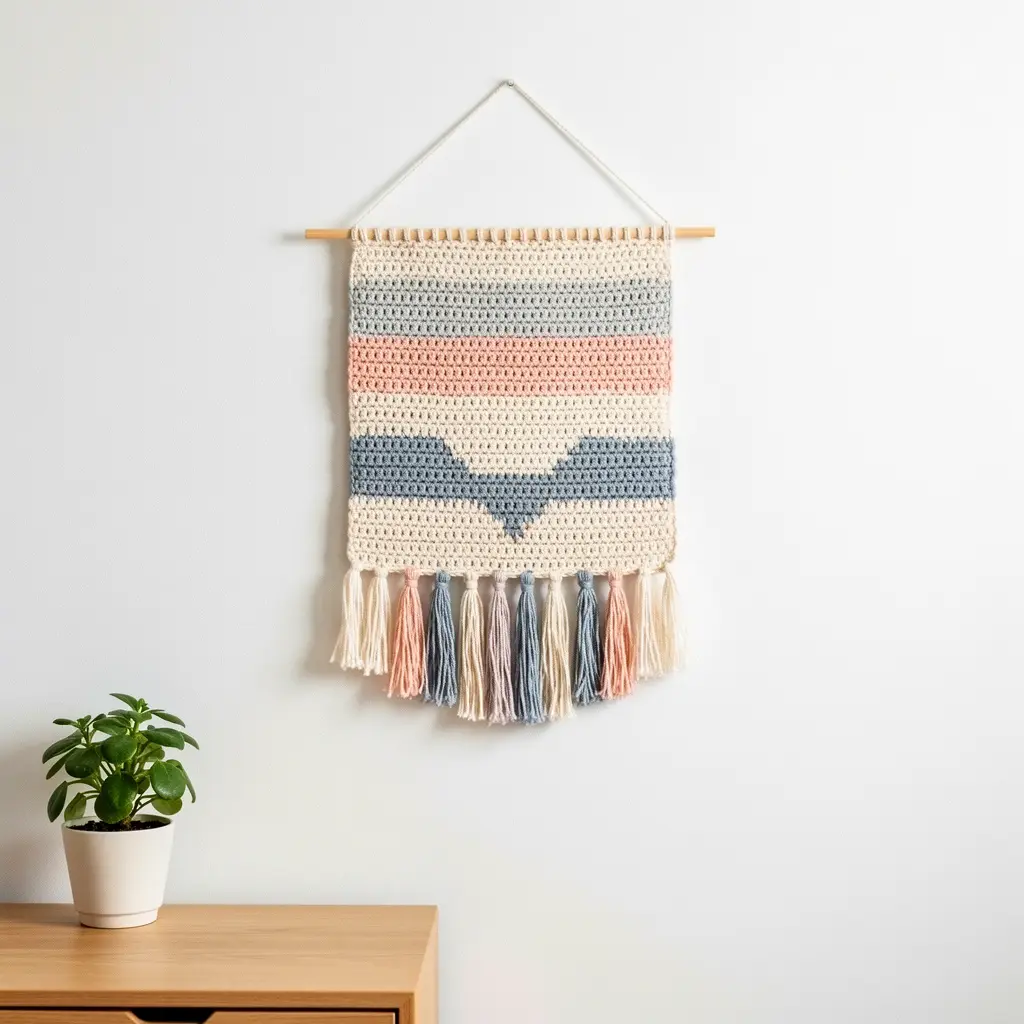
Instead of attempting a complicated pattern change across the piece, varying the length of different sections, some strands or panels reaching further down than others, creates visual movement using only basic stitches. This technique is common in boho style wall hangings specifically because it looks intentional while staying simple to execute.
A gentle V shape, longer in the center and shorter at the edges, or an asymmetrical staggered length across the bottom, both look designed instead of accidental, even with zero pattern changes in the stitches themselves.
6. Add Fringe as the Easiest Way to Add Texture
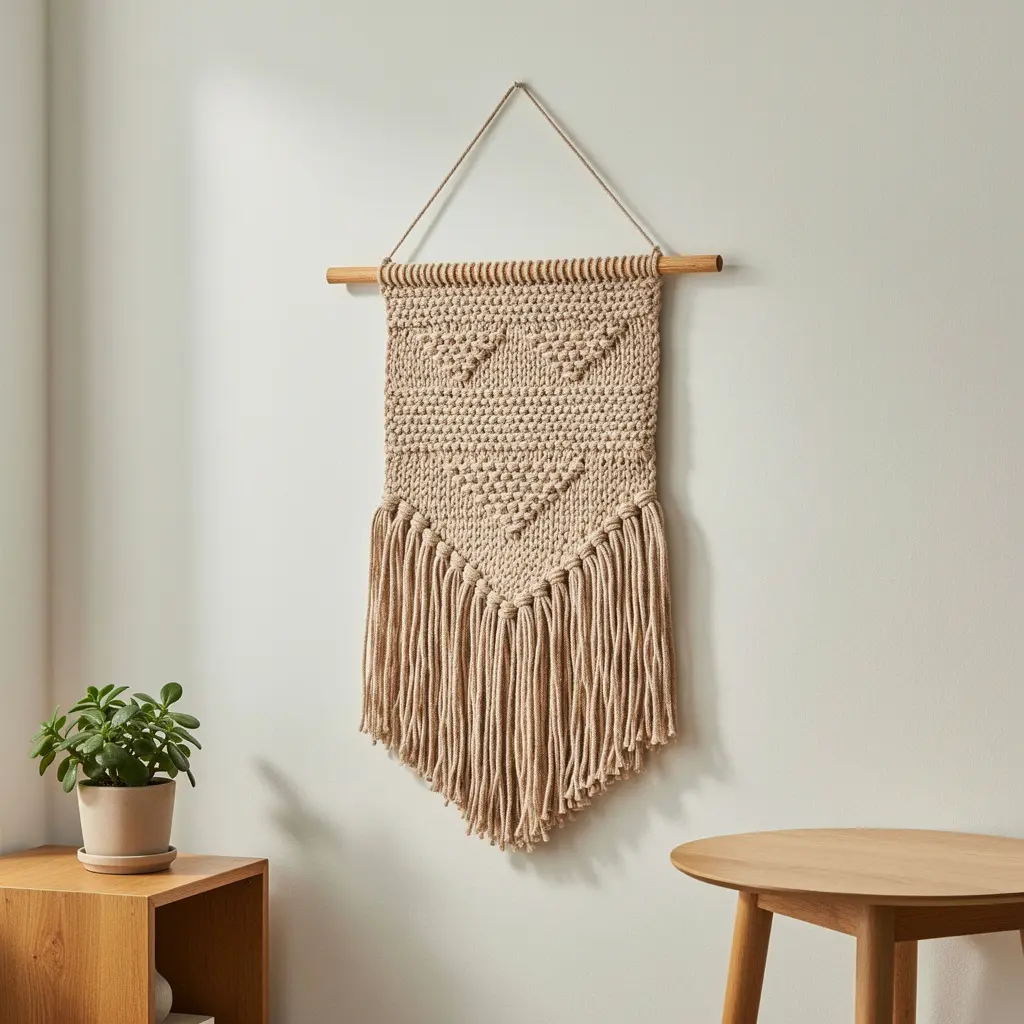
Cut lengths of yarn attached along the bottom edge add texture and movement for very little additional cost, because fringe uses leftover yarn from the same skein already purchased for the body of the piece. Trimming the fringe to slightly varied lengths, instead of one perfectly even line, gives it a more natural, less stiff appearance.
A fringe comb, or even just your fingers, run gently through the strands after trimming helps separate individual fibers in a cotton yarn, giving the fringe a softer, more textured look than leaving it as tightly twisted strands. This small step takes only a minute or two but makes a noticeable difference in how finished the bottom edge looks once the piece is hanging.
7. Keep Tension Consistent for a Clean, Finished Look
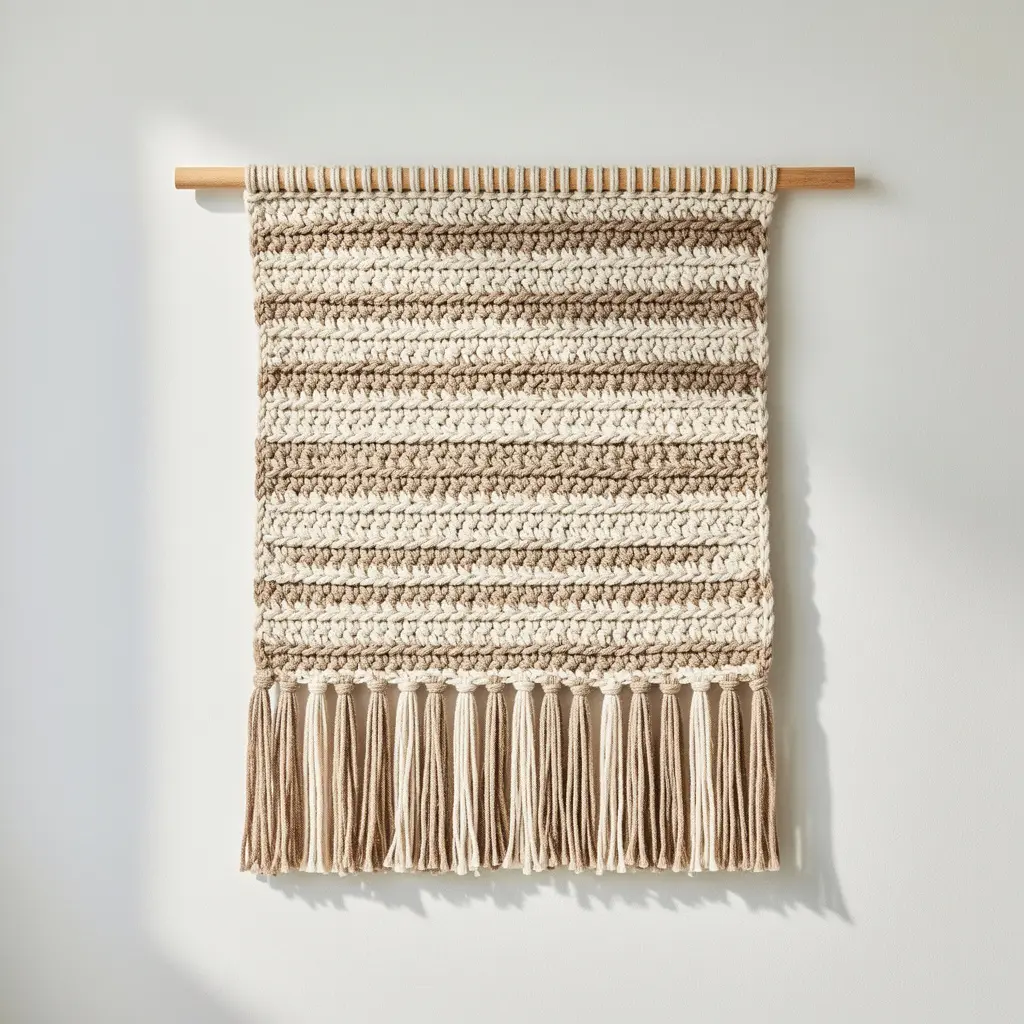
Uneven tension, some rows tight and others loose, is one of the most common issues that makes a beginner crochet piece look unfinished regardless of the pattern chosen. Working slowly and checking your stitch height periodically against earlier rows helps catch tension drift before it becomes obvious in the finished piece.
If tension is hard to control while you’re still learning, choosing a looser, more textured stitch pattern can actually help disguise minor inconsistencies better than a tight, uniform stitch would.
8. Block the Piece Before Hanging It
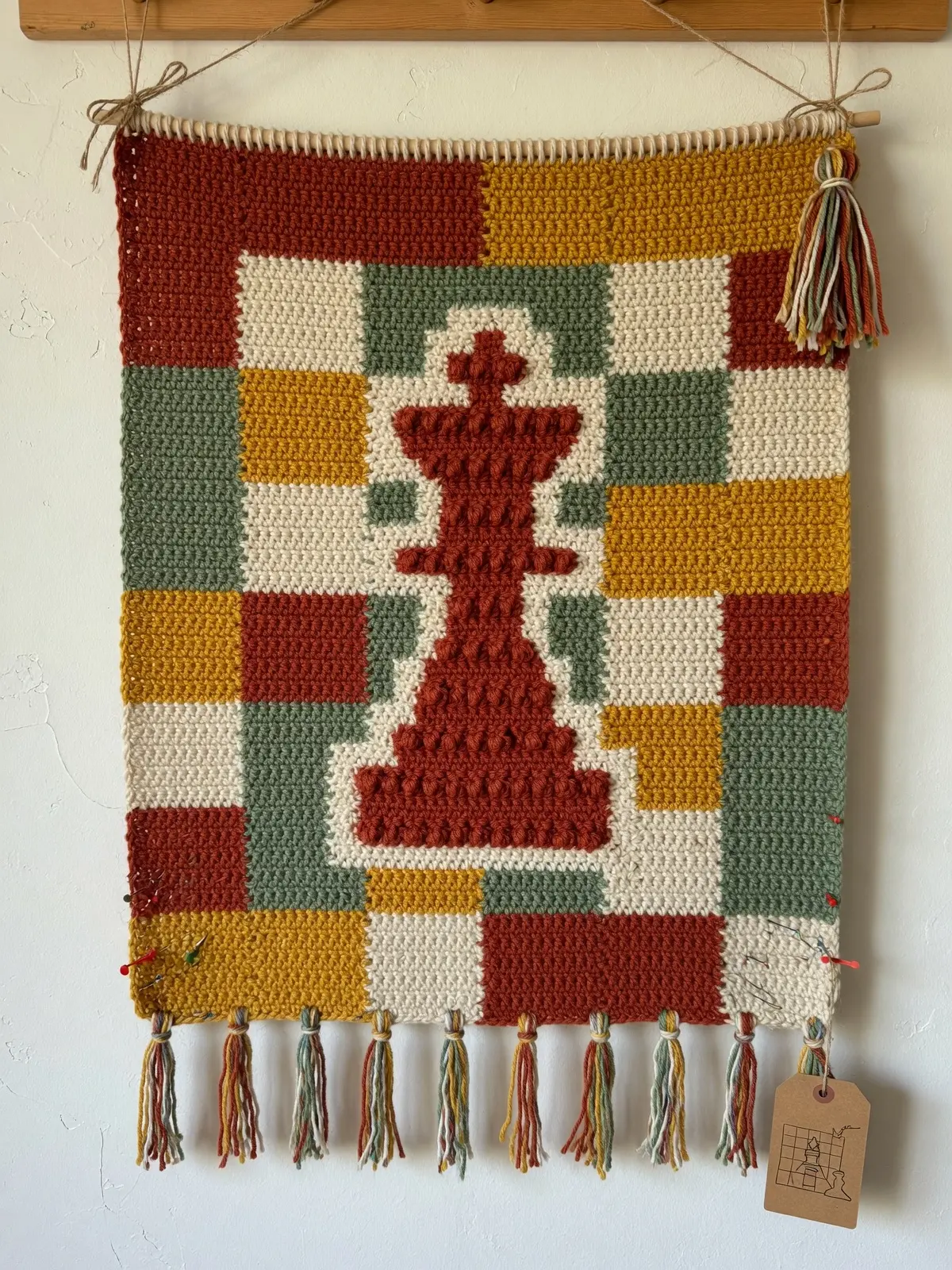
Blocking, lightly wetting the finished piece and pinning it into shape while it dries, evens out any remaining tension inconsistencies and helps the piece hang flat and straight instead of curling or twisting. This step is easy to skip but makes a noticeable difference in how finished the final piece looks.
A simple towel laid flat, with the piece pinned to roughly its intended shape and left to air dry for a day, is enough blocking for most cotton yarn wall hangings without needing any special equipment.
9. Attach It to the Dowel Without Sewing if You’re New
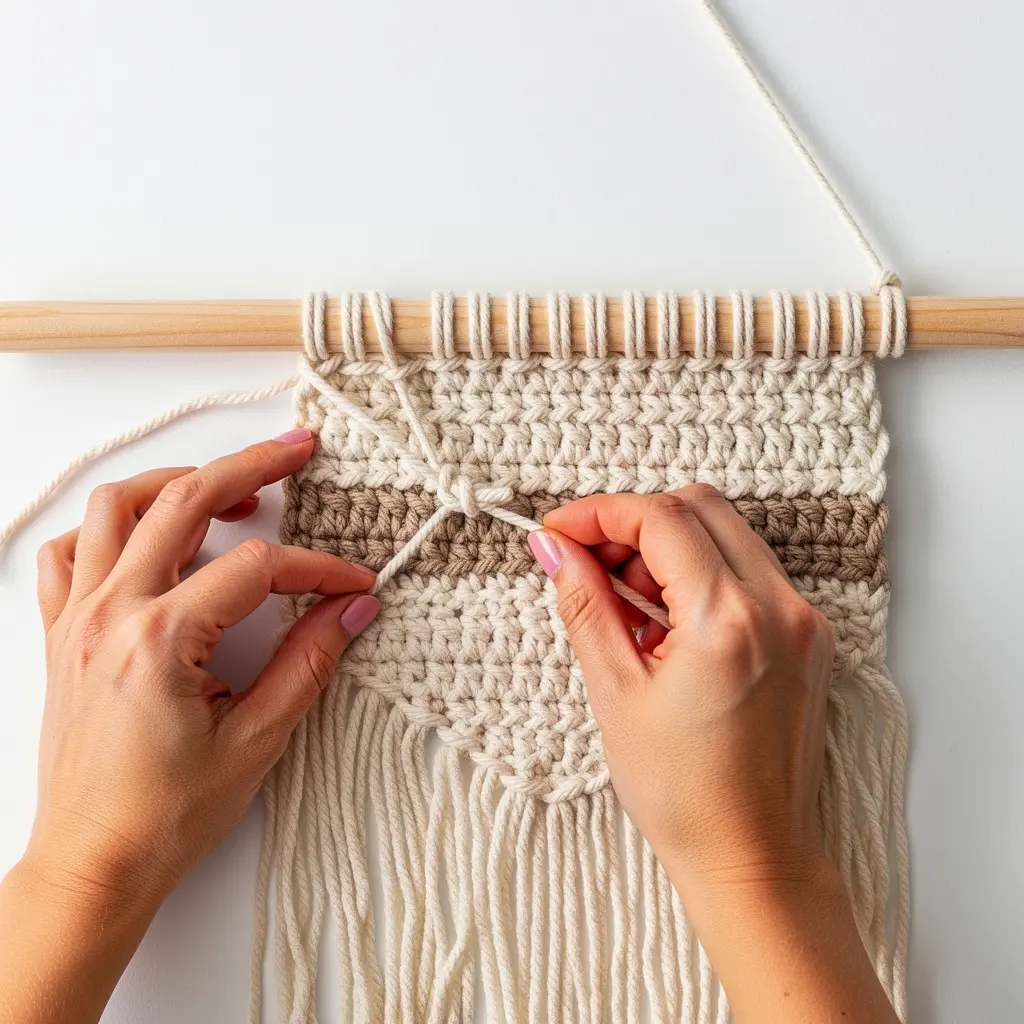
Rather than sewing the crochet piece onto the dowel, which can look uneven for a beginner, simply looping individual stitches or small sections directly over the dowel as part of the foundation row creates a clean attachment without extra stitching. This technique also makes the piece easier to remove and reattach if you want to switch dowels later.
For pieces made separately and attached afterward, a simple lark’s head knot, tying loops of yarn directly around the dowel, is one of the easiest and most forgiving attachment methods for a first attempt.
10. Where to Find Even Cheaper Supplies
Craft store yarn on sale, secondhand yarn from thrift stores or online marketplaces, and driftwood or fallen branches gathered outdoors for the dowel can bring the total project cost down to just a few dollars. Estate sales in particular sometimes have large lots of yarn sold for a fraction of retail price.
A single wall hanging project is also a reasonable way to use up partial skeins left over from other projects, especially if you’re comfortable working in one color family even when the exact shades vary slightly between leftover skeins.
Mistakes to Avoid
- Mixing too many colors or stitch patterns into one small piece
- Choosing acrylic yarn that looks limp once the piece is hung
- Skipping the blocking step, leaving the piece curled or uneven
- Trimming fringe in one perfectly straight line instead of varied lengths
- Sewing the piece onto the dowel unevenly instead of using a simpler attachment method
- Rushing tension consistency, which shows clearly in a finished wall piece
Frequently Asked Questions
What yarn is best for a budget crochet wall hanging? A worsted or bulky weight cotton or cotton blend yarn in a single neutral color holds its shape well and keeps costs down to one skein for most projects.
Do I need a special rod to hang a crochet piece? No. A plain, unfinished wood dowel, lightly sanded and stained, works just as well as a decorative rod and costs significantly less.
How much yarn does a typical wall hanging use? Most small to medium wall hangings use one to two skeins of worsted or bulky weight yarn, depending on the finished size and how much fringe is added.
Is blocking really necessary for a crochet wall hanging? It’s not strictly required, but blocking evens out tension and helps the piece hang flat instead of curling, which makes a noticeable difference in the finished look.
Can beginners really make a nice looking wall hanging with basic stitches? Yes. Varying length and adding fringe create visual interest using only simple stitches, so a beginner piece can look just as intentional as a more advanced pattern.
Conclusion
A budget friendly crochet wall hanging comes together through smart material choices, a single affordable yarn, a plain dowel, and a couple of basic stitches, more than an expensive supply list or advanced technique. Focus on consistent tension and a proper blocking step, because those two details do more for the finished look than any fancy stitch pattern could. Handled this way, a first crochet wall hanging can hold its own next to store bought decor for a fraction of the price.