10 Cozy Bedroom Ideas for Small Rooms That Look Beautiful
A small bedroom gets blamed for feeling cramped more often than it deserves. Most of the time it’s not the square footage causing the problem, it’s furniture that’s too big, lighting that’s too flat, or a layout nobody actually planned. These cozy bedroom ideas for small rooms focus on the changes that make a tiny space feel genuinely beautiful, not just functional.
1. Why Small Bedrooms Often Feel Cramped Instead of Cozy
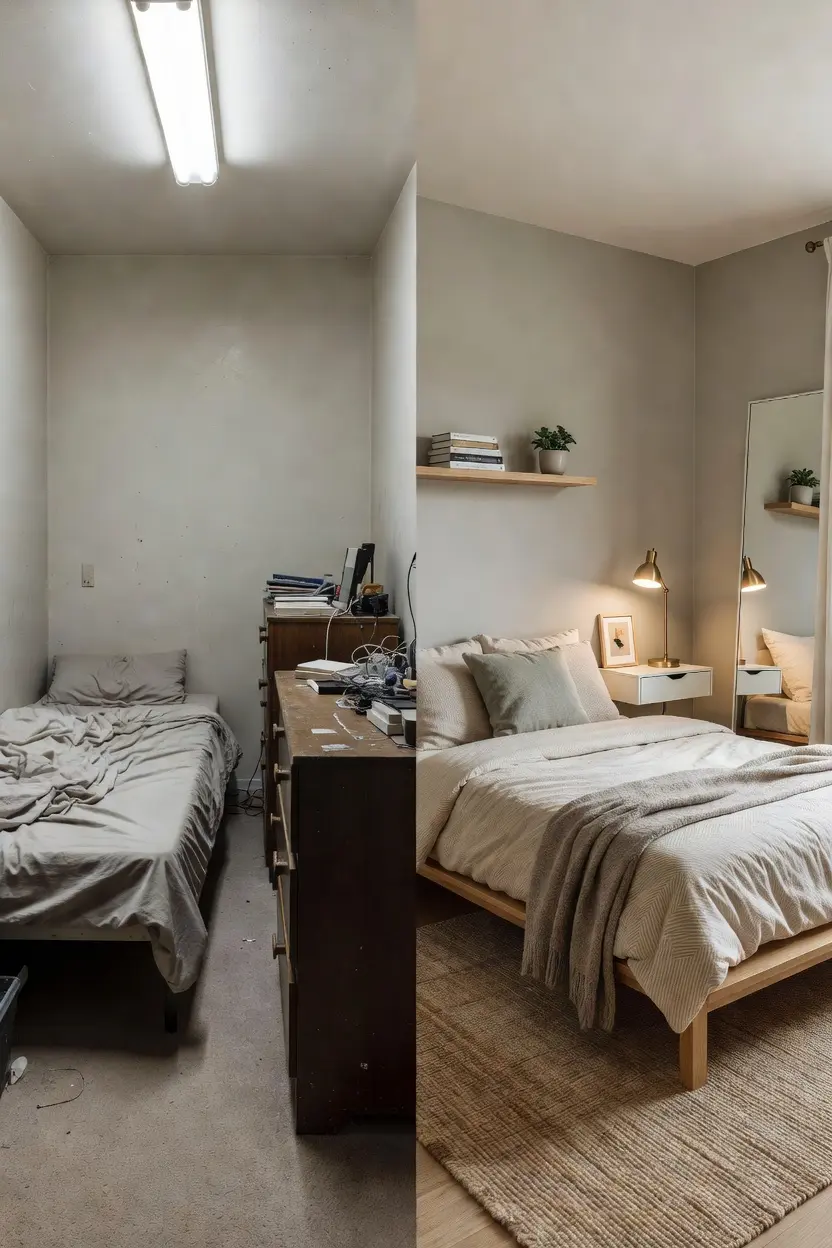
Cramped and cozy get confused constantly, but they’re not the same thing. Cramped happens when a room fights its own size, oversized furniture, cluttered surfaces, harsh lighting. Cozy happens when a room works with its size instead, using scale, texture, and warmth to make the space feel intentional.
Small rooms actually have an advantage here. There’s less to coordinate, fewer walls to plan around, and a smaller area to layer with texture and lighting. Get the basics right, and a small room can feel more pulled together than a much larger one filled with mismatched pieces.
2. Furniture Scale and Layout Choices That Open Up the Room
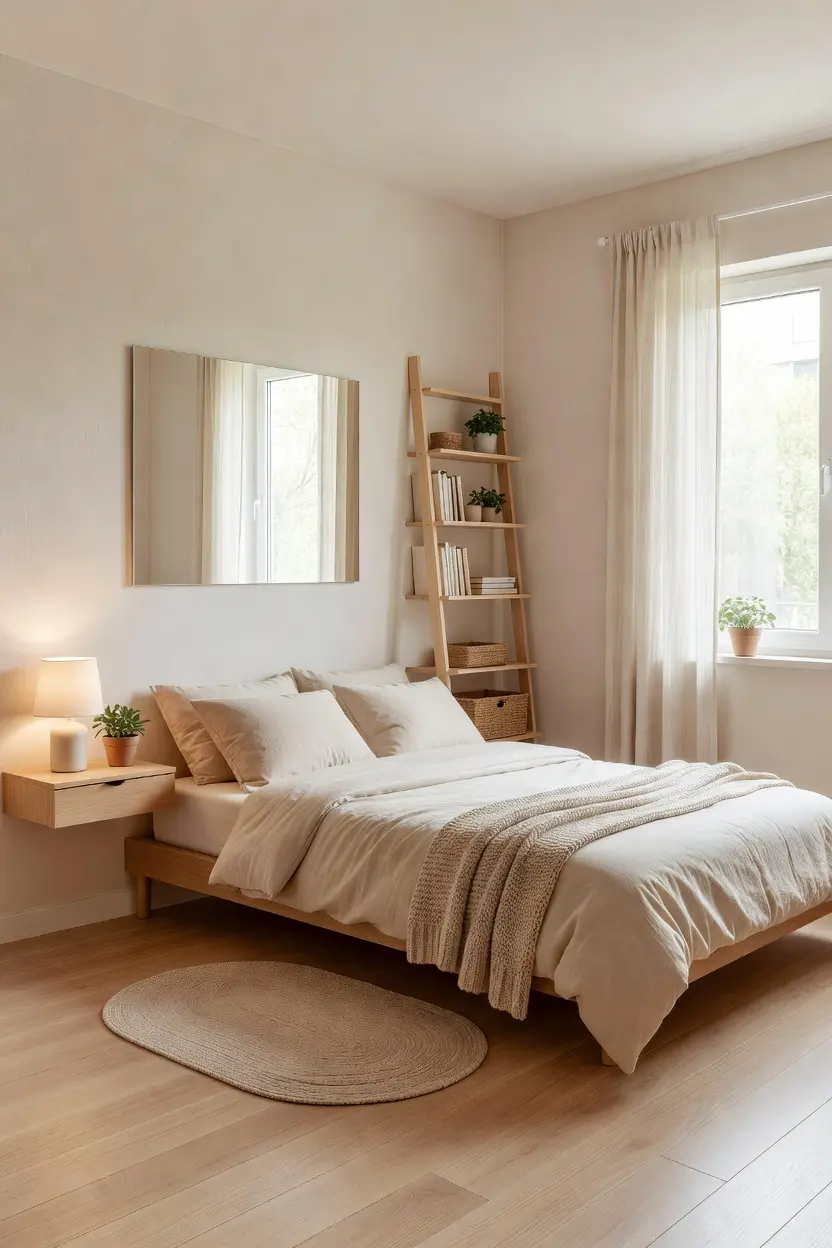
Oversized furniture is the single fastest way to make a small bedroom feel tight. A full size bed frame with a low, simple headboard leaves more wall visible than a tall, bulky one, and that visible wall space reads as breathing room.
Push the bed against the longest wall instead of centering it, and you often free up a walking path that makes the whole room feel more functional. Nightstands with exposed legs let floor space show through underneath, a small detail, but one that visually lightens the whole setup compared to a solid base sitting flush on the ground.
A quick tip that helps: measure the room’s actual walking paths before buying furniture. A bed that fits doesn’t always mean there’s enough room left to walk around it comfortably.
3. Paint Colors and Placement That Make a Small Room Feel Bigger
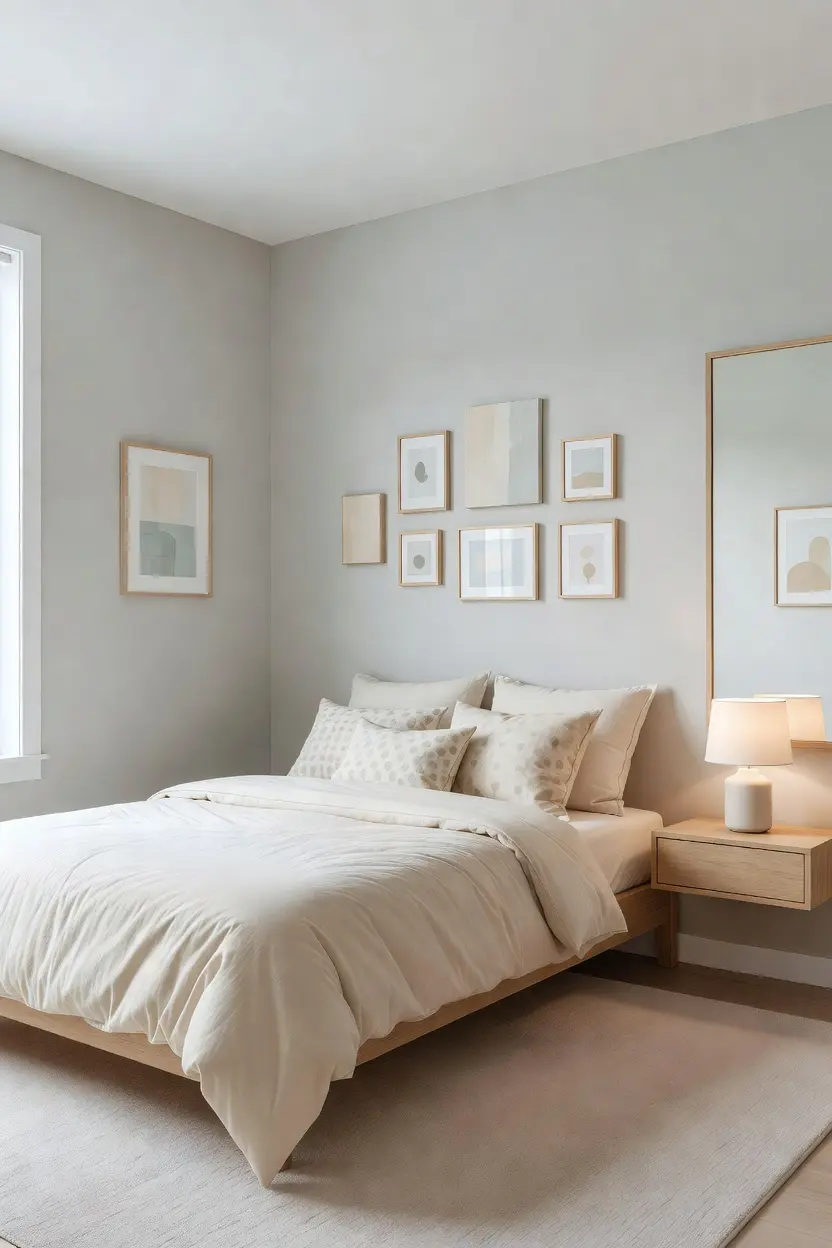
Light, warm neutrals tend to work well in small rooms with limited natural light, since they reflect what light is available rather than absorbing it. Skip stark white though. It often reads as cold and flat, especially once the sun goes down and artificial lighting takes over.
Color drenching, where the walls, trim, and ceiling all share one color, removes the visual breaks that make a small room feel chopped up. Without a stark white ceiling cutting the room off, the eye reads the whole space as one continuous area instead of several small pieces.
Testing Paint Before Committing
Paint a large sample, at least two feet wide, directly on the wall and check it morning, midday, and evening. Small rooms shift in light more than people expect, since there’s less space for that light to bounce around and even out.
4. Lighting Layers That Add Warmth Without Adding Clutter
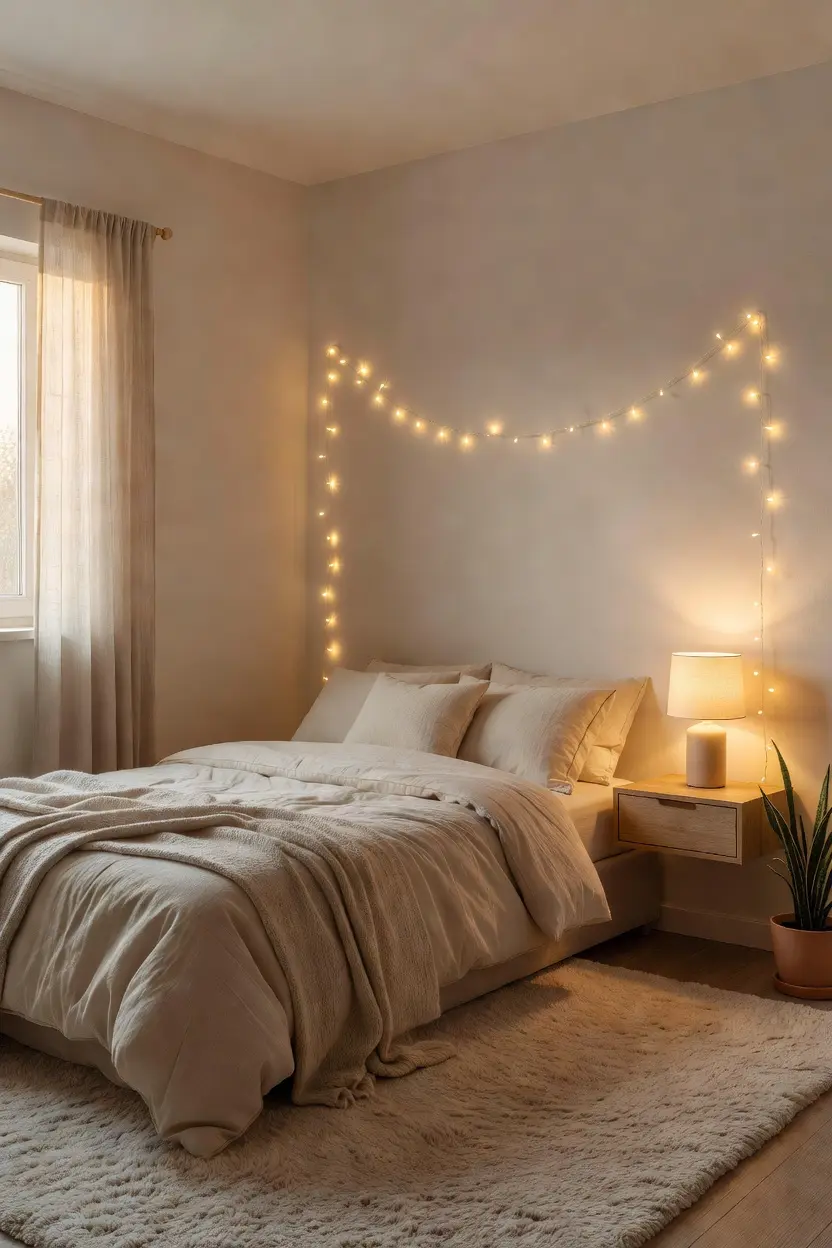
A single overhead fixture flattens a small room, casting the same harsh light across every surface with nothing to break it up. Adding a table lamp or a small wall sconce creates pockets of warmer light that make the room feel deeper than it actually is.
Warm bulbs, generally 2700K to 3000K, flatter a small space far better than cooler daylight bulbs, which can read closer to office lighting than something you’d want to fall asleep under. A dimmer switch, where the wiring allows it, lets the room shift from bright and functional to soft and cozy without needing to swap fixtures.
5. Mirror Placement Tricks for Extra Depth
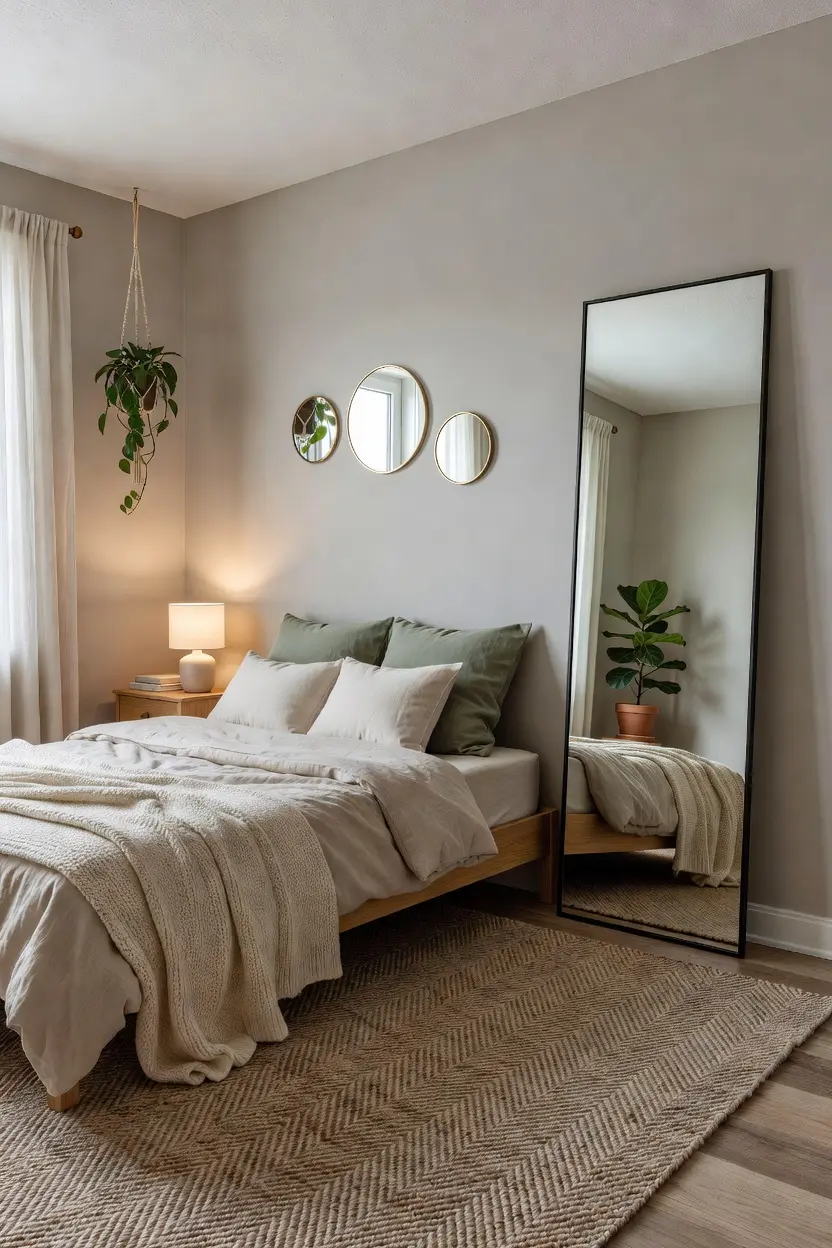
A well placed mirror is one of the cheapest, most effective tools in a small bedroom. Positioned across from a window, it bounces natural light deeper into the room and creates the illusion of another window entirely.
Size matters here more than people think. A mirror too small for the wall gets lost, while one sized to roughly two thirds the width of the furniture below it, a dresser or console, tends to look proportional rather than randomly placed. Leaning a large mirror against the wall instead of mounting it often looks less formal and skips the need for specialized hardware.
6. Textile Layering That Adds Coziness Without Bulk
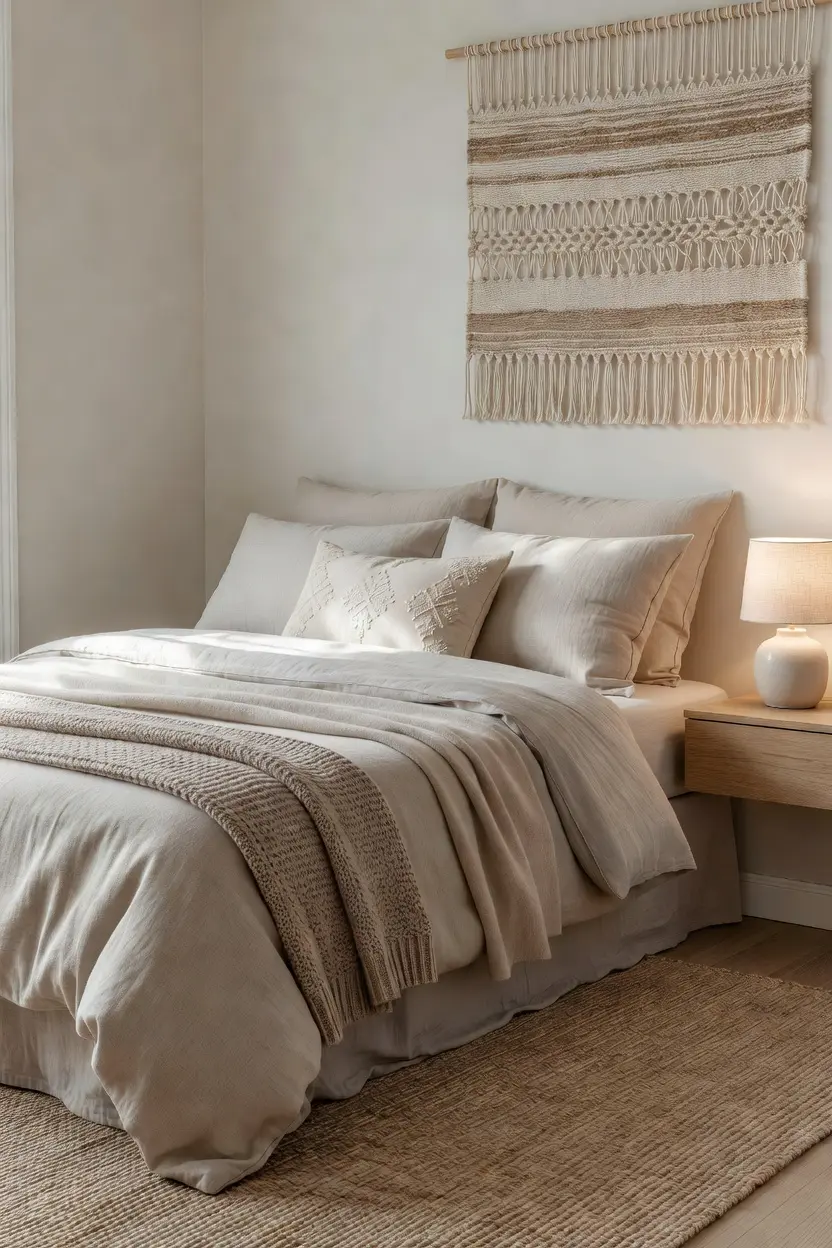
Textiles do a lot of work in a small room because they add warmth without eating into floor space the way furniture does. A chunky knit throw blanket, layered over a simpler duvet, adds texture and visual interest without needing more square footage to pull off.
Curtains hung closer to the ceiling than the window frame, and wider than the window itself, make windows look taller and the whole room feel less boxed in. A rug layered slightly under the bed, rather than floating in the middle of the room, ties the space together without competing for floor space that’s already limited.
Key takeaway: texture creates coziness in a way color alone can’t, and it does it without taking up any actual room.
7. Storage Solutions That Keep the Floor Clear
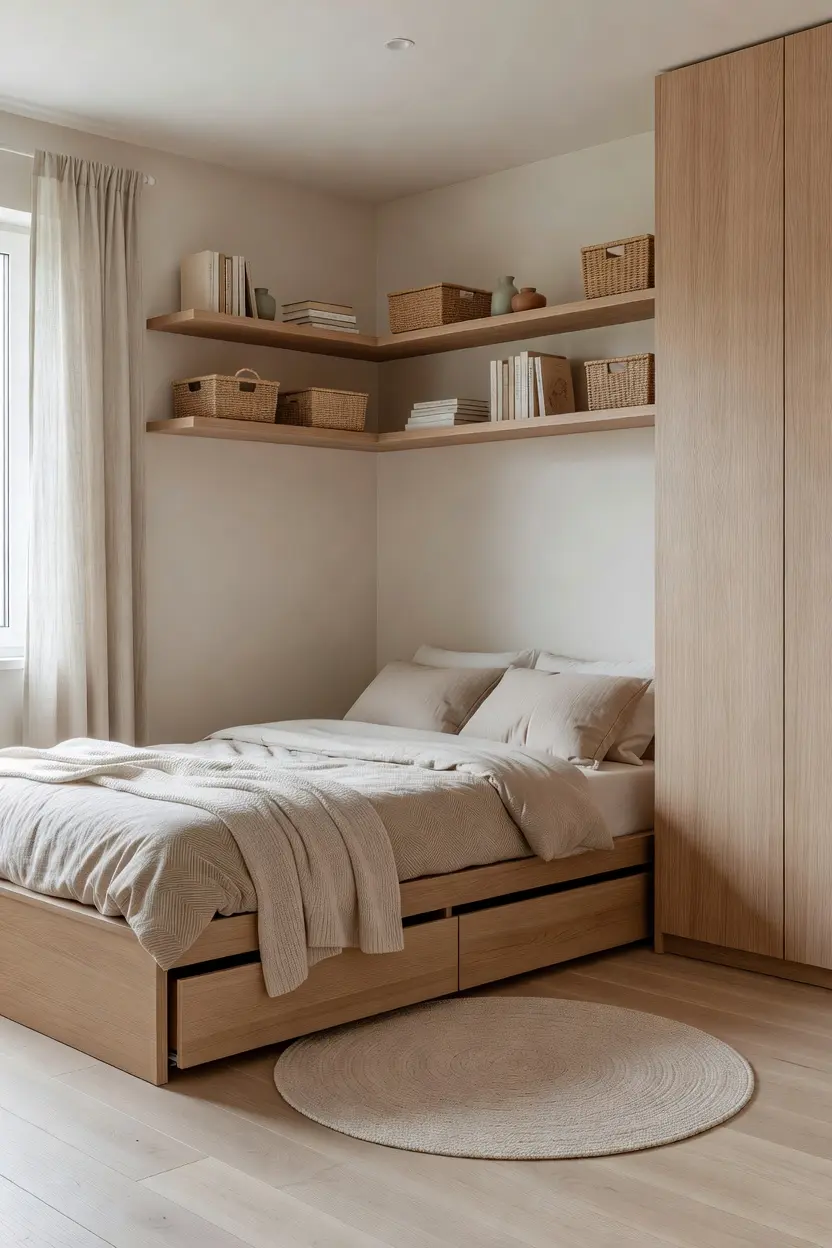
Clutter reads as smaller in a small room than it would in a bigger one, simply because there’s less space to absorb it. Under bed storage, whether a rolling bin or a bed frame with built in drawers, uses space that would otherwise go unused entirely.
Woven baskets on an open shelf hold extra items without needing a bulky dresser or closet system, and they add texture at the same time. A slim, tall dresser stores a similar amount as a short, wide one while taking up less floor space, letting the room breathe a little more.
8. Vertical Space and Why It Matters More Than People Think
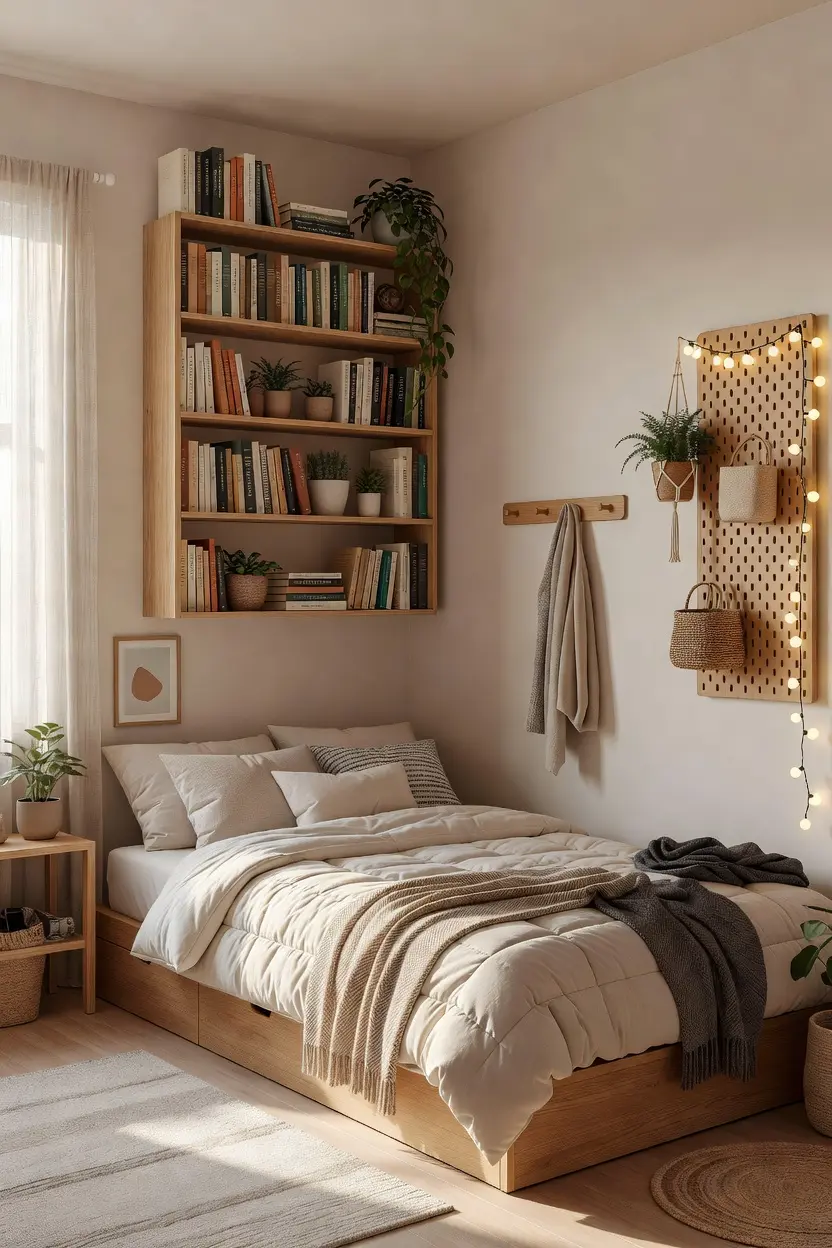
Floor space gets all the attention in small room planning, but vertical space matters just as much and gets used far less often. Floating shelves, styled with just a few curated items, add storage and display space without eating into the walking room a floor standing piece would take.
Tall, narrow furniture pulls the eye upward instead of across, which makes ceilings feel higher than they actually are. Even something as simple as hanging curtains higher than the window frame borrows this same trick, using the vertical space above the window to make the whole room feel taller.
9. Budget Ranges for a Small Bedroom Refresh
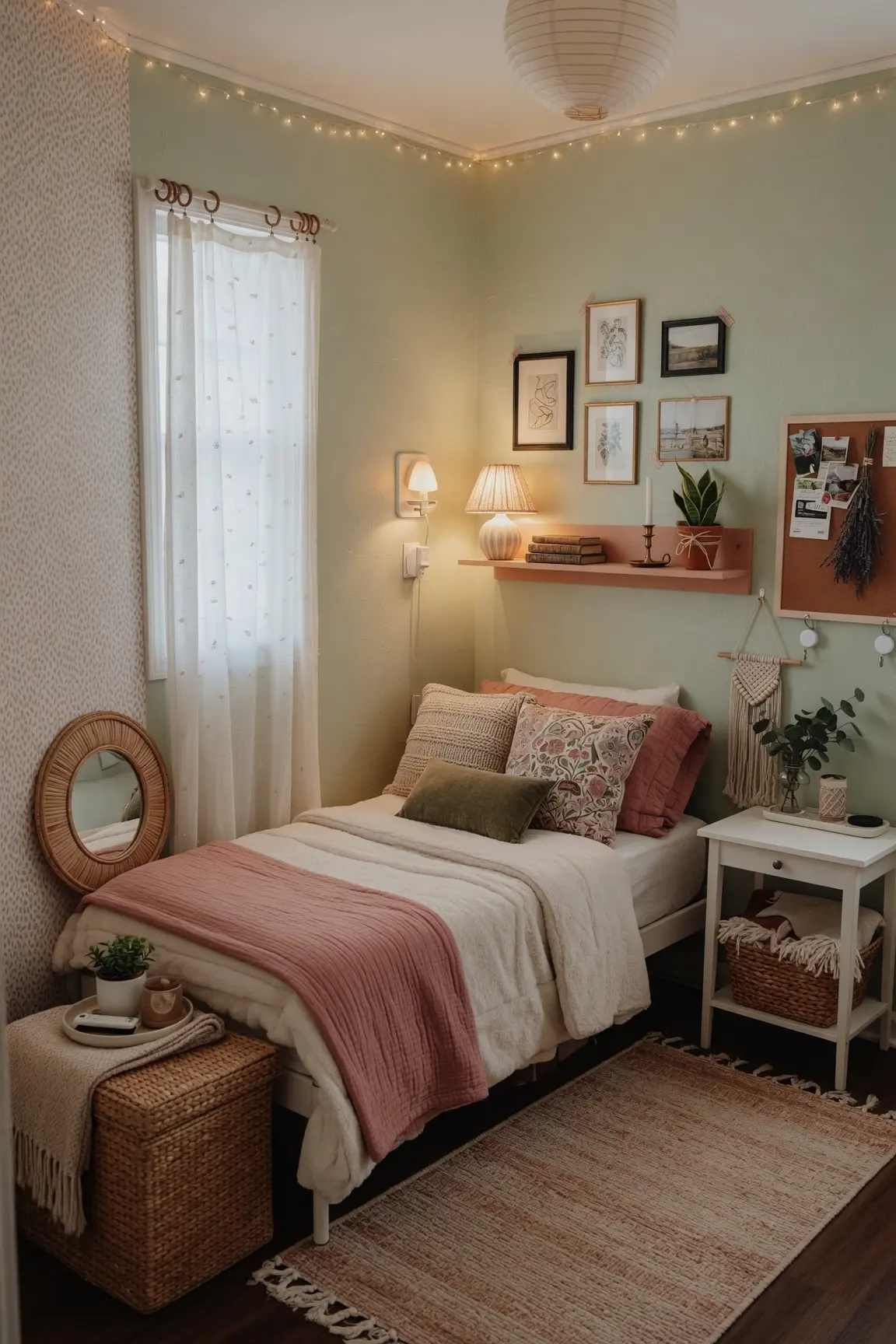
A full room repaint, walls and trim included, done as a DIY project, typically costs 60 to 120 dollars in paint and supplies for a small bedroom. New bedding in a coordinated palette, a duvet cover, pillow shams, and a throw, generally runs 100 to 250 dollars depending on material, though secondhand and sale finds can bring that down significantly.
A leaned or wall mounted mirror, sourced secondhand or from a budget retailer, typically costs 40 to 100 dollars depending on size. A couple of secondhand lamps, refreshed with new shades, often cost 30 to 70 dollars total. A full small bedroom refresh, paint, bedding, a mirror, and lighting, often lands somewhere between 250 and 450 dollars, a fraction of what new furniture and professional work would run.
10. Styling Details That Pull the Room Together
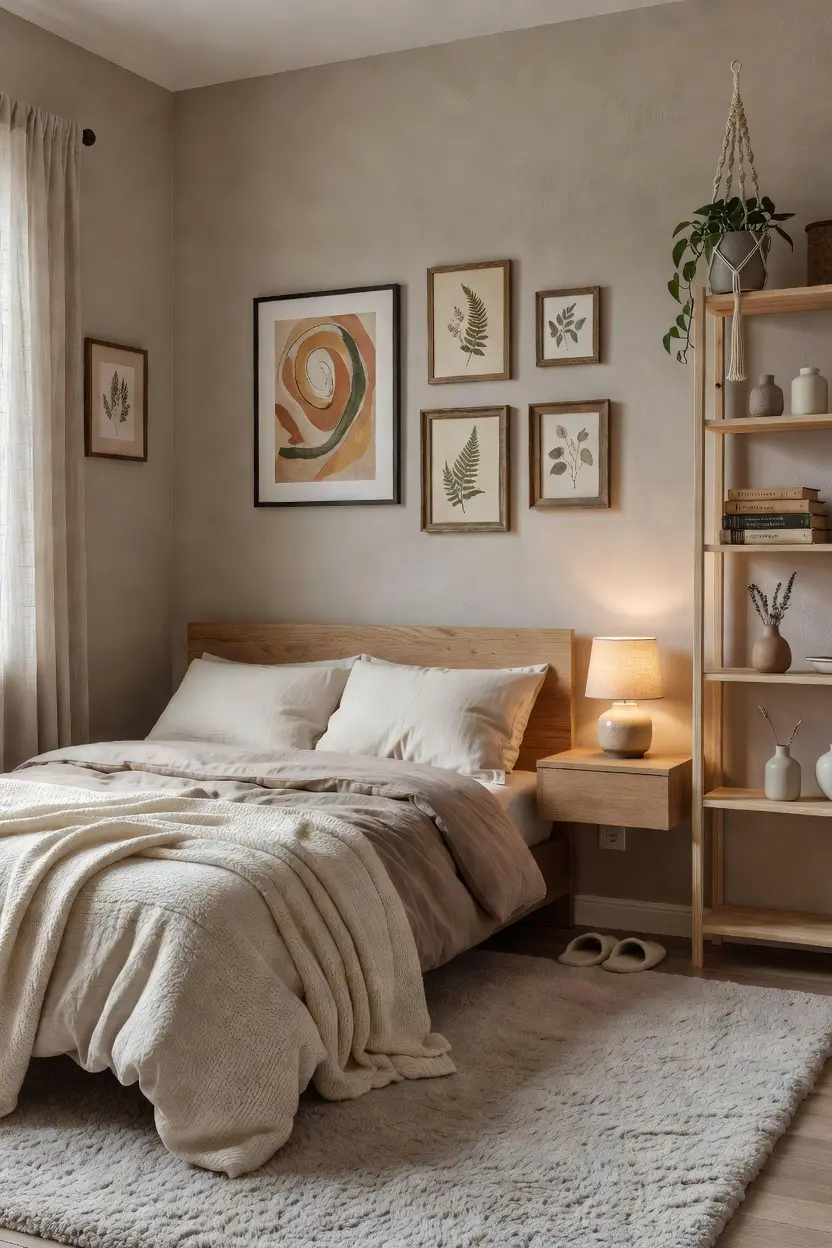
A single plant, real or a quality faux version, adds life to a small room without taking up much space or introducing a color that needs to be managed. A ceramic tray on the dresser, styled with just a couple of items rather than fully covered, keeps the room feeling calm instead of cluttered.
Artwork sized appropriately for the wall, not too large, not too small, finishes the room without overwhelming it. In a small bedroom specifically, leaving some surfaces only partially styled matters more than in a larger space, since visual clutter reads as smaller and busier the tighter the footprint gets.
Mistakes to Avoid
- Choosing furniture scaled for a larger room, which eats up walking space
- Hanging curtains at the window frame instead of closer to the ceiling
- Skipping layered lighting and relying only on one overhead fixture
- Overfilling shelves and surfaces instead of leaving intentional empty space
- Placing a mirror too small for the wall it’s hung on
- Ignoring vertical storage options in favor of floor level furniture alone
Frequently Asked Questions
What’s the single cheapest change that makes the biggest difference in a small bedroom? Paint is usually the best value per dollar spent. Carrying one warm color across the walls, trim, and ceiling removes visual breaks and makes the room feel larger for the cost of a single gallon.
Does a small bedroom need a lot of furniture to feel finished? No. Fewer, correctly scaled pieces almost always look better than a room packed with furniture chosen for a bigger space. A bed, one nightstand, and a slim dresser is often enough.
How do I add storage to a small bedroom without making it feel more cramped? Move storage vertical instead of horizontal. Floating shelves, tall narrow dressers, and under bed storage all add function without eating into the floor space that keeps a small room feeling open.
What size mirror works best in a small bedroom? A mirror sized to roughly two thirds the width of the furniture beneath it, like a dresser or console, tends to look proportional. Oversized or undersized mirrors can throw off the balance of the wall.
Is it worth buying new furniture for a small bedroom makeover? Not always. Refinishing existing pieces or sourcing solid furniture secondhand often costs less than new budget furniture and tends to hold up better over time.
Conclusion
A cozy, beautiful small bedroom comes down to a handful of intentional choices rather than a full furniture overhaul. Start with paint and lighting since they change the most for the least money, then layer in texture, a well placed mirror, and vertical storage. The goal isn’t to fill the room. It’s to make every piece in it work harder than a bigger, more crowded room ever could.