10 Cozy Living Room Wall Decor Ideas with Stylish Floating Shelves
A blank wall can throw off a whole room, even when everything else in it is right where it should be. Floating shelves fix that in a way that feels warmer than a row of framed prints ever could. You get a spot for books, plants, and small things that actually mean something to you, not just filler. Here are ten real ways to plan, space, and style them so the wall feels cozy instead of bare or overstuffed.
1. Why Floating Shelves Work Better Than a Gallery Wall for a Cozy Feel

A gallery wall is flat by nature. It can look good, sure. But it doesn’t add much depth to a room.
Floating shelves let you stack real objects on top of each other. Books with mismatched spines, a small plant, a ceramic dish someone gave you. Things that catch light and cast small shadows. That’s what actually makes a wall feel cozy.
And shelves are easier to change than a fixed gallery wall. Found something new at a flea market? Swap it in. No new holes, no rearranging six frames.
A wall with shelves just feels more like someone lives there.
2. Planning Your Layout Before You Drill a Single Hole

Tape the shelf outlines on the wall first. Painter’s tape works fine. Step back, look at the spacing, and only then start drilling.
Two or three shelves staggered at different heights beats one long shelf, or a row of them lined up evenly. Even spacing looks flat. Staggered breaks it up.
A Simple Starting Layout
Start with one shelf around eye level, roughly 60 inches up. Add a second one about 12 to 16 inches above or below it. If you’re adding a third, offset it to the side rather than stacking it directly.
3. Choosing Shelf Materials That Feel Warm, Not Sterile

Solid wood, oak, walnut, pine, brings warmth on its own before you’ve put a single thing on it. The grain does a lot of work.
Painted MDF in off white or soft sage can work too, especially with warm decor on top. Skip glossy white if cozy is the goal. That finish reads more clinical than warm, no matter how you style it.
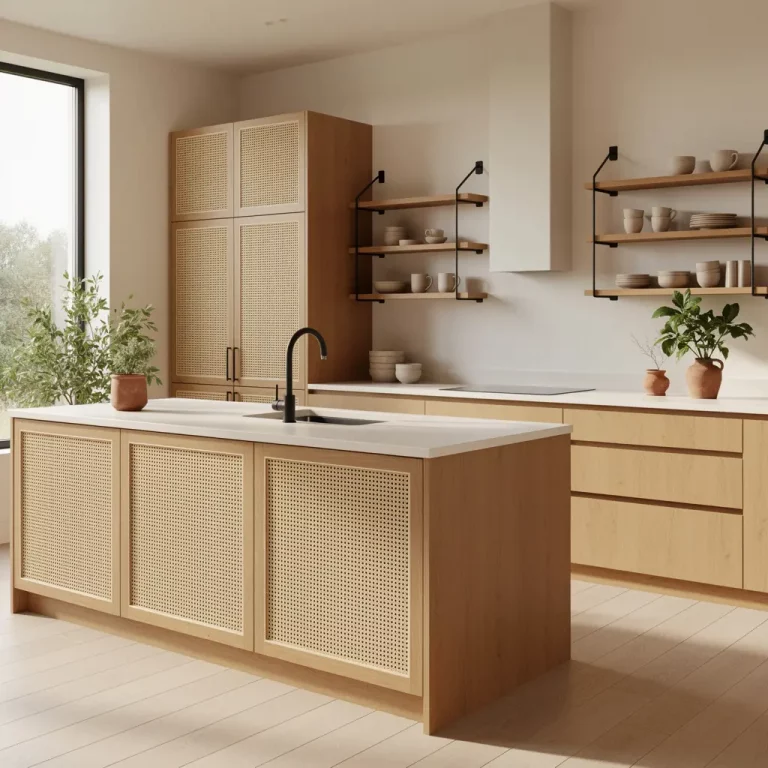
Metal bracket shelves with a wood top land somewhere in between. A little industrial edge, but the wood keeps it from feeling cold.
4. Spacing Shelves So the Wall Feels Balanced
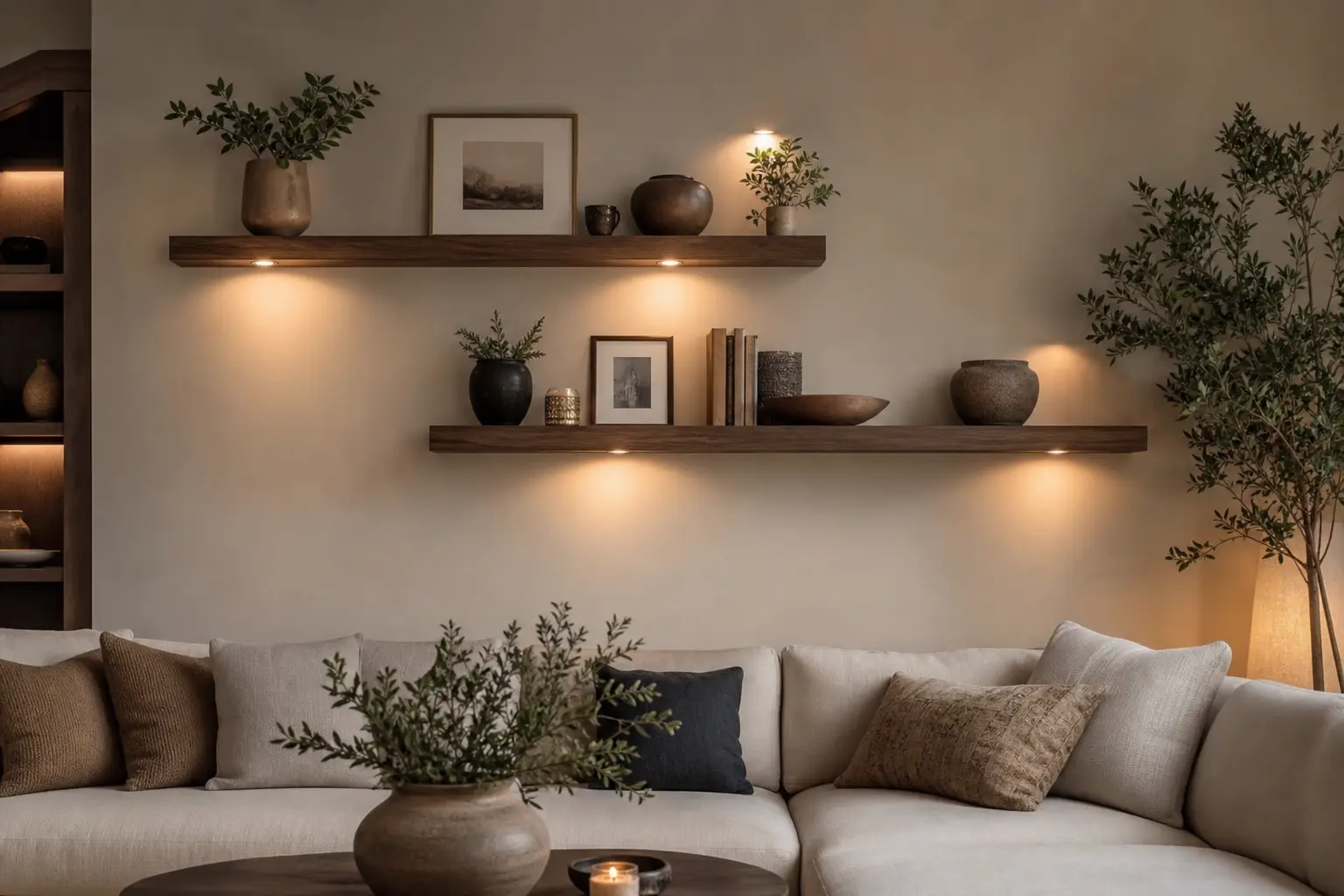
Leave 10 to 12 inches between stacked shelves at minimum. Anything tighter and taller items, a vase, a stack of bigger books, start bumping into the shelf above.
If you’re spreading shelves horizontally across the wall, give each one enough room to feel like its own section. Crowd them together and they start competing instead of complementing each other.
Some bare wall around the shelves is a good thing, not a gap to fill. It gives the eye a place to land before it moves to the next spot.
5. Styling Each Shelf with a Mix of Height and Texture

Mix tall and short. A tall vase or book stack on one end, something shorter, a small dish, a candle, on the other. That contrast creates flow instead of a flat line of same sized objects.
Texture matters as much as height does. A smooth ceramic piece next to a woven basket, or a rough book cover against something glossy, adds a layer that all matching materials never will.
The Rule of Odd Numbers
Three or five items per shelf tends to look more natural than two or four. Not a hard rule. Just a good place to start if a shelf feels off and you can’t figure out why.
6. Using Books as a Styling Tool, Not Just Storage
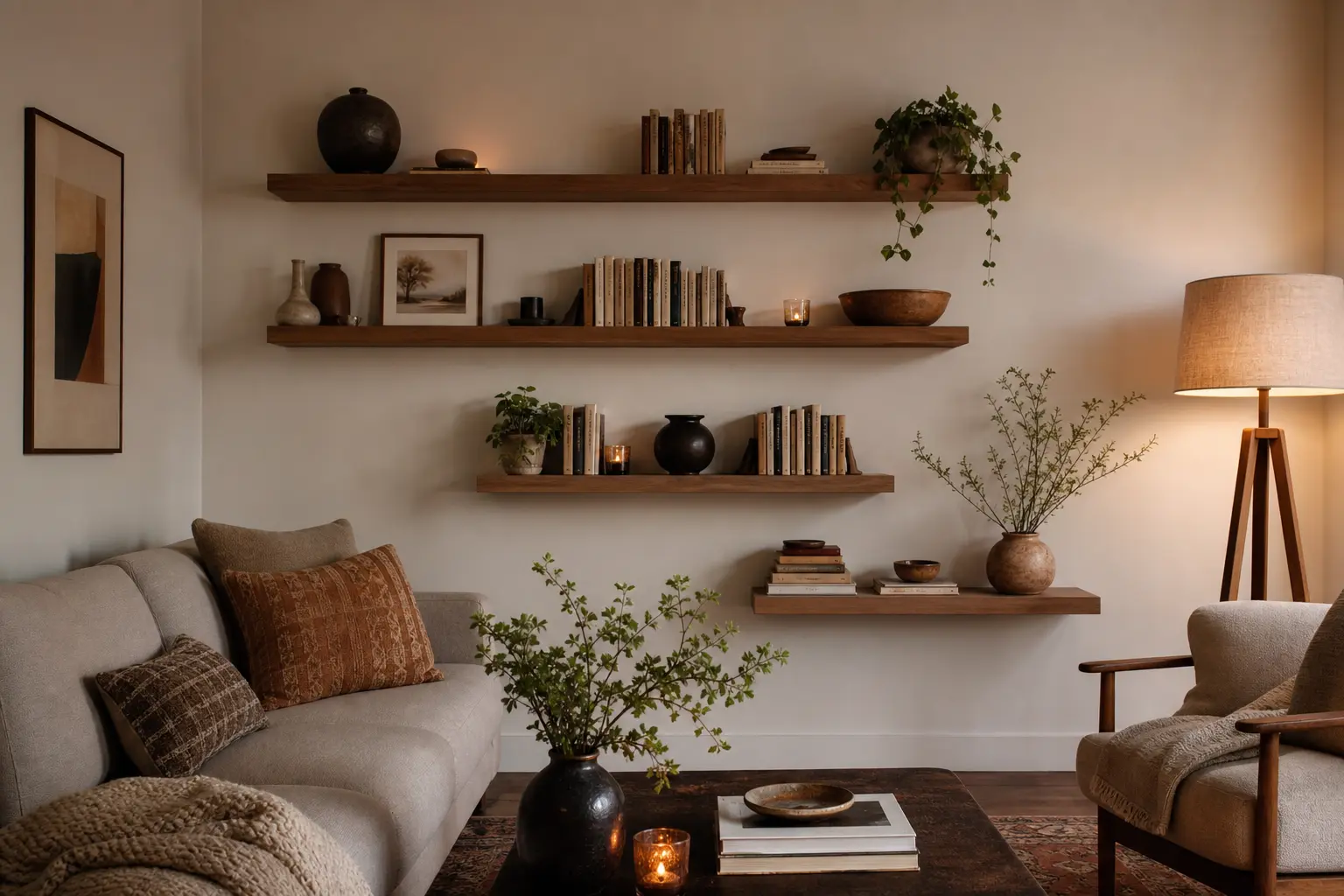
How you place books changes everything about how a shelf reads. Stack a few flat, top one with a candle or small plant, and you’ve got a solid anchor on one side.
Stand a small row upright on the other side for balance. Mixing flat stacks with upright rows looks more natural than lining every book the same way.
Got books with loud, mismatched covers? Turn a few spines toward the wall so just the page edges show. Instant calm, especially if the shelf is meant to look curated rather than like a working bookshelf.
7. Adding Warmth with Lighting Near the Shelves
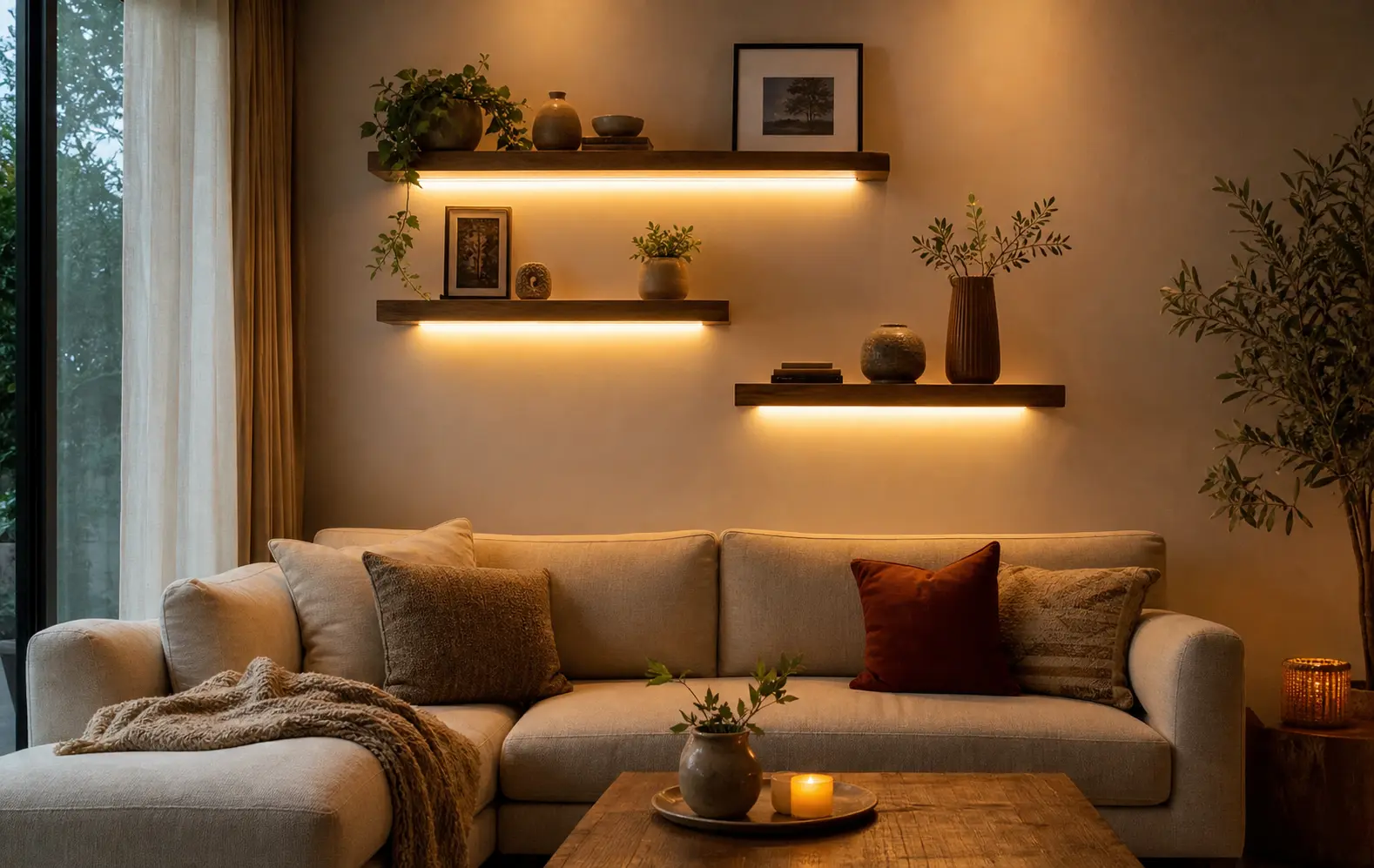
A small puck light or warm LED strip tucked under a shelf edge gives whatever sits on top a soft glow, especially once the overhead lights go down for the evening.
Stick with warm white, 2700K to 3000K. Cool light washes out wood and ceramic. Warm light makes both look richer.
A plug in sconce mounted near the shelves works too, if you’ve got an outlet close by. No hardwiring needed, and it gives the wall a soft wash of light on its own.
8. Budget Friendly Ways to Get the Look
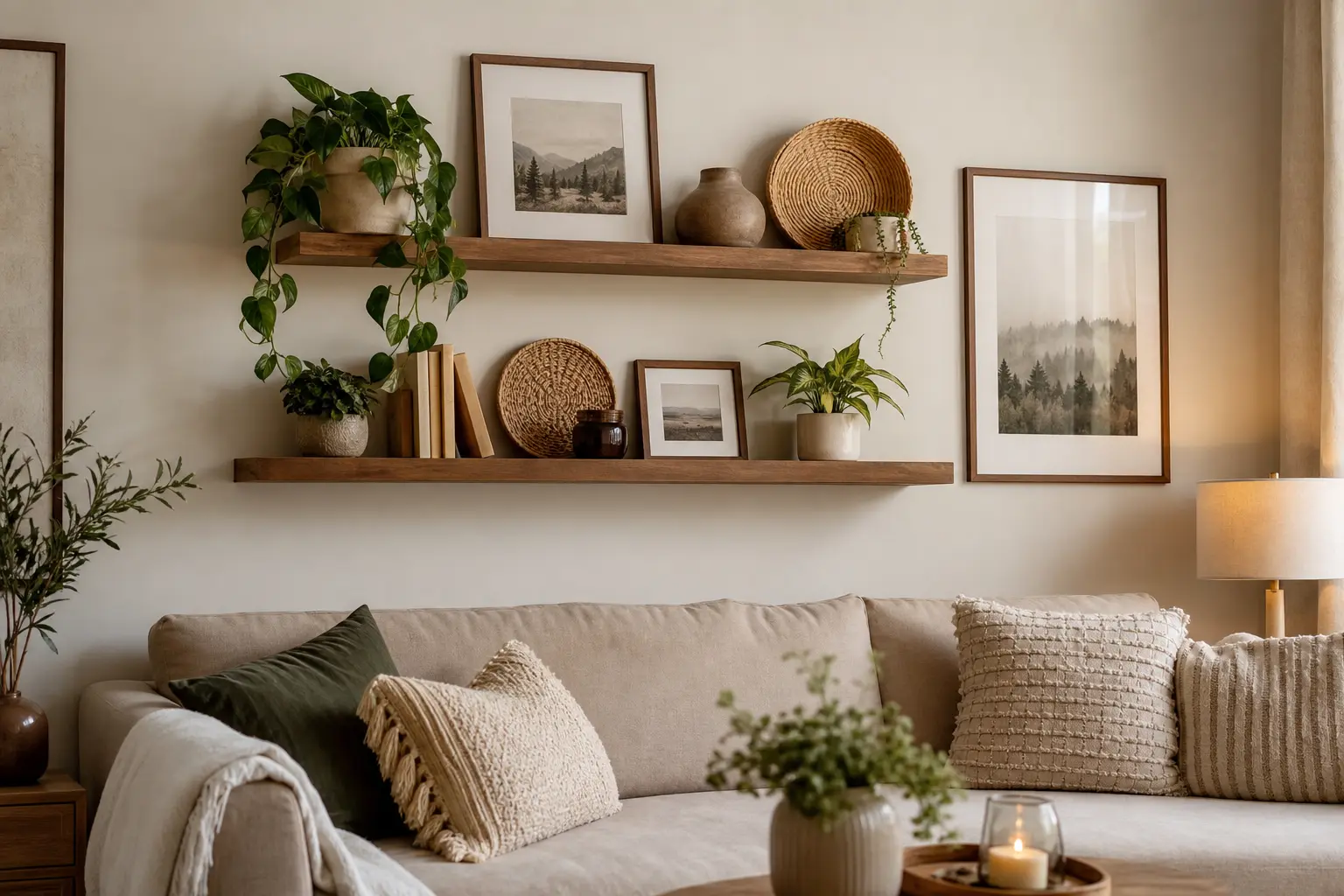
Standard floating shelves, 24 to 36 inches wide, usually run 15 to 30 dollars each. Buy two or three in matching finishes and you often save a bit per shelf.
For the styling itself, thrifted books, secondhand ceramics, a small plant from a local nursery, all cost far less than a matched decor set from one retailer.
Three 20 dollar shelves and a handful of thrifted pieces can look just as good as an expensive designed display. Spacing and texture do more work than the price tag ever will.
9. Mixing Personal Items with Decor Pieces

An all store bought shelf can look a little generic, even styled well. Toss in one or two personal pieces, a small framed photo, something from a trip, a handmade item, and the whole wall starts to feel like it belongs to actual people.
Keep it to one or two personal pieces per shelf. Cover the whole thing in mementos and it stops looking intentional.
Swap them out every few months if you want. Keeps things feeling fresh without spending anything new.
10. Adjusting the Idea for Small or Awkward Walls

Smaller living room? One well styled shelf, around 24 inches, does more than three crammed into a tight space. Don’t force multiples where one does the job.
Got an awkward wall, one broken up by a window or door? Try a narrow vertical column instead. Two or three short shelves stacked close together fit a leftover strip of wall that a horizontal one never would.
Renting, and drilling isn’t an option? Adhesive mounted shelves rated for lighter loads still work fine for a few books or a small plant. Just don’t expect the same weight capacity as a screwed in shelf.
Mistakes to Avoid
- Lining shelves up perfectly even instead of staggering the heights
- Overloading a single shelf and leaving no breathing room
- Choosing glossy white or cold toned shelves when the goal is cozy
- Drilling before testing the layout with tape first
- Filling every shelf with only store bought decor and no personal touches
Frequently Asked Questions
How many floating shelves should I use on one wall? Two or three works for most living rooms. More than that and it starts feeling cluttered unless the wall is unusually large.
What’s the ideal height for the first shelf? Around 60 inches from the floor, roughly eye level, is a solid starting point before adding more above or below.
Can floating shelves hold heavier decor? Most are rated for 10 to 25 pounds depending on the model. Check before loading up anything heavy like large ceramics.
Do I need a wall stud to install them? For heavier loads, yes, that’s more secure. Lighter displays can get away with rated drywall anchors instead.
How do I keep the shelves from looking too matched or store bought? Mix materials. Mix personal items in with decor. A set that’s all from one retailer tends to look flat compared to something collected over time.
Should the shelves match my furniture’s wood tone exactly? Not necessarily. Close is fine, but a slightly different tone can look intentional too, especially if your room already mixes a few finishes.
Conclusion
Floating shelves give a blank wall texture, warmth, and a place for the things that actually mean something, without a full gallery wall or a big furniture commitment. Plan the layout first, mix up heights and textures, and don’t be afraid to leave a little space empty. That’s the balance that makes a wall feel finished instead of just filled.