10 Tiny Apartment Bedroom Ideas That Maximize Every Inch
A tiny apartment bedroom can start to feel like storage overflow rather than an actual room, with clothes, books, and miscellaneous items piling up faster than the space can absorb them. Tiny apartment bedroom ideas solve that by treating every single piece of furniture and every inch of wall space as an opportunity, rather than accepting a cramped, cluttered room as the inevitable result of limited square footage.
The key is combining smart storage with furniture that does more than one job, so nothing in the room takes up space without earning its place. Here are ten ways to make a genuinely tiny bedroom feel functional, organized, and surprisingly spacious.
1. Measure the Room Before Buying Any Furniture
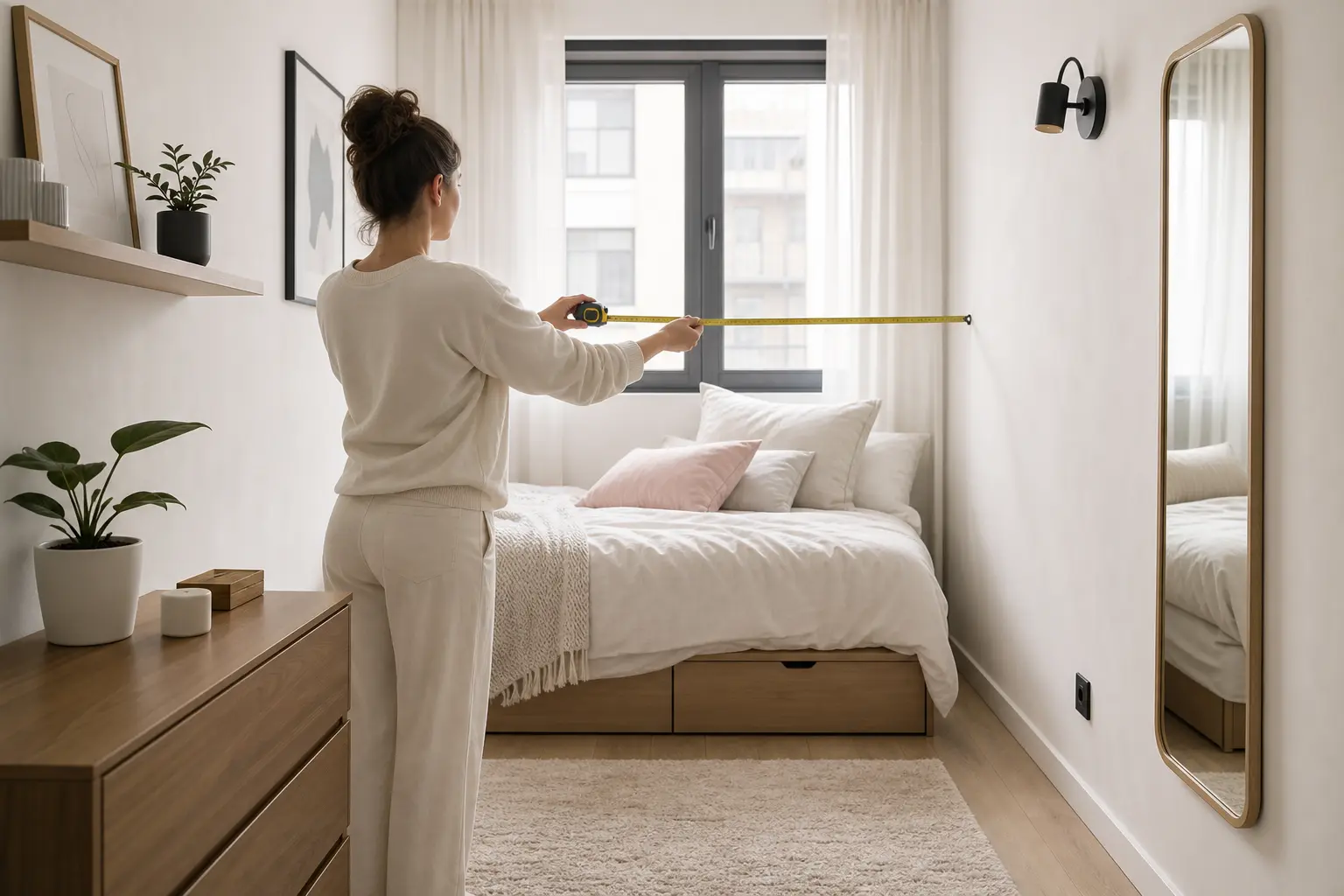
Before shopping for anything, measure the full room, including door swing, closet access, and any awkward corners or angled walls. Note the width needed to walk around the bed comfortably, typically at least 24 to 30 inches on at least one side.
This step gets skipped constantly, and it’s the reason so many tiny bedrooms end up with furniture that technically fits but makes the room impossible to move through comfortably.
2. Choose a Bed with Built In Storage
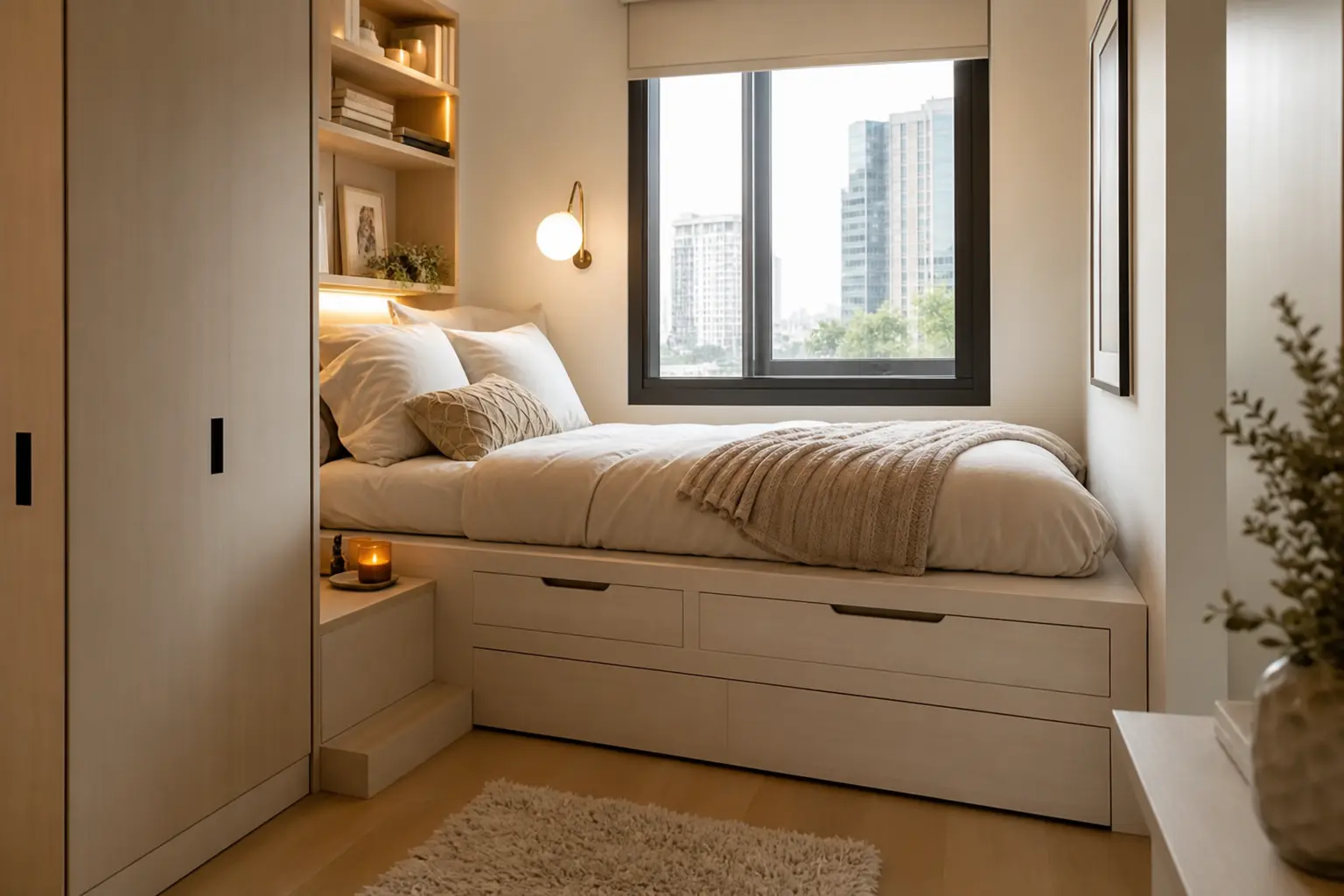
A bed frame with drawers underneath, or a platform bed with a lift up base, turns the largest piece of furniture in the room into significant additional storage. This is one of the highest impact changes available in a tiny bedroom, since the space under a standard bed frame often goes completely unused otherwise.
Storage Bed Options at Different Price Points
A basic bed frame with drawer storage typically runs $300 to $700, while a lift up storage bed with a larger internal cavity can run higher, often $500 to $1,200 depending on size and material.
3. Use Vertical Space Instead of Floor Space
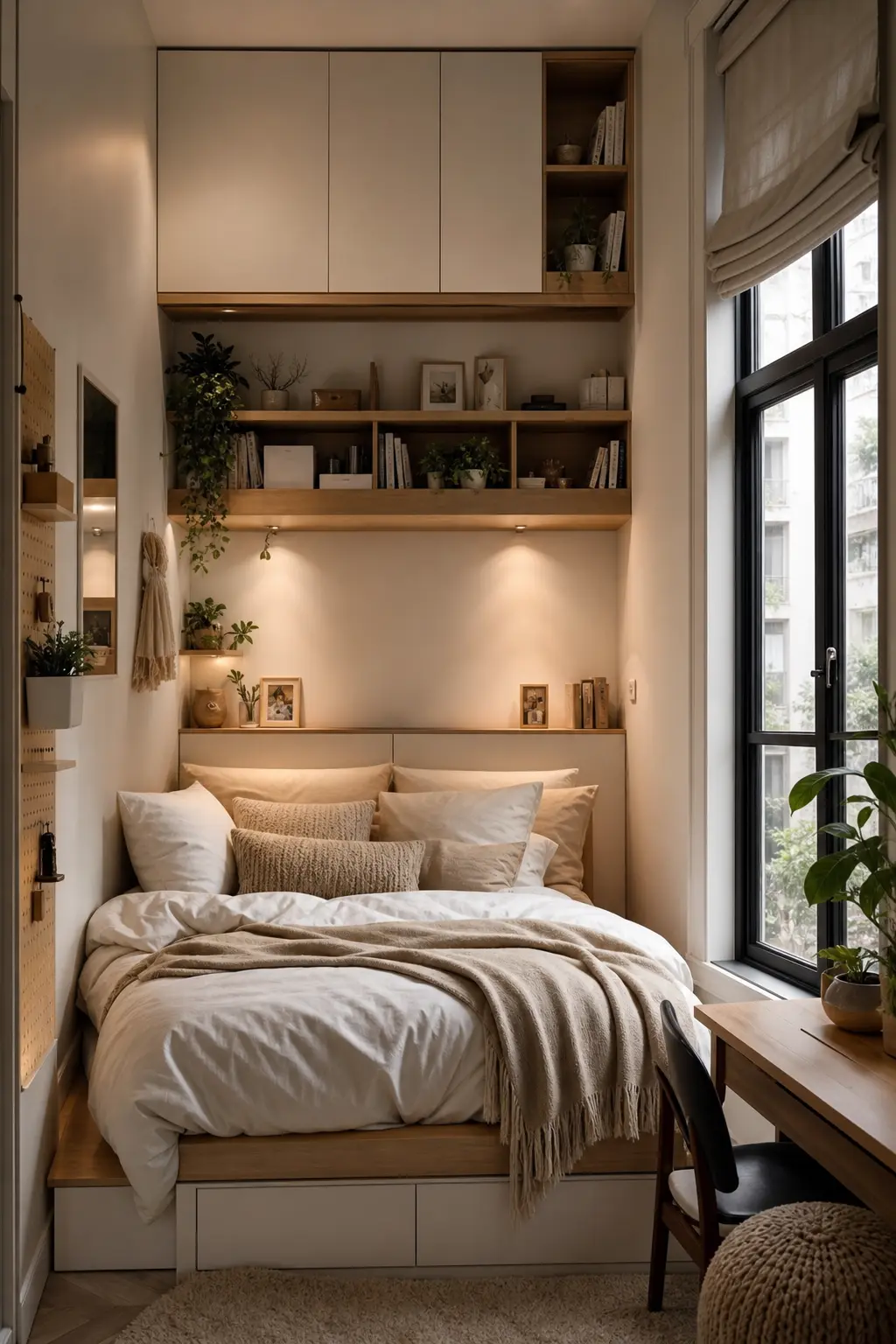
Floor space is the scarcest resource in a tiny bedroom, so push storage upward wherever possible. Floating shelves, a wall mounted jewelry organizer, or tall narrow shelving units make use of vertical wall space that would otherwise go completely unused.
A tiny bedroom with storage concentrated on the walls rather than the floor almost always feels larger than one with the same amount of storage spread across bulky floor standing furniture. This single shift changes how spacious the room feels more than almost any other adjustment.
4. Add a Wall Mounted or Folding Desk

If the room needs to double as a workspace, a fold down wall mounted desk, in the $60 to $200 range, provides a work surface that disappears entirely when not in use. This is far more space efficient than a standard desk that occupies floor space permanently, whether it’s being used or not.
A slim floating shelf can serve a similar function for a laptop if a full desk setup isn’t necessary, taking up only a few inches of depth rather than a full desk footprint.
5. Choose Multi Purpose Furniture Wherever Possible
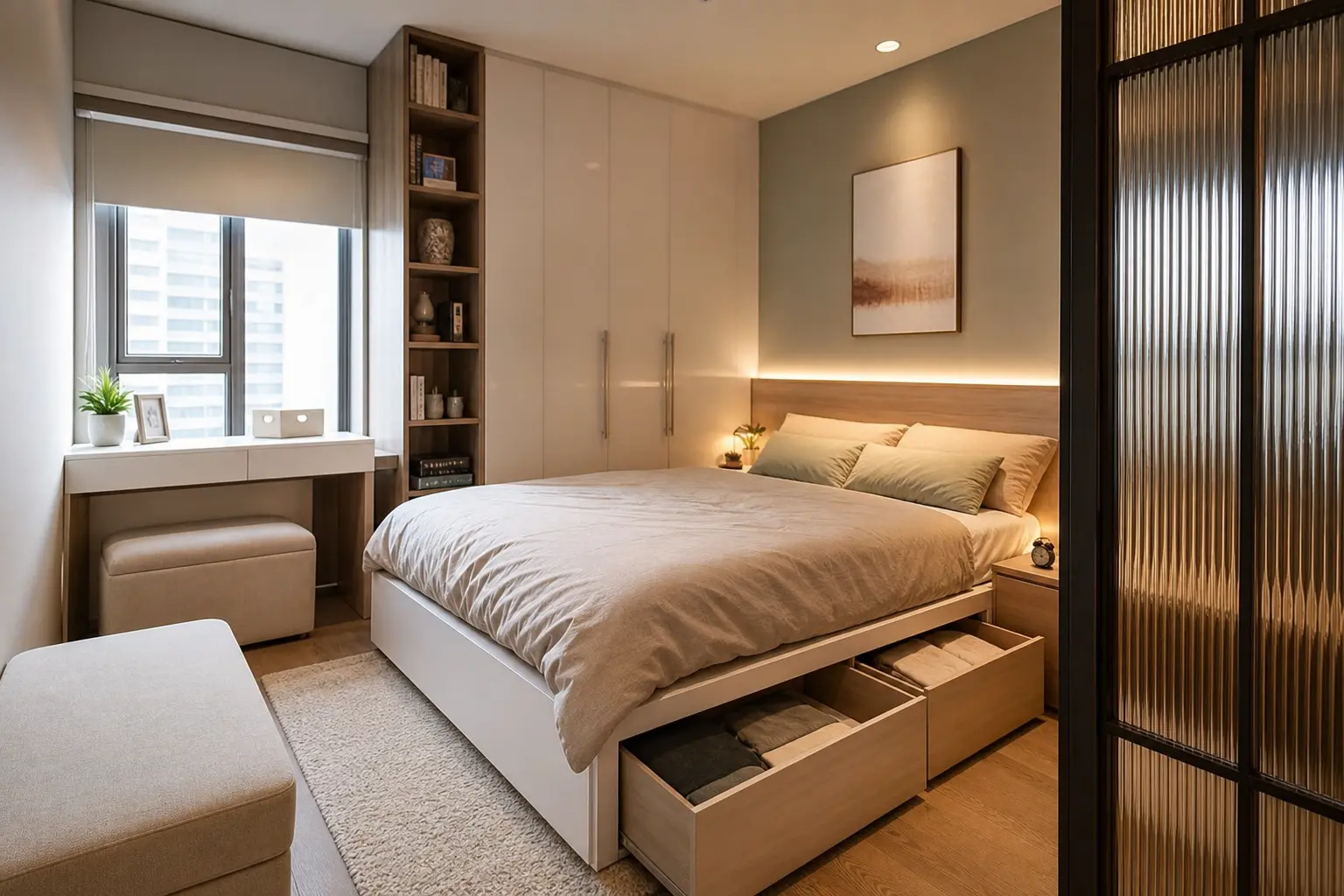
A storage ottoman that doubles as a seat, a nightstand with a pull out shelf, or a bench with a lift up lid all let one piece of furniture handle multiple jobs. In a tiny bedroom, every piece of furniture that only does one thing is a piece of furniture competing for space it might not deserve.
Look specifically for furniture marketed for small spaces or studio apartments, since these lines are often designed with multi functionality as a primary feature rather than an afterthought.
6. Use Light Colors to Make the Room Feel Larger
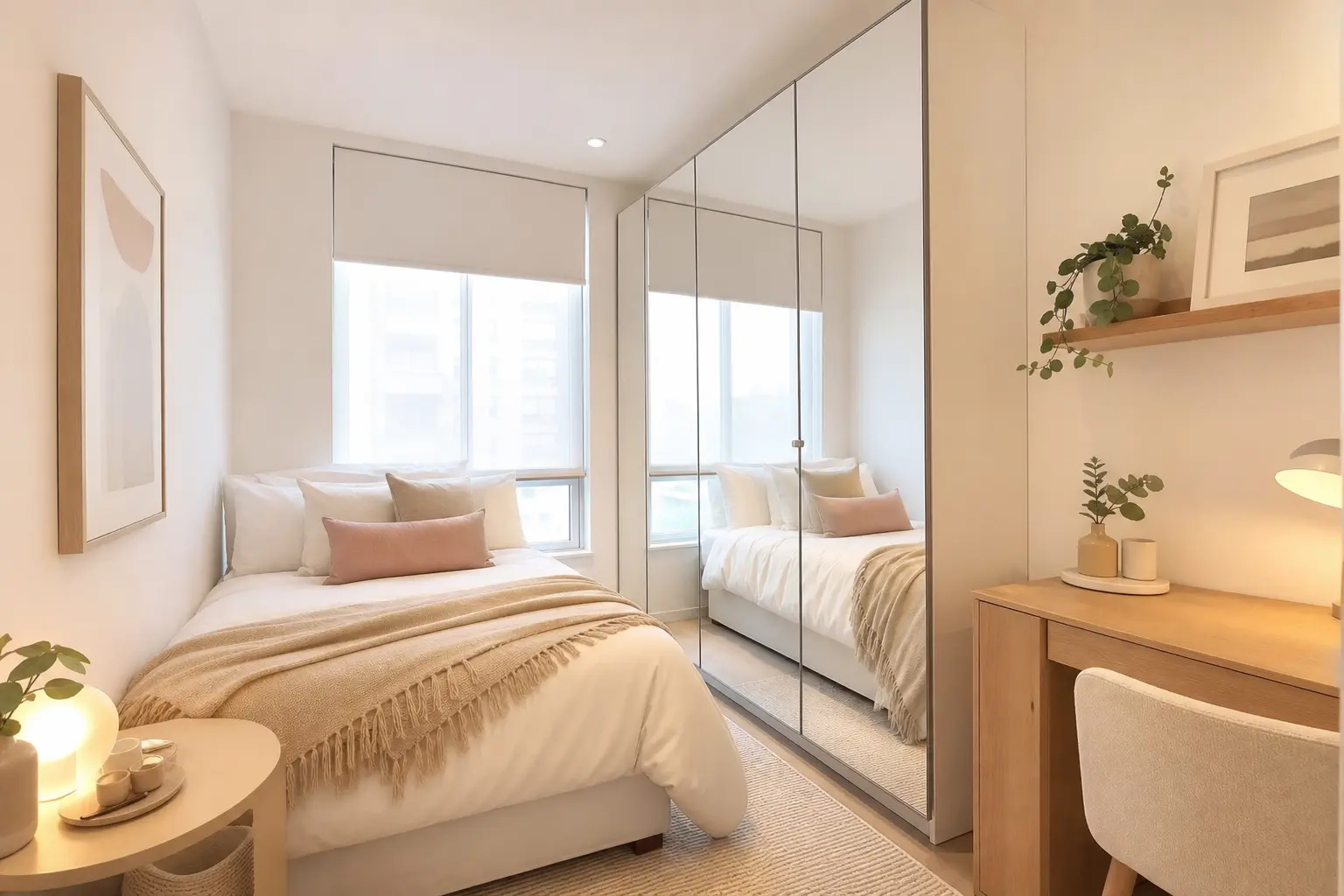
A tiny bedroom painted in a dark, saturated color can feel even smaller than it actually is, since dark walls absorb light rather than reflecting it. A soft white, cream, or pale gray on the walls, paired with light colored bedding, helps the room feel more open and airy.
This doesn’t mean the room needs to be entirely colorless. A single darker accent, through a piece of art or a small textile, can add personality without sacrificing the overall sense of openness that lighter walls provide.
7. Add Mirrors to Bounce Light and Space
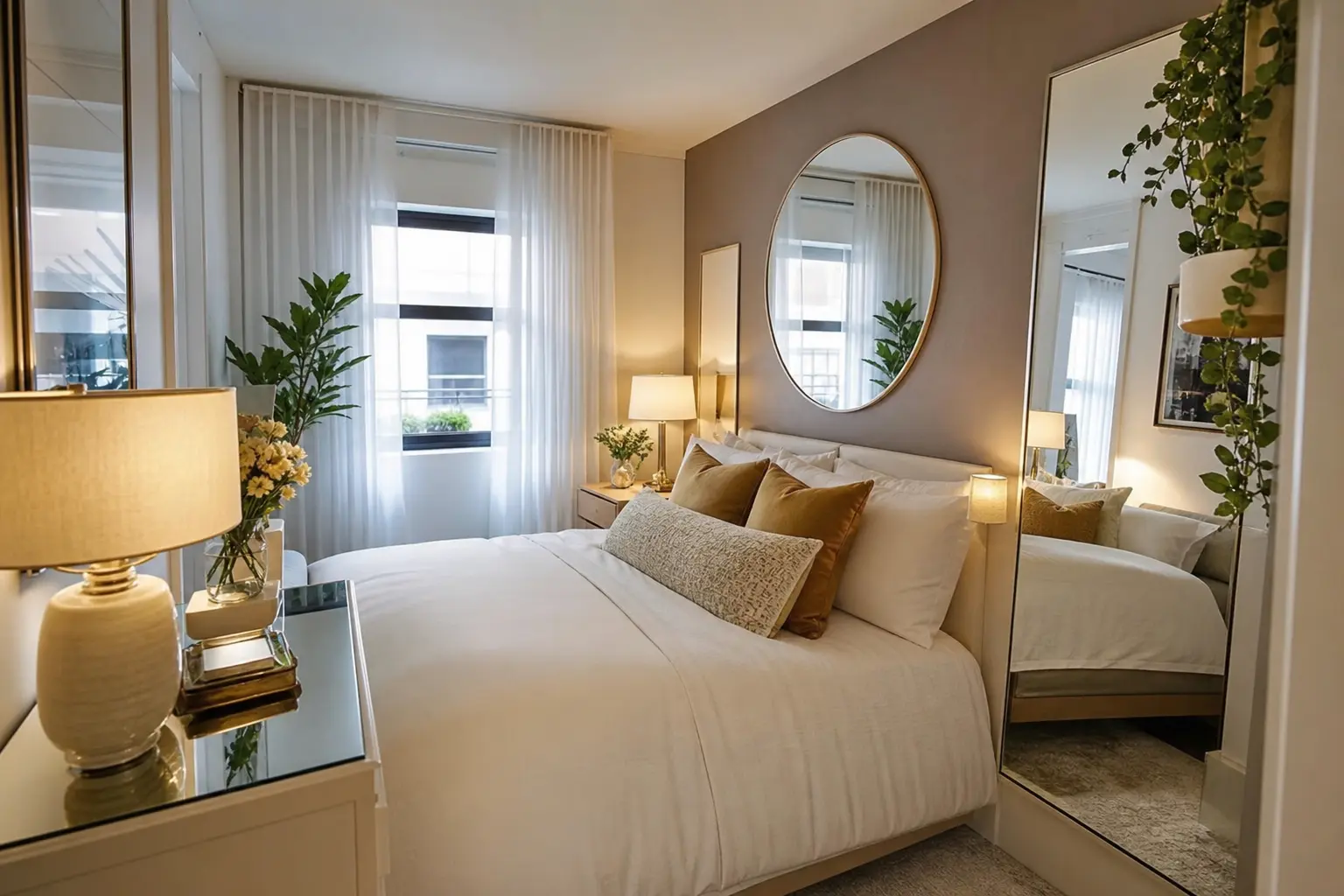
A large mirror, positioned to reflect either a window or a light source, visually doubles the sense of space in a small room. This is one of the most effective and affordable tricks for making a tiny bedroom feel bigger than its actual square footage.
Where to Position a Mirror for the Best Effect
A mirror placed directly across from a window reflects natural light deep into the room, while a mirror on a wall perpendicular to the window adds brightness without creating a glare directly in the sightline from the bed.
8. Keep Window Treatments Simple and High Mounted
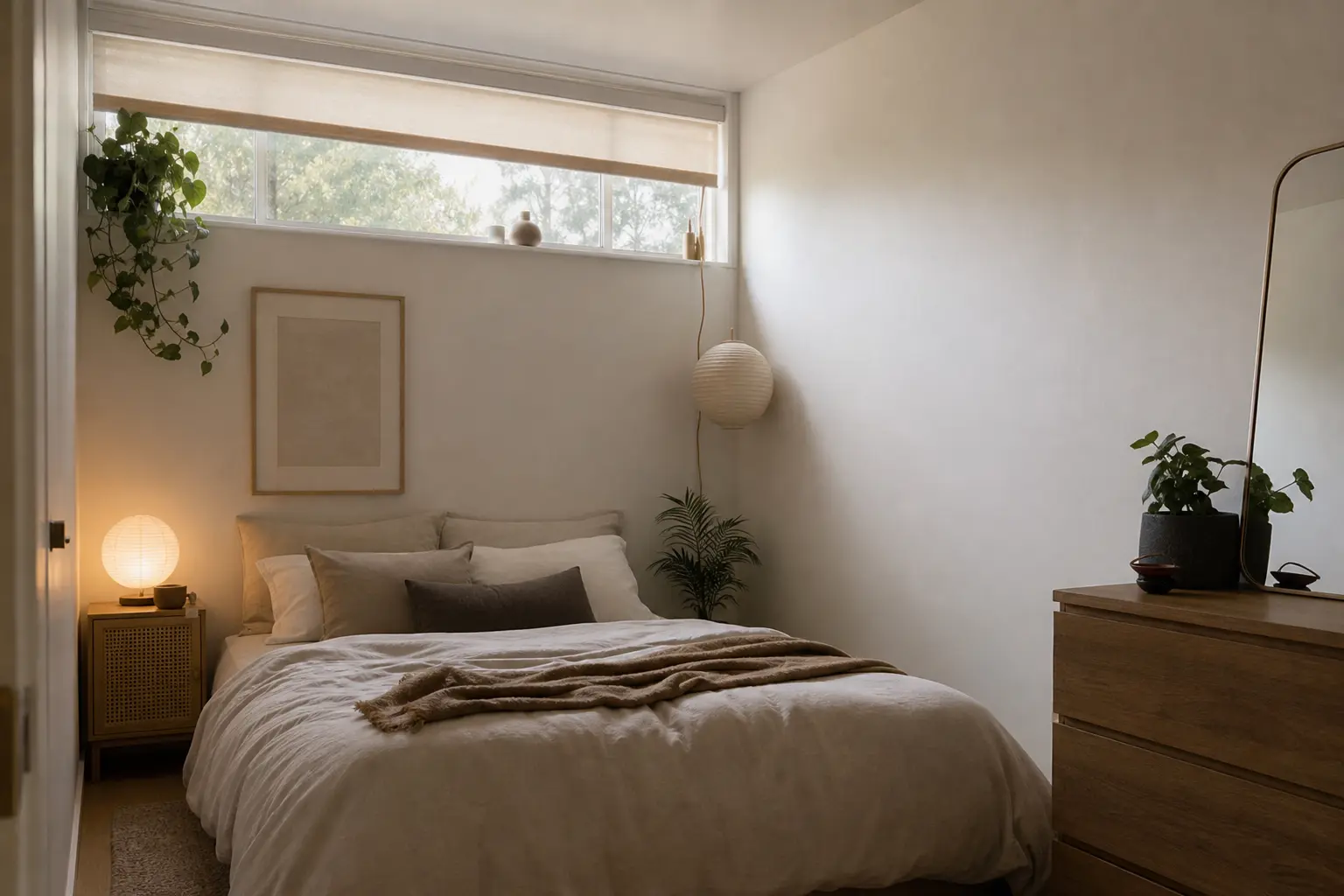
Heavy, layered curtains can make a small window feel even smaller and eat into limited wall space on either side. A simple curtain panel or a fitted blind, hung as close to the ceiling as possible rather than directly above the window frame, makes the ceiling feel taller and the window feel larger.
Light, sheer, or lightweight fabric also lets more natural light into the room compared to heavy blackout curtains, which matters in a small space that benefits from every bit of available brightness.
9. Use Under Bed Storage for Out of Season Items
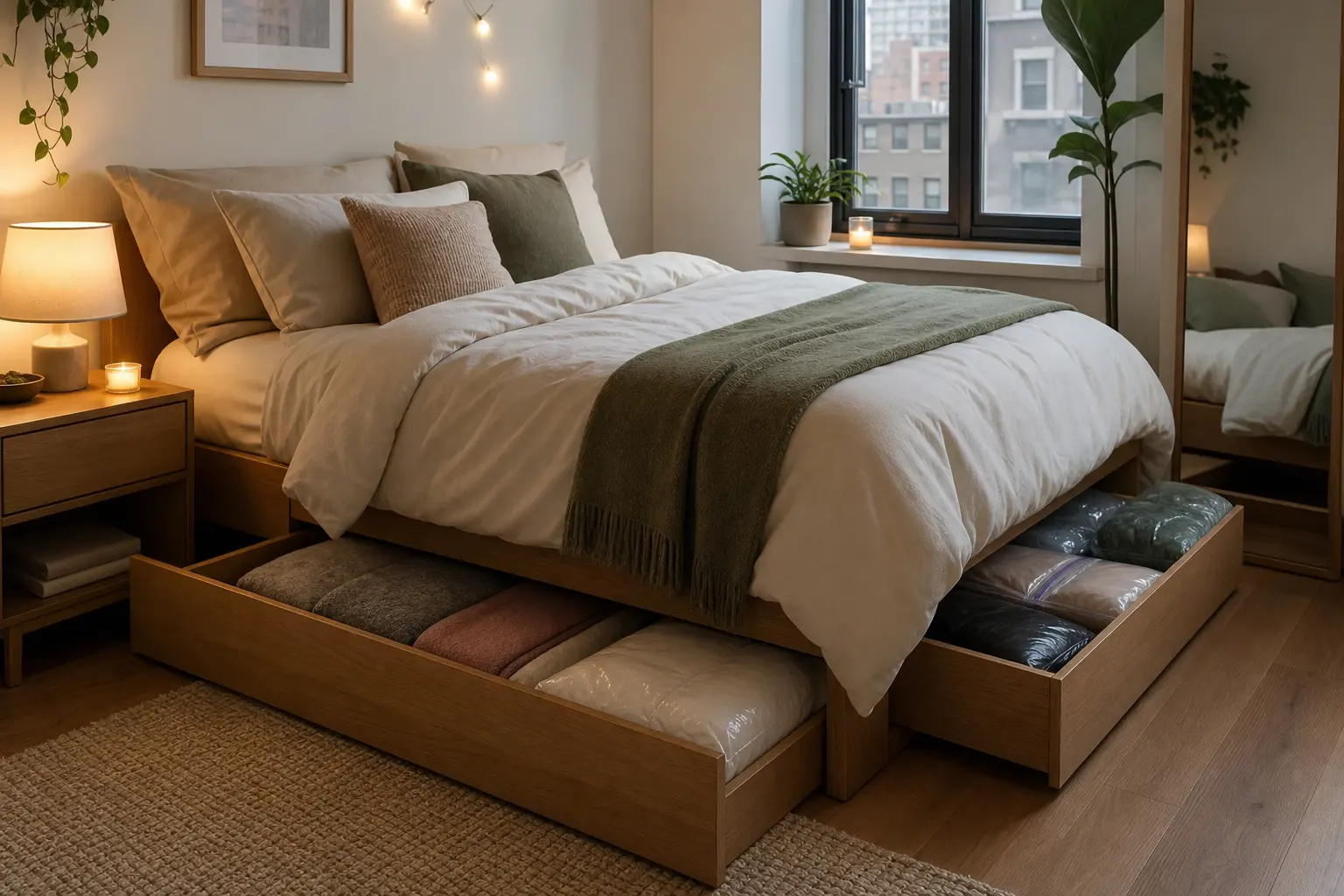
Even without a specialized storage bed frame, flat storage bins slid under a standard bed frame make use of otherwise wasted space for items you don’t need daily access to, off season clothing, extra bedding, or seasonal decor. Clear or labeled bins make it easy to find what you need without pulling everything out.
This is one of the most affordable storage solutions available, often under $30 for a set of bins, and it requires no furniture changes at all if you already have a standard bed frame with clearance underneath.
10. Limit Decor to a Few Intentional Pieces
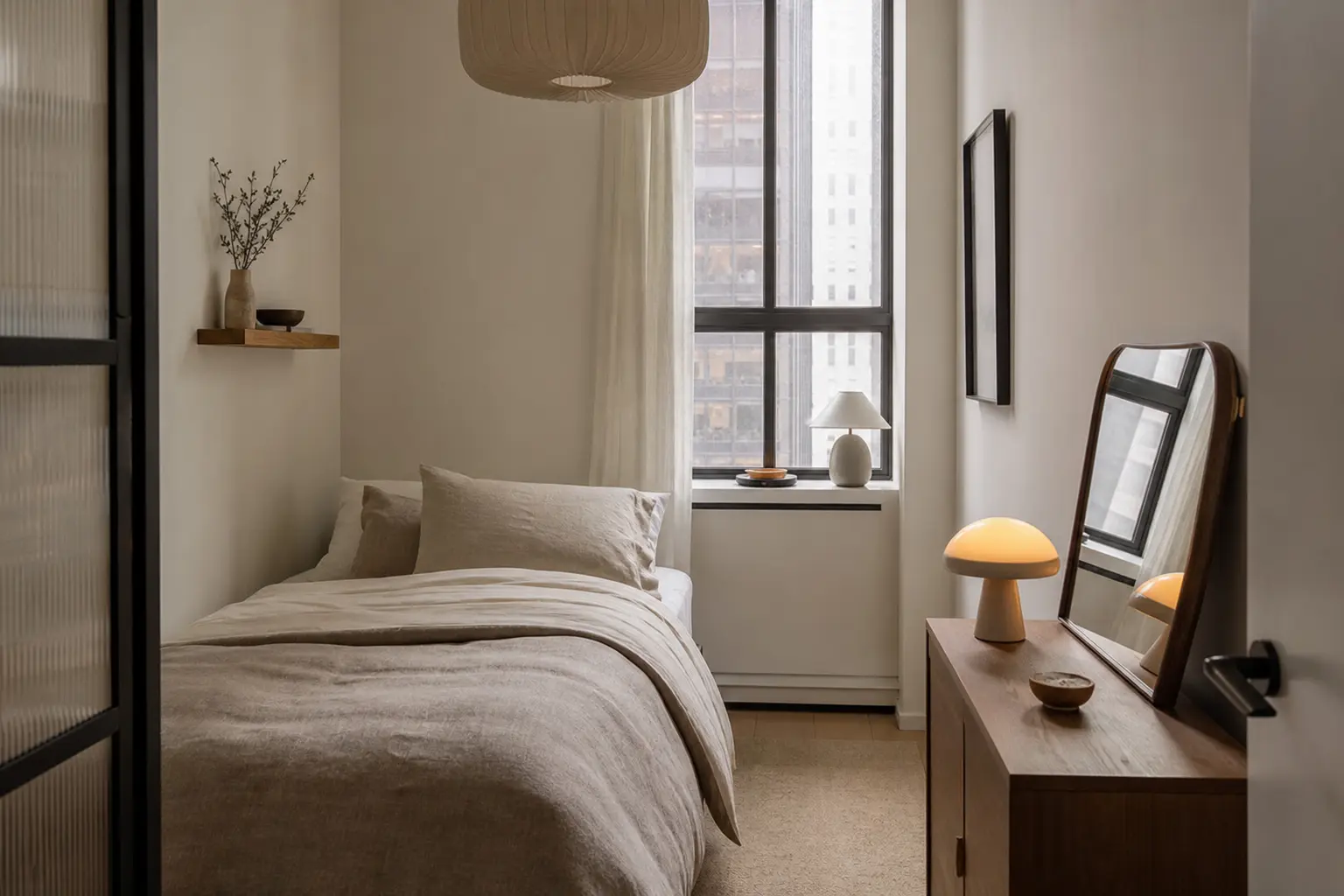
A tiny bedroom filled with many small decorative objects reads as cluttered fast, even if each individual item is nice on its own. Choose a small number of larger, more considered pieces, one framed print, one plant, one textured throw, rather than covering every surface with smaller items.
This restraint isn’t just aesthetic. In a genuinely small room, every object on a surface is competing with the practical function of that surface, so fewer, better chosen pieces keep the room feeling both stylish and usable.
Mistakes to Avoid
- Choosing furniture based on measurements alone without accounting for door swing and walking space
- Skipping under bed or vertical storage and relying only on a closet or dresser
- Painting the room in a dark, saturated color that makes an already small space feel smaller
- Hanging heavy curtains that eat into wall space and block natural light
- Overfilling shelves and surfaces with small decorative objects instead of a few larger pieces
- Choosing furniture that only serves one function when a multi purpose option was available
Frequently Asked Questions
What’s the single best change for a tiny apartment bedroom? Switching to a bed with built in storage, or adding under bed storage bins if a full storage frame isn’t an option, usually provides the biggest functional improvement for the space required.
Does paint color really make a small room feel bigger? Yes. Light, reflective colors bounce available light around the room, while dark colors absorb it, which makes a genuine visual difference in how spacious a small bedroom feels, even though the actual square footage stays the same.
How much walking space do I need around a bed in a tiny bedroom? At least 24 to 30 inches on one side is generally the minimum for comfortable movement, though even less can work if the bed is pushed against a wall on one side.
Can I fit a desk in a tiny apartment bedroom? Yes, especially with a fold down wall mounted desk or a slim floating shelf, both of which take up minimal space and can be hidden away when not in use.
Is it worth investing in custom or specialty small space furniture? For a genuinely tiny bedroom, furniture designed specifically for small spaces often earns back its slightly higher cost through better use of every available inch, particularly for beds and desks.
Conclusion
A tiny apartment bedroom can feel genuinely spacious and organized with the right combination of storage, multi purpose furniture, and a few visual tricks like mirrors and light color. Start with the bed and vertical storage, since those two changes free up the most usable space, then layer in lighter colors, mirrors, and a few well chosen decorative pieces from there.