10 Cozy Canopy Bedroom Ideas for a Dreamy & Relaxing Space
A plain bed frame with no softness above it can feel surprisingly stark, even with nice sheets and a good mattress. There’s nothing drawing the eye upward, nothing making the bed feel like its own little world within the room. Cozy canopy bedroom ideas fix that by adding soft, draped fabric above the bed, turning it into the clear visual and emotional center of the room.
A canopy works especially well for creating a dreamy, relaxing mood because it softens the hard lines of a typical bedroom, ceiling, walls, furniture, with something flowing and gentle right above where you sleep. Add the right lighting and fabric choices, and even a simple bed frame can feel like a genuine retreat. Here are ten ways to build that kind of canopy bedroom.
1. Choose the Right Canopy Frame for Your Bed

A four post bed frame gives you a built in structure for canopy fabric without needing any additional hardware. If your current bed doesn’t have posts, a ceiling mounted canopy frame, in the $50 to $150 range, hangs above the bed and achieves a similar effect.
Ceiling Mounted Versus Bed Frame Canopies
A ceiling mounted option works in almost any room, since it doesn’t depend on your existing bed frame at all. A four post frame, on the other hand, offers a more architectural, built in feel but usually requires replacing the bed frame itself if you don’t already have one.
2. Pick a Fabric Weight That Suits the Mood

A lightweight, sheer fabric like voile or chiffon creates an airy, ethereal feel and lets light filter through softly. A heavier fabric, like a cotton gauze or a light linen, adds more visual weight and a slightly more enclosed, cocoon like feeling.
Sheer fabric tends to suit a brighter, more romantic bedroom, while a slightly heavier weave works well in a room aiming for a cozier, more grounded mood.
3. Add Warm Fairy Lights Woven Through the Fabric

Warm white string lights, in the 2700K range, threaded loosely through the canopy fabric add a soft, magical glow without needing any additional lamps or fixtures. This is one of the fastest, most affordable ways to make a canopy bedroom feel genuinely dreamy after dark.
A canopy with warm lighting woven through it transforms the whole room’s evening atmosphere, since the light diffuses gently through the fabric rather than shining directly and harshly into the space.
4. Balance the Canopy with Layered Bedding

A soft canopy above pairs naturally with layered, textured bedding below. A knit throw, a few varied pillows, and a substantial duvet keep the bed feeling grounded and cozy rather than only soft at the top. This layering also prevents the room from feeling one dimensional, all softness with no texture variation.
Choose bedding in a tone that complements the canopy fabric rather than matching it exactly. A slight contrast, a cream canopy with dusty rose bedding, for example, adds depth to the overall look.
5. Choose a Color Palette That Feels Calming

Canopy bedrooms tend to feel most dreamy in soft, muted colors, cream, blush, sage, or a pale lavender, rather than bold, saturated tones. The gentle color palette supports the soft, flowing nature of the fabric itself, reinforcing the calm mood rather than fighting against it.
If you want to introduce a bolder color, save it for a single accent, a pillow or a small piece of art, rather than the canopy fabric itself, which works best in a softer, quieter shade.
6. Keep the Rest of the Room Simple
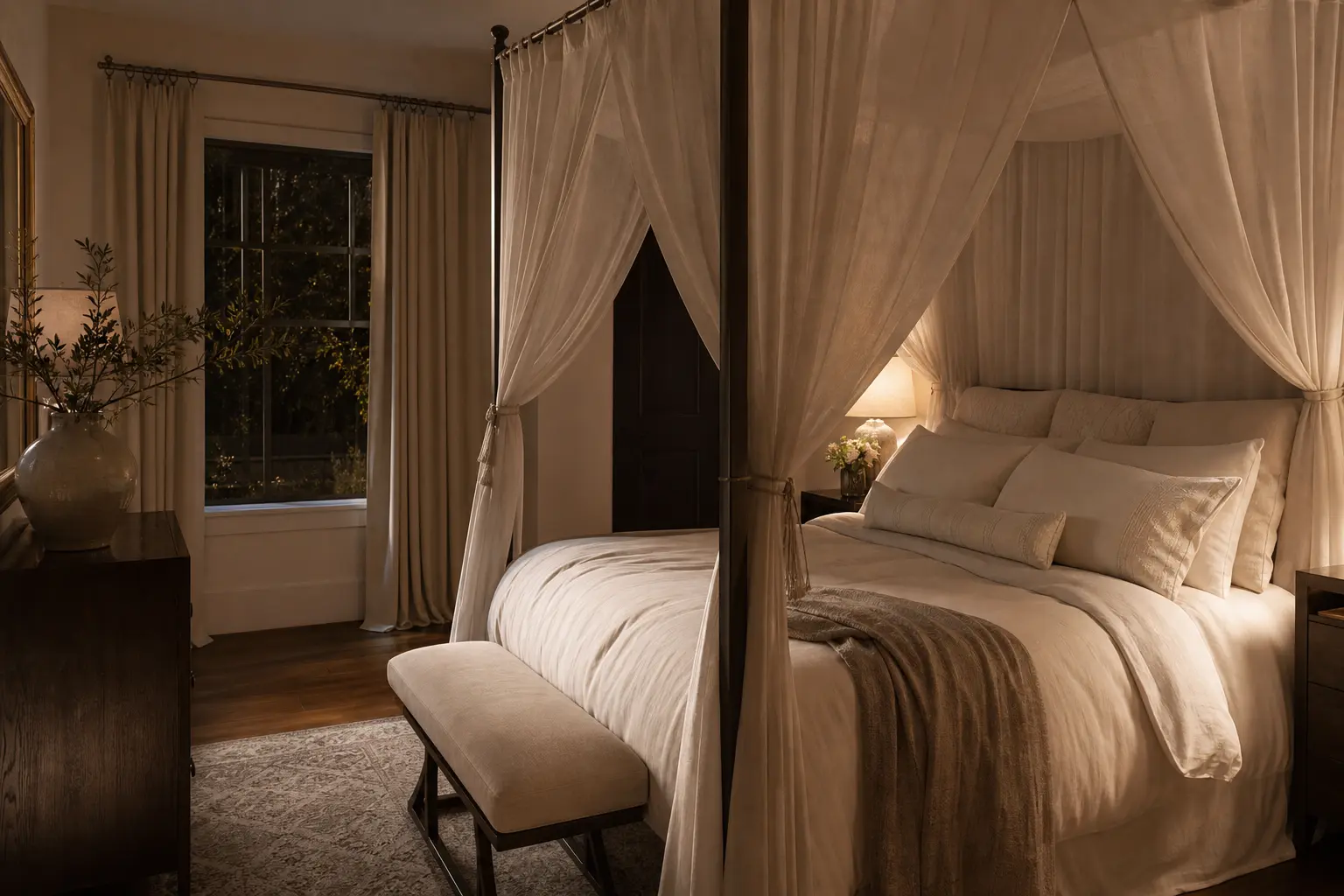
A canopy bed is already a strong visual statement, so the rest of the room benefits from staying relatively simple. Avoid competing focal points, like a busy gallery wall or bold patterned wallpaper, which can pull attention away from the bed and make the room feel visually crowded.
One or two supporting pieces, a simple dresser, a small chair, are usually enough alongside a canopy bed. Let the bed remain the clear centerpiece of the room.
Why Restraint Matters Here
A room with too many competing focal points loses the dreamy, cocooning effect that makes a canopy bed feel special in the first place. Simplicity elsewhere in the room lets the canopy do its job.
7. Add a Rug That Softens the Floor Below
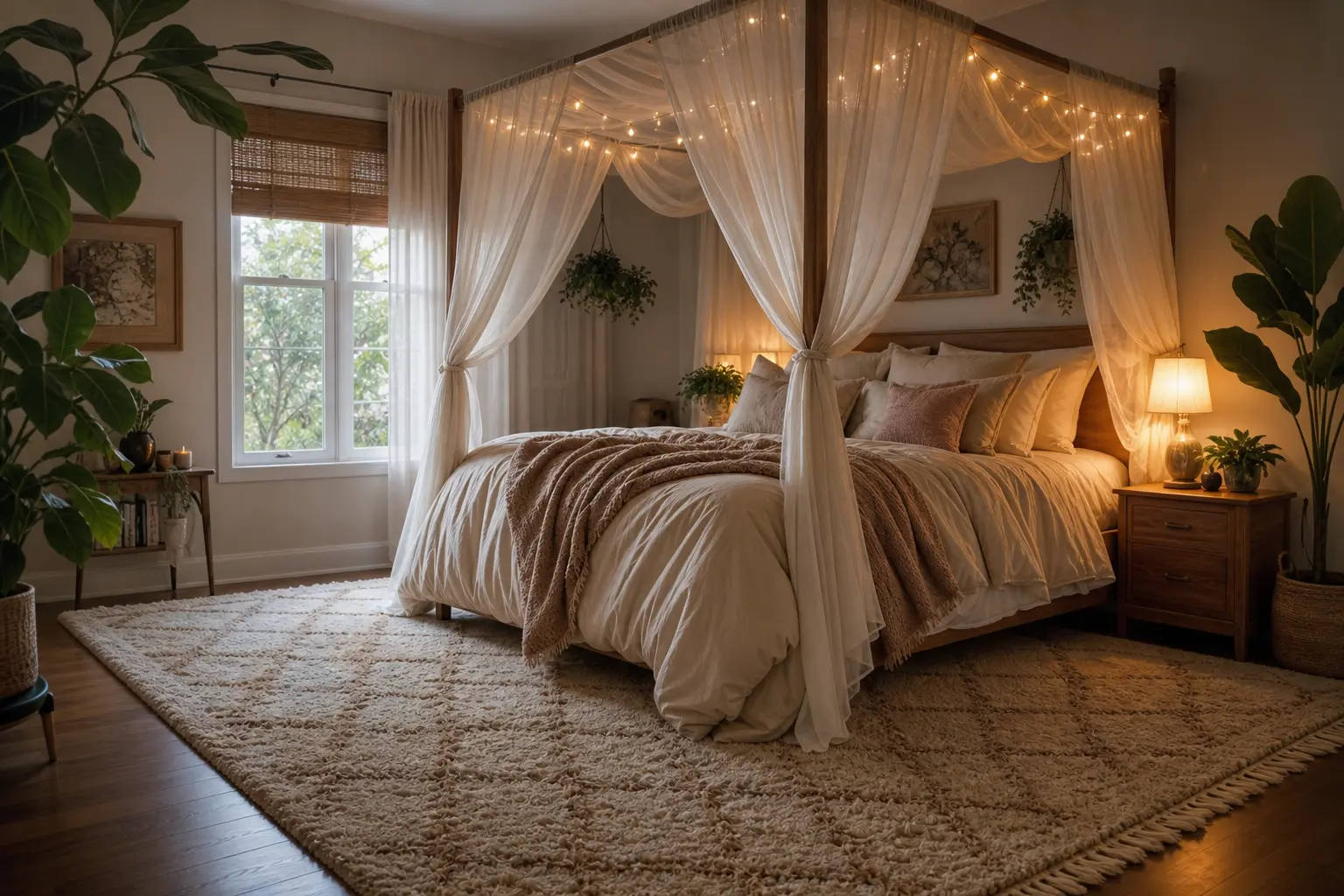
A plush rug beneath and around the bed extends the soft, cozy feeling from the canopy down to the floor. A rug in a warm neutral or a soft muted tone, in the $150 to $400 range depending on size, keeps the whole room feeling cohesive from top to bottom.
Choose a rug large enough to extend well beyond the edges of the bed frame, so the canopy and the rug feel like part of the same intentional design rather than two separate decisions.
8. Use a Freestanding Frame If You Can’t Mount to the Ceiling
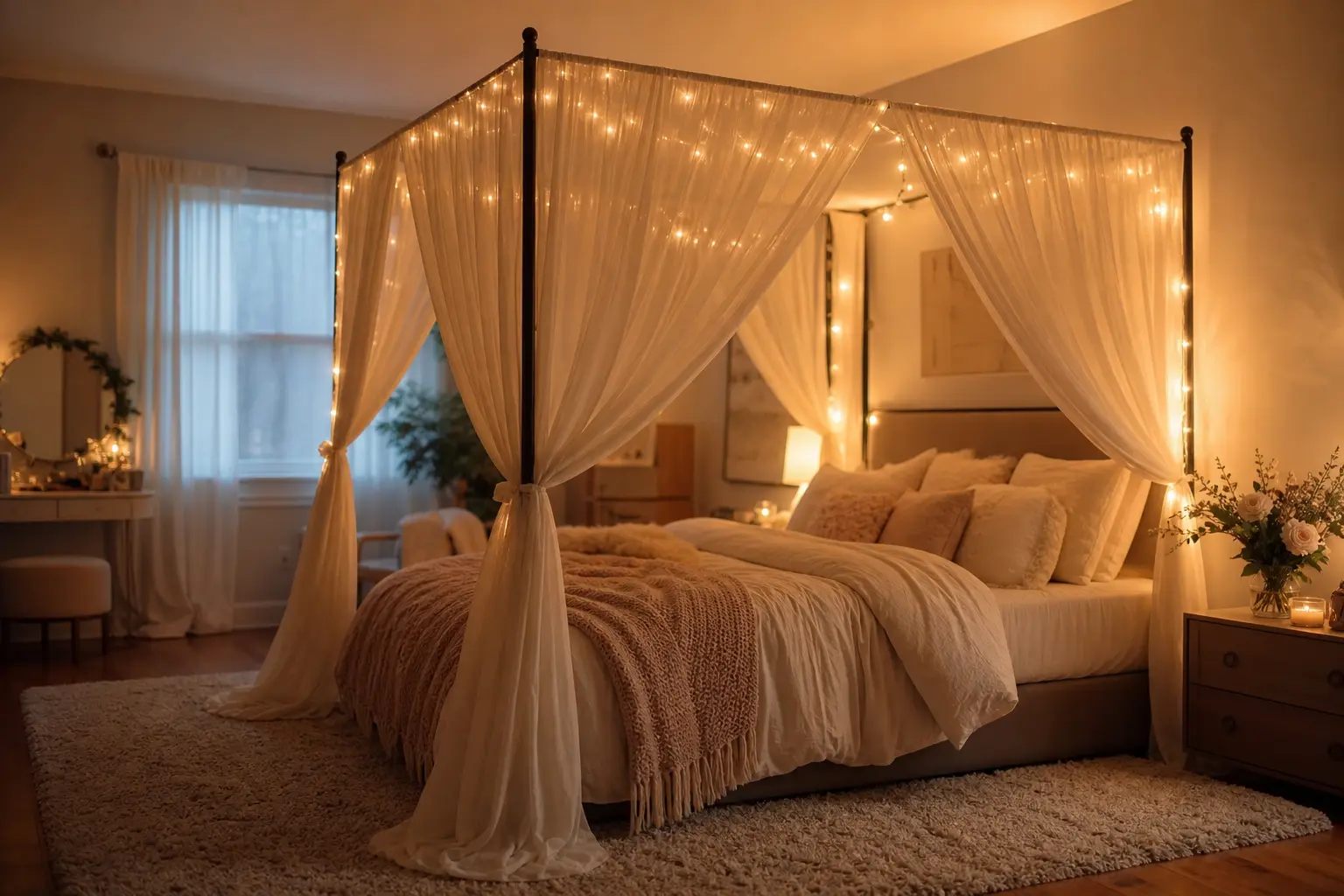
Renters or anyone unable to drill into the ceiling can still achieve the canopy look with a freestanding frame that surrounds the bed without any wall or ceiling attachment. These frames, typically in the $80 to $200 range, offer full flexibility and can move with you between homes.
A freestanding frame also makes it easier to change the fabric seasonally or update the look over time, since nothing about the setup is permanent.
9. Add Greenery Near the Bed for Contrast
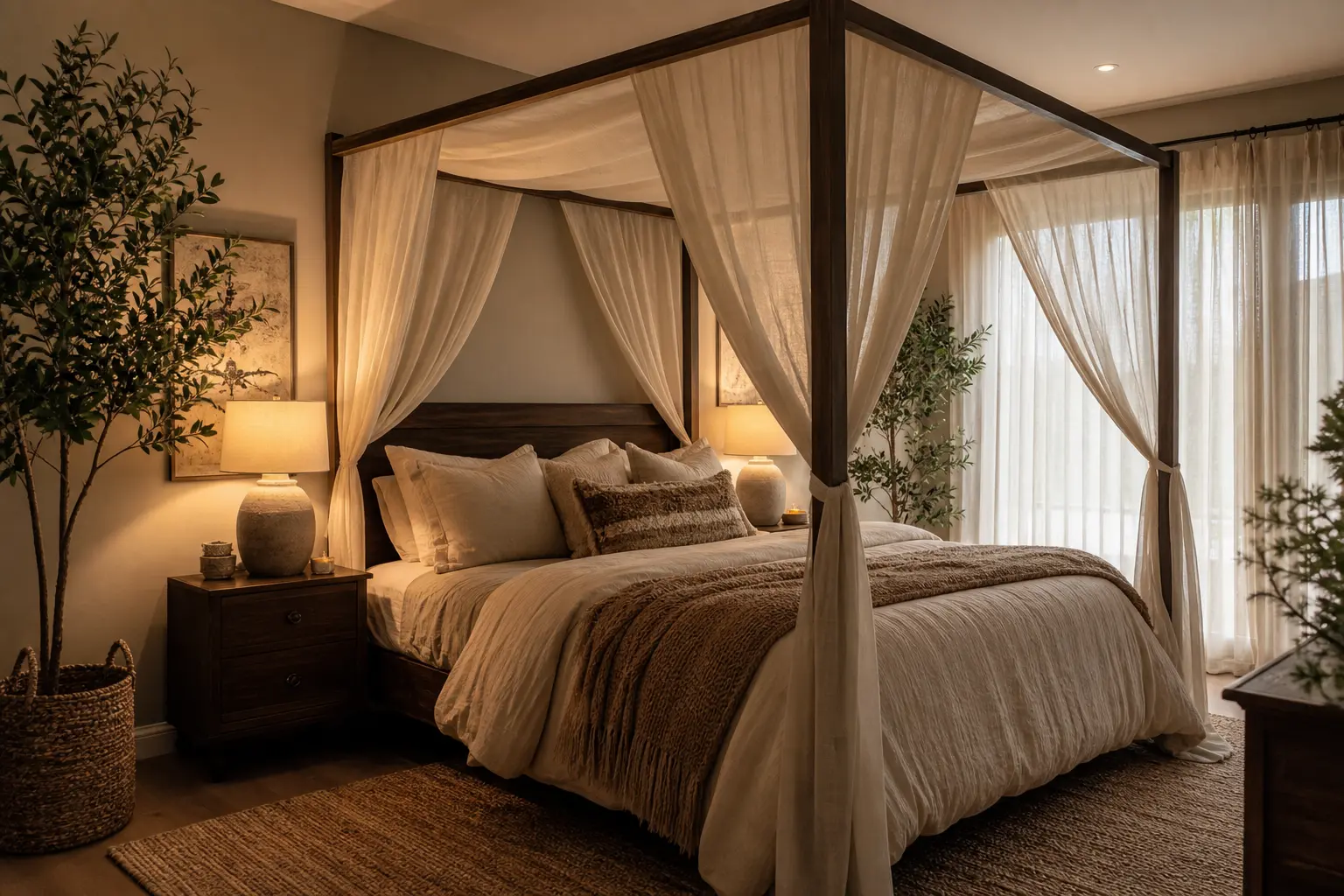
A trailing plant on a nearby shelf or nightstand adds a natural, living contrast to the soft, flowing fabric of the canopy. A pothos or a string of pearls works particularly well, since their draping growth pattern echoes the movement of the canopy fabric itself.
This small addition ties the room’s softness to something alive and growing, which reinforces the calm, restful mood the rest of the space is working to create.
10. Finish with Scent for a Full Sensory Retreat

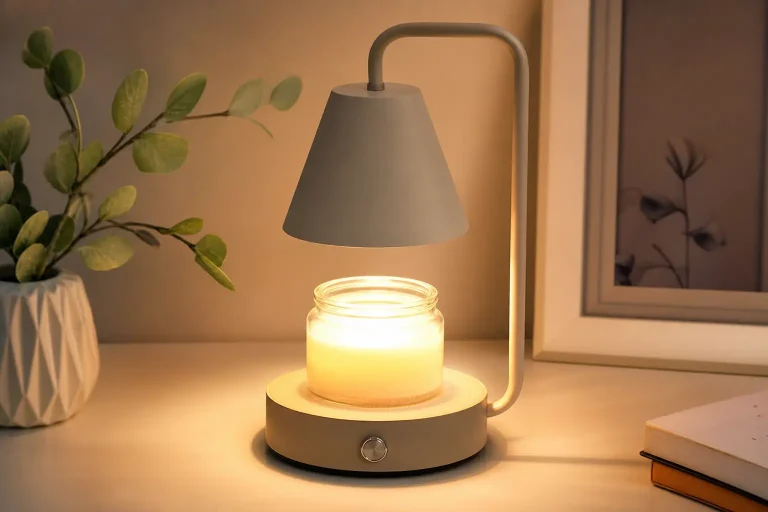
A candle or a diffuser with a calming scent, lavender, chamomile, or a soft vanilla, rounds out the canopy bedroom’s dreamy atmosphere by engaging more than just sight. This detail turns the space from a visually pretty room into a genuinely relaxing sensory retreat.
Keep any candle a safe distance from the canopy fabric itself, and consider a flameless option if the candle needs to sit anywhere near the draped material.
Mistakes to Avoid
- Choosing fabric too heavy for the room, which can make a small bedroom feel closed in
- Skipping lighting within the canopy and relying only on the room’s general overhead light
- Overcrowding the rest of the room with competing focal points that pull attention from the bed
- Choosing bold, saturated canopy fabric instead of a softer, more calming tone
- Placing a candle too close to sheer or lightweight canopy fabric
- Choosing a rug too small to visually connect with the scale of the canopy bed above it
Frequently Asked Questions
Do I need a four post bed frame for a canopy? No. A ceiling mounted or freestanding canopy frame works with any bed frame, or even no dedicated frame at all, making the canopy look accessible in almost any bedroom setup.
Is a canopy bed practical in a small bedroom? Yes, especially with a lightweight, sheer fabric that doesn’t visually shrink the room. A heavier fabric can work too, but it tends to suit larger rooms better where it has more space to breathe.
How do I keep a canopy bed from feeling too romantic or old fashioned? Choose a simple frame, a neutral or muted fabric color, and keep the rest of the room modern and minimal. The combination of clean lines elsewhere and soft fabric at the bed creates a more contemporary feel.
Can renters achieve this look? Yes. A freestanding canopy frame requires no drilling or permanent installation, making it fully compatible with a rental agreement and easy to take along when you move.
What’s the most affordable way to start a canopy bedroom? A basic ceiling mounted canopy frame paired with lightweight fabric and a set of warm string lights usually costs under $100 combined and creates an immediate transformation.
Conclusion
A cozy, dreamy canopy bedroom comes down to choosing the right fabric weight for your space, adding warm woven lighting, and keeping the rest of the room simple enough to let the bed remain the clear focal point. Start with the frame and fabric, then layer in lighting, a rug, and scent to round out the sensory experience.