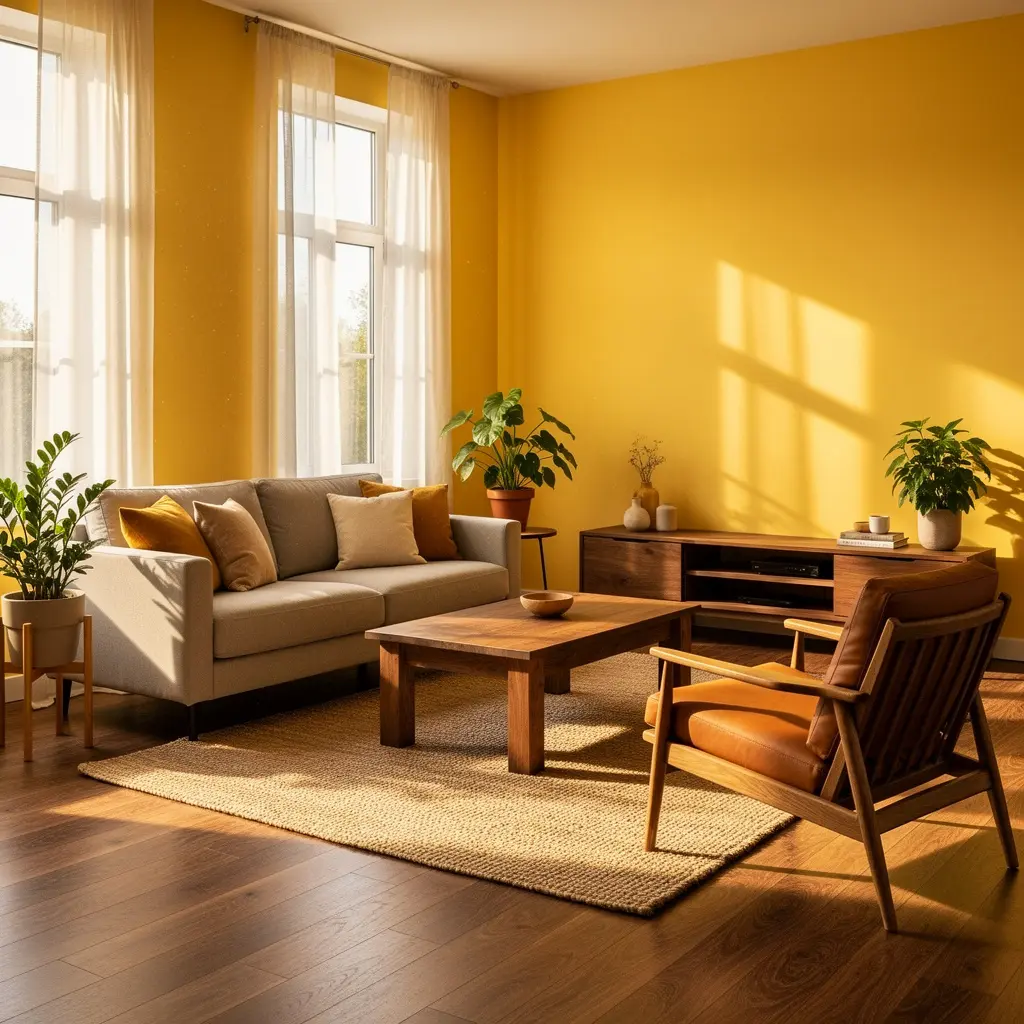
10 Sunlit Yellow Living Room Ideas You’ll Want to Copy
Yellow scares people. One coat on the wrong wall and a living room ends up feeling like a waiting room instead of somewhere you’d want to spend an evening. Here’s the thing though: paired with the right light and the right supporting colors, yellow becomes one of the warmest choices you can make. It’s back in the spotlight for a reason. Done with restraint, it comes across as optimistic and grounded, not loud.
1. Choose the Right Yellow for a Sunlit Room
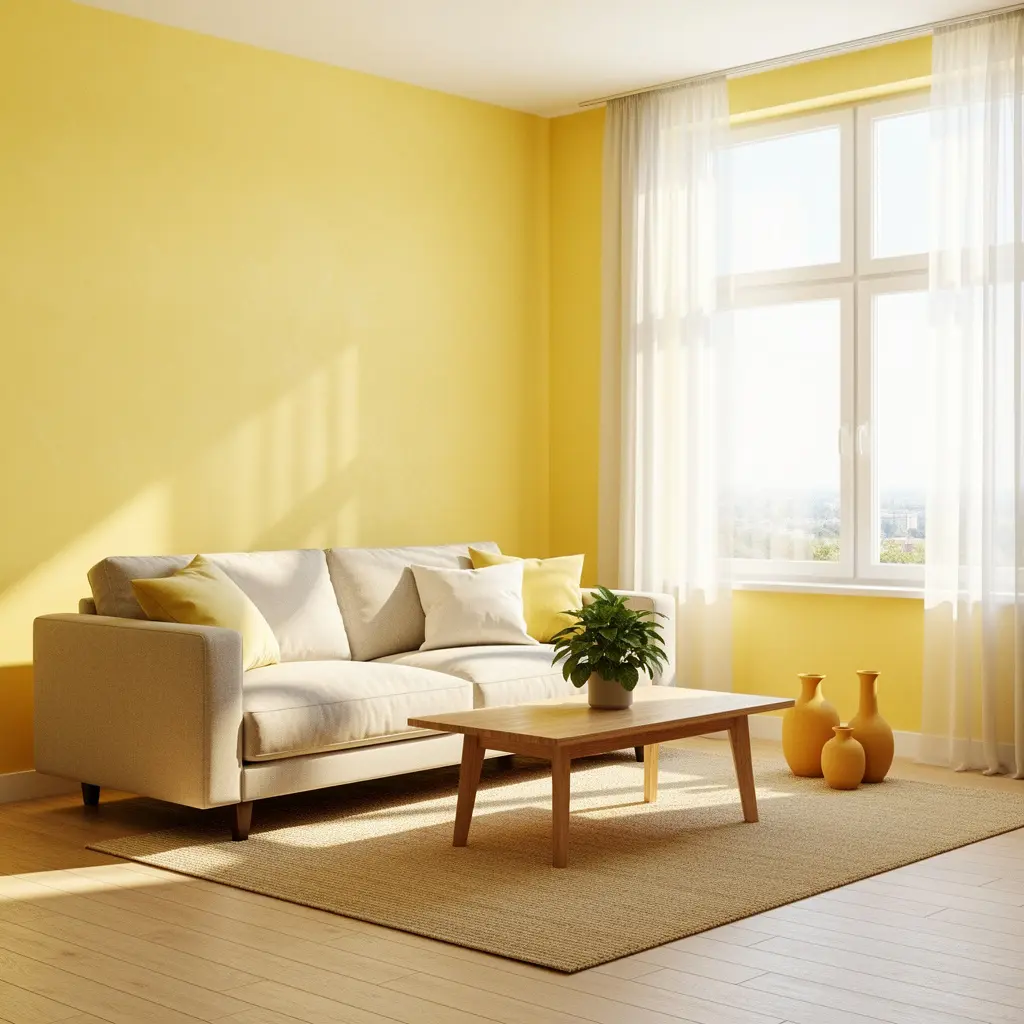
Soft butter, warm ochre, and muted mustard all behave differently depending on how much natural light a room gets. A room already flooded with afternoon sun can carry a slightly deeper mustard without tipping over, since the light softens the intensity on its own. Less direct sun usually calls for a lighter butter or pale gold, which brightens a room instead of dragging it down.
Bright, electric yellow has fallen out of favor this year in favor of softer, muted versions. A quieter yellow wears better over years. A harsh, saturated one can feel dated within a single season.
2. Pair Yellow With Deep Navy for Contrast
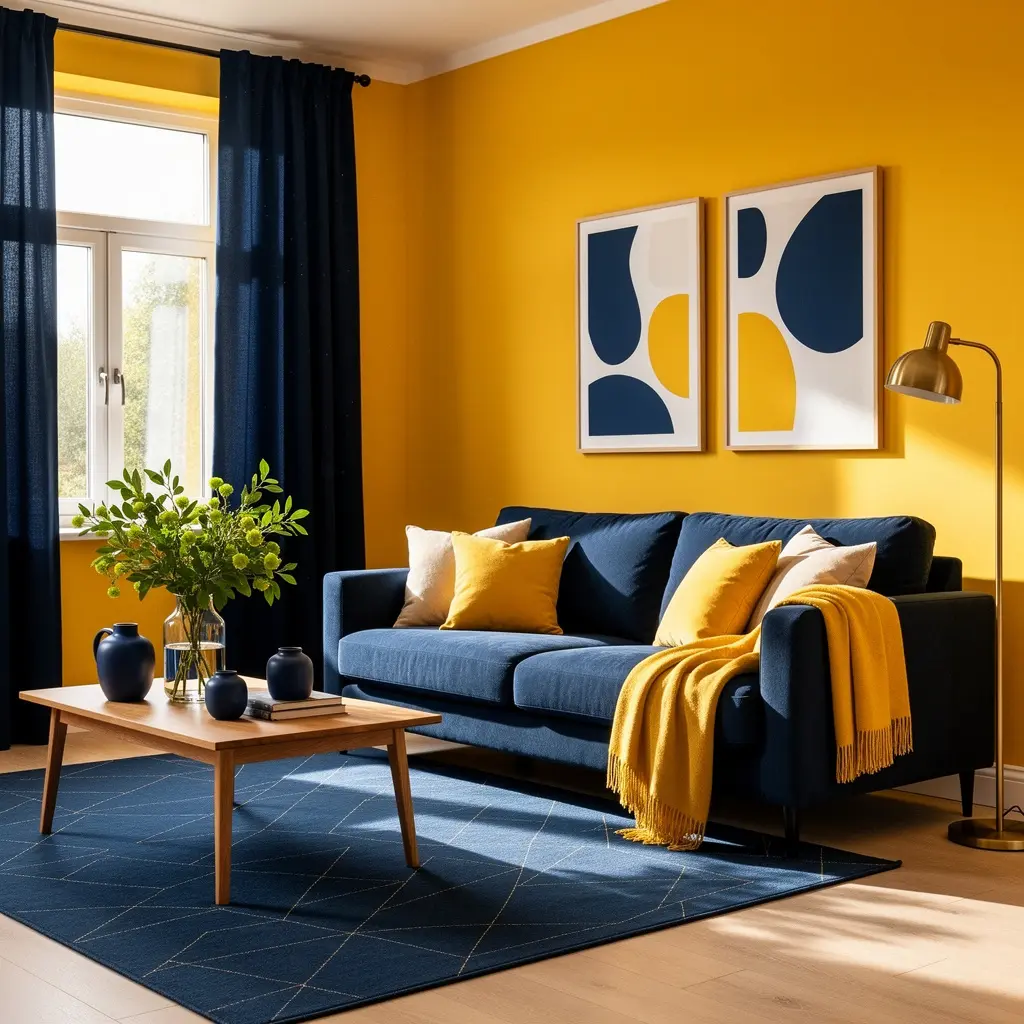
Deep navy walls or furniture make yellow art and accessories look brighter by comparison, and the pairing has become one of the standout combinations right now. A butter yellow throw over a navy armchair creates an instant reading corner, more sophisticated than playful, and the contrast keeps either color from carrying the whole room by itself.
Deciding Which Color Leads
Pick early whether yellow or navy dominates. Yellow walls with navy furniture reads completely different from navy walls with yellow accents, and splitting the difference without a clear lead tends to feel unresolved.
3. Let Sheer Curtains Carry the Natural Light
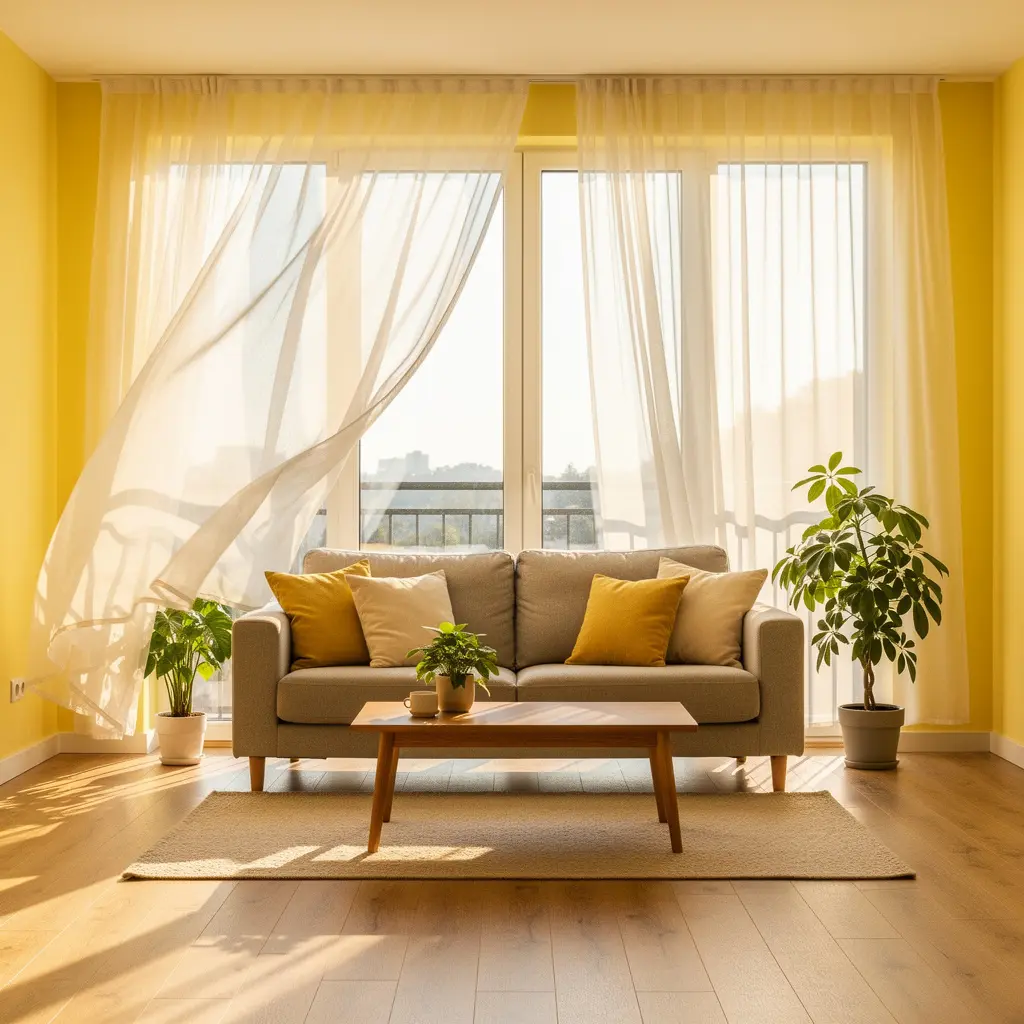
Heavy drapes block exactly the thing a sunlit yellow room depends on. Sheer curtains let daylight fill the room and interact with the yellow directly, so the light itself becomes part of the color story as it shifts throughout the day.
4. Use a Yellow Velvet Sofa as the Focal Point
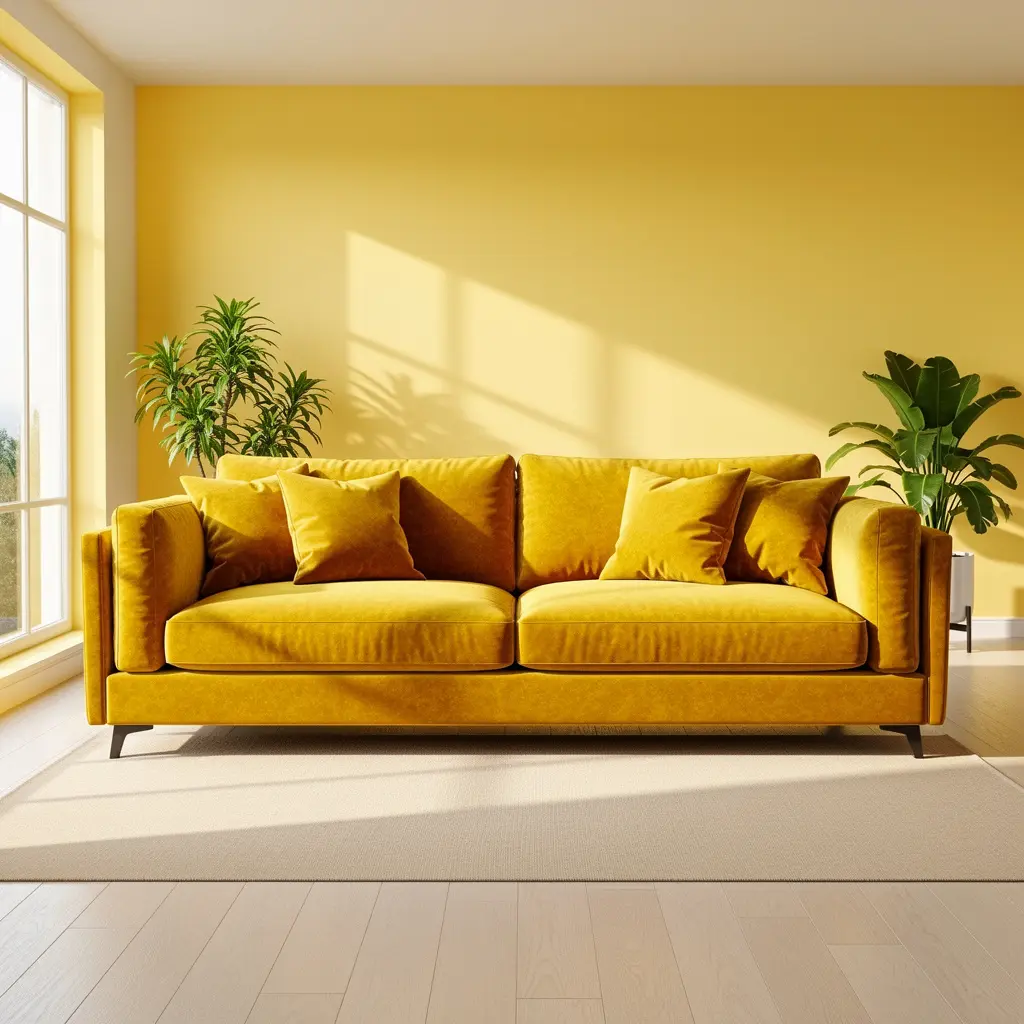
A tufted marigold or butter velvet sofa can anchor a whole room, especially when everything else stays tightly edited around it. Warm neutrals, a bit of brass, some moody art, and the sofa does the talking instead of competing with five other loud choices. Velvet also catches light differently than flat fabric, which adds to that sunlit effect through the day.
5. Add Colorful Glass for Shifting Light

Amber, cobalt, or emerald glass, in a pendant, a tabletop, or a few small pieces, catches sunlight by day and shifts under artificial light at night. Set a piece of amber glass where afternoon sun reaches it, and it’ll cast a warm tint across the nearby wall or floor. Solid materials can’t do that.
6. Keep the Supporting Palette Warm and Neutral
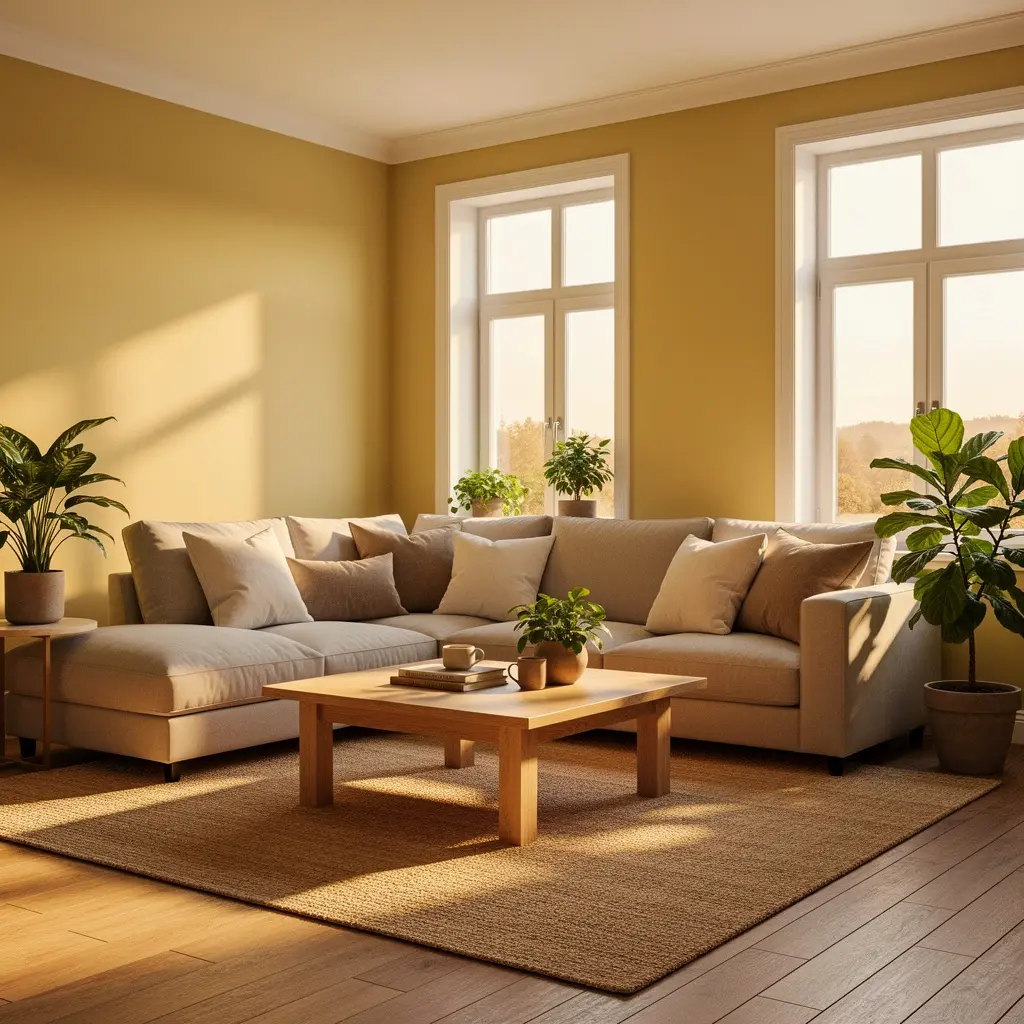
Warm neutrals, honey wood, brass hardware. These let yellow feel grounded instead of loud. Pair it with cool grays or stark white and the room can end up feeling disjointed. Warm neutrals underneath make yellow feel like an extension of the room’s warmth rather than a color dropped in on top.
7. Use Yellow in Smaller Doses if a Full Wall Feels Risky

Throw pillow covers, a table runner, a few small objects. All of it lets you test yellow before committing to a full wall. Removable pillow covers are especially easy, cheap, and simple to swap out later if the color doesn’t stick.
Testing Before Committing
Live with the pillows and a runner for a season first. Then decide whether an accent wall or a bigger furniture piece actually earns its place. Lower risk, and the eventual bigger move feels a lot more confident.
8. Add Wood Tones to Ground the Warmth
Honey floors and wood furniture sit in the same warm family as yellow. A room with golden hour light spilling across wood already has a head start on feeling sunlit, and yellow amplifies that instead of fighting it the way a cooler material might.
9. Layer in Ikat, Plaid, or Textured Pillows
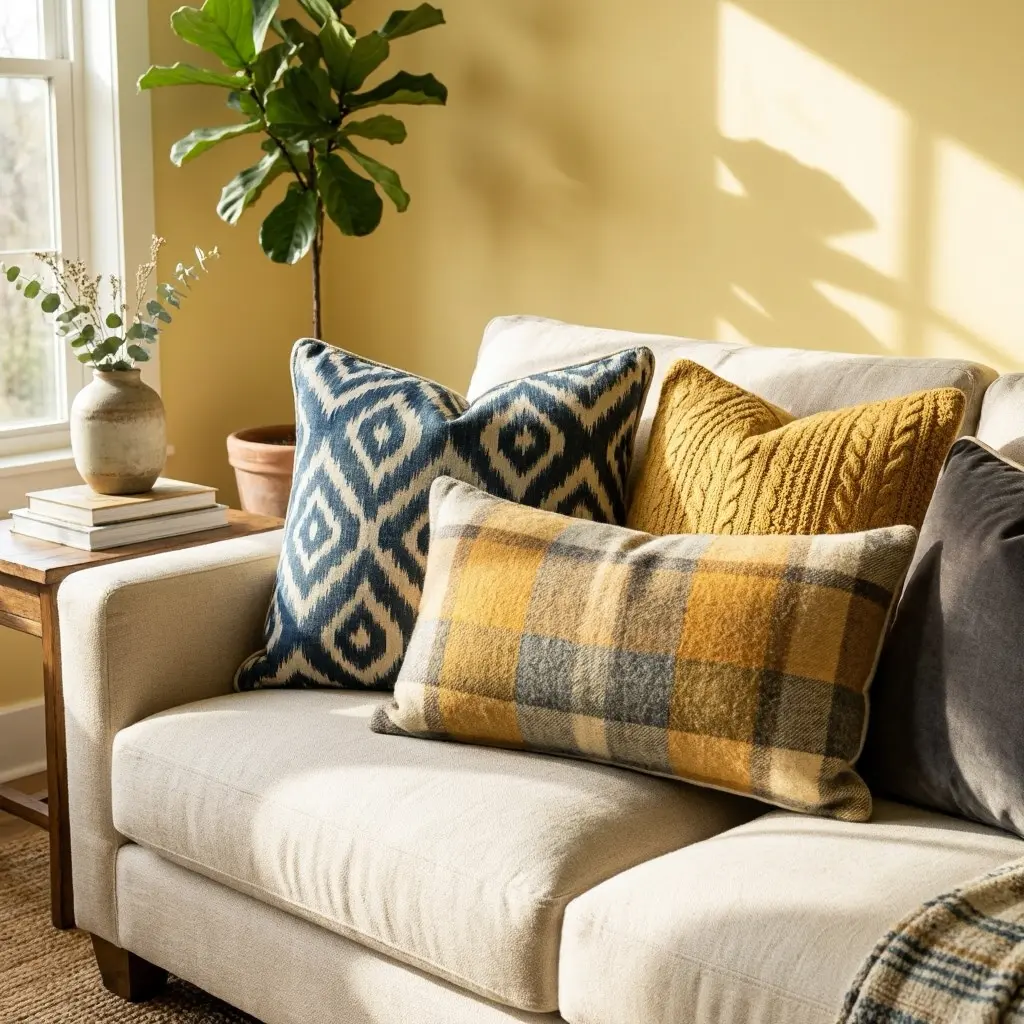
Ikat pillows, a striped ottoman, a textured throw. This kind of layering adds a sense of abundance without needing more wall color, and it softens the visual weight of a strong yellow so the room feels inviting instead of sterile.
10. Keep the Palette Edited Rather Than Scattered
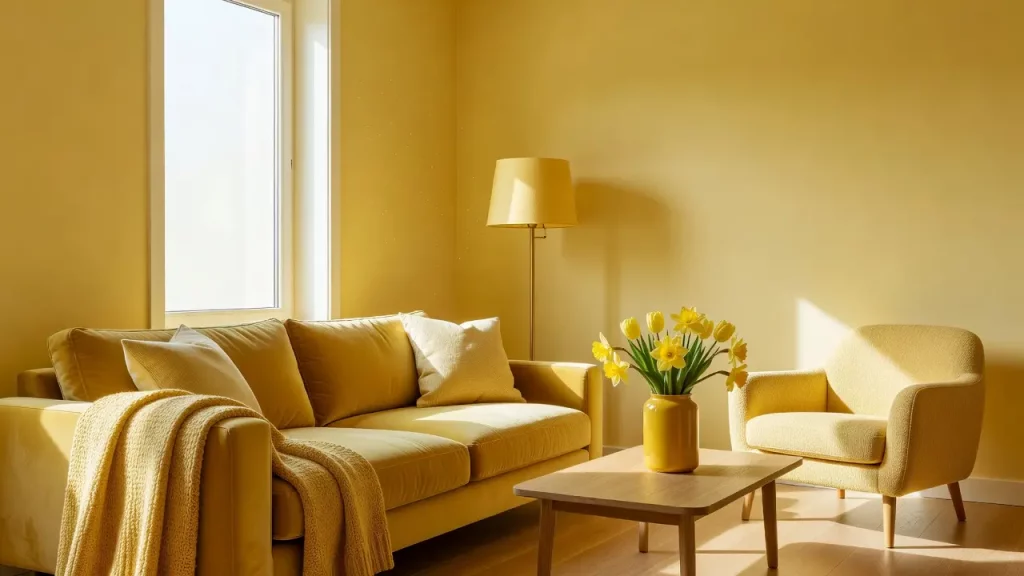
The rooms that pull off yellow best tend to keep everything else under control. A few warm neutrals, one or two supporting colors like navy or brass, yellow as the clear lead. Restraint everywhere else is what lets yellow actually stand out instead of getting buried in noise.
Mistakes to Avoid
- Choosing a harsh, overly saturated yellow instead of a softer, more muted tone that ages well
- Using heavy, opaque curtains that block the natural light a sunlit yellow room depends on
- Pairing yellow with cool grays instead of warm neutrals and wood tones
- Introducing too many other bold colors at once instead of keeping the supporting palette edited
- Committing to a full accent wall before testing the color with textiles and smaller accessories first
- Ignoring how much natural light the room actually gets when choosing the specific shade of yellow
Frequently Asked Questions
Will yellow make a small living room feel smaller? Not necessarily. A lighter butter or pale gold can brighten a small room, especially with sheer curtains and good natural light, though a deep mustard is worth testing carefully first.
What color pairs best with yellow in a living room? Deep navy creates the strongest contrast. Warm neutrals and honey wood ground the look and keep it from feeling too bold on its own.
Is yellow a passing trend or a lasting choice for a living room? Muted, softer yellows are being treated as long term investments rather than a trend, especially paired thoughtfully with the rest of the room.
How much natural light does a yellow living room need? It works across different light levels, but the shade should shift accordingly. Sun filled rooms can handle a deeper mustard. Dimmer rooms usually look better with something paler.
What’s the easiest way to try yellow without repainting? Removable pillow covers, a table runner, or a few small objects let you test the color before committing to a wall or a major piece of furniture.
Conclusion
A sunlit yellow living room comes down to matching the shade to your light, pairing it with warm neutrals or a bold contrast like navy, and letting sheer curtains carry the light instead of blocking it. Start small if the commitment feels risky, then build toward something bigger once you’ve lived with the color for a while. Done with restraint, yellow reads warm and optimistic, not overwhelming.