10 Dreamy Sage Green Bedroom Ideas on a Budget That Look Expensive
A bedroom painted the same builder grade white as every other room in the house rarely feels like a retreat. Sage green changes that without requiring the kind of budget a full renovation demands. These dreamy sage green bedroom ideas on a budget focus on the handful of choices, paint application, textiles, and a few key swaps, that make the room feel calm and elevated rather than like color slapped on a wall.
1. Why Sage Green Works So Well in a Bedroom
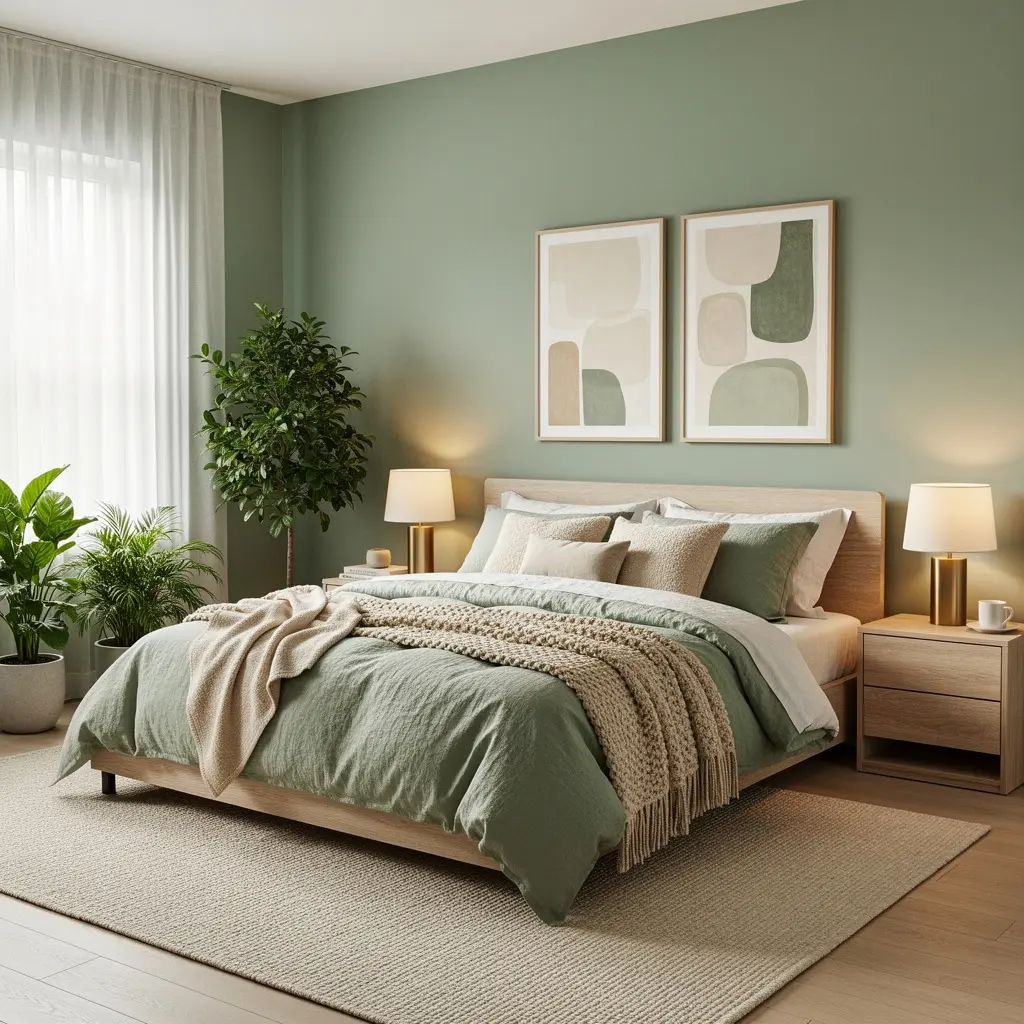
Sage sits in an unusual spot on the color wheel. It reads as both a neutral and a color, which is part of why it works so well in a room meant for rest. Unlike a brighter green, sage doesn’t compete for attention, it settles into the background the way a good neutral does while still adding warmth a true gray or beige can’t offer.
There’s a practical side too. Sage pairs easily with warm wood tones, black metal accents, and most bedding colors, which makes it more forgiving than a bolder, more saturated color choice.
2. Choosing the Right Shade of Sage for Your Light
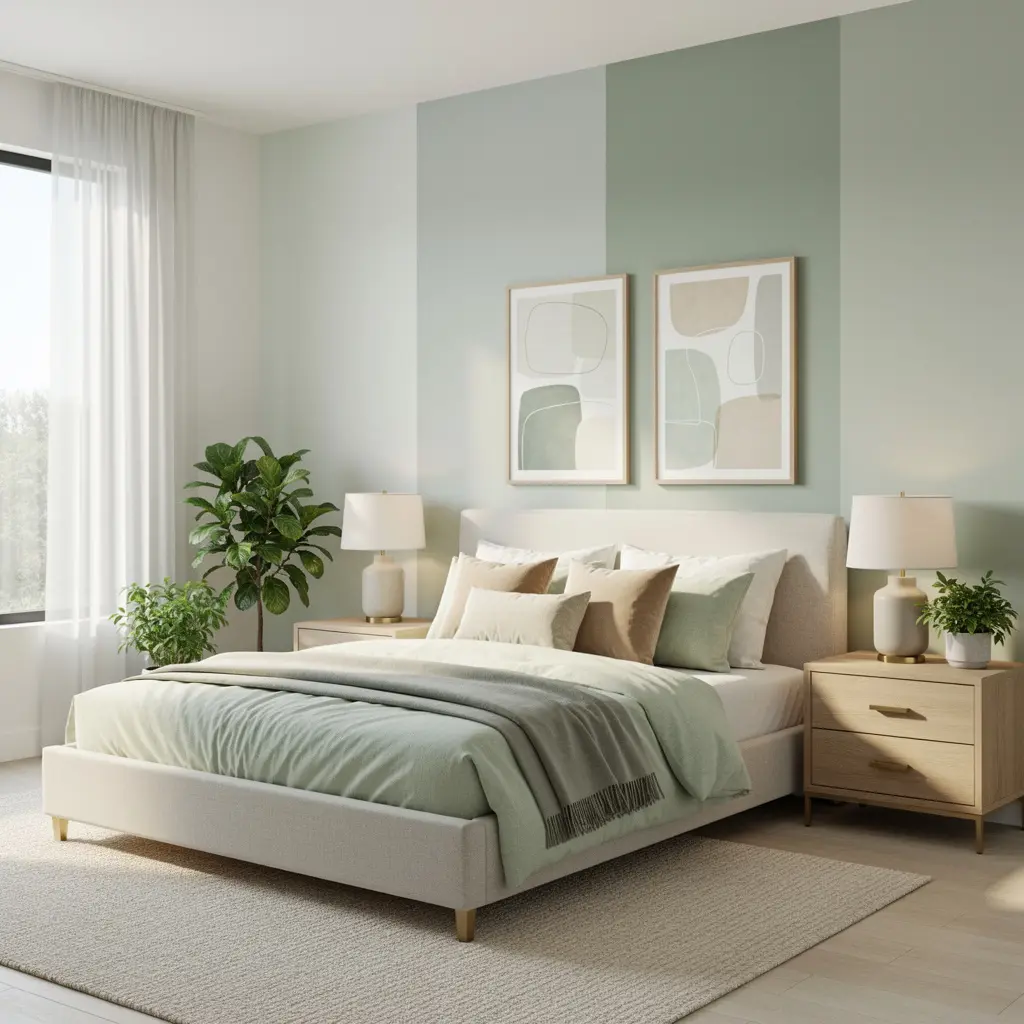
Sage green shifts a lot depending on light exposure, more than most people expect before painting an entire wall. A north facing bedroom, with cooler, indirect light, tends to suit a slightly warmer, more muted sage, since cooler light can pull out gray undertones and make the color feel flat.
South or west facing rooms with more direct sunlight can handle a slightly cooler or brighter sage without it washing out. Rooms with very limited natural light generally do better with a lighter sage tone overall, since a deep, saturated sage can feel heavy or dark without enough light bouncing around the room.
A quick tip that helps: paint a large sample swatch, at least two feet wide, and check it morning, midday, and evening before committing to a full wall or room.
3. Paint Application Ideas Beyond a Full Accent Wall
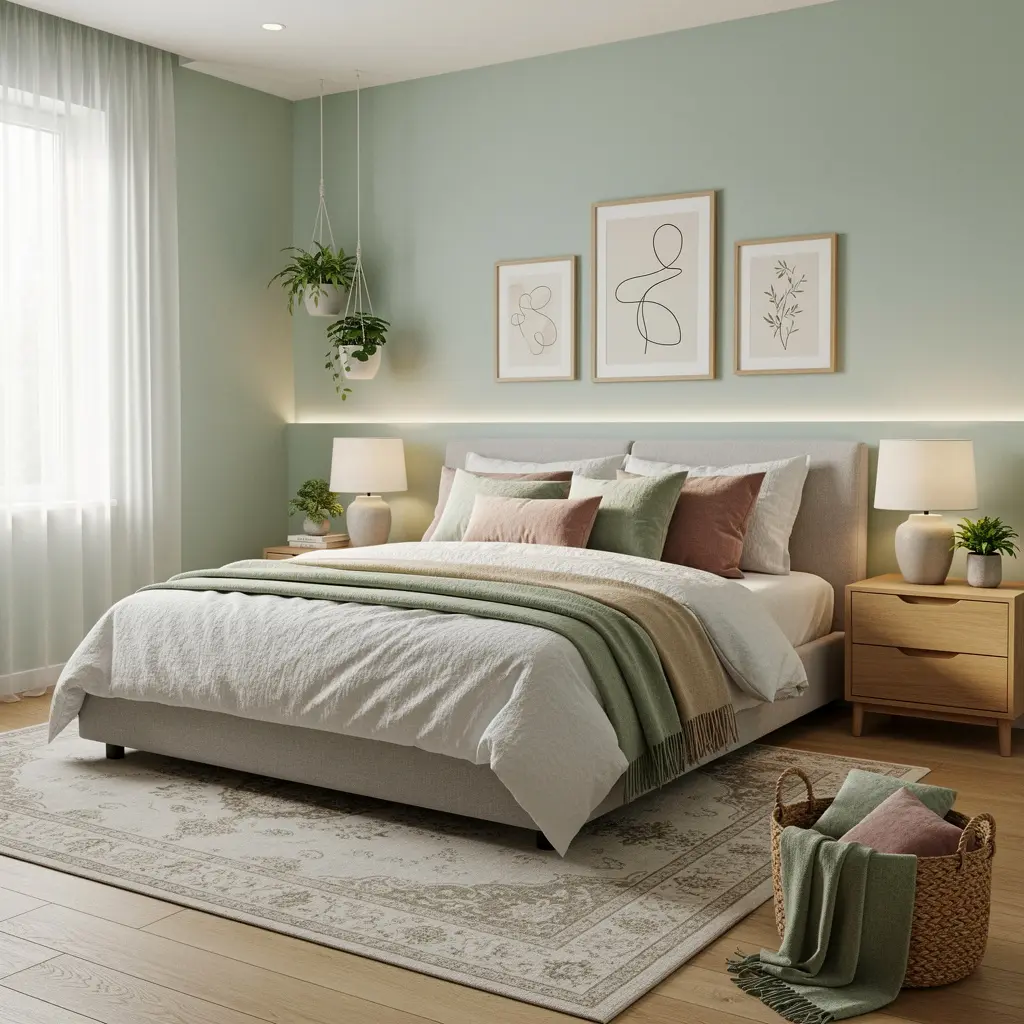
A single accent wall is the most common approach, but it’s not the only option, and it’s not always the most effective one either. Painting just the lower half of the wall, below a chair rail height or a simple painted line, adds color without committing to a full wall and works especially well in rooms with lower ceilings.
Color drenching, where the walls, trim, and ceiling all get the same sage tone, removes the visual break a contrasting white ceiling creates, which can make a small bedroom feel more expansive rather than boxed in. Painting just the ceiling sage, while keeping the walls a lighter neutral, is a less common but effective option that adds color from an unexpected angle.
Budget for Paint
A gallon of quality paint typically runs 35 to 60 dollars, and most bedrooms need one to two gallons depending on wall size and number of coats. A single accent wall usually costs under 40 dollars in paint alone.
4. Bedding and Textile Choices That Reinforce the Palette
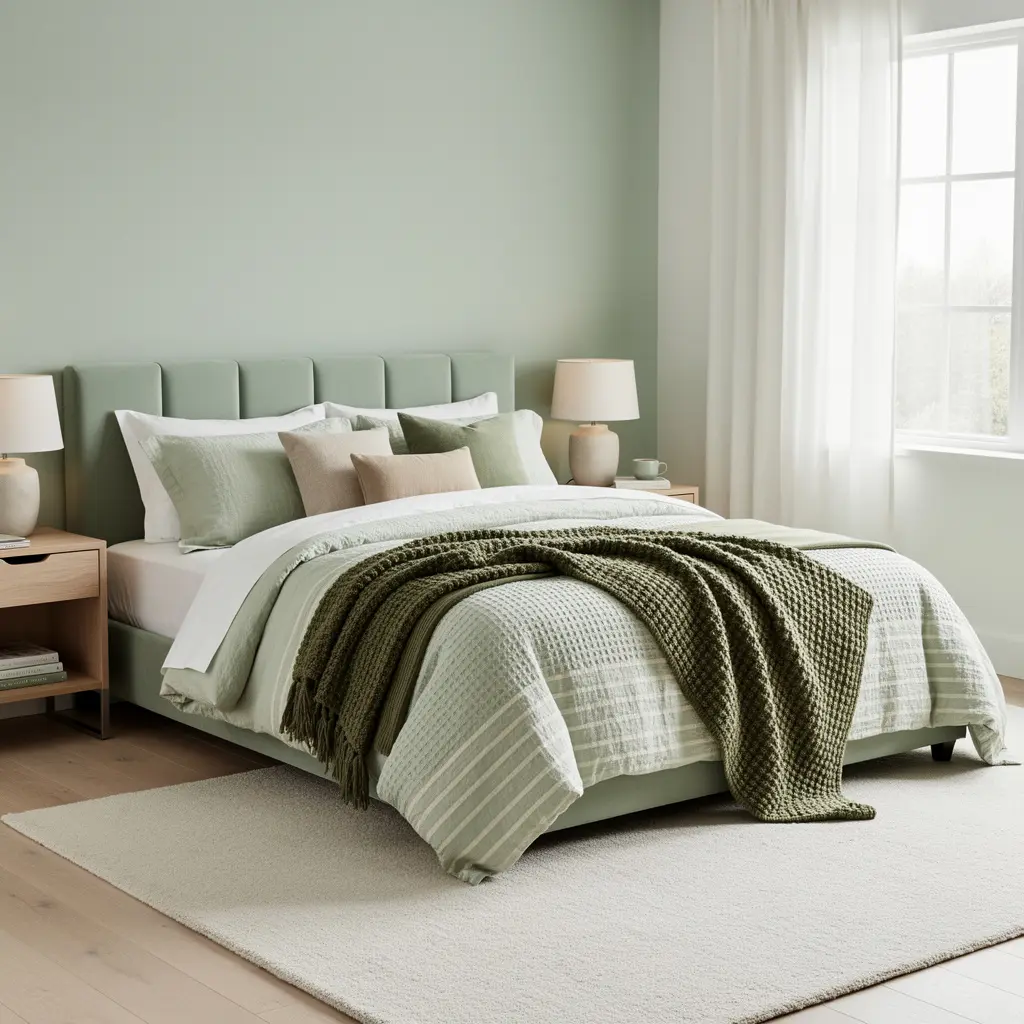
Bedding does a lot of visual work in a bedroom, sometimes more than the wall color itself. A duvet or comforter in a warm white or cream lets sage green walls stand out clearly, while a sage colored duvet against neutral walls flips that relationship and puts the color front and center on the bed instead.
Layering in a textured throw blanket, a woven or knit material rather than smooth cotton, adds depth without introducing another color. Pillow covers in a slightly different tone of green, a touch lighter or darker than the wall, keep the palette from feeling flat or overly matched.
Where to Find Budget Textiles
Marketplace and thrift finds often include well made bedding and throws for a fraction of retail cost, and a wash or light steam usually freshens up secondhand textiles without much effort.
5. Wood Tones That Pair Best With Sage Green
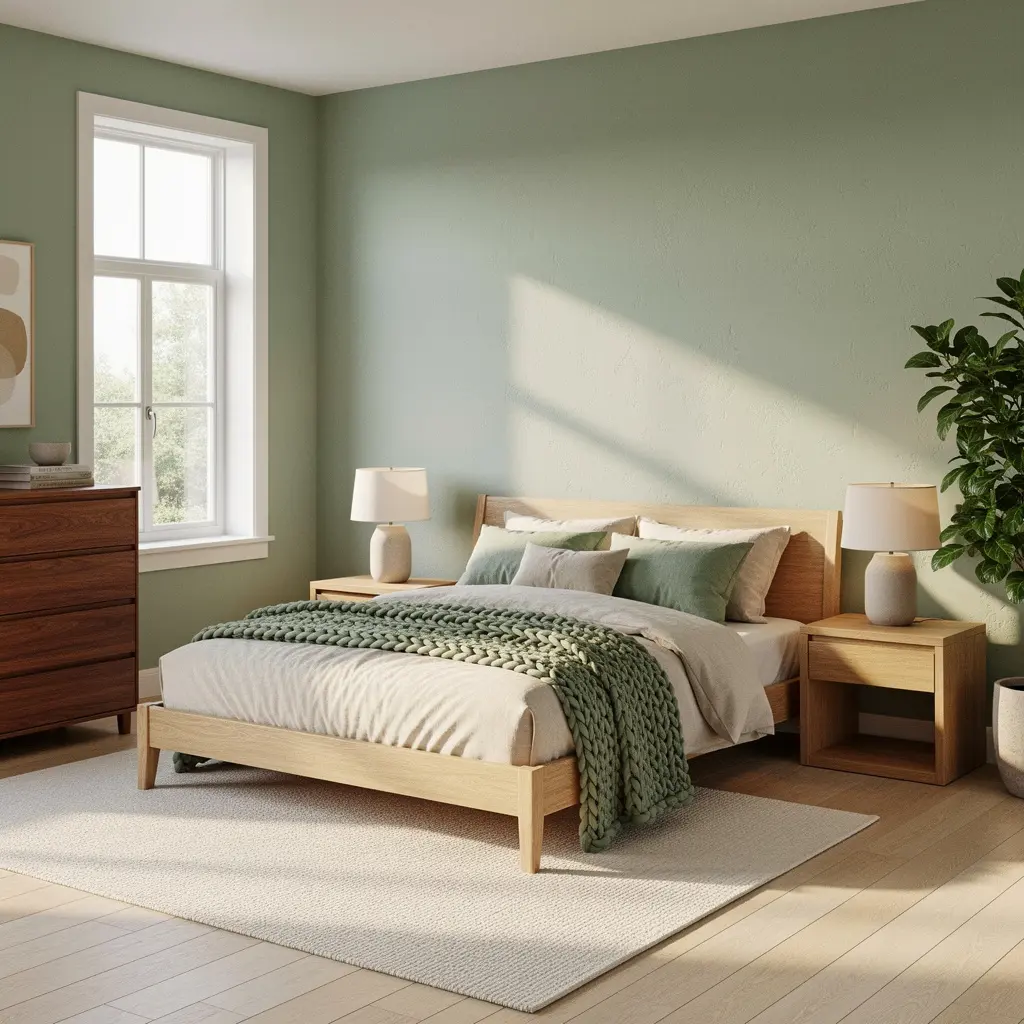
Warm wood tones, like oak or a lighter walnut, complement sage green better than very dark, cool toned wood, which can make the whole room feel heavier than intended. A wood headboard or nightstand in a natural, unfinished looking tone tends to soften sage green and keep the room from feeling too saturated with color.
Rattan and cane furniture details pair especially well with sage too, adding texture and a slightly organic feel that suits the color’s natural, plant inspired undertone. If existing furniture is a cooler toned wood, a warm sage on the walls can still work, but it’s worth testing the pairing with a sample swatch before painting the whole room.
6. Lighting That Keeps a Sage Green Room Feeling Warm
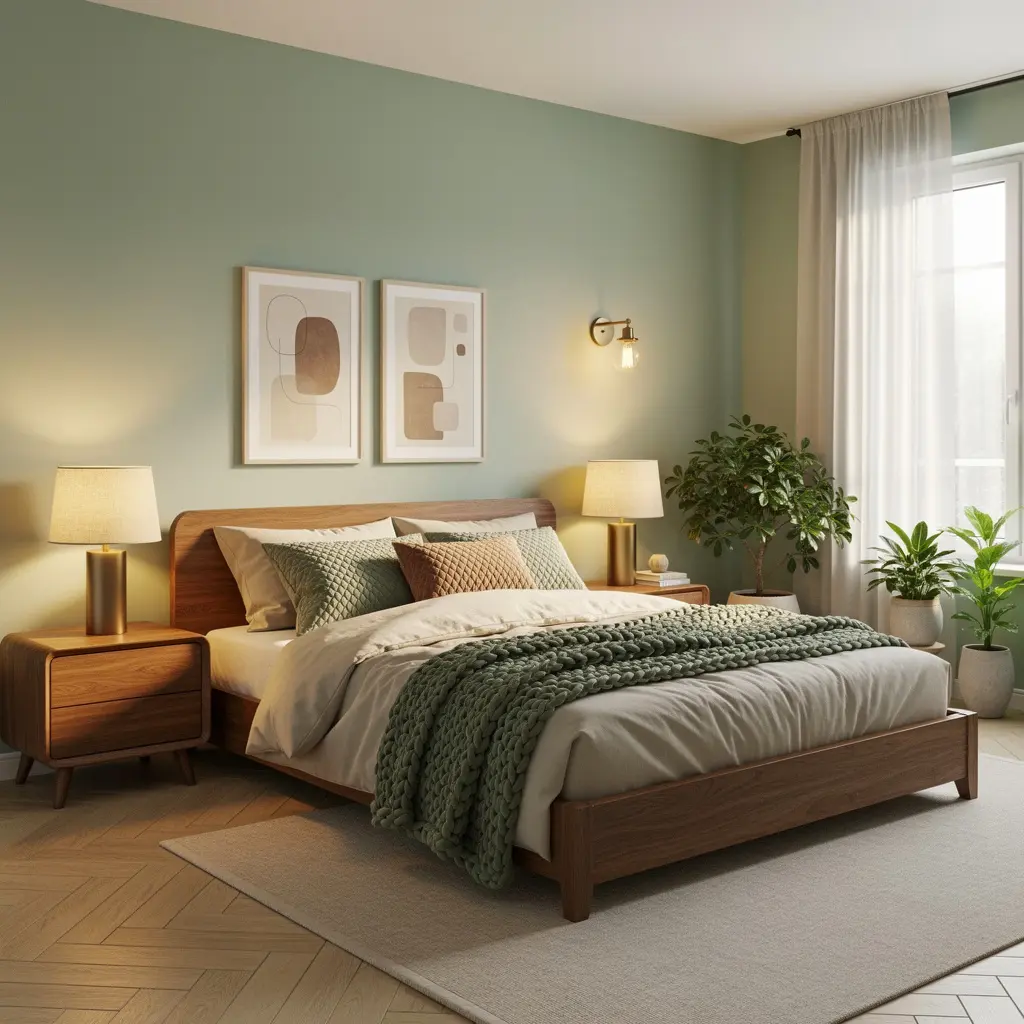
Cool toned lighting can pull sage green toward gray, flattening a color that’s meant to feel warm and organic. Warm white bulbs, generally 2700K to 3000K, keep the green looking rich rather than washed out.
Layering in a table lamp or a small wall sconce beyond the main overhead light adds shadow and warmth that makes the room feel more like a retreat and less like a functional space lit for utility. A dimmer switch, where the wiring allows it, lets the room shift from bright and functional during the day to soft and calming at night.
7. Budget Furniture Swaps and Refreshes
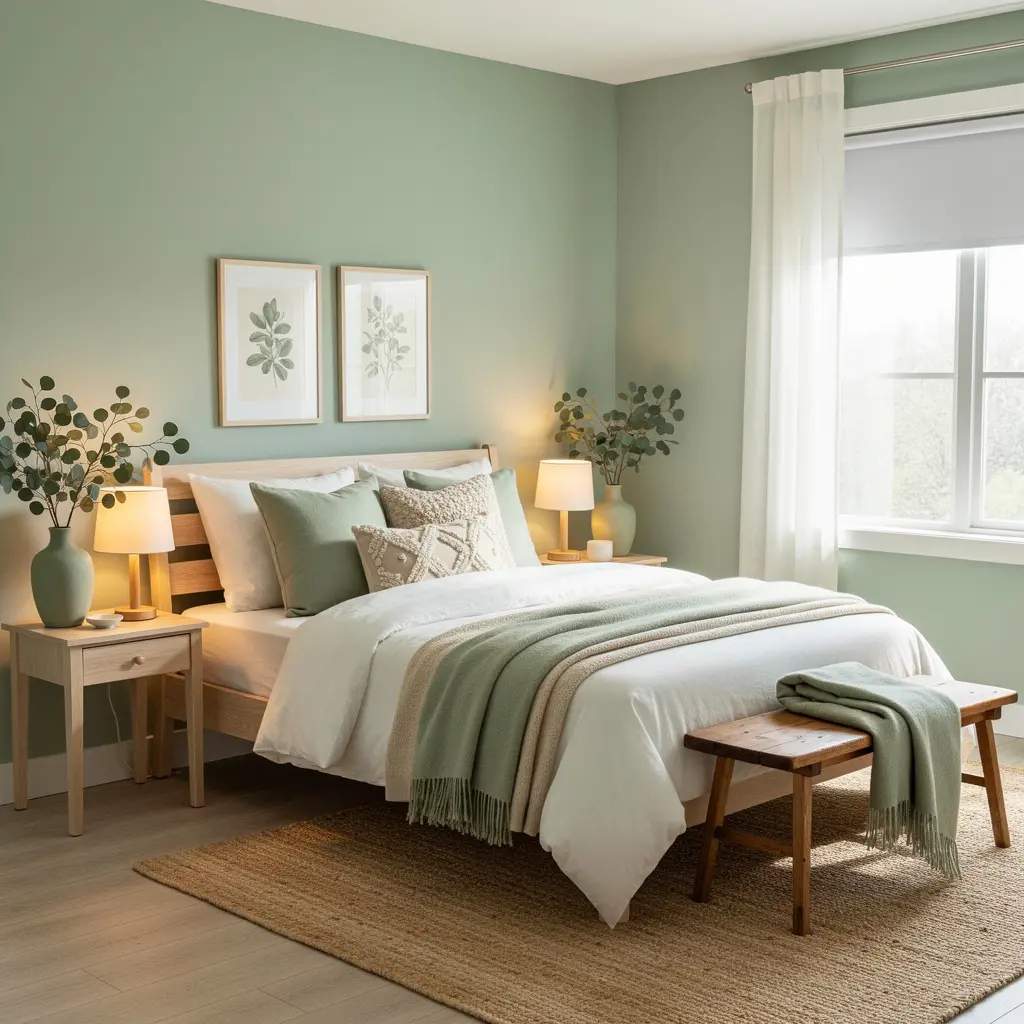
A full furniture replacement rarely makes sense for a budget bedroom refresh. Refinishing an existing dresser or nightstand, sanding down a dated finish and applying a lighter stain or a coat of paint, updates the piece for the cost of supplies rather than a full replacement.
Swapping out drawer pulls and knobs on existing furniture is one of the cheapest updates available, often under 5 dollars per piece, and it makes an older piece feel more current without any major work. Secondhand furniture, sourced from thrift stores or online marketplaces, often costs a fraction of new furniture and tends to be better built, especially solid wood pieces from decades ago.
Key takeaway: most of a room’s furniture budget goes further spent on refinishing and hardware than on buying everything new.
8. Layering Texture Without Adding More Color
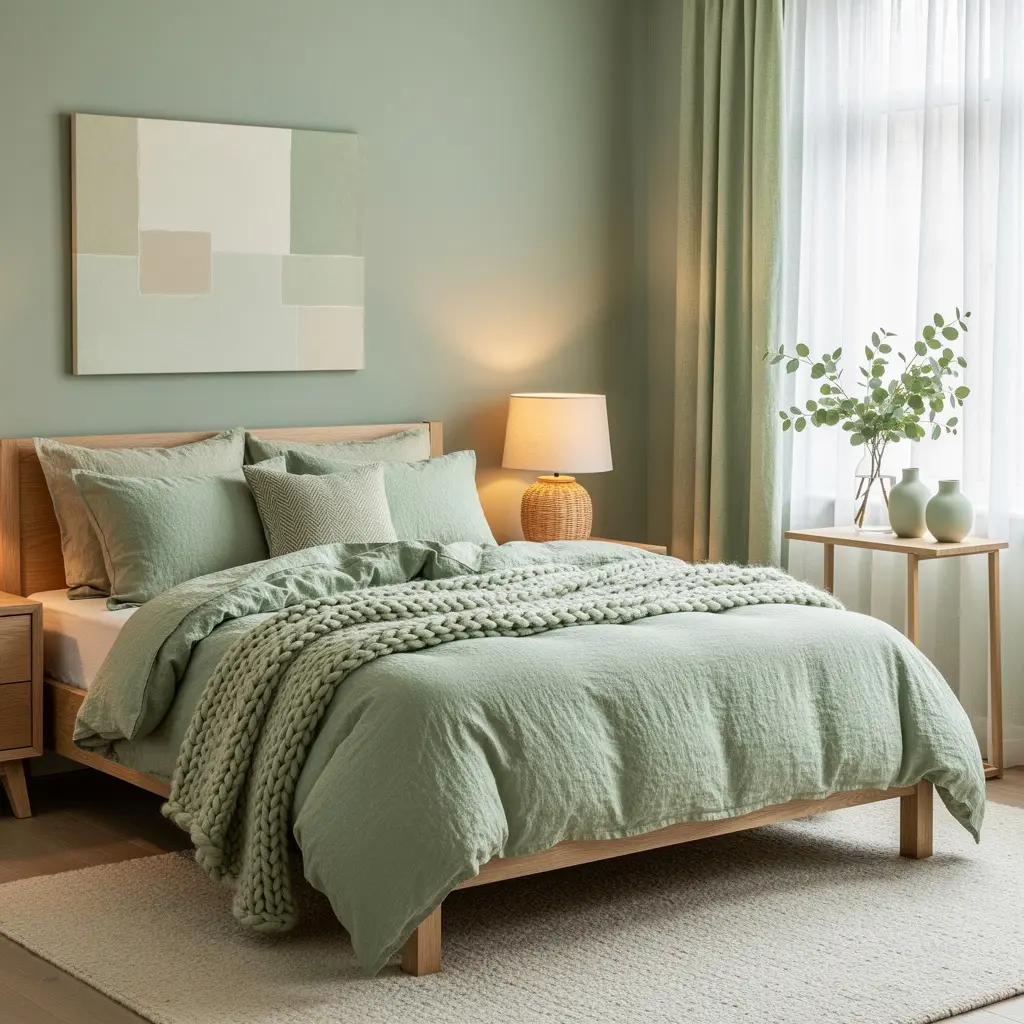
A sage green room can start to feel flat if every surface leans on color alone to do the visual work. Texture fills that gap without needing another paint color or a bigger budget.
A woven jute or sisal rug adds natural texture that pairs well with sage’s earthy undertone, and it tends to be more affordable than a plush wool option. Linen curtains, slightly rumpled rather than perfectly pressed, add a relaxed texture that suits the calm mood a sage green room is usually going for.
Rattan pendant lights or woven baskets used for storage bring in texture at eye level and above, which balances out a room that might otherwise concentrate all its texture at floor level with just a rug.
9. Budget Ranges for a Full or Partial Sage Green Refresh
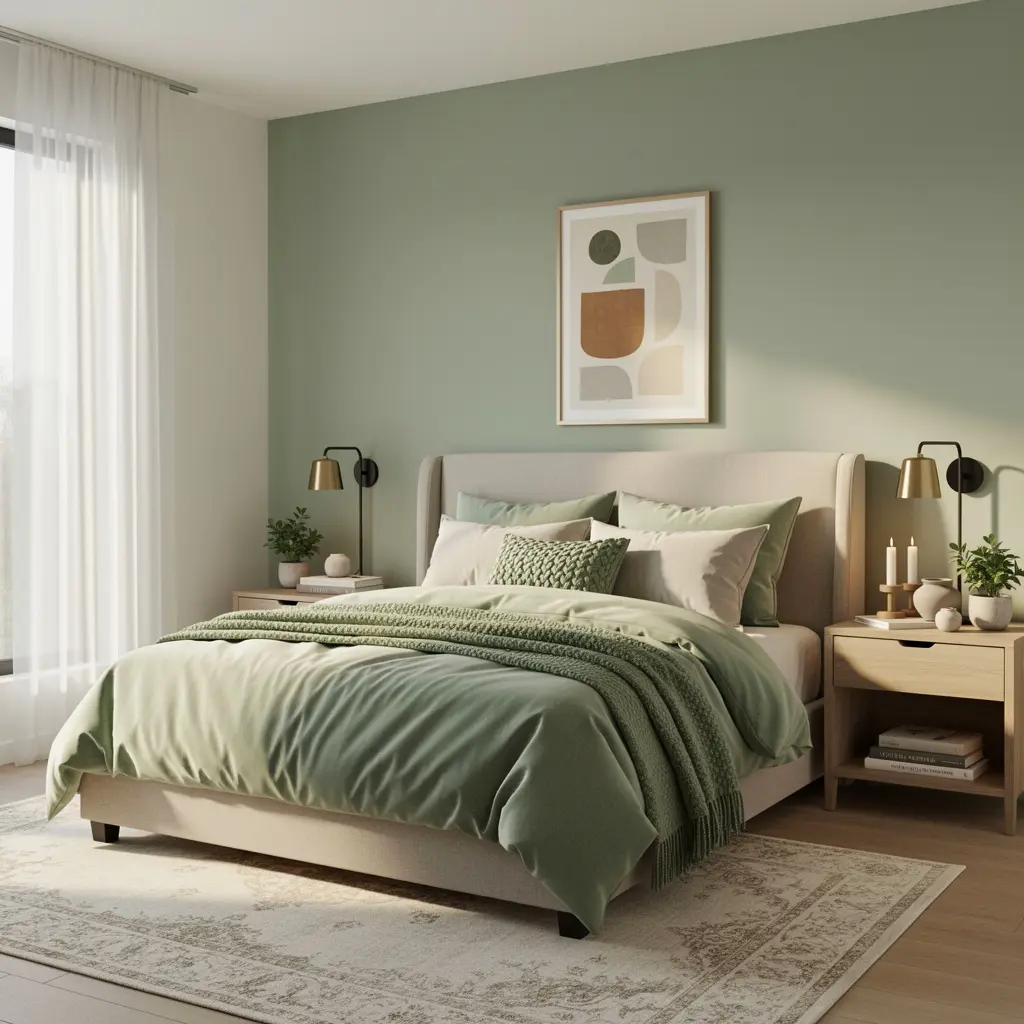
A full room repaint, walls, trim, and ceiling included, done as a DIY project, typically costs 80 to 150 dollars in paint and supplies for an average sized bedroom. A single accent wall runs closer to 30 to 50 dollars.
New bedding in a coordinated palette, a duvet cover, pillow shams, and a throw blanket, generally runs 100 to 250 dollars depending on material quality, though secondhand and sale finds can bring that down significantly. Furniture refinishing supplies, sandpaper, stain or paint, and a brush, typically cost 30 to 60 dollars per piece, well under the cost of buying new furniture in a similar style.
A full sage green bedroom refresh, combining paint, textiles, and a couple of refinished furniture pieces, often lands somewhere between 250 and 500 dollars total, a fraction of what a full furniture replacement and professional painting would cost.
10. Small Details That Pull the Whole Room Together
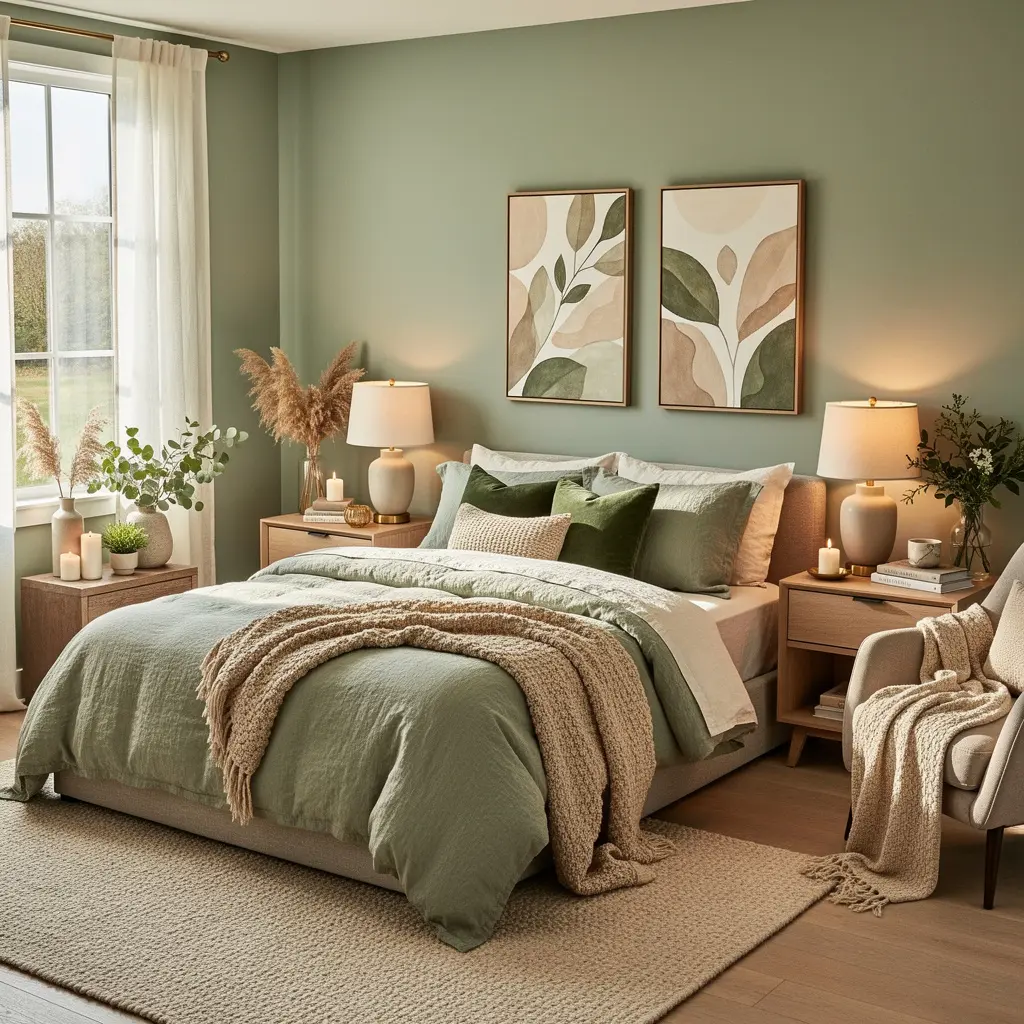
A few plants, real or a well made faux version, reinforce sage green’s natural, organic feel without adding any additional color to the room. Ceramic vases or ceramic table lamp bases in a warm cream or a deeper green tie back into the wall color without matching it exactly, which tends to look more intentional than an exact match.
Artwork with botanical or abstract nature themes suits a sage green room particularly well, continuing the natural feel established by the wall color. Keeping surfaces like nightstands and dressers only partially styled, rather than fully covered, leaves the room feeling calm rather than cluttered, which matters especially in a space meant for rest.
Mistakes to Avoid
- Choosing a sage shade without testing it against the room’s actual light throughout the day
- Pairing sage green with cool toned, dark wood furniture that makes the room feel heavier than intended
- Skipping texture and relying on color alone to make the room feel finished
- Overfilling nightstands and dressers instead of leaving some surfaces clear
- Using only cool toned lighting, which can wash out sage’s warm undertone
- Matching every textile to the exact same shade of green, which flattens the palette
Frequently Asked Questions
What shade of sage green works best in a room with little natural light? A lighter, slightly warmer sage tends to work better in low light rooms, since a deeper, more saturated sage can feel heavy or dark without enough natural light bouncing around the space.
Do I need to paint the whole room to get a sage green look? No. A single accent wall, the lower half of the walls, or even just the ceiling can bring in the color without the cost or commitment of a full room repaint.
What wood tone pairs best with sage green walls? Warm wood tones like oak or lighter walnut tend to complement sage green better than cool, dark wood, which can make the room feel heavier than intended.
Is sage green a color that will look dated in a few years? Sage tends to hold up better over time than brighter, more saturated greens, since it functions closer to a neutral. Muted, earthy colors generally have more staying power than trend driven bright tones.
What’s the most affordable way to try a sage green bedroom? Start with a single accent wall and a few coordinated textiles, like a throw pillow or blanket, rather than a full room repaint and new furniture. It’s the lowest cost way to test the palette before committing further.
Conclusion
A dreamy sage green bedroom doesn’t require a big budget, it requires a few intentional choices made well. Pick a shade suited to your room’s light, pair it with warm wood and natural texture, and let bedding and small details carry the rest. Whether it’s a full repaint or just an accent wall and new bedding, the result can feel like a calm, elevated retreat without the renovation price tag.