10 Aesthetic Bunk Bed Bedroom Ideas for Kids and Small Spaces
Bunk beds get chosen for practical reasons first, fitting two or more kids into one room or making the most of a small footprint. That practical starting point doesn’t mean the room has to look purely functional. These aesthetic bunk bed bedroom ideas show how to style a bunk setup so it looks intentional and cozy, not like storage furniture with mattresses attached.
1. Why Bunk Beds Work for More Than Just Saving Space
The obvious benefit of a bunk bed is floor space, fitting two sleeping areas into the footprint of one. That alone makes bunks worth considering for shared kids rooms or small guest spaces, but the format offers more than pure efficiency.
A bunk bed naturally creates a defined, slightly enclosed feeling for whoever’s sleeping on it, especially the bottom bunk. Kids in particular tend to respond well to that semi private, almost fort like quality, which gives the design a real advantage beyond just saving square footage.
2. Choosing a Bunk Bed Style That Suits the Room
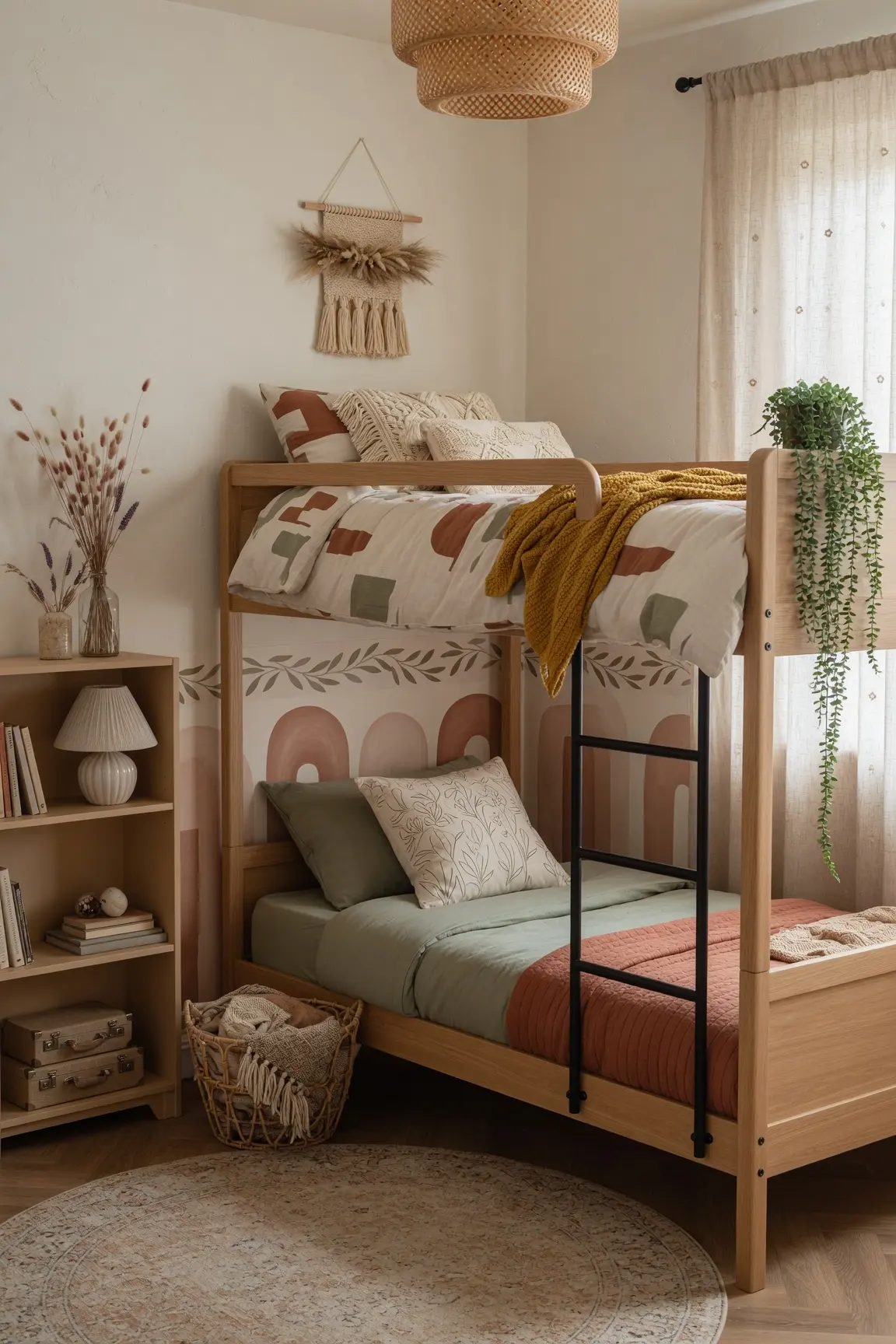
A traditional twin over twin bunk suits most standard bedrooms and works well for two kids close in age. A twin over full configuration offers more sleeping space on the bottom bunk, useful for an older child or for occasional sleepovers.
Loft style bunks, with only a top sleeping area and open space underneath for a desk or seating, work particularly well in smaller rooms needing to serve more than one function. Built in bunks, constructed into a wall nook or an alcove, can look more architectural and permanent than a freestanding frame, though they require more commitment since they’re harder to remove later.
A quick tip that helps: measure the ceiling height before committing to any bunk style, since the space between the top bunk and the ceiling needs enough clearance for a child to sit up comfortably without hitting their head.
3. Safety Considerations That Shouldn’t Be Skipped
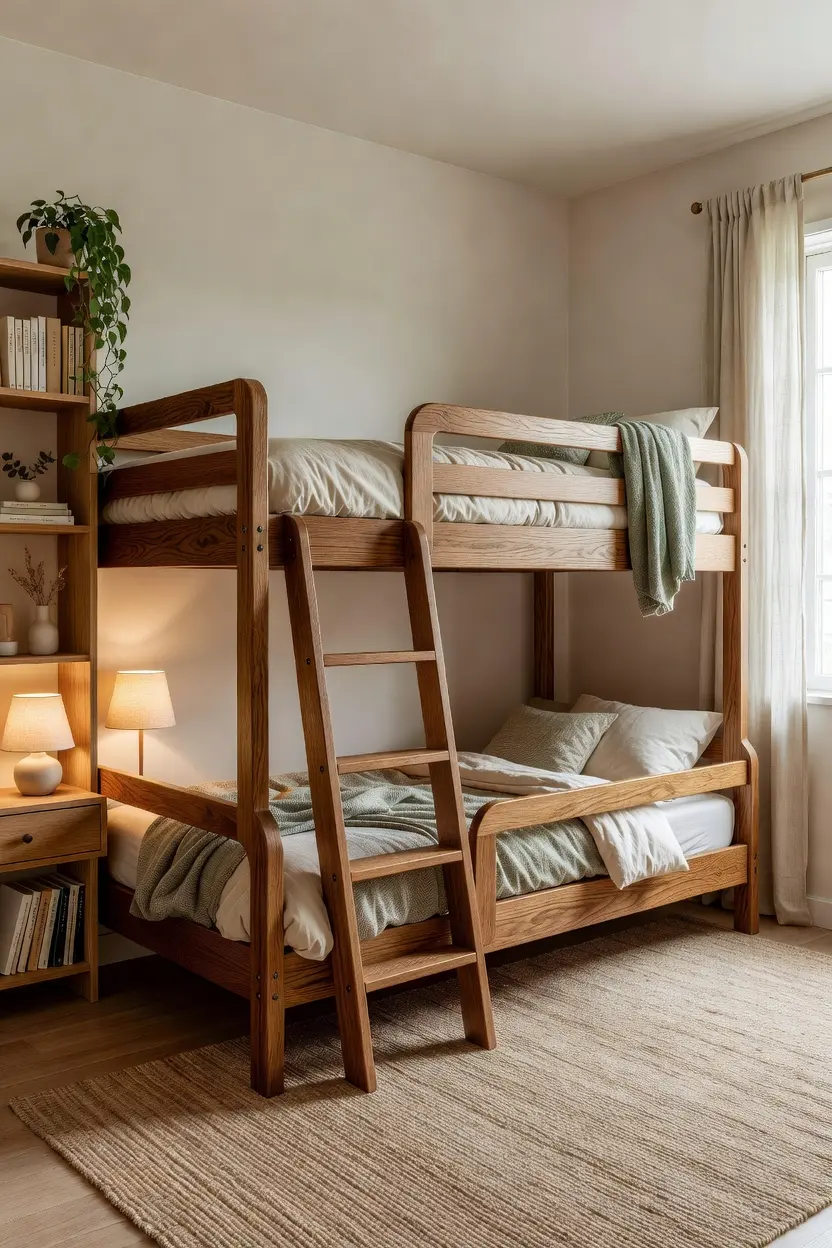
Guardrails on the top bunk are non negotiable, and checking that they meet current safety standards matters more than matching them to the room’s aesthetic. Most guidelines recommend the top bunk isn’t used by children under six, so age matters as much as the room’s layout when deciding who sleeps where.
A sturdy, well secured ladder, rather than a loose or wobbly one, reduces the most common bunk bed related injuries, which tend to happen during climbing rather than sleeping. Checking that the bed frame itself is rated for the mattress thickness being used prevents an unstable setup that looks fine until someone actually climbs in.
4. Styling Each Bunk as Its Own Small Space
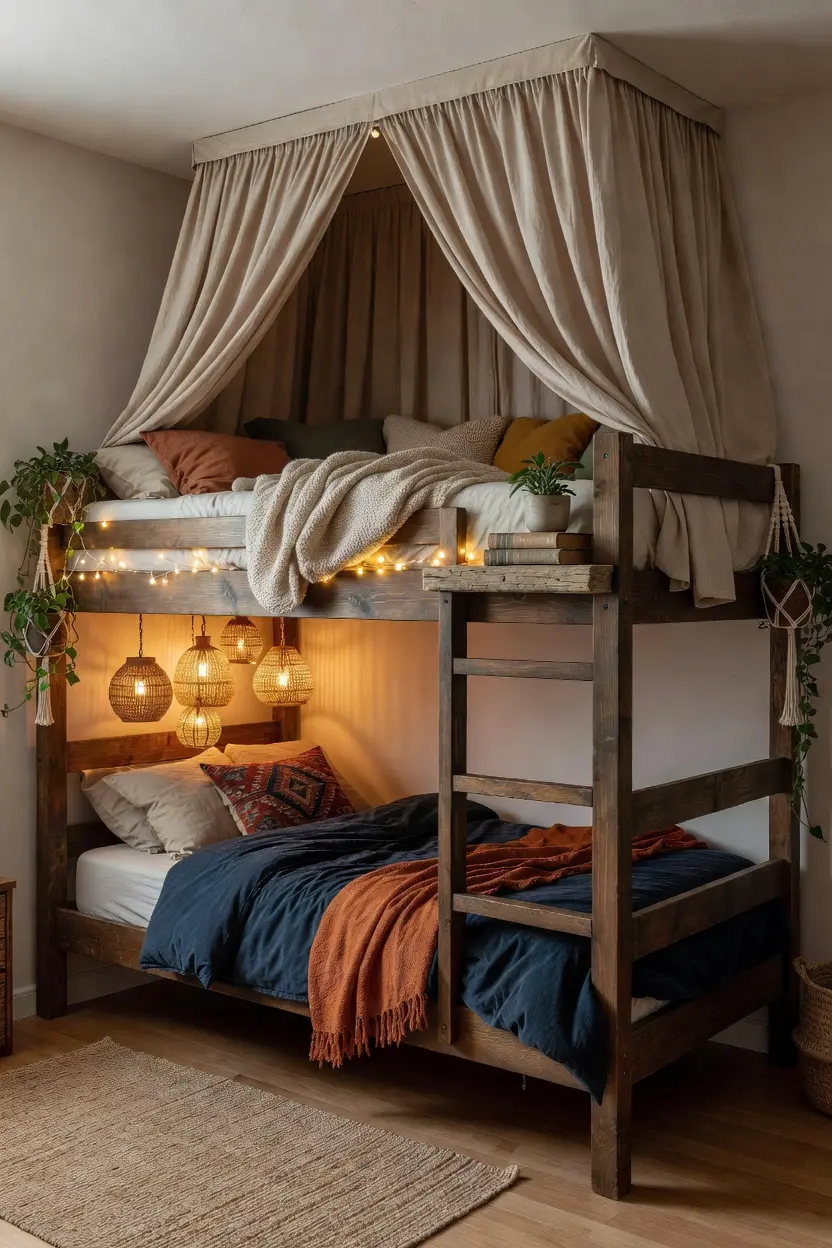
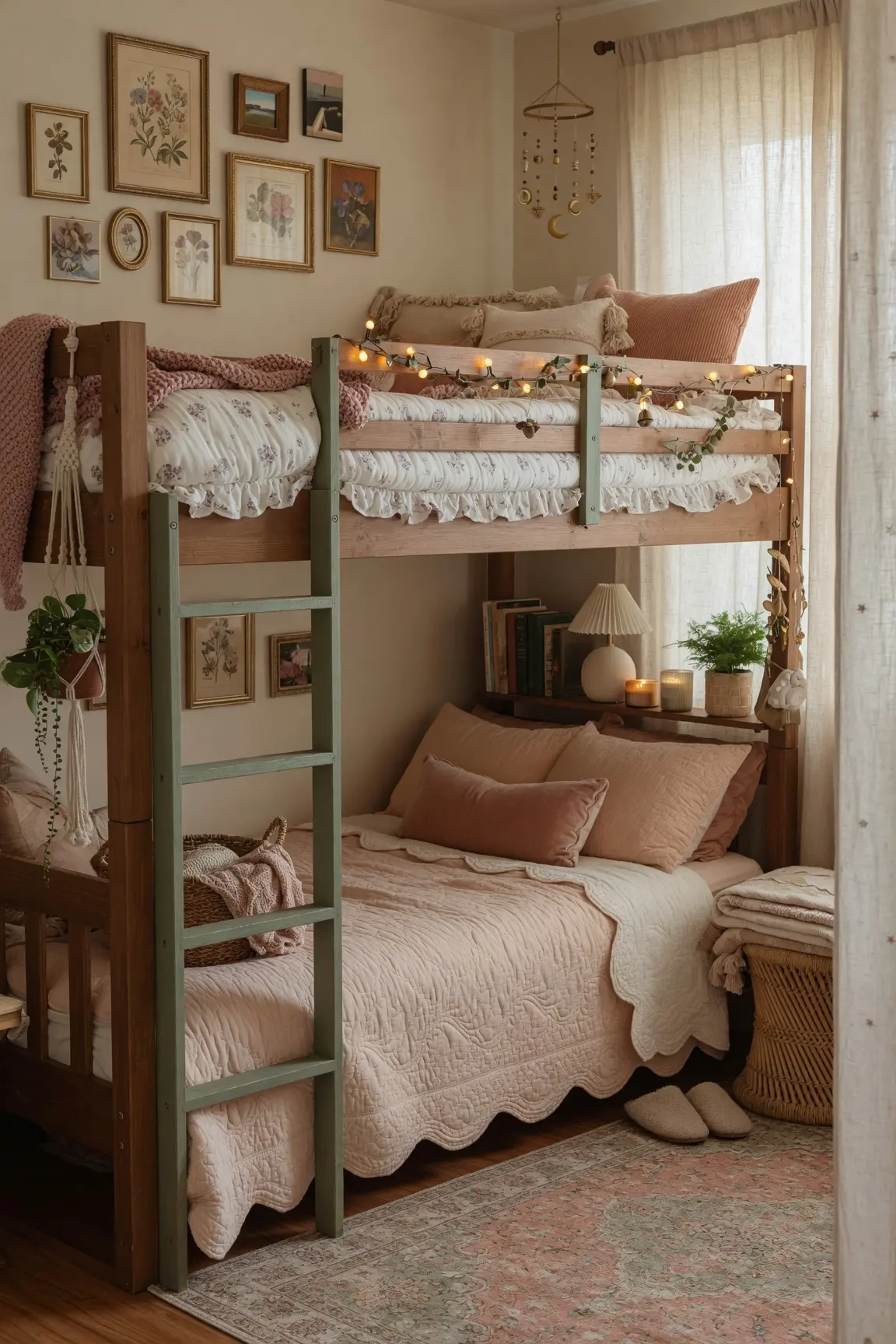
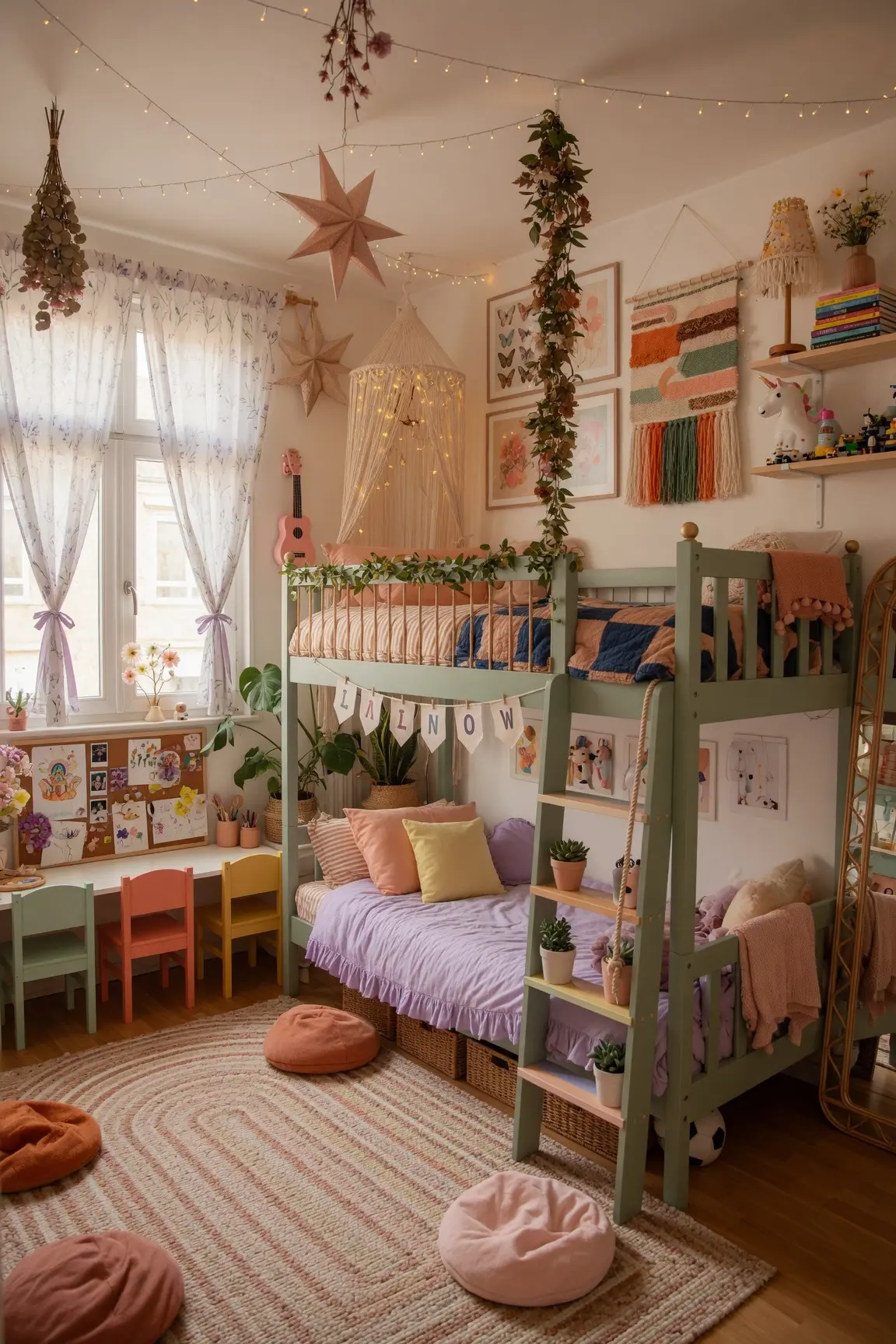
Treating each bunk as its own little room, rather than one continuous piece of furniture, tends to produce a more considered, styled result. A small string of warm LED lights along the top bunk’s frame gives that sleeping area its own light source and a bit of personality.
A fabric canopy or a simple curtain attached to the top bunk’s frame adds a tent like quality that kids often love, while also giving the space a slightly more finished, designed look. The bottom bunk, often more enclosed by the frame above it, benefits from similar personal touches, a small shelf for books or a nightlight suited to that specific spot.
5. Lighting Solutions for the Bottom and Top Bunk
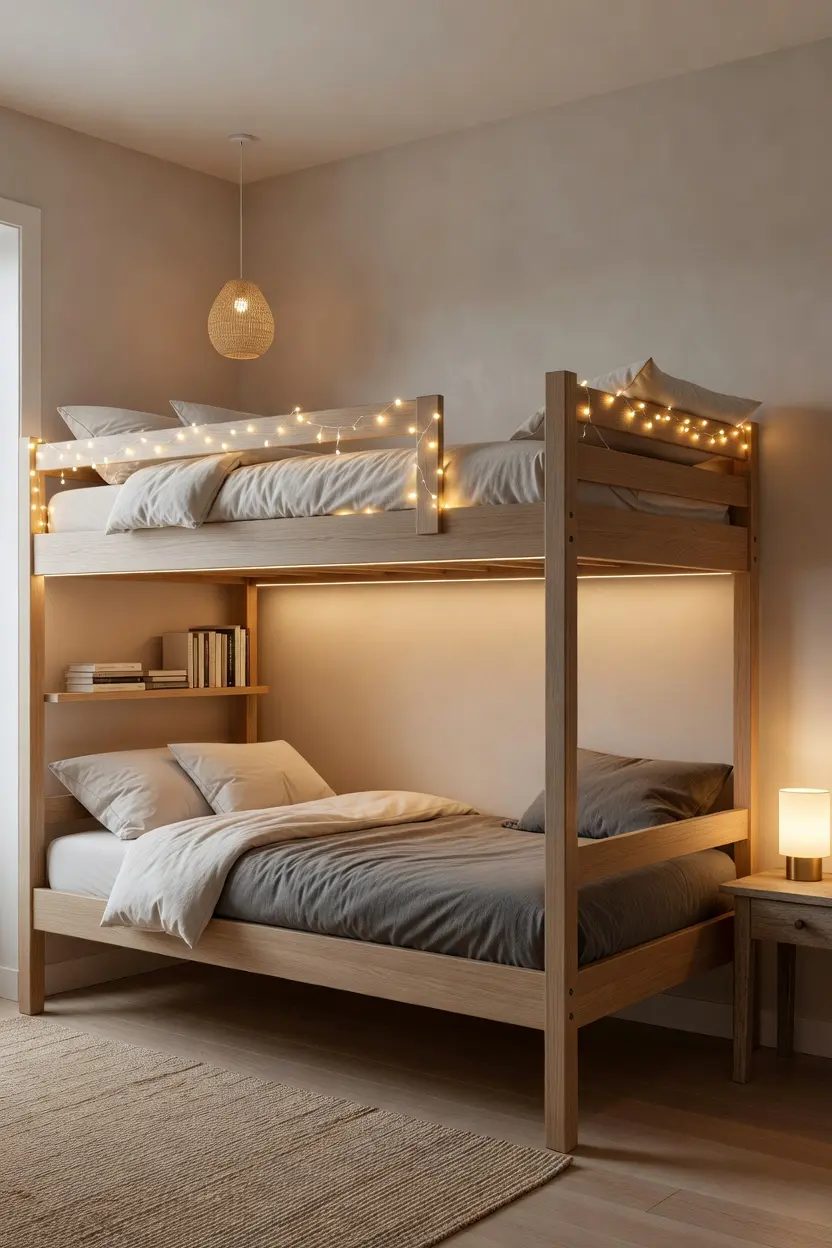
Bunk beds create their own lighting challenge, since the top bunk sits closer to any overhead fixture while the bottom bunk often ends up in its shadow. Clip on reading lights, attached directly to each bunk’s frame, solve this without needing separate lamps competing for limited nightstand space.
Battery powered puck lights or a warm toned LED strip, tucked along the underside of the top bunk, illuminate the bottom bunk without needing any wiring changes. Warm bulbs, generally 2700K to 3000K, matter here as much as anywhere else, keeping the space feeling cozy rather than clinical, especially important in a kids room meant to feel comforting at bedtime.
6. Storage Built Into or Around the Bunk Frame
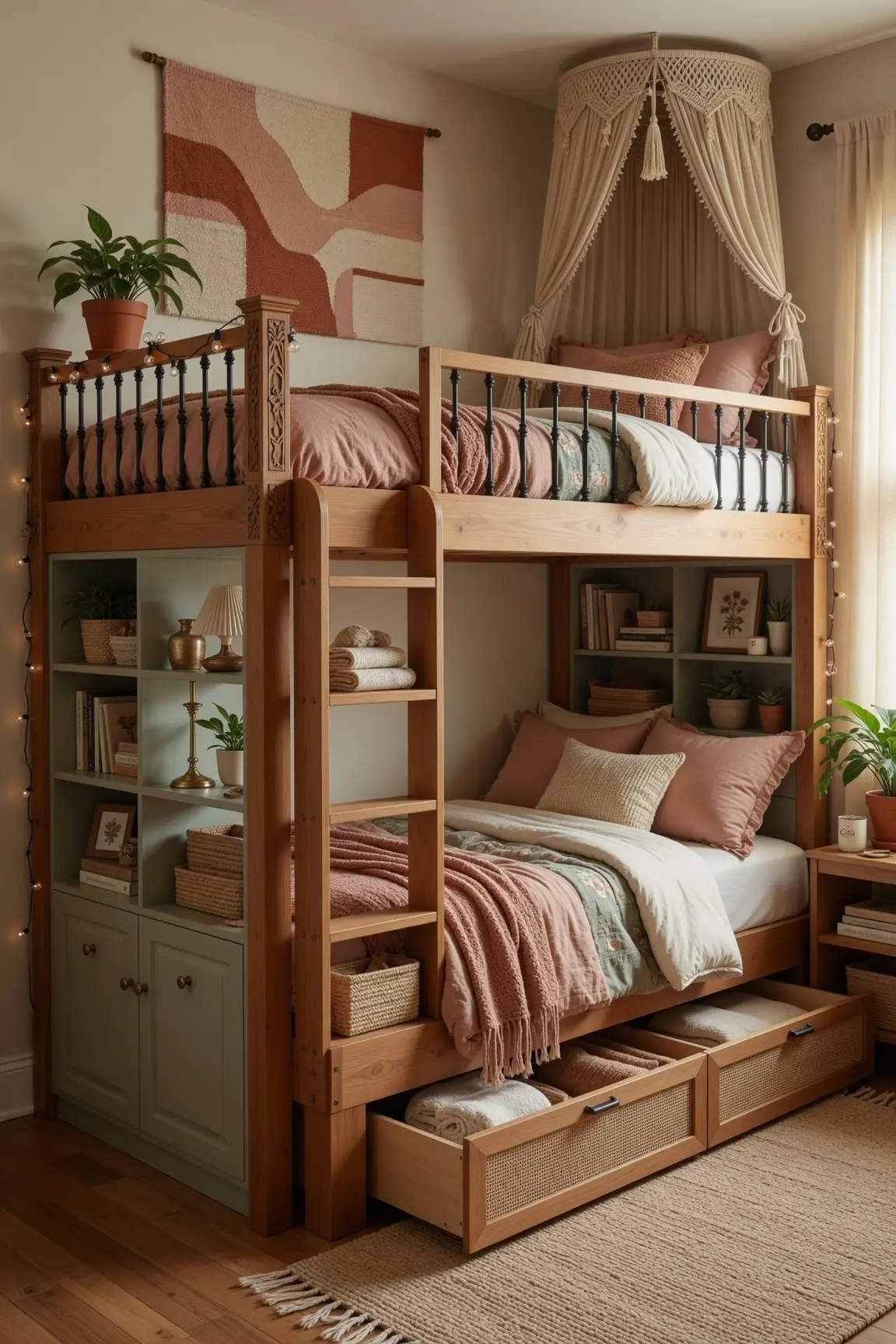
Many bunk bed frames come with built in drawers underneath the bottom bunk, making use of space that would otherwise sit empty. For frames without that feature, low profile rolling bins slid underneath add similar function without needing a separate furniture purchase.
A ladder with built in shelving, rather than a simple straight ladder, adds storage exactly where floor space is already limited by the bed frame itself. Wall mounted shelves beside each bunk give kids a personal spot for books or a favorite object, without needing floor space that a bunk room usually can’t spare.
Key takeaway: a bunk bed frame already occupies a lot of the room’s vertical space, so storage solutions that build into or around the frame itself tend to work better than freestanding furniture competing for the remaining floor area.
7. Curtains and Privacy for Each Sleeping Area
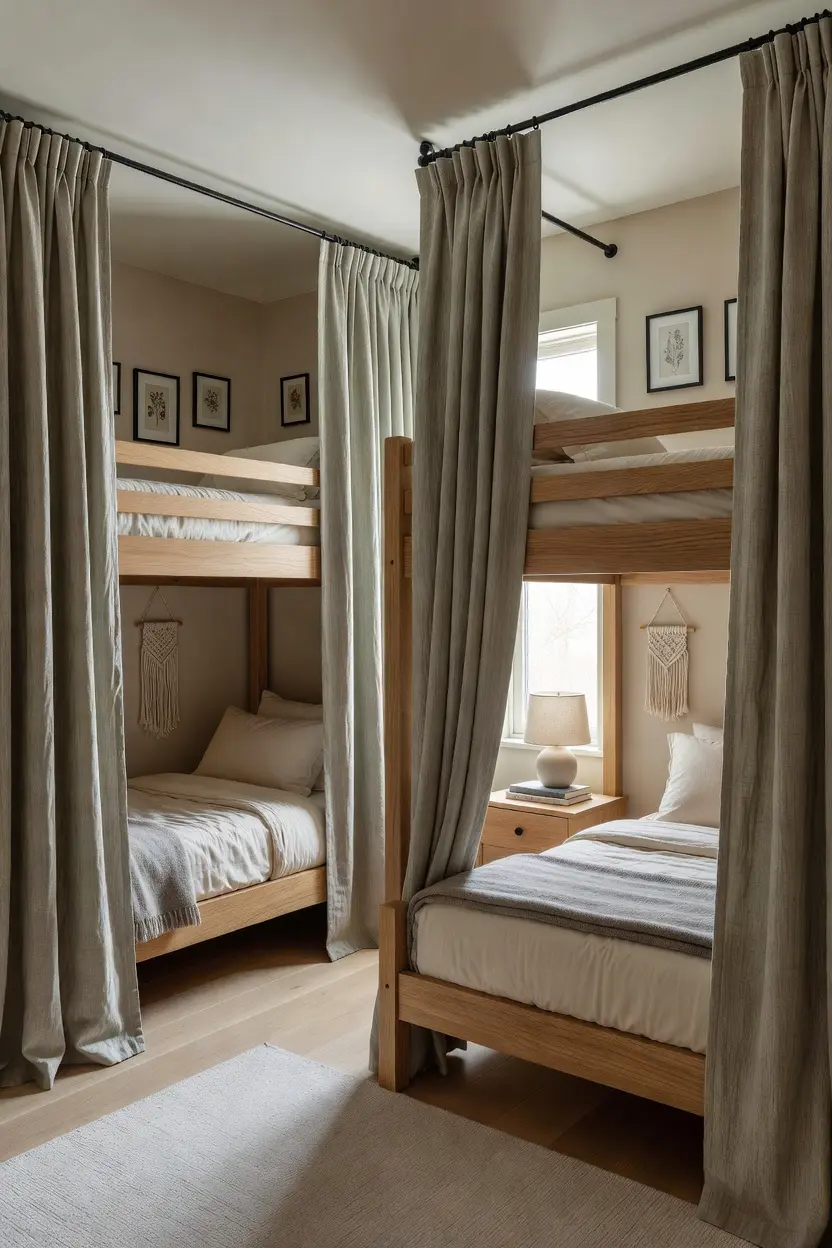
A simple curtain rod, mounted along the length of each bunk, lets a curtain be drawn for privacy without any major construction. This works especially well for older kids sharing a room who want a bit more personal space than an open bunk provides.
Choosing a lightweight, breathable fabric matters more here than in a standard window curtain, since airflow around a sleeping area affects comfort more directly. A patterned fabric, chosen by the child sleeping in that specific bunk, gives each sleeping area its own personality even within a shared, coordinated room.
8. Color and Theme Choices That Age Well
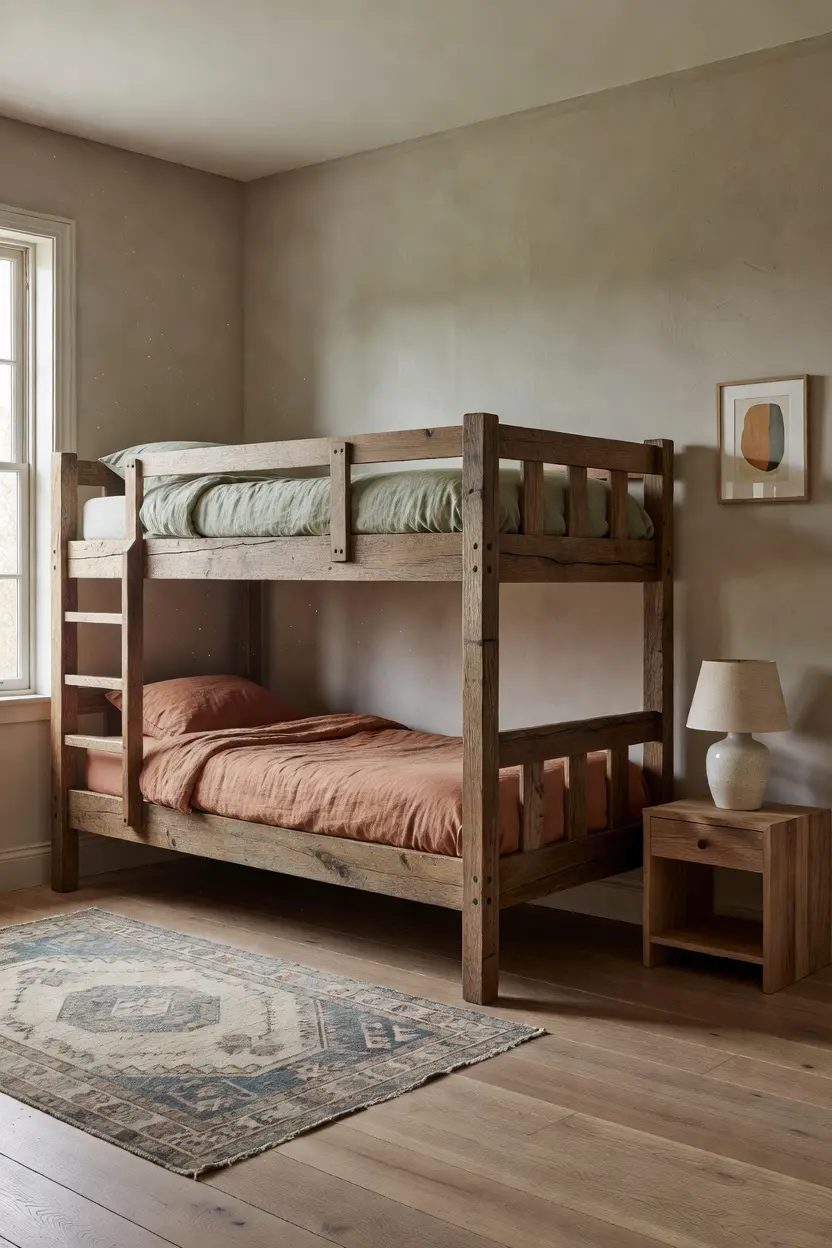
A specific character or trend based theme can feel dated within a couple of years, especially for an older child who outgrows that interest quickly. A more neutral base palette, with theme elements added through easily swapped bedding or wall decor, tends to age better and requires less full scale redecorating down the line.
Muted, slightly warmer tones, a soft sage, a warm blue, or a gentle terracotta, suit both younger and older kids better than bright primary colors, which can feel more juvenile as a child gets older. Letting each child choose their own bedding or a small personal decor element within an otherwise coordinated room balances individuality with a cohesive overall look.
9. Budget Ranges for a Bunk Bed Bedroom Refresh
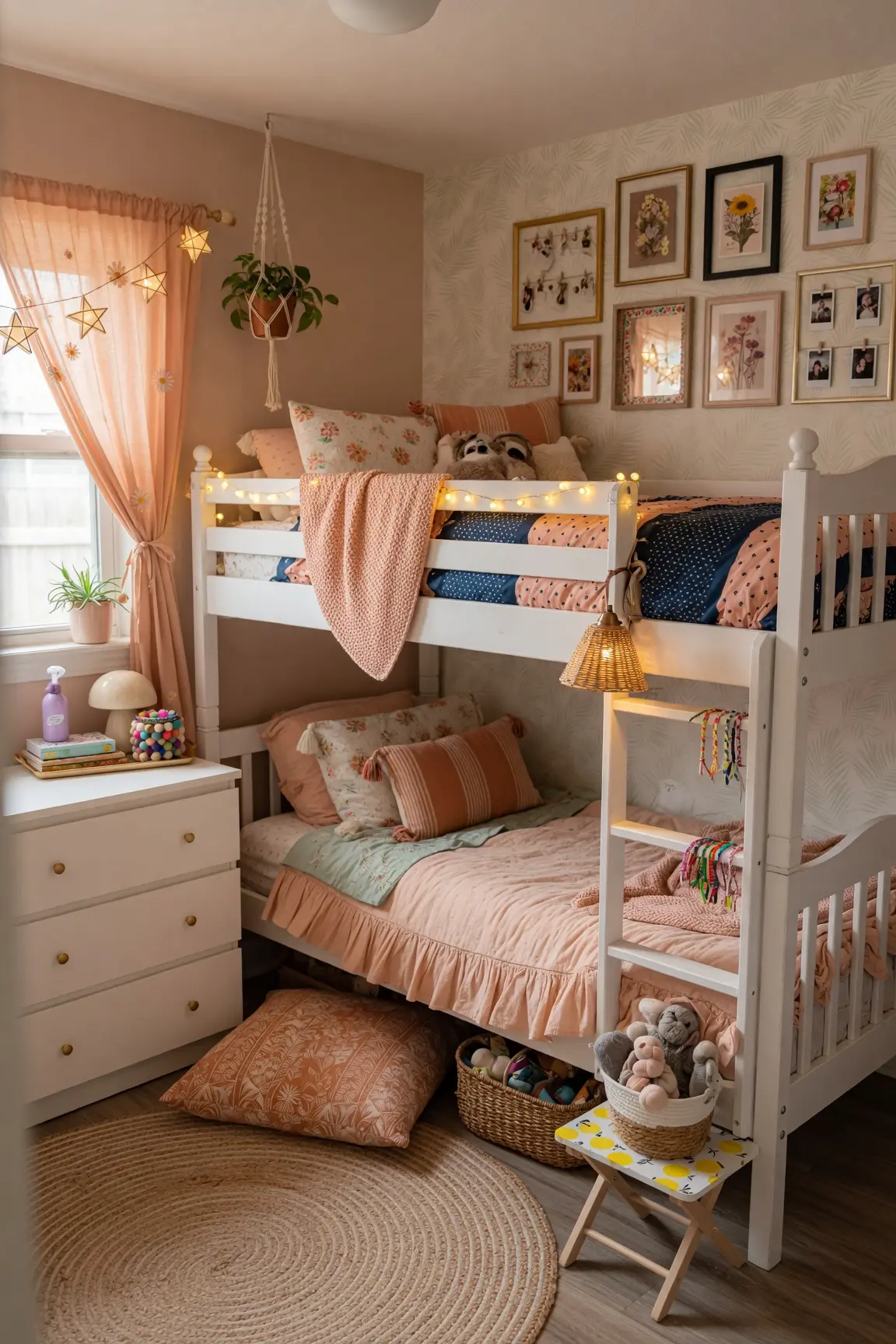
A solid wood bunk bed frame, mid range quality, typically runs 400 to 900 dollars depending on size and configuration, while a metal frame version generally costs less, often 200 to 500 dollars. Clip on reading lights or LED strip lighting for both bunks typically costs 30 to 60 dollars total.
Curtains for each bunk, fabric and a simple rod, generally run 40 to 80 dollars per bunk depending on fabric choice. New coordinated bedding for both bunks typically costs 100 to 200 dollars total. A full bunk bed bedroom refresh, frame, lighting, curtains, and bedding, often lands somewhere between 600 and 1,200 dollars total, depending heavily on whether the frame itself needs replacing.
10. Layout Tips for Rooms Sharing More Than Two Kids
For rooms needing to sleep three or more kids, an L shaped bunk configuration, two standard bunks positioned perpendicular to each other, often makes better use of a room’s corners than two straight bunks against opposite walls. Triple bunk frames exist too, though checking ceiling height becomes even more important with a third sleeping level involved.
Assigning each child a small, clearly defined personal zone, even within a shared bunk setup, helps prevent the territorial disputes that often come with multiple kids sharing one room. A shared, neutral color base with each child’s individual bunk personalized through bedding or a curtain choice tends to balance harmony and individuality better than either a fully matched or fully mismatched approach.
Mistakes to Avoid
- Skipping proper guardrails or a securely attached ladder for the sake of aesthetics
- Choosing a heavily trend based theme that a child will likely outgrow quickly
- Ignoring ceiling height clearance when selecting a bunk bed style
- Leaving the bottom bunk without adequate lighting of its own
- Overcrowding the room with freestanding furniture instead of using the bunk frame’s built in storage
- Assuming one bedding style suits every child sharing the room without any personalization
Frequently Asked Questions
At what age can a child safely sleep on the top bunk? Most safety guidelines recommend children be at least six years old before sleeping on a top bunk, though checking the specific bed frame’s manufacturer guidelines is worth doing as well.
How do I add lighting to a bottom bunk that sits in shadow? Battery powered puck lights or a warm toned LED strip attached to the underside of the top bunk illuminate the bottom bunk without requiring any wiring changes or additional furniture.
Can bunk beds work in a small bedroom for just one child? Yes, particularly loft style bunks, which free up floor space underneath for a desk, reading nook, or additional storage rather than a second sleeping area.
What’s the best way to give each child privacy in a shared bunk room? A simple curtain rod mounted along each bunk’s length allows a curtain to be drawn for privacy, and choosing a fabric each child likes adds a bit of personal style too.
Should I choose a themed bunk bed setup for kids? A heavily specific theme can feel dated as a child grows older. A neutral base palette with theme elements added through easily swapped bedding or decor tends to age better over time.
Conclusion
An aesthetic bunk bed bedroom proves that practical furniture and genuine style aren’t mutually exclusive. Prioritize safety first, then layer in lighting, storage, and small personal touches that make each bunk feel like its own considered space. Done well, a bunk bed room can look just as intentional and cozy as any single bed setup, all while solving the space and sharing challenges bunks were originally built for.