10 Budget Friendly Living Room Floor Makeover Ideas That Look Expensive
You stand in your living room staring at scratched wood, dated carpet, or an ugly patch near the door, and the only fix that comes to mind is ripping everything out and starting over, a project that costs thousands of dollars you don’t have. Full replacement is rarely the only option. A budget friendly living room floor makeover usually comes down to correctly diagnosing what’s actually wrong first, since a rug, a refinishing pass, or a peel and stick fix solves most floor problems for a fraction of what replacement costs.
1. Figure Out What’s Actually Wrong Before Choosing a Fix
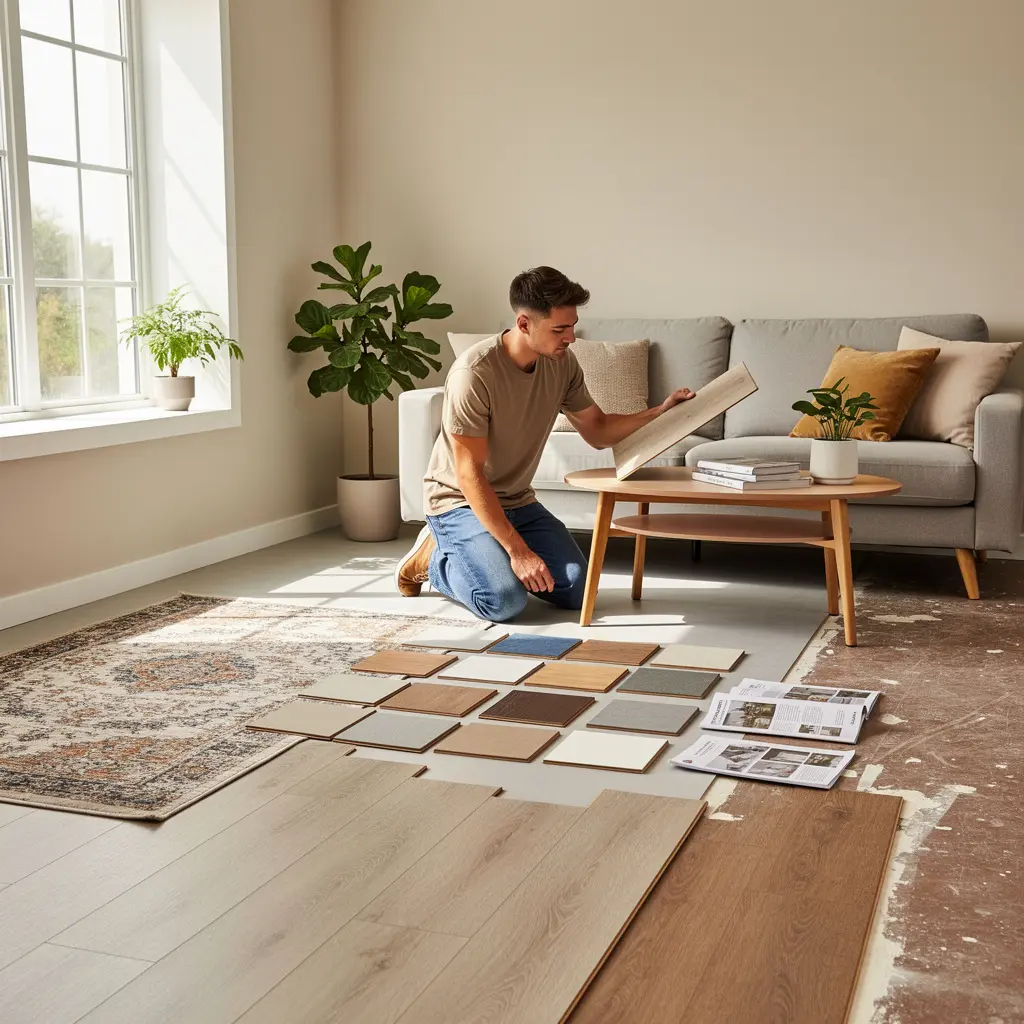
Not every floor problem needs the same solution. Scratched or dull wood usually just needs refinishing, not replacement. Outdated color or pattern can often be solved with a rug rather than tearing anything out. Actual structural damage, water stains, rot, cracked tile, is the one category that needs a more involved repair.
Spend fifteen minutes walking the room and sorting each problem area into one of these categories before spending any money. A floor that looks bad because of color or wear responds to completely different, cheaper fixes than one that’s actually damaged underneath.
2. A Large Area Rug Solves More Than People Expect
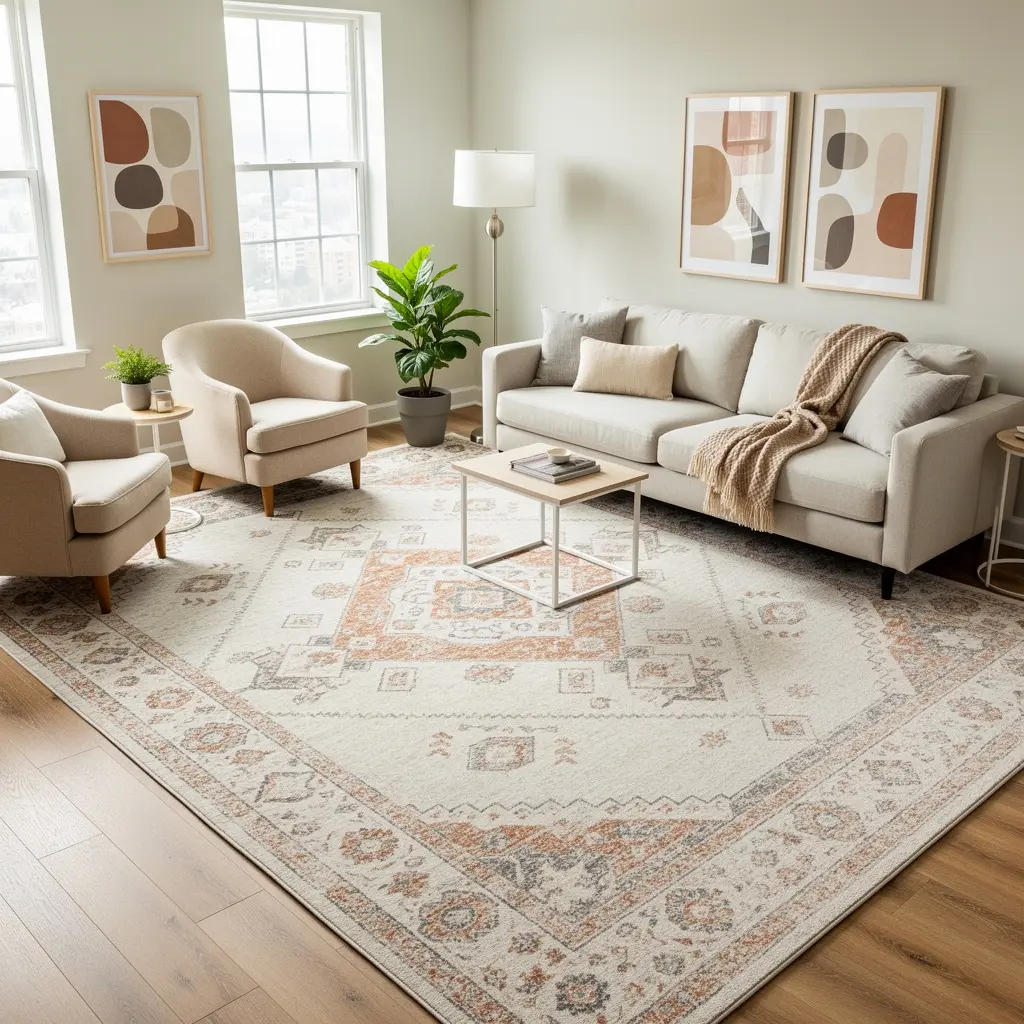
An area rug covering most of the seating area, ideally large enough that furniture legs sit on it, instantly updates the look of almost any floor underneath, regardless of its condition or age. This is often the single highest impact, lowest effort fix on this entire list.
Sizing the Rug Correctly
A rug that’s too small makes a room look unfinished no matter how nice the rug itself is. As a rough rule, leave 12 to 18 inches of bare floor visible around the rug’s edges in a standard living room, which usually means sizing up from what feels intuitive at first.
3. Peel and Stick Flooring for Truly Damaged Surfaces

For floors with actual damage, cracked tile, deeply stained concrete, warped sections, peel and stick vinyl planks or tiles offer a real fix without the cost or labor of a full replacement. Modern versions look considerably more convincing than older peel and stick products, with realistic wood or stone textures.
Peel and stick flooring typically runs $1 to $4 per square foot, and a motivated DIYer can cover an average living room in a weekend. It’s one of the more dramatic budget transformations available for a genuinely damaged floor.
4. Refinishing Existing Wood Instead of Replacing It

Scratched, dull, or outdated colored wood flooring often just needs a light sanding and a fresh coat of finish, not a full replacement. A screen and recoat, which lightly abrades the surface without removing the whole finish layer, costs significantly less than a full sand and refinish and works well for floors that aren’t deeply damaged.
When a Deeper Refinish Is Worth It
Floors with deep scratches, water damage, or a finish color you want to change entirely usually need a full sand and refinish. It costs more but still runs a fraction of full replacement, often $3 to $8 per square foot depending on your area and whether you hire it out.
5. Painting a Wood or Concrete Floor as a Last Resort Fix
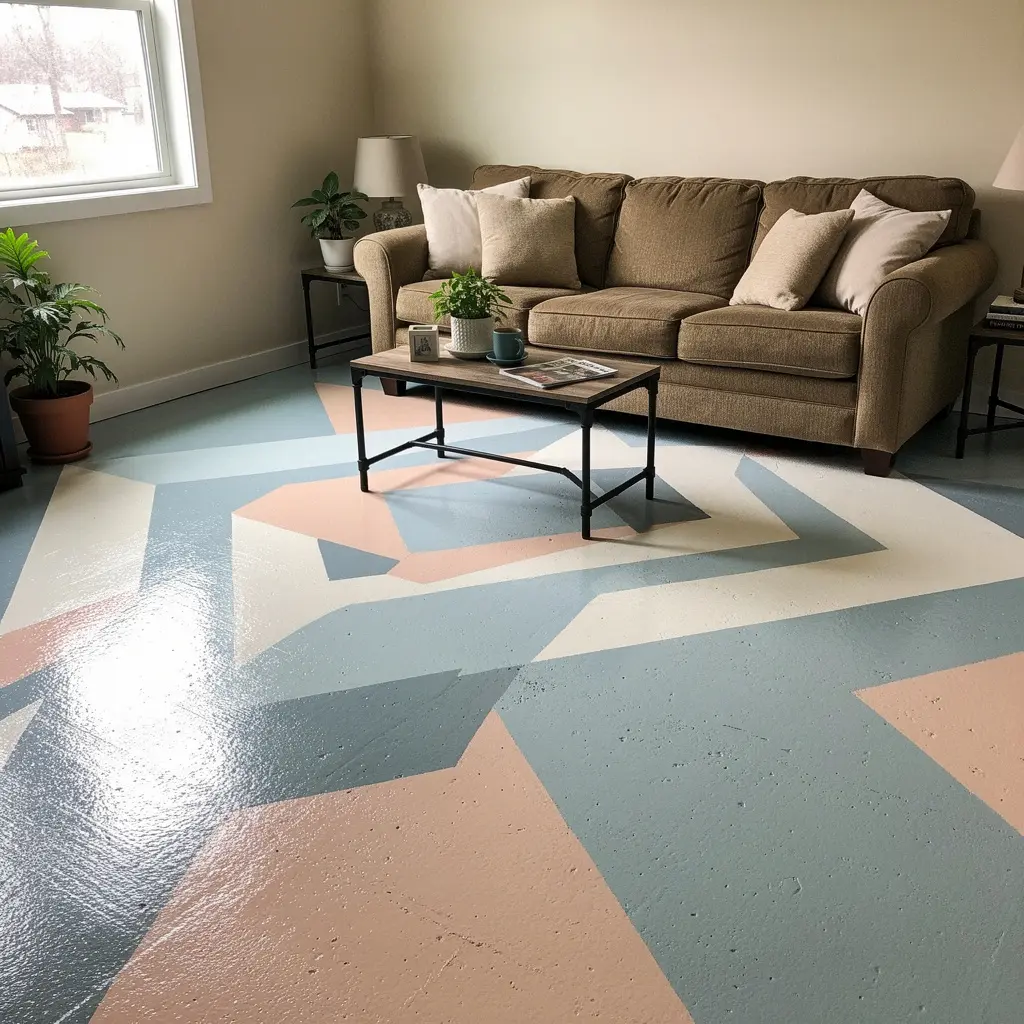
For a wood or concrete floor too damaged or dated to refinish affordably, floor specific paint offers a real transformation for very little money. A painted floor, especially in a checkerboard, striped, or solid neutral pattern, can look intentional and stylish rather than like a stopgap fix.
This works best as a temporary or rental friendly solution, since floor paint needs maintenance and eventual reapplication. But for a floor that would otherwise need full replacement, it buys real time and a genuinely different look for well under $100 in most rooms.
6. Layer Two Rugs for a More Designed Look

A smaller, more textured or patterned rug layered on top of a large neutral base rug creates visual depth that a single flat rug can’t achieve on its own. It’s a trick used often in professionally styled rooms. This also stretches a smaller, potentially more expensive rug further, since it doesn’t need to cover the whole floor area by itself.
A jute or sisal base rug, typically $50 to $150 for a large size, paired with a smaller vintage or patterned rug on top, is a common and effective combination that costs less than one large patterned rug of the same size.
7. Fix Squeaks and Small Repairs Before Covering Anything
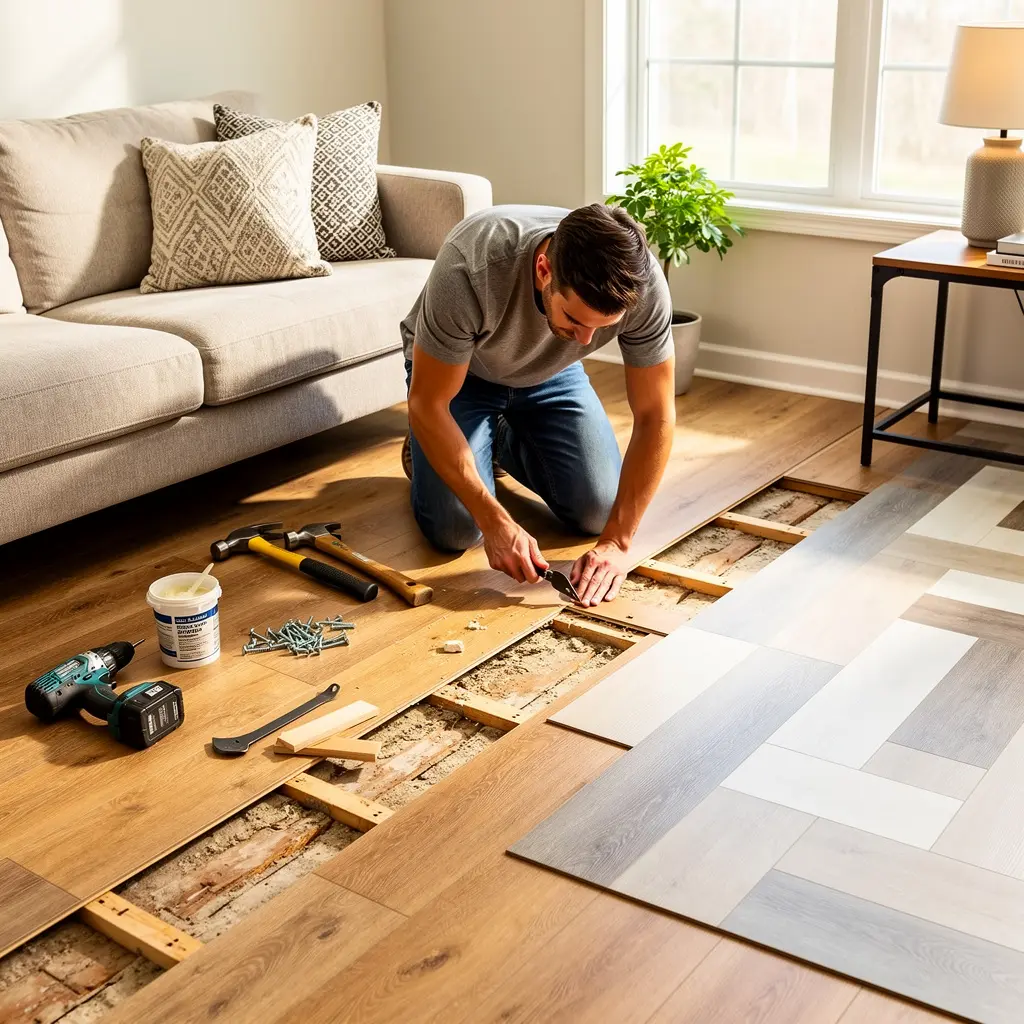
A squeaky board or a small area of visible damage is worth addressing before laying a new rug or refinishing, since covering a problem doesn’t actually solve it. A few wood screws driven through the subfloor at an angle, or a small wood filler repair on minor gouges, are inexpensive fixes that prevent bigger issues later.
Skip this step to save time, and you’ll usually end up dealing with the same problem again once a rug wears through or a peel and stick tile lifts at the damaged spot.
8. Use Furniture Placement to Distract From Problem Areas
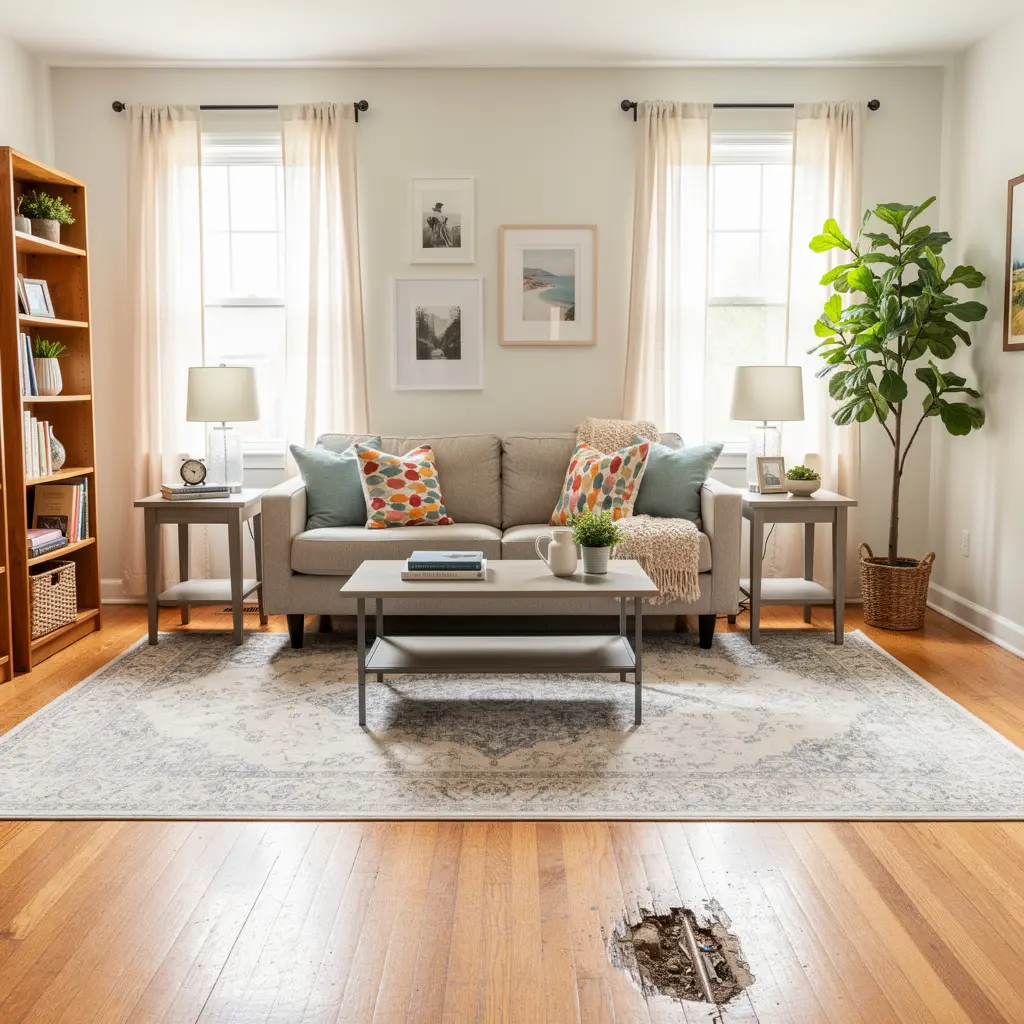
A worn patch near a doorway or a stained section under where furniture used to sit can often be addressed simply by rearranging the room so a rug, a piece of furniture, or a plant covers the area instead of leaving it exposed. This costs nothing beyond the time it takes to rearrange.
It isn’t a permanent fix for genuine damage. But for cosmetic wear that isn’t worth a bigger repair right now, smart placement buys time and improves the room’s look immediately.
9. Add a Runner in High Traffic Paths to Protect New Flooring
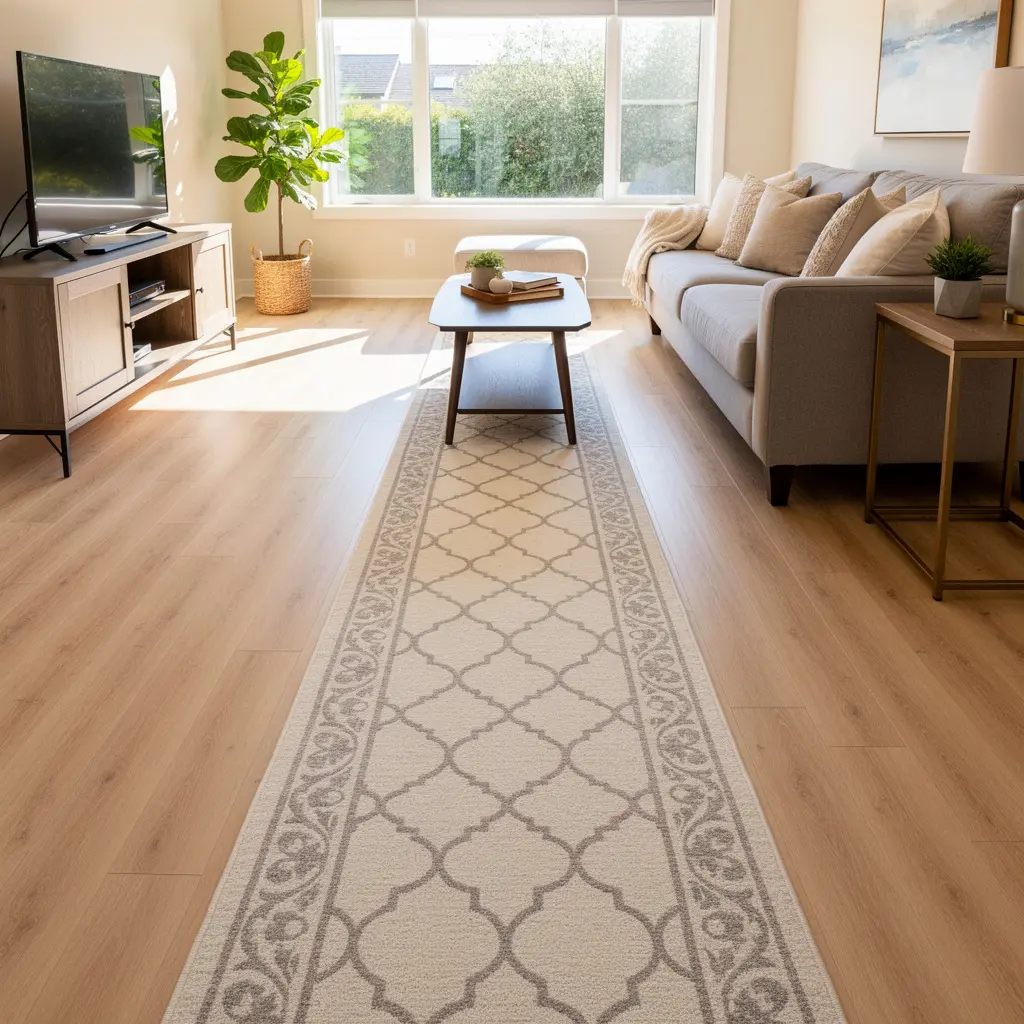
Once a floor has been refinished, painted, or covered with new peel and stick tile, a runner in the highest traffic path, like the route from the entry to the main seating area, protects the investment from the wear that caused the original problem. Runners in the $30 to $80 range for a standard hallway length cover most budgets.
This is a preventive step people often skip after finishing a floor project, but it’s one of the cheapest ways to make sure the new fix actually lasts rather than showing the same wear pattern again within a year or two.
10. Where to Spend More If the Budget Allows a Little Extra
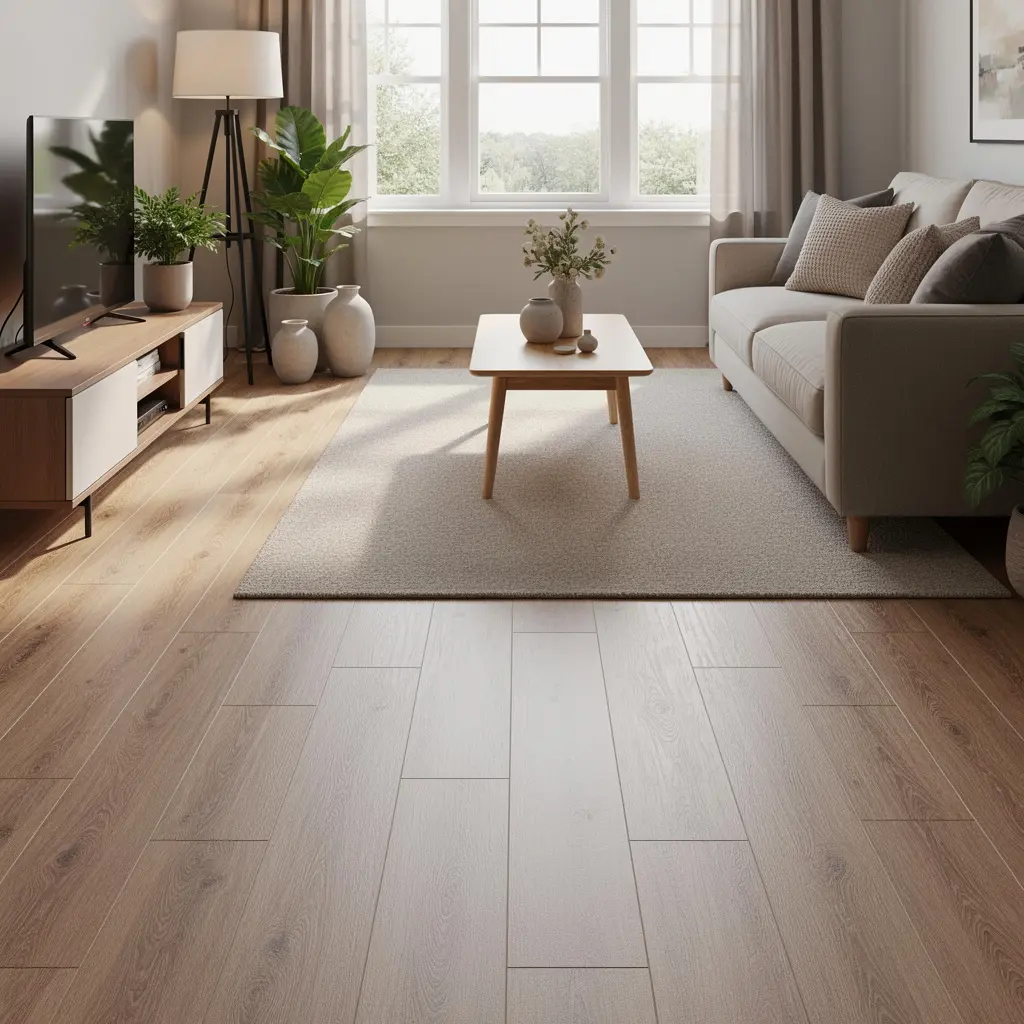
If there’s a little more room in the budget, a good quality area rug, wool rather than a synthetic blend, tends to hold up longer and look better over time than a cheaper option that needs replacing again in a year or two. This is usually the single best place to spend slightly more within an otherwise tight floor makeover budget.
Professional installation for peel and stick flooring or a screen and recoat refinish, if you’re not comfortable doing it yourself, is another reasonable place to spend a bit extra, since a poorly done DIY floor job can end up costing more to fix later than paying for it correctly the first time.
Mistakes to Avoid
- Assuming every floor problem requires full replacement
- Choosing a rug that’s too small for the seating area
- Covering damage with a rug or furniture instead of addressing it first
- Skipping small repairs like squeaky boards before a bigger floor project
- Using painted floors as a permanent fix in a high moisture area
- Forgetting a protective runner in high traffic paths after finishing a project
Frequently Asked Questions
Can I really transform a living room floor without replacing it? In most cases, yes. Refinishing, rugs, peel and stick flooring, and floor paint solve the majority of cosmetic and moderate damage issues for a fraction of full replacement cost.
How do I know if my wood floor needs a full refinish or just a light recoat? Deep scratches, water stains, or wanting an entirely different color usually call for a full sand and refinish, while a floor that’s just dull or lightly scratched often only needs a screen and recoat.
Is peel and stick flooring durable enough for a living room? Modern peel and stick vinyl products are considerably more durable than older versions and hold up well in living rooms, though very high traffic commercial spaces need a sturdier material.
What size rug should I buy for a living room? Aim for a rug large enough that at least the front legs of your main seating pieces rest on it, generally leaving 12 to 18 inches of bare floor visible around the edges.
Is painting a wood floor a good long term solution? It works well as a budget friendly, often temporary fix, especially in a rental, but it does need some maintenance over time and isn’t as durable as a true refinish or replacement.
Conclusion
A budget friendly living room floor makeover starts with correctly identifying the actual problem, since cosmetic wear, dated color, and real damage all call for different fixes at very different price points. Start with a properly sized rug for the fastest, cheapest transformation, then move to refinishing or peel and stick flooring if the floor underneath genuinely needs it. Handled in that order, most living rooms can look completely different for a small fraction of what a full floor replacement would cost.