10 Aesthetic Apartment Bedroom Ideas for Small Spaces That Feel Bigger
A 10 by 11 foot apartment bedroom that has to fit a bed, a dresser, and a desk can start to feel like a storage unit instead of a room, and no amount of throw pillows fixes that on its own. That’s the real challenge behind most searches for aesthetic apartment bedroom ideas. The solution isn’t more furniture, it’s smarter choices about placement, color, and what actually earns a spot in a small footprint. Picture a bed pushed into a corner instead of centered against a wall, a large leaning mirror doubling the sense of space, and a single wall shelf replacing a bulky bookcase. That’s the kind of thinking this article walks through.
1. Choose the Right Bed Placement First
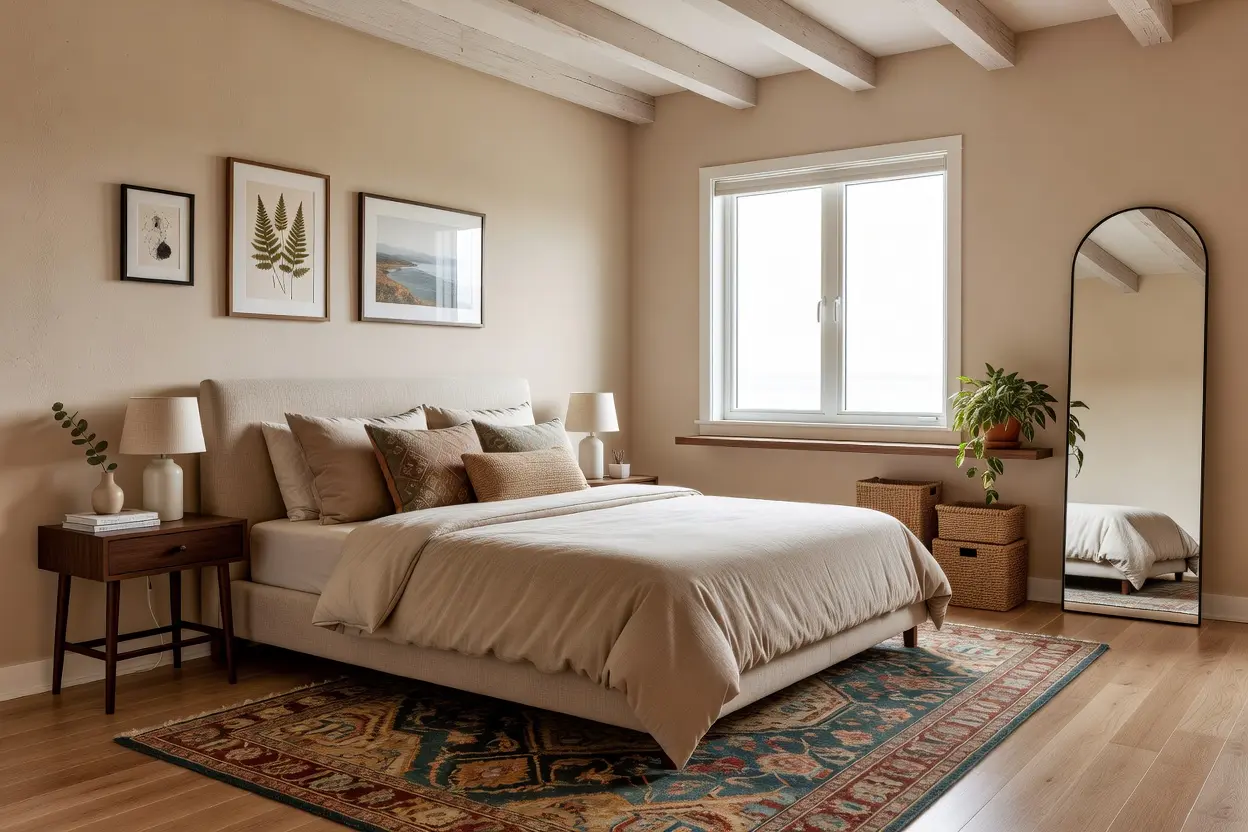
In a small bedroom, the bed usually dictates everything else, so it’s worth getting right first. Pushing the bed into a corner instead of centering it against the longest wall often frees up several feet of usable floor space elsewhere in the room. A corner placement also opens up a full wall for a desk or dresser that would otherwise compete with the bed for space.
Measure Before Committing
Before moving furniture, sketch the room’s dimensions on paper or use a free room planning app. A queen bed alone takes up roughly 60 square feet with clearance to walk around it, so knowing the numbers up front avoids a frustrating rearranging session later.
2. Stick to a Light, Cohesive Color Palette
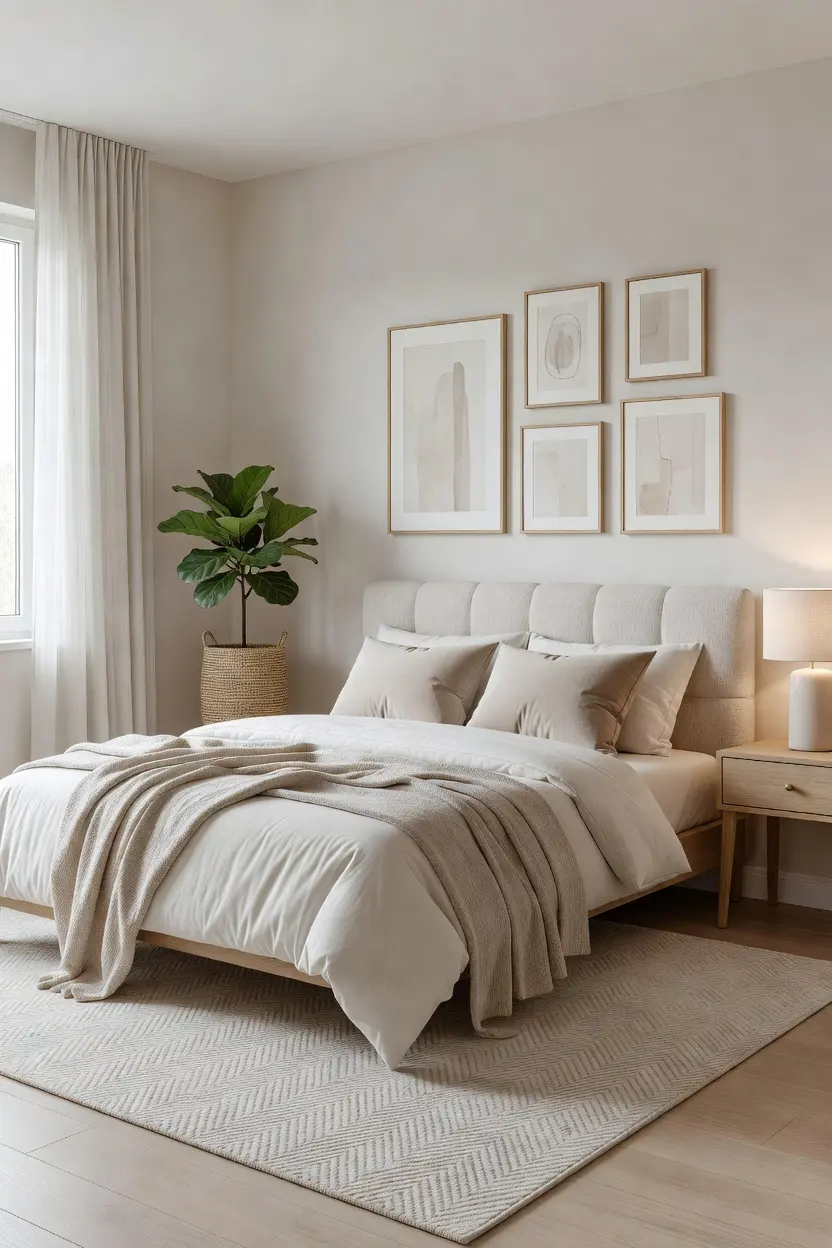
Dark, saturated wall colors can make an already small room feel smaller by visually pulling the walls inward. A palette built around soft whites, light greiges, or pale sage keeps the room feeling open. If color is important, save the boldest tone for one accent wall or a single large textile rather than all four walls.
Matching the wall color closely to major furniture pieces, a light dresser against a similarly light wall, reduces visual breaks in the room and makes the whole space read as more continuous.
3. Use Vertical Space Instead of Floor Space
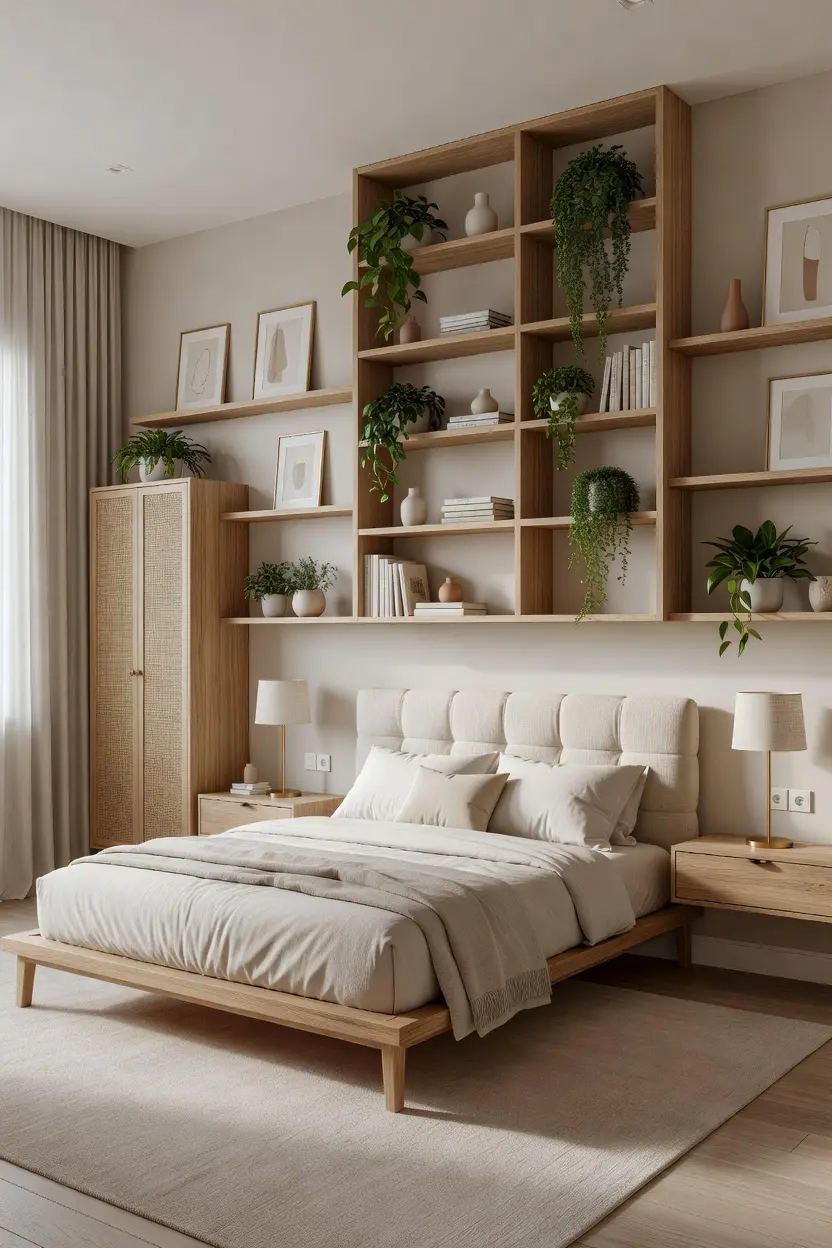
Floor space is the scarcest resource in a small apartment bedroom, but wall space above eye level is usually empty. Floating shelves, a wall mounted desk, or a tall narrow bookcase all use vertical square footage that would otherwise go to waste. A single floating shelf, typically $20 to $40, can replace a bulky nightstand in tight layouts.
Hanging curtains closer to the ceiling than the window frame, even eight to ten inches above it, draws the eye upward and makes the ceiling feel higher than it actually is.
4. Add a Large Mirror to Open Up the Room
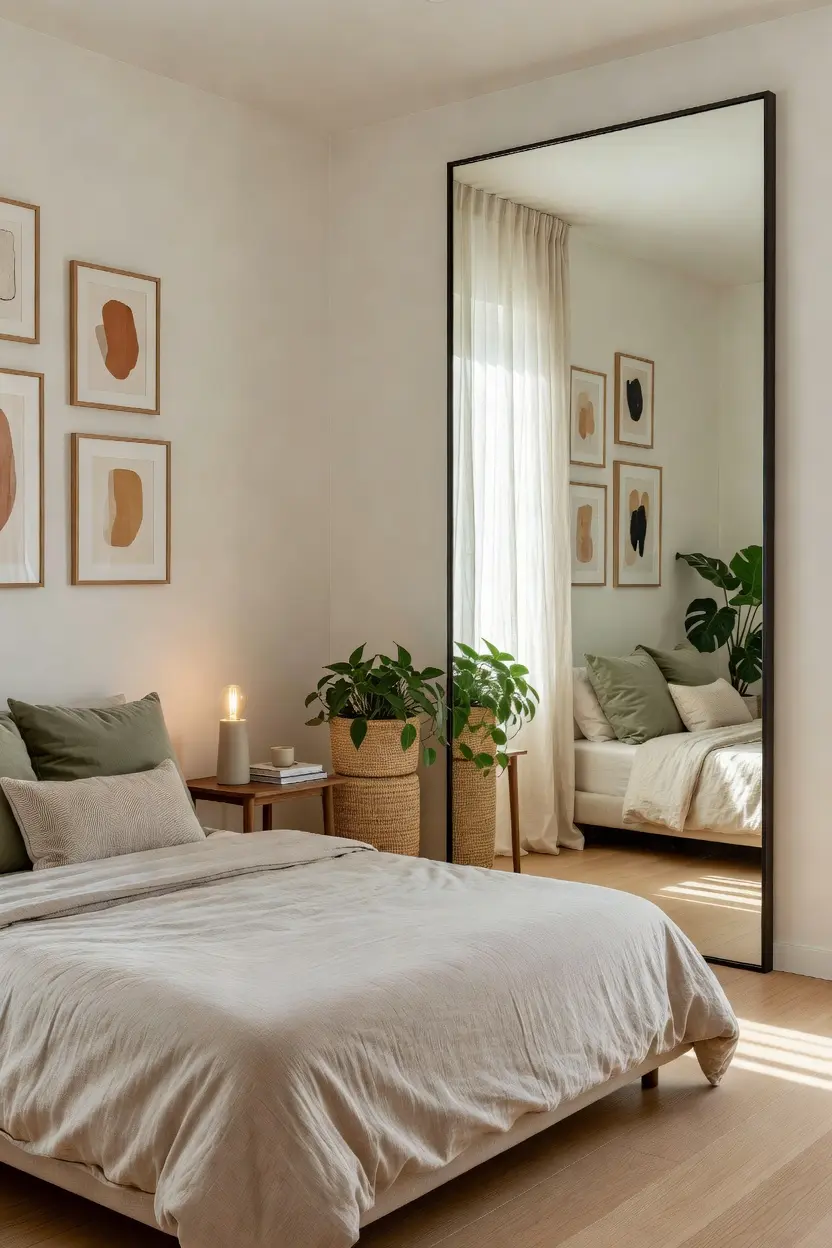
A large mirror, leaning or wall mounted, reflects light and visually doubles the depth of a room. Placing it across from a window maximizes the amount of natural light bouncing around the space. A floor length leaning mirror in the $60 to $150 range works well because it doubles as a full length mirror for getting dressed.
Avoid small decorative mirrors scattered around the room for this purpose. One large mirror does significantly more visual work than several small ones.
5. Pick Multi Use Furniture Over Single Purpose Pieces

In a small apartment bedroom, furniture that does two jobs is worth more than furniture that does one. A bed frame with built in drawer storage underneath, an ottoman that opens for extra blanket storage, or a desk that also works as a vanity all reduce the total number of pieces needed in the room.
A Quick Test Before Buying Furniture
Ask whether a piece could serve a second purpose before buying it new. If a nightstand can’t also hold a small stack of books or double as extra seating in a pinch, it might not earn its footprint in a genuinely tight room.
6. Use a Small Scale Rug to Anchor the Space
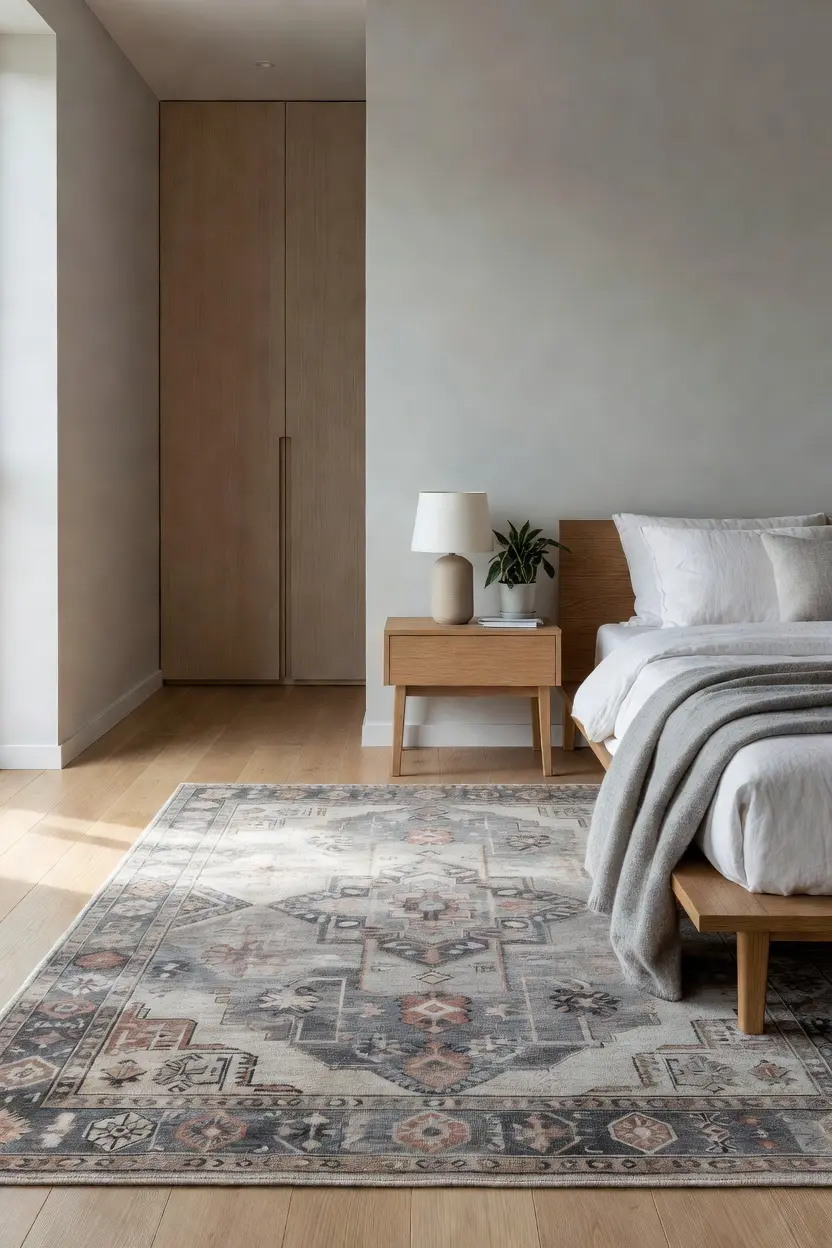
A rug that’s too small floats awkwardly in the middle of the room, while one sized correctly, extending a foot or so past the bed on the sides that are visible, grounds the space. In a small bedroom, a 5×7 or 6×9 rug usually works better than a full room sized rug, since it defines the space without overwhelming it.
Lighter rug colors keep the floor from visually shrinking the room the way a dark, heavy patterned rug can in a tight footprint.
7. Keep Window Treatments Simple and Light
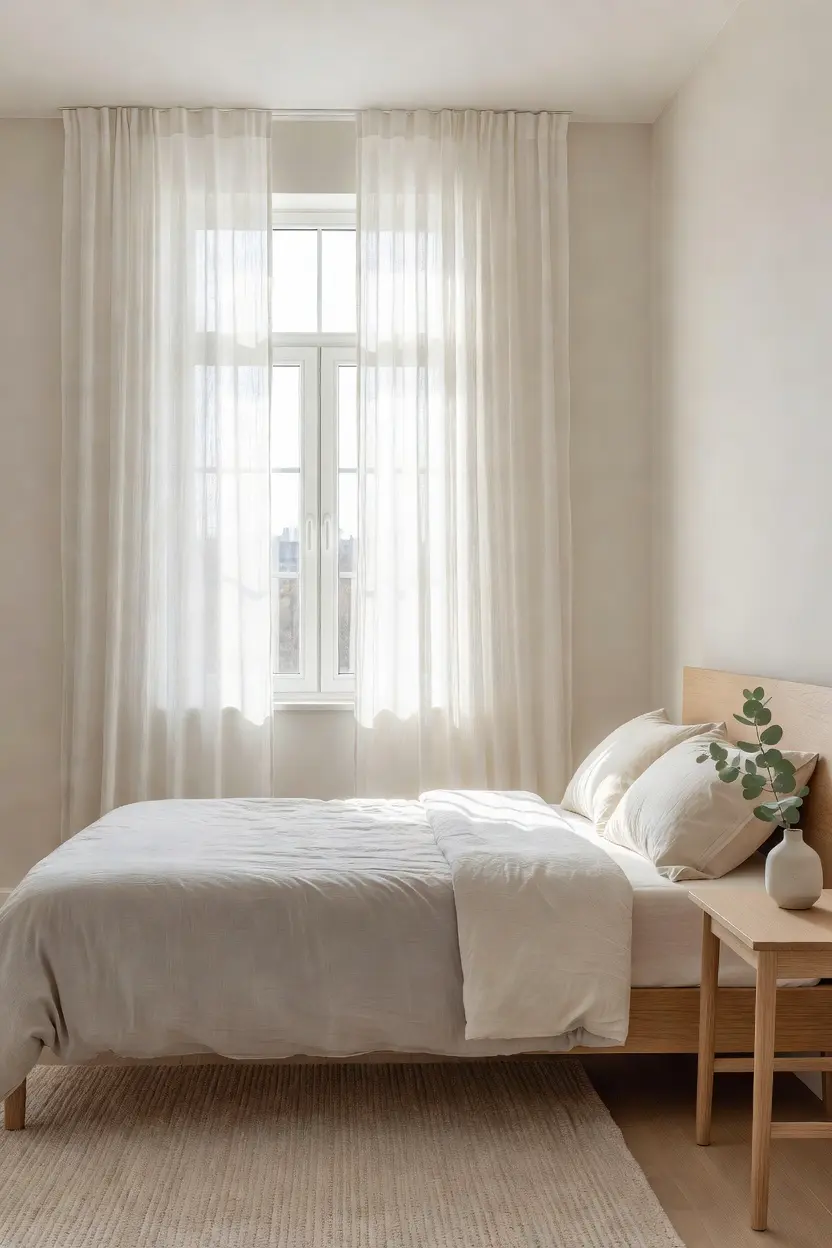
Heavy, dark curtains can make a small window feel smaller and block valuable natural light. Sheer or lightweight curtain panels in a color close to the wall let light filter through while still offering privacy in the evening. Curtains hung wide of the window frame, extending a few inches on each side, make the window itself appear larger.
If privacy at night is a priority, layer a lightweight blackout panel behind a sheer rather than switching to one heavy dark curtain that dominates the wall.
8. Edit Down What Actually Stays in the Room
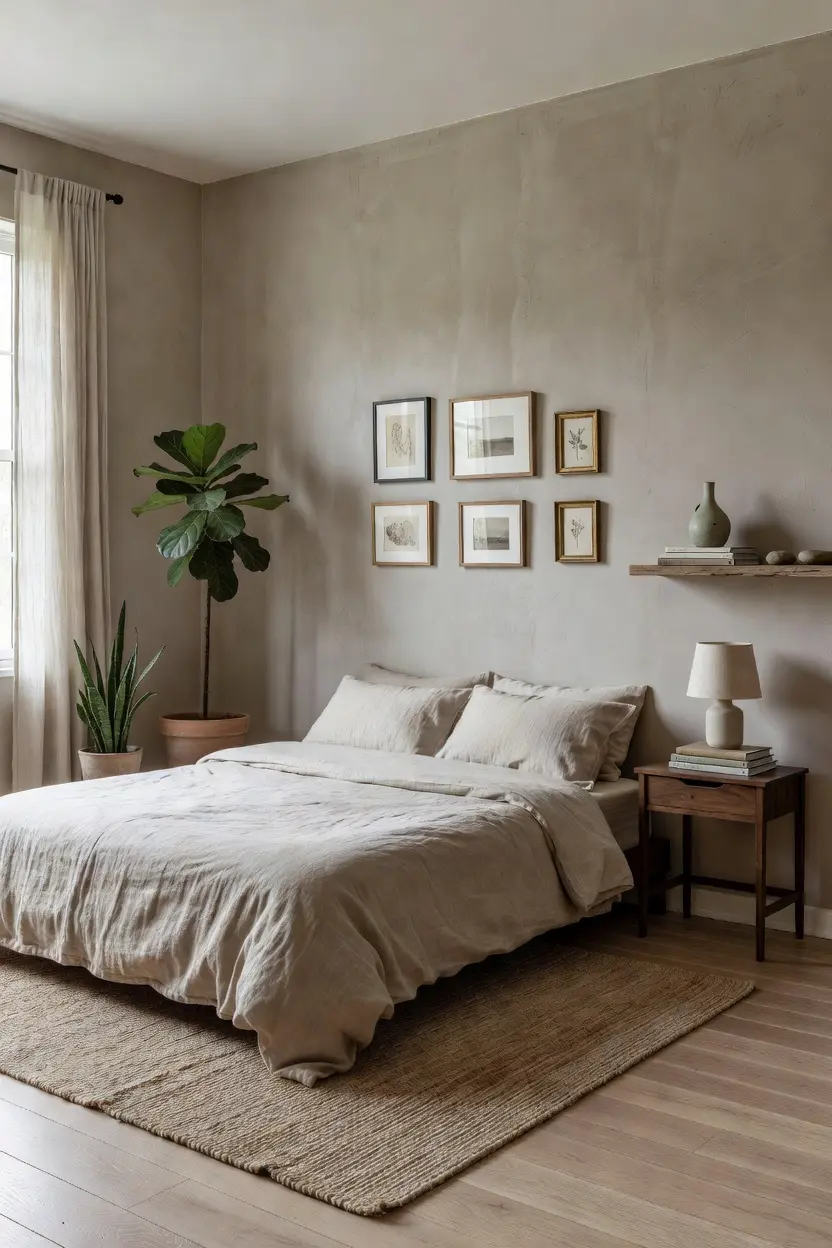
Every item in a small bedroom competes for visual and physical space. A useful rule is to keep only what’s used weekly on open surfaces, and move everything else into closed storage, a closet, or another room entirely. A dresser top with three items looks calm. The same dresser with fifteen items looks chaotic regardless of how nice each individual object is.
This editing process is ongoing, not a one time task, especially in an apartment where storage throughout the whole unit tends to be limited.
9. Layer Lighting to Avoid a Flat, Boxy Feel
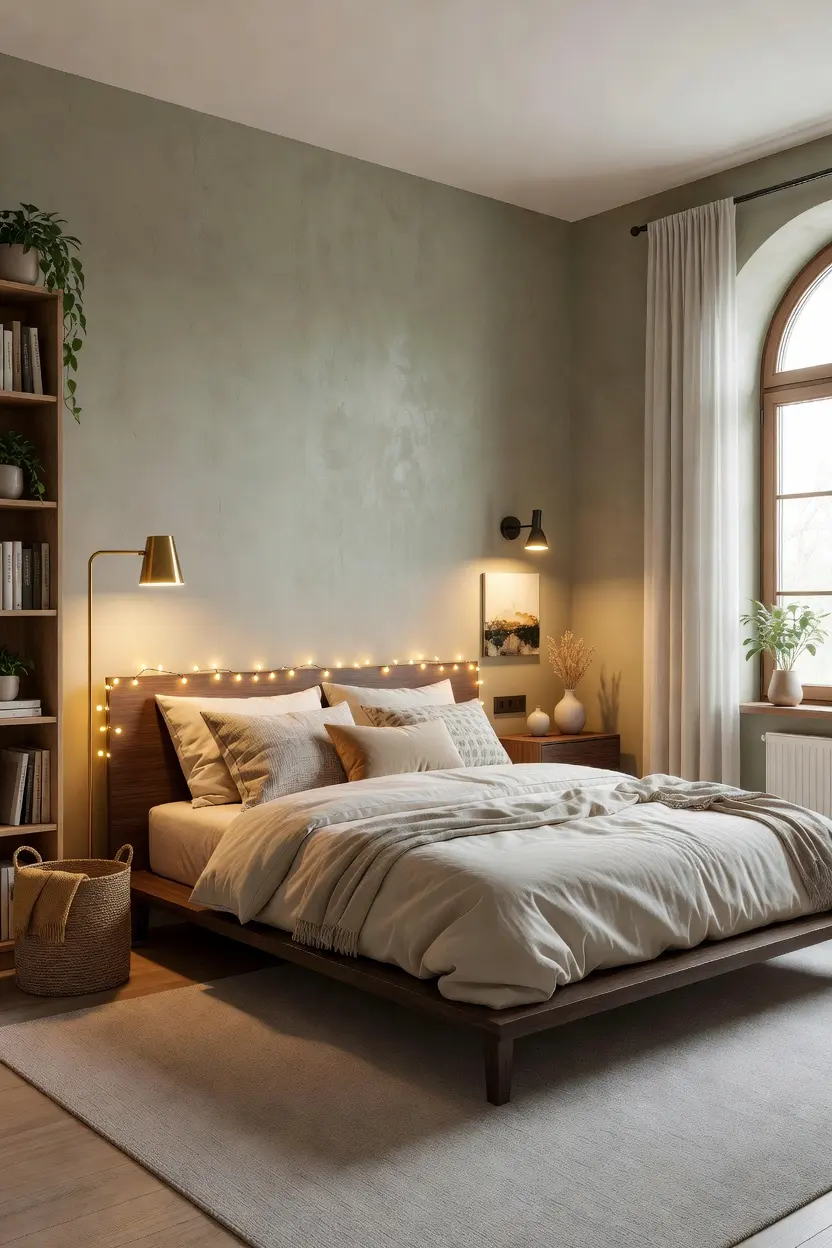
A single overhead fixture in a small room tends to flatten the space and make the walls feel closer together. Adding a floor lamp in one corner and a smaller table lamp on a dresser or desk creates pockets of light that make the room feel larger by drawing the eye to different points around it rather than one flat wash of light.
Warm bulbs, again in the 2700K to 3000K range, help a small space feel cozy instead of stark under bright, cool lighting.
10. Add Personality Without Adding Visual Clutter
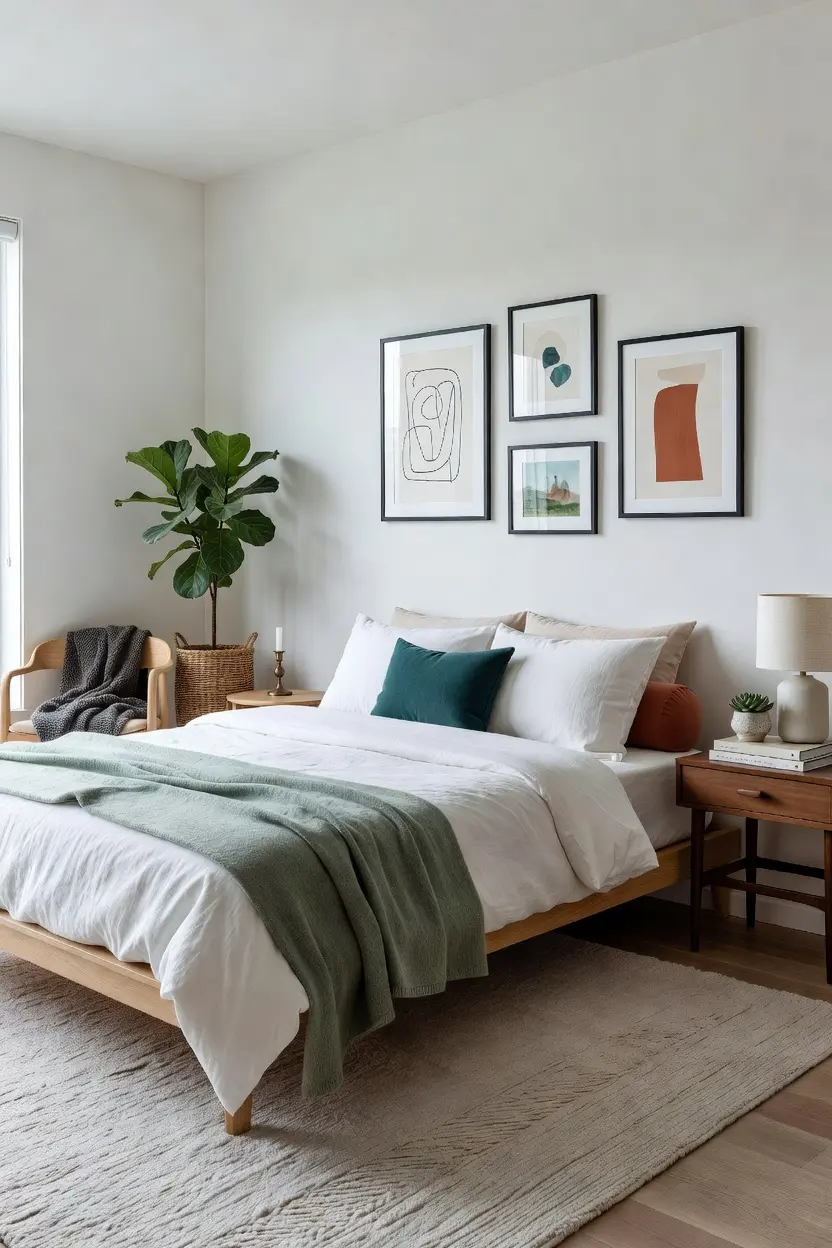
A small room can still feel personal through a few intentional touches: one meaningful piece of art, a textured throw blanket, a small plant on the windowsill. The goal is restraint, not blankness. Two or three well chosen items read as curated, while a dozen scattered ones read as cramped, especially in a room that’s already working with limited square footage.
Rotating a few decor pieces seasonally is a low cost way to keep the room feeling fresh without adding to the overall clutter long term.
Mistakes to Avoid
- Centering the bed against a wall when a corner placement would free up more usable space
- Choosing dark, saturated paint colors that make the room feel smaller
- Buying a rug that’s too small and leaving it floating in the middle of the floor
- Overfilling open shelves and surfaces until the room looks cluttered
- Skipping a large mirror, which is one of the most effective small space tools available
- Using only one overhead light source instead of layering in lamps
Frequently Asked Questions
What’s the best bed placement for a small apartment bedroom? A corner placement often frees up more usable floor space than centering the bed against the longest wall, especially in rooms under 120 square feet.
Do light colors actually make a small room feel bigger? Yes. Light, cohesive wall and furniture colors reflect more light and reduce visual breaks in the room, which makes the space read as more open.
What size rug works best in a small bedroom? A 5×7 or 6×9 rug usually fits better than a full room sized rug in a small footprint, since it defines the space without visually shrinking the floor.
Is a large mirror really worth it in a tiny room? A large mirror, especially placed across from a window, reflects natural light and adds visual depth, making it one of the more effective single purchases for a small space.
How do I add storage without making a small bedroom feel cluttered? Prioritize closed storage, drawers, bins, an ottoman with storage, over open shelving, and keep visible surfaces limited to a few items at a time.
Conclusion
An aesthetic apartment bedroom in a small footprint comes down to smart choices more than square footage. Rethink the bed placement, keep the palette light, use vertical space, and add one large mirror before buying anything else. Multi use furniture and a well sized rug round out the rest. None of these changes require more space, just a more intentional use of the space that’s already there.