10 Cozy Balcony Makeover Ideas with a Lotus Mural Accent Wall
Most balconies end up as storage space. A bike leans against the railing. A few boxes sit in the corner. Nobody actually goes out there to relax. A lotus mural accent wall changes that completely. It gives the space a single strong focal point, something worth sitting near instead of walking past. This article covers real ways to plan the mural, furnish around it, and style the whole balcony so it becomes a spot you actually want to use.
1. Why a Lotus Mural Accent Wall Works So Well on a Balcony
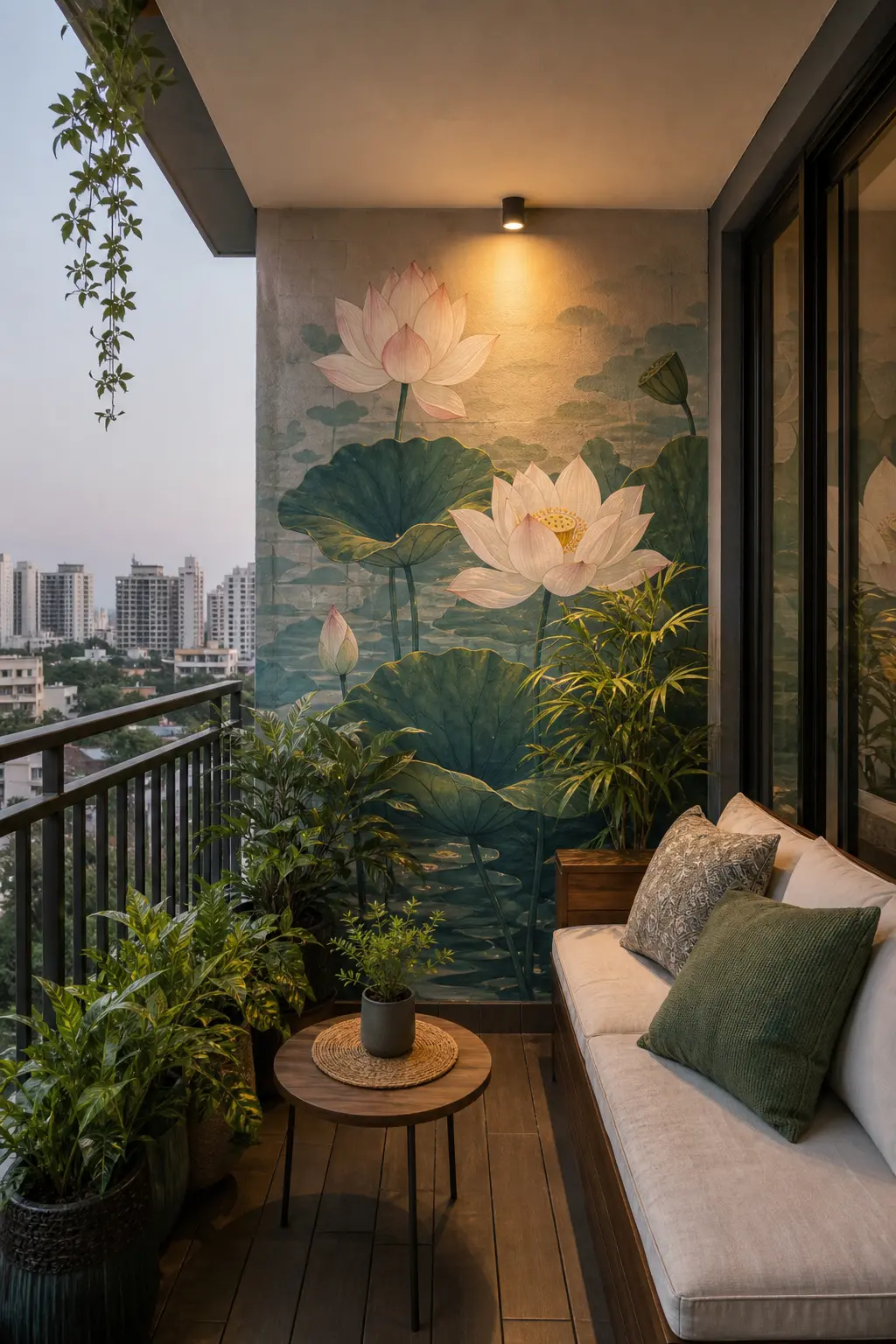
A balcony is usually small. Small spaces need one strong visual anchor instead of a lot of competing decor. A lotus mural gives you that anchor.
The lotus shape itself carries a calm, natural feeling. Its rounded petals and symmetry read as peaceful rather than busy, which matters on a space meant for unwinding.
Painted directly on the wall, the mural also solves a common balcony problem. Bare concrete or plain siding often looks unfinished. A mural covers that blank space with something intentional instead of leaving it empty.
A single well placed mural does more for a balcony’s mood than a dozen small decor pieces scattered around it.
2. Planning the Mural Before You Pick Up a Brush
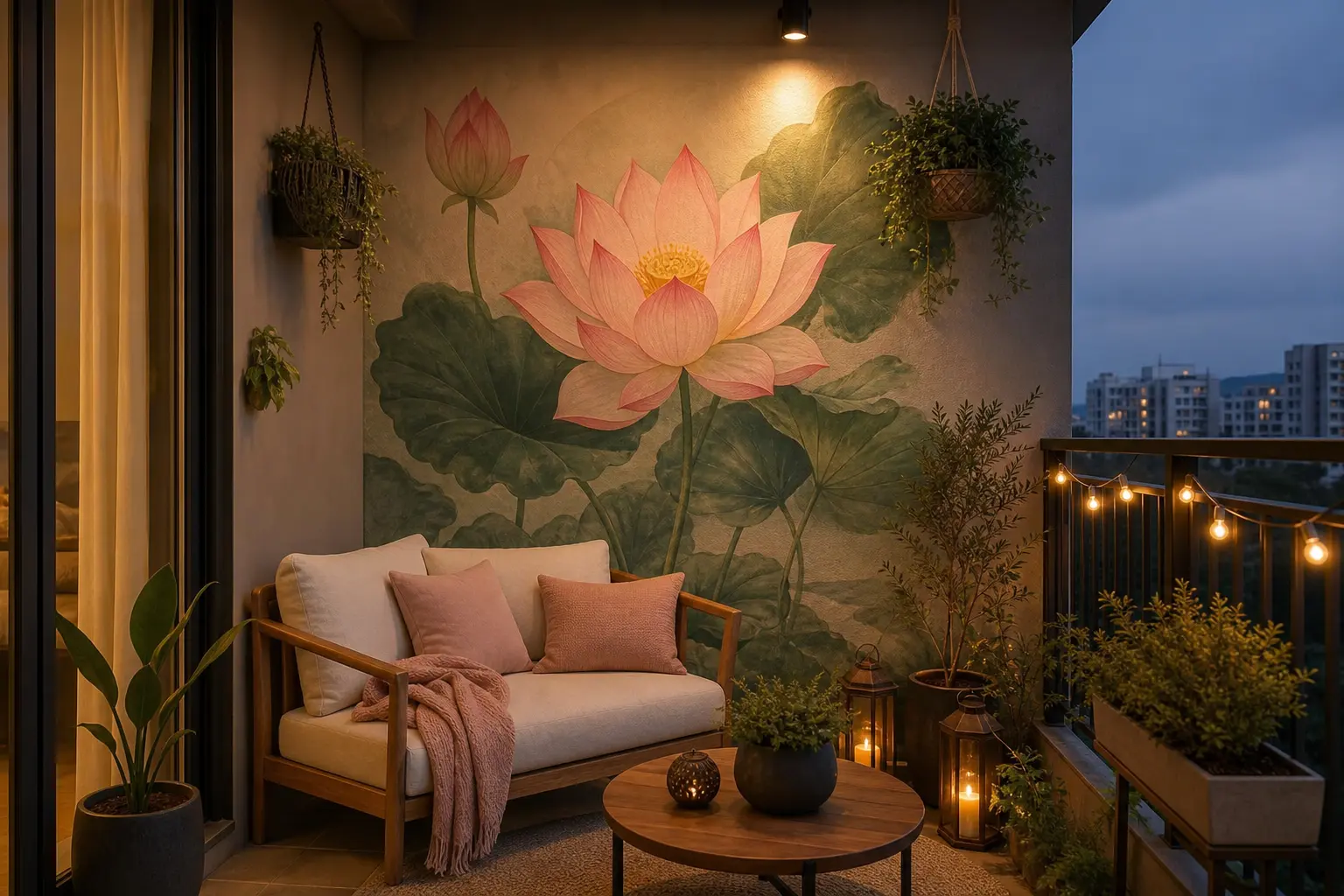
Before painting anything, measure the wall. Most balcony accent walls range from 6 to 10 feet wide. Sketch the lotus design at scale on paper first so you know how large the petals and center should be relative to the wall.
Keep the design centered if the wall is symmetrical. If the wall has an off center door or window, shift the lotus toward the larger open section instead of forcing it into the middle.
Working with a Stencil
If freehand painting feels risky, a large lotus stencil, often sold in sheets for 20 to 40 dollars, gives you clean lines without needing painting experience. Tape the stencil in sections and work through one petal at a time.
3. Choosing Colors That Match Your Outdoor Light

Balconies face different directions, and that changes how paint colors read outdoors. A balcony that gets strong afternoon sun handles cooler tones well, like soft blues or sage greens for the petals, since warm light naturally balances them out.
A balcony that stays shaded most of the day looks better with warmer petal tones, blush pink or soft terracotta, since these colors won’t look washed out or flat under low light.
For the background behind the lotus, a muted off white or warm beige works in almost any lighting. It keeps the mural as the focal point without competing for attention.
4. Furniture That Fits a Small Balcony Without Crowding It
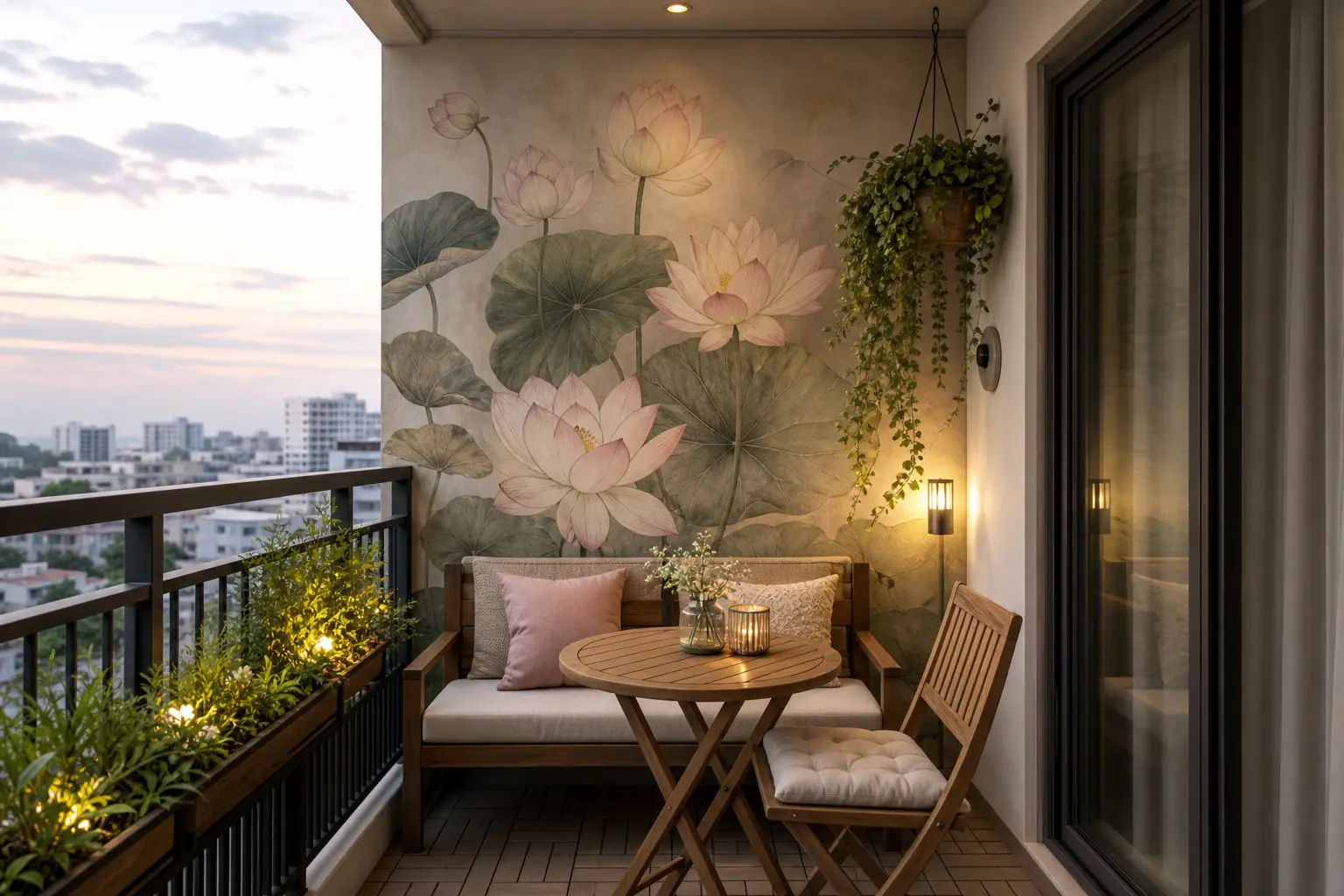
Most balconies can’t fit more than one or two real pieces of furniture. A single accent chair, around 24 to 28 inches wide, works better than a full two seat bench in a tight space.
If you do have room for two seats, choose a compact bistro set instead of bulkier pieces. These typically run 100 to 200 dollars and fold flat for storage during bad weather.
A small side table, no bigger than 14 inches across, gives you a spot for a drink or a candle without eating up floor space. Skip large furniture entirely if your balcony is under 25 square feet. A single floor cushion works just as well there.
5. Layering Lighting for Evenings on the Balcony
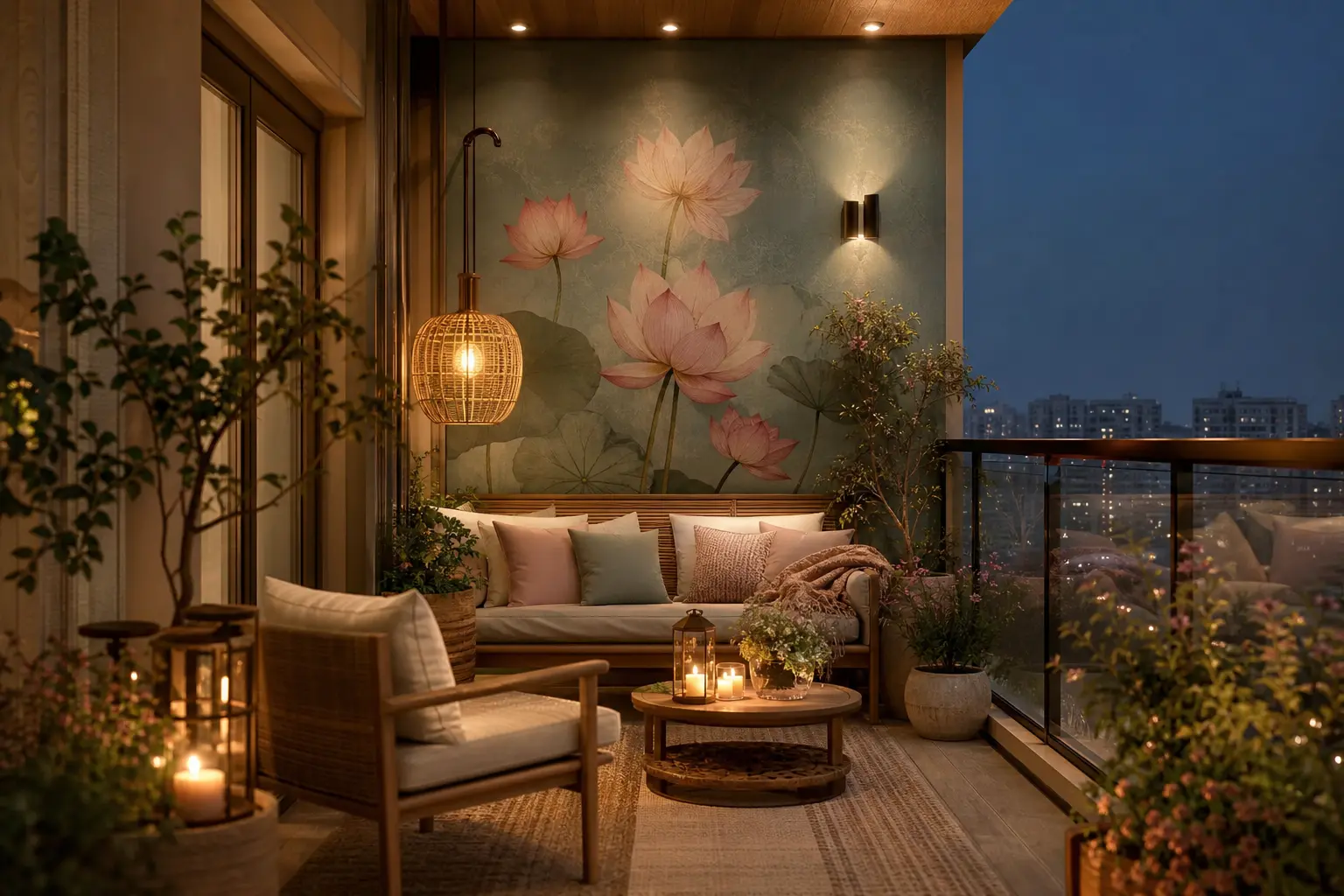
Daytime, the mural does most of the visual work. At night, lighting takes over. String lights along the railing or overhead beam give a soft ambient glow without needing an electrician.
Add a small solar powered lantern near the seating area for a second light layer. This avoids one harsh overhead light and instead spreads soft light across a few points.
If the mural has a light colored background, a small spotlight or uplight aimed at the wall from below makes the lotus glow softly after dark, which turns the mural into a nighttime feature, not just a daytime one.
6. Plants That Pair Naturally with a Lotus Theme
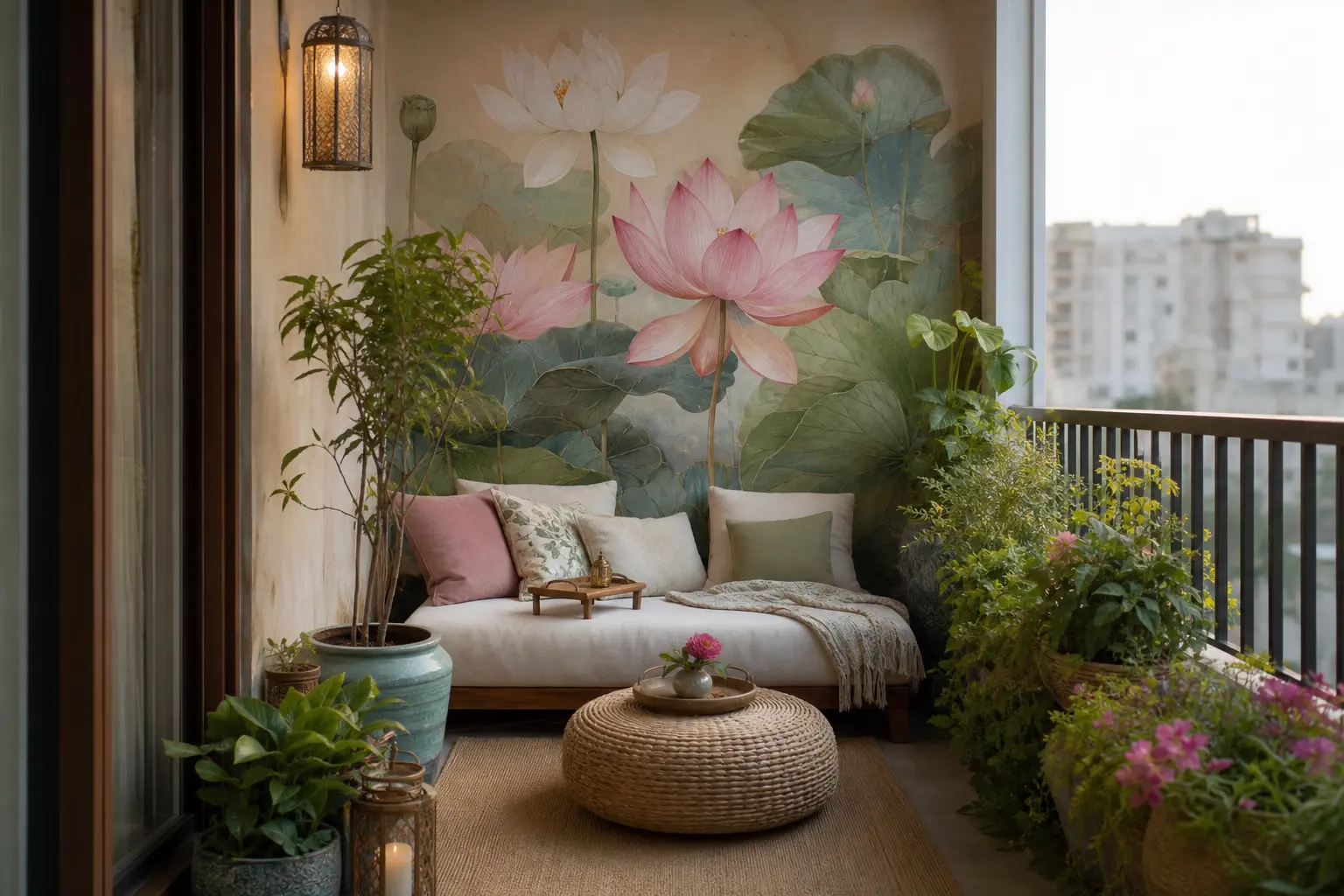
Real potted plants extend the theme without repeating it too literally. Avoid trying to grow actual lotus flowers on a balcony unless you have a dedicated water container, since lotus plants need standing water and don’t grow in regular soil pots.
Instead, pair the mural with plants that share a similar calm, layered look. Snake plants, pothos, or a small potted bamboo all work well and tolerate varying light conditions common on balconies.
Low Maintenance Options
If you travel often or forget to water, succulents or ZZ plants handle neglect better than most options. They still add green without demanding daily attention.
7. Protecting the Mural from Weather and Sun
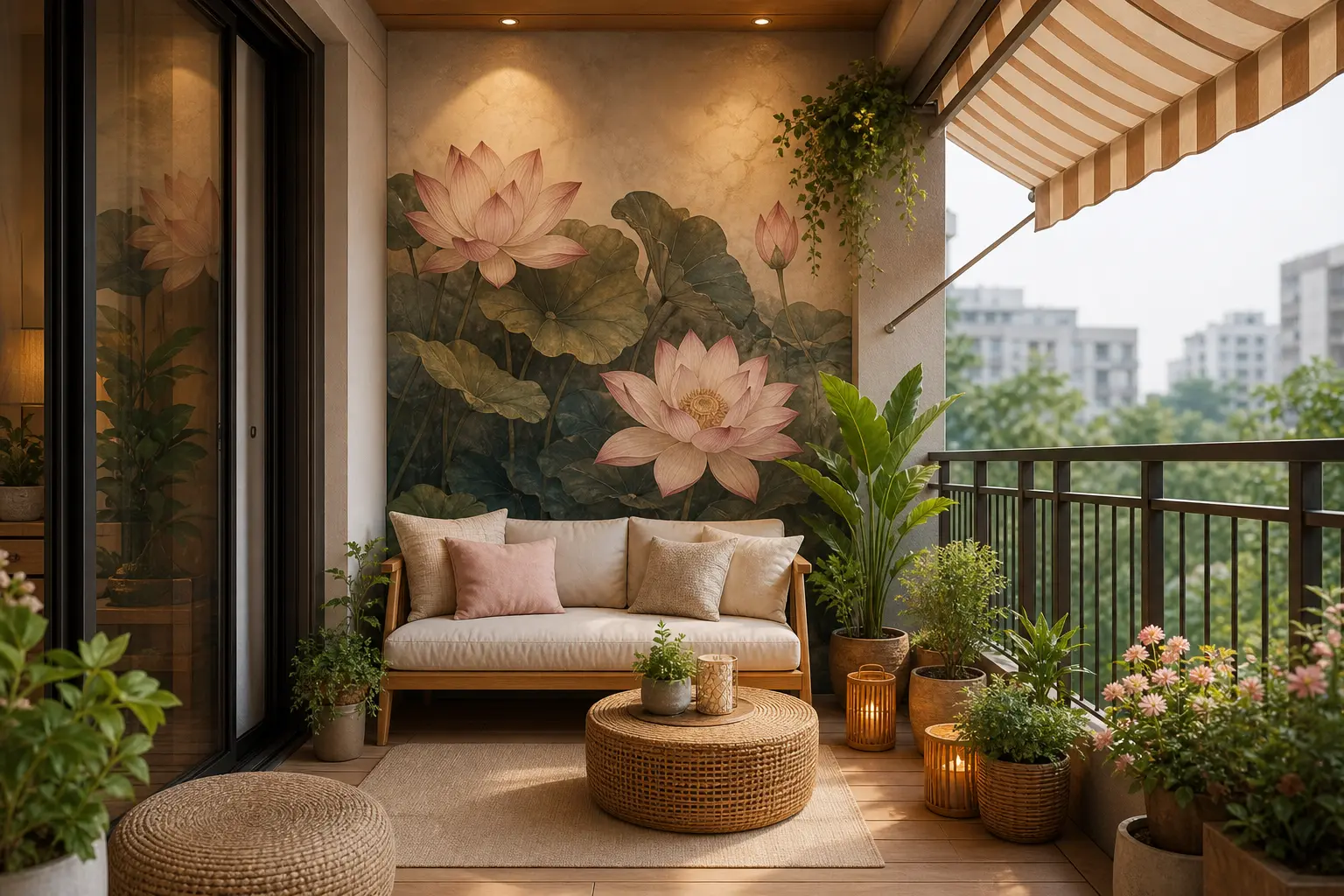
Outdoor murals face real wear from sun, rain, and temperature swings. Use exterior grade acrylic paint, not regular indoor paint, since indoor paint fades and peels much faster outside.
Once finished, seal the mural with a clear exterior sealant. This step alone can add several years to how long the colors stay vibrant before needing a touch up.
If your balcony gets direct, intense sun for most of the day, expect to touch up the mural every 2 to 3 years even with a sealant. Covered or shaded balconies can go longer between touch ups.
8. Budget Friendly Ways to Get the Look
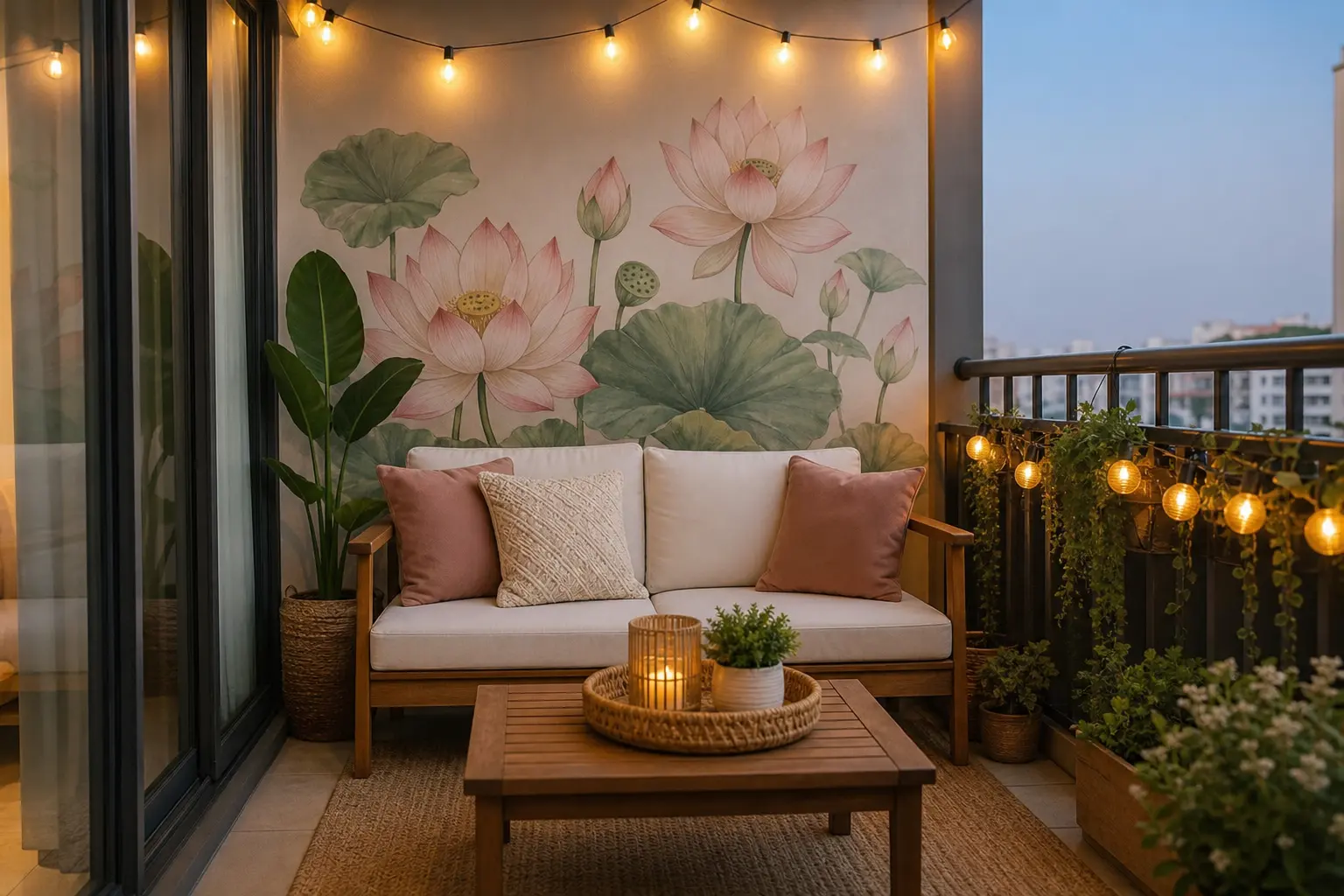
A full mural, paint and sealant included, typically costs 40 to 80 dollars in materials if you paint it yourself. Hiring a local artist for the same size wall usually runs 150 to 400 dollars depending on detail level.
For furniture and decor, secondhand marketplaces often have balcony appropriate chairs and small tables for a fraction of retail price. A quick search for “bistro chair” or “outdoor accent chair” in local listings often turns up options under 50 dollars.
You don’t need a large budget to pull this off. The mural itself is the expensive looking part, and it’s also the cheapest piece to create yourself.
9. Adding Texture with Textiles and Rugs
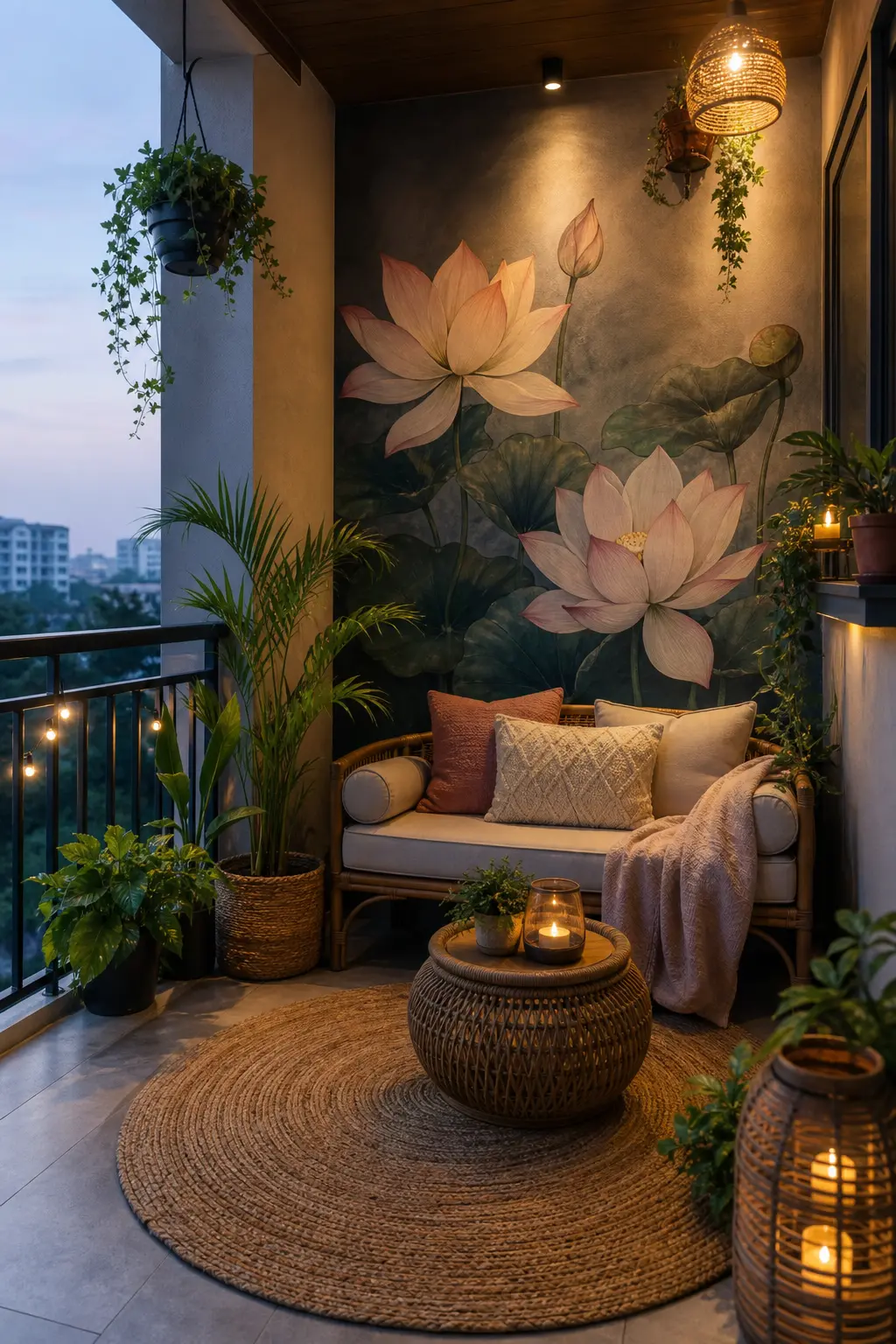
A small outdoor rug, sized for the space, roughly 3 by 5 feet works for most balconies, adds warmth underfoot and defines the seating area. Choose a flat weave rug rather than a plush one, since plush textures hold moisture and dry slowly outdoors.
A seat cushion in a color pulled from the mural, like a soft pink or sage green, ties the whole space together visually. Look for outdoor rated fabric, which resists fading and mildew far better than standard indoor cushions.
Keep the total number of patterns low. One patterned cushion or rug is enough. Two competing patterns fight with the mural for visual attention.
10. Making the Space Feel Private and Restful
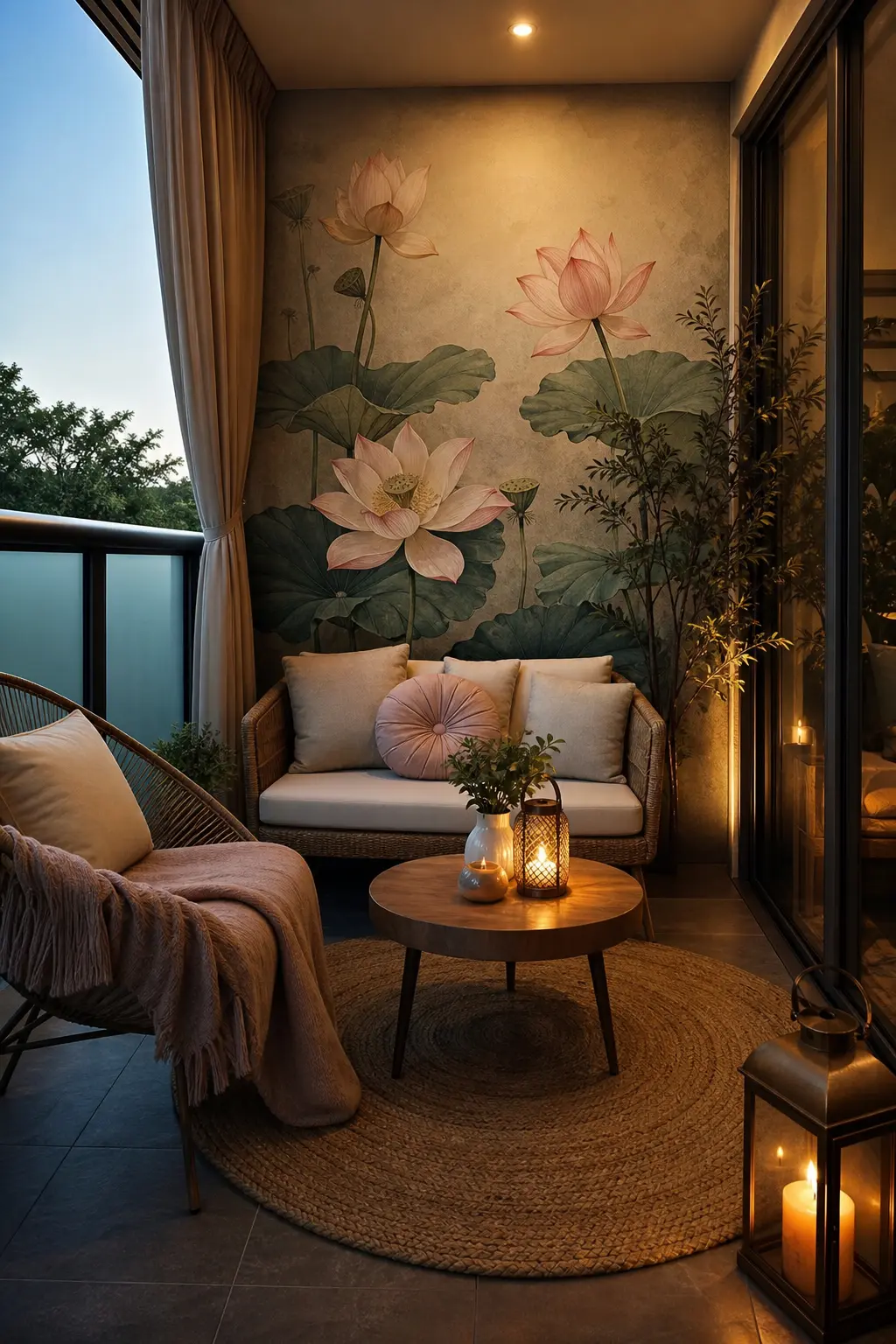
A balcony that faces a busy street or neighboring building can feel exposed rather than restful. A simple bamboo privacy screen along one side, usually 6 to 8 feet in length, blocks sightlines without closing the space in completely.
Sheer outdoor curtains hung from a tension rod also soften the view while still letting light and air through. These typically cost 20 to 35 dollars per panel.
Combined with the mural as a backdrop, a bit of privacy on the sides makes the whole balcony feel like an enclosed little room instead of an open ledge, which is really the goal of a proper makeover.
Mistakes to Avoid
- Using indoor paint for the mural, which fades and peels much faster outdoors
- Overcrowding a small balcony with too much furniture instead of one or two well chosen pieces
- Trying to grow real lotus flowers without a proper water container
- Skipping a sealant on the finished mural, which shortens how long the colors last
- Mixing too many patterns between cushions, rugs, and the mural itself
Frequently Asked Questions
Do I need to be a skilled painter to do a lotus mural myself? Not necessarily. A large stencil makes the outline easy to follow, and the lotus shape is fairly forgiving since its petals don’t need to be perfectly identical.
How long does an outdoor mural typically last? With exterior paint and a proper sealant, most murals hold their color well for 3 to 5 years before needing a touch up, depending on sun exposure.
Can I do this on a rented apartment balcony? Check your lease first. Some rentals allow paint changes if you repaint the wall a neutral color before moving out, while others restrict any wall changes entirely.
What size balcony is too small for this idea? Even a narrow balcony under 20 square feet can work. Scale the mural and furniture down, using a single chair and a smaller lotus design instead of a full wall sized piece.
Will the mural attract too much heat if my balcony gets full sun? Paint color has a minor effect on surface heat, but it won’t meaningfully change the overall temperature of the space. Shade from an umbrella or screen matters far more for keeping the area cool.
Do I need a professional to install string lighting outdoors? For low voltage string lights plugged into an existing outdoor outlet, no professional is needed. If your balcony has no outdoor outlet, solar powered lights avoid the wiring question entirely.
Conclusion
A lotus mural accent wall gives a plain balcony something it usually lacks, a real focal point worth sitting near. Pair it with one or two comfortable pieces of furniture, a couple of easy care plants, and layered lighting for the evening, and the whole space starts to feel intentional instead of forgotten. It doesn’t take a large budget or a big balcony. It just takes one good wall and a plan for what goes around it.