10 Aesthetic Attic Bedroom Ideas for a Unique and Cozy Space
An attic bedroom comes with a built in identity most standard rooms don’t have. Sloped ceilings, exposed rafters, maybe a dormer window or two, all of it shaping the room in ways a rectangular bedroom never has to consider. These aesthetic attic bedroom ideas treat that architecture as a starting point worth working with, not a problem to disguise.
1. What Makes an Attic Bedroom Different to Design For
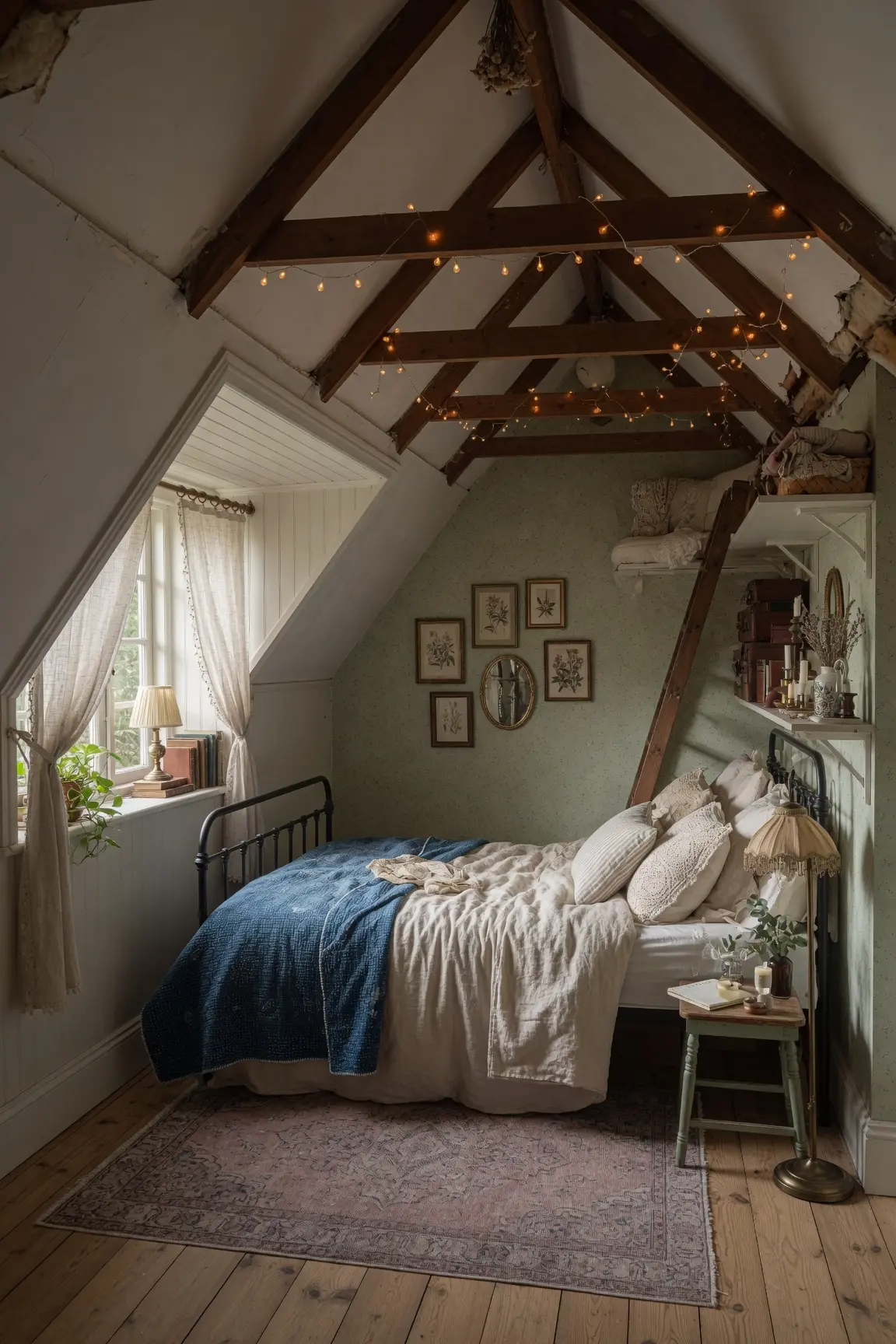
A standard bedroom offers four flat walls and a flat ceiling, a blank canvas with predictable dimensions. An attic bedroom rarely offers that. Sloped ceilings limit where furniture can comfortably sit, and low points along the walls create dead zones a normal room layout doesn’t have to account for.
Rather than fighting those constraints, the most successful attic bedrooms lean into them. The slope becomes a design feature. The low walls become built in storage opportunities. The unusual shape becomes part of what makes the room feel distinct from anywhere else in the house.
2. Furniture Placement Around Sloped Ceilings
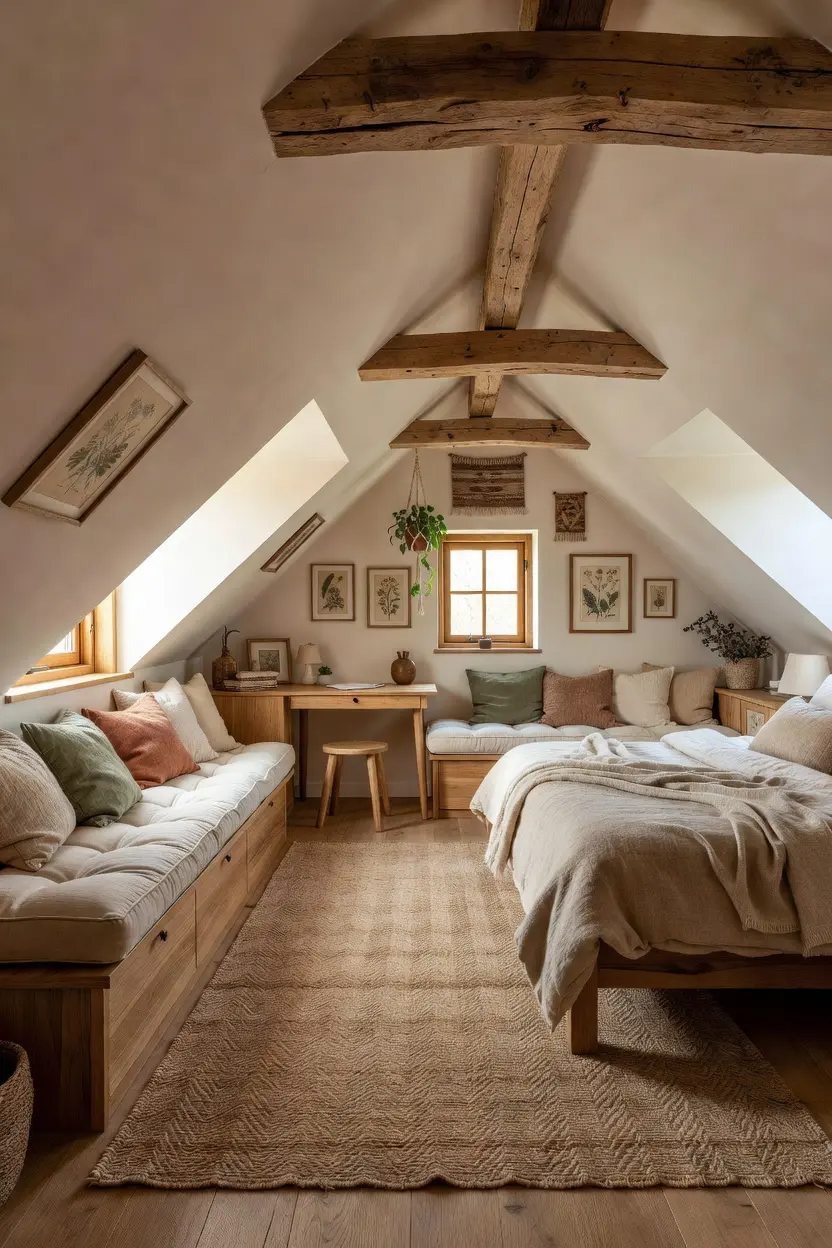
The tallest point of the ceiling, usually the center of the room, is where furniture needing headroom, a bed, a dresser, a wardrobe, should generally sit. The lower edges, where the ceiling meets the walls, work better for lower profile pieces or built in storage that doesn’t require standing clearance.
Measuring the actual usable height at several points across the room, not just the tallest point, helps avoid placing furniture somewhere it technically fits but feels cramped once someone’s actually using it. A low bench or a reading nook tucked into the lowest part of the slope often makes better use of that space than trying to force a taller piece of furniture in.
A quick tip that helps: sit or stand in different spots around the room before finalizing furniture placement, since the actual experience of the slope often differs from what the measurements alone suggest.
3. Making the Most of Dormer Windows
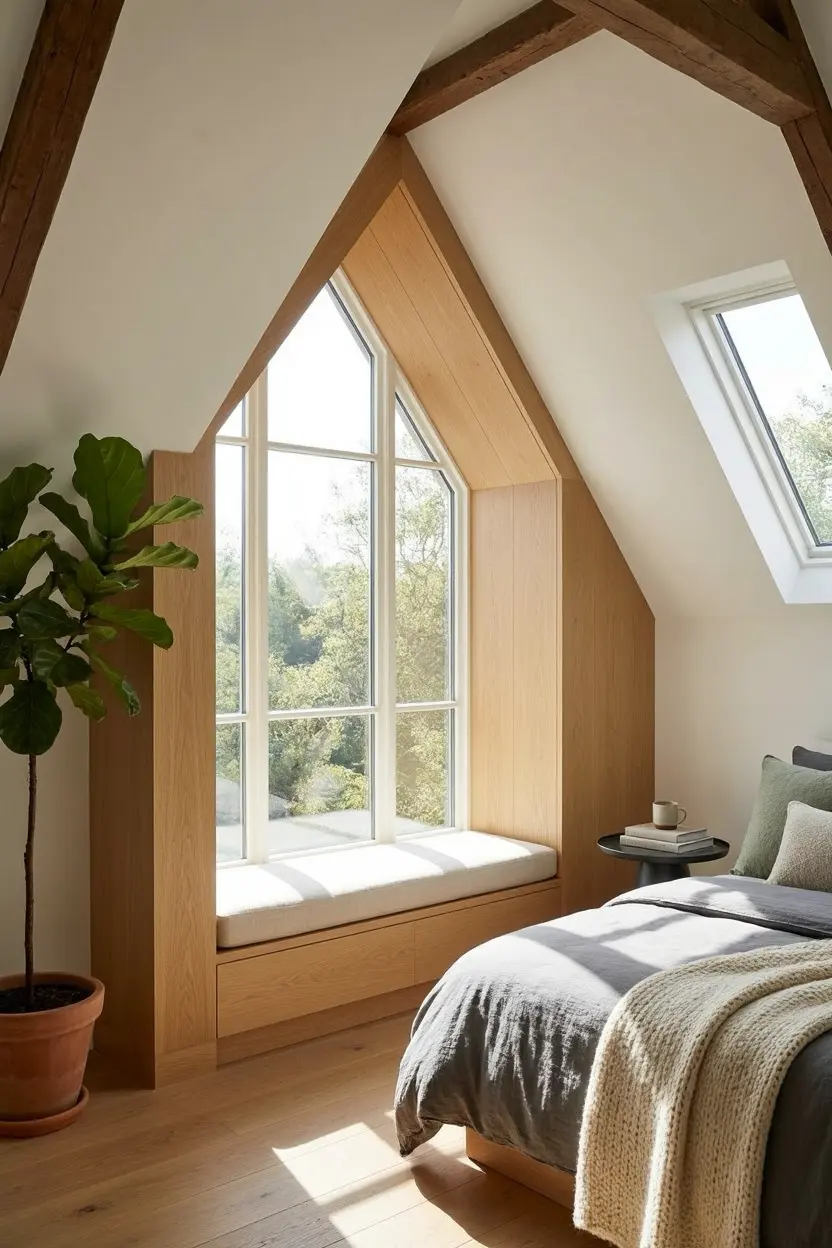
A dormer window, with its own small section of vertical wall and ceiling, often creates a naturally framed nook worth treating as its own mini feature. A window seat built into the dormer, even a simple cushioned bench, makes use of a spot that might otherwise sit awkwardly unused.
Curtains hung within the dormer’s own frame, rather than trying to stretch fabric across the entire sloped wall, look more proportional and intentional. Positioning a small desk or reading chair directly in the dormer takes advantage of the extra natural light that section of the room typically receives compared to the rest of the attic.
4. Choosing a Bed Position That Works With the Roofline
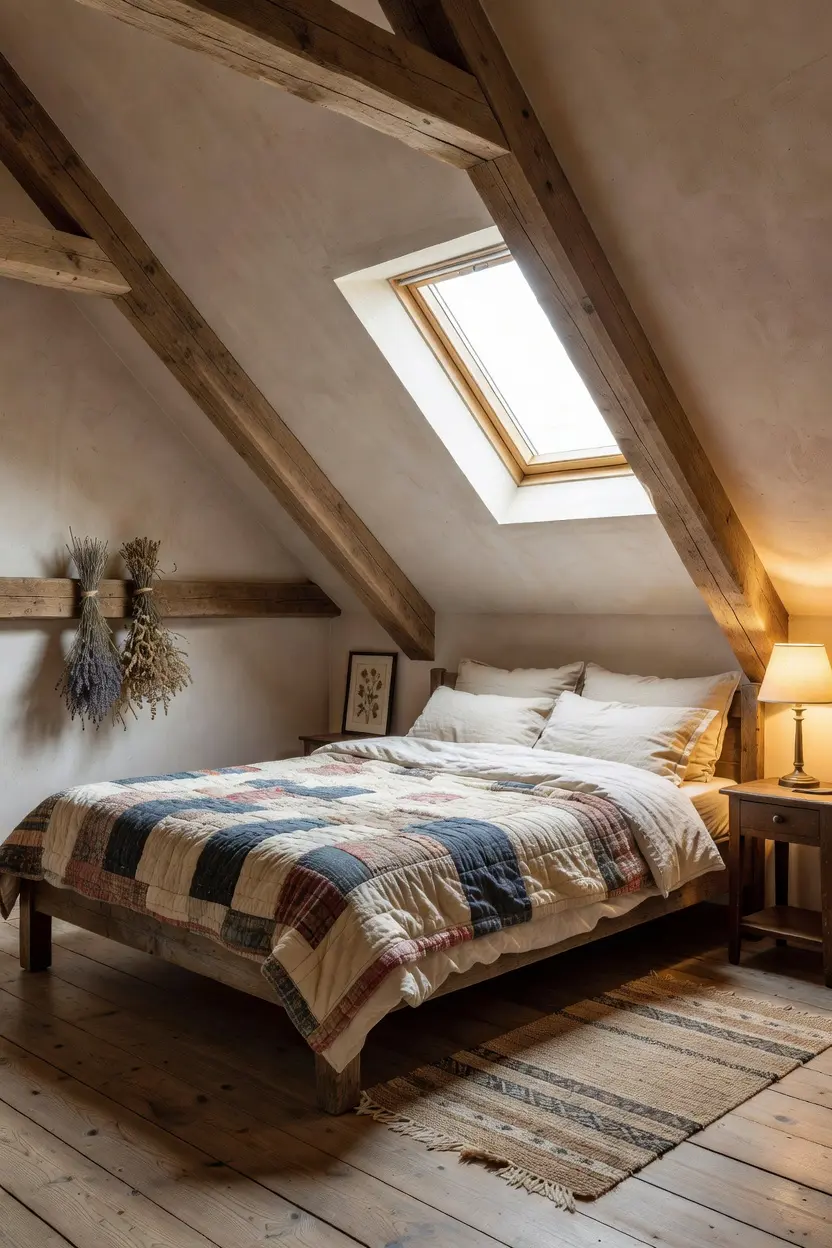
Positioning the bed under the tallest part of the ceiling avoids the uncomfortable feeling of a sloped surface hanging directly overhead, which some people find genuinely bothersome when trying to sleep. If the room’s layout doesn’t allow for that, positioning the bed so the slope meets the wall at the foot rather than directly above the pillow area usually feels less confining.
A low profile bed frame, without a tall headboard, suits an attic bedroom’s often limited vertical space better than a bed with substantial height. For rooms with a particularly dramatic slope, positioning the bed against the shortest wall, with the headboard against the lowest point, can actually work well, using the slope as a kind of natural canopy rather than fighting it.
5. Color Choices for Low Ceilings and Angled Walls
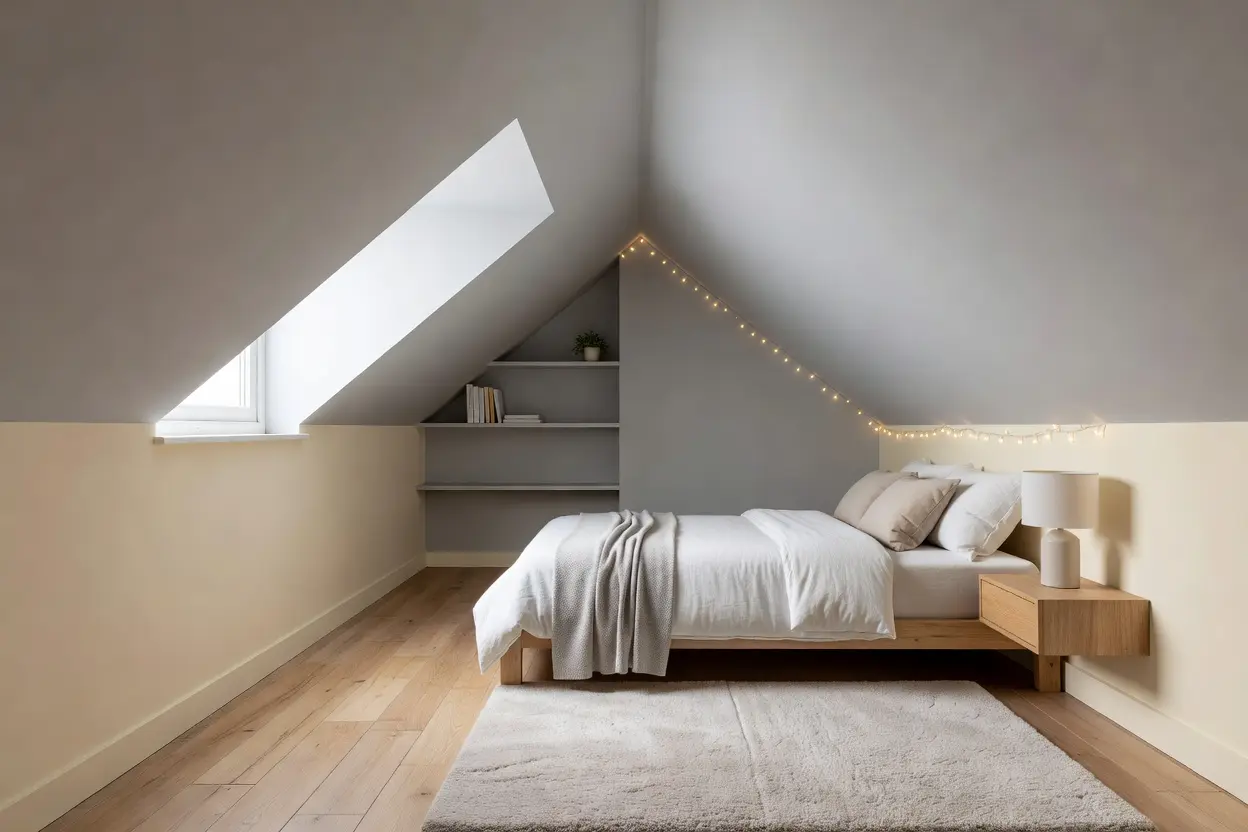
Painting the sloped ceiling sections the same color as the walls, rather than a contrasting white, removes the visual break that can make a low ceiling feel even lower and more oppressive. This approach, sometimes called color drenching, tends to work particularly well in attic spaces specifically because of their unusual geometry.
Light, warm neutrals generally help a lower ceilinged attic room feel less closed in than a dark, saturated color would, though a confident deep tone can still work if the room gets enough natural light to balance it. Testing any paint choice under the room’s actual light, which often comes only from dormer windows or skylights, matters more here than in a standard room with more consistent light exposure.
6. Lighting Solutions for Limited Overhead Options
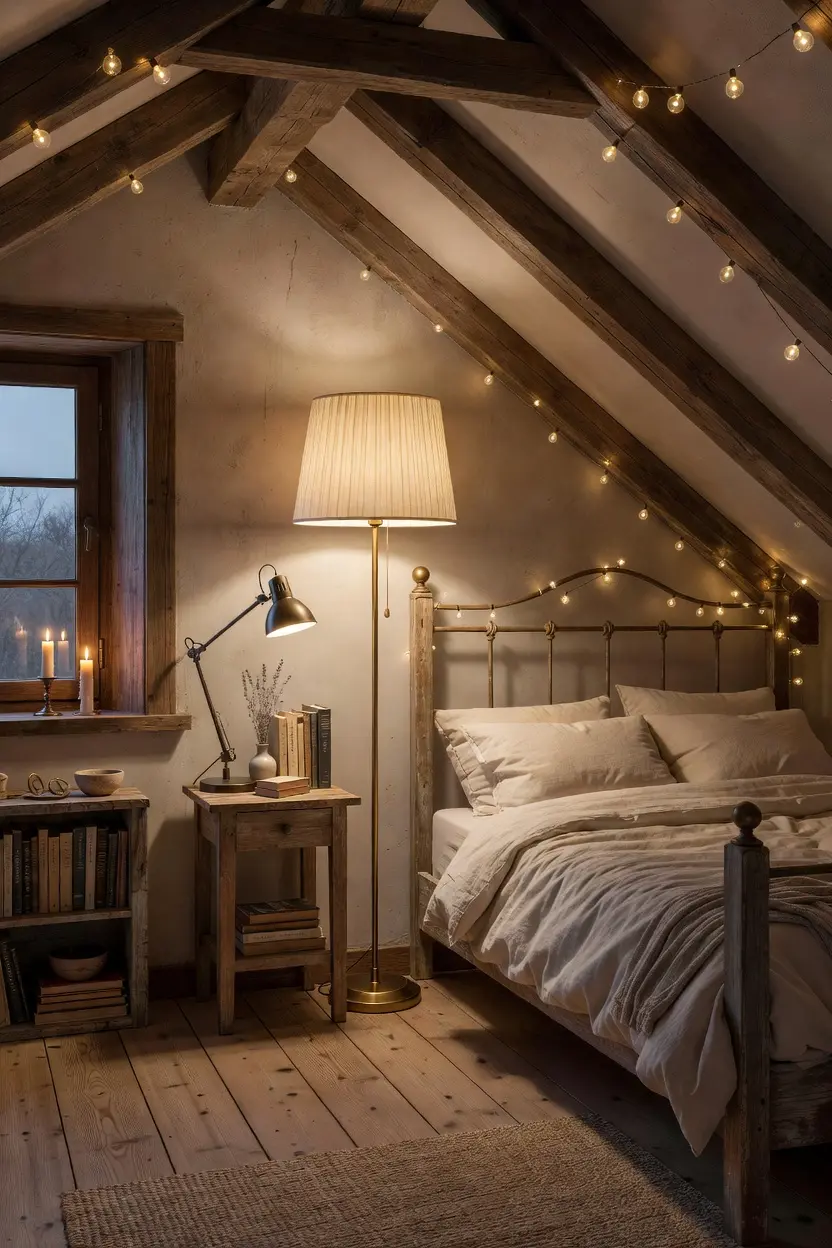
Sloped ceilings often make a standard overhead fixture impractical or awkward to install, which means attic bedrooms typically need to rely more heavily on floor and table lamps than other rooms. This isn’t necessarily a drawback. Layered lamp lighting tends to create a cozier feel than a single overhead fixture would anyway.
Wall sconces, mounted on the room’s flat vertical walls rather than the sloped ceiling, add ambient light without requiring any awkward ceiling installation. Skylights, if the attic has them, bring in valuable natural light during the day, though they’re worth pairing with a blackout shade for anyone sensitive to early morning light waking them up too soon.
7. Storage That Works With Awkward Angles
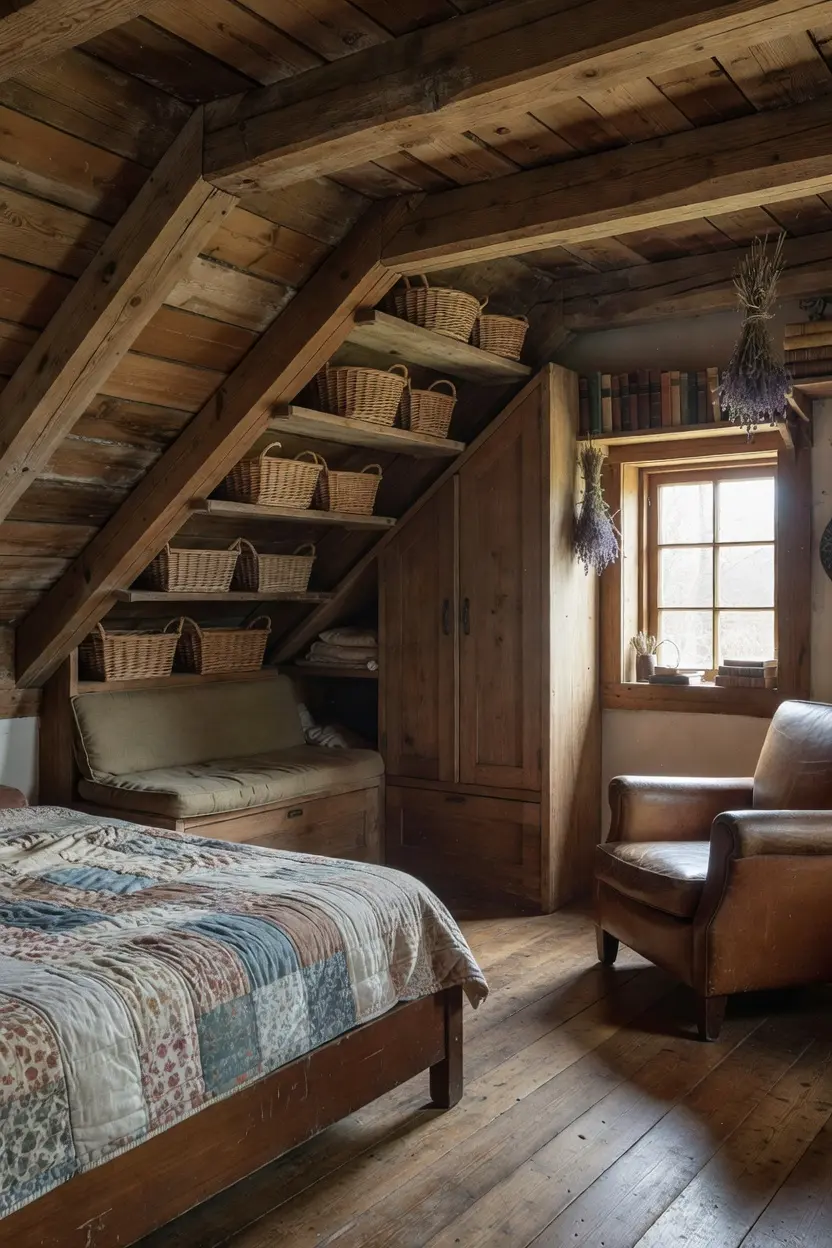
The low, angled sections where the ceiling meets the floor are often dead space in a standard layout, but they’re some of the best built in storage opportunities an attic bedroom has to offer. Custom drawers or cabinets built into these low points make use of space a normal freestanding dresser never could.
Key takeaway: an attic’s awkward angles usually contain more usable storage potential than they first appear to, provided the furniture or built ins are custom fitted rather than generic pieces forced into an irregular space.
Freestanding Alternatives
For attic bedrooms without the budget for custom built ins, low, wide storage bins or baskets tucked into the low slope areas offer a similar function without requiring any construction, even if they’re slightly less space efficient than a custom fitted option.
8. Textiles and Warmth for a Space Prone to Temperature Swings
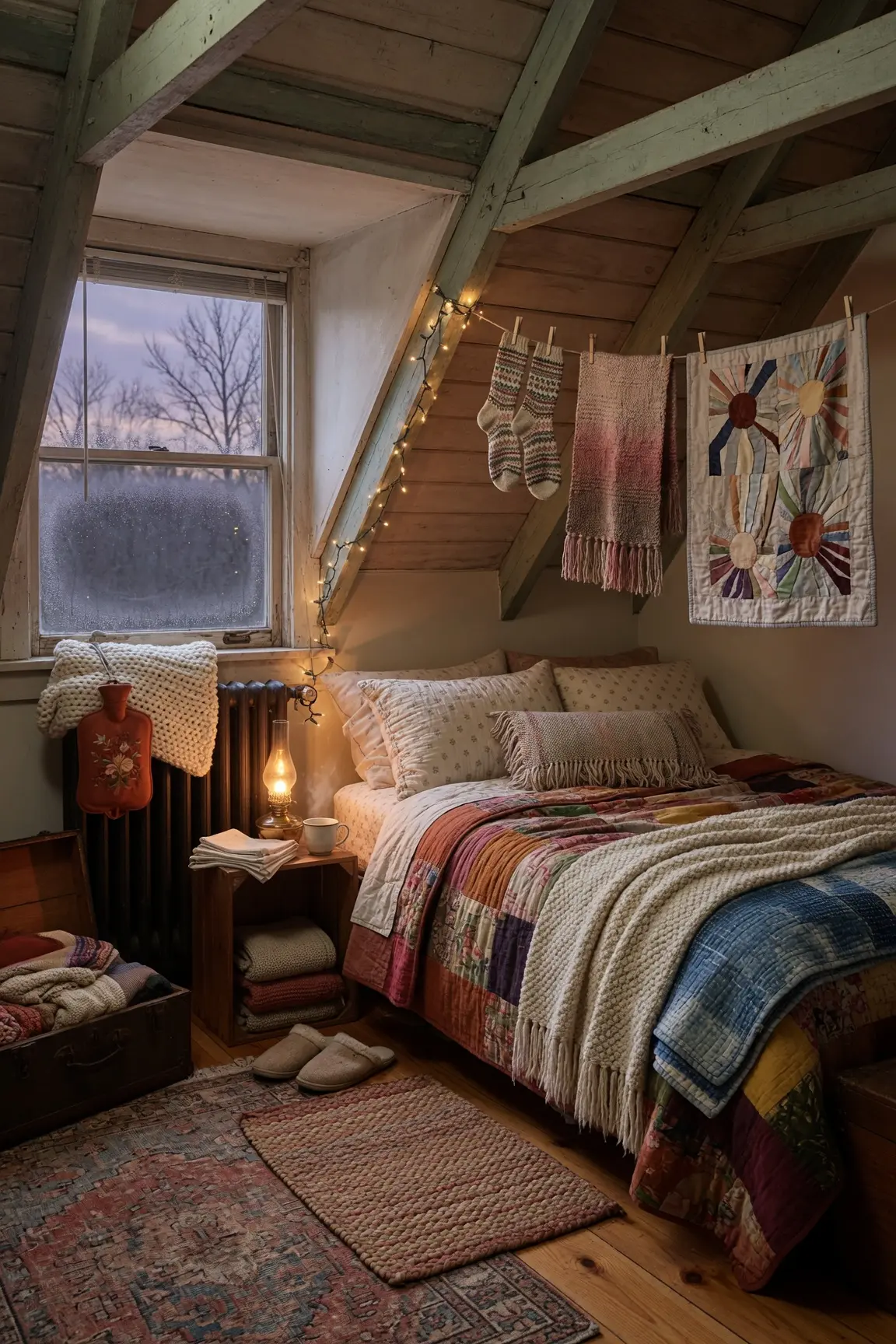
Attic bedrooms often experience more dramatic temperature swings than the rest of the house, running warmer in summer and cooler in winter due to their position directly under the roof. Layered bedding, a substantial duvet with an easily removable lighter layer underneath, helps accommodate that variability better than a single, fixed weight comforter.
A substantial area rug adds warmth underfoot, which matters more in an attic than a room with more consistent insulation from the floors below. Heavier curtains, beyond their light blocking function, help insulate dormer windows, which tend to lose or gain heat faster than a standard window lower in the house.
9. Budget Ranges for an Attic Bedroom Refresh
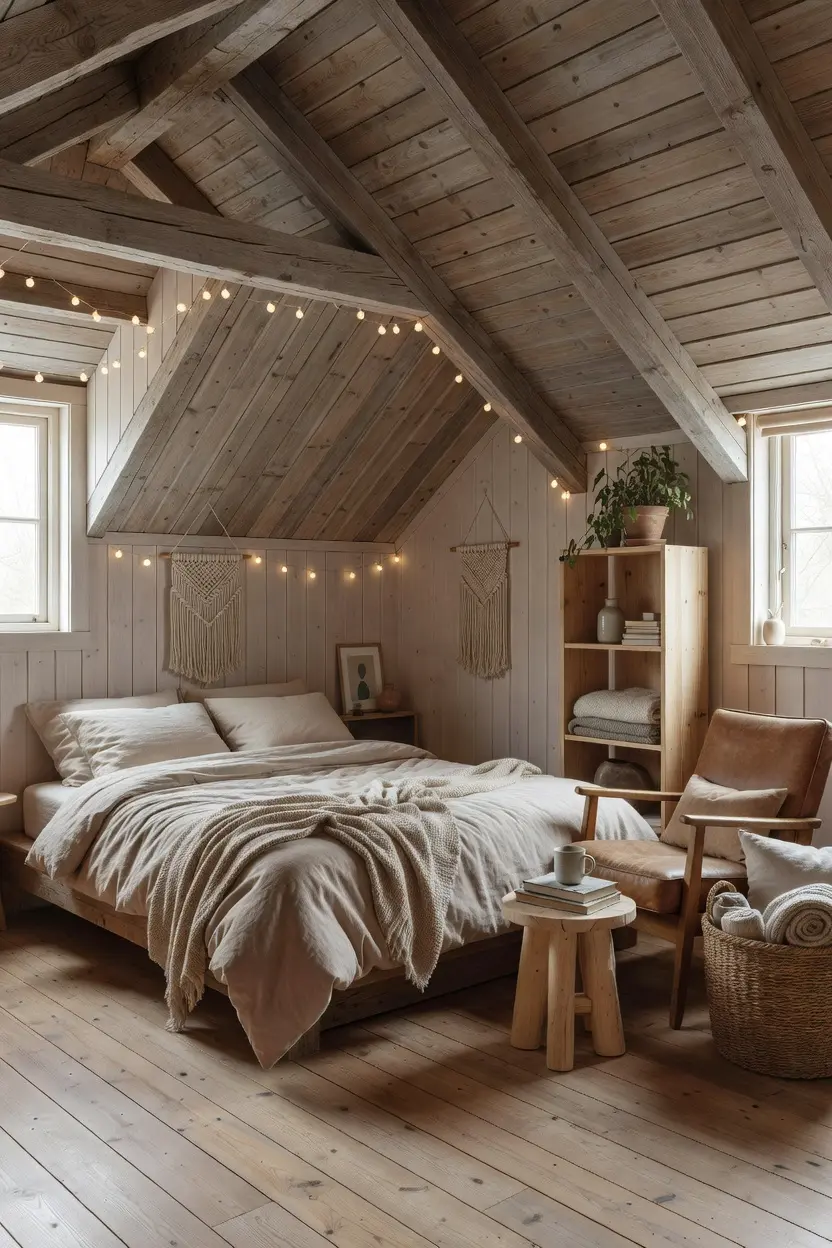
A full room repaint, including sloped ceiling sections, typically costs 100 to 200 dollars in paint and supplies for an average attic bedroom, given the additional surface area compared to a standard flat ceilinged room. Custom built in storage for low, angled sections generally runs 500 to 1,500 dollars depending on the extent of the build, while freestanding storage alternatives cost considerably less, often 100 to 300 dollars total.
A window seat cushion and curtains for a dormer window typically cost 80 to 200 dollars combined, depending on fabric choice. Layered lighting, a couple of floor and table lamps plus wall sconces, generally runs 150 to 350 dollars total. A full attic bedroom refresh, paint, storage, a dormer nook, and lighting, often lands somewhere between 700 and 1,800 dollars, with custom built ins pushing toward the higher end of that range.
10. Layout Mistakes Specific to Attic Spaces
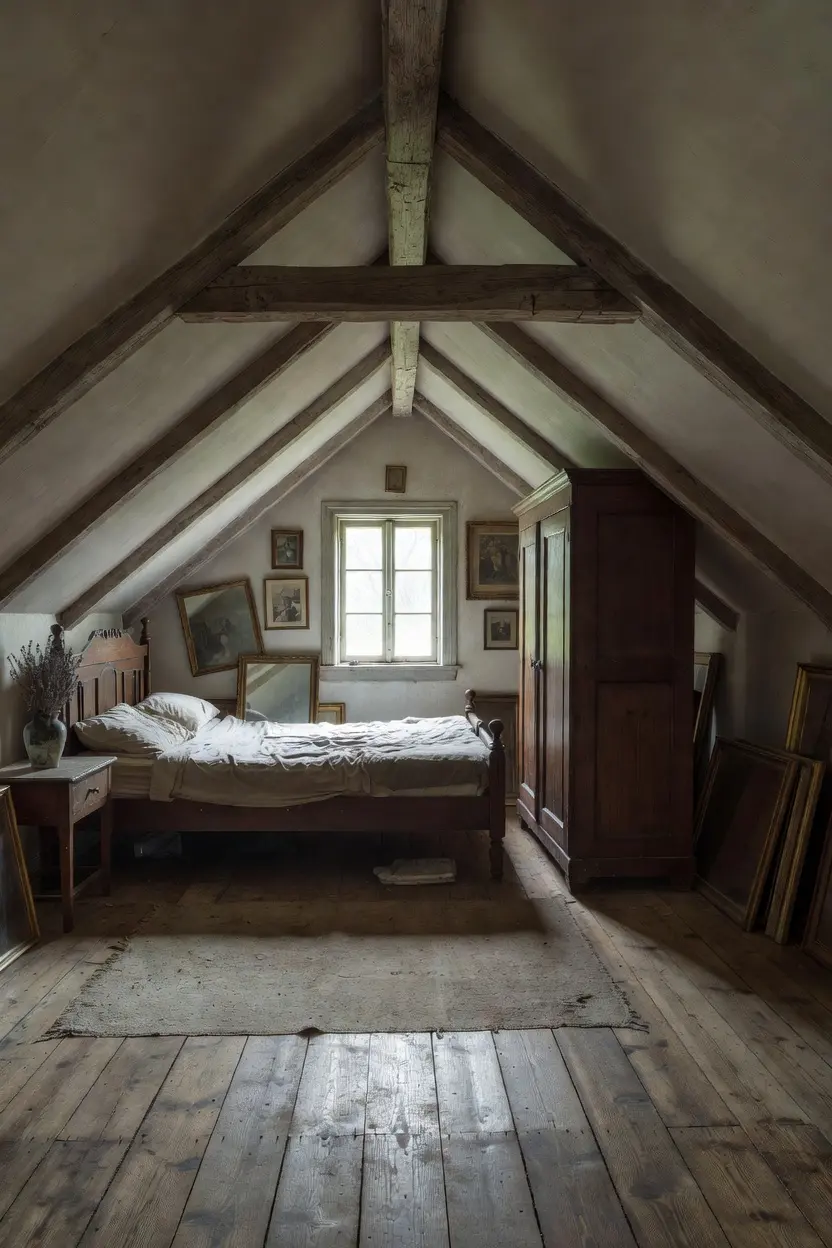
Placing tall furniture, a wardrobe or a tall bookshelf, in a low slope area is one of the most common attic bedroom mistakes, resulting in a piece that doesn’t actually fit the available headroom no matter how it’s angled. Measuring the specific spot’s usable height, not just the room’s tallest point, before buying furniture avoids this issue.
Ignoring dormer windows as a design opportunity, treating them as just another window rather than a natural nook, wastes one of an attic’s most distinctive architectural features. Underestimating temperature swings, and furnishing the room the same way a standard bedroom would be furnished, often leads to a space that’s uncomfortable during extreme weather without the right textile layers in place.
Mistakes to Avoid
- Placing tall furniture in low slope areas where it doesn’t actually fit comfortably
- Painting sloped ceiling sections a contrasting color that emphasizes how low they are
- Ignoring dormer windows as a potential nook or seating opportunity
- Relying on a single lighting plan without accounting for the room’s limited overhead options
- Skipping layered textiles needed to handle an attic’s typical temperature swings
- Forcing generic, freestanding furniture into irregular spaces better suited to custom storage
Frequently Asked Questions
Where should the bed go in a room with a heavily sloped ceiling? Under the tallest part of the ceiling generally works best, or positioned so the slope meets the wall at the foot of the bed rather than directly above where someone’s head would rest.
Should I paint sloped ceiling sections the same color as the walls? Generally yes. Painting the slope the same tone as the walls removes the visual break that can make a low ceiling feel even lower, a technique that works particularly well in attic spaces.
What’s the best way to add storage to an attic bedroom’s low, angled areas? Custom built in drawers or cabinets make the most efficient use of these spaces, though low, wide storage bins or baskets offer a similar function without requiring any construction.
How do I handle lighting in an attic bedroom without much overhead space? Floor lamps, table lamps, and wall sconces mounted on the room’s flat vertical walls typically work better than trying to force an overhead fixture onto a sloped ceiling.
Do attic bedrooms really get warmer or colder than other rooms in the house? Often yes, due to their position directly under the roof. Layered bedding, a substantial rug, and heavier curtains help accommodate those temperature swings better than a standard bedroom setup would.
Conclusion
An aesthetic attic bedroom comes down to designing with the roofline rather than against it. Position furniture according to actual usable height, treat dormer windows as a genuine feature, and layer in lighting and textiles suited to the space’s unique quirks. Done well, an attic bedroom can feel more distinct and cozy than a standard rectangular room ever could, precisely because of the architecture most people assume is a limitation.