10 Kitchen Organization Box and Clear Pantry Storage Ideas for a Neat and Stylish Kitchen
You open the pantry door and immediately close it again. Boxes are half open. Snacks are buried behind cans nobody remembers buying. This is exactly what clear pantry storage and organization boxes fix. A system built around clear bins and defined zones means you can see what you have at a glance, and it stops the slow slide back into clutter that happens with a pantry full of mismatched boxes and bags. Below are ten ways to build that system, plus the mistakes that make even a freshly organized pantry fall apart within a month.
1. Start With a Full Pantry Inventory Before Buying Anything

Before you order a single bin, pull everything out and sort it into rough categories, like snacks, baking, canned goods, and grains. This step tells you what you actually own and how much space each category really needs, rather than guessing and ending up with bins that don’t fit what you have.
Why This Step Gets Skipped and Shouldn’t
It’s tempting to jump straight to buying matching bins because that’s the fun part. But bins bought before an inventory often end up the wrong size, and you end up returning half of them. The inventory takes an hour. Reordering bins takes another two weeks.
While you’re sorting, toss anything expired or duplicated. Most pantries have at least two or three items nobody remembers buying, and clearing those out first means you’re organizing only what you’ll actually use.
2. Choose Clear Bins Over Opaque Storage

Clear acrylic or plastic bins let you see contents without opening every container, which matters most for anyone doing a quick grocery check before shopping. Opaque bins look tidy from the outside, but they hide the same problem they were meant to solve, since you still have to open several to find one item.
Clear bins also make it easier to spot when something is running low. A half empty bag of rice sitting inside an opaque box can go unnoticed for weeks, while the same bag in a clear bin is obvious the moment you glance at the shelf.
3. Group Items Into Clear Zones

Once everything is sorted, assign each category a specific shelf or section. Breakfast items together, baking supplies together, snacks together. This is what actually keeps a pantry organized long term, since everyone in the household knows exactly where to put something back.
Zoning by Frequency of Use
Put daily items, like cereal and snacks, at eye level or lower for easy reach. Save the top shelf for things you use only occasionally, like holiday baking supplies or bulk backup items, since that shelf is harder to reach regularly.
4. Pick the Right Bin Size for Each Category

A single bin size for the whole pantry rarely works well. Small bins, around 6 by 9 inches, suit spice packets and snack bars. Larger bins, closer to 12 by 18 inches, work better for bread, produce, or bulkier snack boxes. Measure your shelf depth before ordering, since a bin that’s too deep for the shelf wastes space behind it.
Stick to two or three bin sizes total rather than a different size for every category. Too much variation in size makes shelves look uneven, while a small, repeated set of sizes stacks and lines up more cleanly.
5. Add a Simple, Consistent Labeling System
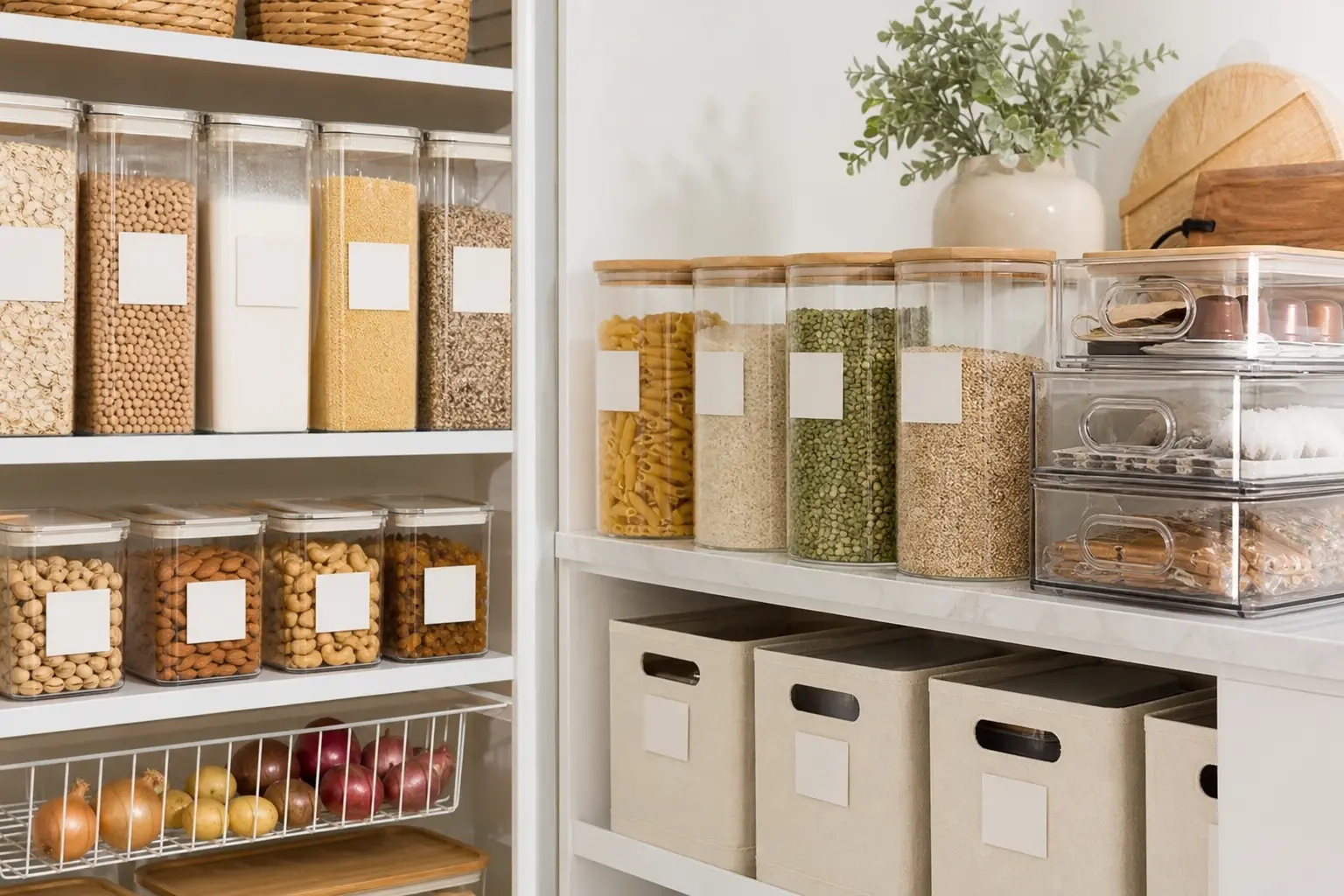
A label on each bin removes the guesswork for everyone using the pantry, not just the person who organized it. Stick to one label style throughout, whether that’s a simple printed label or a small chalkboard tag, rather than mixing several styles that end up looking inconsistent.
Include a rough date or “use by” note on decanted items if the original packaging had one. Once food leaves its original box, it’s easy to lose track of freshness, and a small label solves that in seconds.
6. Use Lazy Susans for Deep Corner Shelves

Deep pantry shelves and corner cabinets are where items disappear and get forgotten. A lazy susan, spun into reach with one hand, solves this without needing to dig around blindly. They work especially well for oils, vinegars, and condiment bottles that are awkward to stack.
A two tier lazy susan doubles the usable space on a single deep shelf, which is especially useful in a smaller kitchen where every inch of pantry space counts.
7. Decant Dry Goods Into Matching Containers

Transferring flour, rice, pasta, and cereal into matching airtight containers does two things at once. It keeps food fresher longer by sealing out air and pests, and it gives the pantry shelf a uniform, calm look instead of a shelf full of mismatched bags and boxes.
A Note on Container Material
Glass containers look great and don’t absorb odors, but they’re heavier and can break. Clear BPA free plastic containers are lighter and more practical for anyone reaching for them daily, especially on a higher shelf.
8. Add Vertical Storage for Tall, Awkward Items

Baking sheets, cutting boards, and tall bottles rarely fit neatly into a standard bin. A vertical divider or a small rack, tucked into an unused corner of the pantry, keeps these items upright and easy to pull out without them sliding around behind everything else.
This same approach works for cutting boards and trays stored in a lower cabinet near the pantry. Keeping them upright instead of stacked flat means you’re not lifting three items just to reach the one on the bottom.
9. Keep a Few Bins Empty for Overflow

A pantry organized perfectly for exactly what you own today will feel cramped the moment you bring home extra groceries. Leave one or two bins about half empty on purpose, so there’s somewhere for new items to go without disrupting the whole system.
This matters most after a big grocery trip or holiday stock up. Without that buffer space, extra items end up piled on the counter or shoved wherever they fit, which is usually how a well organized pantry starts sliding back into clutter.
10. Maintain the System With a Simple Weekly Habit

Even the best organized pantry drifts back toward clutter without some upkeep. A five minute reset once a week, putting stray items back in their bins and tossing anything expired, keeps the system working long term. This is a smaller task than a full reorganization, and it prevents the need for one.
Pick the same day each week for this reset, right before a grocery run works well, so it becomes a habit rather than an occasional chore that gets skipped when the week gets busy.
Mistakes to Avoid
- Buying bins before doing an inventory, which often leads to wrong sizes and wasted money
- Using opaque bins throughout, which hides contents and defeats the purpose of organizing
- Skipping labels, which means the system only makes sense to the person who set it up
- Filling every bin to capacity with no room for new groceries
- Choosing container material too heavy for a high shelf, making daily use awkward
Frequently Asked Questions
What size bins work best for a standard pantry? A mix works best. Smaller bins around 6 by 9 inches suit snacks and spices, while larger bins around 12 by 18 inches fit bread, produce, or bulk items.
Are glass or plastic containers better for pantry decanting? Glass looks polished and resists odors, but it’s heavier and can break if dropped. Clear BPA free plastic is lighter and often more practical for everyday reach shelves.
How often should I reorganize my pantry? A full reorganization once or twice a year is usually enough if you keep up with a five minute weekly reset to put stray items back where they belong.
Do clear bins actually save space compared to keeping original packaging? Yes, in most cases. Uniform bins stack and align more efficiently than mismatched boxes and bags, which often leave gaps and wasted shelf space.
What’s the easiest way to label pantry bins without it looking messy? Pick one label style, whether printed labels, a label maker, or small tags, and use it consistently throughout the pantry rather than mixing several styles.
Conclusion
A neat, stylish pantry isn’t really about buying the fanciest matching bins. It’s about knowing what you have, giving every category its own zone, and building in just enough overflow room for real life. Start with the inventory, then add bins and labels once you actually know what you need. The system will hold up far longer than one built around guesswork.