10 Cozy Beige Bedroom Ideas with Wood Furniture That Look Expensive
Beige walls on their own can feel unfinished, like a starting point rather than a finished room. Add the right wood furniture, and that same beige suddenly reads as warm and intentional instead. These cozy beige bedroom ideas with wood furniture focus on the pairing that actually makes beige work, not just the wall color alone.
1. Why Beige and Wood Pair So Naturally
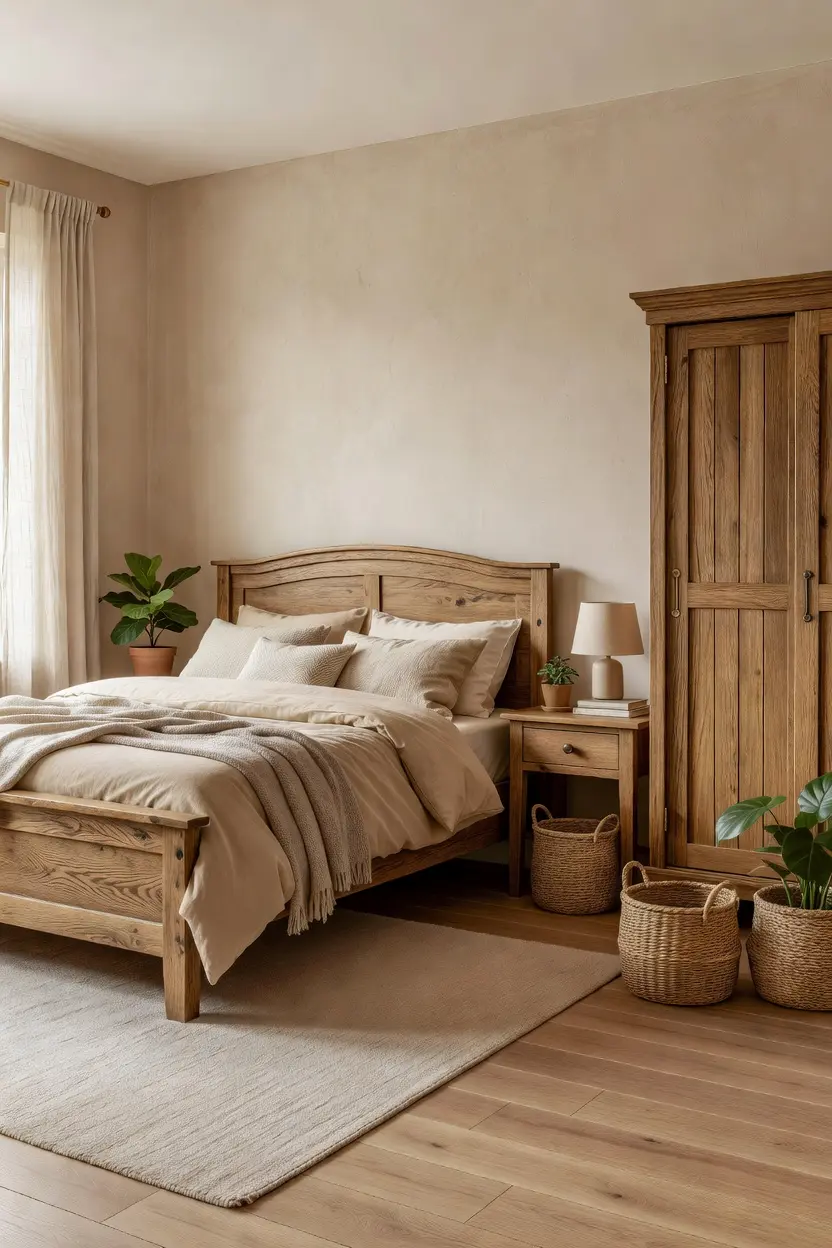
Beige and wood share a similar undertone, both lean warm rather than cool, which is exactly why they work together without much effort. Unlike beige paired with cool gray or stark white furniture, wood adds a richness that keeps the room from feeling flat.
There’s a textural benefit too. Wood grain adds visual interest that a smooth painted or laminate surface can’t replicate, and that texture matters more in a beige room than a boldly colored one, since beige relies on materials and texture to avoid feeling one dimensional.
2. Choosing a Wood Tone That Suits Your Beige Shade
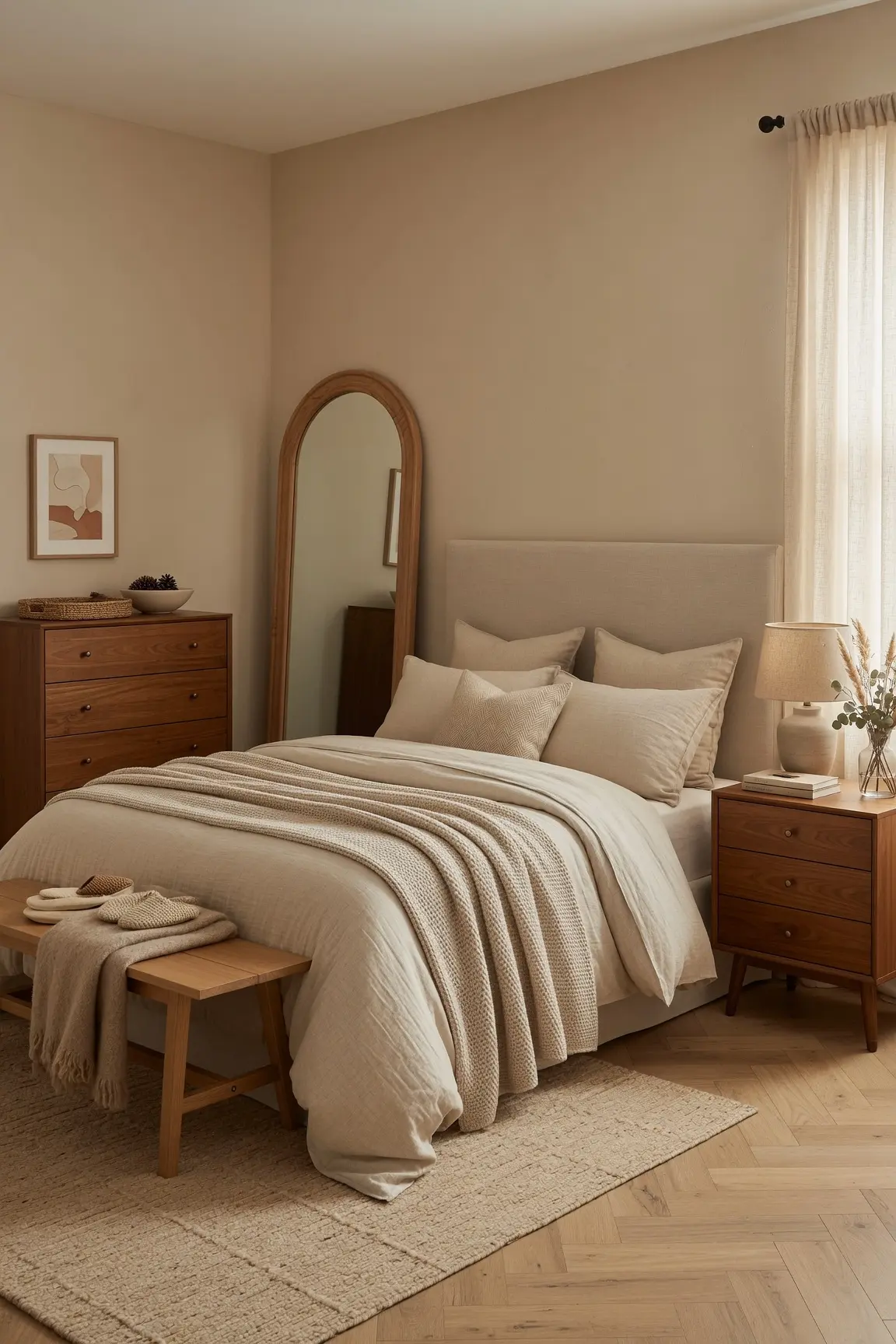
Not every wood tone pairs equally well with every beige. A beige with warm, sandy undertones tends to suit lighter woods like oak or ash, since both share that same warm base and avoid clashing. A beige leaning slightly gray or cooler pairs better with a mid tone walnut, which adds enough warmth to balance the cooler wall without fighting it.
A quick tip that helps: hold an actual wood sample, a furniture leg or a small board, up against your beige paint swatch before buying anything. Undertones that look fine separately can clash once placed side by side.
Testing the Pairing in Real Light
Beige and wood both shift depending on the light hitting them, so check the pairing under natural daylight and warm evening lamp light before committing to a full room of furniture in one tone.
3. Mixing Wood Tones Without It Looking Mismatched
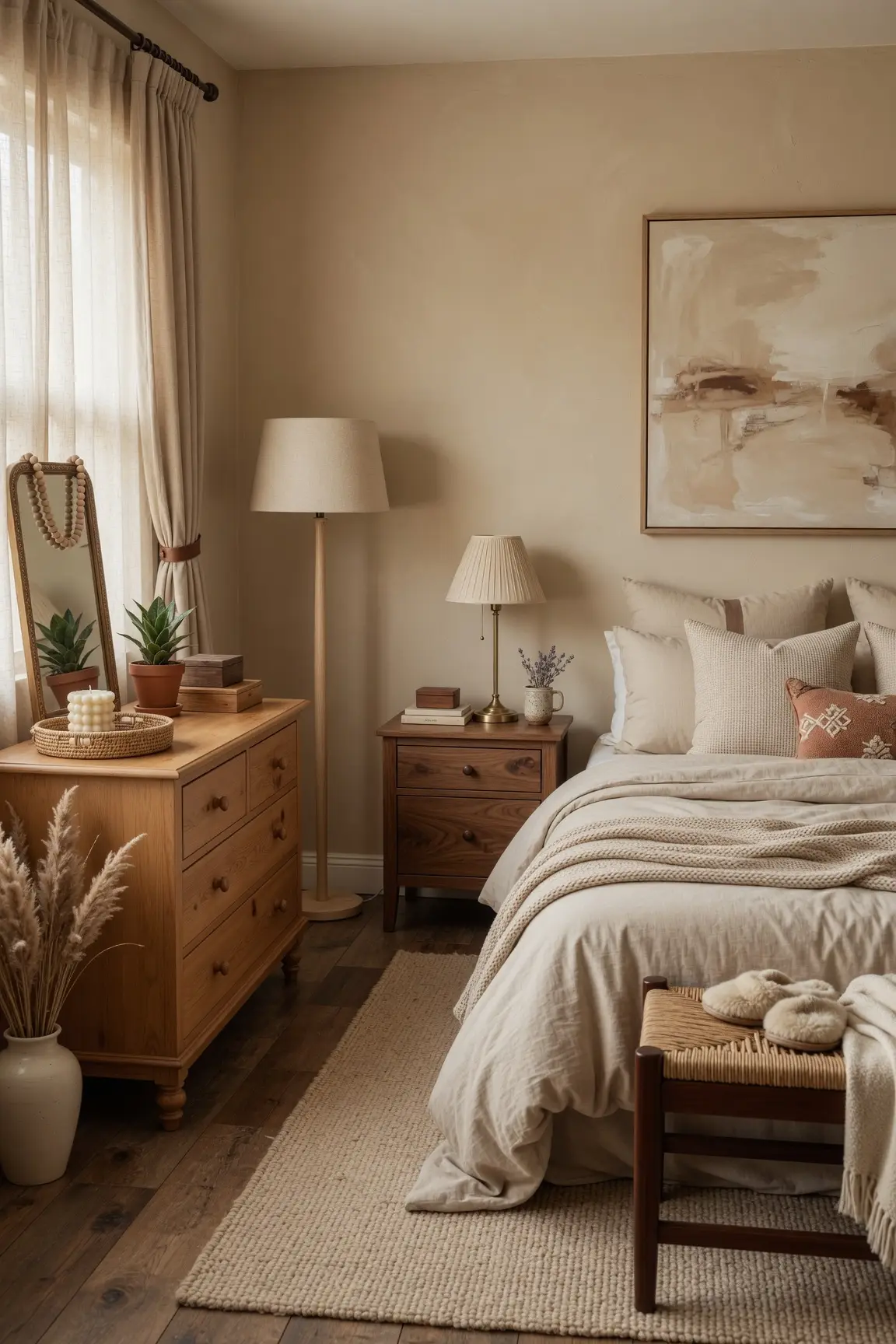
A room doesn’t need every piece of wood furniture in the exact same tone to look cohesive, though mixing tones without a plan can look accidental rather than intentional. A general rule that helps: keep no more than two distinct wood tones in the room, and let one dominate while the other plays a smaller accent role.
If the bed frame is a warm oak, a nightstand in a similar tone keeps things simple, while a dresser in a slightly darker walnut can add contrast without clashing, as long as the undertones, warm or cool, stay consistent across both. Avoiding a third or fourth wood tone keeps the room from feeling like mismatched furniture accumulated over time rather than chosen with intention.
4. Furniture Pieces Worth Prioritizing in Wood
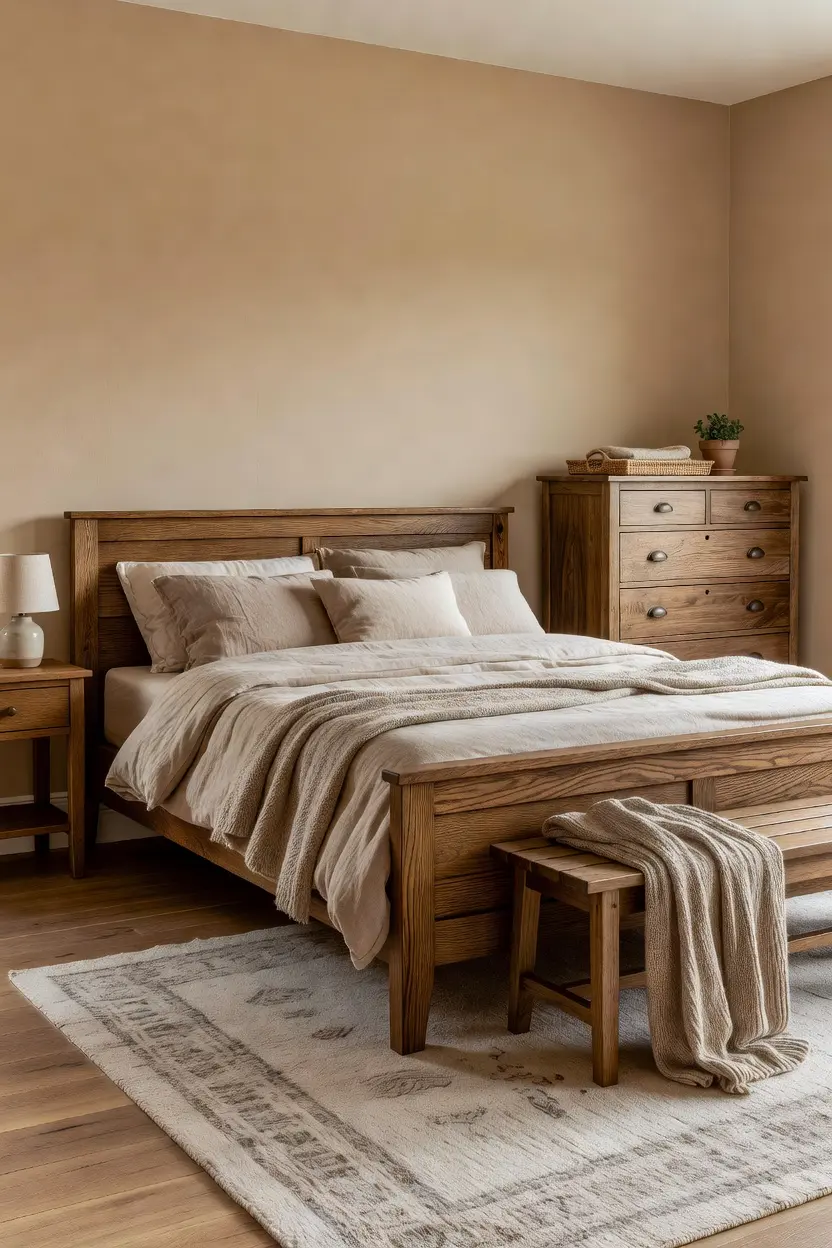
Not every piece needs to be wood to get the warm, elevated look this pairing offers. The bed frame and nightstands matter most, since they sit closest to eye level and get noticed first when someone walks into the room.
A dresser in matching or complementary wood adds to the effect, though a painted or upholstered piece can work as a break from an otherwise all wood room, as long as its color ties back to the beige or wood tones already present. Wood accent chairs or a bench at the foot of the bed round out the look without requiring a full furniture replacement if the bed and nightstands already do most of the work.
Key takeaway: prioritizing the pieces closest to eye level in wood gets most of the visual benefit without needing to replace every item in the room.
5. Bedding and Textiles That Complement the Pairing
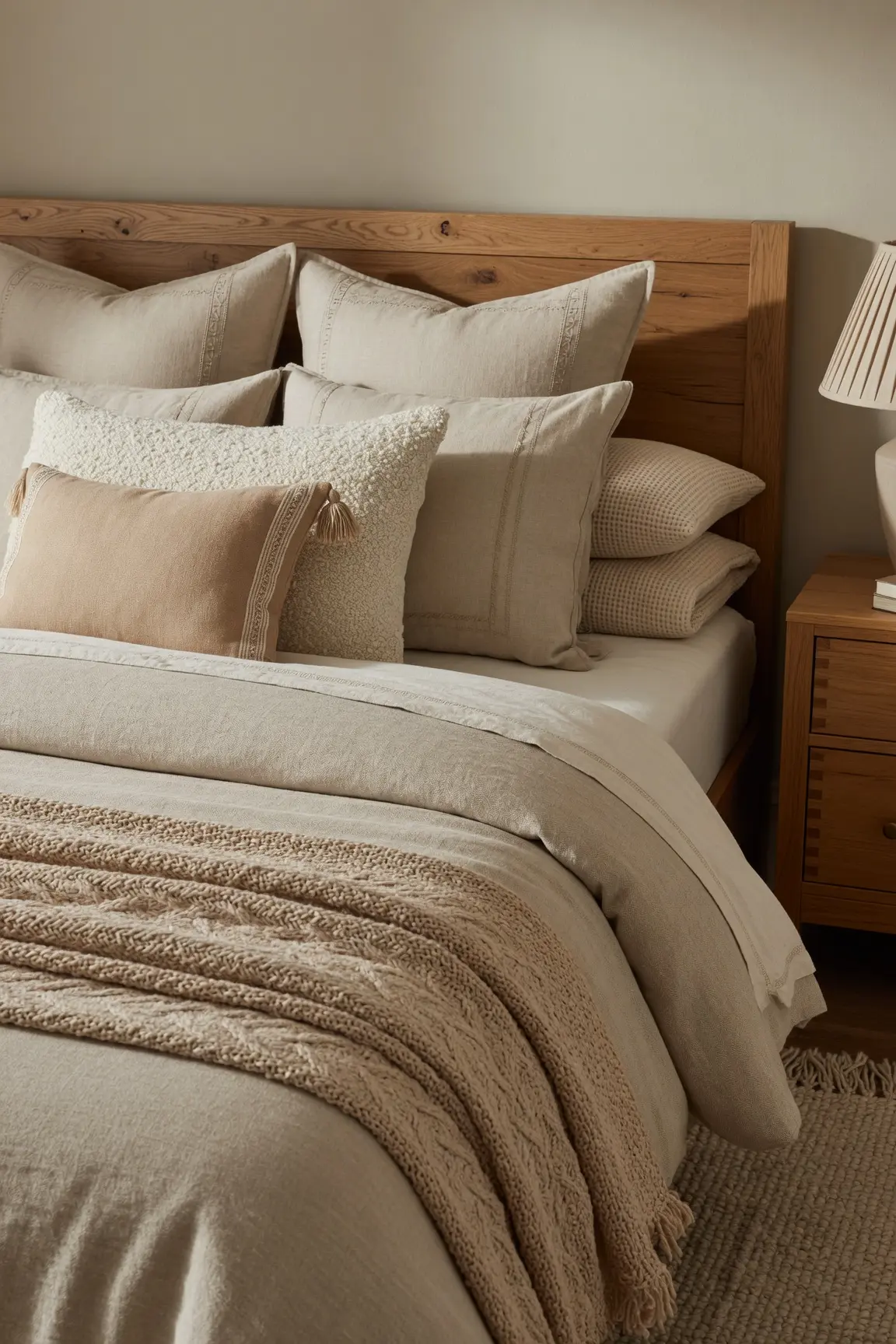
Bedding in warm white, cream, or a soft oatmeal tone lets both the beige walls and the wood furniture stand out without competing with a bolder bedding color. A linen duvet cover in particular echoes wood’s natural, slightly imperfect texture in a way smooth cotton doesn’t quite match.
Layering in a chunky knit throw or a woven textured pillow adds depth without introducing a new color that needs to be balanced against the beige and wood already in the room. Avoiding stark white or very cool toned bedding matters here, since it can create an unintentional contrast that pulls attention away from the warm palette the room is going for.
6. Lighting That Brings Out Wood Grain and Warmth
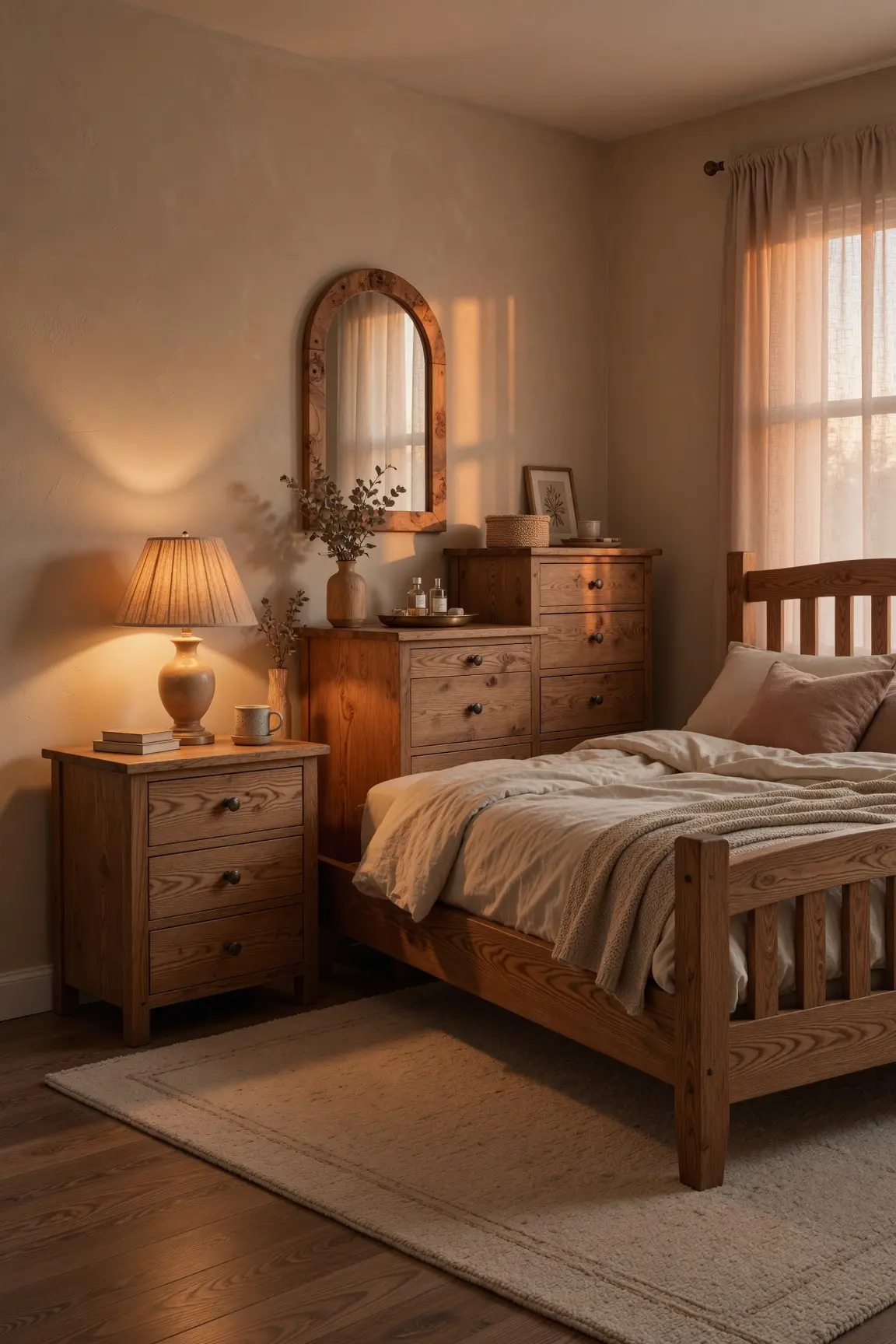
Cool toned lighting flattens wood grain and can make beige look gray rather than warm, undercutting the whole pairing. Warm white bulbs, generally 2700K to 3000K, bring out both the wood’s natural grain and beige’s warm undertone far better than a cooler bulb would.
A table lamp positioned to cast light across a wood surface, a dresser or nightstand top, highlights the grain in a way overhead lighting alone can’t. Natural light does similar work during the day, so positioning wood furniture near a window, where practical, lets daylight show off the material at its best.
7. Metal Accents That Round Out the Palette
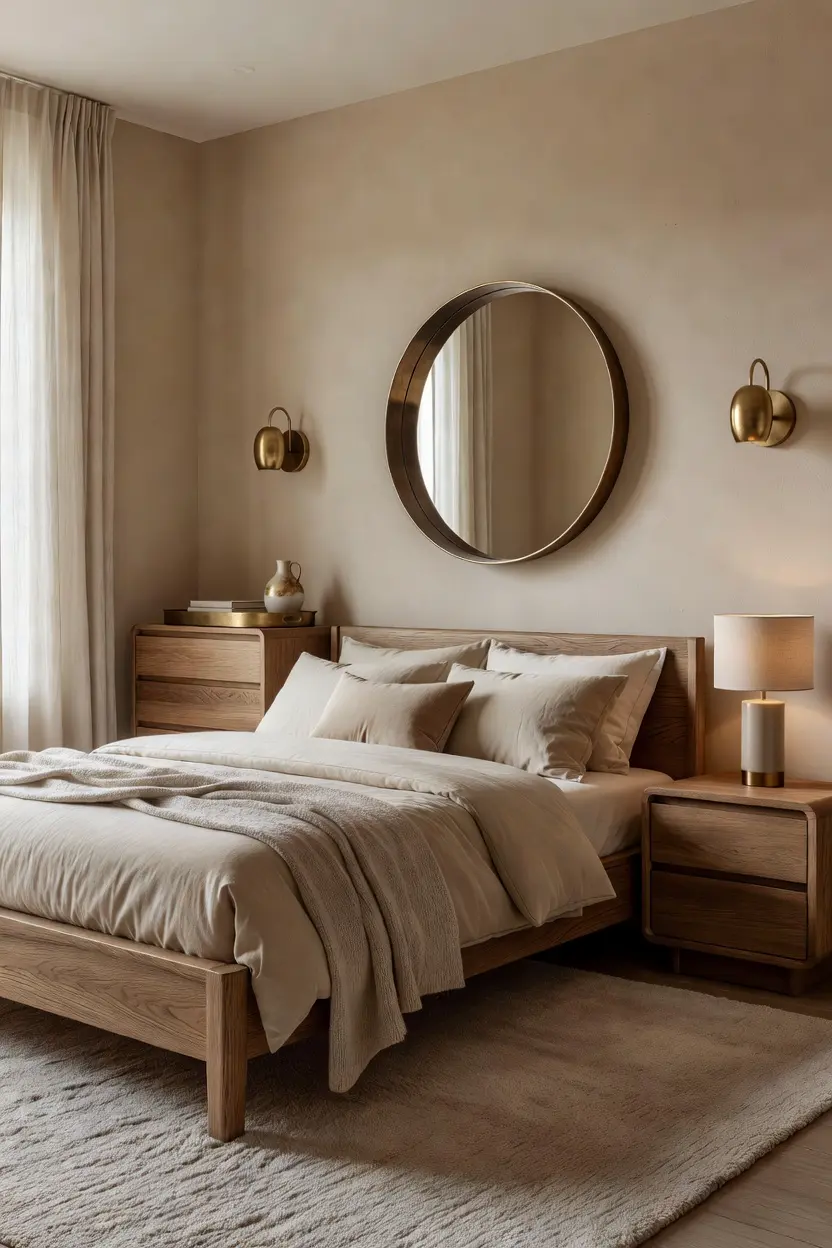
Warm metals, brass or aged gold, pair well with both beige and wood without introducing a competing color or finish. A brass lamp base, drawer pulls, or a mirror frame add a bit of shine that keeps an all warm toned room from feeling flat or overly matched.
Black metal offers a different route, adding contrast rather than continuing the warmth, which works well for anyone wanting the beige and wood pairing to feel slightly more modern rather than entirely soft and traditional. Whatever finish gets chosen, keeping it consistent across visible hardware avoids a mismatched look that can undercut an otherwise well planned room.
8. Layout Choices That Let the Wood Stand Out
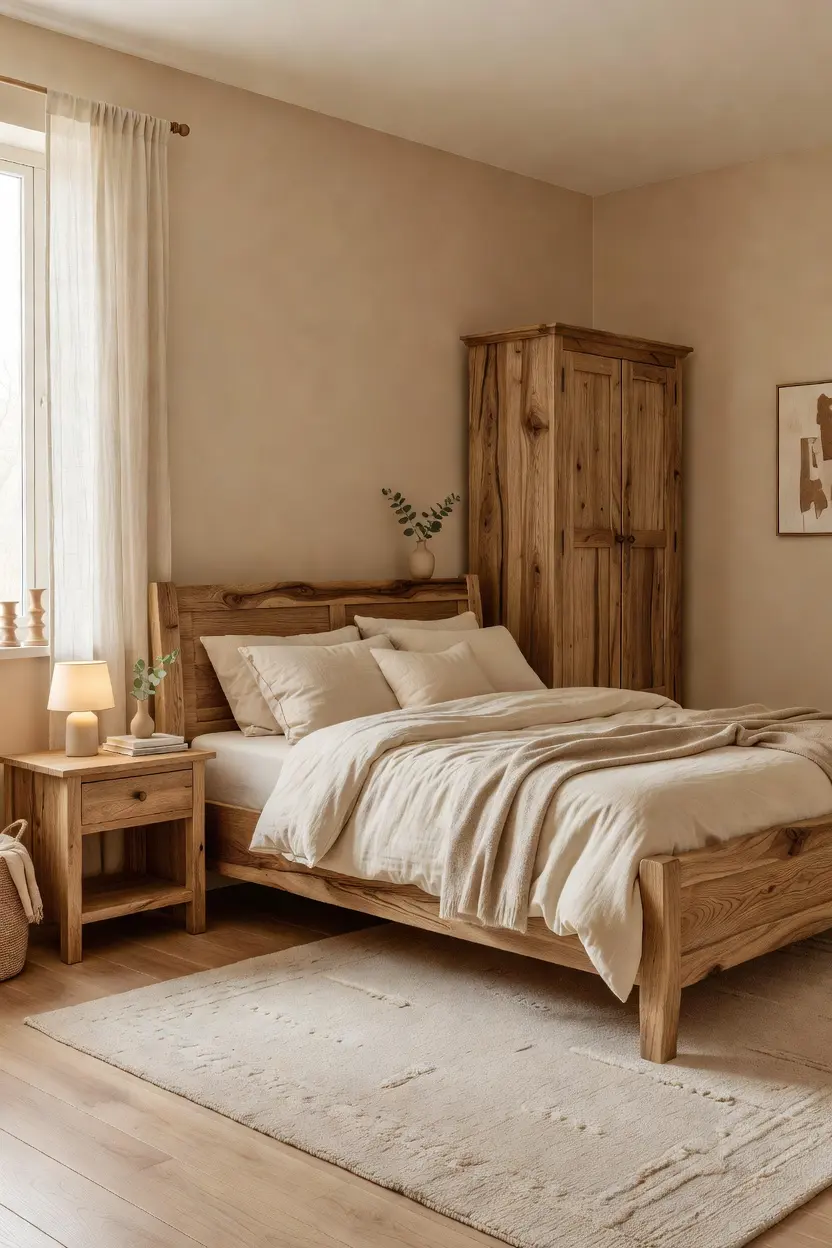
Overcrowding a room with furniture, even beautiful wood pieces, can bury the individual character of each item. Leaving some breathing room between pieces lets the eye actually appreciate the wood grain and craftsmanship rather than reading everything as one dense block of furniture.
Positioning the bed as the visual anchor of the room, with nightstands and a dresser arranged to support it rather than compete with it, keeps the layout feeling intentional. A single, well chosen wood accent piece, a bench or a small side table, often does more for the room than several smaller wood items scattered throughout.
9. Budget Ranges for Wood Furniture and Refinishing
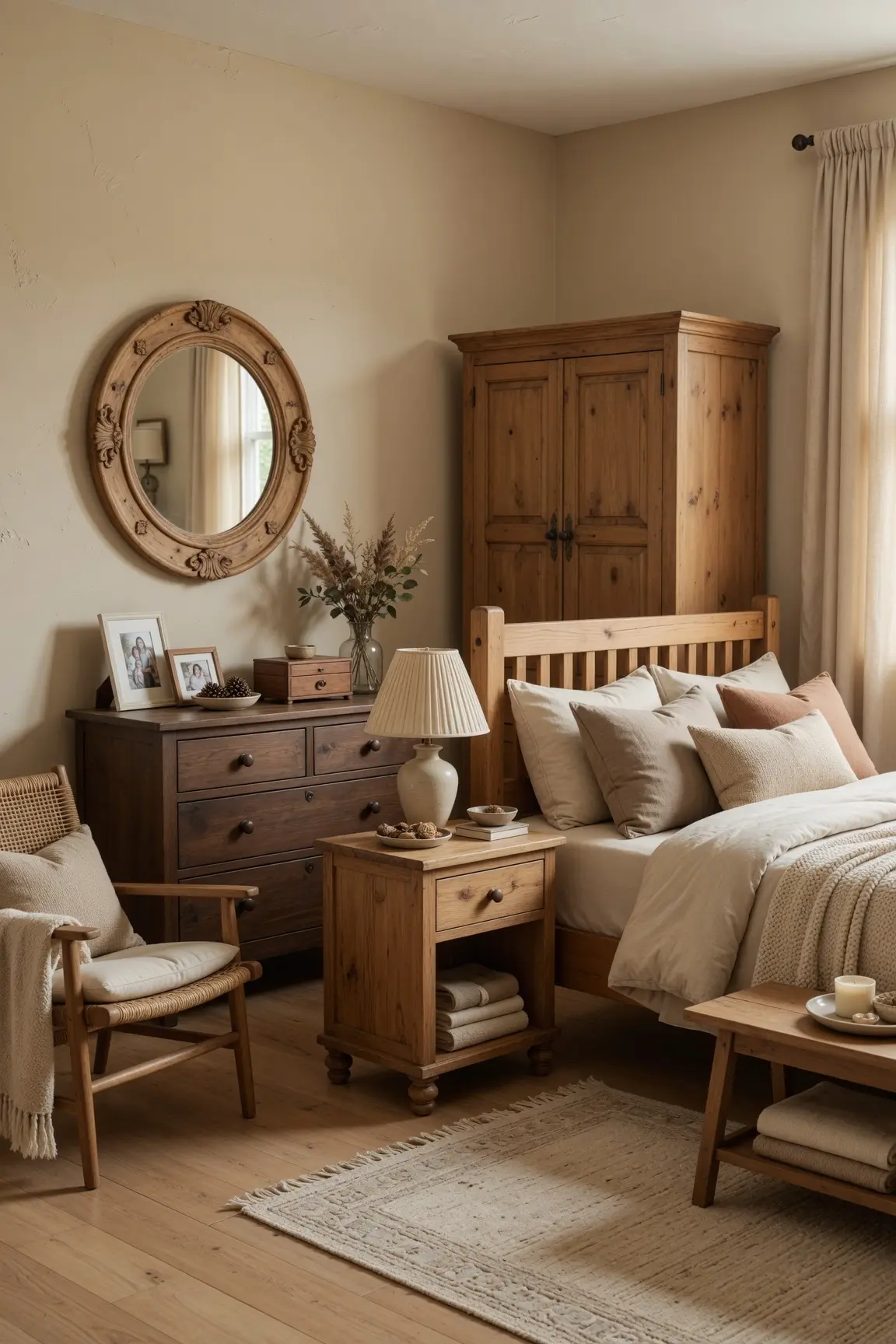
New solid wood furniture, a bed frame or dresser from a mid range retailer, typically runs 400 to 1,200 dollars per piece depending on size and wood type. Secondhand solid wood furniture, sourced from thrift stores, estate sales, or online marketplaces, often costs a fraction of that, sometimes 50 to 200 dollars for a piece that just needs refinishing.
Refinishing supplies, sandpaper, stain, and a brush, typically cost 30 to 60 dollars per piece, well under the cost of buying new furniture in a similar style. A full beige and wood bedroom refresh, combining a couple of refinished secondhand pieces with new bedding and lighting, often lands somewhere between 300 and 600 dollars total, a fraction of what an entirely new furniture set would cost.
10. Keeping Wood Furniture Looking Its Best Over Time
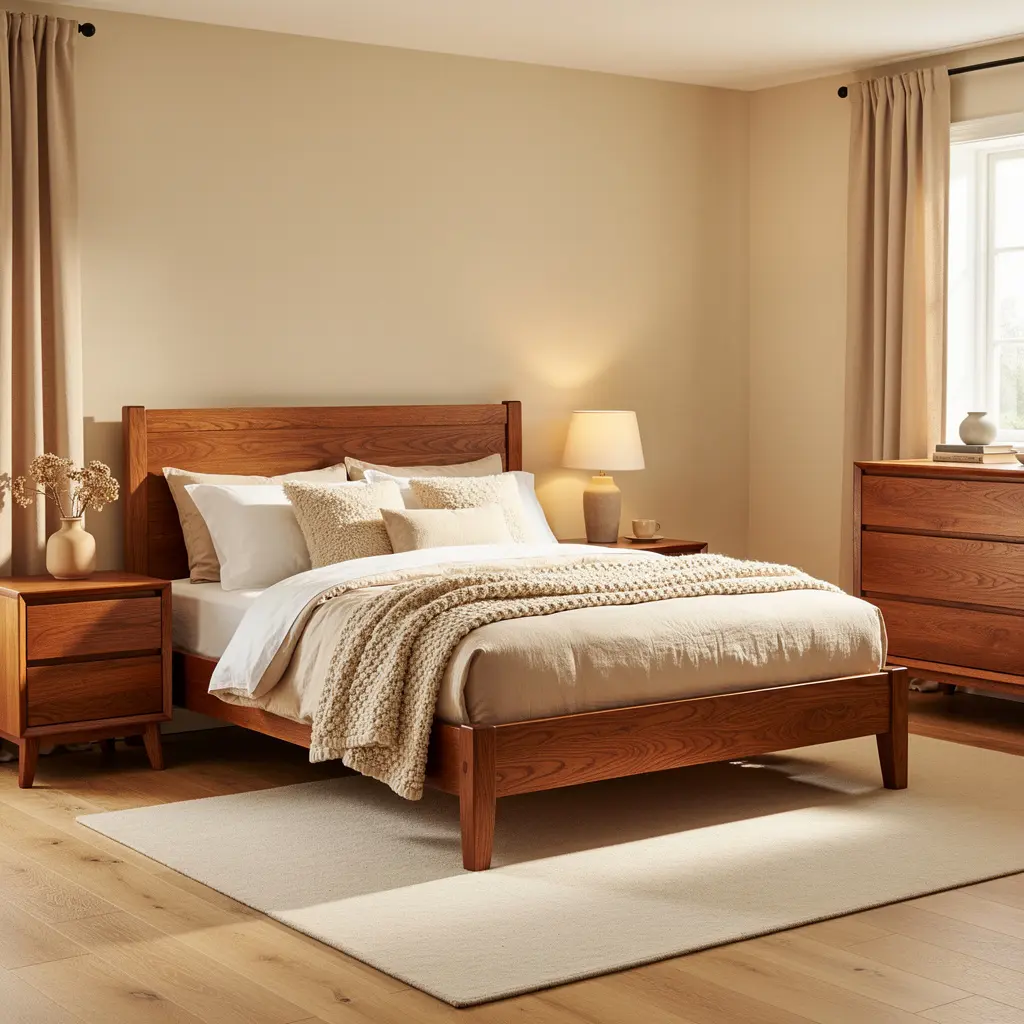
Wood furniture needs a bit more upkeep than laminate or painted pieces, but the payoff in warmth and texture is usually worth it. Dusting with a soft, slightly damp cloth rather than a dry one prevents the fine scratches a dry cloth can leave on a sealed wood finish.
Avoiding direct sunlight on wood furniture for long stretches helps prevent fading and drying out over time, particularly for furniture positioned near an uncovered window. A furniture safe wood polish or conditioner, applied every few months, keeps the finish looking rich rather than dull, especially on pieces that see daily use like a nightstand or dresser top.
Mistakes to Avoid
- Mixing more than two distinct wood tones without a clear plan
- Pairing warm beige with cool toned wood furniture that clashes rather than complements
- Overcrowding the room with furniture, burying each piece’s individual character
- Using only cool toned lighting, which flattens wood grain and beige’s warmth
- Choosing stark white or very cool bedding that fights the warm palette
- Skipping regular wood care, leading to a dull or faded finish over time
Frequently Asked Questions
Can I mix different wood tones in a beige bedroom? Yes, as long as it’s kept to two tones at most, with one dominant and one playing an accent role. Keeping undertones consistent, warm with warm or cool with cool, prevents the mix from looking accidental.
What wood tone works best with a warm beige? Lighter woods like oak or ash tend to suit a warm, sandy beige best, since both share the same warm undertone and avoid clashing with each other.
Do I need all new wood furniture to get this look? Not necessarily. Refinishing existing furniture or sourcing solid wood pieces secondhand often achieves the same warm, elevated look for a fraction of the cost of buying everything new.
What metal finish pairs best with beige and wood? Brass or aged gold continues the room’s warm tone, while black metal adds more contrast for a slightly more modern feel. Both work, depending on the overall style you’re going for.
How do I keep wood furniture from looking dull over time? Dust with a slightly damp cloth rather than a dry one, avoid long stretches of direct sunlight, and apply a furniture safe wood polish or conditioner every few months to keep the finish looking rich.
Conclusion
A cozy beige bedroom with wood furniture works because the two materials share the same warm foundation, letting texture and grain do the work that color alone can’t. Choose a wood tone that suits your beige shade, keep the palette to no more than two wood tones, and let warm lighting bring out the natural grain. Done well, a beige and wood bedroom can look far more expensive than the actual cost of putting it together.