10 Cozy Blush Pink Bedroom Ideas for Couples That Feel So Romantic
Blush pink has a reputation problem in shared bedrooms. One partner pictures something soft and romantic, the other pictures a nursery, and the color gets vetoed before it gets a real chance. That reputation comes down to shade and pairing, not the color itself. These cozy blush pink bedroom ideas for couples show how to keep the look romantic and warm without it reading as overly sweet or feminine to either partner.
1. Why Blush Pink Works for a Couples Bedroom
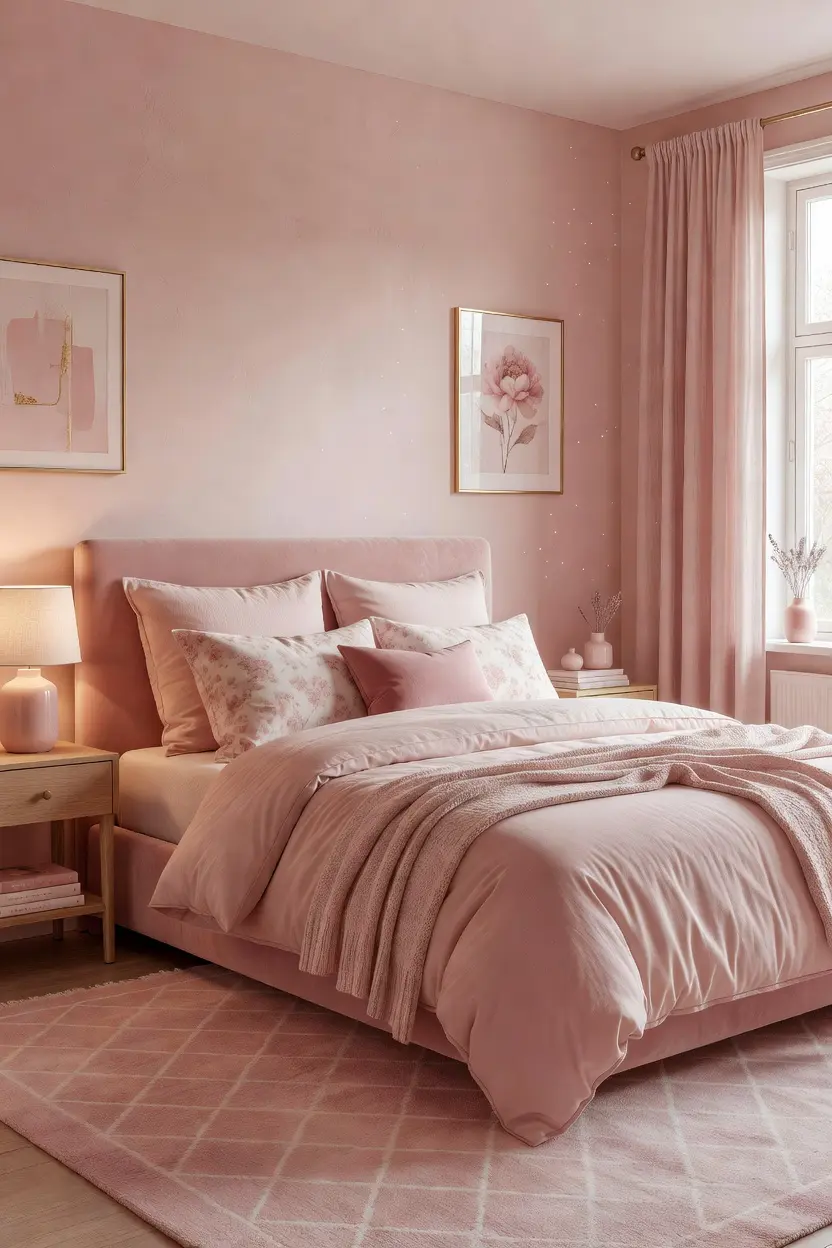
Blush sits in a strange spot on the color wheel, warm enough to feel romantic, muted enough to avoid feeling loud. Unlike a brighter bubblegum pink, a true blush leans closer to a warm neutral, which is exactly why it can work in a shared space without alienating a partner who isn’t drawn to pink as a color on its own.
There’s also a psychological angle worth mentioning. Warm, muted tones tend to read as calming and intimate rather than energizing, which suits a bedroom’s purpose better than a bold, saturated color would.
2. Choosing a Blush Shade That Feels Balanced, Not Sweet

A dusty, slightly muted blush, closer to a warm terracotta pink than a true pastel, reads as sophisticated rather than sweet. Brighter, cooler pink tones tend to push the room toward feeling more feminine and less balanced for a shared space.
North facing bedrooms, with cooler indirect light, generally suit a warmer, slightly deeper blush better, since cooler light can pull a pale pink toward gray or make it look washed out. South facing rooms with more direct sun have a bit more flexibility and can handle a lighter or slightly cooler blush without it feeling flat.
A quick tip that helps: paint a large sample directly on the wall, at least two feet wide, and have both partners look at it under daytime and evening light before making a final decision. What reads as too sweet in the mind can look completely different once it’s actually on the wall.
3. Pairing Blush With Materials That Feel Grown Up

The fastest way to keep blush from feeling overly soft is pairing it with materials that carry more visual weight. Black metal bed frames, matte black hardware, or dark wood furniture ground the color and keep the room from tipping too far into delicate territory.
Leather accents, a headboard, a bench at the foot of the bed, or even a leather bound tray on the dresser, add a structured, slightly masculine texture that balances blush’s softness. Structured, tailored bedding, rather than a heavily ruffled or overly delicate style, keeps the overall look feeling more like a grown up bedroom than a themed room.
Avoiding an Overly Sweet Look
Skip pairing blush with other pastel colors across the whole room. One dominant color, blush, paired with neutrals and darker accents, reads as more intentional than a full pastel palette, which can tip the room toward feeling like a nursery rather than a shared adult bedroom.
4. Paint Placement Ideas That Keep the Look Subtle
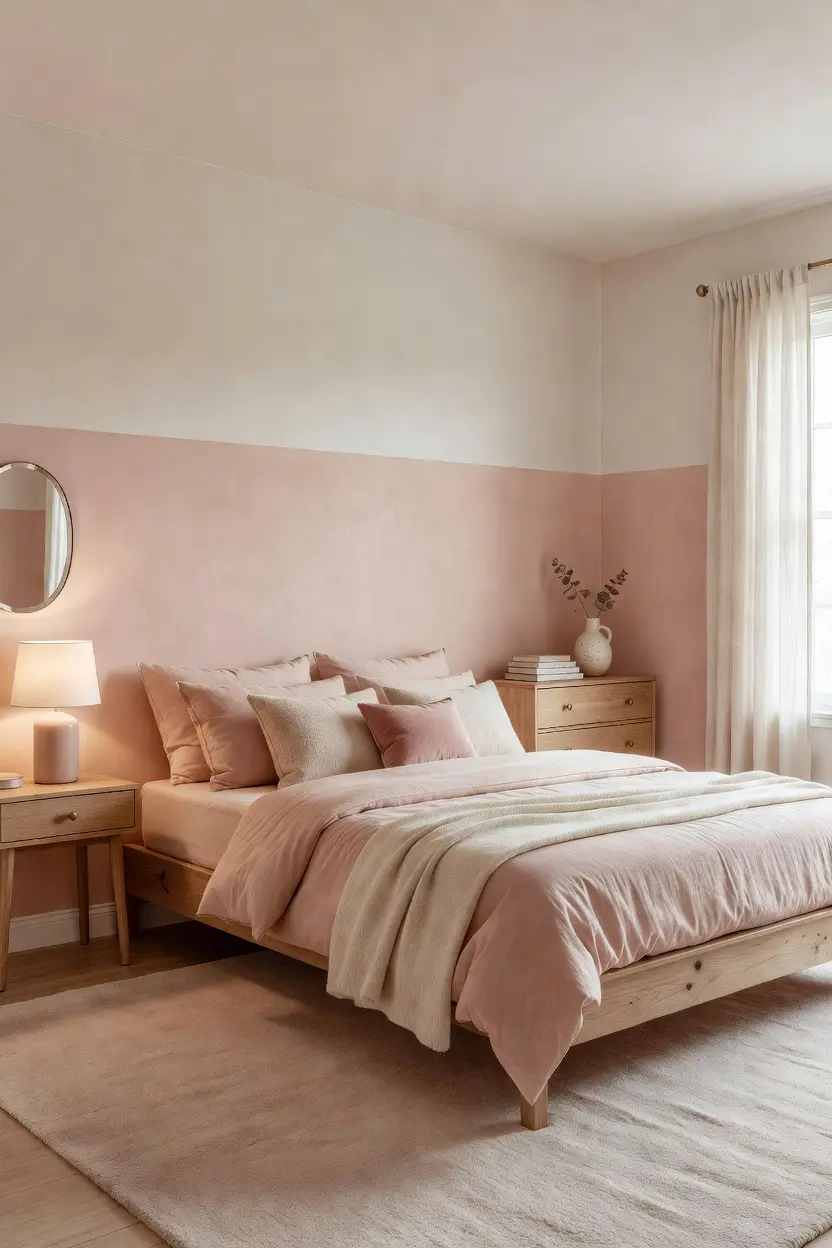
A full accent wall behind the headboard introduces blush without wrapping the entire room in it, which tends to feel like a safer starting point for a couple still deciding how much color they actually want. For a more subtle approach, painting just the lower half of the wall, below a chair rail or a painted line, brings in the color at a smaller, less committed scale.
Color drenching an entire small room in blush is a bolder choice, and it works best paired with dark furniture and metal accents that keep the room from feeling one dimensional. This approach suits a couple who’s already confident about the color rather than one still testing it out.
Budget for Paint
A gallon of quality paint typically runs 35 to 60 dollars, and most bedrooms need one to two gallons. A single accent wall usually costs under 40 dollars in paint alone.
5. Bedding and Textile Choices for a Romantic Feel

Bedding in a warm white, charcoal, or deep terracotta lets a blush wall stand out without the bed itself competing for attention. Velvet throw pillows, in a deep burgundy or forest green, add a rich accent color that balances blush without introducing another pastel to the mix.
A weighted, textured blanket in a neutral tone adds a cozy, tactile element that suits a romantic bedroom without leaning too sweet. Avoiding lace, ruffles, or overly delicate trim on bedding keeps the overall feel more sophisticated and less like a themed room built around one color alone.
6. Lighting That Sets a Romantic Mood

Warm white lighting, generally 2700K to 3000K, matters more in a romantic bedroom than almost any other room, since cool lighting can make blush feel clinical rather than cozy. Overhead lighting alone rarely creates the mood a couple’s bedroom benefits from, so layering in table lamps on both nightstands adds warmth and a sense of balance to the space.
A dimmer switch, where the wiring allows it, lets the room shift from bright and functional to soft and romantic without needing to swap out any bulbs or fixtures. Candles, used safely and away from bedding or curtains, add a warm, flickering light that suits a blush palette especially well for evenings.
7. Furniture and Wood Tones That Ground the Palette
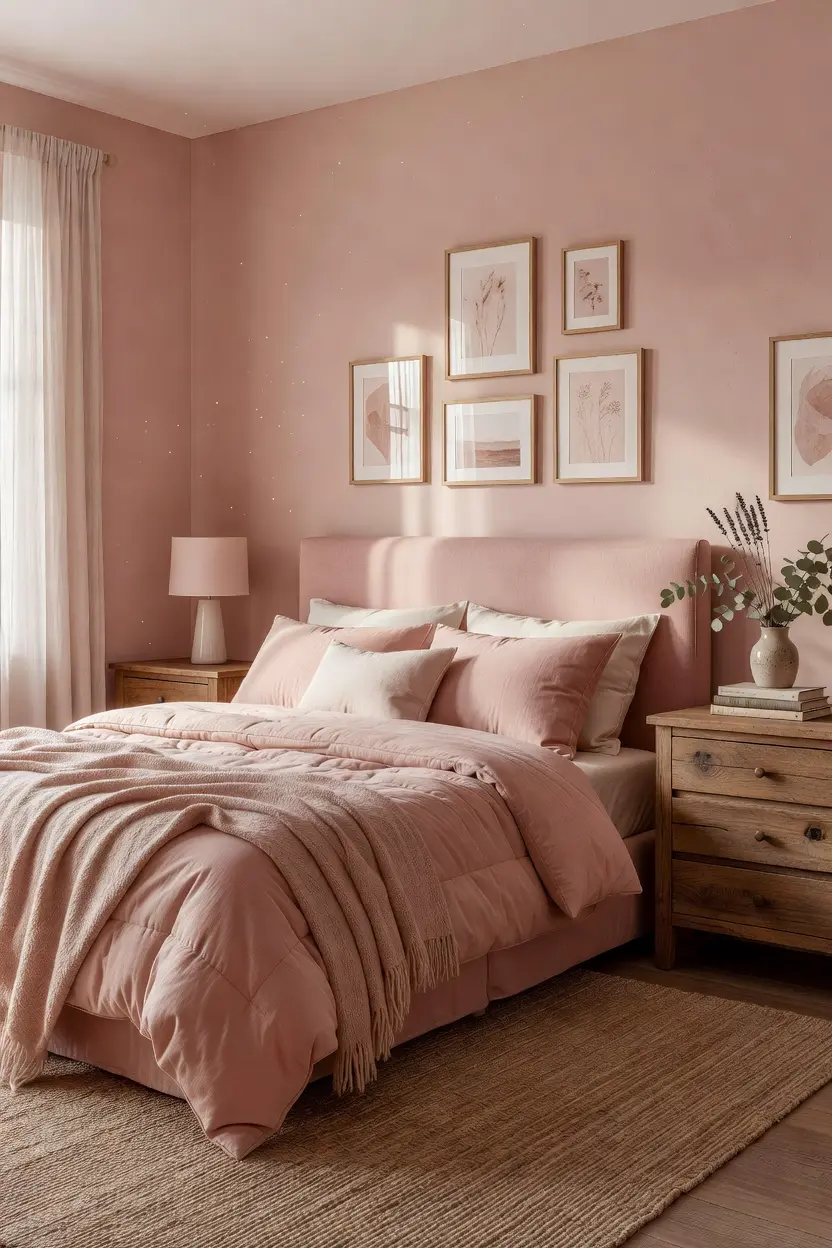
Dark or deeply stained wood furniture, a walnut dresser or a dark oak nightstand, grounds a blush palette and keeps it from feeling too light or airy overall. This pairing tends to suit couples who want the romantic feel of blush without the room skewing too soft or delicate.
For a slightly softer approach, warm oak furniture still works well, especially paired with black metal accents that add contrast and structure. Whatever wood tone gets chosen, consistency across the major furniture pieces, the bed frame, dresser, and nightstands, keeps the room feeling cohesive rather than mismatched.
Key takeaway: the furniture in a blush pink bedroom does as much work balancing the palette as the wall color itself.
8. Balancing the Palette So It Doesn’t Feel One Sided
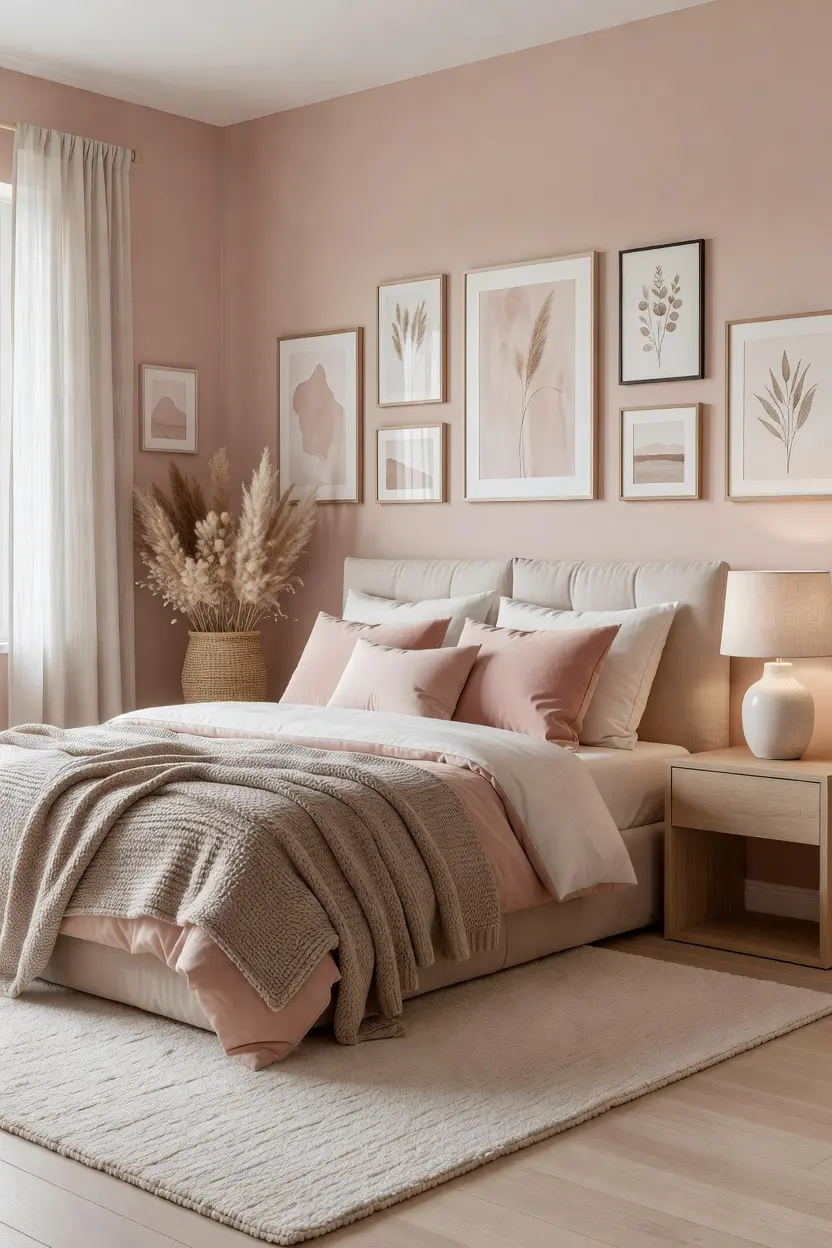
A couples bedroom works best when both partners see something they connect with in the room, not just one dominant aesthetic. Balancing blush with a partner’s preferred materials, leather, dark wood, black metal, or minimal decor, keeps the space feeling shared rather than like one person’s room the other happens to sleep in.
Artwork is a low commitment way to add that balance, a black and white photograph or a piece with strong graphic lines can offset a softer wall color without requiring any permanent changes. Keeping the overall styling relatively minimal, rather than heavily decorated, tends to suit shared spaces better, since it leaves room for both partners’ taste rather than leaning fully into one direction.
9. Budget Ranges for a Full or Partial Blush Refresh
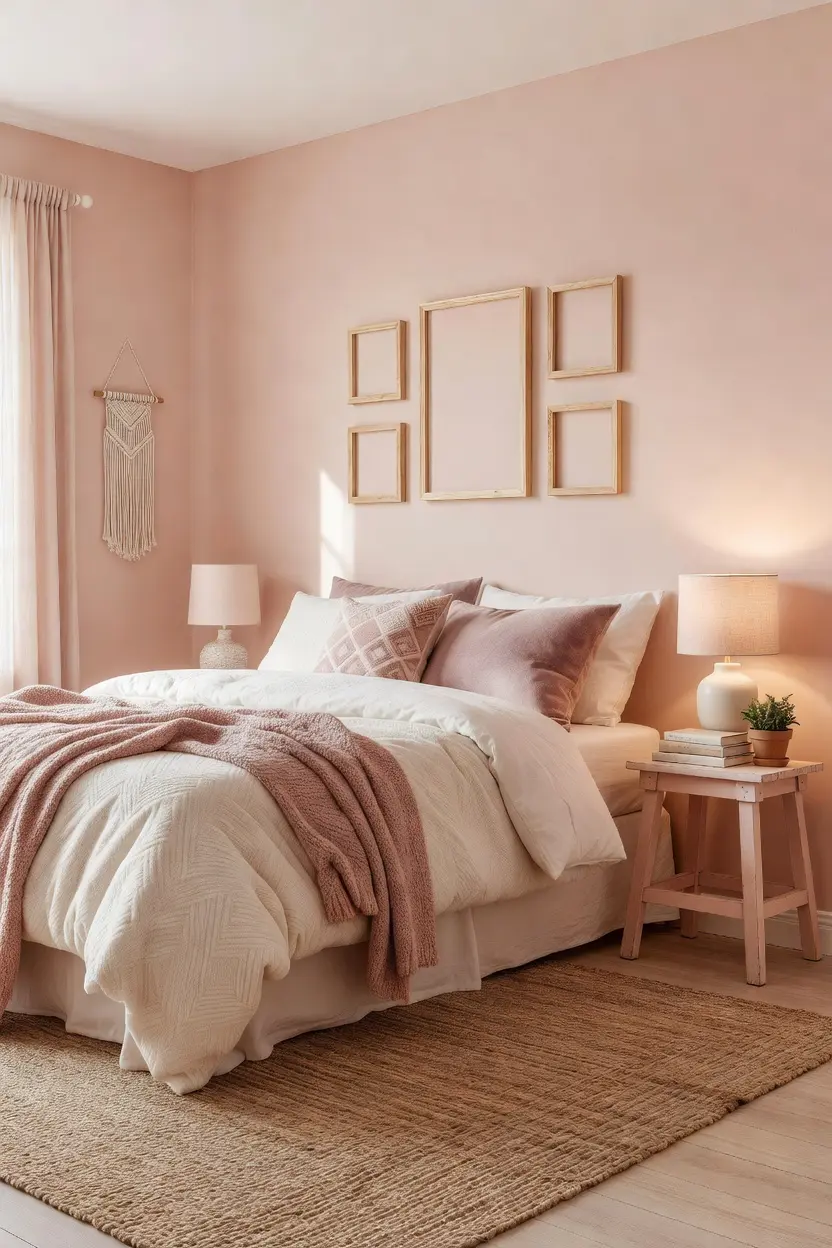
A full room repaint, walls and trim included, done as a DIY project, typically costs 80 to 150 dollars in paint and supplies for an average bedroom. A single accent wall runs closer to 30 to 50 dollars.
New bedding in a coordinated palette, a duvet cover, pillow shams, and a throw, generally runs 100 to 250 dollars depending on material, though secondhand and sale finds can bring that down. Dark wood or black metal furniture pieces vary widely, but a couple of refinished secondhand pieces, sanded and restained, often cost 40 to 100 dollars each in supplies rather than several hundred for new furniture. A full blush refresh, paint, bedding, and a furniture refresh, often lands somewhere between 250 and 500 dollars total.
10. Small Details That Reinforce the Romantic Feel
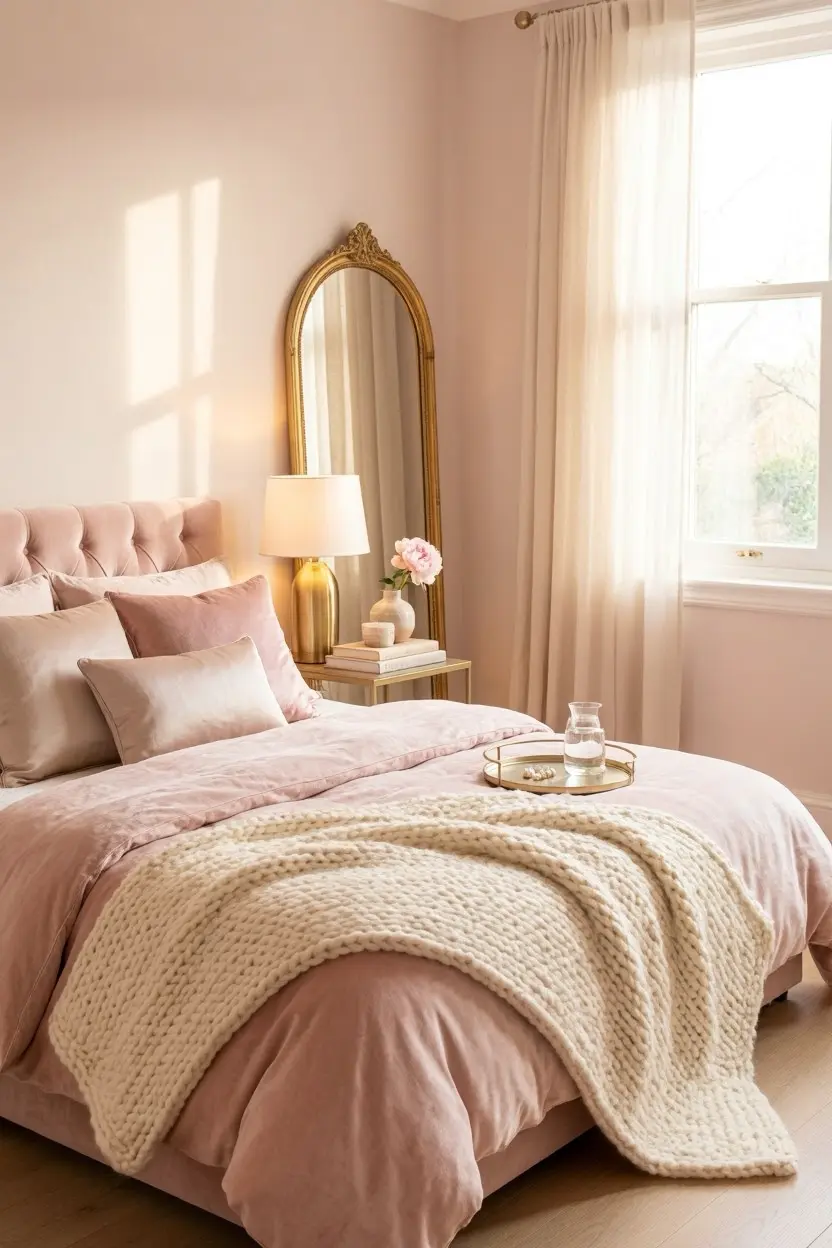
A couple of well chosen candles or a diffuser in a warm scent add a sensory layer that reinforces the romantic mood beyond just the visual palette. Fresh or dried flowers, styled simply rather than in an overly elaborate arrangement, tie into blush’s soft, natural undertone without adding another color to manage.
Personal touches, a shared photo, a small tray with items both partners actually use, matter more in a couples bedroom than in a solo space, since the room needs to reflect two people rather than one. Keeping nightstands balanced, similar styling on both sides rather than one side more decorated than the other, reinforces the shared feel of the room in a small but noticeable way.
Mistakes to Avoid
- Choosing a bright, cool toned pink that reads as more juvenile than romantic
- Pairing blush with other pastels across the whole room, which can feel like a nursery
- Skipping darker, structured materials that ground the palette
- Relying only on overhead lighting instead of layering in warm lamps or candles
- Styling only one nightstand, leaving the room feeling unbalanced between partners
- Overdecorating with ruffles or overly delicate details that skew too sweet
Frequently Asked Questions
How do I convince a partner who’s hesitant about pink to try a blush bedroom? Start with a single accent wall or a few textiles rather than a full room commitment, and pair the color with materials your partner already likes, dark wood, leather, or black metal, so the room feels balanced rather than fully pink.
What makes blush pink feel grown up instead of girly? A muted, slightly dusty shade paired with dark or structured materials, rather than a bright, cool pink paired with other pastels, keeps the look sophisticated and suited to a shared adult bedroom.
What colors pair well with blush pink in a bedroom? Charcoal, deep terracotta, forest green, and burgundy all work well as accent colors, adding richness and contrast that keeps an all pink room from feeling flat or one dimensional.
Should both partners be involved in choosing the blush shade? Yes, ideally. Since undertone and saturation affect how sweet or sophisticated the color reads, having both partners look at samples under real lighting helps avoid a shade one person ends up unhappy with.
Is blush pink a good long term color choice for a couples bedroom? A muted, dusty blush tends to hold up better over time than a bright, trend driven pink, since it functions closer to a warm neutral and pairs easily with furniture and decor changes down the line.
Conclusion
A cozy blush pink bedroom for couples works best when the color gets balanced rather than left to carry the whole room on its own. Choose a muted, warm shade, pair it with darker wood or metal accents, and keep the styling shared between both partners instead of leaning entirely into one aesthetic. Done thoughtfully, blush pink can feel romantic and warm without either partner feeling like they’re sleeping in someone else’s room.