10 Aesthetic Wall Decor Ideas for a Cozy and Modern Home
A blank wall above a sofa or at the end of a hallway can sit untouched for months simply because filling it feels harder than it should be, and that hesitation is the real problem behind most searches for aesthetic wall decor ideas. The fix isn’t buying one big statement piece and hoping it works. It’s usually a layered approach: a gallery wall here, a floating shelf there, a woven hanging adding texture somewhere else. Picture a mixed frame gallery arrangement beside a small shelf holding a candle and a trailing plant, with one woven textile piece breaking up all the straight edges. That layered approach is what this article walks through.
1. Measure the Wall Before Choosing Anything
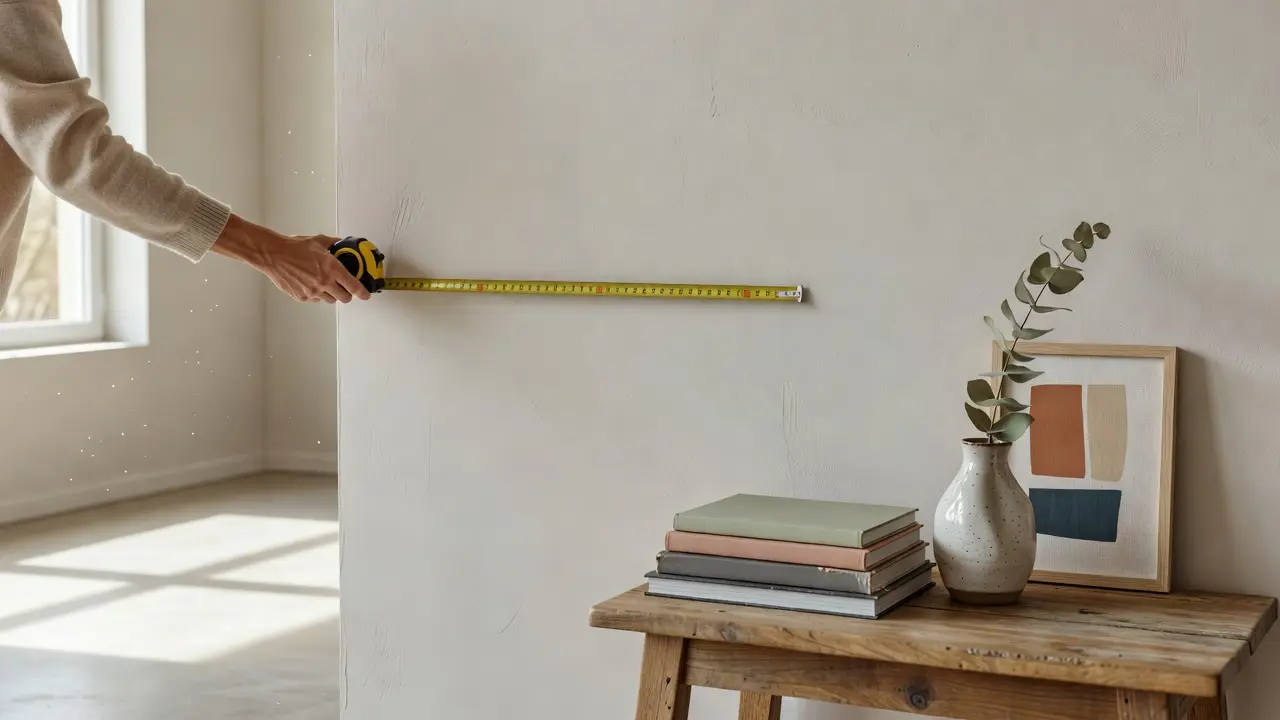
Before buying frames or shelving, measure the actual wall space and note any obstacles, outlets, light switches, or trim. A rough guideline for art placement is filling roughly two thirds to three quarters of the available wall width above a piece of furniture like a sofa or console table.
Why Skipping This Step Backfires
A single small frame on a large wall looks lost. An oversized piece on a narrow wall looks cramped. Measuring first, even with a simple tape measure and a sketch, prevents a return trip to exchange something that doesn’t fit the space.
2. Build a Gallery Wall With Mixed Frame Styles
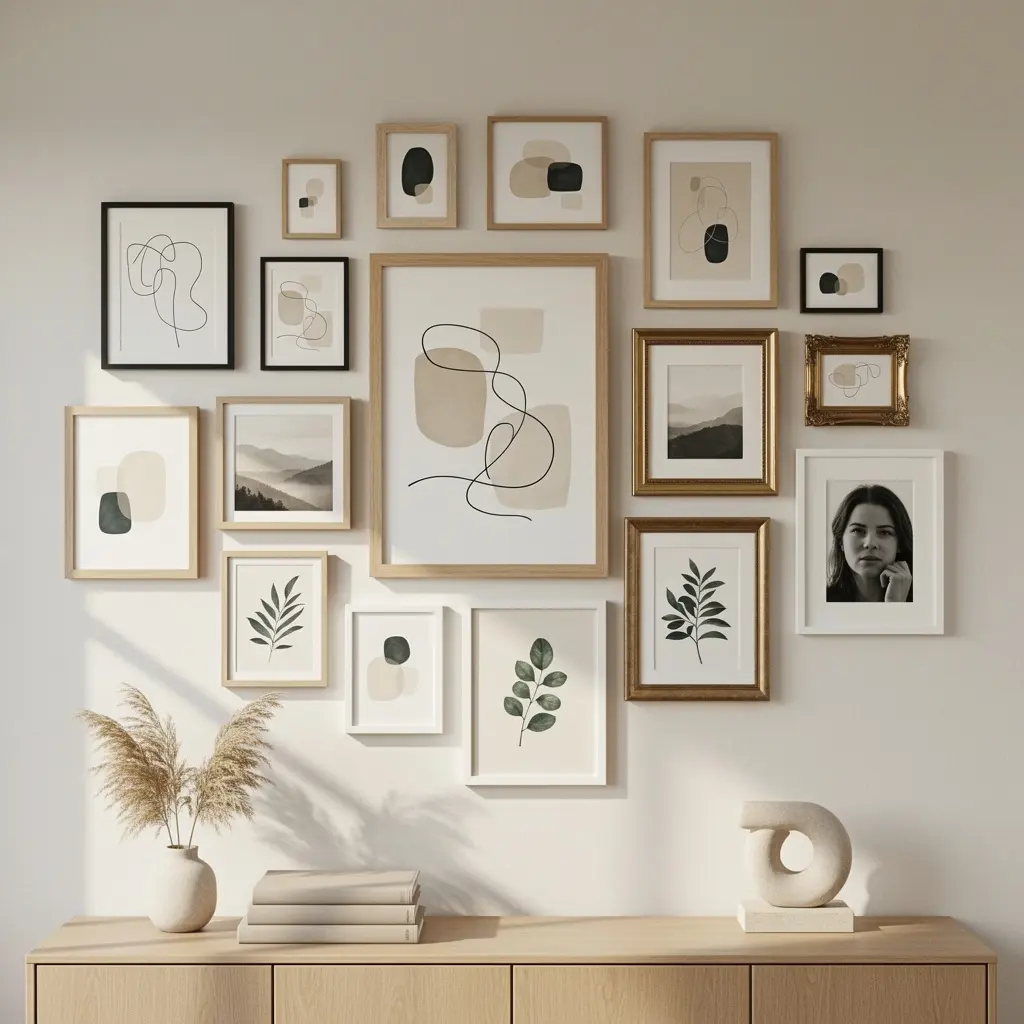
A gallery wall works best with some intentional variation: different frame finishes, black metal, raw wood, no frame at all, and different sizes rather than a uniform matching set. This mix reads as collected over time rather than purchased in a single trip, which tends to feel more personal and less staged.
Laying the frames out on the floor first, in their planned arrangement, before hanging anything lets adjustments happen without extra nail holes in the wall.
3. Add a Floating Shelf for Function and Display

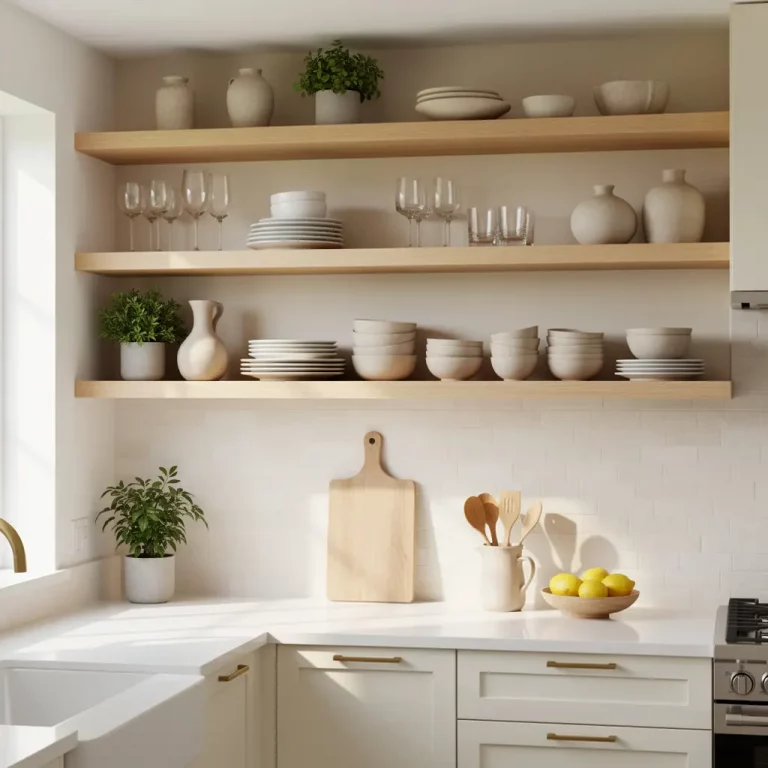
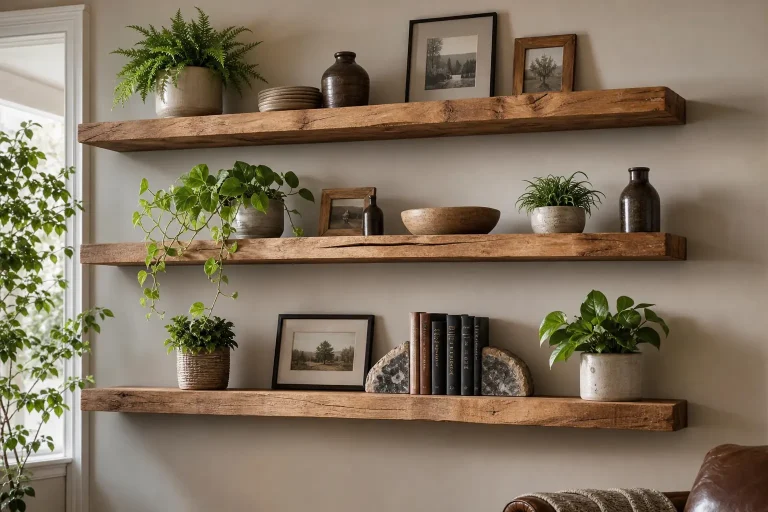
A floating shelf, typically $20 to $50 depending on length and material, adds a functional surface to a wall decor arrangement, somewhere to rest a small plant, a candle, or a stack of books, rather than relying only on flat hanging pieces. This adds dimension to an otherwise two dimensional wall.
Styling a Floating Shelf Well
Group two or three objects of varying height on the shelf rather than lining up several similar sized items in a row. A small stack of books topped with a candle, next to a single plant, tends to look more intentional than a straight row of matching objects.
4. Bring in a Woven or Textile Wall Hanging
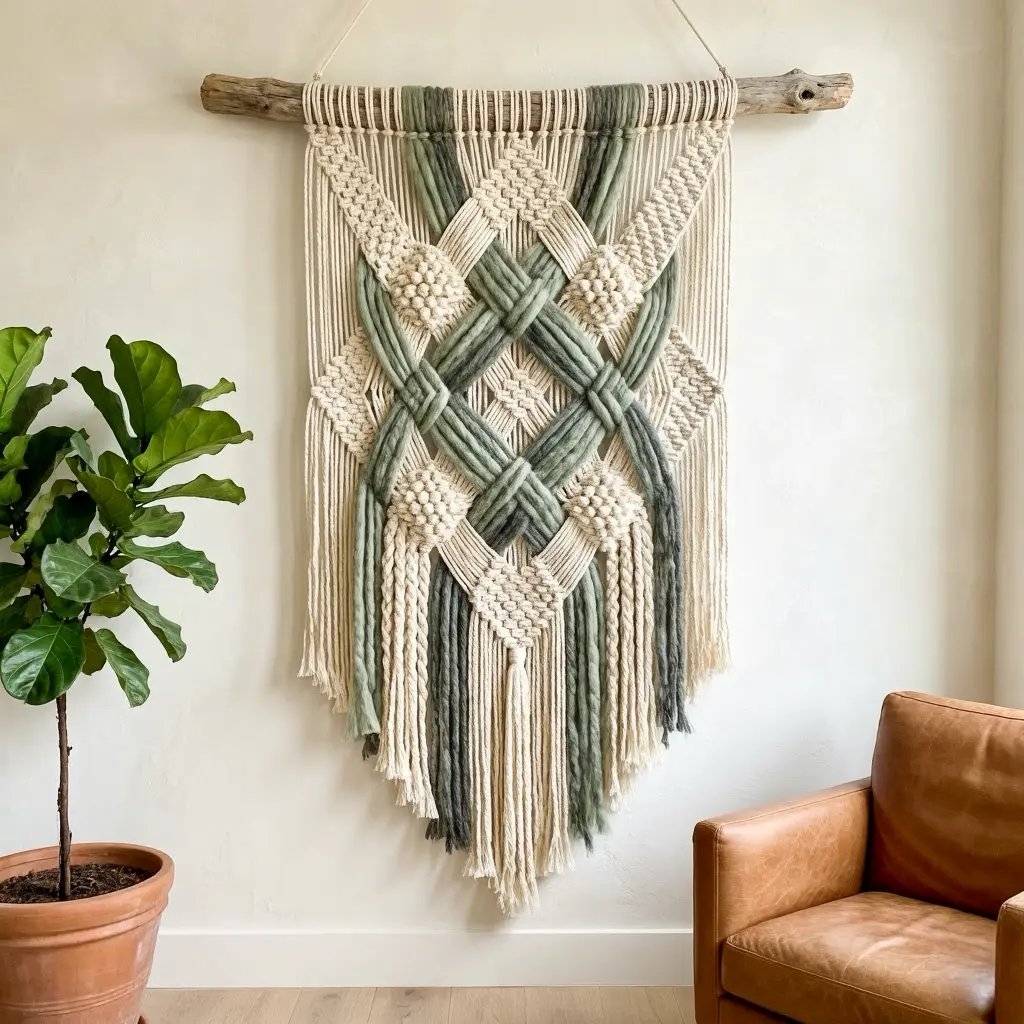
A macrame piece, a woven tapestry, or a textile wall hanging adds texture that framed art and photos can’t provide on their own. These pieces work particularly well breaking up an otherwise flat gallery wall or filling an awkward narrow space where a frame wouldn’t fit well.
Textile pieces in the $30 to $90 range, depending on size and complexity, add warmth and a handmade quality that pairs well with both modern and more relaxed, boho leaning spaces.
5. Use a Statement Mirror to Add Light and Depth
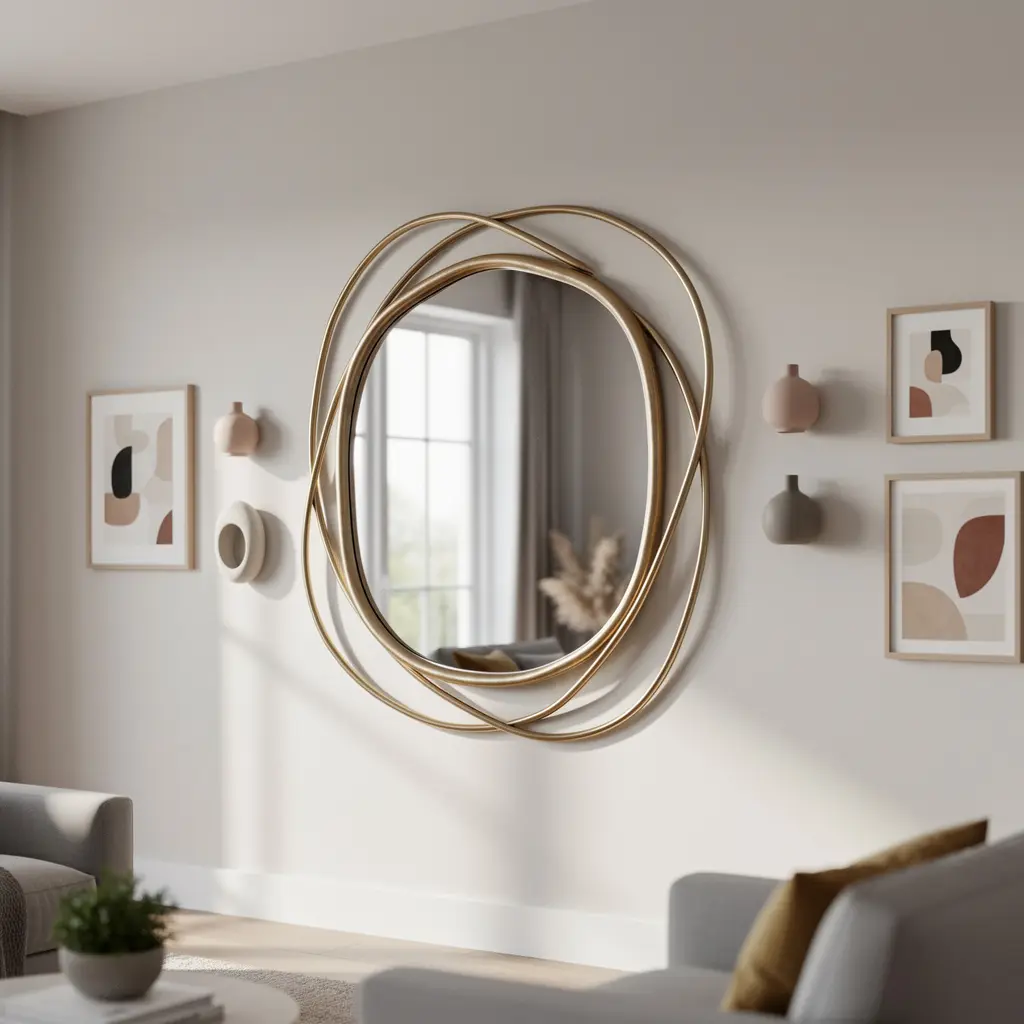
A large mirror does more than reflect light. It adds visual depth to a wall and can anchor an entire arrangement on its own. Mirrors with an interesting frame shape, arched, sunburst, or an organic irregular edge, work as both function and decor. Mirrors in the $80 to $250 range cover a wide variety of styles and sizes for this purpose.
Placing a mirror across from a window maximizes how much natural light it reflects back into the room throughout the day.
6. Try a Single Oversized Art Piece Instead of Many Small Ones
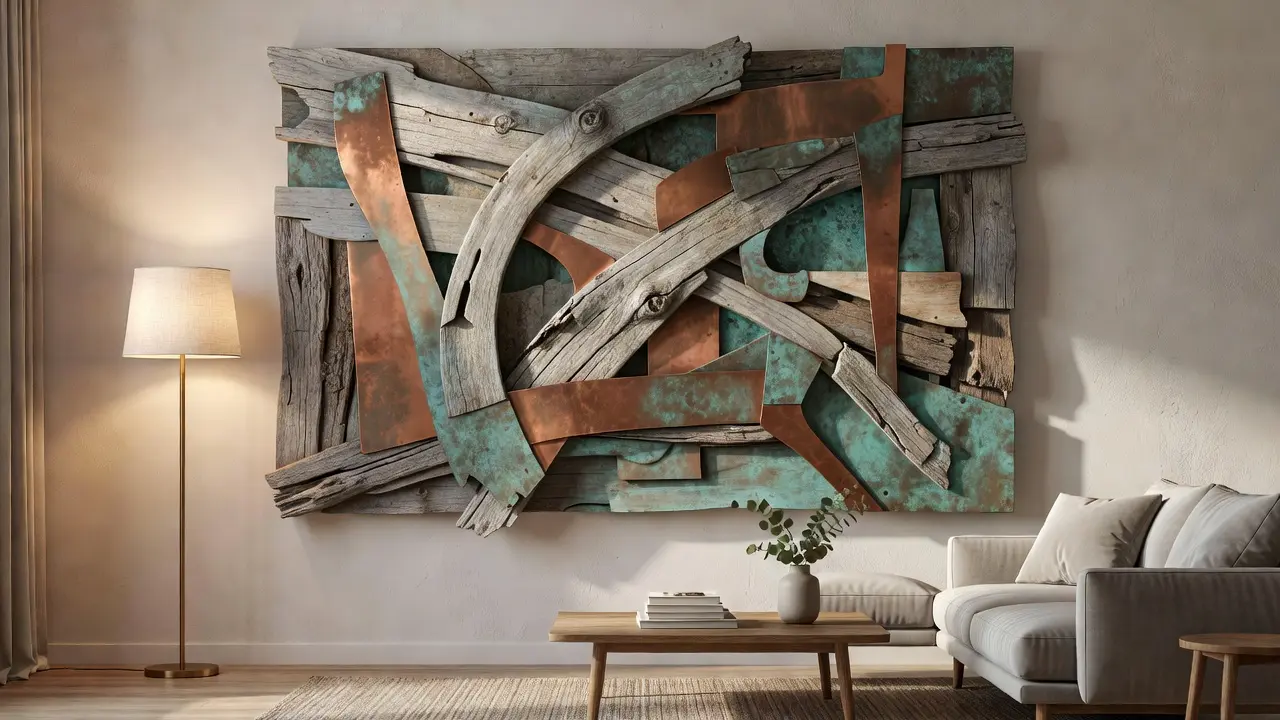
Not every wall needs a gallery arrangement. Sometimes one large piece of art, sized to fill roughly two thirds of the available wall width, makes a stronger, calmer statement than several smaller pieces competing for attention. This approach works particularly well above a bed or in a room that already has a lot of other visual activity, like patterned textiles or bold furniture.
An oversized canvas or framed print in the $100 to $300 range, depending on size, is often more cost effective per square foot of wall covered than assembling an equivalent gallery wall of smaller framed pieces.
7. Mix Materials Across the Wall for Visual Depth
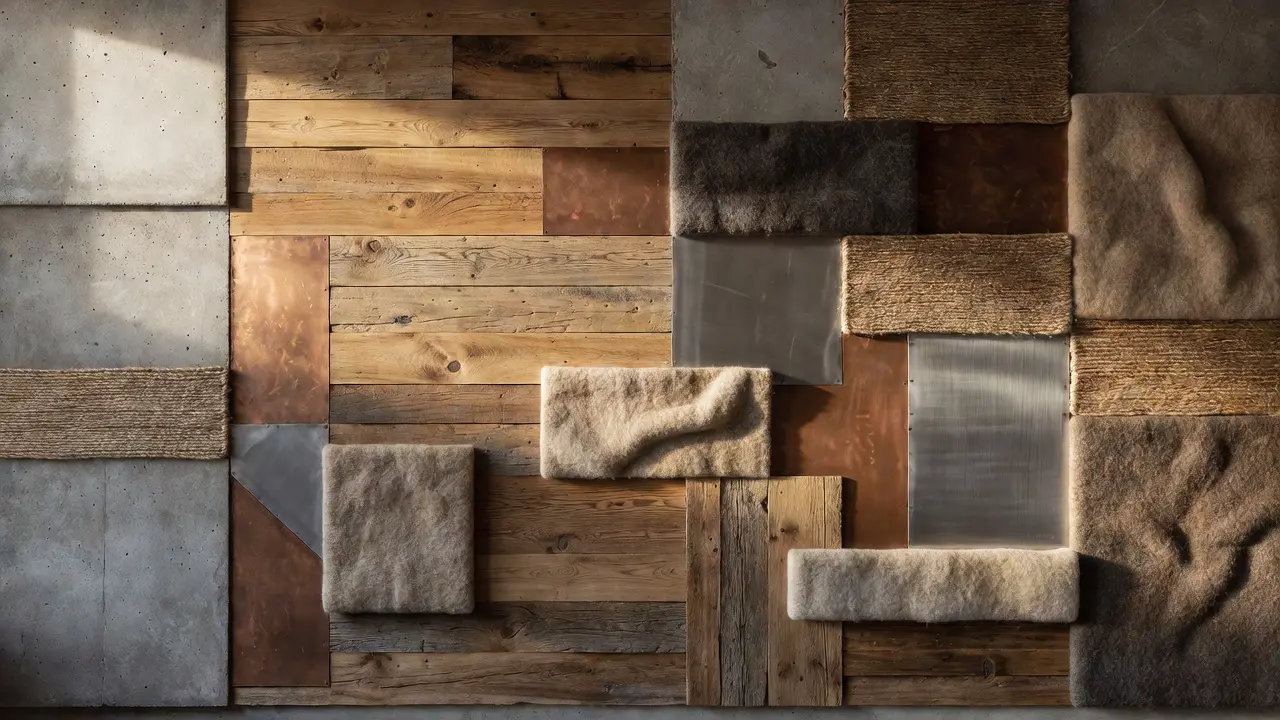
Combining a framed print, a woven textile, and a small wood or ceramic wall shelf in one arrangement adds more visual interest than an arrangement using only one material type. The contrast between smooth glass, soft woven fiber, and matte ceramic or wood keeps the eye moving across the wall rather than settling into a flat, repetitive pattern.
This mix doesn’t need to be complicated. Even two materials, framed art plus one textile piece, creates noticeably more depth than an all frame gallery wall on its own.
8. Add Wall Sconces for Layered Lighting
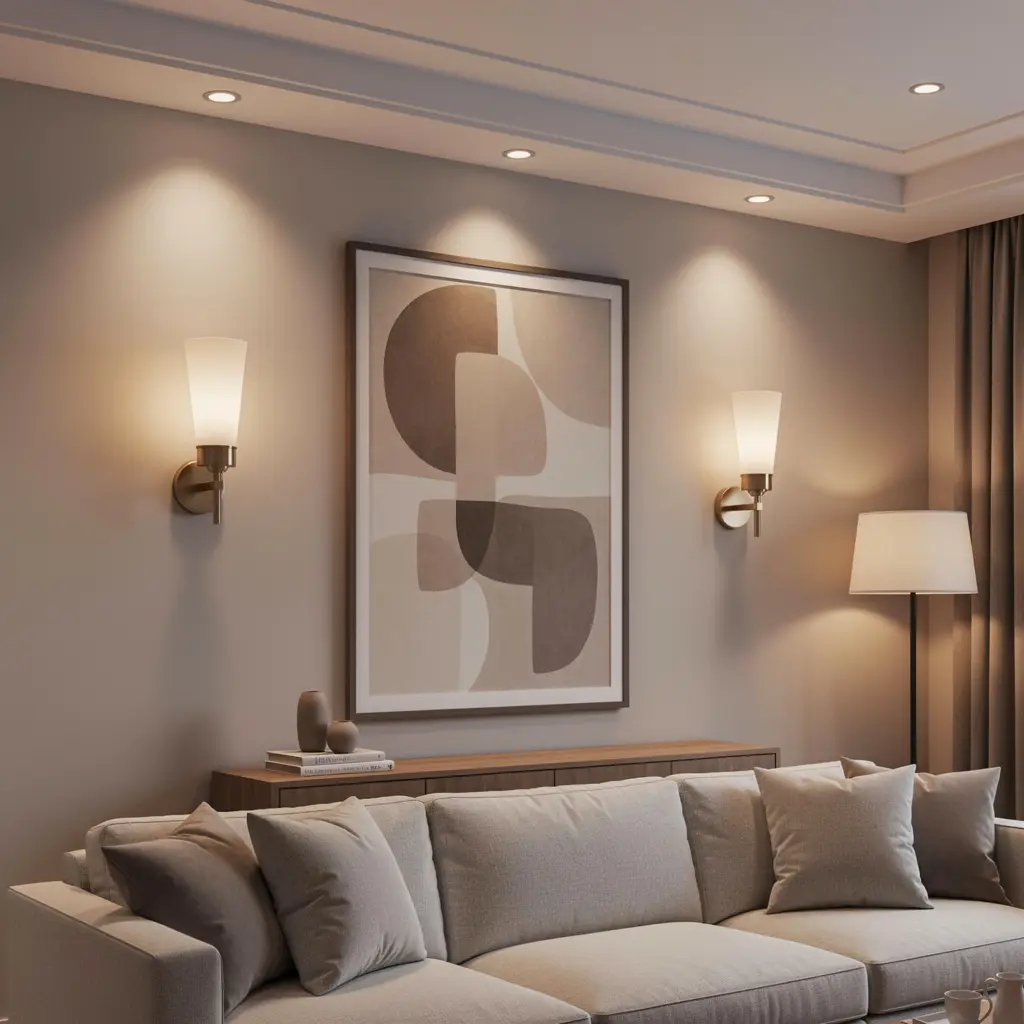
A wall sconce placed near a gallery wall or beside a piece of art adds a warm, focused light source that highlights the decor after dark. Sconces in the $40 to $120 range, in a finish that matches other metal accents in the room, add both function and a design element in one fixture.
Battery operated or plug in sconces are available for spaces where running new wiring isn’t practical, offering a similar visual effect without an electrician.
9. Use Plants to Soften a Wall Decor Arrangement
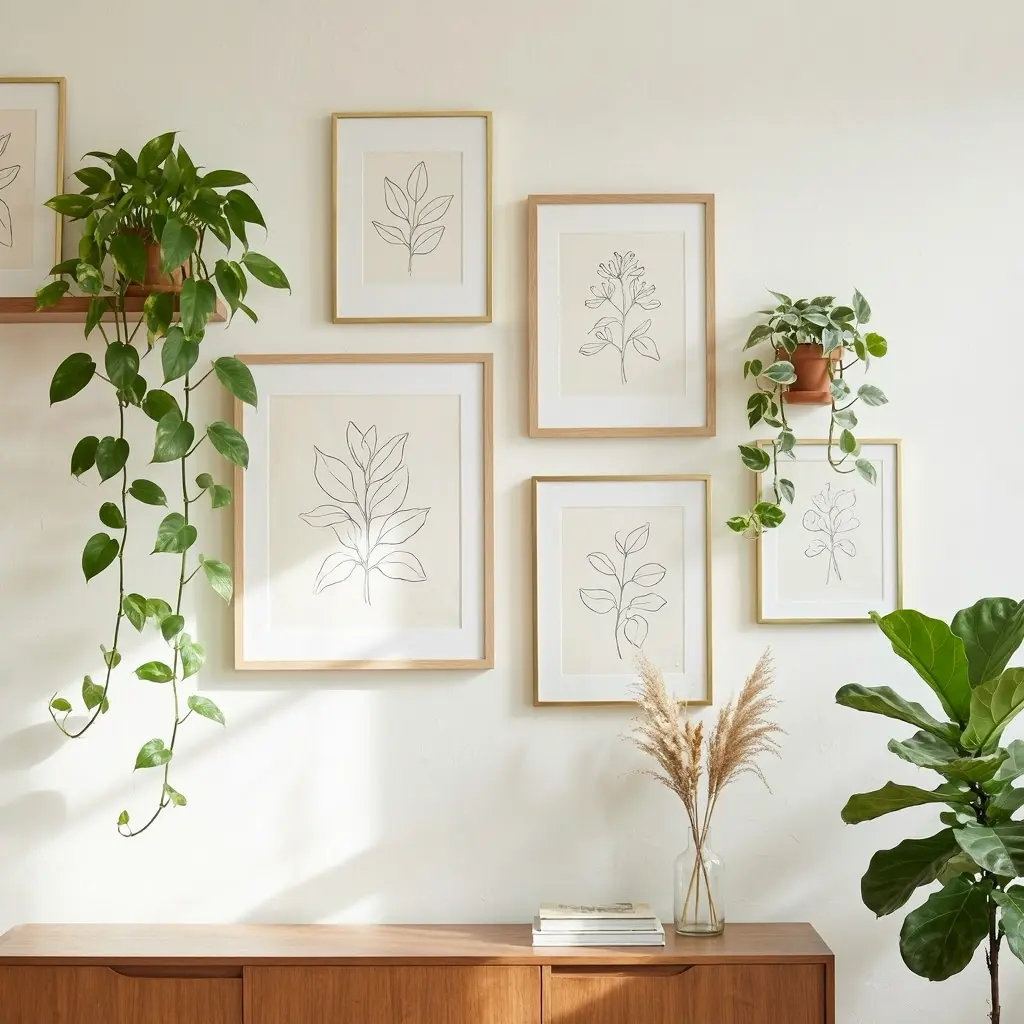
A trailing plant on a floating shelf, or a wall mounted planter beside a framed piece, softens the straight lines and hard edges of frames and shelving with some organic movement. This is a small addition, but it noticeably changes how a wall decor arrangement feels, adding a sense of life that flat art alone doesn’t provide.
Wall mounted planters, in the $15 to $40 range, are a space efficient way to add greenery to a wall arrangement without needing floor or shelf space.
10. Leave Some Walls Intentionally Simple
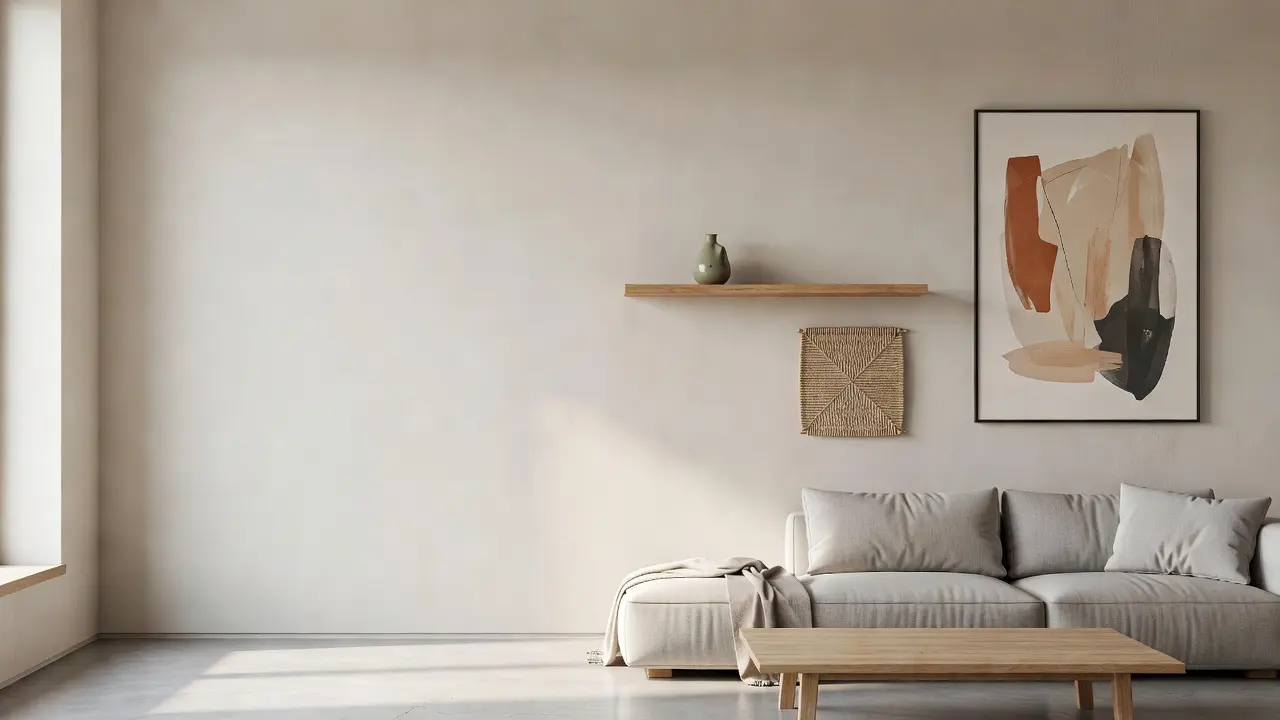
Not every wall in a room needs to be filled. A deliberately empty or minimally decorated wall gives the eye a place to rest and actually makes a nearby styled wall stand out more by contrast. This is especially useful in smaller rooms, where filling every available wall can start to feel overwhelming rather than cozy.
Choosing one or two walls to focus decor on, and leaving the rest simple, usually creates a more balanced, considered feeling room than decorating every surface equally.
Mistakes to Avoid
- Hanging art too high, which is one of the most common wall decor mistakes and throws off the room’s proportions
- Buying a matching frame set instead of mixing finishes and sizes for a more collected look
- Filling every wall in a room instead of leaving some surfaces intentionally simple
- Skipping the measuring step and ending up with art that’s too small or too large for the space
- Using only framed art with no other material or texture mixed in
- Forgetting to layer in a dedicated light source like a sconce for the arrangement
Frequently Asked Questions
How high should art be hung on a wall? A common guideline places the center of the piece at around 57 inches from the floor, which is roughly eye level for most adults.
Do gallery walls need matching frames? No. A mix of frame finishes and sizes tends to read as more intentional and collected than a uniform matching set.
What size art works best above a sofa? Art or a gallery arrangement filling roughly two thirds to three quarters of the sofa’s width tends to look proportionate rather than too small or overwhelming.
Is a floating shelf better than a full gallery wall? Neither is inherently better. A floating shelf adds function and dimension, while a gallery wall adds more visual density. Many rooms benefit from combining both.
How do I avoid a wall decor arrangement looking cluttered? Vary the sizes and materials used, leave breathing room between pieces, and resist the urge to fill every inch of available wall space.
Conclusion
Aesthetic wall decor comes down to layering, texture, and restraint more than any single statement piece. Measure the space first, mix frame styles and materials, and don’t feel obligated to fill every wall in the room. A gallery wall, a floating shelf, and one textile piece working together will do more for a room’s coziness than a single matching art set ever could.