10 Smart Loft Studio Setup Ideas That Actually Work
A loft studio sounds like the dream until you’re actually trying to fit a desk, two monitors, and a decent chair under a sloped ceiling with awkward angles everywhere you turn. That’s the real challenge behind a smart loft setup, and it’s less about buying the flashiest gadgets and more about making genuinely tight, oddly shaped square footage work as hard as a full sized office would. Done right, the sloped ceilings and skylights that make a loft tricky to furnish become exactly what makes the space feel worth working in.
1. Position the Desk to Use the Skylight, Not Fight It
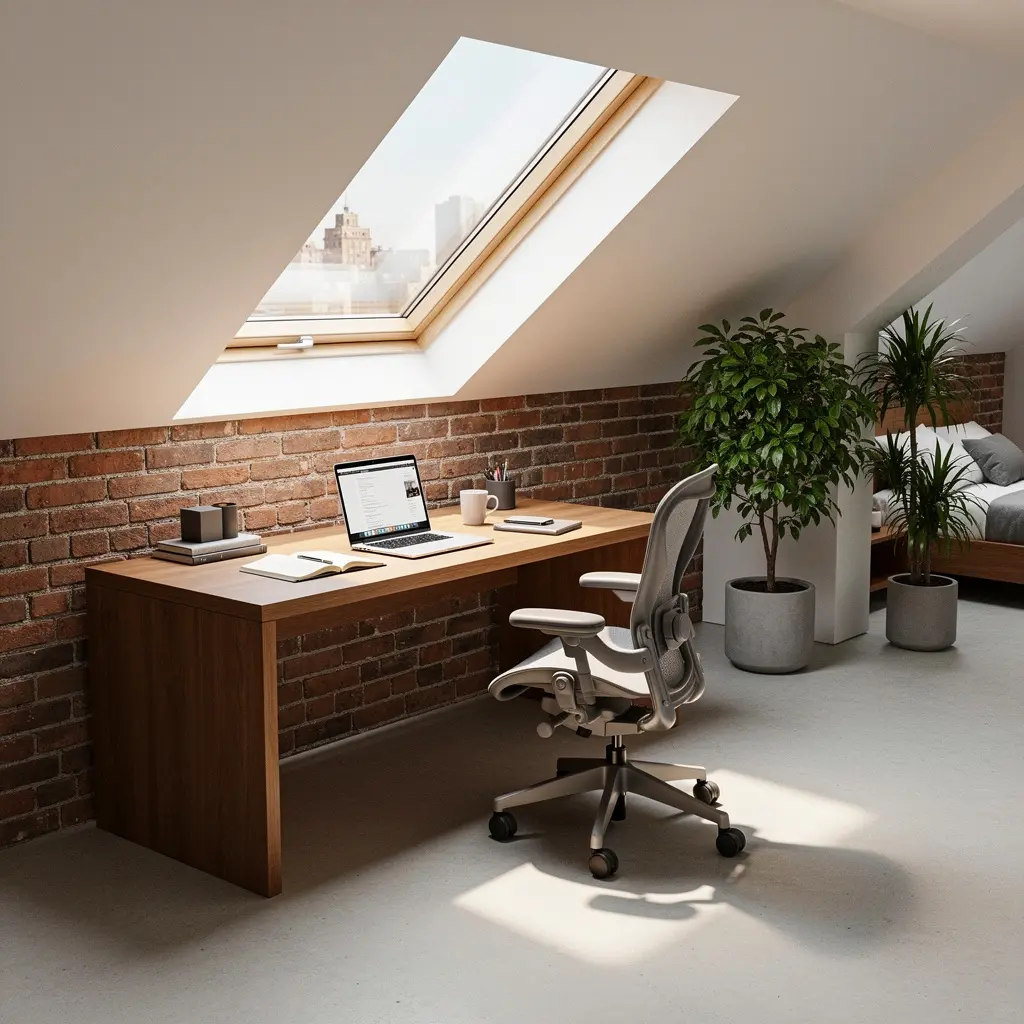
A loft’s skylight is usually the single best light source in the room, and placing the desk directly beneath it puts natural daylight right where you need it most during work hours. This single placement decision does more for the space’s overall feel than almost any other choice, since it means less reliance on artificial lighting during the day and a noticeably brighter workspace without adding a single fixture.
2. Choose Furniture That Works With the Sloped Ceiling, Not Against It
Low profile furniture and a desk positioned where the ceiling height is tallest keeps you from constantly ducking or feeling boxed in by the roofline. A rolling console or a low cabinet tucked into the lowest, most awkward part of the slope turns dead space into actual storage, rather than leaving it empty simply because a taller piece wouldn’t fit there anyway.
Making the Most of Awkward Corners
The tightest corner under a slope is rarely worth a full piece of furniture, but it’s often just right for open shelving or a slim rolling cart that can be pulled forward when needed and pushed back out of the way otherwise.
3. Set Up a Multi Monitor Display for More Screen Space
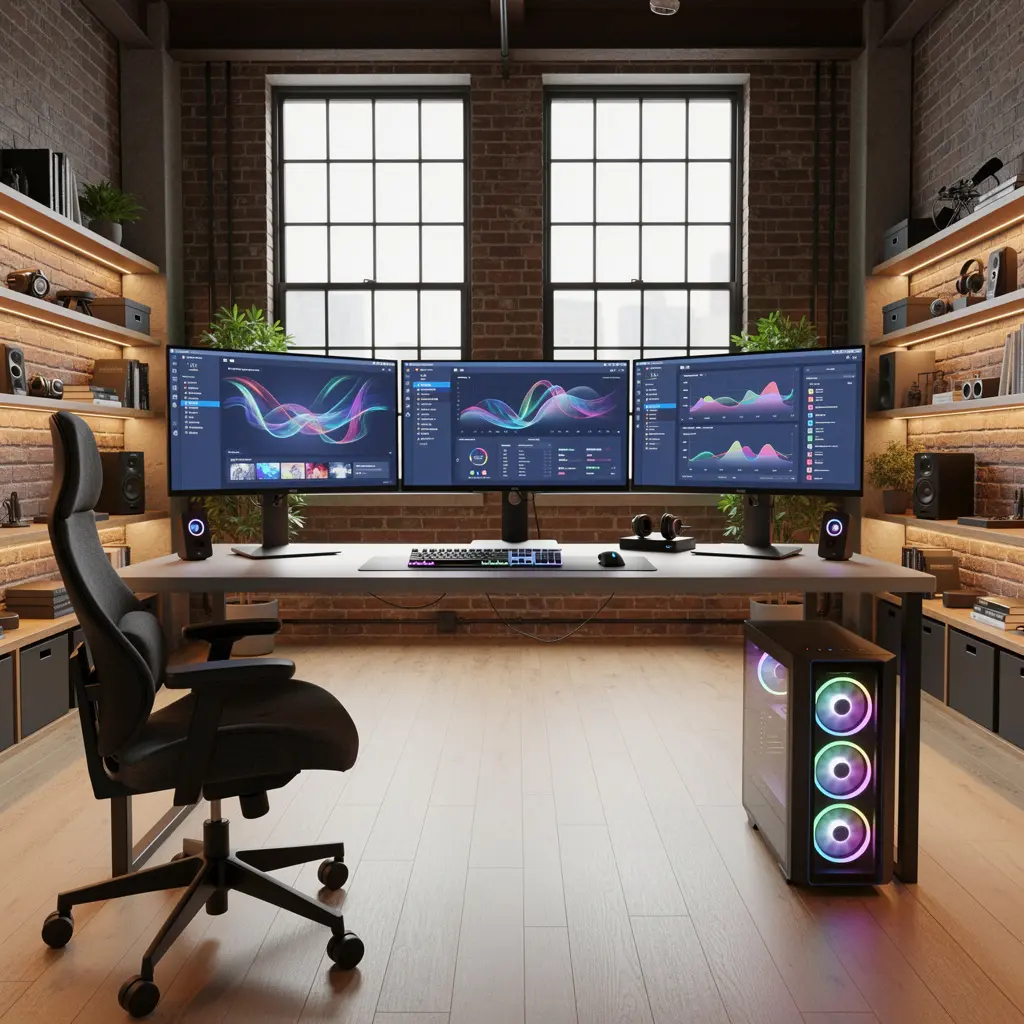
A loft studio’s footprint is usually smaller than a dedicated office room, which makes screen real estate matter more, not less. A dual monitor setup on an adjustable arm mount frees up desk space that a bulky monitor stand would otherwise occupy, and it improves multitasking across applications without needing a bigger desk to fit everything.
4. Add a Standing Desk Base for Movement Throughout the Day
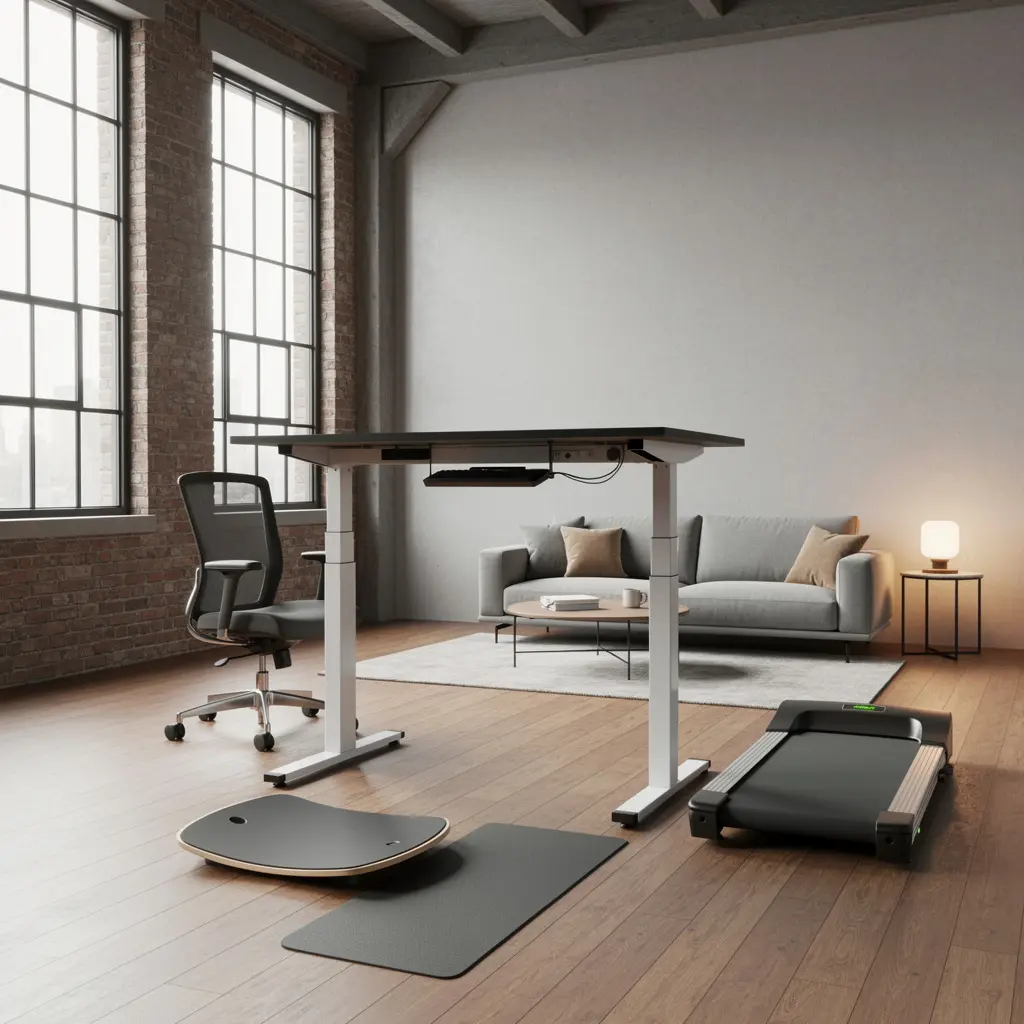
A standing desk has become close to a baseline expectation in a well planned home workspace this year, not an optional upgrade. Programmable height presets and quiet motors make switching between sitting and standing simple, and in a loft specifically, that flexibility helps offset a workspace that might otherwise feel cramped by letting you change position rather than staying locked into one seated posture all day.
5. Hide Cables With Grommets and Under Desk Trays
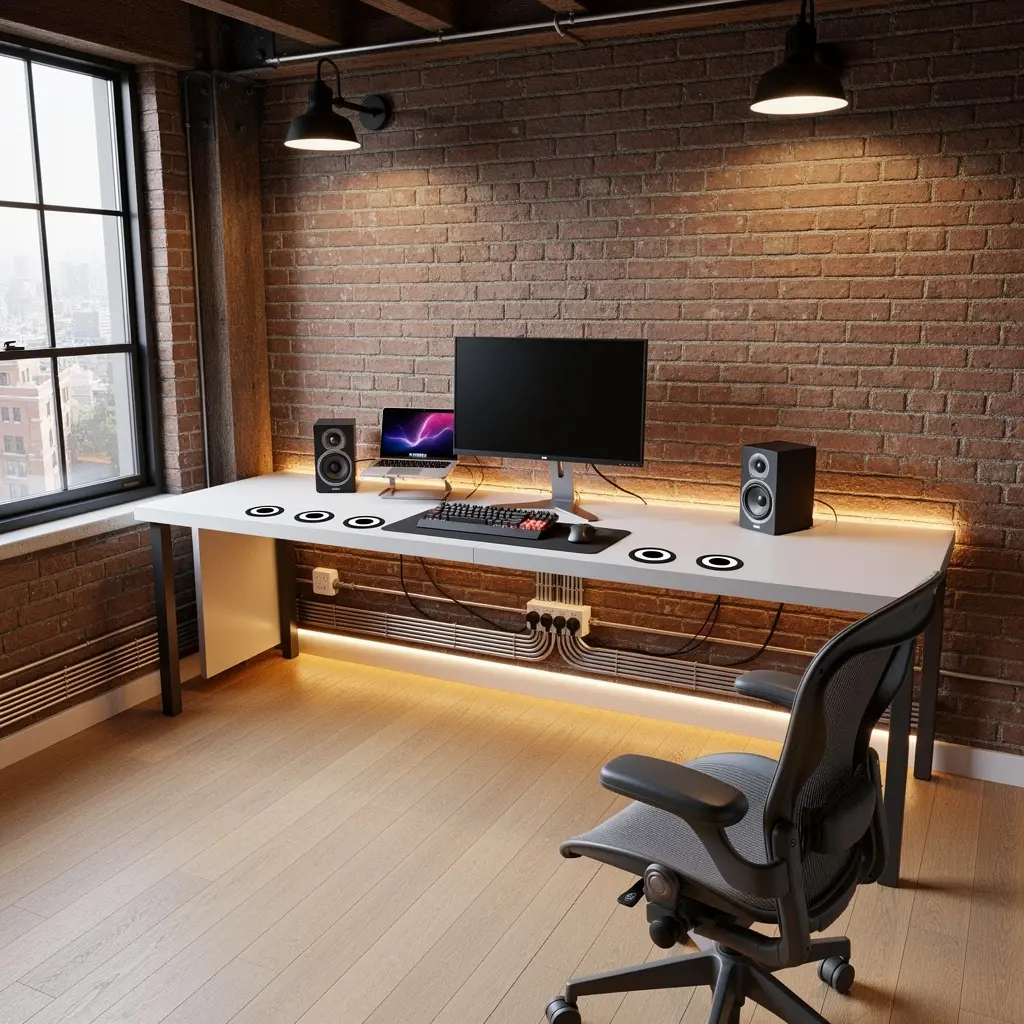
Loose cables and a tangle of chargers undercut even a well designed loft setup fast. Desk grommets paired with an under desk cable tray keep everything reachable but out of sight, and the extra time spent on this during setup pays off every single day afterward, since a clean desk surface reads as far more put together than one buried in cords.
6. Layer In Smart Lighting That Shifts Through the Day
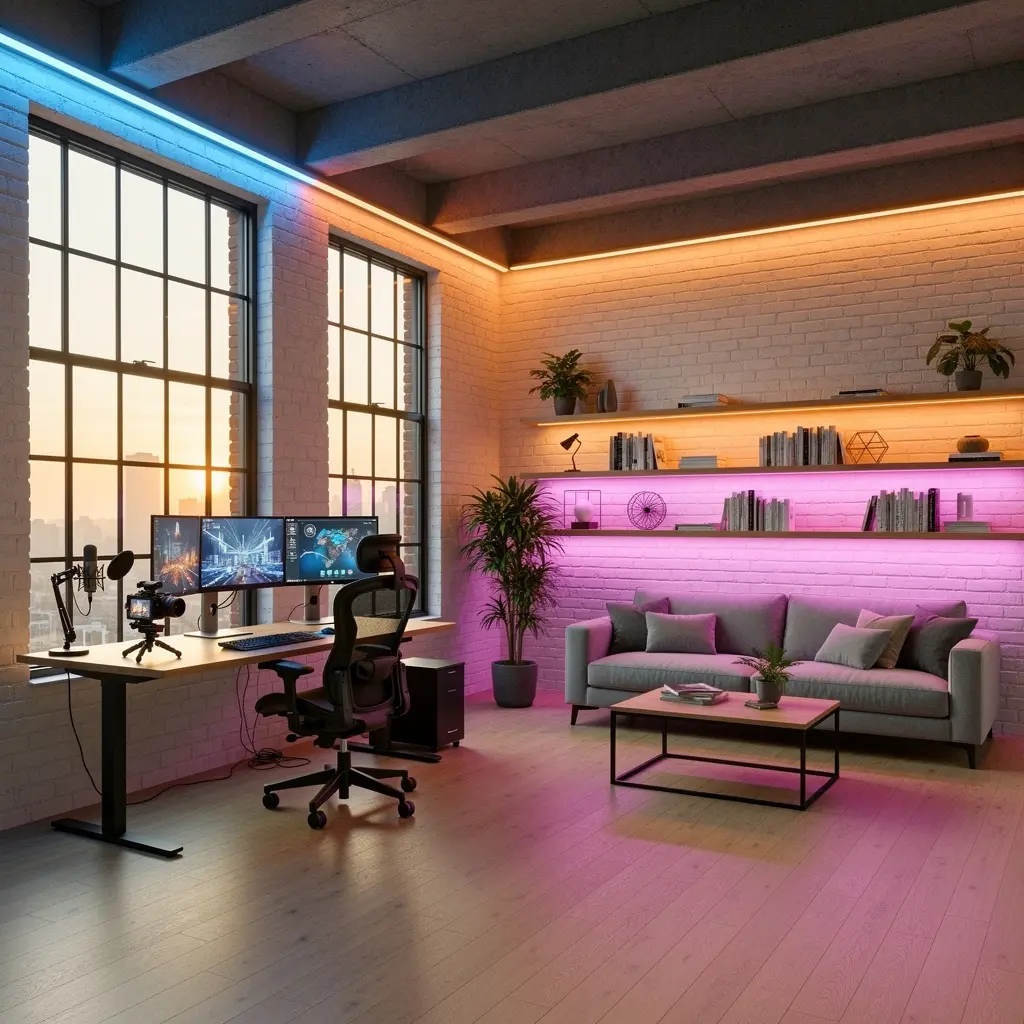
Smart bulbs that adjust color temperature and brightness on a schedule support focus during work hours and ease off into a warmer tone once the workday winds down. This kind of layered, shifting light matters even more in a loft, where a single fixture rarely reaches every angle of a sloped ceiling evenly, so a couple of smart lights positioned at different points in the room fill in what a single central fixture misses.
7. Choose an Ergonomic Chair Built for Long Hours
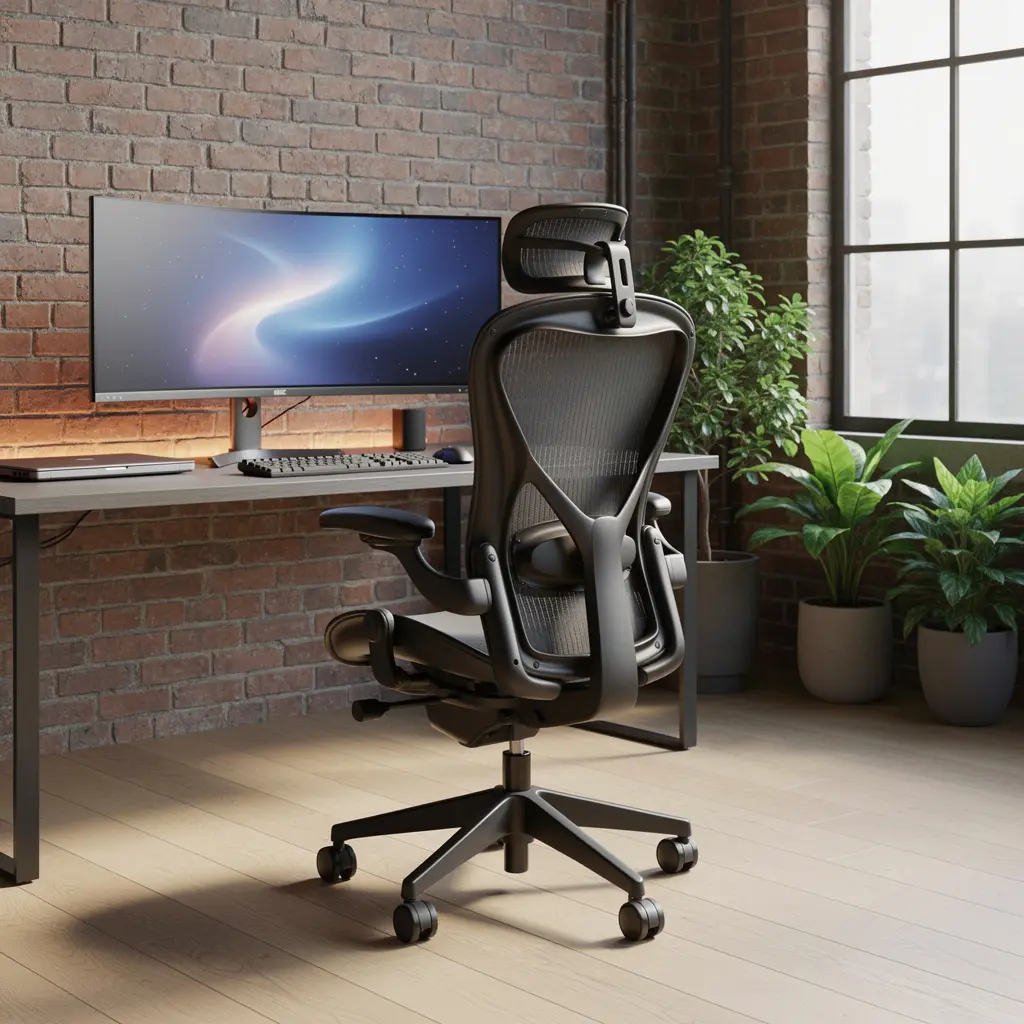
A loft studio is still a workspace, and the chair matters just as much here as it would in any other office. Look for genuine adjustability, seat height, lumbar support, and armrest position at minimum, and test it in person if at all possible, since fit varies enough from body to body that specs alone don’t guarantee comfort.
8. Bring In a Vertical Garden or Layered Plants for Focus
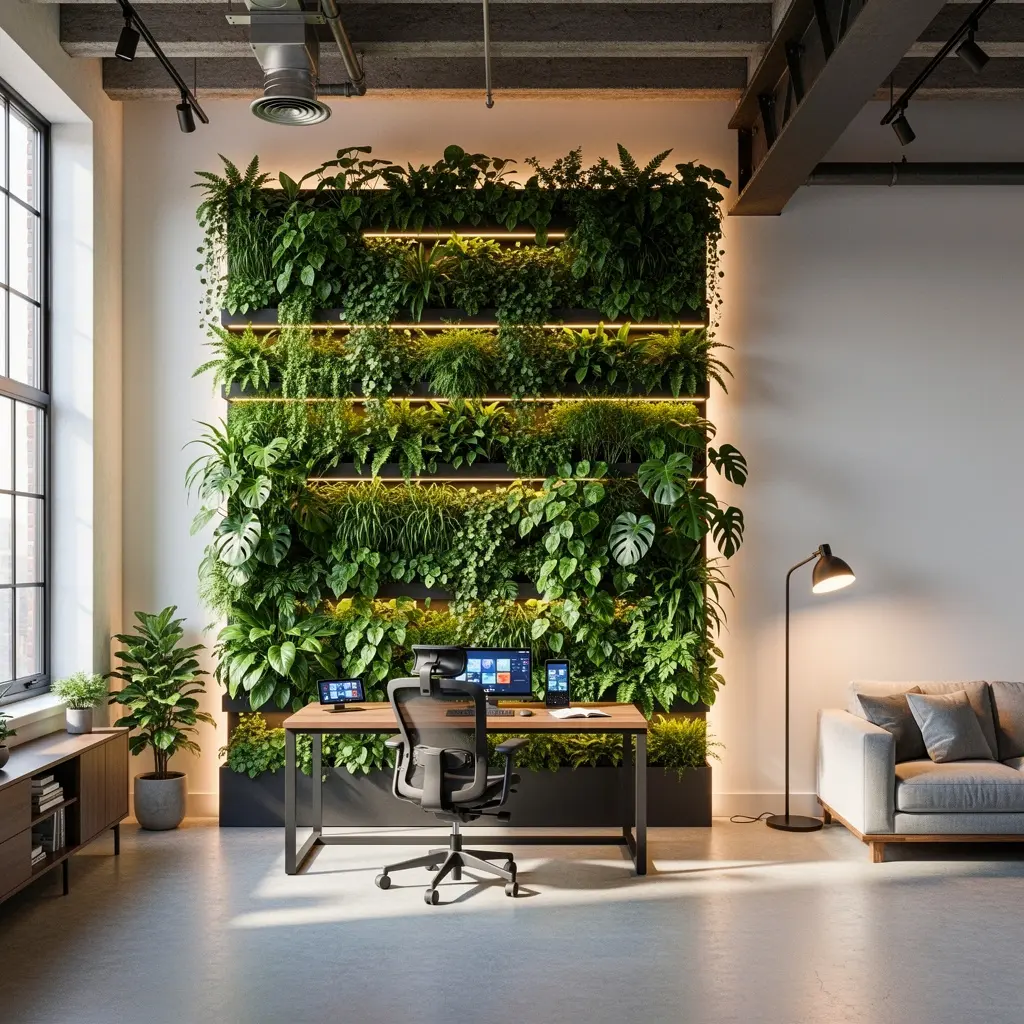
A living wall or a cluster of trailing plants softens the hard angles a loft’s architecture tends to create, and there’s real research behind greenery’s effect on focus and mood in a workspace. In a loft specifically, plants along the lower slope of the ceiling fill a space that’s often too short for furniture anyway, turning an awkward zone into something worth looking at.
9. Keep the Palette Monochromatic With One Accent Color
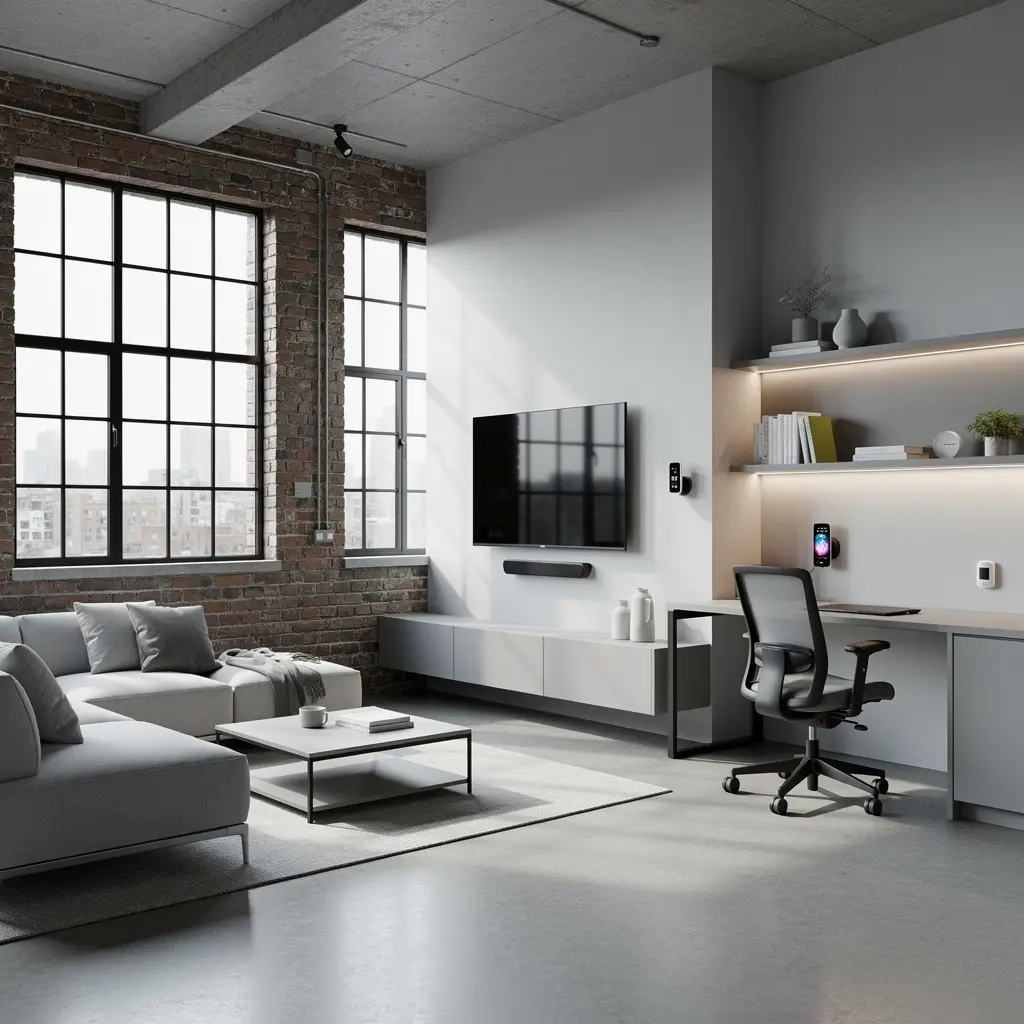
A clean, largely neutral palette punctuated by a single accent color, a teal chair, a set of copper desk accessories, keeps a loft studio feeling current without looking sterile. This restraint matters more in a smaller loft footprint than it would in a larger office, since a cluttered mix of colors and materials reads as chaotic fast in a tight space.
10. Add a Room Divider or Curtain to Separate Work From Rest
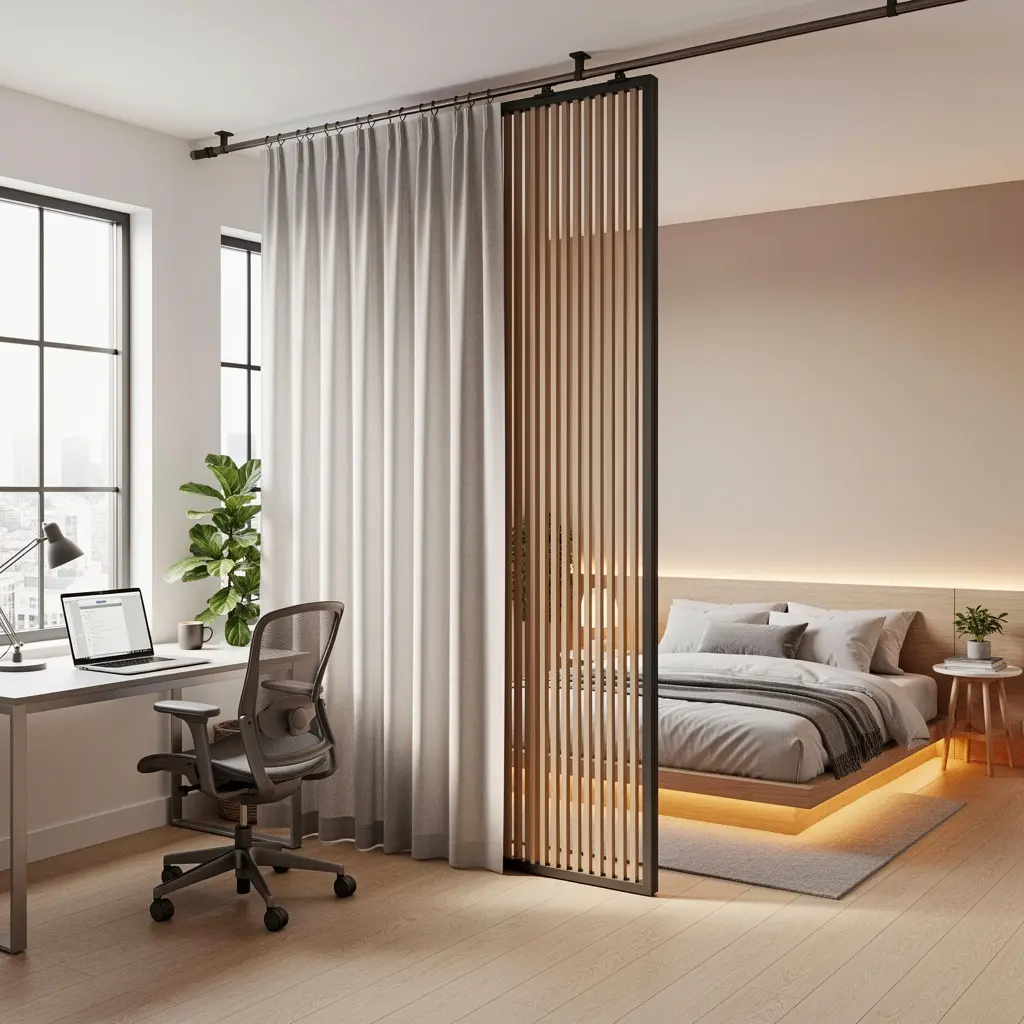
If the loft doubles as more than just a workspace, a rolling divider, a curtain on a track, or even a strategically placed bookshelf creates a visual boundary between the work zone and whatever else shares the space. This kind of separation helps maintain an actual line between work and downtime, which matters even more in a loft than in a dedicated office room, since the two areas are often only a few feet apart.
Mistakes to Avoid
- Positioning the desk away from the skylight instead of using it as the primary light source
- Choosing tall, bulky furniture for the lowest part of a sloped ceiling instead of low profile pieces
- Skipping cable management, which leaves an otherwise well designed loft looking unfinished
- Relying on a single central light fixture instead of layering in smart lights that reach every angle
- Overcrowding a small loft footprint with too many colors or materials instead of keeping the palette edited
- Choosing a chair based on looks alone without testing its actual adjustability and support
Frequently Asked Questions
How do I make a small loft studio feel less cramped? Position furniture around the tallest part of the ceiling, use low profile pieces in the lower slopes, and keep the color palette mostly neutral with just one accent color to avoid visual clutter.
Is a standing desk practical in a loft with a sloped ceiling? Yes, as long as it’s placed where the ceiling height comfortably clears you in the standing position. Check the maximum height clearance in that spot before choosing a standing desk model.
What’s the best way to manage cables in a loft office? Desk grommets combined with an under desk cable tray keep cords reachable but hidden, which matters especially in a small, visible space where clutter is harder to hide than in a larger room.
Do I need smart lighting, or is one good desk lamp enough? A single lamp can work for basic tasks, but layered smart lighting fills in the uneven light a sloped loft ceiling often creates, and it lets the room’s brightness and tone shift automatically through the day.
How do I separate work and rest in a loft that serves both purposes? A rolling room divider, a curtain on a track, or even a bookshelf positioned as a soft boundary can create a visual and physical line between the two zones without requiring a full wall.
Conclusion
A smart loft studio setup comes down to working with the room’s odd angles instead of fighting them. Put the desk where the skylight and ceiling height actually support it, manage cables and screen space deliberately, and layer in lighting and furniture that adapt to a space that’s rarely a simple rectangle. Done well, a loft studio doesn’t feel like a compromise. It feels like the most interesting room in the house to actually get work done in.


