10 Smart Modular Kitchen Storage Ideas to Maximize Space
You organize your kitchen perfectly the week you move in, and eighteen months later half the storage doesn’t match how you actually cook anymore, the spice rack is in the wrong spot, and there’s a cabinet full of gadgets you stopped using. That’s the core problem with fixed kitchen storage. It’s built for one moment in time. Smart modular kitchen storage solves this by using systems that can be rearranged, resized, or repurposed as your cooking habits, household size, or available space actually change.
The goal isn’t buying a completely new storage system every time something shifts. It’s choosing components upfront that were designed to move and adjust in the first place, so a change in routine means rearranging what you already have instead of starting over.
1. What Makes Storage “Modular” Versus Just Organized
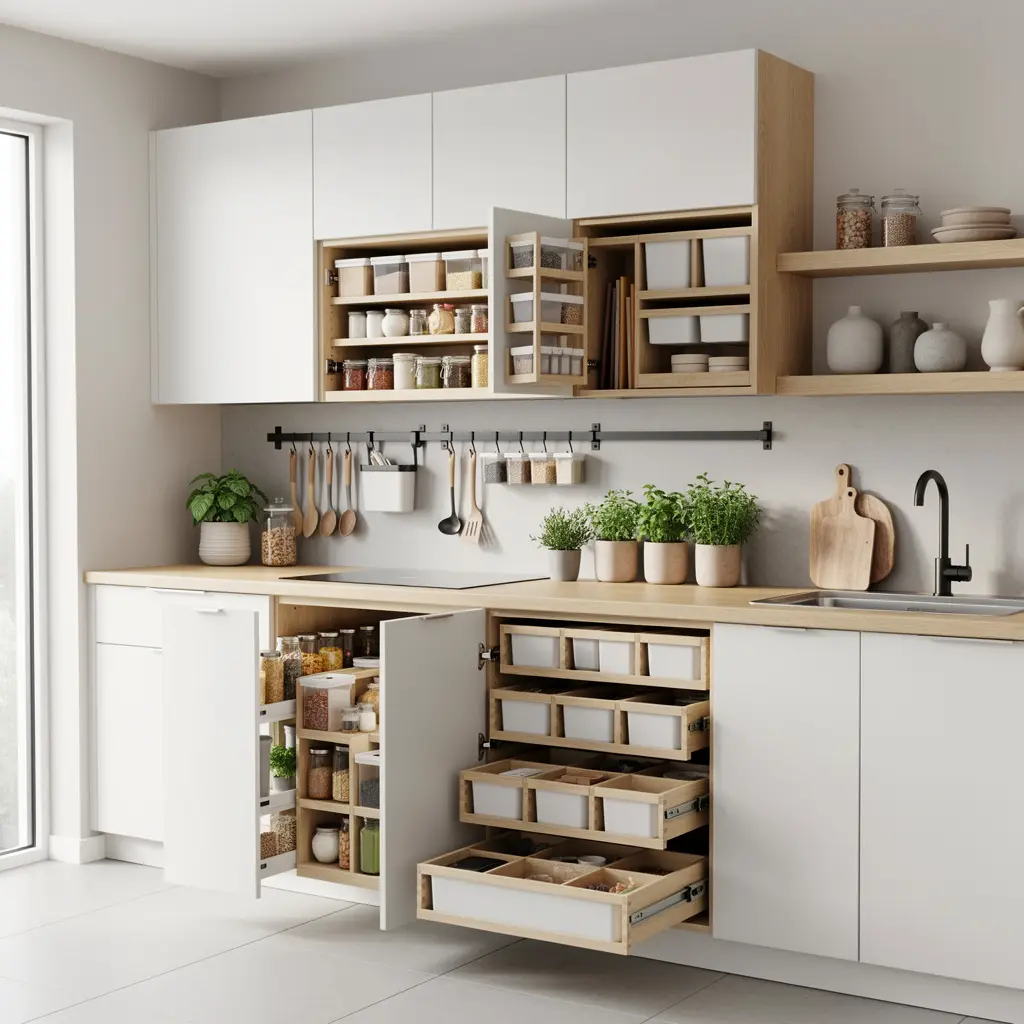
Modular storage refers to components that can be moved, resized, or reconfigured without tools or major renovation, as opposed to fixed shelving or built in dividers that are set in one position permanently. A drawer divider that slides and locks into different spots is modular. A single fixed wood divider glued into place is not.
This distinction matters because kitchens change more than people expect. A new appliance, a shift toward more home cooking, or simply running out of room for a growing spice collection all require storage that can adjust rather than being torn out and replaced.
Thinking about storage this way from the start, rather than after the third reorganization attempt, saves both money and effort over the years someone typically lives in a home with the same kitchen.
2. Start With Adjustable Shelving Before Anything Else
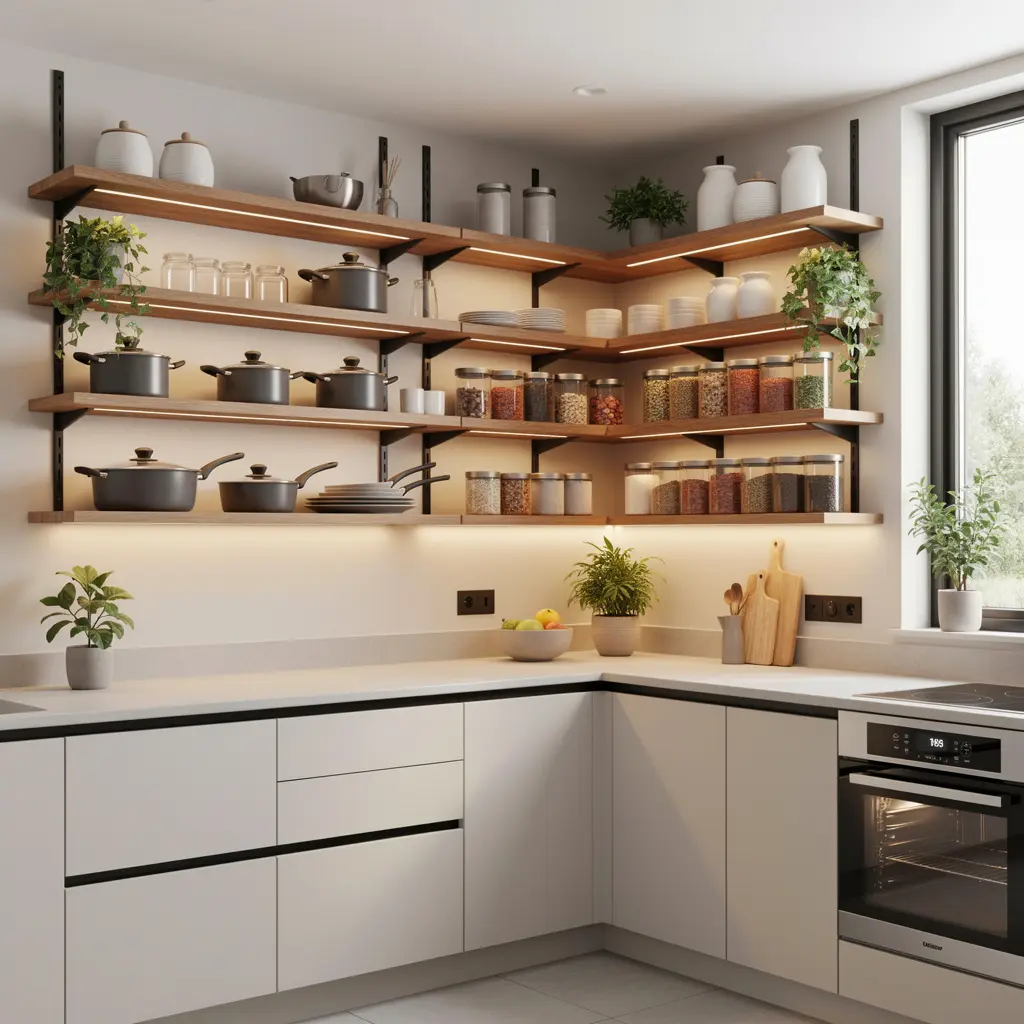
Most kitchen cabinets come with shelves fixed at standard intervals that rarely match the actual height of what you’re storing, wasting vertical space above shorter items. Adjustable shelf pins, sold in sets for a few dollars, or aftermarket adjustable shelving inserts let you reposition shelves to match your actual dishware and appliances.
Where This Makes the Biggest Difference
Cabinets storing mixed height items, like small spice jars next to tall cereal boxes, benefit the most from adjustable shelving, since a single fixed shelf height almost never suits every item stored beneath it.
3. Use Drawer Dividers That Can Be Reconfigured
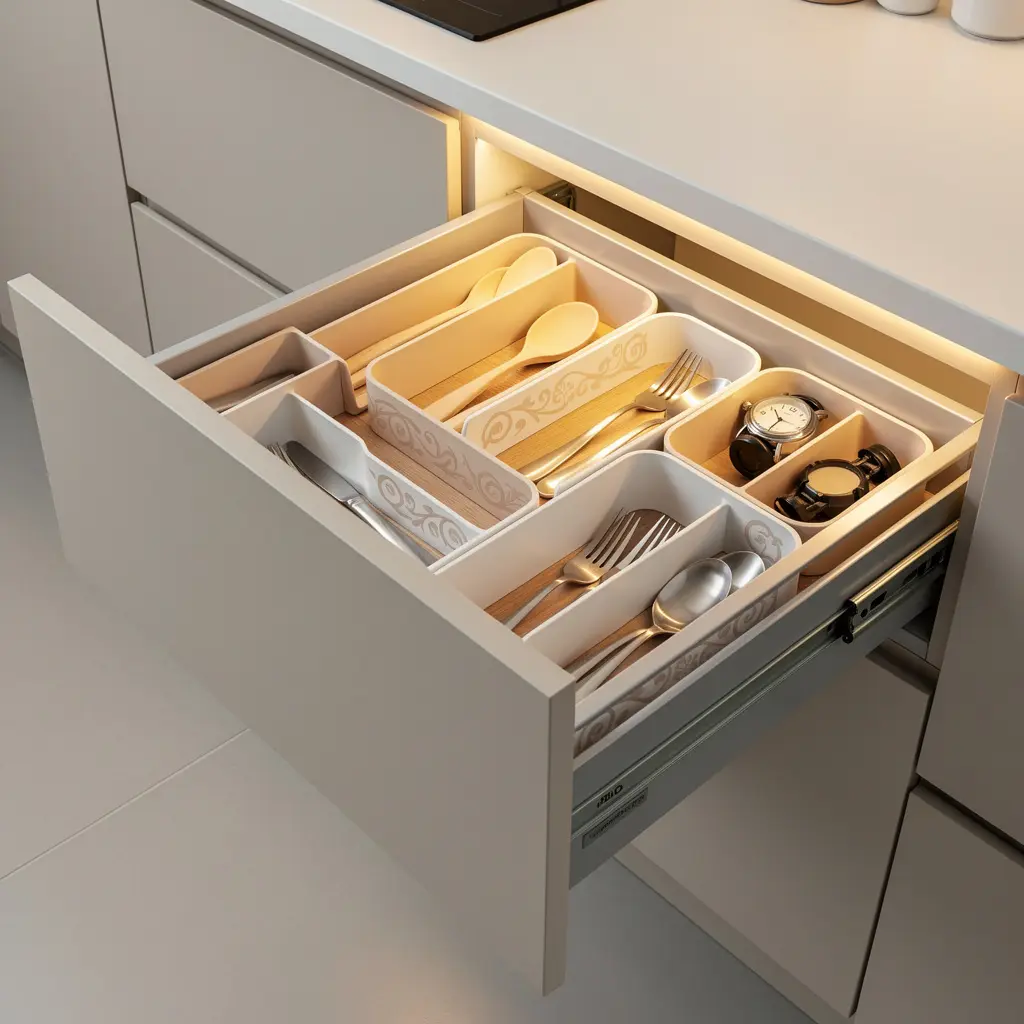
Expandable or modular drawer dividers, the kind that slide along a track rather than sitting in one fixed position, let a single drawer serve different purposes as your utensil collection or gadget count changes. This is a meaningful upgrade over a one piece molded tray that only fits one specific set of tools.
Bamboo or adjustable plastic divider sets in the $15 to $35 range typically include enough pieces to configure several drawer layouts, which means one purchase can adapt across multiple reorganizations over the years.
4. Add Pull Out Shelves to Deep, Hard to Reach Cabinets
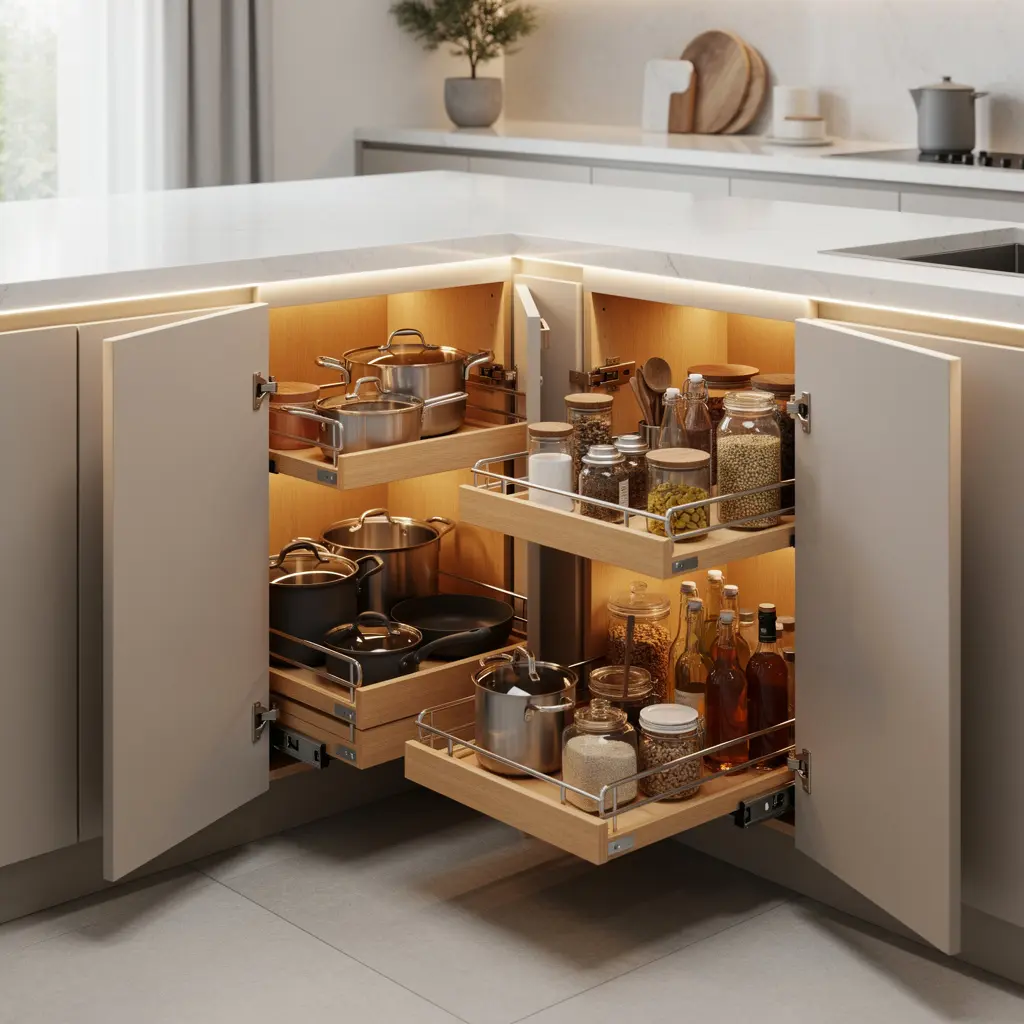
Deep lower cabinets, especially corner units or anything more than 20 inches deep, tend to become a black hole where items get pushed to the back and forgotten. Pull out shelf inserts, either purchased as a kit or professionally installed, bring the entire depth of the cabinet into view and reach without crouching or digging.
These inserts typically run $40 to $120 per cabinet depending on size and whether it’s a DIY kit or a professionally installed version, and they’re one of the highest impact modular upgrades for cabinets that currently go mostly unused.
5. Stack With Interlocking or Nesting Containers
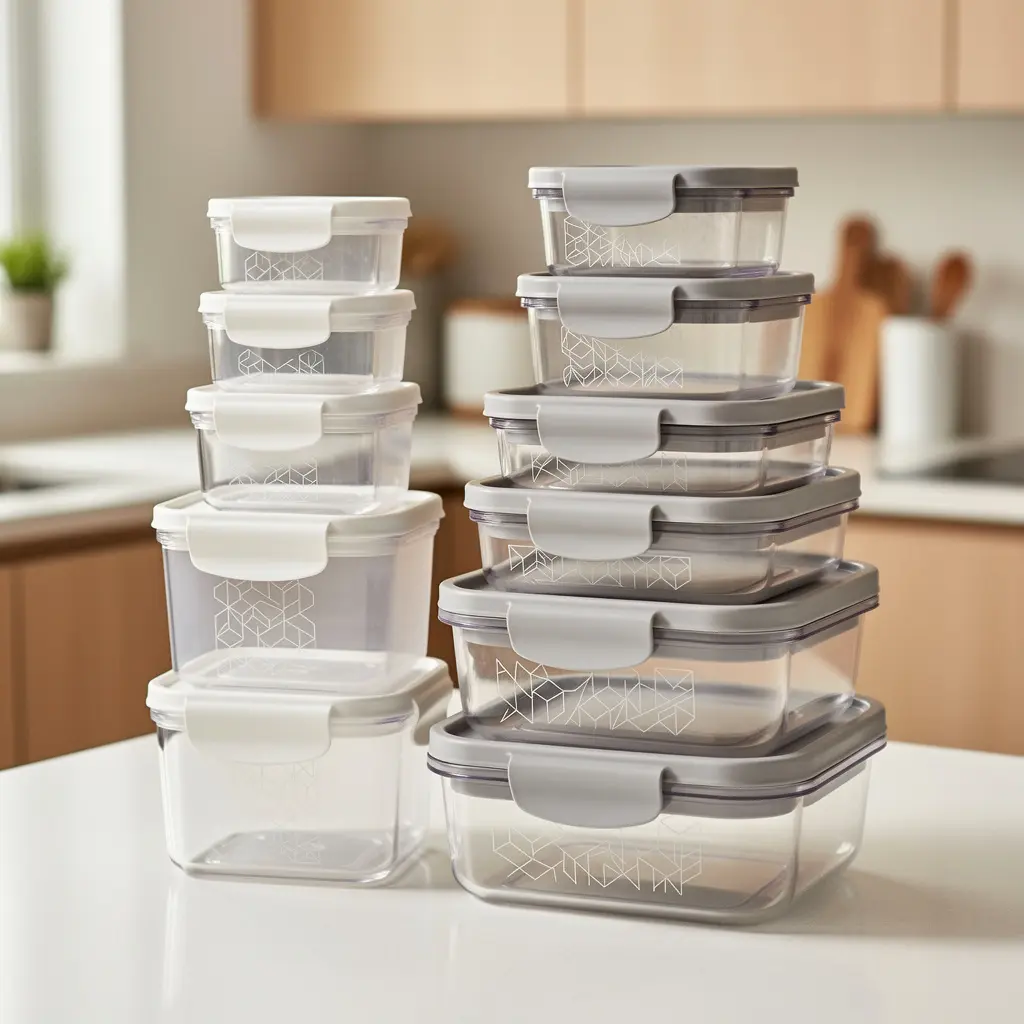
Storage containers that interlock or nest into each other, rather than a random mix of shapes and sizes, let you reconfigure cabinet or pantry space as inventory changes without leaving awkward gaps. A nesting container set adjusts its footprint depending on how full or empty it currently is.
Why Uniform Systems Beat Mismatched Ones
A pantry full of mismatched containers wastes space through irregular stacking, while a uniform, interlocking system keeps the same footprint no matter how the contents shift over time, which is the core advantage of a modular approach over a collection of individually purchased containers.
6. Install a Modular Pantry System Instead of Fixed Shelves
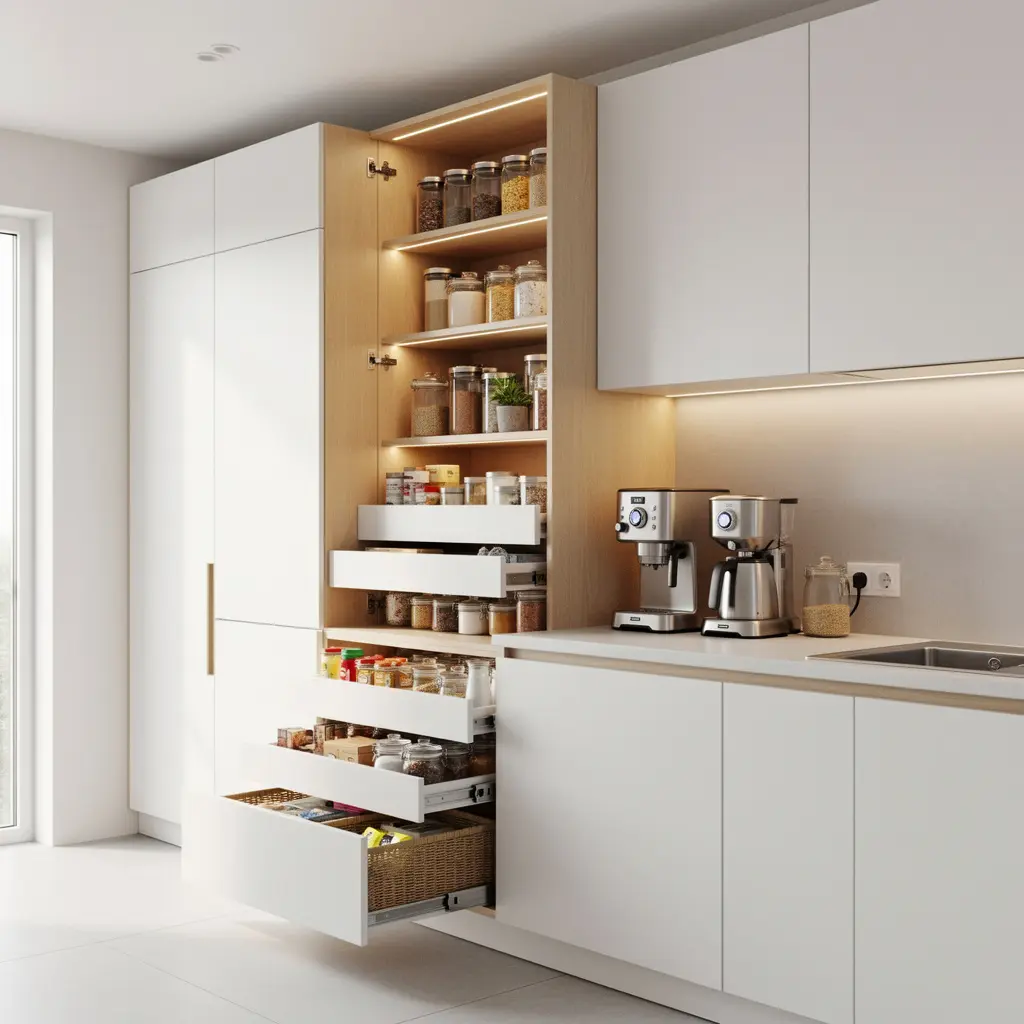
A pantry built around adjustable wire or wood shelving, wall mounted rail systems, and repositionable baskets adapts far more easily to a growing or shrinking household than a pantry with shelves fixed at set intervals. Wall mounted rail systems, in particular, let you add, remove, or move shelves and baskets without new holes or hardware each time.
This kind of system costs more upfront, typically $150 to $400 for a full pantry wall depending on size and materials, but it pays off over years of reconfiguring rather than needing a full pantry redo every time storage needs shift.
7. Use Rail and Hook Systems for Frequently Moved Tools
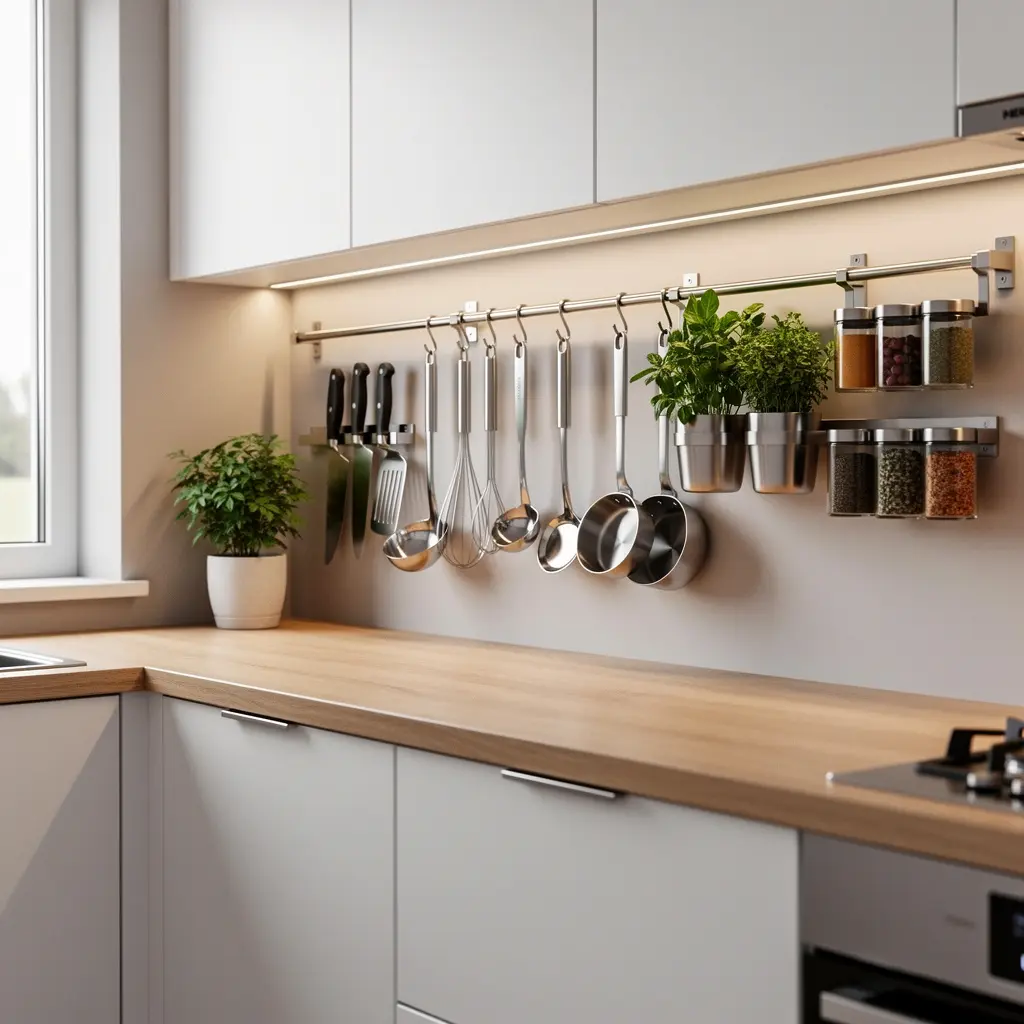
A wall mounted rail with movable hooks, sometimes called a rail storage system, lets frequently used tools, pots, or utensils move around as your cooking routine changes, without drilling new holes for each rearrangement. This works especially well above a stove or prep area where reach matters most.
Rail systems in the $30 to $80 range for a basic starter kit are one of the more affordable modular upgrades, since a single rail can support dozens of different hook and holder configurations over time.
8. Rethink Corner Cabinets With Rotating or Sliding Inserts
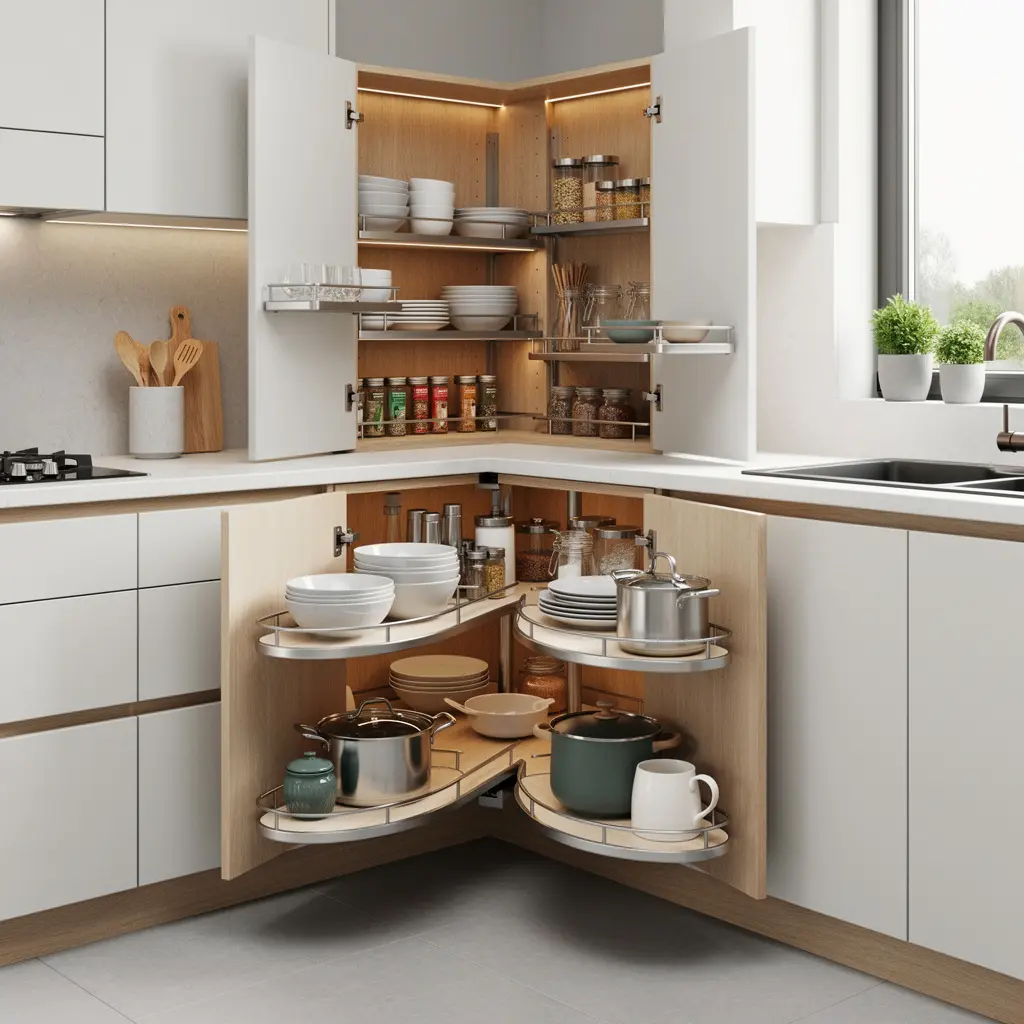
Corner cabinets are notoriously hard to use efficiently with fixed shelving, since so much of the space sits behind the door hinge and out of easy reach. A rotating lazy Susan insert or a sliding pull out system brings that wasted corner space into active, usable storage.
These inserts range from $50 for a basic rotating shelf to $200 or more for a full sliding shelf system, and they’re often the single biggest storage improvement available in kitchens with an awkward blind corner cabinet.
9. Keep a Flexible Zone for Seasonal or Changing Needs

Rather than assigning every inch of storage a permanent purpose, leaving one shelf or drawer intentionally flexible gives you room for seasonal items, holiday baking supplies, or a new kitchen gadget without disrupting the rest of an otherwise organized system. This flexible zone is what keeps a modular system from slowly becoming rigid again over time.
Reassessing this flexible zone every few months, rather than letting it quietly fill with random overflow, keeps it actually useful instead of turning into a catch all junk drawer. A quick five minute check during a regular pantry restock is usually enough to keep this zone from drifting away from its original purpose.
10. Budget Modular Options That Don’t Require Renovation
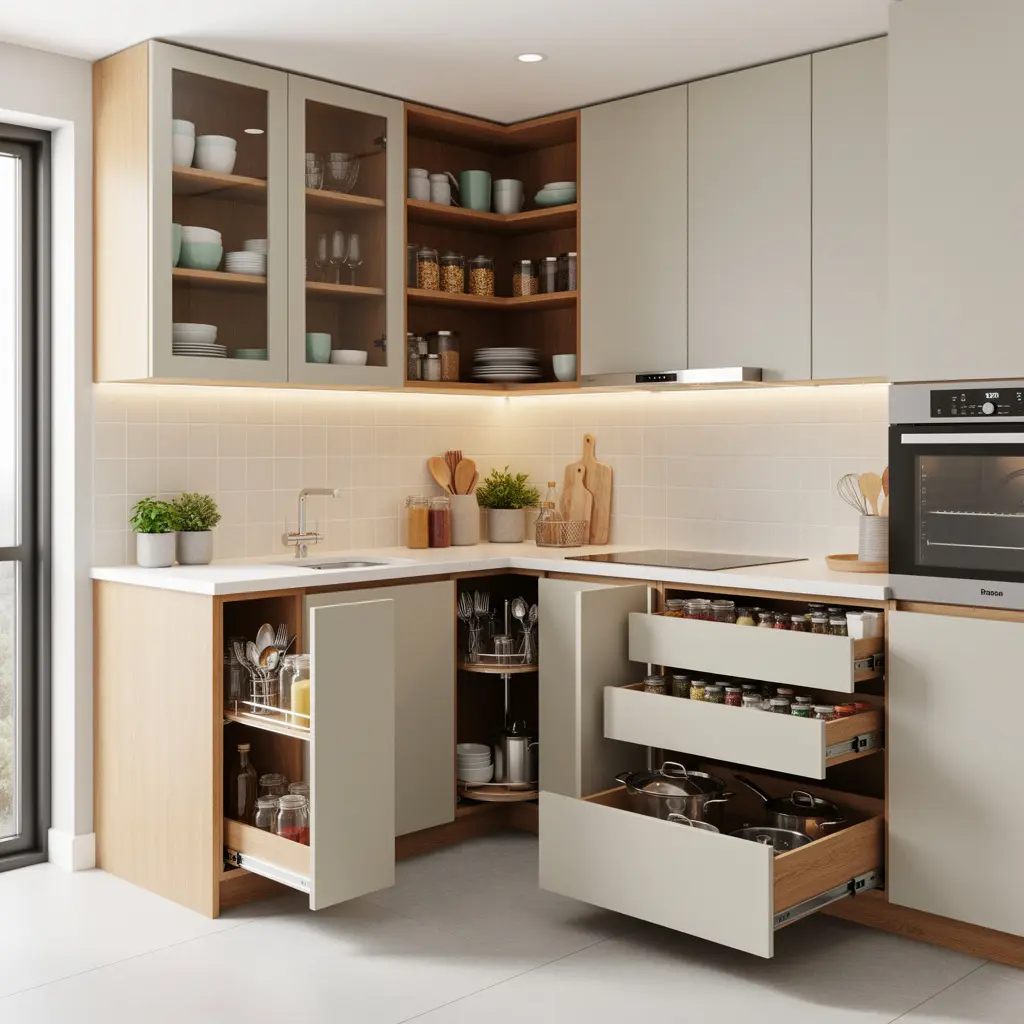
A full modular kitchen overhaul isn’t necessary to get real benefits. Tension rods used as makeshift dividers, stackable dollar store bins, and adjustable shelf risers can create a genuinely flexible system for under $50 total, all without any permanent installation or renovation.
Renters in particular benefit from these non permanent modular options, since most can be removed entirely at move out without leaving marks or requiring repairs to cabinets or walls.
Mistakes to Avoid
- Installing fixed dividers or shelves in a kitchen that’s likely to change over time
- Mixing container shapes and sizes instead of choosing a uniform, stackable system
- Ignoring deep or corner cabinets that quietly waste the most usable space
- Filling every inch of storage with no flexible zone left for future changes
- Choosing permanent installation over adjustable options in a rental kitchen
- Skipping a periodic reassessment of what’s actually being used and stored
Frequently Asked Questions
What’s the difference between modular and traditional kitchen storage? Modular storage can be moved, resized, or reconfigured without tools or renovation, while traditional storage is typically fixed in one position from installation.
Is modular kitchen storage more expensive than standard organization? Not necessarily. Many modular options, like tension rod dividers or stackable bins, cost less than custom built ins and can be reconfigured indefinitely without additional cost.
Can renters use modular kitchen storage systems? Yes. Most modular options are designed to be temporary and removable, which makes them one of the most practical storage upgrades for a rental kitchen.
How often should I reorganize a modular kitchen system? Checking in every few months, or whenever a noticeable change happens like a new appliance or a shift in how often you cook, keeps the system genuinely useful.
What’s the best first modular upgrade for a small kitchen? Adjustable shelving or reconfigurable drawer dividers tend to offer the most noticeable improvement for the lowest cost and effort, especially in kitchens with mismatched item heights.
Conclusion
Smart modular kitchen storage works because it treats your kitchen as something that will keep changing, not a space to organize once and leave alone. Start with adjustable shelving and reconfigurable drawer dividers, since those offer the biggest improvement for the least cost and effort, then expand into pull out shelves or a modular pantry system as budget allows. A kitchen built around flexible, reconfigurable storage stays genuinely functional for years instead of needing a full reorganization every time your routine shifts. Pick one cabinet or drawer to convert first, live with it for a few weeks, and use what you learn there before expanding the same approach through the rest of the kitchen.