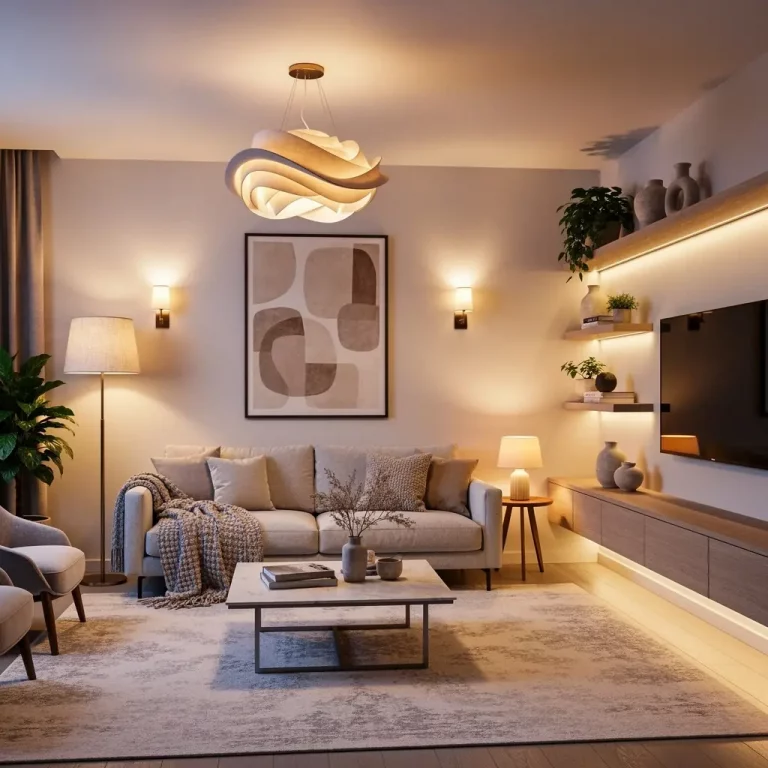
10 Warm Japandi Living Room Wall Ideas With Floating Shelves
A bare living room wall can feel unfinished, but overcrowding it with decor often swings too far the other way, and finding that calm middle ground is exactly what a warm Japandi living room wall with floating shelves is built to achieve. Japandi, the blend of Japanese minimalism and Scandinavian warmth, leans on restraint and natural materials rather than empty, cold minimalism or busy maximalist styling. This guide covers how to plan and style that kind of wall so it feels genuinely calm and considered, not just sparse.
1. Understand What Makes Japandi Warm Rather Than Cold Minimalist

Minimalism on its own can sometimes read as stark or unwelcoming, all straight lines and empty space with nothing to actually connect with. Japandi avoids that by pairing minimalist restraint with warm natural materials, wood, linen, ceramic, and a genuinely lived in, functional feel rather than an untouched showroom look.
The warmth in Japandi comes specifically from material choice and a few well chosen, meaningful objects, not from adding more stuff. Keeping this distinction in mind while planning a wall helps avoid the common mistake of either leaving it too bare or over styling it in an attempt to make it feel cozier.
2. Choose a Wood Tone That Anchors the Whole Wall

Floating shelves in a warm, light to medium wood tone, oak, ash, or a light walnut, are a defining feature of this style, and choosing that wood tone early gives you a consistent anchor to build the rest of the wall’s styling around. Avoid a very dark or heavily stained wood, which tends to read as more traditional or moody than the warm, airy feeling Japandi is going for.
If the wall already has other wood tones nearby, existing furniture or flooring, try to choose a shelf finish that either closely matches or intentionally, subtly contrasts with what’s already in the room, rather than landing in an awkward in between tone that clashes with both.
3. Plan Floating Shelf Placement and Spacing First

Before adding any decor, plan out how many shelves you want and how they’ll be spaced on the wall. A pair of staggered shelves, offset slightly rather than perfectly stacked, tends to create a more organic, less rigid look than a symmetrical grid, which fits the relaxed Japandi aesthetic better than a very formal, evenly spaced arrangement.
A gap of roughly 10 to 14 inches between staggered shelves generally gives enough room for taller styled objects without feeling cramped, though this can flex depending on what you’re planning to display. Mapping this out with painter’s tape on the wall beforehand helps confirm the spacing actually works before drilling any holes.
Single Shelf vs a Staggered Pair
A single floating shelf makes a clean, quiet statement and suits a smaller wall or a room that already has other visual interest nearby. A staggered pair of two shelves gives more room for varied styling and works well as the wall’s main focal point in a larger, more open living room.
4. Style With Fewer, More Considered Objects

Japandi styling depends heavily on restraint. Two to four objects per shelf is usually the right range, each chosen deliberately rather than filling the space with whatever’s on hand. A ceramic vase, a small stack of two or three books, and a single sculptural object is a fairly typical, well balanced grouping for one shelf.
Every object on the shelf should feel like it earns its spot, either functionally or because it’s genuinely meaningful, rather than existing purely to fill visual gaps. This is really the core principle that separates Japandi styling from simply sparse, undecorated shelving.
5. Mix Ceramic, Wood, and Woven Textures on the Shelves
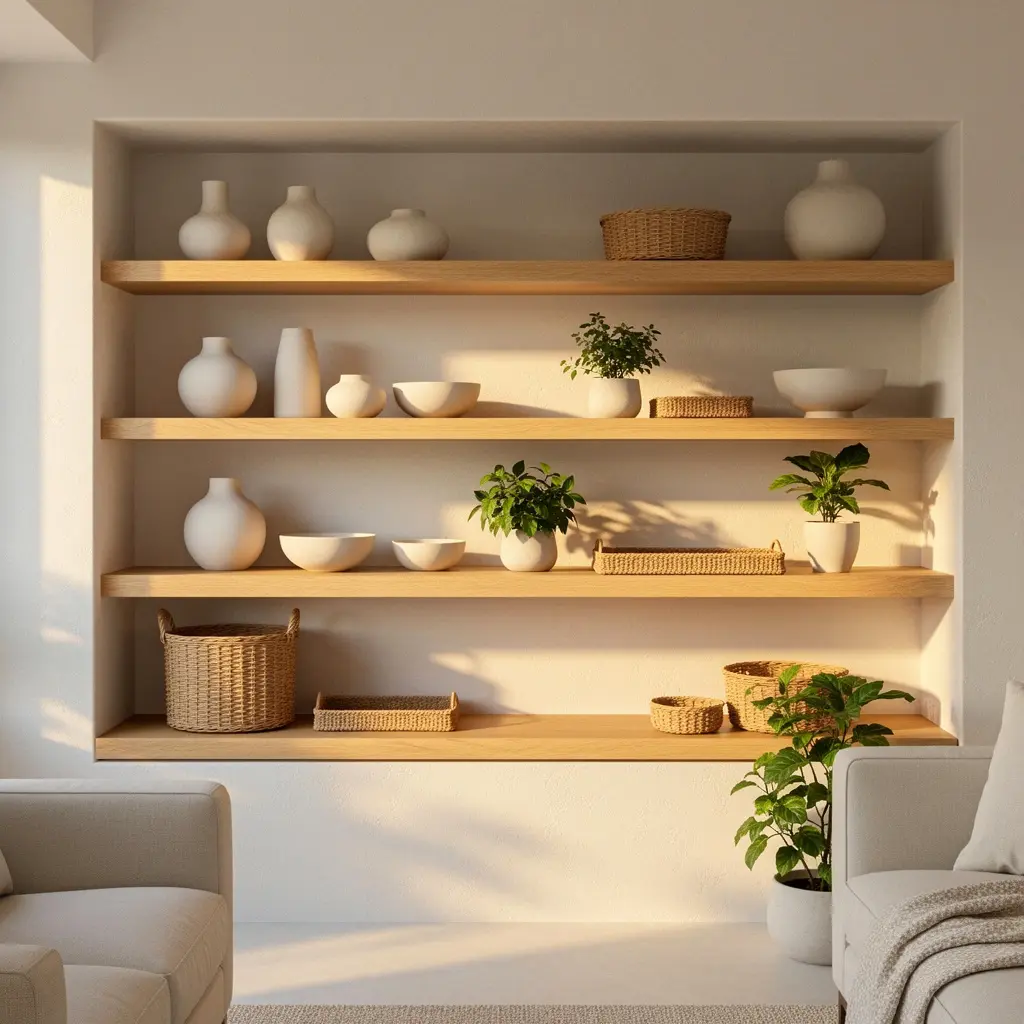
Layering a few different natural materials, a matte ceramic vase, a small woven basket, a wood bowl, adds textural variety without introducing any color or pattern that would clash with the style’s overall calm feeling. This textural mixing is where a lot of the visual interest in a Japandi styled wall actually comes from, since color palette itself stays fairly restrained.
Avoid glossy, high shine finishes in favor of matte or naturally textured surfaces, since these read as calmer and more in line with the overall aesthetic. A rough, hand thrown ceramic piece fits this look far better than a polished, glossy vase, even in a similar shape and color.
6. Leave Deliberate Negative Space Around Every Grouping

Negative space isn’t a byproduct of not having enough decor in Japandi styling, it’s an intentional design choice. Leaving visible empty space around and between objects on each shelf, roughly a third to half of the shelf’s total surface, is what gives the styling its calm, uncluttered quality.
This is often the hardest habit for people to stick with, since the instinct is usually to keep adding things until a shelf feels full. Resisting that instinct, and trusting that the empty space is doing real visual work, is a core part of getting this style right.
7. Use a Muted, Warm Neutral Color Palette Throughout

Japandi color palettes lean heavily on warm whites, soft beige, light taupe, and muted greens or terracotta used sparingly as small accents. Avoid bright, saturated colors or high contrast black and white combinations, both of which tend to feel more like a different, bolder minimalist style than the specifically warm, soft quality Japandi is known for.
Keeping the wall color itself in a warm off white or soft neutral, rather than a stark bright white, also supports this palette and makes the wood tones and natural textures on the shelves stand out more clearly against the backdrop.
8. Add One Piece of Art or a Textile for Softness

A single piece of art, ideally something simple and abstract or a quiet landscape rather than anything busy or high contrast, adds another layer of warmth to the wall without disrupting its calm feeling. Alternatively, a small woven wall hanging or a piece of textured fabric art brings in the same kind of soft, tactile quality that defines the rest of the styling.
One piece is generally enough for this kind of wall. Multiple competing art pieces start to shift the look away from the restrained Japandi feeling and toward a busier gallery wall style instead.
9. Bring in a Single Plant for Organic Contrast

A small trailing plant, like a pothos or a subtle draping fern, on one of the shelves introduces a bit of organic, living contrast against all the straight lines and manufactured materials elsewhere on the wall. This single green touch does a lot to soften the overall look without requiring multiple plants or a full dedicated plant display.
Choose a simple, unfussy pot in a matte ceramic or woven material to keep the plant consistent with the rest of the wall’s material palette, rather than a bright or patterned pot that would stand out too much against the otherwise muted styling.
10. Step Back and Edit Once the Wall Is Fully Styled

Once the shelves are styled, step back, ideally viewing the wall from where you’d actually sit in the room, and honestly assess whether anything feels like it’s competing for attention or crowding the space. It’s common to add one or two objects too many in the initial styling process, and removing even a single item can noticeably improve the overall balance.
This kind of editing is really the final, essential step in Japandi styling, since the difference between a wall that feels calm and considered versus one that feels merely sparse or awkwardly cluttered often comes down to just one or two objects too many. Live with the wall for a week or two, and don’t hesitate to remove something that isn’t quite working once you’ve actually seen it in daily use.
Mistakes to Avoid
- Choosing a dark, heavily stained wood tone instead of a warm light to medium finish
- Overcrowding each shelf instead of leaving deliberate negative space
- Mixing in bright, saturated colors that clash with the muted Japandi palette
- Adding multiple competing art pieces instead of one considered focal piece
- Using glossy, high shine objects instead of matte, naturally textured ones
- Skipping the final editing step and leaving the wall slightly overstyled
Frequently Asked Questions
What wood tone works best for a Japandi floating shelf? Light to medium tones like oak, ash, or light walnut are the most common choices, since they read as warm without leaning into the darker, more traditional feeling of heavily stained wood. Matching or intentionally complementing existing wood tones in the room helps the shelves feel cohesive.
How many objects should go on a Japandi styled shelf? Two to four objects per shelf is a good general range, chosen deliberately rather than added to fill space. Leaving visible negative space around the grouping matters just as much as the objects themselves.
Can Japandi work in a small living room? Yes, the restrained, edited nature of Japandi styling actually suits small spaces well, since it avoids the visual clutter that can make a small room feel even more cramped. A single floating shelf, rather than a staggered pair, is often the better choice for a smaller wall.
What colors should I avoid in Japandi styling? Bright, saturated colors and high contrast black and white combinations tend to clash with the warm, muted palette that defines Japandi. Sticking to warm whites, soft beige, and muted natural tones keeps the styling consistent with the overall look.
Do I need real plants for a Japandi wall to work? A real plant adds a nice organic contrast, but a high quality faux version can achieve a similar visual effect if a real plant isn’t practical for the light conditions or your care schedule. The key is keeping the pot simple and consistent with the rest of the material palette either way.
Conclusion
A warm Japandi living room wall with floating shelves comes down to restraint, natural materials, and deliberate negative space rather than filling every inch with decor. Choose a warm wood tone to anchor the shelves, style with fewer, more considered objects, and don’t skip the final editing step once everything is up. Done well, this kind of wall becomes one of the calmest, most intentional features in the whole living room, without ever feeling bare or unfinished.