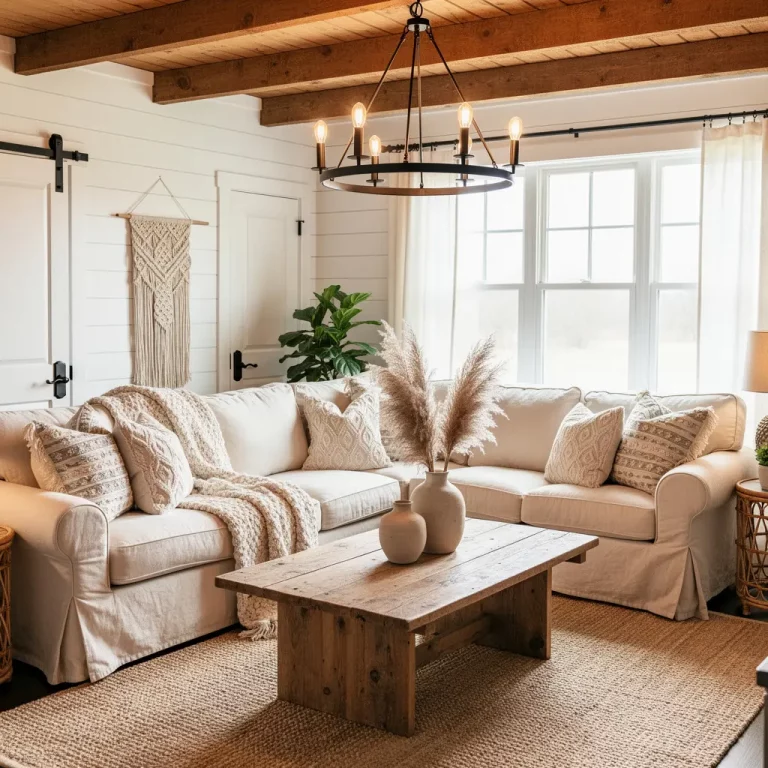
10 Minimal Home Decor Ideas for a Calm & Cozy Space
Two rooms can follow the exact same minimalist blueprint, a few furniture pieces, a neutral palette, plenty of open space, and end up looking completely different. One feels calm, considered, and quietly upscale. The other just looks like someone hasn’t finished decorating yet. Budget size has surprisingly little to do with that gap. What matters more is a handful of specific choices: material, proportion, and restraint applied with actual intention, not as an excuse to buy less.
Plenty of people set out to build a calm, minimal room and end up with something that just feels unfinished. The furniture is there. The neutral palette is there. What’s missing is the quiet layer of decisions that makes an empty seeming room feel purposeful instead of abandoned halfway through.
1. Why Minimal Decor Sometimes Reads as Cheap Instead of Upscale

Minimalism gets treated as a shortcut sometimes, fewer purchases, less to think about, and that mindset shows up in the finished room. A handful of budget pieces spread thin across a space looks sparse, not intentional. Real minimalism was never about buying less for its own sake. It’s about buying carefully and stopping once a room actually works.
The rooms that get this right treat every remaining piece as load bearing, visually speaking. With fewer objects in the room, each one has to earn its place. That pressure is exactly what gets skipped when minimalism turns into an excuse to spend less rather than choose better.
It’s worth being honest about which category a room actually falls into. A truly minimal room and an underfurnished one can look almost identical in a quick photo, but they feel completely different to stand inside, and that feeling is where the real difference lives.
2. Choose Fewer Pieces, But Make Each One Count

A room with three well made pieces almost always looks more expensive than one with eight mediocre ones, even at a similar total price. Fewer objects means each one gets more visual attention, so a cheap looking piece stands out far more starkly in a sparse room than it would buried among a dozen others.
Deciding What Stays and What Goes
Before adding anything new to a minimal space, ask whether it’s genuinely necessary or whether the room works fine without it. A minimal room earns its calm feeling through editing. Not through accumulating fewer things that are still mediocre.
3. Prioritize Material Over Trend When Shopping

Solid wood, linen, wool, stone, and leather hold up visually and physically over time in a way laminate, polyester blends, and glossy plastic never quite manage. A trendy shape in a cheap material dates fast and looks worse the longer it sits in a room. A simple shape in a good material ages well and photographs consistently no matter how many years pass.
This matters more in minimalism than in a heavily decorated room, since there’s nothing else competing for attention. A cheap material has nowhere to hide when it’s the main feature on an otherwise bare wall or floor.
4. Get Proportion Right Before Anything Else

Furniture that’s slightly undersized for a room is one of the fastest ways to make an expensive piece look cheap and out of place. A sofa that looks small against a large wall, or a coffee table dwarfed by the seating around it, throws off the whole room’s sense of scale no matter how nice each individual piece is.
Measure the room carefully and lean toward slightly larger, more substantial furniture. Compact pieces meant to save space usually end up looking like a starter apartment setup instead of a considered one.
5. Add Texture So the Room Doesn’t Feel Flat

A room built entirely from smooth, matte surfaces, walls, floors, upholstery, can end up feeling sterile rather than calm. Boucle, raw linen, a nubby wool rug, and unfinished or lightly textured wood all add tactile depth that keeps a minimal room from feeling empty.
Three or four distinct textures within the same neutral color family usually does more visual work than adding another piece of furniture would. Texture is often the missing ingredient in a minimal room that feels flat despite good bones.
6. Use a Tight, Considered Color Palette

Sticking to two or three closely related tones, several shades of cream and warm white, for example, feels far more intentional than a room where every piece is a slightly different shade of the same general color family without any coordination. A scattered palette, even a neutral one, undercuts the calm cohesion minimalism depends on.
Bring physical swatches or fabric samples together in the same light before committing to furniture and paint. It catches small mismatches that are easy to miss shopping online, one item at a time.
7. Invest in Hardware and Small Details

Cabinet pulls, drawer handles, light switch covers, and door hardware are small enough to overlook but visible enough to notice, especially in a room with little else competing for attention. Cheap plastic or thin stamped metal hardware undercuts an otherwise well chosen room in a way that’s hard to pinpoint but easy to feel.
Solid brass, cast iron, or well finished wood hardware costs more per piece but rarely needs replacing. In a minimal space, these small details carry more weight than they would in a busier room full of other things to look at.
8. Let Negative Space Do Real Work

Empty wall space, open floor area, and a bit of breathing room around furniture aren’t gaps waiting to be filled. They’re part of the design. A room that leaves visible negative space feels deliberate and confident, while one where every surface gets covered starts to undercut the minimalist premise entirely.
This is often the hardest habit to build, since most people feel an instinct to fill empty space with something. Resisting that instinct, at least some of the time, is part of what separates a genuinely calm room from one that’s just sparsely decorated.
9. Choose Lighting That Feels Layered, Not Bare

A single overhead fixture as the only light source flattens a minimal room and makes it feel unfinished after dark, regardless of how nice the furniture looks during the day. Layering in a floor lamp, a table lamp, or wall sconces, even just one or two additional sources, adds warmth and dimension a bare ceiling light can’t provide alone.
Warm bulbs in the 2700K to 3000K range, dimmed lower in the evening, do more to create an upscale mood than any single fixture purchase, and that holds especially true in a minimal room where lighting carries more of the atmosphere.
10. Where a Small Splurge Changes Everything

Not every piece in a minimal room needs the top price tag, but choosing one item to genuinely invest in, a substantial sofa, a solid wood table, a real piece of art, gives the room an anchor that everything else can support rather than compete with. That single higher quality piece often does more for the room’s overall feel than spreading the same budget evenly across several mediocre items.
Choose this anchor piece early, before filling in the rest of the room, so every other decision gets made in relation to it, not as a series of disconnected purchases.
Mistakes to Avoid
- Treating minimalism as an excuse to buy fewer, cheaper things
- Choosing undersized furniture that throws off the room’s proportion
- Filling a room with only smooth, flat surfaces and no texture
- Scattering slightly mismatched neutral tones instead of a tight palette
- Overlooking cheap hardware and small details in an otherwise nice room
- Relying on a single overhead light instead of layering warmer sources
Frequently Asked Questions
Why does my minimalist room look cheap instead of upscale? It usually comes down to material quality, proportion, or a scattered color palette rather than the minimalist approach itself, which can look expensive when those details are handled carefully.
Do I need expensive furniture to make minimalism look upscale? Not entirely, but investing in one or two anchor pieces, like a substantial sofa or a solid wood table, makes a bigger difference than spreading a budget evenly across many mediocre items.
How much texture should a minimal room have? Three or four distinct textures within the same neutral color family usually adds enough tactile interest without breaking the calm, cohesive feeling minimalism depends on.
Is negative space really necessary in a minimal room? Yes. Visible empty space feels intentional and confident, and filling every surface tends to undercut the calm, considered feeling minimalism is meant to create.
What’s the easiest first change to make a minimal room feel more expensive? Layering in warmer, additional light sources beyond a single overhead fixture often makes the fastest, most noticeable difference for relatively little cost.
Conclusion
Minimal home decor that looks expensive comes down to material, proportion, and restraint applied with real intention, not simply owning fewer things. Choose fewer, better pieces, get the scale right for the room, and let some genuine negative space remain instead of filling every surface out of habit. Handled this way, a minimal room feels calm and considered rather than unfinished, which is really the whole difference between expensive looking minimalism and a room that just looks bare.