10 Elevated Kitchen Styling Ideas for a Rustic Countertop
A kitchen counter covered in mismatched appliances, random mail, and whatever landed there during the last grocery unload rarely feels styled, and that’s exactly the gap elevated kitchen styling with rustic countertop touches is meant to close. The goal isn’t a completely empty, showroom counter, since a kitchen still needs to function every day. It’s choosing a handful of natural, well made pieces that do real work while also making the space feel considered. This guide covers how to actually build that look, piece by piece.
1. Start by Clearing the Counter Down to the Essentials

Before adding any new styling pieces, clear the counter completely and only add back what genuinely needs to live there daily. A coffee maker used every morning earns its spot. A blender used twice a month probably belongs in a cabinet instead. This editing process alone often does more for a kitchen’s overall look than any new decorative object could.
A cluttered counter, no matter how nice the individual items are, reads as chaotic rather than styled, so this first step of subtraction matters more than most people expect going in. Once the essentials are back, there’s usually more visible counter space than it seemed like there was before.
2. Choose a Few Natural Materials as Your Styling Anchors

Rustic kitchen styling leans on natural materials, wood, ceramic, stoneware, woven fiber, rather than sleek plastic or heavily polished metal. Picking two or three of these materials to repeat across your counter styling, rather than one of everything, creates a cohesive look instead of a random assortment of nice individual pieces.
A warm wood tone paired with a matte ceramic finish is a common, reliable combination that suits a wide range of kitchen styles beyond just rustic specifically. Once you’ve settled on your material anchors, it becomes much easier to evaluate whether a new piece actually fits the look before bringing it into the kitchen.
3. Use a Wood Board as a Functional Styling Piece

A large wood cutting board, leaned upright against the backsplash or a wall rather than stored flat in a drawer, adds both function and visual warmth to a counter. This works especially well near a stove or prep area, where the board genuinely gets used regularly rather than sitting purely as decoration.
Choosing one substantial board over several smaller ones tends to look more intentional, since a single larger piece reads as a deliberate styling choice rather than functional clutter. A board with a visible edge grain or a slightly irregular natural shape adds even more of that rustic, handmade character.
4. Group Everyday Tools in a Ceramic or Stoneware Crock

Wooden spoons, spatulas, and other frequently used utensils tend to end up loose in a drawer or scattered across the counter without a dedicated home. A ceramic or ceramic look crock, positioned near the stove, gives these tools a defined spot while also adding a rounded, textural shape to the overall counter styling.
This is a genuinely functional piece, not purely decorative, which is part of why it works so well in an elevated but still lived in kitchen look. Choosing a crock in a warm, slightly earthy glaze rather than a stark white or bright color keeps it consistent with the broader rustic material palette.
A Note on Crock Placement
Position the crock within easy reach of the stove, since that’s where most of the tools inside it will actually get used. A crock placed purely for looks on the opposite side of the kitchen tends to result in tools ending up back in a drawer out of simple daily convenience.
5. Bring in a Few Glass or Ceramic Jars for Pantry Staples

Transferring a few frequently used dry goods, flour, sugar, pasta, coffee beans, into clear glass or simple ceramic jars adds visual interest to a counter while also keeping those staples fresher and easier to see at a glance. This is a case where a functional organizing habit doubles directly as a styling choice.
Sticking to two or three jars rather than a full matching set lined up in a row keeps the counter from looking like a retail display, which fits the more relaxed, elevated but still rustic feeling this style is going for. A single larger jar as a focal point, paired with one or two smaller ones nearby, tends to look more natural than a uniform row.
6. Add a Small Plant or Herb Pot for Life on the Counter

A small potted herb, basil, thyme, or rosemary, on the counter near a window brings a bit of living green into the space while also being genuinely useful for cooking. This is one of the easiest, lowest cost ways to add life and color to a kitchen counter without introducing anything that clashes with the natural material palette already in place.
If the counter doesn’t get enough natural light to support a living herb plant, a small dried bundle in a simple ceramic vase achieves a similar visual effect without the light requirement, though it won’t offer the same cooking convenience.
7. Layer in One Textural Element Like a Woven Basket or Runner

A woven basket, holding fruit or bread, or a simple linen runner underneath a cluster of styled items, adds a soft textural layer that breaks up the otherwise harder surfaces of wood, ceramic, and stone that dominate a rustic kitchen. This kind of texture layering is a small detail, but it’s often what separates a counter that looks merely tidy from one that looks genuinely styled.
One textural piece is usually enough for a single counter vignette. Adding too many competing textures, a woven basket, a knit trivet, a textured runner, all in the same small area, starts to look busy rather than intentional.
8. Keep Appliances Tucked Away or Chosen With Style in Mind
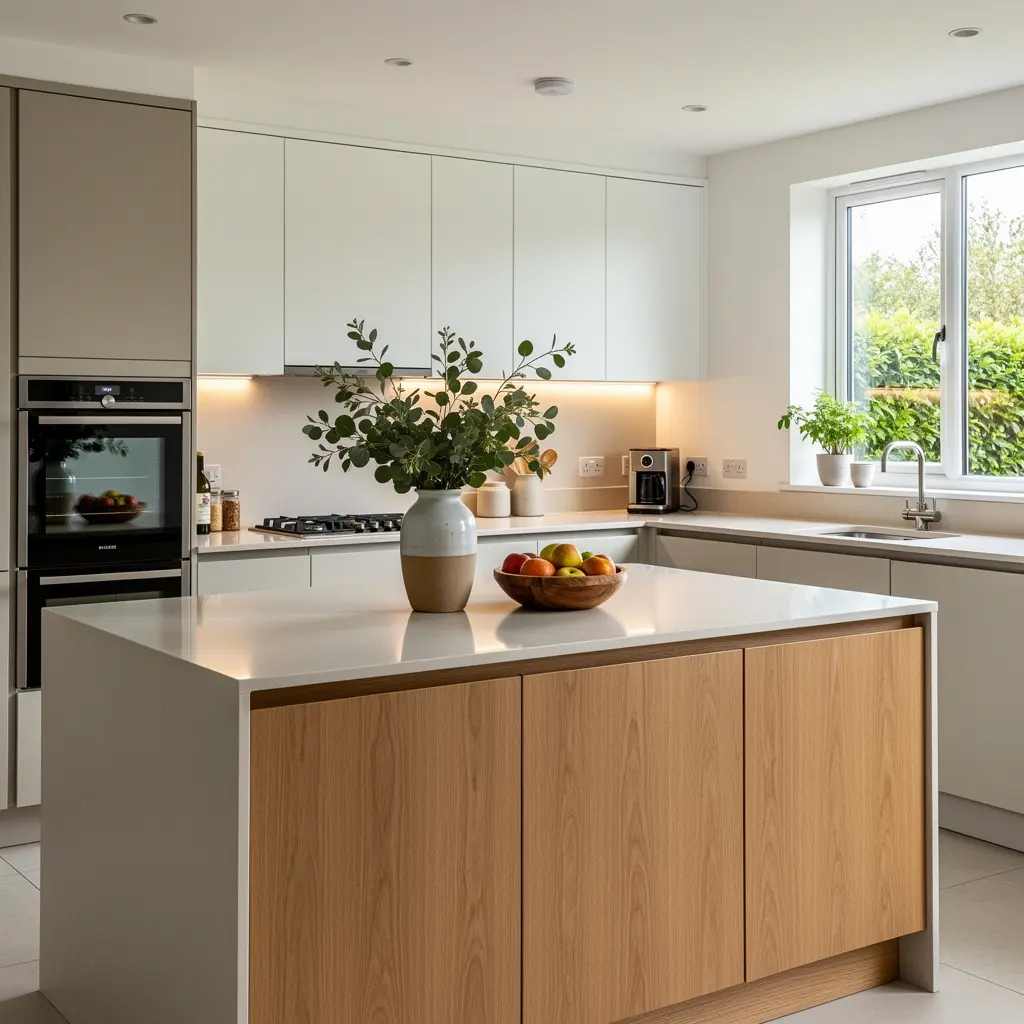
Appliances used daily, a coffee maker, an electric kettle, genuinely need to stay on the counter for practicality, but it’s worth considering their finish alongside the rest of your styling choices. A stainless steel or matte black appliance tends to blend into a rustic kitchen more seamlessly than a brightly colored or heavily branded one.
For appliances used only occasionally, a stand mixer, a food processor, storing them in a cabinet rather than leaving them out keeps the counter focused on the pieces that are actually contributing to the styled look, rather than crowding it with equipment that’s only in use once in a while.
9. Use Open Shelving to Extend the Rustic Look Upward

If the kitchen has open shelving, or if you’re considering adding a floating shelf above the counter, this space can extend the same rustic material story vertically. A few stacked ceramic bowls, a small collection of wood cutting boards in varying sizes, or a row of glass jars all continue the same look established on the counter below.
Keeping the shelf edited, with visible negative space between grouped items rather than filling every inch, matters just as much here as it does on the counter itself, since an overcrowded shelf undercuts the same elevated feeling you’re building below it.
10. Style in Odd Numbered Groupings for a More Natural Look

A common styling principle, grouping objects in odd numbers, three items rather than two or four, tends to create a more visually balanced, natural looking arrangement than perfectly even groupings. This applies well to a kitchen counter vignette. A wood board, a ceramic crock, and a small plant, for example, read as more intentional together than a symmetrical, evenly spaced pair.
Varying the height within that grouping too, a taller crock, a mid height jar, a low dish, adds even more visual interest than three items all sitting at the same level. This is a small compositional trick, but it consistently makes styled vignettes look more considered rather than randomly assembled.
Mistakes to Avoid
- Leaving every appliance out on the counter regardless of how often it’s actually used
- Mixing too many unrelated materials instead of anchoring around two or three
- Lining up a full matching set of jars instead of a more natural, varied grouping
- Placing a functional piece like a utensil crock somewhere inconvenient just for looks
- Overcrowding open shelving above the counter with no visible negative space
- Styling in even, overly symmetrical groupings instead of more natural odd numbered ones
Frequently Asked Questions
How do I style a kitchen counter without it looking cluttered? Start by clearing the counter down to genuinely daily use items, then add back only a few natural material pieces, a wood board, a ceramic crock, a small plant, grouped intentionally rather than scattered. Editing down first matters more than any specific styling choice that follows.
What materials work best for rustic kitchen styling? Wood, ceramic, stoneware, and woven natural fibers are the core materials associated with rustic kitchen styling. Sticking to two or three of these consistently, rather than mixing in a lot of plastic or high shine metal, keeps the look cohesive.
Can I do rustic kitchen styling in a modern kitchen? Yes, a few rustic material touches, a wood board, a stoneware crock, can work well as warm contrast against sleek modern cabinetry and countertops, rather than requiring the whole kitchen to be renovated in a rustic style. The contrast itself can look intentional and elevated.
Should I keep small appliances out on the counter? Only the ones used daily, like a coffee maker, are generally worth keeping out for convenience. Less frequently used appliances tend to work better stored in a cabinet, both for counter space and for keeping the styled areas focused and uncluttered.
How many items should be in a styled kitchen counter vignette? Three items is a commonly used, visually balanced starting point, varied in height and grouped with some negative space around them. This tends to look more intentional than either a single lonely object or a crowded cluster of five or six competing pieces.
Conclusion
Elevated kitchen styling with a rustic countertop touch comes down to editing first, then layering in a few natural material pieces that are actually doing real work in the kitchen rather than sitting purely for decoration. Choose your material anchors, wood, ceramic, woven texture, and style them in small, varied groupings rather than symmetrical rows or a crowded counter. Done well, this approach makes even a genuinely busy, well used kitchen feel considered rather than chaotic.