10 Crochet Flower Lamp Decor Ideas You’ll Want to Try
A store bought lamp can light a room just fine, but it rarely feels like it belongs to you the way a handmade piece does, and that gap is exactly what crochet flower lamp decor is meant to fill. A crochet flower shade or accent brings texture, warmth, and a bit of nostalgic charm that a plastic or fabric shade usually can’t match, all while still doing its actual job of casting light. This guide covers how to choose, style, and care for one, whether you’re buying a handmade piece or making your own.
1. Understand What Makes This Style Different From a Standard Lampshade
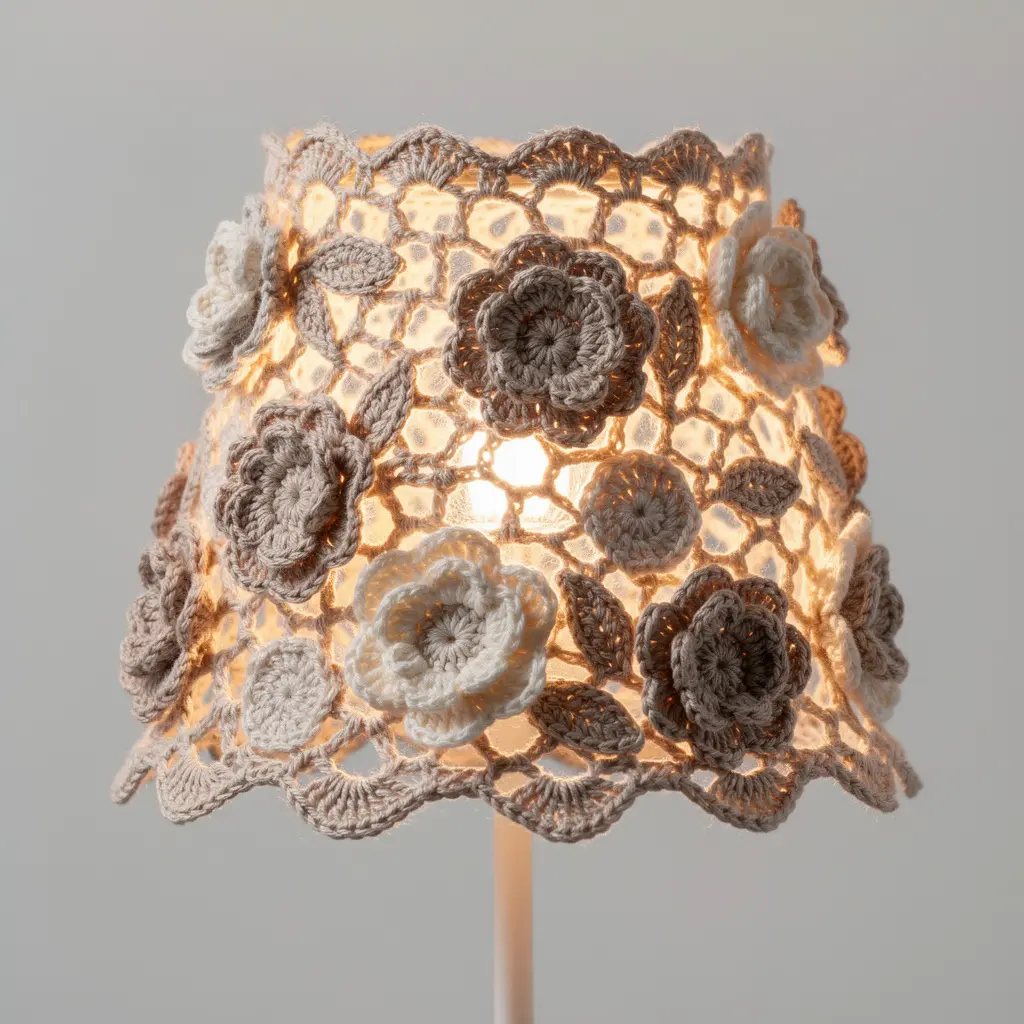
A crochet flower lamp typically features either a full crochet shade, worked in a granny square or flower motif pattern, or a plain fabric or wood lamp with crocheted flower accents attached around the base or shade edge. Both versions bring in handmade texture, but they create fairly different looks, one soft and diffused, one more sculptural and decorative.
The appeal of this style comes largely from its imperfection. Slight variations in stitch tension or flower placement are part of what makes a crochet piece feel handmade rather than mass produced, so it’s worth embracing a bit of that natural irregularity rather than seeking out a perfectly uniform look.
2. Choose a Base Lamp That Suits a Crochet Flower Shade
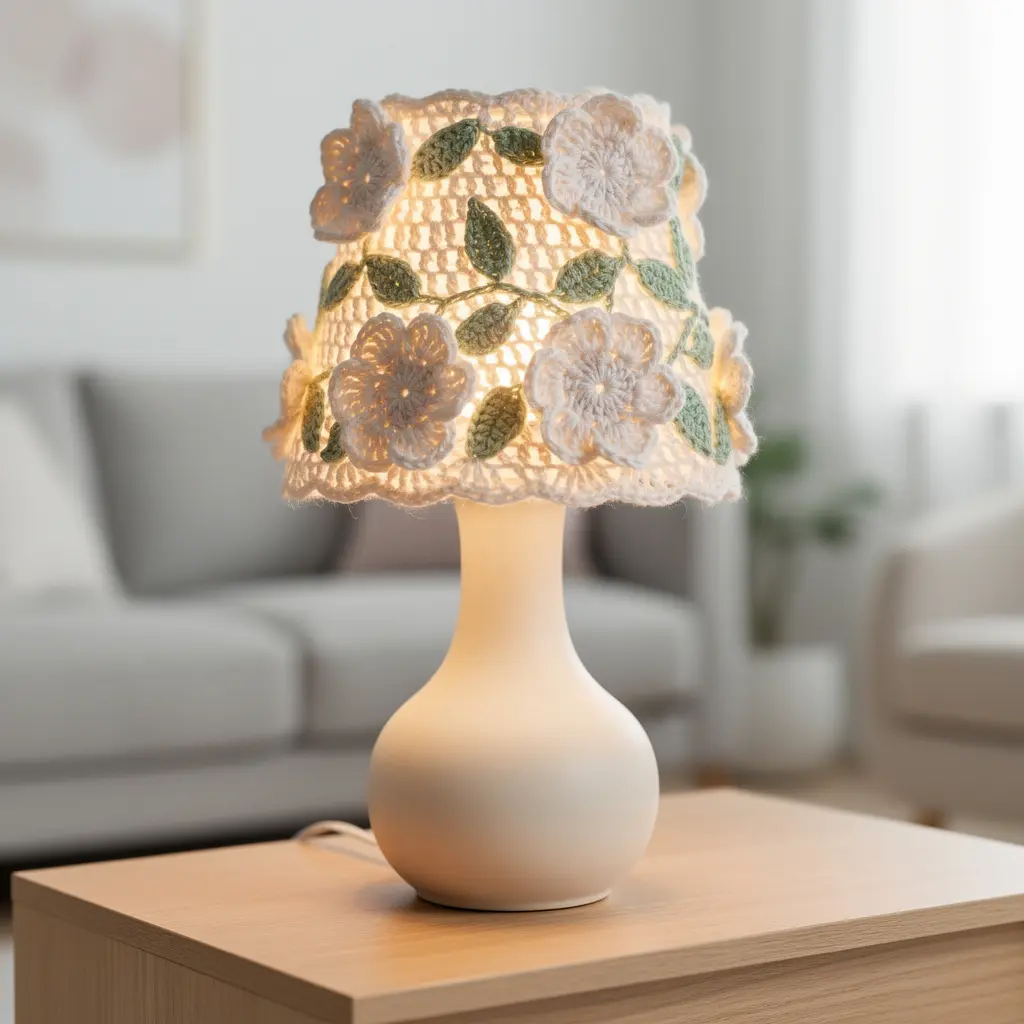
If you’re adding a crochet shade to an existing lamp base, look for a base with simple, uncomplicated lines, wood, ceramic, or a simple metal finish, so the base doesn’t compete visually with the textured shade on top. An overly ornate or heavily patterned base can clash with the softness of crochet work.
For a full crochet shade specifically, a simple drum or bell shaped lamp frame underneath, the kind typically covered in fabric on a standard lampshade, gives the crochet piece a stable structure to attach to or fit over. If buying new, look specifically for lamps sold with a plain frame meant for a fabric or crochet cover, rather than one with a shade permanently built in.
3. Pick Yarn Colors That Match Your Room’s Existing Palette
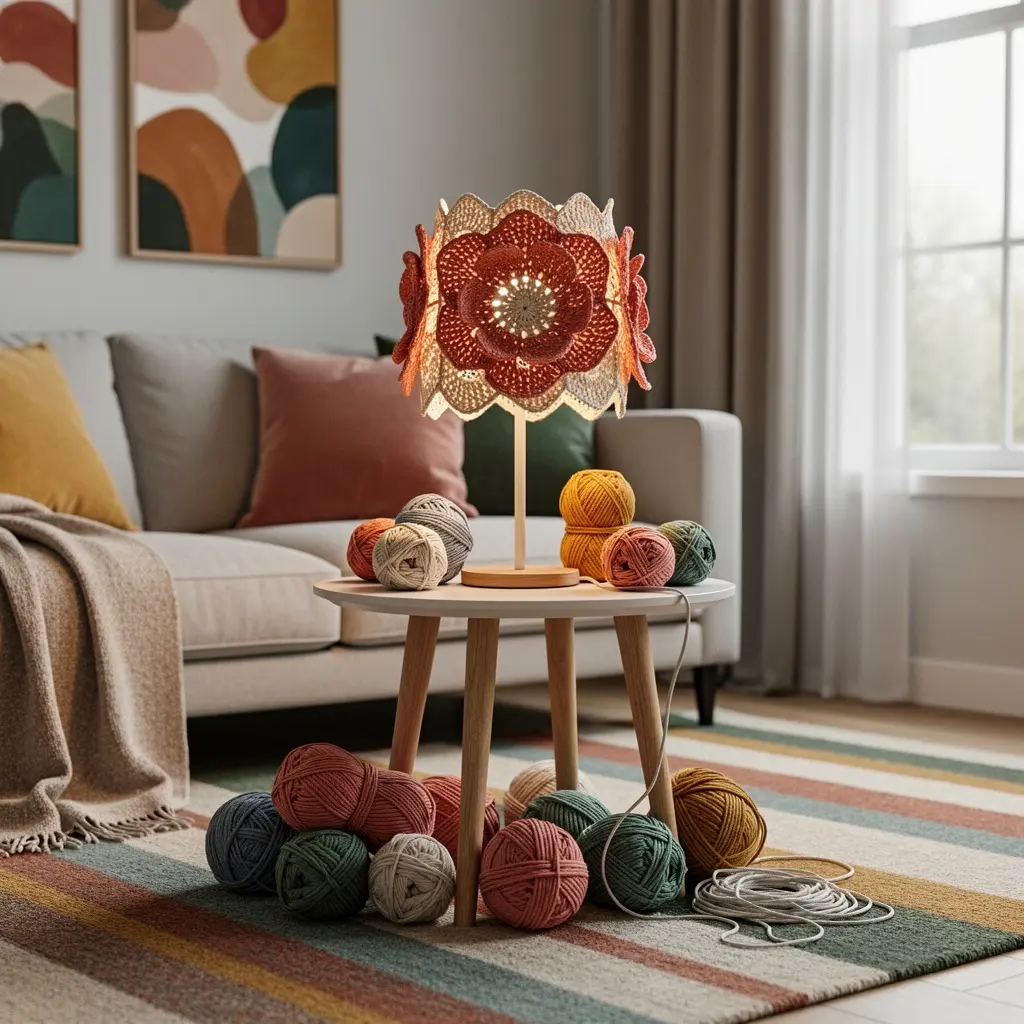
Crochet flower lamps are often associated with bright, varied colors, but a version worked in a room’s existing neutral or muted palette tends to blend more seamlessly into a broader range of home styles. Soft cream, dusty rose, sage green, and warm mustard are popular choices that fit both cottagecore and more general cozy, eclectic styles.
If your room already leans toward a bold or maximalist palette, a more vibrant, multicolor crochet lamp can work as an intentional statement piece instead. The key is choosing the color story on purpose, rather than defaulting to whatever colors happen to be available, since the yarn color affects both the daytime look and the tone of light the lamp casts once it’s on.
4. Decide Between a Full Crochet Shade and Flower Accents Only
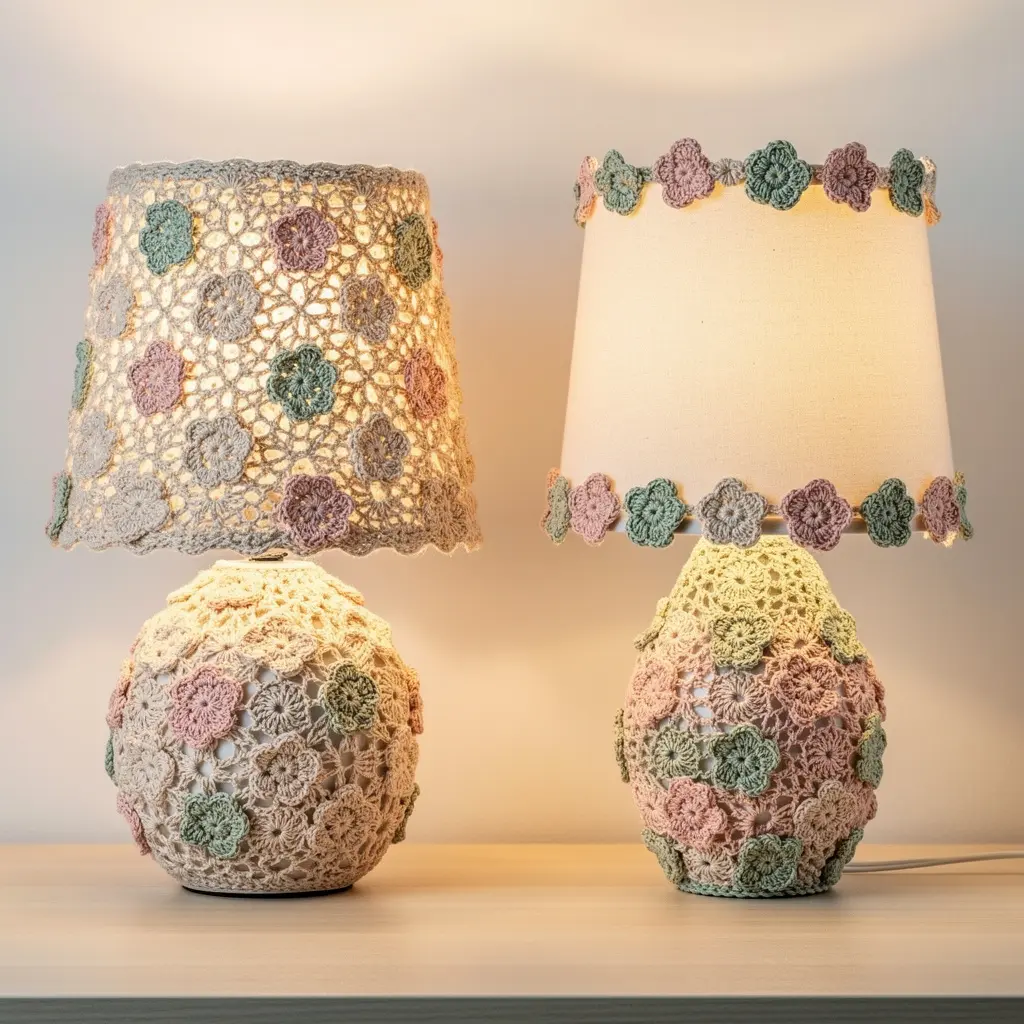
A full crochet shade diffuses light through the stitch work itself, creating a soft, slightly patterned glow on the wall or ceiling nearby, which is part of the charm but also means less direct light output than a standard opaque shade. This works well as an accent or mood lamp but may not be the best sole light source for reading or task work.
A standard shade with crochet flower accents added around the base or trim keeps the lamp’s light output closer to normal while still bringing in the handmade texture. If the lamp needs to function as a practical reading light, this second option is usually the more functional choice.
5. Consider Bulb Type and Brightness for Safety and Glow

Because yarn is a flammable material, it’s worth being deliberate about bulb choice with any crochet lampshade, whether full coverage or accent only. LED bulbs run significantly cooler than incandescent bulbs and are the safer, more practical choice for this application, since they reduce the risk of heat building up too close to the yarn.
Keep some distance between the bulb and the crochet material where possible, and avoid high wattage bulbs not specifically rated for the fixture. A warm white LED, in the 2700K range, also complements the cozy, handmade feel of the style better than a bright white or daylight bulb would.
6. Find the Right Room and Spot for This Style of Lamp
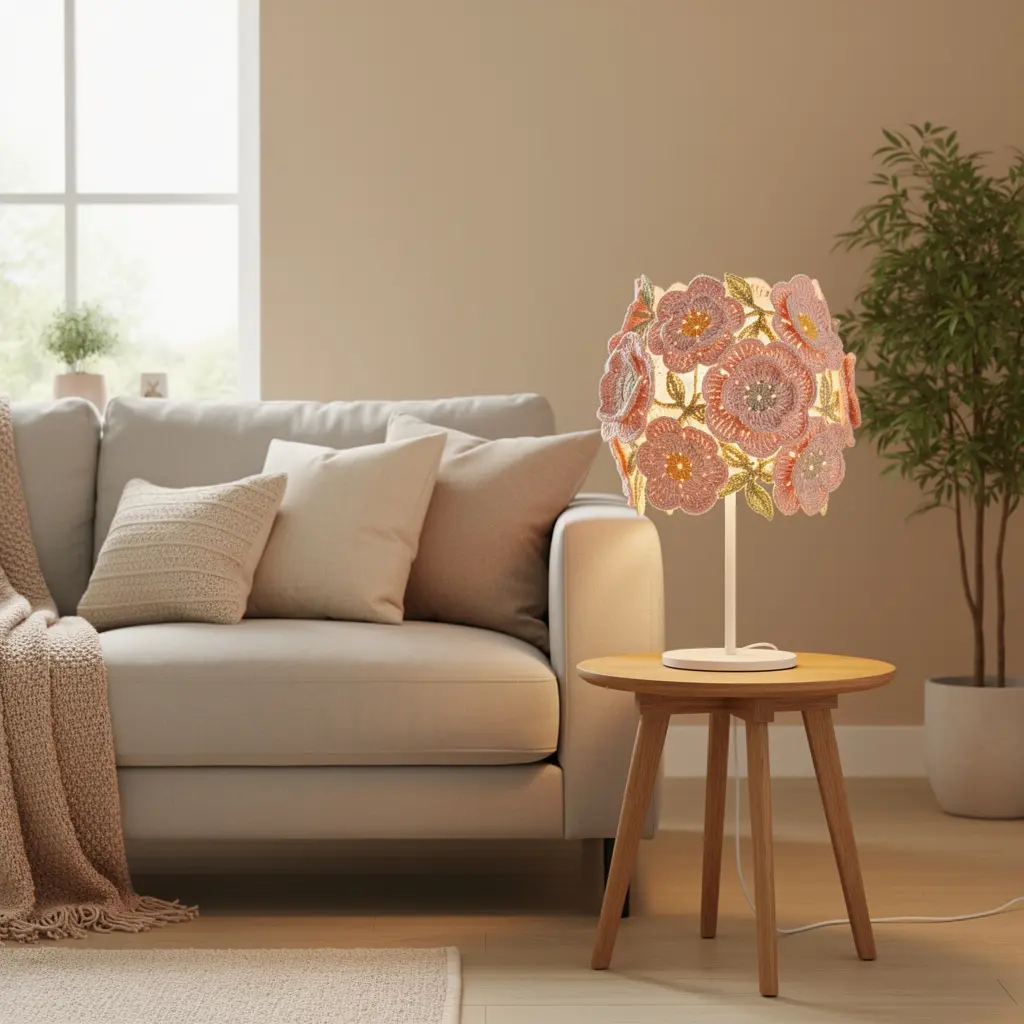
A crochet flower lamp tends to suit a bedroom nightstand, a reading nook, or a living room side table more naturally than a kitchen or bathroom, both because of the soft, cozy aesthetic and because those rooms tend to have more humidity, which isn’t ideal for yarn over time. A spot with some ambient light already, rather than a room’s sole light source, lets the lamp function more as a cozy accent than a primary utility light.
Placing the lamp somewhere it will actually be seen and used daily, rather than in a rarely visited guest room, also means you’ll get more enjoyment out of a piece that likely took real time and care to make or source.
7. Pair the Lamp With Other Handmade or Natural Textures
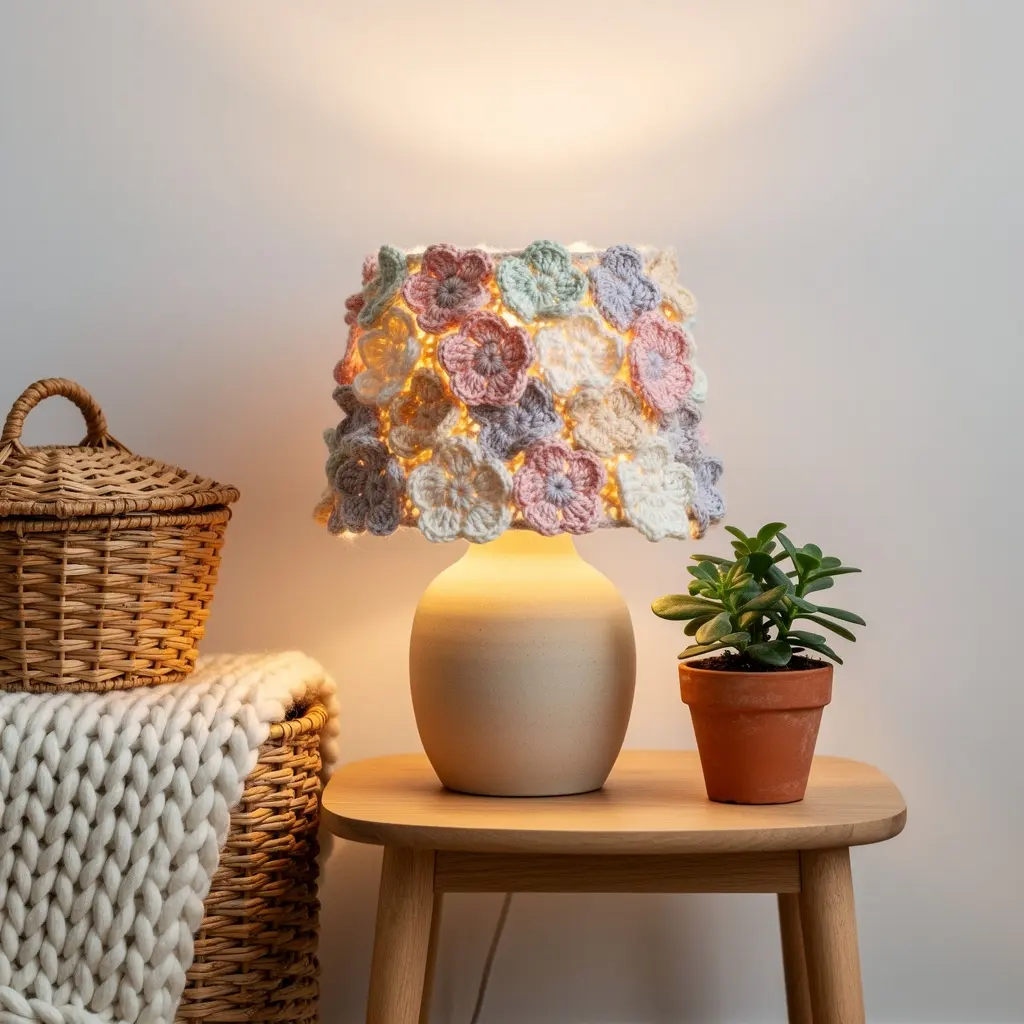
A crochet flower lamp tends to look most at home surrounded by other natural or handmade textures rather than sitting alone on an otherwise sleek, modern surface. A woven basket, a ceramic vase with a hand thrown texture, or a linen table runner all complement the lamp’s handmade quality rather than contrasting sharply against it.
This doesn’t mean the whole room needs to match the style. One or two other textured pieces nearby is usually enough to make the lamp feel intentionally placed rather than randomly dropped into an otherwise very different aesthetic.
8. Know the Basics of Caring for a Crochet Lampshade
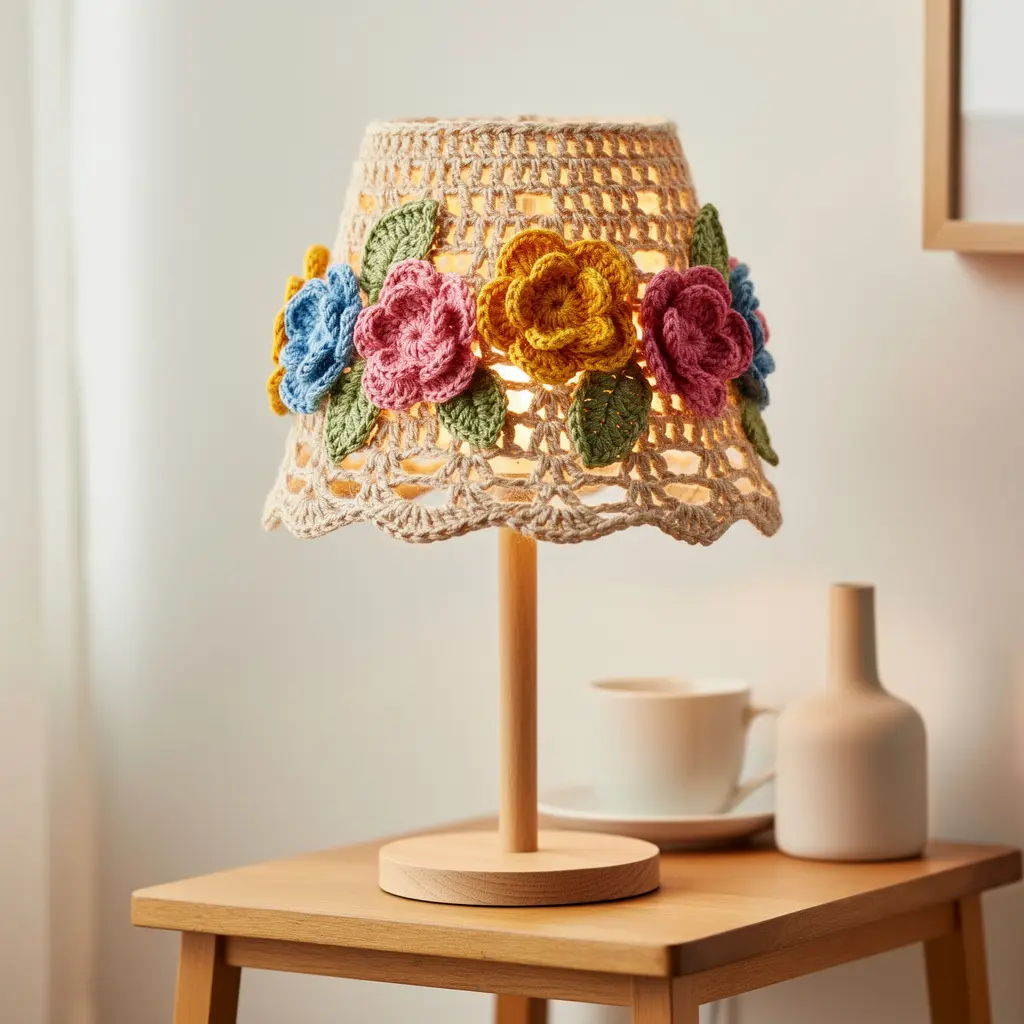
Yarn shades collect dust more visibly than smooth fabric or plastic ones, given the texture and open stitch work, so a light dusting every couple of weeks with a soft brush attachment keeps the piece looking fresh. Avoid harsh cleaning products directly on the yarn, since most crochet pieces are better spot cleaned than fully washed while attached to a lamp base.
If the yarn is a natural fiber like cotton, it will generally hold color and shape better over time than an acrylic yarn exposed to consistent heat from the bulb. This is worth considering if you’re buying or making a piece meant to last for years rather than a single season.
9. Decide Whether to Buy Handmade or Make Your Own
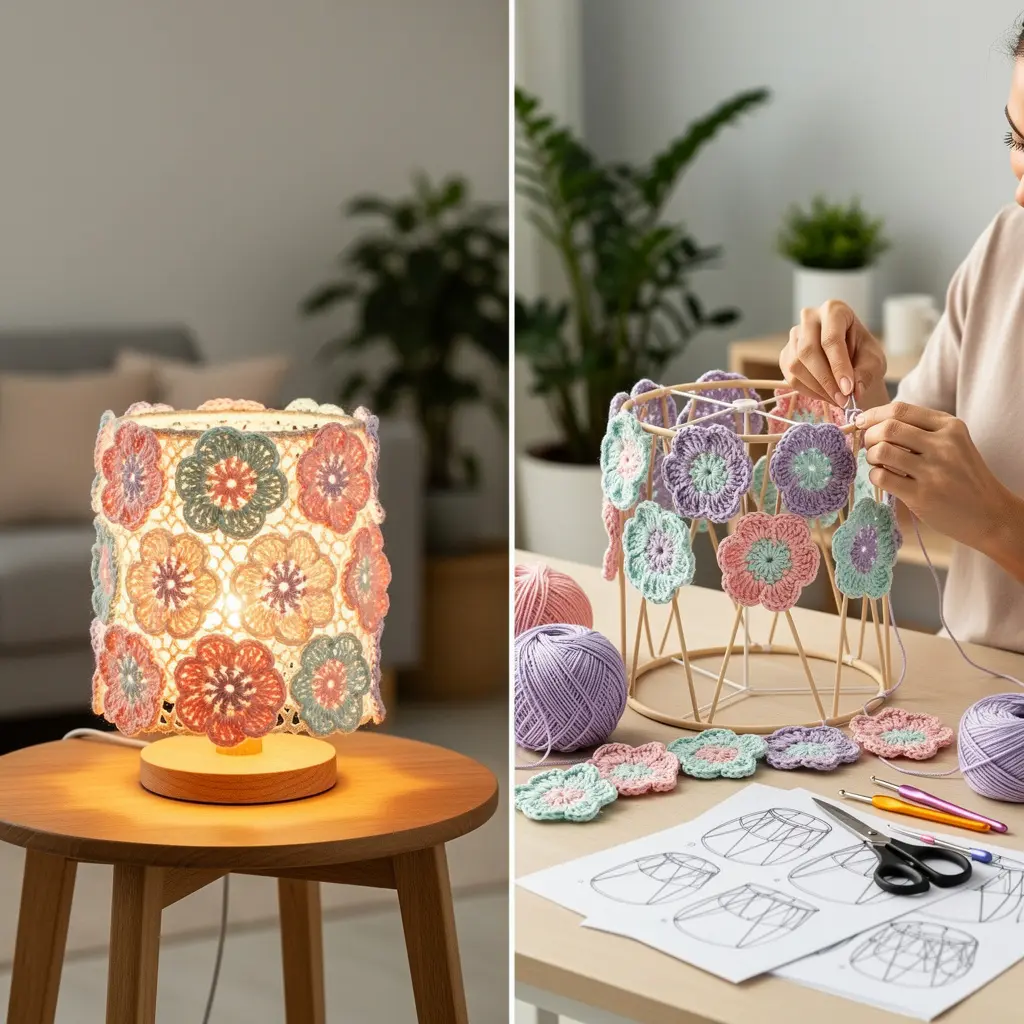
Handmade crochet flower lamps are widely available through independent sellers and craft marketplaces, and buying one supports an actual maker’s time and skill, which is worth factoring into the price compared to a mass produced lamp. Prices vary quite a bit based on size and complexity, so it’s worth comparing a few sellers before deciding on a specific piece.
If you already crochet, or are interested in learning, a flower lamp is a genuinely approachable beginner to intermediate project, since individual flower motifs are typically smaller, quicker projects compared to a full garment. Attaching finished flowers to an existing plain shade is often easier for a first attempt than crocheting an entire shade from scratch.
10. Style Around the Lamp Instead of Letting It Compete for Attention
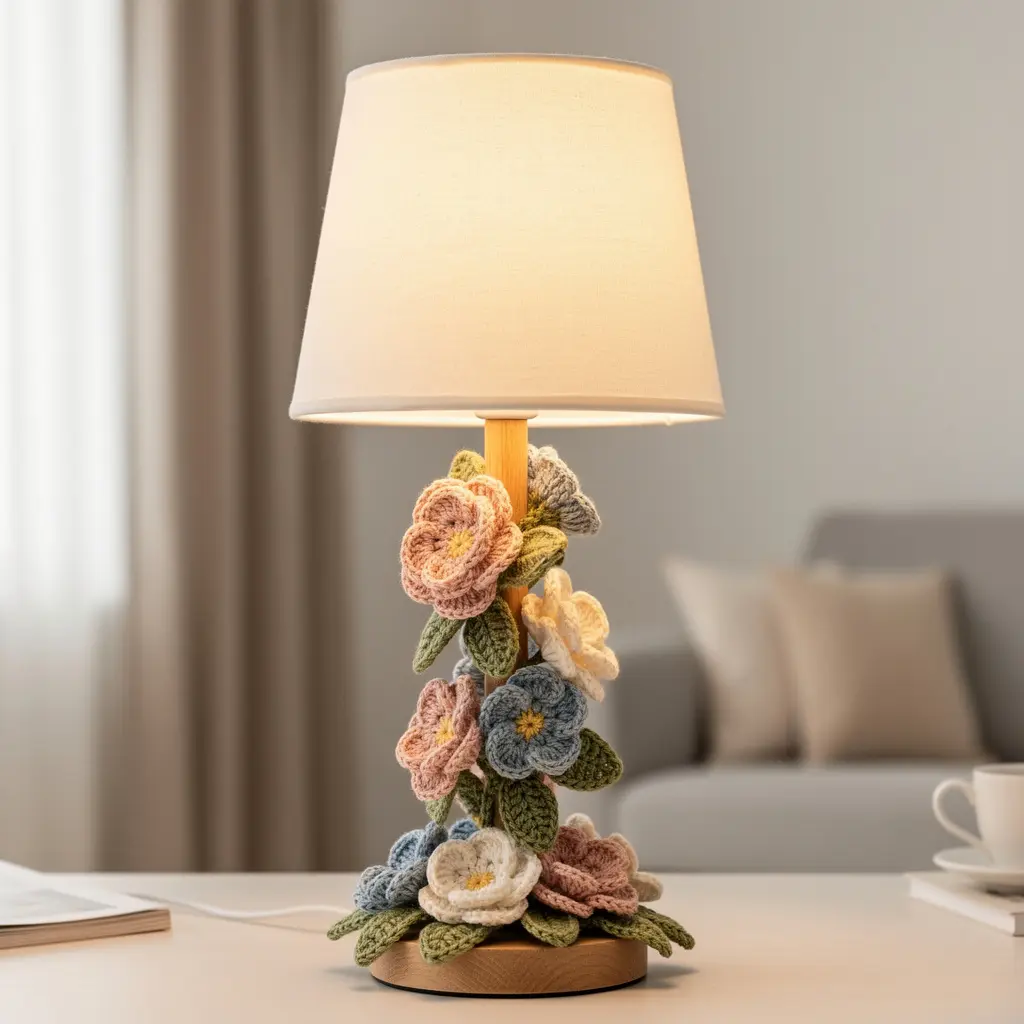
Because a crochet flower lamp already brings in color, texture, and a handmade quality, it works best as the star of its immediate surface rather than one of several competing statement pieces. Keep the surrounding decor, other objects on the same nightstand or table, relatively simple, a small stack of books, a single candle, so the lamp remains the clear focal point.
This is a case where restraint elsewhere in the styling actually makes the handmade piece stand out more, rather than getting lost among too many other textures and colors on the same small surface.
Mistakes to Avoid
- Choosing a busy, ornate lamp base that competes visually with the crochet shade
- Using a high wattage or hot running bulb too close to the yarn material
- Defaulting to bright, mismatched yarn colors instead of choosing a palette on purpose
- Placing the lamp in a humid room like a bathroom, where yarn holds up less well over time
- Overcrowding the surrounding surface with too many other textured objects
- Skipping regular dusting, which shows more visibly on open crochet stitch work
Frequently Asked Questions
Is a crochet lampshade a fire hazard? Any fabric or yarn shade carries some fire risk if paired with the wrong bulb, so using a cool running LED bulb and maintaining reasonable clearance between the bulb and the yarn significantly reduces that risk. Avoid high wattage incandescent bulbs with any yarn based shade.
What yarn works best for a crochet lampshade? Cotton yarn is a popular choice for lampshades since it holds its shape well and is more heat resistant than some acrylic yarns, though a light gauge acrylic can also work fine with an LED bulb. Avoid very thick, bulky yarns for a full shade, since they block too much light to function well.
Can I make a crochet flower lamp if I’m a beginner? Yes, individual crochet flowers are a common beginner project, since they’re small, quick to finish, and don’t require advanced shaping skills. Attaching a few finished flowers to a plain existing lampshade is an accessible starting project before attempting a full crochet shade.
Do crochet lamps work in a modern, minimalist room? They can, especially if you choose a single neutral or muted color rather than a bright multicolor design, letting the texture stand out more than the color itself. Pairing it with otherwise simple, uncluttered styling around the lamp also helps it fit a more minimal space.
How do I clean a crochet lampshade without damaging it? Light, regular dusting with a soft brush attachment is generally the safest approach while the shade stays on the lamp. If the yarn allows it, spot cleaning with a damp cloth on visible marks works better than fully washing an attached shade, since drying can be difficult and may affect its shape.
Conclusion
Crochet flower lamp decor brings a genuinely handmade warmth into a room that a standard store bought fixture usually can’t replicate, whether you buy a piece from an independent maker or crochet one yourself. Choose a simple base that lets the texture stand out, pick a color palette that fits your room on purpose, and use a cool running bulb to keep the piece both safe and long lasting. Styled with a bit of restraint around it, this small handmade detail can end up being one of the coziest, most personal pieces in the whole room.