10 Cozy Corner Plant Shelf Ideas for Small Spaces
An empty corner and a windowsill that’s already overflowing with plant pots is a common combination, and it’s exactly the gap a cozy corner plant shelf idea is meant to fill. Corners are some of the most underused space in most rooms, yet they’re often just tall enough and just tucked away enough to become the perfect home for a small plant collection. This guide covers how to actually plan one out, from light and shelf style to which plants pair well together, so the corner becomes a genuinely calming spot rather than another cluttered surface.
1. Assess the Corner’s Light Before Choosing a Single Plant
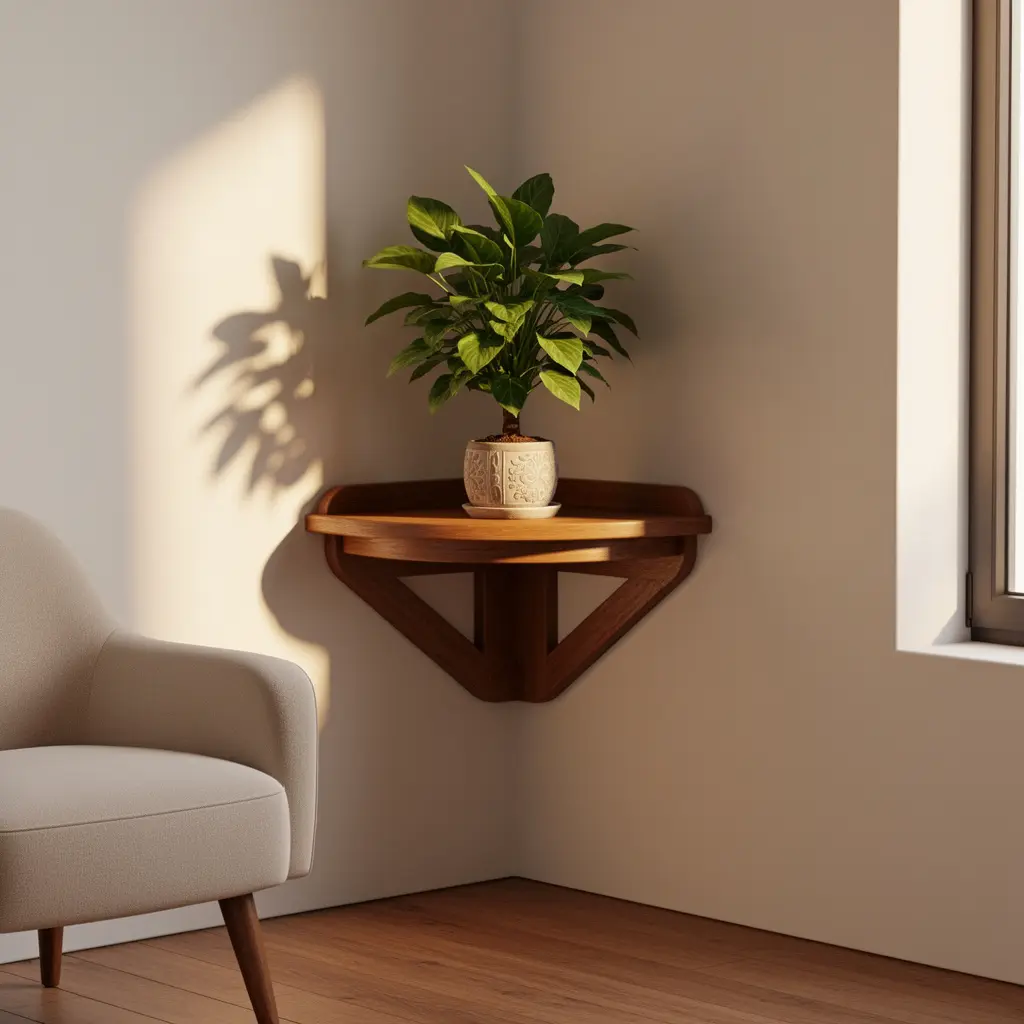
Before buying a shelf or a single plant, spend a few days actually observing the corner’s light throughout the day. A corner near a window that gets a few hours of indirect light can support a wider range of plants than one tucked against an interior wall with almost no natural light at all.
Matching plant choice to actual available light is the single biggest factor in whether a corner plant shelf thrives or slowly declines. If the corner gets very little natural light, it’s worth planning for a grow light from the start rather than hoping a sun loving plant will somehow adapt.
2. Choose a Shelf Style That Fits a Corner’s Awkward Shape
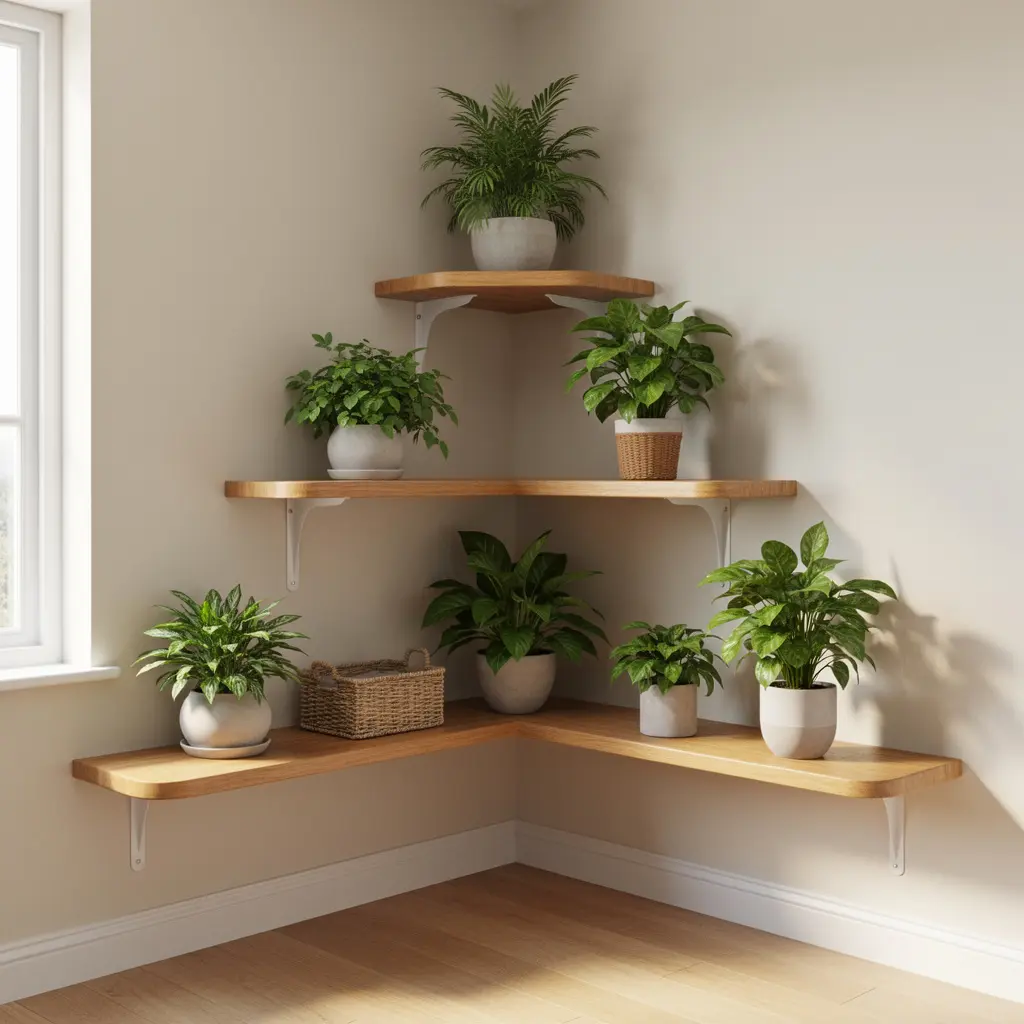
Standard shelves are built for flat walls, which is part of why corners so often sit empty. A corner specific shelf unit, either a stacked triangular design or a ladder style shelf angled to fit the space, makes much better use of that awkward geometry than trying to force a flat shelf into the gap.
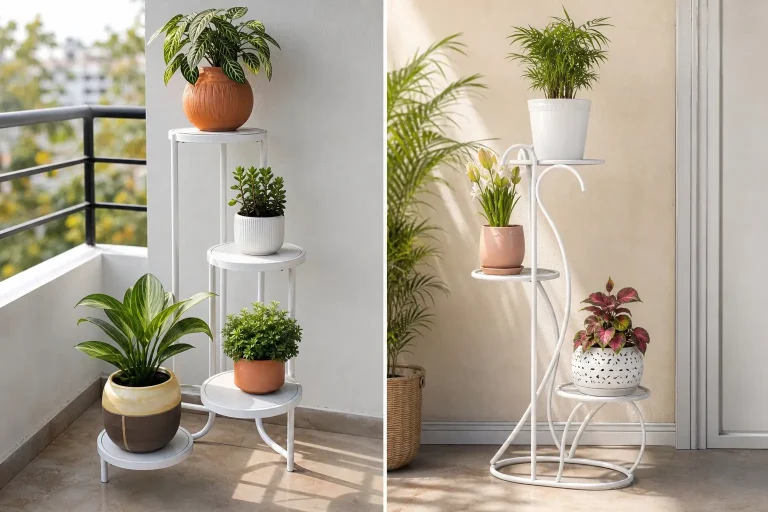
A tiered plant stand, with three or four graduated shelves, is another strong option for corners, since it naturally narrows toward the top the way a corner does. Measure the corner’s width at both the floor and a few feet up, since many corners are slightly uneven, before settling on a specific shelf style.
Freestanding vs Wall Mounted
A freestanding corner shelf or plant stand is easier to install and move later, which matters if you rent or like to rearrange. A wall mounted corner shelf frees up floor space entirely but requires drilling into two walls at an angle, which is a more permanent commitment.
3. Plan Plant Placement by Height, Not Just by Preference
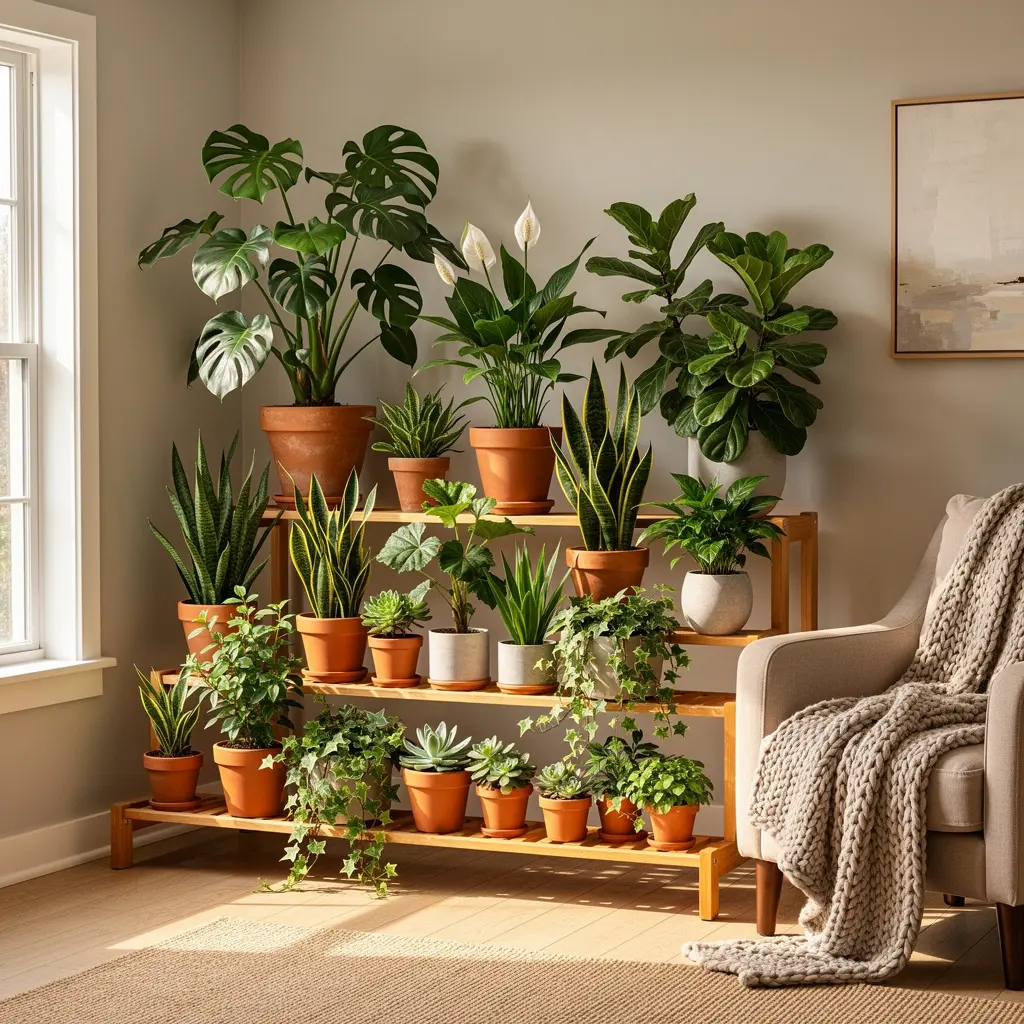
Placing your tallest plant on the bottom shelf and smallest on top might feel intuitive, but it usually looks better reversed, with trailing or shorter plants on lower shelves and taller, upright plants either at the very top or on the floor beside the unit. This creates a natural visual pyramid that draws the eye upward through the corner.
Grouping by height rather than randomly placing plants as they’re bought makes a noticeable difference in how intentional the whole corner looks. If a plant outgrows its shelf’s height over time, that’s usually the sign it’s time to move it to the floor or a different spot in the arrangement.
4. Mix Trailing, Upright, and Bushy Plants for Visual Variety
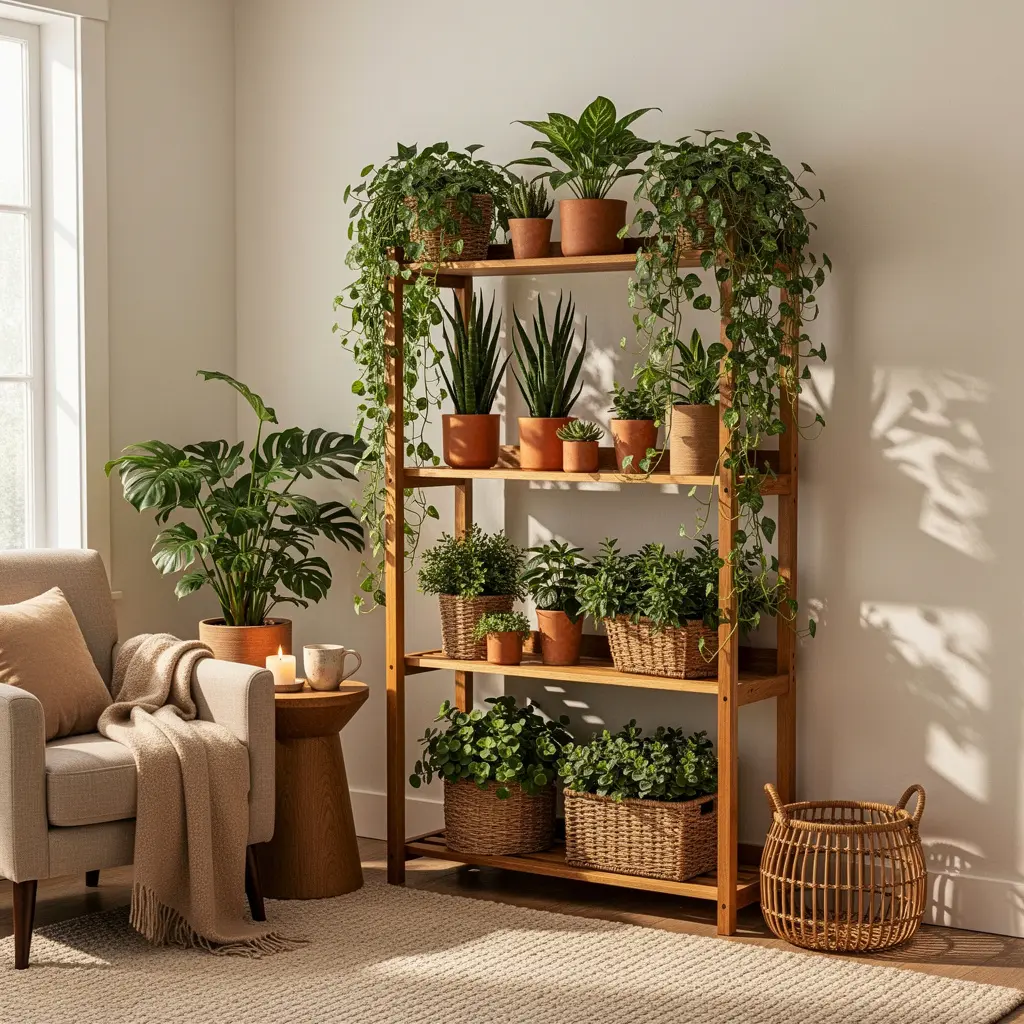
A corner filled entirely with the same plant shape, all upright, all trailing, tends to look flat compared to one with genuine variety. A trailing pothos or string of pearls on an upper shelf, paired with a bushy peace lily in the middle and an upright snake plant at the base, creates layers that make the whole corner feel fuller without needing more plants than you actually have room for.
This variety also has a practical benefit, since different plant shapes tend to have different light and care needs, giving you more flexibility to place each one where it will actually do well within the corner’s specific light conditions.
5. Use Pots and Planters That Feel Cohesive, Not Matched
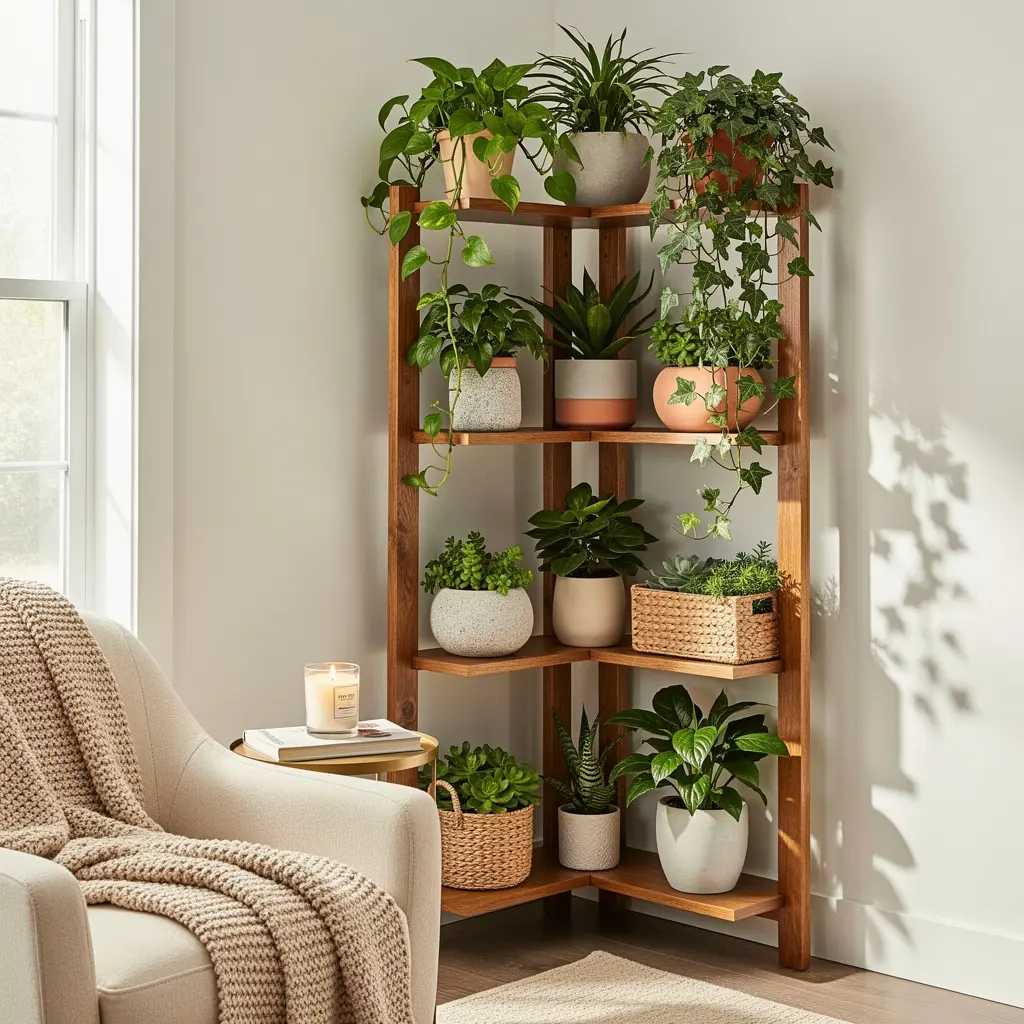
A set of pots in the exact same color and shape can look a little sterile in a corner meant to feel cozy and lived in. A cohesive but varied approach, sticking to two or three materials like terracotta, woven rattan, and matte ceramic, tends to feel warmer than a uniform matching set.
Cohesive doesn’t mean identical, it means the pots share enough in common, tone, material family, that they read as chosen together rather than accidentally different. Thrifted or secondhand pots often add the slight variation and character that a brand new matching set can’t replicate.
6. Add a Cozy Element Beyond Just the Plants Themselves
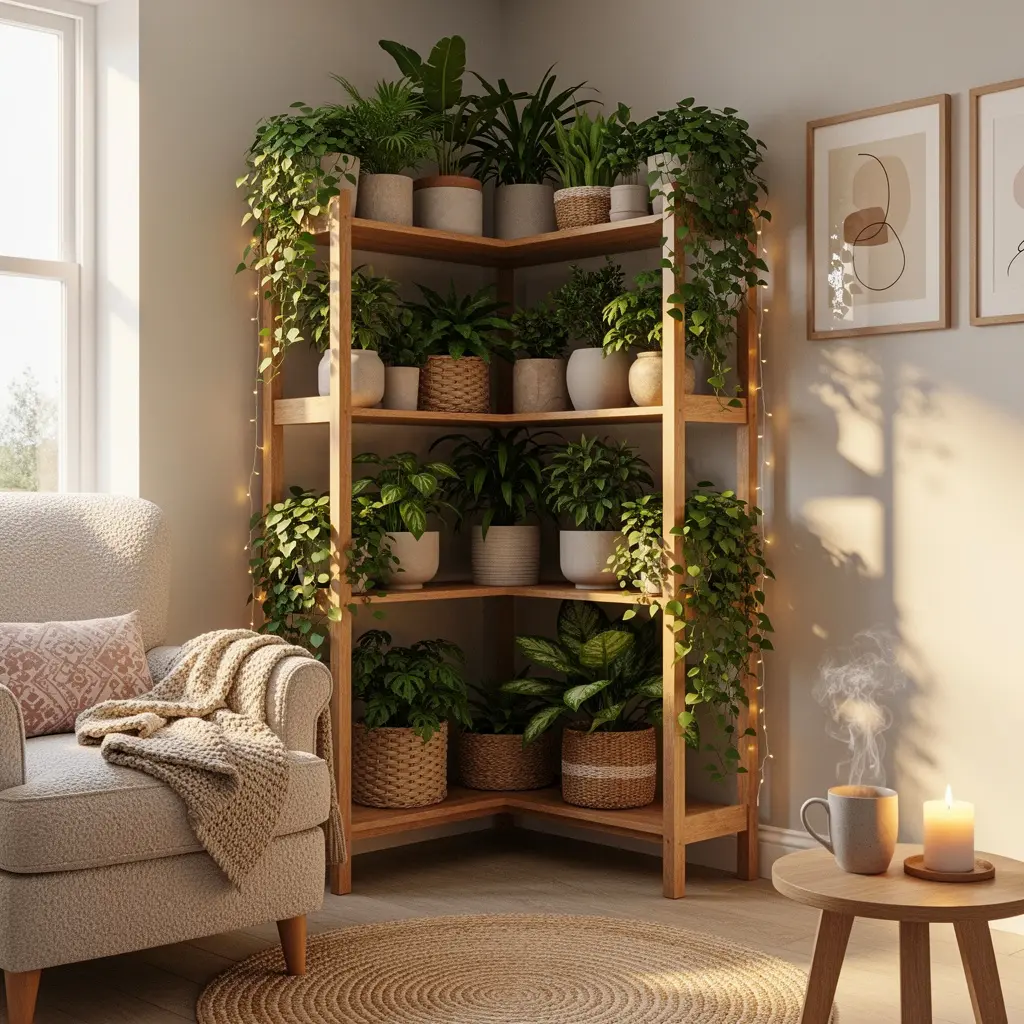
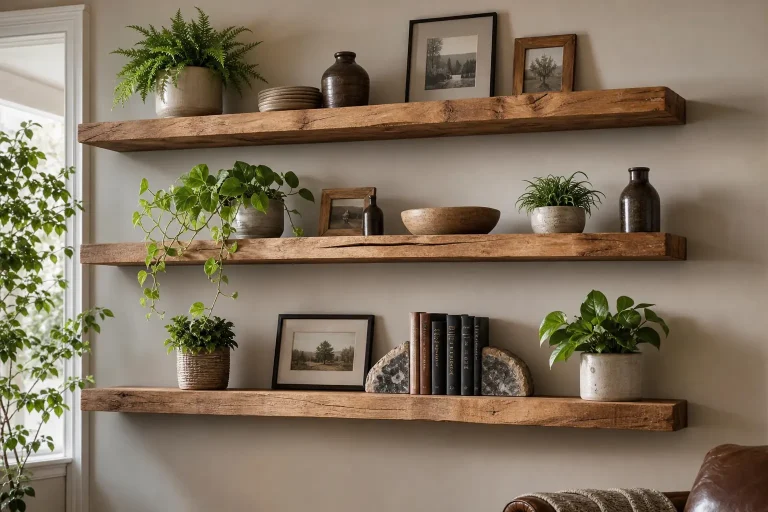
A plant shelf can feel more like a display case than a cozy corner if it’s only plants and nothing else. A small woven basket tucked at the base for extra pots or gardening supplies, a warm toned candle on one shelf, or a small stack of books adds a lived in element that plants alone don’t provide.
This is also a good spot for a single sentimental object, a small framed photo, a ceramic piece from a trip, since the corner is often tucked away enough to feel more personal than a main focal wall. One well chosen non plant object usually does more than several competing ones.
7. Think Through Watering Access Before You Finalize Placement

It’s easy to plan a beautiful corner shelf and forget that every plant on it eventually needs water, which is harder to manage on a high shelf or a tightly packed arrangement. Keep the top shelf, in particular, to plants that can go longer between waterings, since reaching a shelf above eye level with a full watering can regularly gets old fast.
If the corner is near a bathroom or kitchen, watering is generally easier since a water source is close by. In a bedroom or living room corner, keeping a small watering can nearby, rather than in another room entirely, removes one small barrier that often leads to neglected plants.
8. Layer in a Light Source If the Corner Doesn’t Get Much Sun
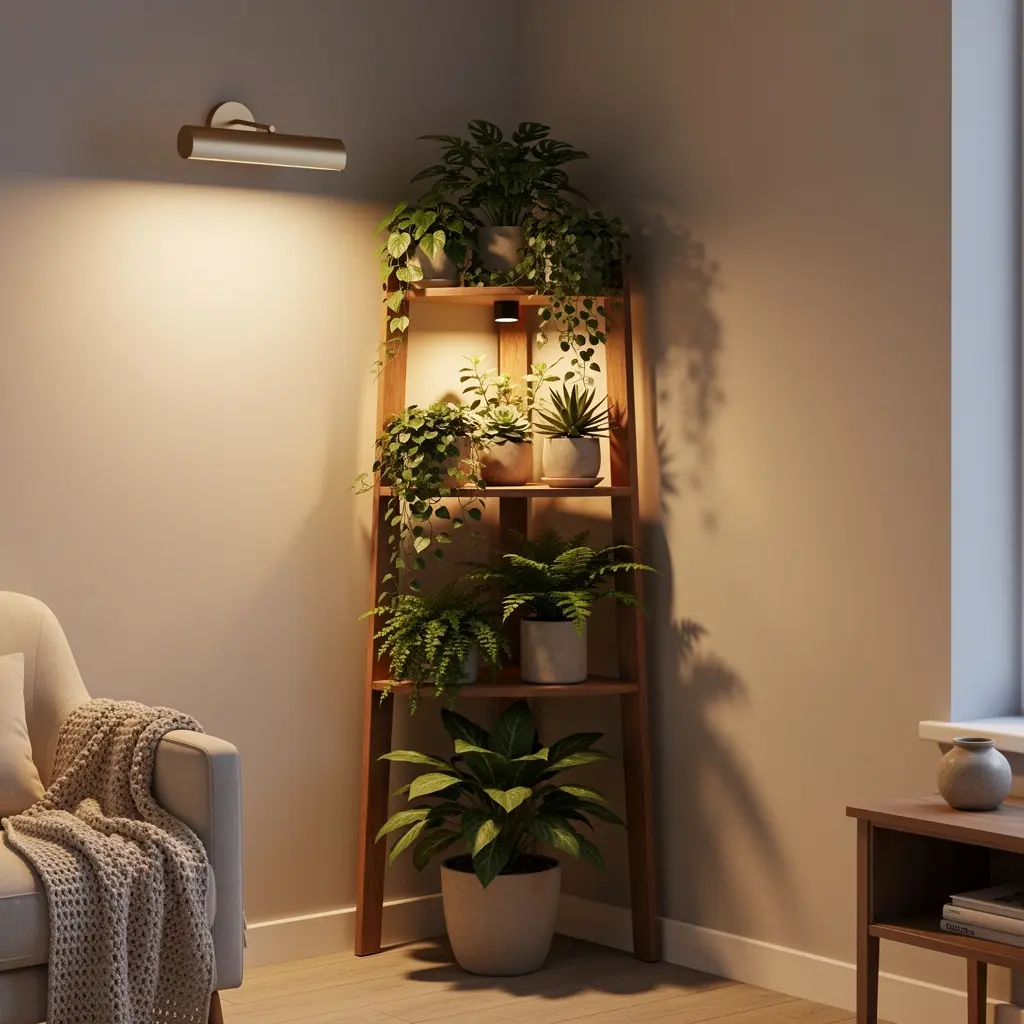
If the corner’s natural light is limited, a small grow light, either a discreet clip on style or a floor lamp with a full spectrum bulb, can keep a wider range of plants healthy than natural light alone would allow. Newer grow lights are far less obtrusive than older purple tinted versions, with many now producing a warm white light that blends into the room’s overall lighting.
A grow light also doubles as ambient lighting in the evening, which fits well with a cozy corner that’s meant to feel inviting after dark, not just during the day. Running it on a timer, typically 10 to 12 hours a day, keeps the plants on a consistent schedule without requiring you to remember to turn it on and off manually.
9. Keep Some Negative Space So the Corner Doesn’t Feel Crowded
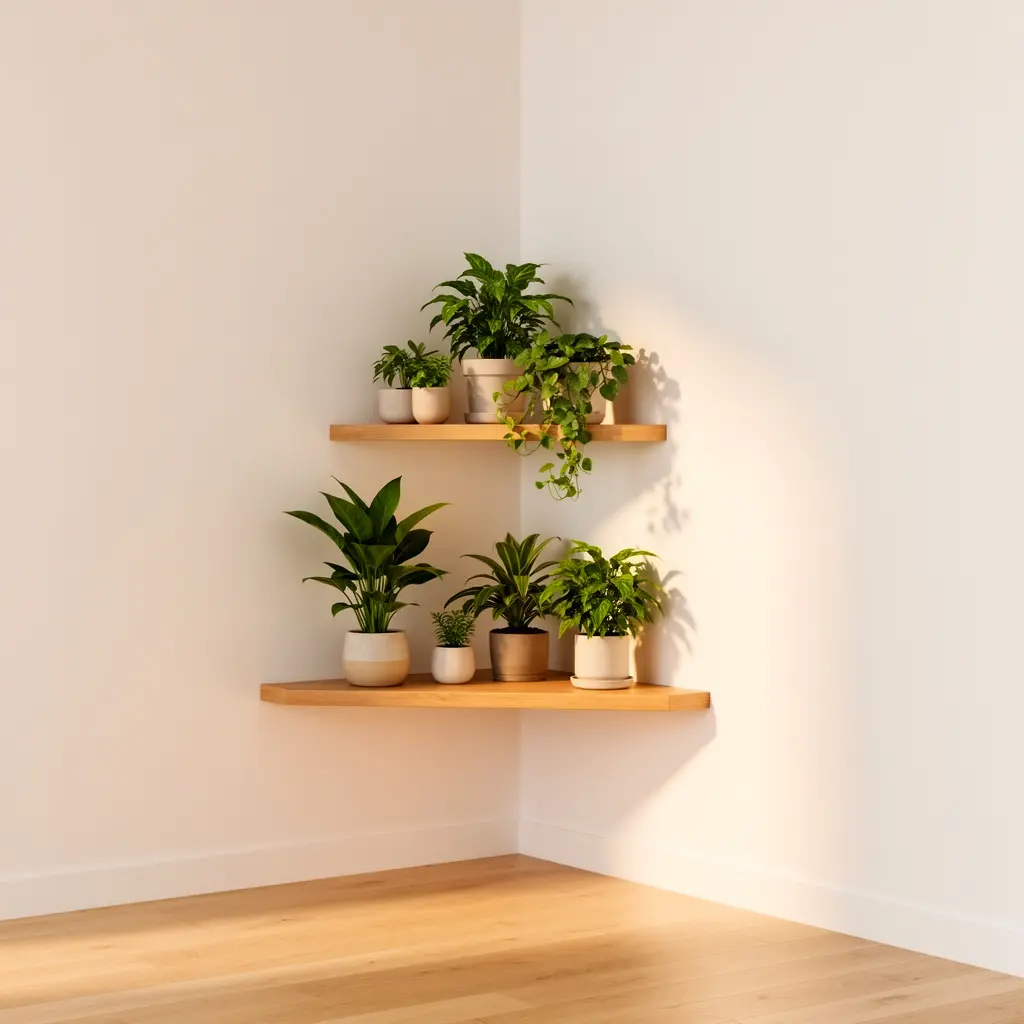
It’s tempting to fill every open spot on a corner shelf once you start collecting plants, but a shelf packed edge to edge starts to feel chaotic rather than cozy. Leaving visible gaps, roughly a quarter to a third of each shelf’s surface, gives the arrangement room to breathe and makes it easier to actually appreciate each individual plant.
This also leaves room to grow, both literally as plants get bigger and for adding new ones over time, without needing to immediately rearrange the entire corner every time you bring home something new from the nursery.
10. Rotate and Refresh the Shelf as Plants Grow
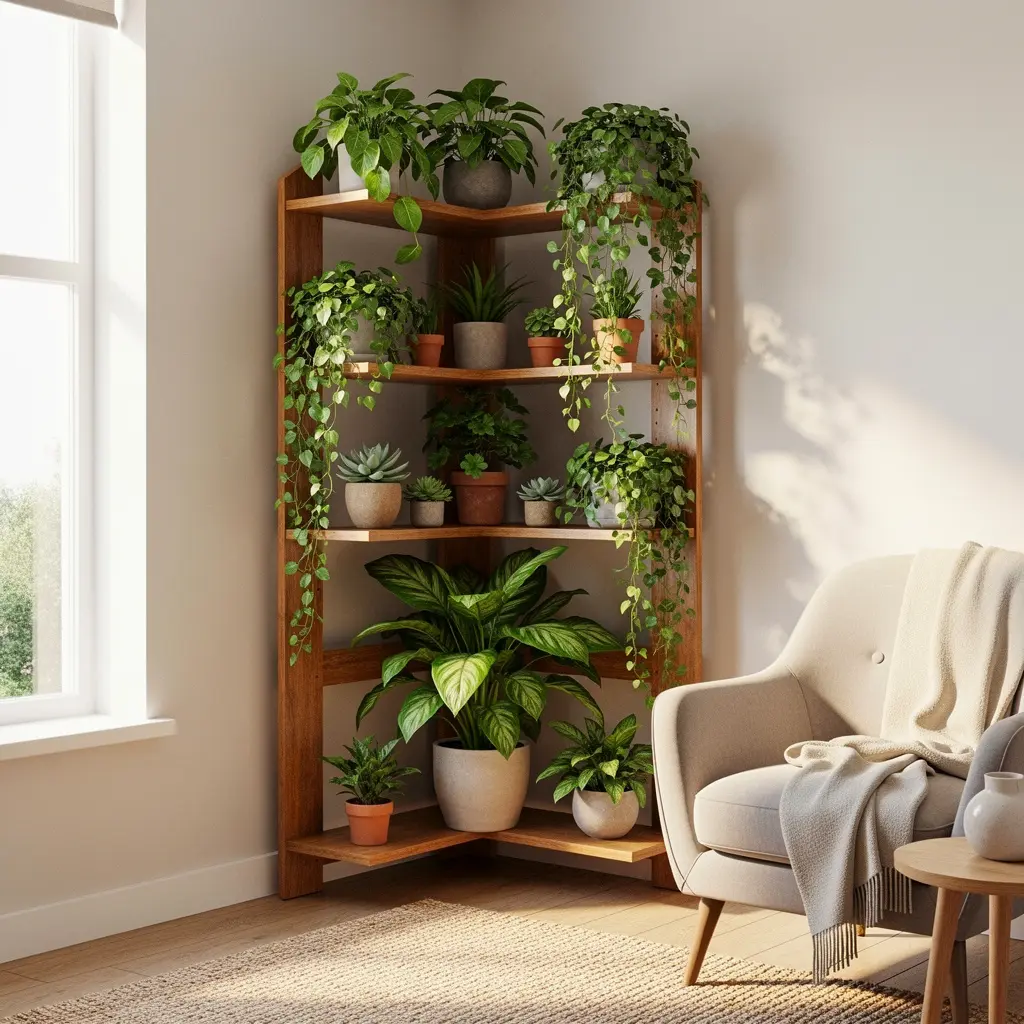
A corner plant shelf isn’t a one time setup. Plants grow at different rates, some outgrow their shelf, others need more or less light as the seasons change, and the arrangement that worked when you first built it may need adjusting every few months.
Checking in on the corner every season, rotating plants for even light exposure and repositioning anything that’s outgrown its spot, keeps the display looking intentional rather than letting it slowly become overgrown or unbalanced. This small habit is really what keeps a cozy corner plant shelf cozy long term, rather than letting it turn into a jungle you’re not sure how to manage.
Mistakes to Avoid
- Choosing plants before actually observing the corner’s real light levels
- Placing tall plants on top and trailing ones on the bottom, working against the natural visual flow
- Buying a perfectly matched pot set that ends up feeling sterile rather than cozy
- Overcrowding every shelf with no visible negative space
- Ignoring watering access, leaving high or hard to reach plants neglected
- Setting up the corner once and never adjusting it as plants grow
Frequently Asked Questions
What plants work well in a low light corner? Snake plants, pothos, and ZZ plants are all known for tolerating lower indirect light and are common choices for corners that don’t get much direct sun. If the corner is genuinely dim, adding a small grow light will widen the range of plants that can actually thrive there.
How many plants should go on a corner shelf? This depends heavily on shelf size, but a general guide is one to two plants per shelf tier, allowing enough negative space that the arrangement doesn’t feel crowded. It’s better to start with fewer plants and add more over time than to overcrowd the shelf from the start.
Do corner plant shelves need to be against a window? Not necessarily, but a corner near a window will support a wider variety of plants without supplemental lighting. A corner farther from natural light can still work well with a grow light and plants specifically chosen for low light tolerance.
What’s the best material for a corner plant shelf? Wood, either solid or a wood look material, tends to suit a cozy aesthetic well and pairs naturally with a range of pot materials. Metal or wire shelving can also work, especially in a more modern space, though it may read as slightly less warm than a wood option.
How do I keep a corner plant shelf from looking messy? Grouping plants by height, sticking to a cohesive but not identical pot palette, and leaving visible negative space between groupings are the biggest factors in keeping the corner looking styled rather than cluttered. Regular seasonal check ins to remove dead leaves and reposition overgrown plants also help maintain the look.
Conclusion
A cozy corner plant shelf turns one of the most commonly wasted spots in a home into a genuinely calming, green focal point, as long as it’s planned around the corner’s actual light and given room to grow over time. Start by observing the light, choose a shelf shape that respects the corner’s awkward geometry, and layer in plant heights and a few cozy non plant touches rather than filling every inch. Checked in on occasionally, that once empty corner becomes one of the most lived in parts of the room.